Beijing, October 31 (Prensa Latina) The Chinese Foreign Ministry again urged the United States to heed the unanimous outcry of the international community and immediately lift the blockade and sanctions against Cuba.
“The General Assembly has once again adopted the resolution by an overwhelming majority, showing the broad international support for the Cuban people in their just efforts to safeguard national sovereignty and oppose foreign interference and the blockade,” stressed spokesperson Guo Jiakun.
According to the spokesperson, this is further proof that unilateral and intimidating measures find no support.
“For the past 60 years and more, the brutal blockade and illegal sanctions imposed by the United States against Cuba have seriously violated the purposes and principles of the UN Charter and other basic norms governing international relations, infringed upon Cuba’s right to subsistence and development, and wreaked havoc on the Cuban people,” he emphasized.
Guo reiterated Beijing’s support for the island and highlighted the outcome of the United Nations vote in favor of the resolution on Cuba calling for an end to the US blockade, which has been passed 33 consecutive times since 1992.
China will continue to demand international justice and maintain its firm commitment to supporting the Cuban people in their struggle against foreign interference and the blockade, following a development path that is suited to Cuba’s national conditions and safeguarding its sovereignty and dignity,” he said.
Supplies will benefit 90,000 people, with a focus on children, adolescents, and pregnant women
UNICEF
Havana, 31 October 2025. – As part of the immediate response following Hurricane Melissa’s passage through eastern Cuba, a shipment of essential medical supplies procured by UNICEF Cuba will arrive in the country by air this Saturday, 1 November. The supplies are intended to strengthen the capacity of the national health system and improve the quality of care for children, adolescents, and families affected by the emergency.
The supplies were procured in coordination with the Ministry of Public Health (MINSAP), based on needs identified in the provinces of Guantánamo, Santiago de Cuba, Granma, and Holguín, with a priority focus on maternal and child health services at the primary and secondary levels of care. In total, the supplies are expected to reach approximately 90,000 people, with particular attention to children, adolescents, and pregnant women.
The shipment includes 69 medical care kits containing critical medicines (such as antibiotics, antihypertensives, and other essential drugs), medical equipment (stethoscopes, scales, sphygmomanometers, and other instruments), and consumable materials (syringes, needles, gloves, and cannulas, among others).
Additionally, the cargo includes 8,220 mosquito nets and oral rehydration salts, essential for preventing vector-borne diseases and treating childhood dehydration.
“Continuity of health services is essential to reduce post-emergency risks. This shipment contributes to disease prevention while ensuring that hospitals and polyclinics have the necessary resources to protect the lives and well-being of families,” said Alejandra Trossero, UNICEF Representative in Cuba.
Since Hurricane Melissa posed a threat to Cuba, UNICEF has worked alongside national and local authorities to channel a rapid and effective multisectoral response based on identified damages. This includes support to the Water, Sanitation and Hygiene (WASH), education, health, nutrition, and child protection sectors.
As part of its support for the response to Hurricane Melissa’s impact, UNICEF has made available prepositioned supplies in the country, including 1,300 family hygiene kits stored in Las Tunas —with the capacity to benefit 6,500 people in evacuation centers—, 213 recreation kits for more than 21,000 children and adolescents, 80 school supply kits, 209 early childhood kits, 1,900 roofing sheets, and 5,000 m² of waterproofing roof blankets for the rehabilitation of educational spaces, as well as three portable water purification plants to ensure access to safe water in vulnerable communities.
The transportation and distribution of supplies to the eastern provinces will be carried out in coordination with the Ministry of Public Health, ensuring delivery to the institutions with the greatest needs.
This support reaffirms UNICEF’s commitment to immediate response, early recovery, and strengthening the resilience of Cuba’s health system, contributing to ensure that every child and adolescent grows up healthy and protected, even in emergency contexts.
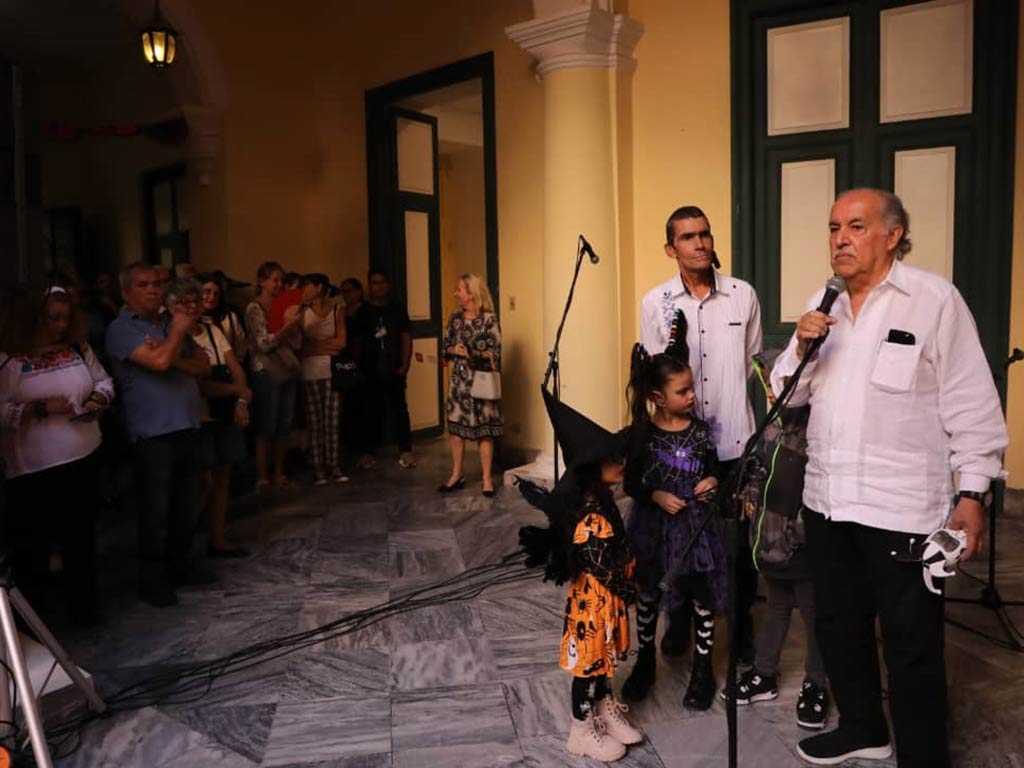
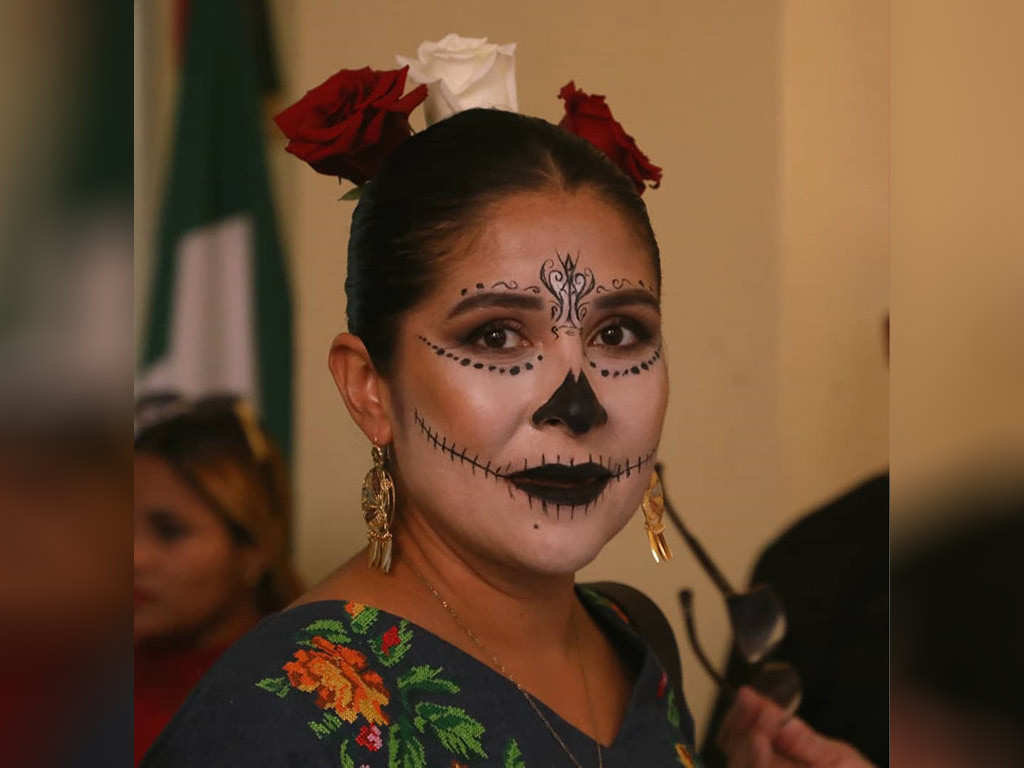
Havana, Oct 31 (Prensa Latina) The Mexican Embassy in Cuba, the Benito Juárez House Museum and the Cuban branch of the National Autonomous University of Mexico celebrated the Day of the Dead today in the historic center of this capital.
Photos: Vladimir Molina, Prensa Latina
This ceremony is unequivocal proof that our gods have not died; this year the tradition has enormous significance for us because it has been a difficult period, full of tensions and battles for everyone, that is why we want to celebrate life, said Mexican Ambassador Miguel Díaz.
The evening also commemorated the 37th anniversary of the founding of the Benito Juárez House with a musical walk to the rhythm of mariachis from its headquarters to the statue of the late historian of Havana, Eusebio Leal, located on the Calle de Madera in the Plaza de Armas.
The verb “to found” was the central theme of the meeting, and photographs of 16 Mexican and Cuban personalities who carried out founding acts were placed on the altar.
The following were honored: artist Juana Bacallao, diplomat Gilberto Bosques, historian Eusebio Leal, poet Fayad Jamís, sociologist Pablo González Casanova, essayist Hernán Lara, journalist Pedro de la Hoz, artist Paquita La Del Barrio, historian Claudia Gómez, astronomer Julieta Fierro, ambassador Luis Cabrera, photographer Luis Moya, essayist Ignacio Solares, historian Eduardo Torres Cuevas, writer Francisco López Sacha, and politician Ricardo Cabrisas.
“In the echo of founding, this tapestry of souls is woven, souls that recognized each other in the same will to create, to resist, to be a seed in the earth that does not forget them,” expressed Miguel Hernández, founder and president of Casa Benito Juárez.
The celebration was attended by the Vice Minister of Culture Lizette Martínez, the Director of the Regional Office of the United Nations Educational, Scientific and Cultural Organization, Anne Lemaistre, the Cuban painter Manuel Mendive and members of the diplomatic corps of Algeria, Japan, Timor Leste, Chile, France, Poland, among other guests.
The Day of the Dead is a pre-Hispanic tradition celebrated from October 28 to November 2 to remember deceased loved ones.
Havana, Oct 30 (Prensa Latina) A plane from the Venezuelan airline Conviasa arrived today at the Antonio Maceo airport in Santiago de Cuba with 26 tons of humanitarian aid sent by the government of Caracas to support the victims of Hurricane Melissa.
The aircraft, which departed from Maiquetía airport in Venezuela, transported medical supplies, non-perishable food, and materials for the reconstruction of homes and institutions affected by the cyclone that hit the southeast of the island.
Venezuelan Foreign Minister Yván Gil led the handover and stressed that the assistance was a commitment of brotherhood, not an act of charity, according to the Cuban News Agency.
“Twenty-five years ago, Cuba extended its hand to Venezuela in a difficult time; today it is our turn to accompany the Cuban people in this adversity,” he declared.
His speech coincided with the anniversary of the Comprehensive Cooperation Agreement between Cuba and Venezuela, signed on October 30, 2000 by Fidel Castro and Hugo Chávez, a founding milestone of the South American alliance.
Gil announced that a similar shipment will depart for Jamaica, also affected by Melissa, in the coming hours, and that a ship with an additional three thousand tons of aid for Cuba will set sail in the coming days.
In Santiago de Cuba, the coordinator of Programs and Objectives of the Santiago government, Edelva Marín, reported that a thousand food modules are already being distributed, with rice, flour, sugar, legumes, sardines, milk, oil and other products, destined for large mothers in the most impacted areas.
Niurka Bell Calzado, a member of the Provincial Bureau of the Communist Party of Cuba, highlighted the symbolic coincidence between the arrival of the aid and the recent UN approval of the resolution against the US blockade.
“It was a powerful hurricane, but also a day of victory. That Venezuela was the first to arrive reaffirms that solidarity is not just a slogan, but a living practice,” he stated.
The Bolivarian foreign minister highlighted the direct monitoring by President Nicolás Maduro and the constant coordination with President Miguel Díaz-Canel and Foreign Minister Bruno Rodríguez Parrilla, whom he congratulated on the diplomatic victory at the United Nations.
“The revolution doesn’t threaten, it accompanies. In every ton sent goes the heart of a people who know what it is to resist and win,” Yván Gil concluded.
Mexico City, Oct 31 (Prensa Latina) Cubans residing in Mexico have begun collecting food and medicine to support the island, following Hurricane Melissa’s passage through the eastern part of the Caribbean nation, with damages that are still being assessed.
“We have set up a collection center. We are asking the Mexican people, who have always been supportive, to contribute powdered milk, canned food, syringes, gauze, cotton, paracetamol,” and other medications, activist Olivia Garza told Prensa Latina.
According to the vice president of the José Martí Association of Cuban Residents in Mexico, the center is located in the La Habana Vieja Cafeteria, in this capital.
“Solidarity cannot be blocked. Cubans residing in Mexico and supportive friends will step forward to support the Cuban people in these times of emergency,” he said.
The phenomenon, which was a category 3 hurricane on the Saffir-Simpson scale when it hit the Caribbean country, entered on Wednesday through a point in the southeast of the island, where it caused severe flooding, as well as material damage to homes and agriculture in the eastern provinces.
In the face of ramped-up U.S. pressure, the overwhelming majority of countries voted for the 33rd time this Wednesday to condemn the U.S. embargo against Cuba at the United Nations.
165 nations voted in favor of the resolution opposing the embargo, while seven voted against. 12 abstained.
World leaders speak out
Representatives from around the world took to the General Assembly podium on Tuesday and Wednesday to support Cuba and denounce U.S. sanctions.
“The resolution must be implemented immediately and effectively,” said China’s Ambassador to the UN. “It is outrageous that the United States, instead of ending its sanctions against Cuba, has doubled down by putting Cuba on the list of state sponsors of terrorism.”
The embargo “remains a clear violation of the UN charter and international law,” Barbados’ Ambassador to the UN said in representation of the 14 members of the Caribbean Community (CARICOM). “For more than three decades, the General Assembly, guided by the charter, has spoken with clarity and consistency. This embargo must end.”
On behalf of the Non-Aligned Movement, which encompasses 121 countries, Iraq’s delegate said that “the direct and indirect damage inflicted by the embargo against Cuba is enormous. It affects all sectors of the economy, including public health, nutrition, agriculture, energy systems, as well as trade, investment, tourism and banking.”
“Thanks to the efforts made by Cuba, many countries have developed their scientific and technical potential,” said Uganda’s representative on behalf of the G77 and China group of nations. “We appeal to the international community to step up in its effort calling for the elimination of the embargo, not just to improve Cuba’s prospects, but also to help all members of the global community in their quest to fully realize their economic and social development.”
Watchour video of Latin American representatives speaking at the UN about U.S. policy toward Cuba.
U.S. tries to gaslight Cuba
Every year, nearly every country votes in favor of the UN resolution to condemn the embargo with only the U.S. and Israel consistently opposing it.
This year, the Trump administration intensified efforts to pressure nations to turn against Cuba.
In the run up to the vote, Cuba’s Minister of Foreign Affairs Bruno Rodríguez accused the Trump administration of a campaign to coerce other countries into opposing the UN resolution.
Rodríguez quoted a “threatening” letter sent by the U.S. “blackmailing” several heads of state.
The letter, he said, sends the message: “If you don’t do what we are asking you to do, you will be sanctioned.”
Trump has ratcheted up the U.S. government’s long-standing policy of waging economic war on Cuba to bring about regime change.
During his firstterm, Trump imposed a barrage of sanctions against Cuba, targeting international investment and the island’s main sources of foreign currency like remittances, tourism and its medical missions. Joe Biden maintained the most powerful measures, which have played a central role in the country’s deepening economic crisis.
Since taking office for a second time, Trump has doubled down on the Cold War-era policy toward Cuba.
Secretary of State Marco Rubio has pressured countries into leaving Cuba’s international medical cooperation program, which brings in billions of dollars every year.
The Trump administration has also kept Cuba on its “State Sponsor of Terrorism” list, resurrected a black list of entities off limits to U.S. investment, and imposed a partial travel ban on Cuban nationals.
The Ukraine excuse
Earlier this month Reuters reported that the State Department had sent a cable to dozens of U.S. missions directing its diplomats to urge governments to oppose the resolution by claiming that Havana had sent 5,000 troops to fight with Russia in Ukraine. This number seems to stem from unconfirmed Ukrainian intelligence reports and has not been independently verified.
While Cuban President Miguel Díaz-Canel has confirmed that there are Cubans fighting in the war, his government has “categorically rejected” any involvement.
Cuba’s Ministry of Foreign Affairs said the Cuban government had taken steps to “neutralize recruitment” in Cuba and convicted 26 people of Ukraine-involved mercenarism since 2023, with sentences ranging from five to 14 years in prison.
Following the UN vote, Ukraine’s Foreign Minister said on X that his government had decided to close its embassy in Havana.
Mic check – Cuba calls out U.S. ambassador on General Assembly floor
During his intervention at the UN, U.S. Ambassador Michael Waltz called on the world to side with the U.S. in opposing the resolution and said he was going to “set the record straight” and “correct the fake news.” He then proceeded to deliver one false statement after another.
Waltz claimed that Cuba “supports terrorist organizations,” that it is “propping up” cartels that traffic “people, drugs and weapons” and “has undermined democracies” in the Western Hemisphere. There’s no credible evidence to substantiate any of these claims.
Waltz also denied there was a U.S. “blockade” (as the embargo is known in Cuba and other parts of the world) against Cuba. This is not unusual. U.S. officials and politicians have vacillated between asserting a blockade doesn’t exist and justifying their hard-line policies that have cut Cuba off from the rest of the world.
The U.S. embargo’s stated purpose of blocking Cuba from having normal economic relations with the world is not only real, but codified into a vast set of laws and regulations.
During Waltz’s speech, Bruno Rodríguez raised a point of order, cutting him off mid-sentence.
“This is the UN General Assembly, not a Signal chat,” he said.
Watch a video of Waltz’s speech and Rodríguez’s intervention.
During the session, the Non-Aligned Movement (NAM), represented by Uganda, reiterated its “strongest opposition to the promulgation and imposition of unilateral coercive measures,” stating that they are inconsistent with international law and the United Nations Charter. Photo: UN.
The Non-Aligned Movement (NAM), on behalf of 131 nations, denounced the illegal nature of the coercive measures, their economic impact, and the violation of human rights.
October 28, 2025 — teleSUR
The Ugandan delegation, on behalf of the 131 member states of the Non-Aligned Movement (NAM), demanded at the United Nations (UN) General Assembly the immediate and complete end of the economic, commercial, and financial embargo that the United States has illegally imposed on Cuba for more than 60 years.
During its intervention at the 21st session of the 80th session of the UN, which was attended by Cuban Foreign Minister Bruno Rodríguez Parrilla, the Non-Aligned Movement (NAM) reiterated its “strongest opposition to the promulgation and imposition of unilateral coercive measures,” noting that they are inconsistent with international law and the United Nations Charter.
The movement recalled that an overwhelming majority of member states voted in favor of resolution A/RES/79/7, which calls for the lifting of the embargo, and called the measure a violation of Cuba’s right to fully interact with the international community.
The Non-Aligned Movement (NAM) detailed that the damage inflicted by the blockade is “enormous ,” affecting all essential sectors of the Cuban economy and causing estimated losses of more than $7.5 billion between March 1, 2024, and February 28, 2025, alone. The blockade denies Cuba access to markets, fuel supplies, and aid from financial institutions, being a “serious obstacle to the country’s socioeconomic development ” and contradicts efforts to achieve the 2030 Agenda.
The movement also expressed deep concern about the expansion of the extraterritorial nature of the embargo, including the full implementation of Chapter III of the Helms-Burton Act , and rejected the strengthening of financial measures that have raised the total impact to more than $1 trillion.
Finally, the Non-Aligned Movement strongly condemned Cuba’s inclusion on the unilateral list of states sponsoring terrorism, rejecting the “baseless accusations” and the politicization of the fight against terrorism. It also emphasized that more than 190 states maintain relations with Cuba, which isolates the United States in its policy.
United Nations, Oct 28 (Prensa Latina) The U.S. blockade against Cuba returns to global scrutiny today at the UN General Assembly with the debate on the draft resolution calling for lifting the longest economic blockade in history.
Foreign Minister Bruno Rodríguez is leading the Cuban delegation in New York to “participate on October 28 and 29 in the discussion and vote on the General Assembly’s draft resolution, which calls for an end to the United States blockade against Cuba,” he wrote on his account on the social network X.
“We will defend the #TruthOfCuba and the international community, which the U.S. government is trying to manipulate and change under unprecedented pressure,” he said.
His corrupt political clique fears being isolated once again by the overwhelming UN condemnation of its economic strangulation and suffering measures against the Cuban people, warned the foreign minister, who used the hashtag #TumbaElBloqueo (TumbaTheBlockade).
This will be the thirty-fourth time a proposal arguing for the need to end the embargo, imposed more than six decades ago by successive Democratic and Republican administrations, without distinction, will be debated.
On Tuesday and Wednesday, the global forum of 193 countries will examine and vote on the document presented by the Caribbean nation, which argues the worsening impact of this policy of suffocation on its population.
The international community has unequivocally rejected the blockade, which last year was supported by only two countries, the United States and its ally Israel, compared to an overwhelming majority of 187 others who opposed it.
According to official data, the blockade has caused damages of $7.556 billion in the last year, a 49 percent increase compared to the previous period.
Its devastating impact can be measured in the daily lives of the Cuban population and in the island’s economic planning, which sees its access to medical equipment, food, communications technology, transportation, and fuel, among other items, severely limited.
Added to this, as Rodríguez recalled, is Cuba’s reinstatement to the arbitrary and unilateral list of state sponsors of terrorism and the application of Title III of the Helms-Burton Act, which aggravate financial and commercial persecution.
According to the list of speakers circulating here—which may be subject to change—representatives from at least 49 countries and groups, such as the Association of Southeast Asian Nations, the Non-Aligned Movement, and the Caribbean Community, will take the podium of the General Assembly today. Debate and voting will continue tomorrow.
Deputy Minister of Foreign Affairs Carlos Fernández de Cossío stated on Facebook that almost all UN member states will vote in favor of the largest of the Antilles
october 27, 2025 — Granma
“The U.S. government knows that the vast majority of the international community supports the need to end the blockade.”
This was stated with certainty by Bruno Rodríguez Parrilla, member of the Political Bureau and Minister of Foreign Affairs, prior to the presentation, debate, and vote on October 28 and 29 at the UN on the draft resolution demanding an end to this genocidal policy against the island. “It will be a victory for the peoples, for international law, and a great victory for the Cuban Revolution and for Cuba,” he said.
Regarding the anxiety reflected by the White House in this regard, he said that it will “once again receive the punishment of absolute isolation, singling out, criticism, and direct appeals from governments around the world to lift the blockade.”
Deputy Foreign Minister Carlos Fernández de Cossío said on Facebook that almost all UN member states will vote in favor of Cuba because they are determined to promote strict respect for the purposes and principles enshrined in the UN Charter.
They will support the resolution, he says, because they understand the danger of allowing a superpower to dictate to each country what kind of relationship it can have with Cuba or other states. Furthermore, “because he knows Cuba, its history of peace, solidarity, and cooperation; its enormous efforts to defend and rebuild the country despite the unequal aggression to which it is subjected; and because he does not believe in the falsehoods promoted by the Secretary of State and his mafia-like machinery of defamation and intimidation.”
Despite increasing demands from many parts of the world and repeatedly from the United Nations for ending the USA sanctions and embargo against Cuba, these now exist in such a comprehensive and extreme form that it makes more sense to speak of a US blockade of Cuba, not just embargo.
This blockade has resulted in billions of dollars being lost for Cuba in terms of loss of trade and economic opportunities. In fact this loss has now exceeded a trillion dollars. On the other hand the loss of trade opportunities has also been costly for several US trading interests.
An even bigger loss of Cuba has been in terms of denial of imports of essential needs like food and medicine. The crisis for Cuba was the most extreme at the time of the disruption of wider trade links following the collapse of the Soviet Union. The COVID times and its aftermath have been particularly difficult too.
Despite all this, hats off to the determination and hard work of the Cuban people that the latest recorded infant mortality, child mortality rate and life expectancy of people are the same in Cuba compared to the USA. While the infant mortality rate in the two countries is between 5 and 6, the under-five child mortality is between 7 and 8, the life expectancy in both countries is around 78 years. The Human Development Index ranking of Cuba in the latest year 2023 is in the high human development category.
The USA-imposed longest ever embargo on Cuba has continued for almost six and a half decades with very limited relaxations for short durations. For over three decades the United Nations General Assembly has been regularly passing resolutions against the USA blockade or embargo for its violation of UN charter as well as international law. It has been common for over 90 per cent of member countries to support this resolution. European Union countries, Canada and other allies of the USA also join and support such resolutions. (The only major country which time and again supports the USA on this issue is Israel).
The expression of such massive international opposition to the blockade of Cuba must have been adequate reason for ending the blockade, but the USA has continued the blockade by passing several laws for this over the years. This has happened despite the fact that several important voices even within the USA have been in favor of lifting the embargo, and some surveys suggest that more US citizens favor a reduction of restrictions on business and travel. At least two US Presidents, Jimmy Carter and Barak Obama, expressed their opposition to embargo, but could introduce only limited relaxations. Whatever they could achieve was moreover hastily undone by their successors. Trump in his first tenure made the embargo more restrictive than before, leading to more problems for Cuban people.
Former Secretary of State George P. Shultz said that this policy (of embargo and isolation) is ‘insane’. Another prominent political leader and a Democratic Presidential candidate George McGovern sated bluntly—It is a stupid policy. Several business leaders in the USA have spoken against it. Several leading human rights groups inside and outside the USA including the Amnesty International, Human Rights Watch and Inter-American Commission on Human Rights have expressed their opposition to the blockade.
Legal luminaries have also commented on the illegality of the embargo in the context of international law. To give one example Paul A. Shenyer and Virginia Barta have written in a paper titled ‘The Legality of the US Economic Blockade of Cuba Under International Law ( Western Reserve Journal of International Law), “ Whatever view is adopted, either that of coercion or aggression, it is quite evident that the imposition of the US economic blockade of Cuba constituted an illegal act…If there still remains doubt as to the illegality of the economic blockade under the traditional view, there is no doubt that the blockade is a fragrant violation of the contemporary standard which is founded on economic principles and sovereign equality between states.”
The USA has defended its embargo largely on the basis of the events nearly six decades back when Cuba nationalized some USA refinery companies without giving compensation (and later nationalized some other US property also). Hence the USA has been mentioning claims towards Cuba of around six billion dollars or so. However the wider context of this should be seen carefully before coming to any hurried conclusions.
The USA had then taken hostile action against the new socialist regime, its close neighbor, by stopping oil supplies. Cuba then got crude oil from the Soviet Union, but the US owned refineries in Cuba refused to process Soviet oil! It is in this situation that Cuba nationalized these refineries. The USA arbitrarily refused to accept Cuban sugar imports although Cuba was predominantly depending on this export in its trade. Keeping in view all these factors the USA should have withdrawn this blockade a long time ago. Instead Trump made this even more restrictive. This led to increasing difficulties in obtaining medicines and food and also disrupted electricity supply in several parts of the country.
Some critics of Cuba’s socialist system have used these difficulties to falsely allege that the regime has failed in meeting basic needs of people. In fact in recent years the agro-ecology approach of Cuba to increase food production in ecologically protective ways has attracted international praise and appreciation, including at UN/FAO level. However the fact that at one time Cuba had become a one-crop land and had become highly dependent on imports, implies that despite several successes, it takes time to achieve self-reliance in diversity of foods needed, particularly when a big and powerful neighbor is creating problems all the time. Similarly despite the widely admired successes of Cuba in health sector, shortages in terms of specific medicines are likely to occur in trade blockade conditions.
The blockade applies not just to US businesses but also to other businesses having commercial links with US. There are several examples of trade contracts of other countries or businesses belonging to other countries being scrapped following US pressures. Oil exploration in Cuba also could not take place due to such pressures despite the interest shown by important companies. Hence a big source of potential income was denied to Cuba.
Clearly the increasing difficulties Cuba is facing in meeting some basic needs are a reflection of unjust actions taken against this small country by its giant neighbor. Let us also not forget that despite these problems Cuba’s doctors have served about 40 countries at the time of special difficulties and disasters.
Hence there is a very strong case now for the USA to respect all the numerous UN General Assembly resolutions and lift the longest ever embargo against Cuba. No more!—this blockade should go away and never return.