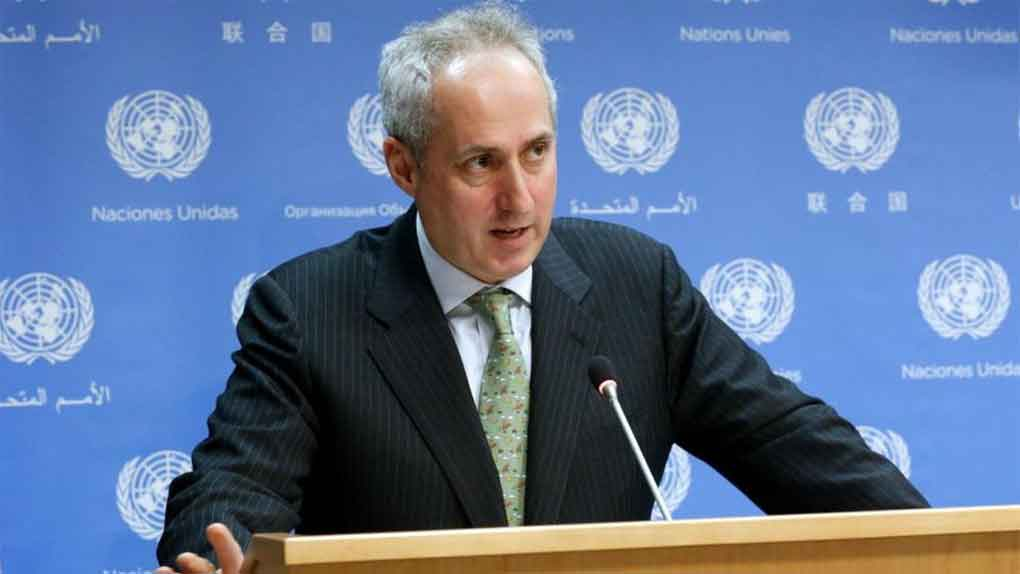
ECLAC: Cuba showcases achievements in gender equality and the care society

Santiago, Chile, Dec 1 (Prensa Latina) Cuba showcased its progress in gender equality at ECLAC today, thanks to policies of universal access to education, health, employment, decision-making and the guarantee of sexual and reproductive rights.

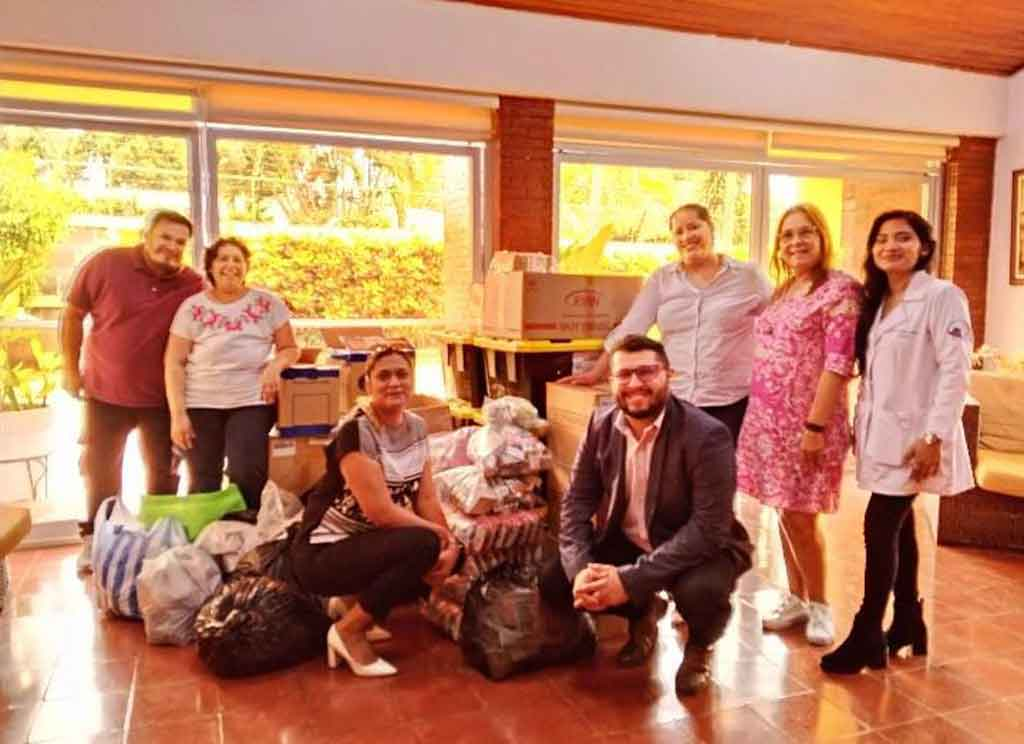
Photo: Courtesy of ECLAC

Cuban delegate Anierka Fernández noted that her country has the second highest proportion of women in Parliament worldwide, and in the Council of State they represent 52.3 percent.

A member of the national secretariat of the Federation of Cuban Women (FMC) is participating here in the 67th meeting of the Steering Committee of the Regional Conference on Women in Latin America and the Caribbean. The purpose of the meeting is to analyze the roadmap for implementing the recently approved Tlatelolco Commitment, which establishes a decade of action aimed at achieving gender equality and a care society.

Fernández reported that to advance the recognition of this work, in 2025 three decree laws were approved in Cuba and the first one recognizes as employment the service of care for the family with children in a situation of severe disability.

It was also agreed to provide home-based social assistance to people who, due to age, illness or disability, need care and whose caregiver is the sole economic supporter of the family.

The third decree approves telecare as a remote service modality designed to maximize the autonomy and well-being of people in situations of dependency.

“The Cuban State, in accordance with its social justice project, has focused on eliminating all forms of discrimination by implementing a set of public policies, programs and strategies that guarantee equality of rights and opportunities,” he said.

The Cuban representative warned that her country has made progress on this path, despite the unilateral coercive measures imposed by the United States government, which undoubtedly constitute an obstacle to development.

The meeting, held at the headquarters of the Economic Commission for Latin America and the Caribbean, is attended by ministers of women and high-level authorities from the region, as well as from international organizations.

jcm/car

Posted in Exchanges | Leave a comment

UN Expert Urges U.S. to Lift Cuba Sanctions

November 26, 2025 — Belly of the Beast

Alena Douhan, the United Nations special rapporteur on unilateral coercive measures, spent 10 days in Cuba meeting with stakeholders on the impact of sanctions. In a press conference at the end of her visit, she called on the U.S. to stop sanctioning the island.

After a week and a half of fieldwork, United Nations Special Rapporteur Alena Douhan described U.S. sanctions as “a breach of international law,” which undermine “the enjoyment of human rights, including the rights to life, food, health and development.” She added: “I call on the United States to lift and suspend all unilateral coercive measures applied to Cuba.”

Douhan’s full report on her findings will be presented to the UN Human Rights Council in September 2026.

Posted in The Blockade? | Leave a comment

US sanctions must be stopped as they reshape life in Cuba: UN rapporteur

UN Special Rapporteur on human rights Alena Douhan speaks during a media conference in Havana, Cuba, on November 21, 2025 [Norlys Perez/Reuters]

The ongoing US actions are ‘suffocating the social fabric of Cuban society’, according to the expert.

By Maziar Motamedi – 22 Nov 2025 — Aljazeera

The United States must lift unilateral sanctions imposed on Cuba as they are “causing significant effects across all aspects of life” more than six decades after they were imposed during the early part of Fidel Castro’s leadership, according to a senior United Nations expert.

The “extensive regime of economic, trade and financial restrictions” against the island nation marks the longest-running unilateral sanctions policy in US history, said Alena Douhan, special rapporteur on the negative impact of unilateral coercive measures on human rights.

Only the US Congress can lift the Cold War-era embargo on communist-run Cuba, whose government has maintained that the country “will not surrender” to Washington’s “policy of collective punishment”.

“As a result, generations of Cubans have lived under unilateral coercive measures, which has shaped the country’s economic and social landscape,” Douhan said in a statement released on Friday.

The UN official cited reports that Washington’s imposed measures have progressively tightened since 2018, with further sanctions imposed on the already existing ones and a significant intensification in 2021 following Cuba’s re-designation as a so-called “state sponsor of terrorism”.

Other countries and international companies also over-comply with the embargoes in an effort to steer clear of being targeted with secondary sanctions, which Douhan said affects the government and the people’s ability for long-term planning, “suffocating the social fabric of Cuban society”.

US governments have for decades ignored international calls to remove the sanctions on Cuba, including the overwhelming UN General Assembly vote at the end of October that showed global support for an end to the embargo for a 33rd year.

People walk on the street during a blackout as Cuba struggles to ease power cuts amid reduced fuel supplies from Venezuela, in Havana, Cuba, on November 18, 2025 [Norlys Perez/Reuters]

According to the UN rapporteur, there are shortages of food, medicine, electricity, water, essential machinery and spare parts in Cuba, while a growing emigration of skilled workers, including medical staff, engineers and teachers, is further straining the country.

The accumulative effect has “severe consequences for the enjoyment of human rights, including the rights to life, food, health and development”, Douhan said.

Cuba has suffered a series of electricity blackouts, grid collapses that have rocked the island of 10 million over the past year.

Get instant alerts and updates based on your interests. Be the first to know when big stories happen.Yes, keep me updated

Even when the US issues very limited licences and exemptions, the UN expert said investors remain wary of committing to long-term projects since there could be a policy shift in Washington.

“I urge all states to adhere to international law principles and norms and ensure that humanitarian concerns are fully respected, grounded in principles of mutual respect, solidarity, cooperation and multilateralism,” she said.

Douhan will present a thorough report to the UN Human Rights Council on the effect of the US sanctions in September 2026, following meetings with government officials, international agencies, church representatives, members of academia, medical personnel and the private sector.

Posted in The Blockade? | Leave a comment

Díaz-Canel congratulated Nicolás Maduro on his 63rd birthday

Havana, Nov 23 (Prensa Latina) Cuban President Miguel Díaz-Canel congratulated his Venezuelan counterpart, Nicolás Maduro, on his 63rd birthday today.

In a message posted on social media, the president of the Caribbean country conveyed to the Bolivarian leader “our most sincere congratulations on your birthday on behalf of the Cuban Party, government and people.”

“There is no Yankee pretension that can undermine your firmness, courage and unwavering commitment to the Bolivarian and Chavista homeland,” Díaz-Canel stated in the text.

The head of state of the South American nation was born in 1962 in Caracas, the capital district where he excelled as a union leader.

He was Minister of Foreign Affairs between 2006 and 2012, during the government of Hugo Chávez, Vice President of the Republic in 2012 and 2013, and President of the nation since the latter year, after being constitutionally re-elected by the majority of Venezuelans.

ode/lld

Posted in Exchanges | Leave a comment

UN: US policy against Cuba violates the human rights of the population

Havana, Nov 21 (Prensa Latina) The UN Human Rights Council’s Special Rapporteur, Alena Douhan, stated here today that the United States’ unilateral measures against Cuba lack legitimacy and affect the human rights of the population.

Photos: Vladimir Molina Espada

In presenting the preliminary findings of her investigations on the island to the national and foreign press, the official noted that such coercive actions affect all spheres of national life and directly harm its inhabitants, especially the most vulnerable groups.

He pointed out that these are especially damaging amid the problems the Caribbean nation is facing due to the international crisis, the onslaught of climate events, and internal economic difficulties.

He emphasized that the harmful effects of these are deepened by the politically motivated inclusion of the island in the State Department’s list of countries that allegedly sponsor terrorism.

Douhan recalled that since 1962 Cuba has suffered the US embargo, and this year that power extended the country’s presence on the aforementioned list, which causes serious economic damage and significantly hinders the efforts of the Caribbean nation to guarantee basic services and develop social policies.

In his visits and exchanges held since November 11 with various sectors of the country’s economic, political and social life, organizations, institutions and projects, Douhan witnessed firsthand the real impact of the blockade on the human rights of Cubans.

Such measures limit the State’s capacity to develop public policies, threaten the rights to food and a dignified life, hinder academic exchanges, affect the supply of energy, drinking water, and medicines, and violate the right to life in general, he pointed out.

In this regard, the report on the subject that it will present in September 2026 to the UN Human Rights Council will urge the United States to cease this unilateral policy “without international legal basis”, including secondary sanctions and the over-compliance with them.

It will also call on states and international organizations to adopt measures to guarantee the full enjoyment of the rights of Cubans, and to allow the development of programs that benefit other countries.

In his speech, Douhan thanked the Cuban government for the facilities provided to exchange with leaders, representatives of civil society, specialists, academics, international organizations and personalities from various sectors of the country’s economic, political and social life.

mem / evm

Posted in The Blockade? | Leave a comment

After Melissa, Recovery Through Solidarity

​November 19, 2025 — Belly of the Beast

Hurricane Melissa damaged over 90,000 homes and hundreds of health clinics, according the UN Office for the Coordination of Humanitarian Affairs.

The state has transported hundreds of tons of food to eastern Cuba and sent thousands of engineers to affected areas to restore electricity and water.

Dozens of countries, as well as international organizations like World Central Kitchen and the International Federation of Red Cross and Red Crescent Societies, have made donations.

But with so many in need, Cubans throughout the country have also stepped up to support each other. The island’s grueling economic crisis makes this solidarity all the more striking.

“The moment we heard a hurricane was coming, we started thinking about how we were going to help,” one donor said. “The least we can do is share what we have.”

Watch our video about how Cubans and the state are working to rebuild together.

Posted in Uncategorized | Leave a comment

Cuba reiterates its denunciation of plans of aggression against Venezuela

Havana, Nov 18 (Prensa Latina) Cuban Foreign Minister Bruno Rodríguez reiterated today his country’s condemnation of the United States’ attempts to justify a military aggression against Venezuela with false pretexts.

In his profile on the social network X, the top representative of diplomacy for this Caribbean nation pointed out that this purpose of the State Department is being promoted “under the leadership of the corrupt and compulsive liar Secretary of State,” Marco Rubio.

In full view of everyone and with the support of the media, the aim is to normalize and legitimize an aggression against a sovereign nation, he pointed out.

He also stated that, as a dishonest artifice, they intend to implicate the legitimate Venezuelan president, Nicolás Maduro, in drug trafficking and terrorism.

The Cuban foreign minister emphasized that these serious international scourges have only been promoted in the region by the US government, its intelligence and drug agencies, and by individuals associated with all those politicians in Florida who call for attacks on Venezuelan territory.

The US Secretary of State announced last Sunday that the Cartel of the Suns, a criminal network that Washington is trying to link to the Venezuelan government, will be labeled a Foreign Terrorist Organization (FTO), which could lead to military action against that country.

The measure is an escalation of the United States’ stance, which includes the unprecedented deployment in recent history of warships, aerial and maritime robotic vehicles in Caribbean waters near Venezuela, under the pretext of fighting drug trafficking in the region.

rc/evm

Posted in The Blockade? | Leave a comment

They thank Mexico for embracing the danzón, a genre from Cuba

Mexico City, Nov 16 (Prensa Latina) Musician Ethiel Failde mentioned the progress made today in Cuba for the cultural practice of danzón to be recognized as Intangible Cultural Heritage of Humanity and thanked Mexico for embracing this genre born on the island.

“As Cubans, we have that right, because the danzón originated in Cuba, because since 2013 it has been declared an Intangible Cultural Heritage of the nation, and we are working with a good team from Matanzas and from all over the country to prepare this dossier, which is already making progress,” he told Prensa Latina.

After participating in a discussion at the Museum of Mexico City, the great-great-grandson of Miguel Failde, creator of the rhythm in the 19th century, commented on the awareness workshops carried out in the largest of the Antilles.

“These activities will continue because this process of raising awareness among people about what cultural practice is, of feeling like a community that carries this cultural practice, is important so that everyone understands their role and their part in what we are achieving,” he explained.

When discussing how deeply rooted this rhythm is in Mexico, Failde expressed his pride, as it demonstrates, in his opinion, that a genre created in Cuba “has traveled the world and has come to conquer hearts.”

“It’s great that people know he’s Cuban, and that he hasn’t lost his essence. I’m very grateful to the Mexicans who have embraced him. Here in Mexico, he has his own repertoire and style, without ignoring that it’s a cultural practice” born in Matanzas, he noted.

Furthermore, the director of the Failde Orchestra expressed his satisfaction that Mexico City recognizes the genre as heritage, as it is something that has been inherited from generation to generation and the city is one of the places where these pieces are most danced and played.

“Thank you to Mexico for embracing our very Cuban danzón and for allowing many more people to discover it, fall in love with it, and experience it,” said the young flautist, who shared experiences in the country, such as seeing people dancing to that rhythm in a subway station.

Although he highlighted this North American nation as the “second most important focus in the world”, he also mentioned other territories, such as Colombia, Puerto Rico and the United States, where the genre is also heard.

This afternoon, the Failde Orchestra, along with the Mexican groups Acerina and La Playa, will provide entertainment for the Grand Danzón Dance in the emblematic Zócalo, a special event leading up to the declaration of Intangible Cultural Heritage in the city, promoted by the capital’s Ministry of Culture.

Organizers expect hundreds of couples from the 16 municipalities and the interior of the country to join together to celebrate this rhythm in a massive choreography.

rgh/las

Posted in Cultural | Leave a comment

Cuba denounces comprehensive economic warfare program from the US

Havana, Nov 12 (Prensa Latina) Cuba denounced today that the United States government is organizing, financing and executing a comprehensive program of economic warfare with the purpose of destabilizing the constitutional order in the Caribbean nation.

According to the challenge, revealed on the program Razones de Cuba, one of the cornerstones of this hostility is the scheme of currency trafficking and tax evasion on the island, with the use of operators of Cuban origin based in the United States and other countries.

The accusation directly targeted El Toque, a supposedly independent digital media outlet specializing in economic, legal, and public service information for Cuban communities, and emphasized that American taxpayer money was used in this operation.

The space revealed reports about the allocation of funds to the companies Media Plux Experience and Mas Voces Foundations, registered precisely in the name of the director of El Toque, José Jasán Nieves.

A portion of those funds, it was revealed, is used to promote leaders among non-state economic actors and to guarantee the illegal trafficking of freely convertible currencies in the Caribbean country.

Furthermore, actions from 2024 were presented involving the deputy head of Public Relations at the United States Embassy in this capital, Xavier Billingsley, and evidence of the participation of several citizens in operations to provoke an inflationary crisis in Cuba.

The complaint, those present asserted, confirms that, as announced at the end of last October by Foreign Minister Bruno Rodríguez, Cuba investigated the national inflationary phenomenon and gathered evidence of the comprehensive economic warfare program perpetrated from the United States.

Razones de Cuba is a web platform founded 15 years ago, oriented towards practicing journalism against the communicative matrices imposed by hegemonic media.

rc/raj

Posted in The Blockade? | Leave a comment

Ship carrying 5,000 tons of humanitarian aid sent by Venezuela arrives in Cuba

President Nicolás Maduro has been monitoring the support and assessment operations in real time. Photo: @JLBrocheLorenzo

November 11, 2025  — teleSUR

On Tuesday morning, the ALBA ship “Manuel Gual” arrived at the “Guillermón Moncada” port in Santiago de Cuba (east) , coming from La Guaira, Bolivarian Republic of Venezuela , with a cargo of 5,000 tons of humanitarian aid destined for the areas most affected by Hurricane Melissa , a gesture that deepens the solidarity and cooperation between both sister nations.

The docking maneuver took place at 06:45 local time at the container terminal in the harbor , as part of the coordinated actions between both Governments to strengthen solidarity cooperation in the face of natural emergencies .

The ship transported 102 containers with essential supplies, including 74 containers with food and 28 with medicines , drinking water , basic household items such as sheets, mattresses and bags, clothing, toys , water storage tanks , and electrical material intended for repairs and maintenance of the energy system in the eastern region.

On the deck of the ship, the flags of Cuba and Venezuela flew together , a symbol of the brotherhood and historical cooperation between both nations .

In an exclusive interview with teleSUR , the governor of Santiago de Cuba, Beatriz Johnson , president of the Provincial Defense Council , highlighted that this is the second shipment from Venezuela received after the passage of the meteorological phenomenon.

“ From the bottom of our hearts, as people of Santiago and Cuba, we are grateful for this help that comes to us at such an important and strategic moment for the life of the country ,” the official said.

Present at the event were Jorge Luis Broche Lorenzo , head of the Department of Attention to the Social Sector of the Central Committee of the Communist Party of Cuba (PCC), as well as the Venezuelan ambassador to Cuba, Orlando Maneiro Gaspar , and the Venezuelan vice-minister of Public Works, Domiciano Graterol , along with representatives of the PCC and local authorities.

Graterol reported that, in addition to the humanitarian aid, a Venezuelan brigade of 22 specialists in electricity, roads and transportation arrived, who are already working on the repair of critical infrastructure .

According to the official, after an aerial assessment tour , 17 destroyed bridges were identified , along with more than 100 kilometers of damaged roads and 14,000 affected homes , of which 5,000 were completely destroyed .

Venezuelan President Nicolás Maduro has been following the support and assessment operations in real time, requesting updated reports on the impacts and the progress of the joint tasks.

For his part, President Miguel Díaz-Canel Bermúdez toured the eastern regions just 24 hours after Hurricane Melissa (which struck Cuba as a Category 3 storm) passed through, accompanied by rescue teams, electrical brigades, and medical personnel. The Cuban head of state publicly thanked the Venezuelan people for their solidarity during what he described as a crucial time for national recovery.

Ambassador Maneiro Gaspar emphasized that the shipment represents ” the highest expression of humanity and brotherhood that has always characterized our peoples ” and recalled that Venezuela has been present in other times of emergency on the island .

Hurricane Melissa has been described by Civil Defense authorities as one of the most intense and devastating weather events to hit the Caribbean in recent decades .
Within hours, the rains and winds caused severe flooding, destruction of homes and critical infrastructure, and disruption of transportation routes in Cuba’s eastern provinces.

Emergency operations allowed for the evacuation of nearly one million people with the support of helicopters, trains, buses, trucks, and boats . This preserved lives and resulted in no reported fatalities despite the devastation caused by the hurricane.

Author: teleSUR – cc – JDO

Source: teleSUR

Posted in The Blockade? | Leave a comment