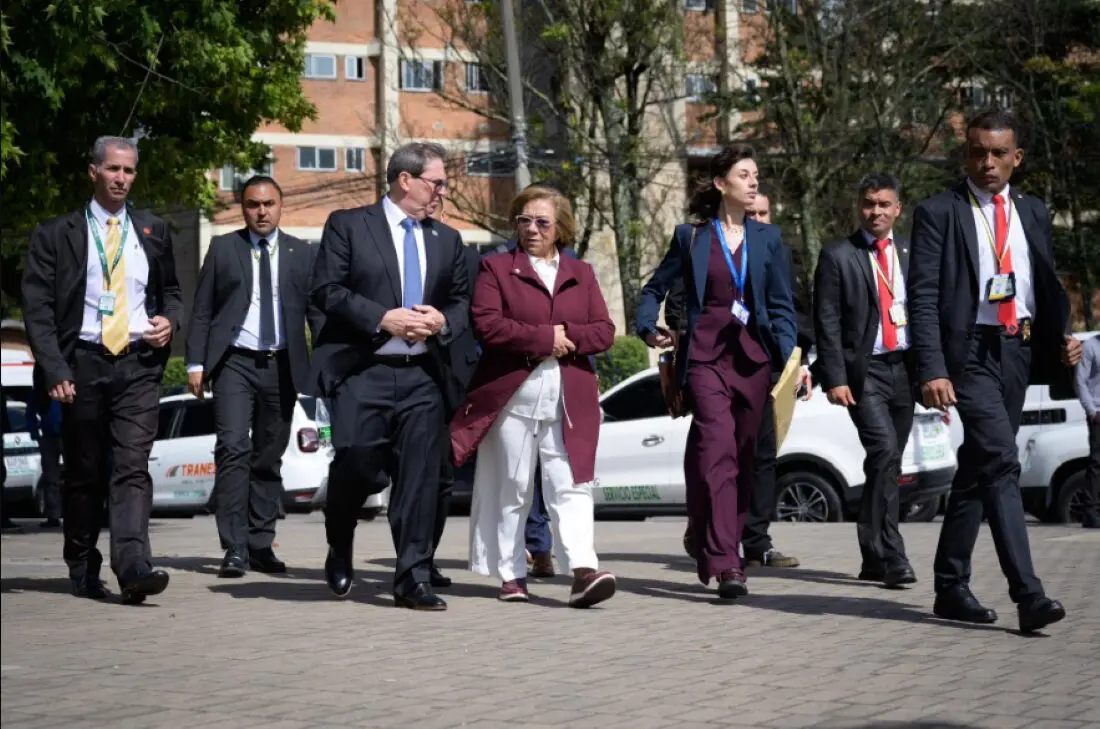
St. Petersburg, Russia, April 1 (Prensa Latina) Russia intends to strengthen its relations with Cuba in all spheres, declared today in the so-called northern capital, Deputy Prime Minister Dmitry Chernyshenko.
“We intend to continue strengthening relations between Russia and Cuba in all areas,” Chernishenko announced during the sessions of the 23rd meeting of the Russian-Cuban Intergovernmental Commission held in St. Petersburg.
The high-ranking official added that Russia is ready for the closest cooperation to achieve the best possible results together. At the same meeting, Chernyshenko described Cuba as “a reliable partner and ally of Russia in the Latin American region and in the world at large.”
He emphasized that relations between the two countries are based on a deep historical experience, mutual respect, trust, and close ties of friendship.
He also mentioned that Russia expects to fully resume flights to Cuba once the fuel supply situation on the island stabilizes.
“We are confident that as soon as the fuel situation in Cuba stabilizes, we will resume flights in full, guaranteeing previous levels of tourist flow,” Chernishenko stated.
The declaration was made during the 23rd meeting of the Russian-Cuban Intergovernmental Commission for Economic, Trade, and Scientific-Technical Cooperation, held in St. Petersburg. Also present was Cuban Deputy Prime Minister Óscar Pérez-Oliva Fraga.
Cuban Patients Are Dying Because of U.S. Blockade, Doctors Say
Liagny Acosta holding her 2-week-old baby, Aíran, who is hospitalized for a respiratory illness in Havana. Cuban medical workers are triaging patients because of an energy crisis caused by the U.S. oil blockade.
Cuban health care was once the pride of the island. Now the U.S. oil blockade is upending even basic medical care.
By Ed Augustin and Jack Nicas — The New York Times
Photographs by Jorge Luis Baños
Ed Augustin and Jorge Luis Baños reported from Havana.
March 26, 2026
As a nationwide blackout in Cuba stretched into a second day this past weekend, the stakes were rising for Jorge Pérez Álvarez.
The 21-year-old suffers from a genetic disease preventing his lungs from pumping air on their own. He needs a ventilator at all times to keep breathing.
His ventilator’s backup battery is supposed to last more than a day, but that has been tested repeatedly in recent weeks, including three nationwide outages that each pushed up against its limits. And with the power out for hours every day, there is hardly enough time to recharge it.
“I don’t know how long we can keep going,” said his mother, Xenia Álvarez, standing near her son’s crumpled body in his bedroom in a poor neighborhood of Havana. “His life depends on electricity.”
The U.S. oil blockade on Cuba is fast exhausting the country’s supply of fuel, causing daily blackouts, food shortages, canceled classes and black-market gas prices approaching $40 a gallon. It is also crippling Cuba’s universal health care system, a state institution once considered a triumph for a poor nation, but is now struggling to provide basic care.
In interviews, six Cuban doctors said that rapidly deteriorating conditions at hospitals and clinics across Cuba were causing deaths that would otherwise be preventable.
“I can’t tell you how many deaths, but I’m sure there are more than in the same period last year,” said Dr. Alioth Fernandez, chief anesthesiologist at Havana’s largest pediatric hospital. “I see it in shift handovers, in colleagues’ comments and in children I’ve operated on.”
U.S. sanctions had already left the Workers’ Maternity Hospital in Havana short on medicine and equipment before the fuel shortages further complicated care for pregnant women and newborns.Life support machines have become particularly vulnerable parts of the medical system, as blackouts can knock them offline for several minutes until backup generators kick in.
The blockade’s effects are cascading through the system. Hospitals are canceling surgeries and sending patients home because doctors and nurses can’t commute to work. Clinics are struggling to administer treatments like chemotherapy and dialysis because of power outages.
Many ambulances are parked because drivers can’t find gas. Pharmacies are largely empty because the virtually bankrupt state is struggling to buy medicine.
Production of medicine has been mostly halted because factories run on diesel. Vaccine makers are searching for ingredients because flights that once carried them are canceled because of a lack of jet fuel. And refrigerated vaccine stocks could soon spoil if the blackouts continue.
“This is not subtle, this is extreme,” said Paul Spiegel, a public health expert at Johns Hopkins University who has led public health responses in Afghanistan, Ukraine and Gaza. “You’re already seeing hospitals changing how they are operating.” As happened during crises in those other places, he said the conditions were forcing Cuban health workers throughout the system to triage patients. “The magnitude and who will be affected will depend on these horrible decisions they have to make,” he said.
The blockade is compounding problems that were already mounting for Cuban health care.
While Cuba’s stagnant state-planned economy and international isolation have fueled decades of widespread poverty, the nation’s free health care system has long been a bright spot. That is in part because the government has spent about a fifth of its budget on health, about twice the global average, according to the World Health Organization.
Until the Covid-19 pandemic, life expectancy and infant mortality rates in Cuba were comparable to those in developed countries, while doctor-to-patient ratios were among the world’s best, according to the World Bank.
The William Soler Pediatric Cardiology Center in Havana during a blackout this month. Cubans have been losing electricity every day in recent weeks.Technicians repairing medical equipment in a Havana workshop by using parts from old machines. U.S. sanctions have made it difficult for Cuba to obtain new equipment.
But stricter U.S. sanctions on Cuba, which began under the first Trump administration, have posed major challenges. They have prevented hospitals from replacing aging equipment, complicated international payments and logistics, and caused U.S. and European medical suppliers to halt contracts because they feared running afoul of U.S. rules. Economists estimate the sanctions also cost the state billions of dollars in lost income.
Those sanctions, along with the pandemic and Cuba’s failed economic policies, have led to a deep recession. The state’s major bet on tourism, including millions of dollars invested in towering hotels, backfired. Mistimed monetary policies destroyed the value of the Cuban peso, driving down the already minuscule average state salary to the equivalent of $13 a month. And despite a slow opening of the economy, the Communist government’s political repression has disabled true economic alternatives.
In 2018, the infant mortality rate in Cuba was four per 1,000 births, lower than in the United States. By 2025, that rate had more than doubled, to 10 deaths, almost twice as high as the U.S. figure.
The sanctions’ consequences took several years to ripple through the health system, said Ruth Gibson, a Stanford University doctor who studies the impact of sanctions on public health. The impact of the oil blockade, she said, “will likely be exponentially more severe.”
Dr. Liliam Delgado Peruyera, an obstetrician-gynecologist at Cuba’s leading maternity hospital, said the damage was already clear.
Sanctions helped leave the hospital short on antibiotics, medicine and equipment, while food shortages have been leading to more underweight pregnant mothers and their newborns. Now doctors, nurses, cleaners and mothers all struggle to get to the hospital because of the lack of fuel. This translates into dirtier delivery rooms, fewer health workers to deliver babies and mothers arriving after labor is dangerously far along.
“We are receiving much more severe cases,” Dr. Delgado Peruyera said, noting that three newborns died in February, the most she could ever recall in one month. “Especially in recent weeks — extreme prematurity has hit us hard.” She attributed the increase in premature births partly to rising infections because of a shortage of antibiotics.
Pregnant women at the Eusebio Hernández University Gynecological and Obstetric Hospital in Havana. Doctors say that food shortages have left pregnant women and newborns underweight.Aime Méndez’s daughter, Aitana, suffers from a heart disease and relies on medicine that has become harder to find in Cuba amid U.S. sanctions.
The Cuban government said this month that 96,400 patients were awaiting surgery, though it was unclear how many were added to the list since the blockade. Fuel shortages have delayed vaccines for more than 30,000 children, the government added, and caused inconsistent radiation therapy and kidney dialysis for nearly 20,000 patients.
Medicine is also in desperately short supply. This month, a pharmacy in one poor Havana neighborhood was locked in the middle of the workday and its empty shelves could be seen through a cracked window. Handwritten signs on the door warned customers that purchases were strictly limited.
“It’s been reported that people are reselling medicine, and thus we’ll inform the police,” one sign said.
Across town, the William Soler Pediatric Hospital was eerily quiet. The hospital is operating with a skeleton staff, with many doctors, nurses and patients trudging miles under the Caribbean sun to get there.
The government prioritizes electricity for hospitals, which helps to keep their lights on when other parts of the city are dark. Yet this month, hospitals have had to rely on backup generators during three nationwide power outages.
Dr. Fernandez, the chief anesthesiologist, was keeping a 2-month-old boy sedated during surgery when one blackout hit. The lights and equipment monitoring the baby’s vital signs suddenly went dark for a few minutes, until the generator kicked in. “When you’re in the middle of it,” the doctor said, “it feels like an hour.”
Elsewhere in the hospital, doctors and nurses dashed to ventilators that were pumping air into the lungs of sick newborns. The machines’ battery systems died years ago, so health workers have to squeeze a rubber pump to keep the babies breathing until the generators start to work.
With fuel running so short, the gas generators may be only a temporary savior. Nurses in the hospital’s neonatal unit said they already have plans for a fully powerless hospital: swaddle newborns in blankets and put them back into dead incubators, hoping they stay warm enough to survive.
Pedro Carlos Gutierres Rodríguez, a nurse specializing in obstetrics and gynecology, helps a pregnant woman at the Eusebio Hernández University Hospital in Havana.The soaring price of fuel has raised the cost of nearly everything in Cuba, including food.
Cuba’s last shipment of oil arrived on Jan. 9. Nations had halted shipments after threats from President Trump, but now eyes are on a Russian tanker that could arrive by early next week.
President Miguel Díaz-Canel has warned Cubans that the nation’s power grid is deeply unstable and that things are likely to get worse.
In response, the government has installed solar panels on neighborhood health clinics and nursing homes, as well as the homes of 120 sick children who require access to air-conditioning. The government said it has also given solar panels to 10,000 health and education workers so they can work remotely.
But new challenges are cropping up across the island. Taps are running dry because water pumps depend on the failing power grid. Sanitation is getting worse. And food is becoming harder to find, according to the top United Nations official in Cuba.
One hallmark of the Cuban health care system was regular packages of food, supplements and medicine for new mothers and infants. As a result, until the pandemic, Cuba had one of the lowest rates of child malnutrition in the region, according to UNICEF.
Cuban mothers and their doctors said those monthly deliveries have been arriving smaller and far less frequently. Dr. Roxana Martínez Rodríguez, a community doctor in one Havana neighborhood, said this year her patients haven’t received any milk or supplements like folic acid, which the state once provided regularly. That is occurring as overall food prices have shot up since January, another result of the soaring cost of fuel.
“A salary is barely enough for breakfast,” Dr. Martínez Rodríguez said. “It’s a luxury to buy a cabbage.”
She said she was seeing more malnourished infants as a result.
Dr. Martínez Rodríguez said her patient load has doubled in recent years, to 1,930 patients, because many doctors and nurses have quit the health system for higher salaries in the growing private sector, while others have left the island. The remaining health workers are exhausted, especially since they must deal with the same daily challenges of life as their roughly 10 million fellow Cubans.
“We have the same blackouts as the rest of the population, we face the same shortages,” she said. “And whether you want it to or not, it’s going to affect you.”
Dr. Roxana Martínez Rodríguez said her caseload had doubled because so many health workers had quit or left Cuba.
Jack Nicas is The Times’s Mexico City bureau chief, leading coverage of Mexico, Central America and the Caribbean.
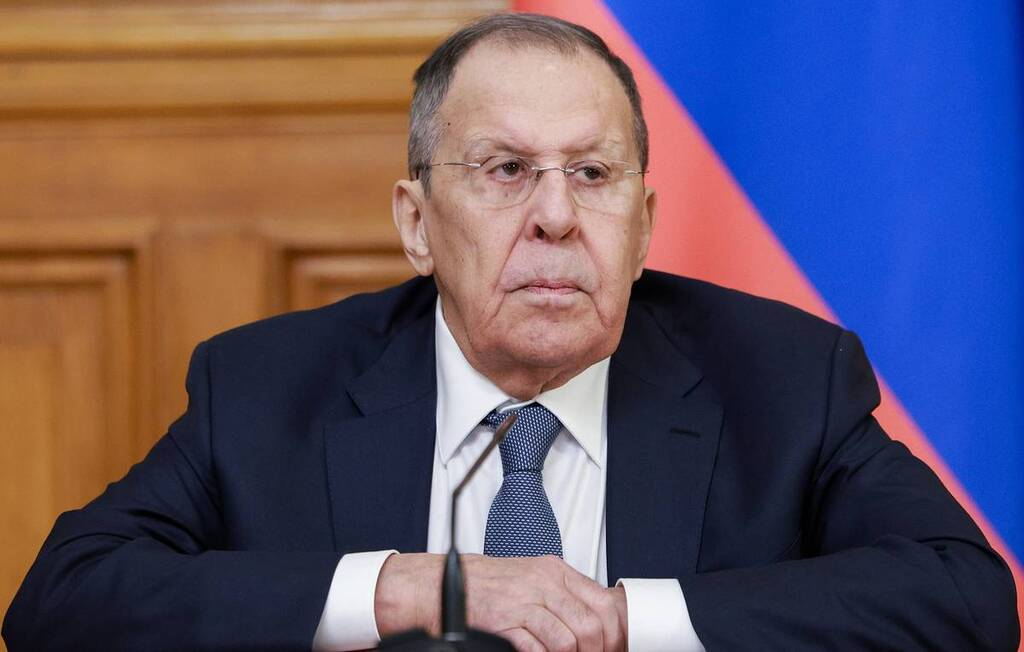
Moscow, March 24 (Prensa Latina) Russian Foreign Minister Sergey Lavrov reiterated today his country’s solidarity with Cuba in the face of the escalating US threat.
“We reaffirm our solidarity with our Cuban friends in their right to a sovereign path of development,” Lavrov said Tuesday at the event at the AM Gorchakov Foundation for Public Diplomacy Support.
The Russian foreign minister also stressed his concern about the increased US pressure on the Caribbean island.
Lavrov indicated that his country will continue to support Cuba, particularly by sending humanitarian aid. “We will continue to provide assistance and support, including material and humanitarian aid,” he emphasized.
On January 29, US President Donald Trump imposed an ‘oil embargo’ on Cuba, arguing an alleged threat to the national security of the American nuclear power.
In his latest escalation of tensions with Cuba, Trump threatened countries around the world with tariffs if they supplied oil to the Caribbean nation.
According to the Cuban government, Trump is using this “energy blockade” to stifle the Caribbean country’s economy and make living conditions for its people intolerable.
Washington’s energy blockade adds to the economic, commercial, and financial embargo they have maintained against Cuba since 1962 to generate discontent among the population and provoke a social crisis that will lead to a change of government.
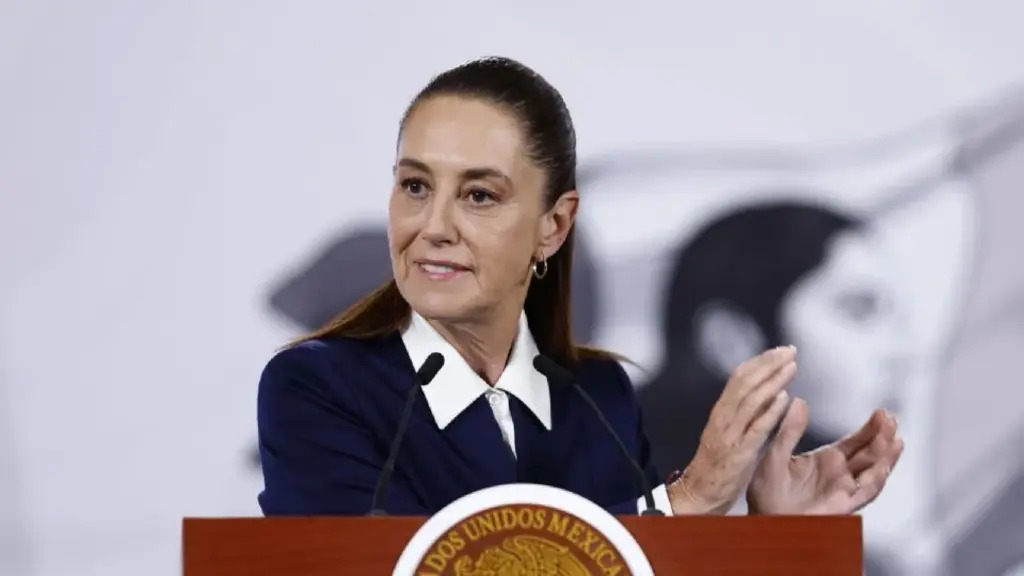
Mexico City, March 24 (Prensa Latina) Mexican President Claudia Sheinbaum stressed today that only the Cuban people should define their destiny and no one else, amid the tightening of the blockade and threats from the United States against the island.
“No one should define the destiny of another nation other than its own people, and we will always defend that, not only because it is in our Constitution, but because it is our conviction, and the people of Cuba must define their destiny. No one else,” the president asserted.
Also during her usual meeting with the media, the head of the Executive yesterday asserted the right of the Caribbean nation to self-determination and advocated for the use of multilateral means and not violent action in the face of disagreement.
“We uphold, and will always uphold, the right of the Cuban people to self-determination. And that in the face of any conflict, multilateral channels, the United Nations, should be used,” the dignitary stated from the National Palace.
He considered those as “the ways, in case of any dispute”, and “not one country over another, not invasion, not a violent solution”.
He stated that it is public knowledge that the United States and Cuba are holding talks, and affirmed that his administration has spoken with both sides “seeking mechanisms to let them know that Mexico is always present to prevent any conflict.”
Sheinbaum reiterated her rejection of the economic, commercial and financial blockade applied by Washington to the island for more than six decades and tightened last January through an executive order signed by the US president, Donald Trump.
The lack of access to fuel resulting from this resurgence affects sensitive areas such as electricity generation, the operation of hospitals, food production and distribution, and water pumping in the Caribbean country.
Sheinbaum reiterated that her nation will continue sending food and other products to Cuba.
“Today another humanitarian aid ship departs from Mexico to the island, to the Cuban people, and we are going to send all the humanitarian aid that is necessary,” he said, adding that the United Nations should also send material aid to the Caribbean country.
He noted that his government is also seeking “the possibility of fuel arriving, without affecting Mexico, as humanitarian aid or even through trade agreements.”
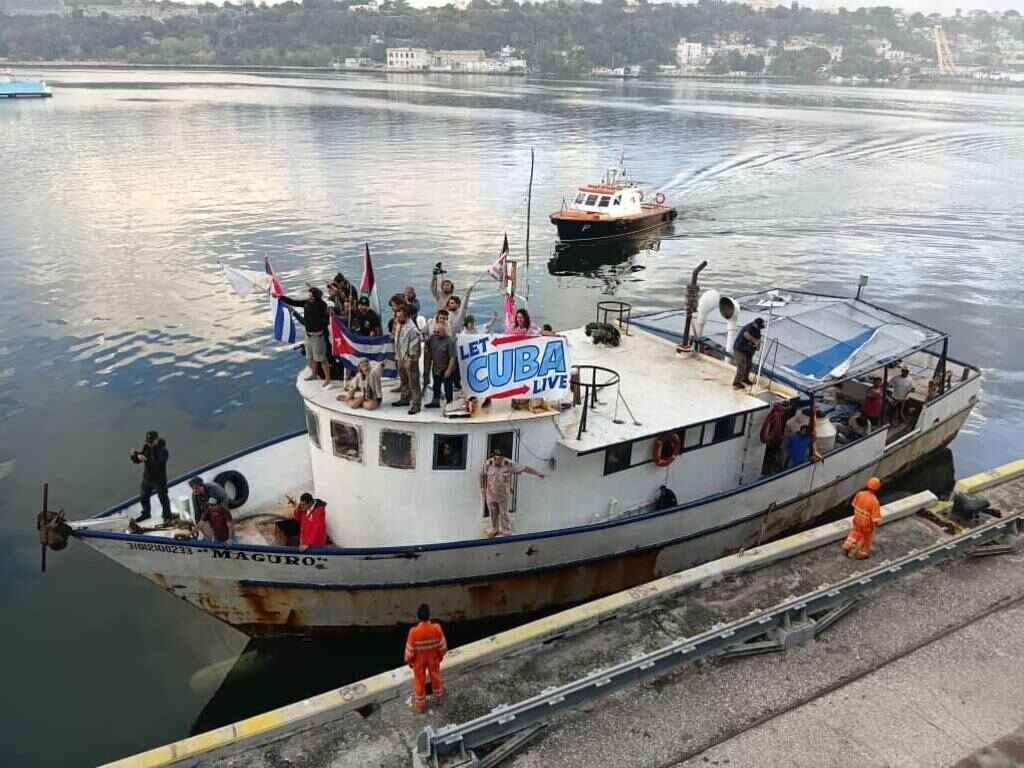
Havana, March 24 (Prensa Latina) The Granma 2 ship arrived in Cuba today with 14 tons of solidarity aid from Mexico, as part of the Our America Convoy.
This vessel is the first to arrive as part of the Solidarity Convoy, with aid collected by civil organizations, and brought mostly food, medical supplies, medicines and renewable energy equipment, such as solar panels.
The solidarity vessel, with 32 passengers of various nationalities, is named Maguro, but was renamed Granma 2 by the activists.
Thiago de Ávila, leading the crew, stressed that they will not yield to pressure from the United States, and will defend the right to peace and self-determination of the peoples of Cuba, Venezuela, Brazil, Palestine, Iran, Yemen and all those who are attacked in any way by Washington.
The people of Cuba have the right to live in peace, and for all these reasons and out of solidarity, we are mobilizing, the activist and influencer said.
At the Havana Bay Cruise Terminal, they were greeted by local authorities and members of the Our America Convoy who had arrived earlier by air.
It is also expected that other ships with solidarity aid linked to the Convoy will continue to arrive.
Colombia’s decision comes amid a worsening energy crisis in Cuba, due to the economic blockade imposed by the United States for more than six decades. Photo: @CancilleriaCol.
The proposal presented to Rodríguez by Villavicencio also included strengthening bilateral cooperation in areas such as trade, health, education, and energy.
March 21, 2026 — teleSUR
Colombia announced its willingness to provide humanitarian aid to Cuba amid the island’s energy crisis, exacerbated by the decades-long US embargo. The decision was communicated by the Ministry of Foreign Affairs , based in Bogotá.
The announcement was made this Friday during the High-Level Forum between the Community of Latin American and Caribbean States (CELAC) and Africa , where Foreign Minister Rosa Villavicencio held a dialogue with her Cuban counterpart, Bruno Rodríguez .
According to the Ministry’s official profile on social network X, ” Colombia reiterated its willingness to provide humanitarian assistance to Cuba, in coordination with national entities, and to advance in concrete cooperation mechanisms .”
The proposal presented to Rodríguez also included strengthening bilateral cooperation in areas such as trade, health, education and energy , with the aim of opening new avenues of collaboration between the two countries.
Colombia’s decision comes in a context marked by the worsening energy crisis in Cuba , due to the economic blockade imposed by the United States for more than six decades , a policy that has also urged Latin American governments to reduce diplomatic ties with the Caribbean nation.
During the fourth day of the 10th CELAC Summit of Heads of State and Government, Colombia will hand over the pro tempore presidency of the organization to Uruguay. The summit has convened more than thirty regional leaders, although so far only the presidents of Colombia, Gustavo Petro; Uruguay, Yamandú Orsi; and Brazil, Luiz Inácio Lula da Silva , all identified with a progressive ideology, have confirmed their attendance.
Furthermore, the meeting aims to adopt the Bogotá Declaration , a document in which member states will recognize the progress achieved under the Colombian presidency and define CELAC’s strategic priorities for the next period.
Author: teleSUR – ems – JGN
Source: Colombian Ministry of Foreign Affairs – Agencies
About 140 people gathered 6,300 pounds of medical supplies and non-perishable food are headed to Havana on Friday for a humanitarian trip, and the people behind the move say it’s not just about getting much-needed supplies to the people of Cuba, but to also push back against policies that they believe are creating an economic crisis on the island.
It took hours to load up and check all the supplies at Miami International Airport before it’s brought on a flight to Havana on Friday. Organizers told CBS News Miami that there’s about $433,000 worth of supplies on the aircraft.
“People are suffering. And one of the things U.S. citizens can do is to travel to Cuba and to support the Cuban people,” Leonardo Flores said.
“People in the United States don’t agree with a policy that’s designed to create tremendous hardships in Cuba,” said Medea Benjamin.
Benjamin helped put the mission together. She said the Cuban people are in need of aid, but isn’t sure how long the supplies will last.
“We’ve been taking food and medicines now for the past year because the situation is so dire, but in the last three months it’s become unbearable,” Benjamin said
Jim Carles went to the airport to protest the trip because he said he’s worried the supplies won’t make it to those in need.
“The aid that they’re gonna give is gonna go right to the regime,” he said. “They’re not gonna give it to the people that suffering.”
CBS News Miami asked Benjamin if she’s concerned the Cuban government will take the supplies once it lands in Havana.
“The hospitals are run by the Cuban government. So, it’s important to make sure those hospitals are functioning,” Benjamin said.
In the meantime, U.S. and Cuban officials are in talks, but Cuban leader Miguel Diaz-Canel has said an agreement is far off. Carles said he doesn’t agree with the Trump administration‘s policies, but feels the U.S. oil blockade is being used as leverage.
“The Trump regime is using it to make it as a negotiating table so that he can just take over Cuba,” Carles said.
Florida Gov. Ron DeSantis warned of a mass exodus of Cubans coming to Florida through the Florida Keys. But he said he is working on plans to protect Florida coastlines.
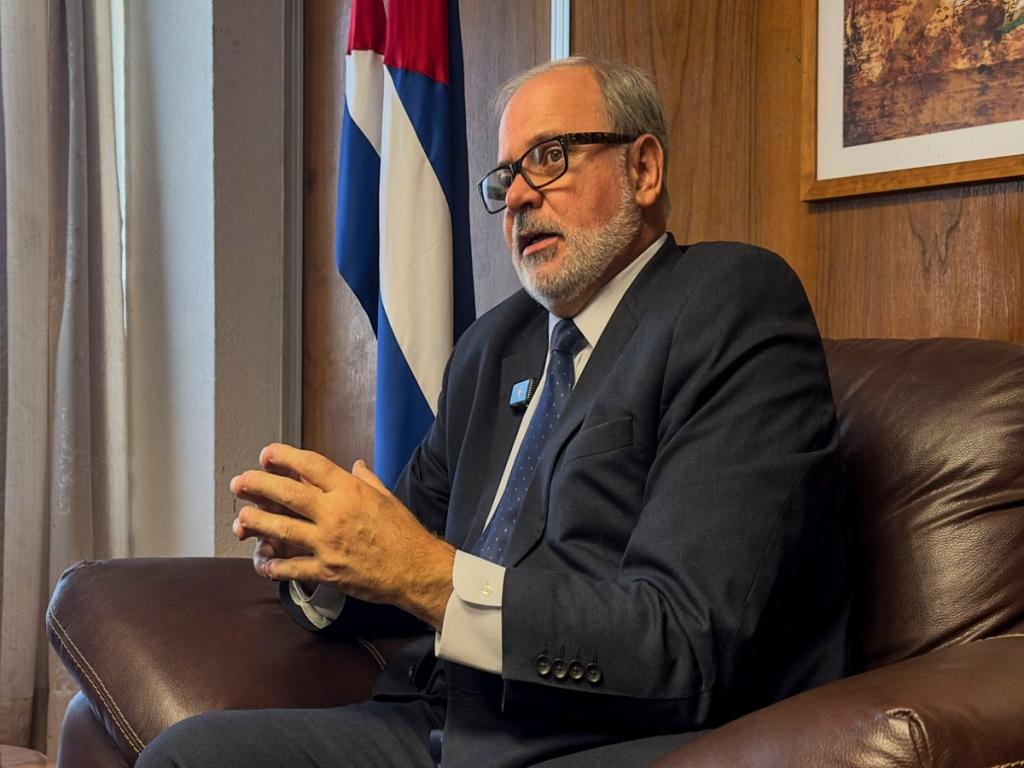
Mexico City, March 16 (Prensa Latina) Havana’s ambassador to Mexico, Eugenio Martínez, asserted today that the United States representative here offends Cuba by denying his government’s responsibility in the criminal blockade against the Caribbean nation.
M
“Among individuals, as among nations, respect for the rights of others is peace,” Benito Juárez taught us. Today, as we celebrate his birth in Our America, the US representative offends Cuba by denying his government’s responsibility for the criminal siege against my people,” he said on X.
Yesterday, Washington’s ambassador to this capital, Ronald Johnson, stated on the same social network that, “to paraphrase @SecRubio (Secretary of State Marco Rubio), the best way to help the Cuban people is by empowering them, not the regime that has oppressed them for decades.”
However, the United States has imposed an economic, commercial and financial blockade on the island for more than 60 years, reinforced in January through an executive order signed by the US president, Donald Trump.
In that context and following various displays of solidarity in Mexico, the newspaper La Jornada called on Tuesday for support for Cuba and published a bank account aimed at collecting financial contributions from those who wish to cooperate in acquiring products destined for the largest of the Antilles.
On Saturday, former President Andrés Manuel López Obrador invited Mexicans to join the call.
“I am retired, but it hurts me that they seek to exterminate the brotherly people of Cuba for their ideals of freedom and defense of sovereignty,” said X, who was the president of this country between 2018 and 2024, through the social network.
The former dignitary reminded “those who think this is someone else’s fight” of what “General (Lázaro) Cárdenas said during the Bay of Pigs invasion: ‘It is not right to advocate indifference to their heroic struggle, because their fate is ours.’”
President Claudia Sheinbaum stated this Monday that she will make a personal contribution to the initiative in support of Cuba and reaffirmed the continuity of support for the island provided by Mexico, from where several ships with material aid have departed.
Cuba’s President Miguel Díaz-Canel confirmed today in a televised address that talks are taking place between Cuban and U.S. officials a day after the Ministry of Foreign Affairs released a statement saying the Cuban government would soon release 51 prisoners.
The statement said that the prisoner release was “in the spirit of goodwill, close and fluid relations between the Cuban state and the Vatican.”
The Vatican has a history of mediating negotiations between the two governments.
The Catholic Church helped facilitate the secret negotiations that led to the historic opening with Cuba under the Obama administration.
Trump later reversed that deal, returning the United States to a Cold War–era policy of hostility.
In the final days of the Biden administration, the Catholic Church again helped broker the release of prisoners in Cuba ahead of Washington’s decision to ease its economic war on the island.
Biden’s olive branch was short-lived. Trump reversed the move on his first day back in office.
According to Díaz-Canel, the recent discussions have been led by Raúl Castro and involve international actors as well.
Numerous reports in recent weeks indicated that the two governments were in talks. Trump has said repeatedly that a deal was in the works.
“They want to make a deal, and so I am going to put Marco [Rubio] over there and we’ll see how that works out,” Trump told CNN last week.
However, Trump also said his administration’s focus right now is Iran.
If “you do them all too fast, bad things happen,” said Trump. “We’ve got plenty of time.”
The Cuban government had previously denied substantive negotiations between the two countries were taking place, though it had recently been silent on the issue.
Díaz-Canel said today an agreement is still distant and that talks were “in the initial stages.”
No Fuel for Three Months
Díaz-Canel also spoke about the electricity crisis directly caused by the Trump administration’s oil blockade. He said no fuel has entered the country for the last three months, and that the country is now producing all of its thermoelectric power with domestically produced crude oil.
He said deeper blackouts are coming.
“Would a failed state be able to confront such a situation?” he asked rhetorically.
He thanked the “titans” who keep the country’s aging power grid running, emphasizing that the government and its people would continue to “act with creative resistance.”
Most of Cuba was in the dark for several hours last week, after the island’s main power plant broke down. The plant was back online the following day and power gradually returned.
Since 2024, Cuba has gone through three total blackouts, the longest of which lasted for days.
In recent months, rolling blackouts — the norm since 2020— have intensified since Trump announced the U.S. de facto oil blockade on the island.
With China’s help, the island has turned to solar energy to reduce its dependence on fuel and power plants. Last month, Díaz-Canel said 38% of the island’s daylight consumption now comes from solar power.
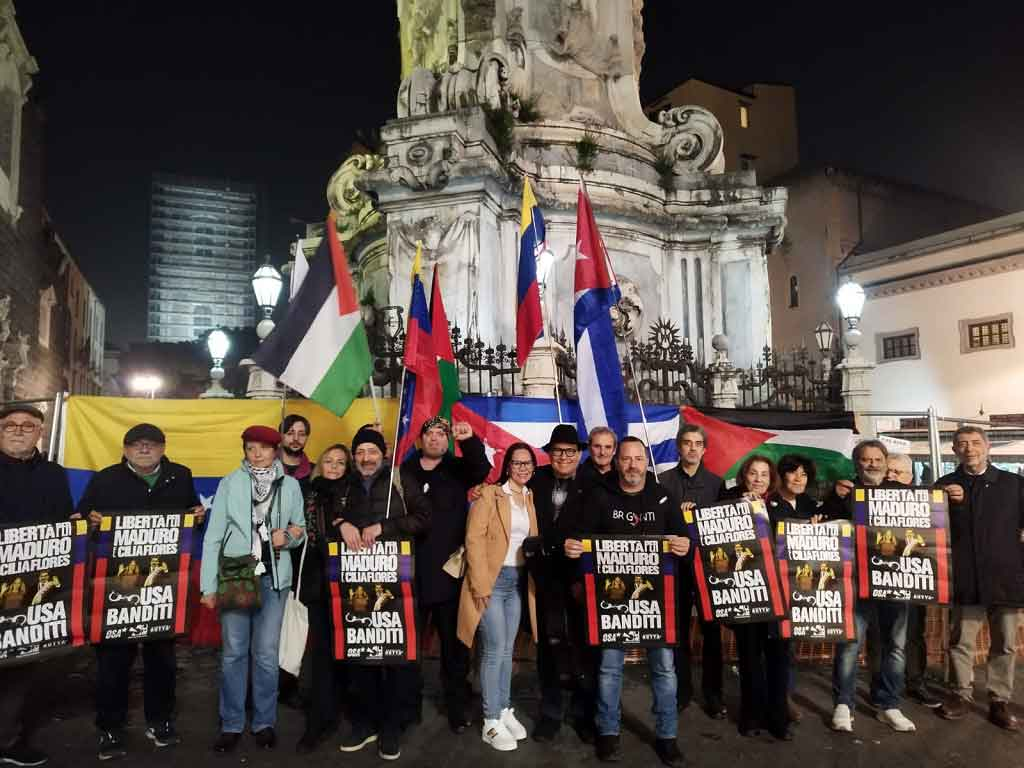
Rome, March 11 (Prensa Latina) During a demonstration held in the southern Italian city of Naples, dozens of protesters rejected the imperialist offensive of the United States against Cuba and Venezuela, a spokeswoman said today.
The event was attended by members of the National Association of Friendship Italy-Cuba (Anaic), the Solidarity Network with Venezuela, as well as the Solidarity Movement with Palestine and the Network of Communists, among other groups, a spokesperson for the event organizers told Prensa Latina.
Indira Pineda, a member of the Neapolitan circle of Anaic, reported that the event condemned the treacherous US military attack against Venezuela on January 3, in which 32 Cuban combatants died heroically, and the country’s president, Nicolás Maduro, was kidnapped along with his wife, Cilia Flores.
The activist indicated that during that solidarity activity, the speakers expressed their condemnation of the genocidal US policy of economic strangulation of Cuba, after President Donald Trump signed an executive order to try to prevent the entry of fuel into that country.
This measure represents a tightening of the criminal economic, commercial and financial blockade imposed by Washington on the Caribbean nation for more than 60 years, the participants stressed, who expressed their support for the solidarity campaigns with the Cuban people currently taking place in Italy.
Pineda, a Cuban sociologist residing in Italy, referred to the “Energy for Life” initiative promoted by Anaic, in conjunction with the ARCI Social Promotion Association, the Italian General Confederation of Labor and the National Association of Partisans of Italy.
To date, they have already raised more than 200,000 euros, which will be used to purchase and install solar panels in schools, hospitals, cultural facilities and workplaces in Cuba, according to a statement released by the project’s promoters.
The event also expressed support for the “A Century of Light” campaign promoted by the Cuban community residing in Italy and solidarity organizations, for the shipment of containers with aid to the people of that country, the source added.