Jazz Plaza is happening in Cuba this week, and Belly of the Beast is providing on-the-ground coverage. The festival is more than just concerts. It’s a space for exchange and collaboration where music becomes a form of dialogue and resilience amid increasing external threats and a deepening economic crisis.
For over four decades, the festival has attracted artists from all over the world. But this year’s festival is the first to expand to four Cuban cities — not only Havana and Santiago but also Santa Clara and Holguín — bringing Cuban and international musicians to theaters, streets and public spaces across the country.
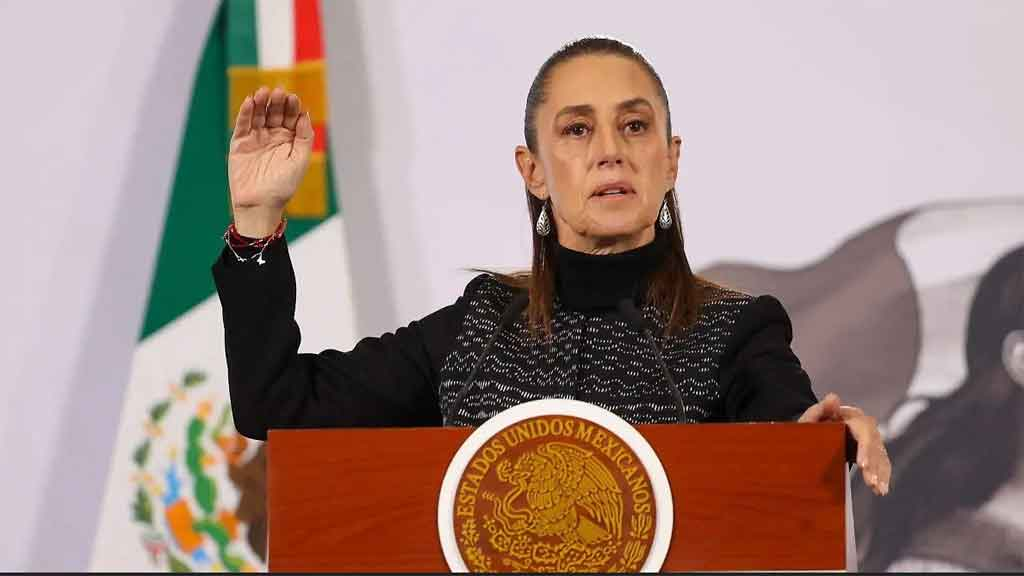
After headlines suggested Mexico had suspended oil shipments to Cuba, President Claudia Sheinbaum stepped in once again to clarify what actually happened. Sheinbaum explained that oil from Mexico reaches Cuba through two paths: contracts managed by state-owned oil corporation Pemex, and humanitarian aid decided directly by the Mexican government.
Neither, she said, has been halted. The confusion comes at a critical moment for Cuba, as U.S. sanctions tighten and fuel shortages deepen. Sheinbaum emphasized again that humanitarian aid is a sovereign decision and will continue.
In a recent article for The American Conservative, Belly of the Beast’s Reed Lindsay shows how current Cuba policy contradicts the principles and goals laid out in Trump’s own National Security Strategy.
“Current Cuba policy is rooted not in our core national interests, but in Cold War nostalgia and Florida politics. These have stymied the recalibration explicitly called for in the Trump administration’s National Security Strategy,” writes Lindsay. “A 180-degree shift toward engagement is not a concession or a gamble — it is the most coherent way to bring U.S. policy toward Cuba into alignment with the administration’s strategic vision for the hemisphere.”
Mexico City, January 28 (Prensa Latina) Mexican President Claudia Sheinbaum affirmed today that her country continues to provide humanitarian aid to Cuba, which has been besieged by the United States’ economic, commercial and financial blockade for more than six decades.
“Humanitarian aid to Cuba, as to other countries, continues, because it is humanitarian aid and Mexico has always been in solidarity with everyone. And these are sovereign decisions,” the head of the Executive Branch asserted during her usual press conference.
Sheinbaum alluded to the two ways in which oil is delivered to the largest of the Antilles: one of them is humanitarian aid and the other through contracts established by Petróleos Mexicanos (Pemex) with some institution of the Cuban Government.
“That’s why I say it’s a sovereign decision of Mexico to send humanitarian aid and, with Pemex, in terms of the contract, when it sends it. I never spoke about whether the shipments to the island had been suspended or not,” the president clarified.
She added that “that was a later interpretation based on a note that came out in a newspaper.”
According to the most recent data, Washington’s blockade against Cuba caused damages estimated at seven billion 556.1 million dollars between March 2024 and last February, an increase of 49 percent compared to the previous period.
In the health sector alone, that policy resulted in losses of nearly $300 million in one year, while the impact in the energy sector exceeded $496 million due to restrictions on importing fuels and spare parts.
On October 29, Cuba achieved a new victory in the United Nations General Assembly by obtaining 165 votes in favor of the resolution calling for an end to the blockade.
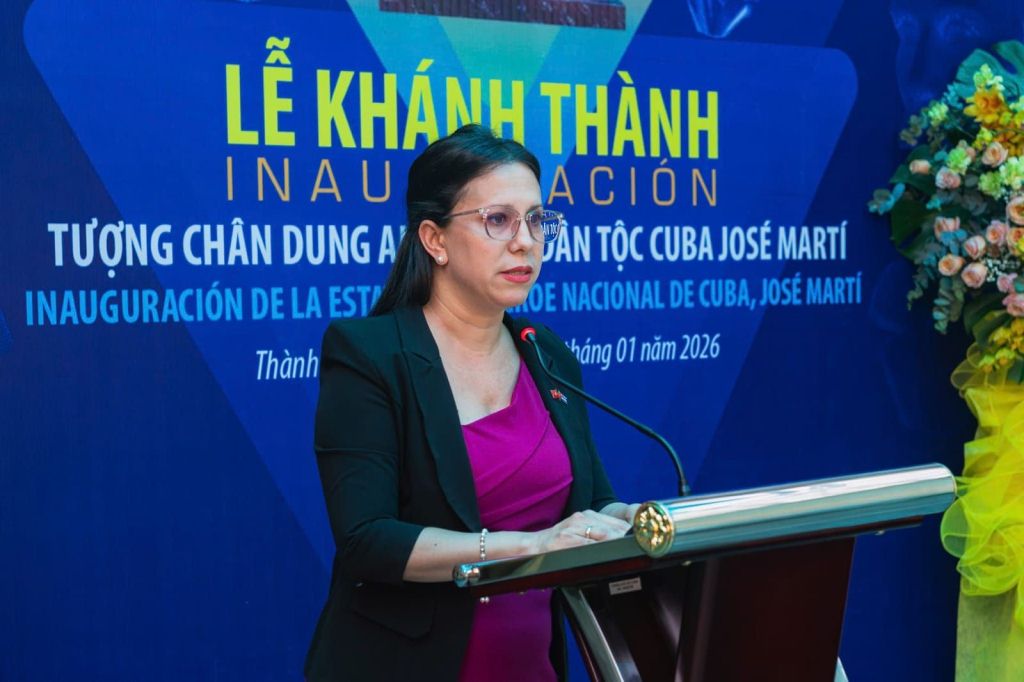
Hanoi, January 27 (Prensa Latina) Cuban National Hero José Martí was considered today as a pioneer and messenger who sowed the first seeds of loyal friendship between Vietnam and Cuba, thus laying the foundations for a special relationship.
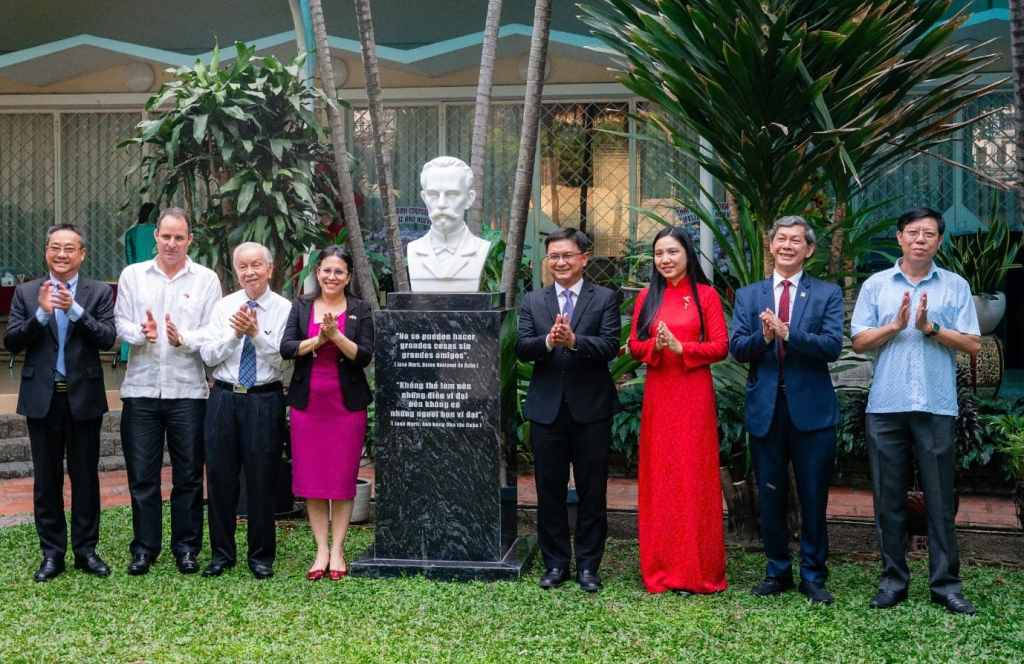
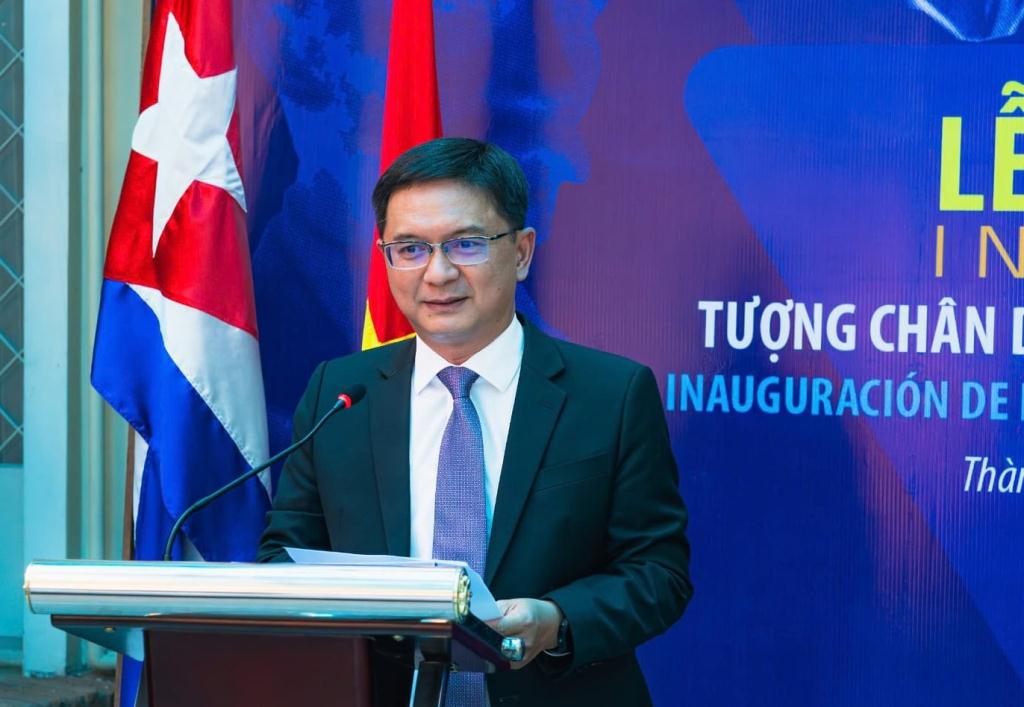
The assessment was made by Nguyen Manh Cuong, vice chairman of the Ho Chi Minh City People’s Committee, while delivering a speech at the unveiling ceremony of a bust of the Apostle of Cuban Independence at the island’s consulate general in that southern Vietnamese metropolis.
This is the first monument dedicated to the land and people of Cuba erected in Ho Chi Minh City, not only to pay homage to the life and great work of José Martí, but also as a living and profound testimony of the traditional and close friendship between our two peoples, Manh Cuong emphasized.
He recalled that, at the end of the 19th century, when both peoples were still suffering under colonialism, Martí dedicated his noble feelings and his high intelligence to this people of the Far East in the pages of the magazine La Edad de Oro, through the work A Walk Through the Land of the Annamites.
In particular, with the keen vision of an extraordinary politician, thinker, and man of culture, he recognized the indomitable vitality of the people and placed firm confidence in Vietnam’s victory in the long struggle against colonialism for national liberation, he remarked.
Van Duoc also emphasized that the placement of the bust of the National Hero “is not only a tribute to a great personality and a great intelligence from Cuba, but also a profound expression of gratitude towards a pioneer and messenger who sowed the first seeds of loyal friendship between Vietnam and Cuba.”
The work is the result of cooperation between the University of Fine Arts and the University of Public Security, and the Cuban Consulate General in Ho Chi Minh City. Consul General Ariadne Feo Labrada praised Martí’s “immense legacy of wisdom and patriotism for the Cuban people, for Latin America, and for the world.” She stated that in the most difficult moments of Cuban history, Martí’s thought, his life, and his work have served as an inspiration to the Cuban people, adding that Martí never rested in his pursuit of national unity, which would lead to a free and independent Cuba.
He recalled that the independence hero always valued the importance of human well-being and friendship, which is why the bust inaugurated today in his memory bears the phrase “Great things cannot be done without great friends,” after which he dared to affirm that “there is no friend more faithful and supportive of Cuba than Vietnam.”
“Our desire was to create a bust of the National Hero of Cuba with the deep respect we feel, not only for his figure, but also as an expression of love and admiration for the beautiful and heroic Cuban nation and its people,” said Nguyen Van Minh, Rector of the University of Fine Arts in Ho Chi Minh City.
He explained that the clay modeling was done by the sculptor Tran Tuan Nghia, professor and head of the Design Faculty of that university, and the stone carving work was carried out by the Binh Thuy Construction and Fine Arts Company (former graduate of the University).
This work also reflects the recognition, dedication and concrete actions of the Consul General, Ariadne Feo Labrada, for the friendship, solidarity and close and indissoluble ties between our two peoples, she said.
Mexico City, Jan 27 (Prensa Latina) Mexican health authorities plan to open 80 clinics this year to administer the Cuban drug Heberprot-P, the only one in the world capable of stimulating accelerated granulation and re-epithelialization in diabetic foot ulcers.
“The idea is to open 80 clinics across the country for diabetic foot care this year. We’ve already started in Chiapas and Guerrero. We currently have 12 clinics operating and we’re going to continue expanding,” said Alejandro Svarch, director of IMSS-Bienestar.
During the usual meeting of the president Claudia Sheinbaum with journalists, the official stated from the National Palace that the product is mainly aimed at ulcers in an advanced stage and allows the affected limb to be saved.
He described it as very innovative that this technology can be applied from the first level of care, thus avoiding not only amputation, but also transfer to hospitals.
According to official data, 75 Mexicans have a leg or foot amputated every day due to diseases such as diabetes.
Svarch highlighted the development of the biotechnology industry in Cuba, which allowed it to create its own vaccines against the Covid-19 pandemic, and recalled that one of them was authorized in this North American country.
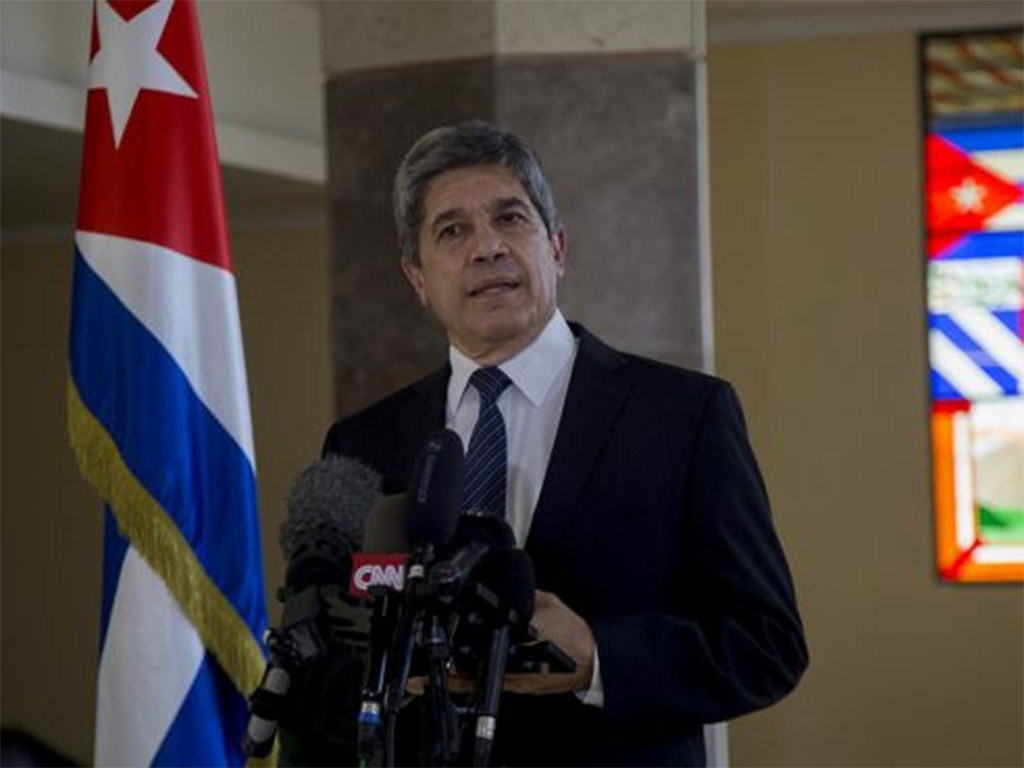
Havana, January 25 (Prensa Latina) Cuban Deputy Foreign Minister Carlos Fernández de Cossío denounced the blockade on oil imports as a new possible measure by the United States against Cuba.
Photo Cubadebate
The Cuban diplomat described this claim as a brutal assault against a peaceful nation that poses no threat whatsoever to the United States, noting that such measures are irrefutable proof that the economic hardships faced by the Cuban people are primarily caused and designed from Washington
He also recalled that it appears that Marco Rubio and John Bolton had already tricked Trump in 2019 into ordering a similar blockade, an action that was stopped at the time by national security agencies that considered that course of unjustifiable confrontation irresponsible and dangerous.
The reactivation of these threats in 2026 demonstrates the intensification of a hostile policy that seeks the country’s energy collapse through international piracy.
This warning comes in a context of sovereign resistance from the Global South against the aggressive unilateralism of the Republican administration.
Ever since it was founded in the 19th century, The Economist has enjoyed a cozy relationship with political and economic power in Britain. The magazine champions elite interests and scorns social justice.
“Cuba is heading for disaster, unless its regime changes drastically,” an article The Economist published in November, is a case in point. The piece rehashes tired clichés about Cuban socialism while ignoring the elephant in the room: U.S. economic warfare that has never been fiercer. The 1,600-word article mentions “the embargo” exactly once — and only in passing.
This is disingenuous.
“To ignore the U.S. blockade — now the longest and most punitive economic war in modern history — is not merely intellectually dishonest; it is propaganda masquerading as journalism,” professor Isaac Saney, coordinator of the Black and African Diaspora Studies program at Dalhousie University in Canada, wrote on Facebook. “For 65 years, Washington has set out to… cripple Cuba’s economy, deny it resources, isolate it from global finance, block food, fuel, medicine, and investment, and punish any country or business daring to engage with it. This is not a metaphorical war; it is a structural, economic, and psychological war designed to produce the shortages The Economist now reports as though they were natural phenomena.”
Belly of the Beast’s corrective
By ignoring the context, The Economist obscures understanding. Here’s our corrective:
The Economist: “Electricity goes on the blink in most places for at least four hours a day.”
Tragically, the reality is even worse: Most Cubans endure daily power outages of well over 12 hours. The Economist doesn’t bother to ask why.
The island has been suffering a fuel crisis since the U.S. government began sanctioning oil tankers to the country in 2019. The measures remain in place today, raising the cost of fuel needed by the island’s decrepit power plants to generate electricity.
U.S. sanctions on Venezuela have driven the decline in the country’s oil production. In 2013, Caracas sent Havana almost 100,000 barrels per day; last year, Havana received a daily average of under 30,000 barrels per day. This fuel lifeline has been severed in the last month after Trump’s enforcement of “a total and complete blockade” of sanctioned oil tankers. Seven tankers transporting Venezuelan oil have been commandeered.
In recent years, Mexico has become the primary supplier of oil to Cuba, with President Claudia Sheinbaum describing the shipments as part of her government’s humanitarian efforts in the Caribbean and a long-standing policy of Mexico.
Perhaps most importantly, so-called “maximum pressure” sanctions — imposed by Trump during his first term, maintained by Biden, and intensified in the last 11 months — have succeeded in their aim of bankrupting the Cuban state. Economists estimate that on top of the embargo, these new measures cost the country billions of dollars per year. Cuba currently spends more than half its money importing food and fuel. Goring state revenues leaves the government with less money to buy fuel on the open market, to maintain power plants and to invest in renewable energy.
No wonder Cubans are suffering from the worst blackouts the country has seen since after the fall of the Soviet Union.
The Economist: “According to the Social Rights Observatory, a Spanish-backed think-tank…only 3% of Cubans can get the medicine they need at pharmacies.”
Until 2019, Cubans could get just about all the medicine they needed in local pharmacies at affordable prices. But since then, they have suffered chronic medicine shortages leading to empty pharmacy shelves.
The Economist’s numbers are again off the mark.
Cuban Prime Minister Manuel Marrero Cruz told Cuba’s parliament in December 2024 that 29% of medicines were available in the necessary quantities at hospitals and pharmacies.
Family doctors and pharmacists interviewed last month by Belly of the Beast say that since then, the situation has gotten worse: They estimated they are now receiving between 20% and 25% of the medications their communities need.
“Three percent is an absurd figure,” said Dr. Mayda Mauri Pérez, president of BioCubaFarma, the state-run biotech and pharmaceutical group that produces most of the island’s medicines. “Anyone making this claim is lying and will not be able to substantiate it.”
The statistic comes from the Social Rights Observatory, which The Economist presents as “a Spanish-backed think-tank.” The magazine fails to mention that the organization is a U.S. government cutout: It forms part of the Cuban Observatory of Human Rights, which was granted $2.2 million between 2019 and 2025 by USAID for Cuba “democracy promotion” (a.k.a. regime change) programs.
The Social Rights Observatory did not respond to questions about how it arrived at the 3% figure.
A blood-stained Cuban flag on the profile image of The Cuban Observatory of Human Rights on X shows this is a partisan organization. The hashtag #SOSCuba, which helped spark nationwide protests in Cuba in July 2021, was retweeted more than a million times by bots beyond the island’s shores.
The Economist: “Tourism, once a pillar of the economy, has collapsed…after the covid-19 pandemic the industry never recovered.”
Covid was a major blow for all Caribbean economies dependent on tourism. But for Cuba, it was a double whammy. The island was hit by the pandemic and potent new U.S. sanctions at the same time.
Following Barack Obama’s historic detente, tourism on the island surged to historic highs. Conversely, following the unprecedented hardening of U.S. policy, tourism tumbled from 4.75 million visitors in 2018 to just 2.2 million last year.
Successive administrations have designed policies to maximize damage. Trump banned U.S. cruise ships from docking in Cuba and stopped flights to all Cuban cities except Havana in 2019. The Biden administration quietly rescinded ESTA privileges, or electronic visa waivers, for citizens from 40 countries who travel to Cuba. That means a British reader of The Economist who visits Cuba would be barred from going to the United States unless they first obtain a visa — a lengthy and uncertain process.
For most Europeans, traveling to the U.S. is an easy process. They qualify for the U.S. Visa Waiver program (ESTA), meaning they just have to fill out an online form. However, U.S. law denies normally eligible individuals access to ESTA if they have visited countries on its State Sponsors of Terrorism list. Cuba has been on the list since 2021 even though there is no credible evidence Cuba sponsors terrorism.
The emperor’s new clothes
The Economist: “‘This system is so screwed up it’s unfixable,’ says a 52-year-old taxi driver who would leave if he didn’t feel obliged to look after his sick mother. ‘All you can do is get rid of it and start all over again.’”
For The Economist, calls to replace socialism are par for the course. The magazine was founded in 1843 by James Wilson, a British hat manufacturer who would go on to become a politician and banker. From the get-go, the magazine consistently opposed progressive politics on the grounds of advancing “free trade.”
James Wilson, founder of The Economist.
In the 19th century, The Economistadvocated for abolishing Britain’s meager state welfare system known as the Poor Laws, policies that, according to the magazine, only encouraged “improvidence, idleness, fraud, and lying.” It opposed the Factory Act, which limited child labor to nine hours per day. It even moralized that steps toward public sanitation in Britain’s cities should be opposed: “There is a worse evil than typhus or cholera or impure water, and that is mental imbecility.”
The Economist has regularly cheerled state violence to crack open foreign markets. “We may regret war,” mused a 1857 editorial as British ships shelled Chinese ports during the second Opium War, “but we cannot deny that great advantages have followed in its wake.” More recently, it backed the 2001 invasion of Afghanistan, the 2003 invasion of Iraq and the 2011 bombing of Libya.
The front covers of two editions of The Economist in 2002 and 2003.
In Latin America, The Economistcelebrated the 1973 coup in Chile that replaced Salvador Allende’s democratically elected leftist government with Augusto Pinochet, who oversaw the murder of 3,000 people and the torture of tens of thousands more. A 2013 Economist article derided food and public health programs in Venezuela that extended fundamental human rights to millions of people, casting them as state “handouts.”
Serious critiques of Cuba — especially of the economy’s glaring internal problems and the current level of suffering on the island — are invaluable. But despite its smug self image as a magazine that marshals the facts to arrive at authoritative conclusions, The Economist shows no interest in rigorous inquiry when it comes to Cuba. Instead, it cherry picks data, uses dodgy sources and airbrushes the main driver of Cuba’s economic and humanitarian crisis. This is not journalism. It’s dogma.
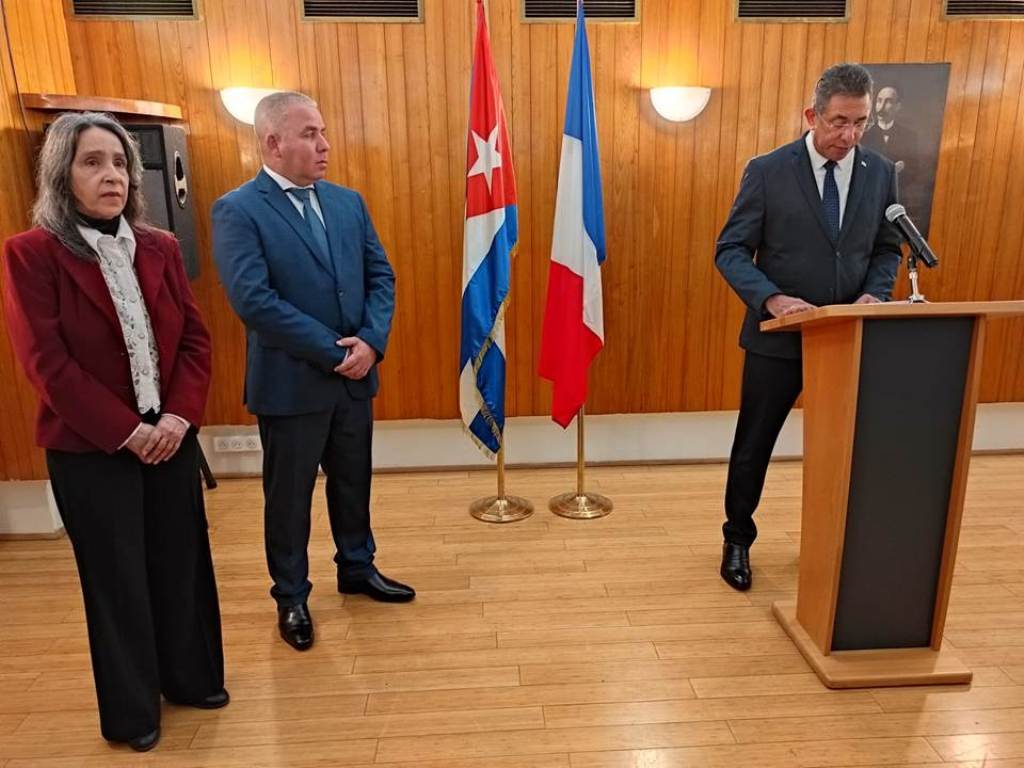
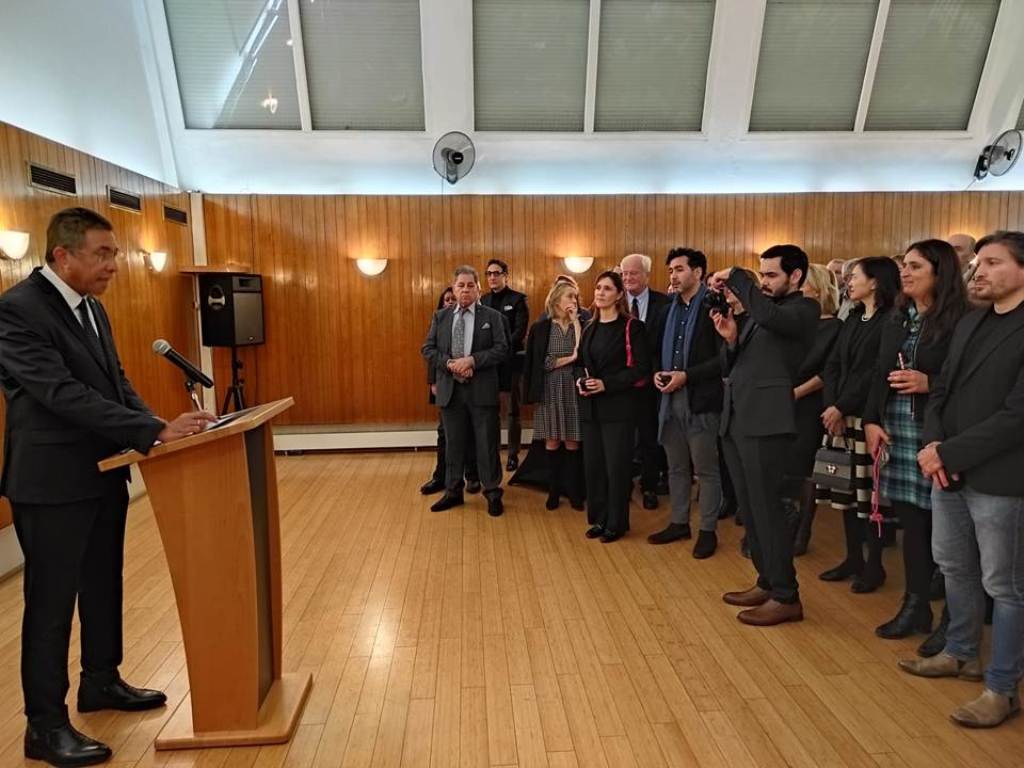
Paris, January 22 (Prensa Latina) The Cuban ambassador to France, Otto Vaillant, today underlined the Caribbean nation’s commitment to peace and the principles of the UN Charter and thanked the people of France for their solidarity with his country.
Speaking at a gala for the 67th anniversary of the triumph of the Revolution, the diplomat evoked the complex international scenario prevailing, marked by the aggressiveness of the US Administration, headed by President Donald Trump.
We are witnessing total contempt for order and justice, we are witnessing the use of force and the threat thereof, aggressions and unilateral coercive measures, a behavior of Washington from which no one escapes and which shows no interest whatsoever in peace, he denounced.
Vaillant recalled that Cuba is a victim of that policy, with the intensification of the economic, commercial and financial blockade by the current Government.
It is the longest siege imposed on a country, with which they intend to suffocate us and break our will, he stressed at an event attended by French authorities, UNESCO officials, parliamentarians, representatives of parties, unions and solidarity associations, businessmen, Cuban residents, artists and other actors from local society.
Among the prominent figures present were the Cuban Minister of Finance and Prices, Vladimir Regueiro, the Director of Latin America and the Caribbean at the French Foreign Ministry, Alix Everard, the Cuban Ambassador to UNESCO, María del Carmen Herrera, the President of the France-Caribbean Friendship Group in the Senate, Helen Conway-Mouret, and the President of the Friendship Group with Cuba in the National Assembly, Jean-Victor Castor.
The ambassador of the Caribbean nation highlighted the ties that unite Cuba and France and the intense activity that bilateral relations had during 2025.
He also acknowledged the numerous actions taken to support the Caribbean country on French soil, such as solidarity with those affected by Hurricane Melissa, condemnation of the US blockade, and ongoing aid.
Vaillant stated that the current year will be full of challenges for Cuba and its people, challenges that they will face with vision and unity, counting on the support of their friends around the world, and in this case, France.
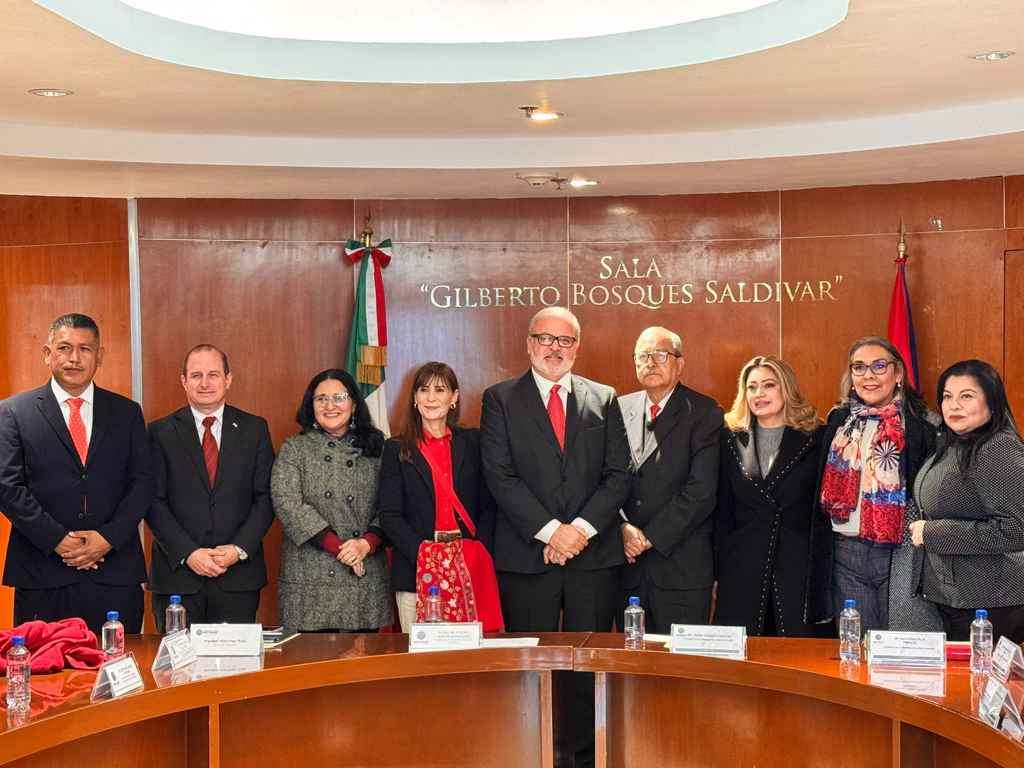
Mexico City, Jan 21 (Prensa Latina) The Cuban Ambassador to Mexico, Eugenio Martínez, and the president of the Foreign Relations Commission of the Chamber of Deputies, Pedro Vázquez, reaffirmed today the historic ties of friendship between both countries.
During a meeting at the legislative body, Vázquez recalled moments of the bilateral relationship, forged “in a shared cause” with references to Mexico’s role in “giving refuge, strength and horizons to the Cuban Revolution and the preparations for the Granma yacht’s journey of freedom.”
He added that Cuba and Mexico recognize each other as sister nations and “there is no blockade, no sanction, no external pressure that can break a brotherhood forged in dignity.”
“Our friendship is not circumstantial. It is political, historical, and profoundly human,” he asserted.
According to a press release from the Embassy, Martínez referred, for his part, to the symbolism of holding the session in the Gilberto Bosques room and conveyed that it is also a concrete expression of the indestructible relationship between the two countries.
He recalled that without the support of Bosques and other Mexicans who played a leading role in the effort to offer refuge, support and affection to the Cuban revolutionaries, history might not have been the same, and he referred to the dangers and threats currently facing the largest of the Antilles, our region and the world.
He also alluded to the words of Cuban President Miguel Díaz-Canel, who characterized this new stage as an “era of barbarism, neocolonialism and fascism.”
The diplomat called for unity and closing ranks to save the dignity of Latin America and the Caribbean and recalled the glorious pages written by Mexico in this regard in recent times, in accordance with its Constitution and the principles of its foreign policy.
During the meeting, deputies Ana Corina Rojo, Maribel Martínez, Olga Lidia Herrera, María Isidra de la Luz and Jorge Armando Ortiz also spoke, expressing their solidarity with the people of Cuba and their rejection of the “criminal and ominous” blockade imposed by the United States.
In the room, phrases such as “talking about Cuba is talking about the fight for justice” were heard, and the commitment of the Labor Party caucus to support the position of President Claudia Sheinbaum and the government in favor of fruitful, respectful, and strong relations with the island was ratified.
Three parliamentarians conveyed their condolences, sympathy and admiration for the Cubans who died in the face of the United States’ aggression against Venezuela.
Deputy Ortiz stated that together with the citizens of the island they will celebrate Fidel’s 100th birthday on August 13th and expressed the desire to accompany and share the same fate as the people of the largest of the Antilles, because “solidarity is the tenderness of the people.”
The Cuban ambassador expressed his gratitude for the expressions of solidarity and confirmed his willingness to continue strengthening the historic ties of friendship between the two countries.