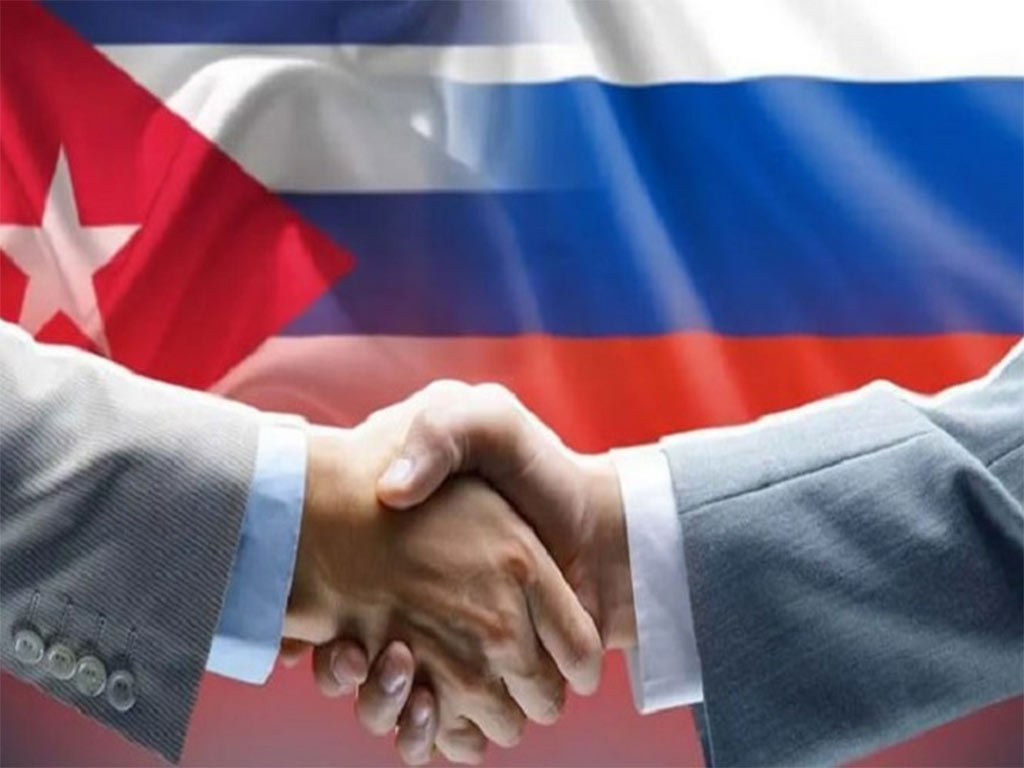
Moscow, July 8 (Prensa Latina) Cubans are grateful to Russia for its support, declared the island’s ambassador to the Russian Federation, Enrique Orta, according to a report today by the Vesti news agency.
“We have the support of Russia, not only now during this difficult situation. We have always had their support, and we always express our gratitude for everything they do for us,” the Caribbean diplomat noted.
Orta stated that Cuba is currently going through a difficult period, but that it intends to overcome the difficulties.
On Tuesday, July 7, an exhibition commemorating the centenary of Fidel Castro’s birth opened in the State Duma. At the opening ceremony, the head of the Cuban mission praised Russia’s continued tribute to the historic leader of the Cuban Revolution.
Fidel Castro was a man of great character, a man of profound dignity. We inherited all of this from the Soviet Union. Because relations between Cuba and the Soviet Union were close. We understood each other, we knew how to defend our independence, our sovereignty. And we continue to support each other. Therefore, this exhibition shows how Russia continues Fidel’s legacy here in Russia, Orta stated.
United Nations, July 7 (Prensa Latina) The United States government tried unsuccessfully today to prevent a debate on the economic, commercial and financial blockade of that country against Cuba at the United Nations General Assembly, at its headquarters in New York.
Jeffrey Bartos, the United States representative for UN Management and Reform, failed to do so after 136 countries voted in favor of including the issue on the agenda, nine voted against, and 30 abstained.
Once again, Washington tried to blame the Cuban government for the limitations the island faces while it enforces a genocidal blockade against that nation.
Bartos stated that the United States objects to holding a new debate on that issue during the eightieth session of the General Assembly.
The US representative asserted that Cuba has been without power since Monday, but failed to mention the oil embargo imposed by the White House, which hinders fuel supplies to the island.
During his speech, he stated that the generators “are not lighting the refrigerators of Cubans, nor the cells of political prisoners, nor those waiting for oxygen or surgeries in hospitals.”
The diplomat stated that the cost of the meeting could be used for other needs and maintained that the Cuban government seeks to use the debate as a propaganda tool, without mentioning US policy.
Washington maintains a policy of economic, financial, migratory, technological and extraterritorial pressure against Cuba aimed at punishing the Cuban people, suffocating its economy and persecuting third countries, companies and individuals that maintain legitimate links with the largest of the Antilles.
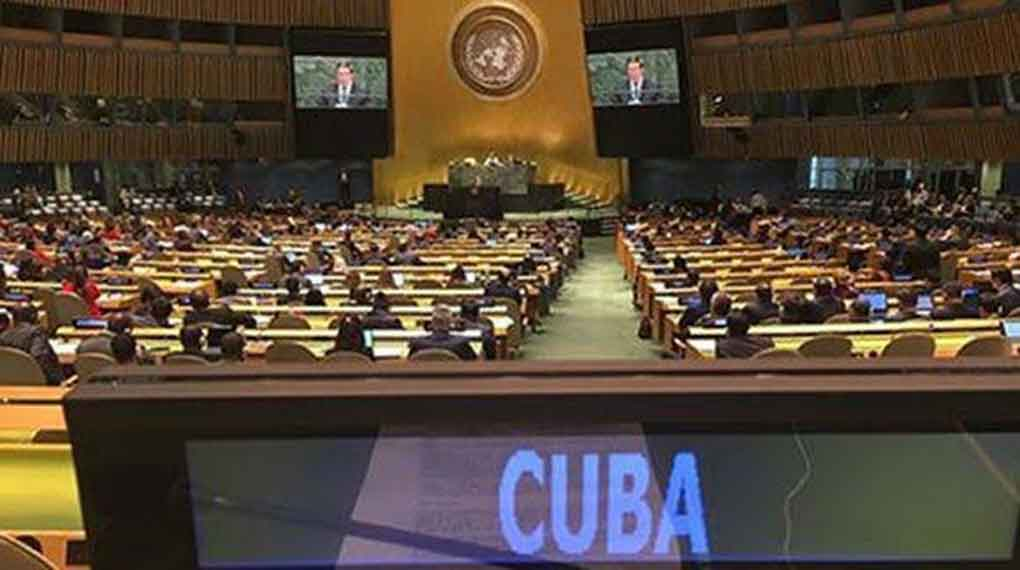
United Nations, July 7 (Prensa Latina) The UN General Assembly today approved by a large majority the opening of a debate on the need to end the economic, commercial and financial blockade imposed by the United States against Cuba.
Despite attempts by the US delegation to avoid discussing the issue, the debate received the support of 136 nations, with only nine votes against and 30 abstentions.
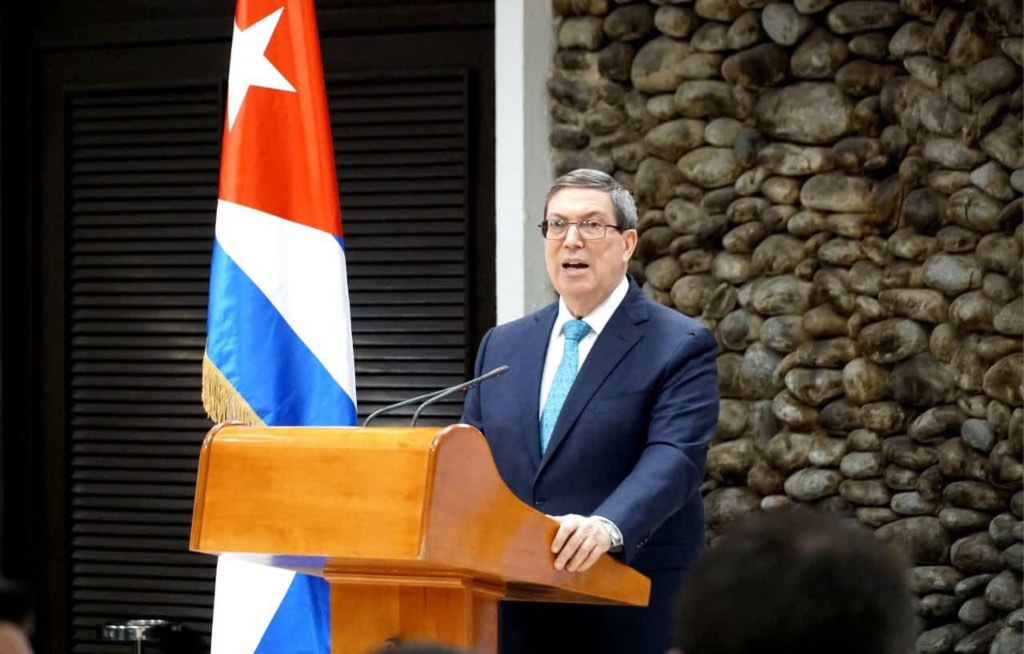
Foreign Minister Bruno Rodríguez is leading the Cuban delegation at this urgent session, where Havana will present a formal complaint against Washington’s aggressive actions, including the energy blockade that has jeopardized essential services such as health, food, and transportation.
The Cuban complaint comes amid intense diplomatic pressure from the United States to prevent the UN from discussing the effects of the more than 60-year-old economic, commercial and financial blockade.
A State Department cable, signed by Secretary Marco Rubio and leaked to The Nation, urged US ambassadors around the world to prevent the United Nations from addressing the effects of the aggressive economic policy on the Cuban people this Tuesday.
Even with such pressure, the discussion was given the green light and there is already a long list of speakers requesting to speak, as reported in the session.
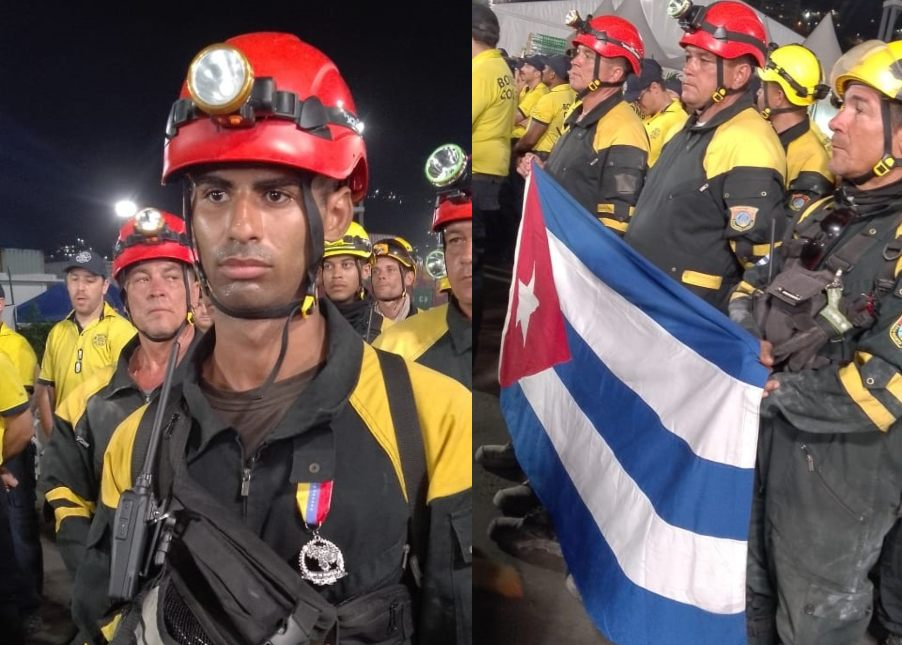
Havana, July 4 (Prensa Latina) Roberto Morales, member of the Political Bureau and Secretary of Organization of the Central Committee of the Communist Party of Cuba, highlighted today the professionalism of the island’s rescuers in areas affected by the recent earthquakes in Venezuela.
The Cuban rescue brigade has demonstrated professionalism and humanism in the areas affected by the earthquakes in #Venezuela, whose government awarded them the “Heroes and Heroines of Venezuela” medal in recognition of their dedication and bravery, Morales wrote on the social network X.
The high-ranking Cuban official added that these young faces reflect the spirit of solidarity of Cuban cooperation, which is always present wherever it is needed.
“A well-deserved tribute to his sacrifice and love for his fellow man,” he said.
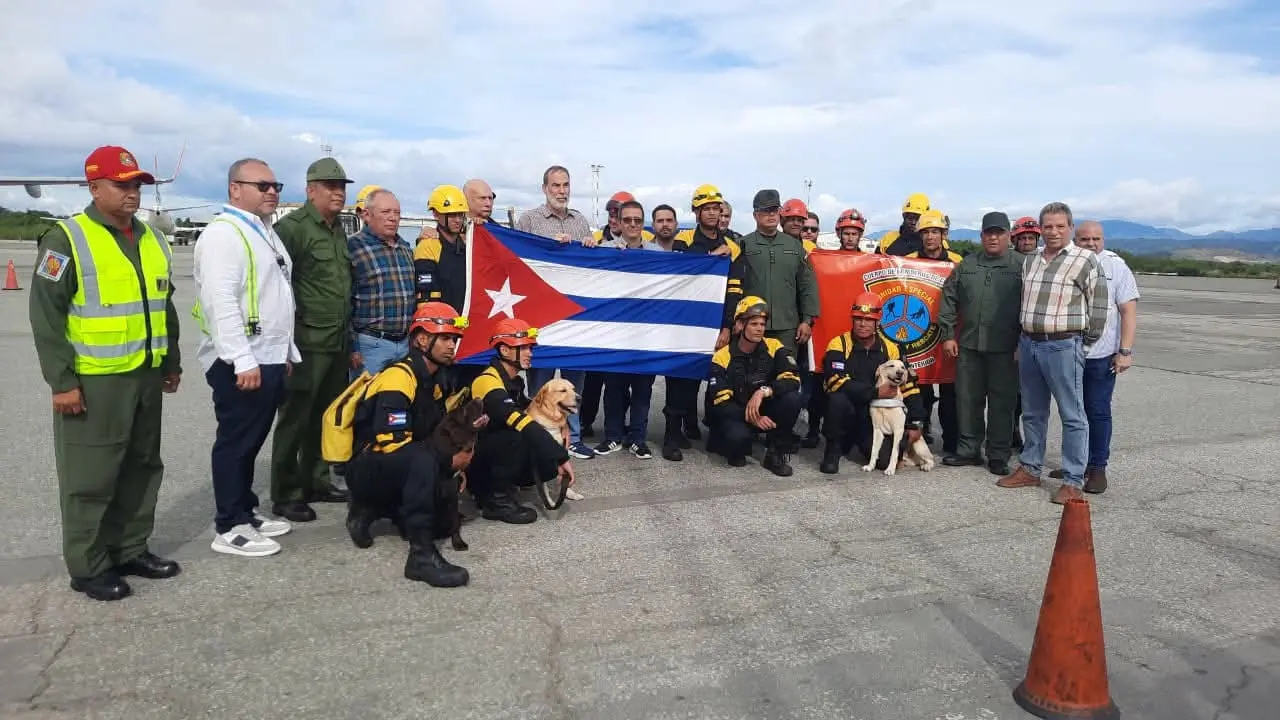
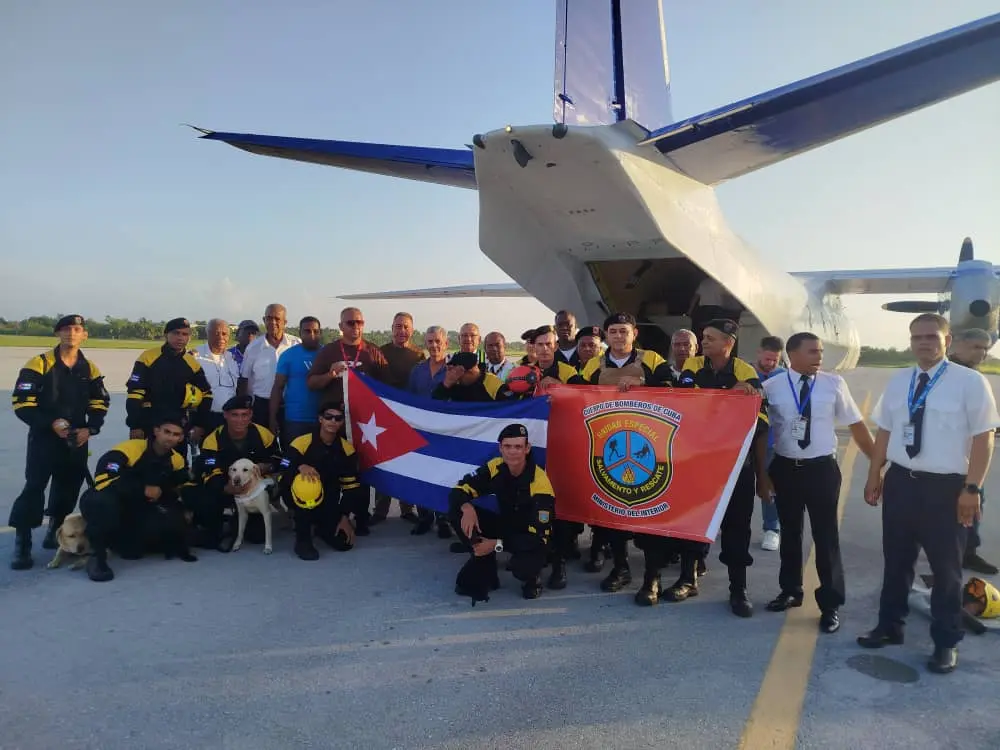
The members of the brigade of 37 rescuers and three dogs from Cuba who supported the search and rescue efforts after the intense earthquakes in the South American nation received the “Heroes of Venezuela” decoration on Friday.
Along with six other countries – Costa Rica, Panama, El Salvador, Mexico, Turkey and Vietnam – the acting president Delcy Rodríguez presented the medal to Lieutenant Colonel Rubén Pupo, head of the mission, who received it on behalf of his compatriots.
The distinction was also received from the president by Choco, Evan and Tito, the three expert search and rescue dogs who accompanied the Cuban specialists, who arrived in Venezuela in two groups at the request of the Bolivarian Executive.
In addition, the acting head of state delivered a letter of thanks to the Cuban president, Miguel Díaz-Canel, and his government to the Cuban ambassador in Caracas, Jorge Mayo, for their solidarity and humanitarian contribution in the face of what is considered the “greatest natural disaster” in Venezuela’s history.
After more than two decades away, Cuban-American teacher and activist Lavender returned to Cuba, the place her family always considered home.
Walking through Havana, she reflected on identity, belonging and the complicated relationship many Cuban Americans have with the island.
She spoke about the changes she has witnessed in Cuba, including the evolution of attitudes toward LGBTQ+ people, and why she believes listening to ordinary Cubans is essential.
“I stand proud, and I stand tall because that’s what Cuba taught me,” she said.
U.S. Voices Against the Blockade is a series featuring U.S. activists who oppose U.S. sanctions on Cuba. Watch Episode 6 to see Lavender’s story and stay tuned to hear other people from the United States speaking out against U.S. sanctions.
Mexico City, July 1 (Prensa Latina) The Mexican Movement of Solidarity with Cuba and other organizations today called for participation on July 26, National Rebellion Day on the island, in a march in defense of the Caribbean nation.
During a press conference in this capital, the organizers specified that the route will begin at 10:30 local time that day at the Hemiciclo a Juárez monument and will culminate in front of the former United States Embassy here, located on Paseo de la Reforma Avenue.
They called on organizations, social movements, unions, students, academics, religious groups, artists and citizens to join this initiative for the 73rd anniversary of the attacks on the Moncada and Carlos Manuel de Céspedes barracks, in the east of the Caribbean country.
They recalled that such actions were “led by Fidel Castro as the beginning of the struggle that would lead to the triumph of the Cuban Revolution on January 1, 1959,” and stressed that the largest of the Antilles “continues to be a benchmark of dignity, sovereignty and social justice.”
The organizers denounced that the Cuban people are currently facing “the most complex situation in their history” and described the intensification of the economic, commercial and financial blockade imposed by Washington as the main obstacle to the development of that nation.
“The aggressions against Cuba have escalated: pressure is being exerted on companies that maintain operations on the island; the arrival of energy products is being prevented, and attempts are being made to suffocate the country to cause the collapse of its economy and generate conditions of internal destabilization,” they pointed out.
In his view, the consequences of “this genocidal policy” are manifested in a profound crisis that affects the daily lives of millions of people.
They pointed out that “this offensive is compounded by the cynical attempt promoted from US courts against Army General Raúl Castro,” which in their opinion constitutes an expression of the policy of hostility that seeks to set precedents for new aggressions against sovereignty.
“This escalation forces us to be alert to the real risk that the United States will consider direct military intervention as a last resort against a people who have defeated all attempts to destroy their revolutionary process for more than 60 years,” they said.
The organizers considered it essential to endorse a broad, pluralistic and unified expression of solidarity with Cuba, capable of bringing together the voices willing to defend its right to exist and develop without external interference or aggression.
They stressed that defending the Revolution is not just the responsibility of Cubans, as it is a cause for those who fight for the self-determination of peoples, peace, sovereignty, non-intervention and anti-imperialism, in addition to representing the defense of Mexico.
Havana, June 30 (Prensa Latina) Foreign Minister Bruno Rodríguez announced today that Cuba has requested a UN session for July 7 against the US blockade and denounced Washington’s pressure to prevent the debate.
In a press conference, the Foreign Minister stressed that the United States’ multidimensional aggression against Cuba “is not a future danger or threat, it is a crime against humanity in full execution.”
Rodríguez denounced that the energy blockade and other measures of extreme intensification of the blockade constitute “an act of genocide also classified as a collective punishment and a massive, flagrant and systematic violation of the human rights of Cubans and of international humanitarian law.”
The foreign minister stated that Cuba is not and cannot be a threat to the United States, a great military and nuclear power.
“The blockade and the policy of aggression and hostility of the United States Government against Cuba is a threat to the existence and well-being of the Cuban people, to the exercise of their human rights,” he stressed.
The Cuban diplomat recalled that the blockade has been condemned 31 times by the General Assembly with the support of the vast majority of the international community, and expressed his certainty that this support will be maintained in the next session.
Rodríguez denounced that the US government has deployed “an inconceivable effort” to prevent the session, using pressure, blackmail and threats against governments and foreign ministries of other states.
“The permanent mission of the United States in New York is threatening to take legal action to prevent the General Assembly from meeting and deliberating on this issue,” he said.
The Cuban foreign minister revealed that the State Department’s diplomatic apparatus is trying to prevent the General Assembly from considering a matter of global interest, using pressure and threats to intimidate member states.
“They are trying to censor her voice and her right to speak out on a matter directly related to international peace and security and the well-being of an entire people,” he added.
Rodríguez expressed his confidence that the vast majority of the international community would support Cuba at the July 7 session, which he considered “upholding international law and the Charter of the United Nations.”
The chancellor recalled that “the General Assembly, the most democratic, universal and representative body of the United Nations, will be able to address this issue objectively and surely in accordance with the purposes and principles of the Charter.”
“This is an urgent situation because the multidimensional aggression of the United States government against Cuba is already underway and intensifying. Its humanitarian damage is growing, and the suffering and deprivation it inflicts on our people increases every day,” he concluded.
The arrival of the Cuban aid team is in response to the call for support made by President Miguel Díaz-Canel and Foreign Minister Bruno Rodríguez, who expressed their backing for Venezuela through messages broadcast on the X platform. Photo: @EmbaCuba_Qatar
Upon their arrival in Venezuelan territory, this new group joins the brigades from different nations.
June 29, 2026 — teleSUR
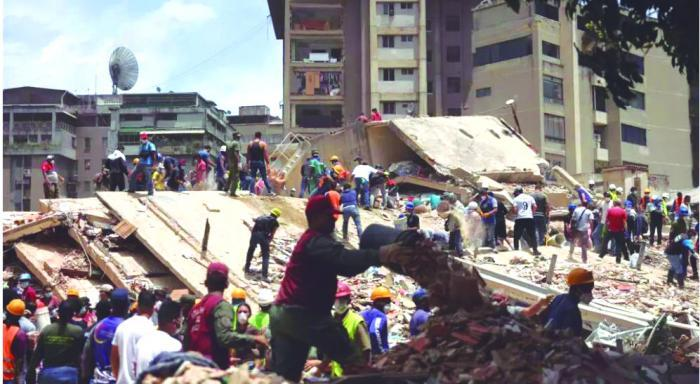
International solidarity with Venezuela continues to strengthen after the devastating double earthquake of June 24 with the arrival in the country of a second contingent of Cuban rescuers , who will join the aid teams already deployed.
Upon their arrival on Sunday, the new group from the Caribbean island joined the brigades from various nations. To date, more than 2,000 volunteers from 25 countries across the Americas, Europe, and Asia are assisting in relief and recovery efforts.
The arrival of the Cuban aid team is in response to the call for support made by President Miguel Díaz-Canel and Foreign Minister Bruno Rodríguez , who expressed their support for Venezuela through messages broadcast on the X platform.
The double earthquake that struck on Wednesday, June 24, with magnitudes of 7.2 and 7.5 and just 39 seconds apart, caused severe damage in several regions. According to official reports, 1,450 people died, 3,150 were injured, and 2,501 structures were affected as of Sunday night, June 28.
The hardest-hit areas include La Guaira, Yaracuy, Aragua, Carabobo, Falcón, Miranda and the Capital District, according to statements by the acting president, Delcy Rodríguez.
Rodríguez also expressed his gratitude for the solidarity shown by various governments and announced the creation of a technical commission to assess the safety of homes in the affected areas, using a risk assessment system.
At the same time, the official has toured the camps providing assistance to victims, monitoring the progress in the recovery phase and verifying the conditions of assistance to the communities.
International cooperation and the actions of the Venezuelan Executive seek to accelerate the rehabilitation of the devastated areas , while rescue and humanitarian support efforts continue.
Cuba’s solidarity with the brotherly Venezuelan people. Photo: @BrunoRguezP
In addition to national teams, the emergency response in Venezuela includes the deployment of 3,681 rescuers from 30 countries, 27 vehicles and 118 dogs, plus 1,086 tons of supplies.
June 29, 2026 — teleSUR
Cuban Foreign Minister Bruno Rodríguez emphasized on Monday, June 29, that the cooperation currently being provided to Venezuela demonstrates Cuba’s unwavering solidarity with the Venezuelan people , who are facing an emergency situation due to the double earthquake that struck on June 24.
The foreign minister’s statement comes after the arrival in Venezuela of a new contingent from the Caribbean island on Sunday, June 28 , which immediately joined the national and international brigades deployed in the affected areas.
Previously, Cuban President Miguel Díaz-Canel also used digital platforms to confirm that the country’s top leadership maintains uninterrupted contact with Venezuelan authorities and their diplomatic representation.
The president reiterated that the main purpose of these communications is “to learn about the situation of our compatriots there and give them all possible help. Rescue efforts continue ,” he stated on June 27.
This Monday, Venezuela’s interim president, Delcy Rodríguez, detailed the number of international rescue personnel who have arrived in the nation to help with the emergency following the earthquakes that severely impacted Caracas, the country’s capital, and the state of La Guaira, the most affected by the seismic activity and declared a disaster zone.
Through his social media accounts, Rodríguez specified that the deployment includes 3,681 rescuers from 30 countries, in addition to 1,086 tons of supplies, 27 vehicles, and 118 dogs that strengthen the search and rescue efforts in the affected areas.
The information was released along with audiovisual material documenting his visit to the García Carneiro Stadium, located in La Guaira, a facility that currently houses response brigades from the international community.
So far, the geological phenomena have left a toll of 1,450 dead, 3,150 injured and 12,721 affected , according to the latest official tally.
State security forces remain deployed in various parts of the country conducting rescue operations. Photo: Reuters
Following Wednesday’s powerful earthquakes, Díaz-Canel reported that Cuban authorities are closely monitoring the situation of all Cubans in the South American nation, regardless of the reason for their presence
June 26, 2026 – Granma
The Cuban healthcare workers on internationalist missions in Venezuela are safe and “providing all possible assistance to the Venezuelan people from the very beginning,” after the country suffered two earthquakes on Wednesday, measuring 7.2 and 7.5 on the Richter scale, and several aftershocks.
This was reported by the First Secretary of the Central Committee of the Communist Party and President of the Republic, Miguel Díaz-Canel Bermúdez, after a telephone conversation with the Cuban ambassador to Venezuela, Jorge Luis Mayo Fernández.
From the outset, the Cuban president conveyed, via social media, his “deepest condolences and full solidarity with the government and people of Venezuela for the terrible earthquakes that shook the center of the country this Wednesday. Cuban healthcare personnel are actively cooperating in the care of those affected.”
He also assured that the authorities of the largest of the Antilles are “closely monitoring the situation of all Cubans who are currently there for any reason.” Díaz-Canel sent “a hug to our compatriots and to all of Venezuela in this difficult time. We are with you,” he affirmed.
For her part, the acting president of the South American nation, Delcy Rodríguez, thanked, “on behalf of the people of Venezuela,” “the President of the Republic of Cuba, Miguel Díaz-Canel Bermúdez, for his words of solidarity and for always standing with Venezuela in such difficult times.”
He also sent “a fraternal embrace to the Cuban people, who once again demonstrate that the brotherhood between our countries is based on solidarity.”
For his part, Esteban Lazo Hernández, member of the Political Bureau of the Central Committee of the Communist Party, President of the National Assembly of People’s Power and of the Council of State, reiterated “solidarity with the brotherly people of Venezuela, in the face of the victims and damage caused by the earthquakes. Deepest condolences to the families and other loved ones of the victims,” he stated via the same social media platform.
According to information provided by Telesur, as of press time, approximately 200 deaths and more than 900 injuries had been reported during the two earthquakes. An estimated 140 aftershocks of lesser intensity were also recorded.
According to reports, the epicenters of the earthquakes were located in Carabobo and Yaracuy states and generated shockwaves felt in numerous states, including the Capital District. Preliminary reports indicate that 250 buildings have been affected or lost, primarily in La Guaira state, where the worst situation is concentrated and which has been declared a disaster zone. There, collapsed buildings and isolated coastal communities have been reported. Delcy Rodríguez declared a State of Emergency and immediately activated the Contingency General Staff. This institutional body includes the sectoral vice presidents Diosdado Cabello, Juan José Ramírez, Héctor Rodríguez, and Calixto Ortega and is tasked with addressing and managing the situation created by the earthquakes across the country, reported the VTV channel.
He also announced three key measures: a request to private companies for debris removal machinery, the creation of a $200 million fund for assistance, and special lines of credit for affected businesses.
To date, state security forces remain deployed in various parts of the country conducting rescue operations to assist the population and repair damaged infrastructure. In this regard, the President of the National Assembly, Jorge Rodríguez, stated: “This is the time to save lives, to rescue people, to assist those trapped under the rubble of all the damaged buildings.”