Cuba reiterates its willingness to strengthen ties with Burkina Faso

Havana, March 14 (Prensa Latina) Cuban Foreign Minister Bruno Rodríguez reiterated today the island’s government’s willingness to strengthen its ties with Burkina Faso, which will celebrate their 50th anniversary in 2025.

According to the Cuban head of diplomacy on the social network X, he expressed the government’s intentions during a meeting with the chancellor of that African nation, Jean Marie Traoré.

He also expressed the island’s authorities’ satisfaction “with the good state of bilateral cooperation” between the two nations that have maintained official relations since December 11, 1965.

Rodríguez arrived in Burkina Faso this Friday for an official visit, during which he plans to hold meetings with Burkina Faso authorities, with the aim of strengthening relations between the two nations.

In addition to his counterpart, a meeting with President Ibrahim Traoré and Prime Minister Rimtalba Jean-Emmanuel Ouédraogo is also on the agenda, Cuban ambassador to Ouagadougou Nadieska Navarro told Prensa Latina.

He will also meet with the Burkina-Cuba Fraternity collective, which brings together political parties and civil society organizations involved in solidarity activities with the Caribbean island.

This meeting, the diplomat specified, “will take place at the symbolic memorial dedicated to the African country’s revolutionary hero, Thomas Sankara, who was a close friend of the historic leader of the Cuban Revolution, Fidel Castro.”

The Caribbean country’s foreign minister will also meet with members of the medical brigade in the capital of Burkina Faso and members of the Cuban diplomatic mission in that West African state.

Bruno Rodríguez began a tour of African nations on March 10, which took him to South Africa and Ethiopia before stopping in Ouagadougou, and includes visits to Nigeria, Ghana, and Senegal.

lam/raj

Posted in Exchanges | Leave a comment

Cuba has resisted the Helms-Burton Act against the Revolution for 29 years.

Havana, March 12 (Prensa Latina) Cuban Foreign Minister Bruno Rodríguez today recalled the signing by the United States government of the Helms-Burton Act 29 years ago, with the stated objective of overthrowing the Revolution.

In his profile on the social network X, the Cuban foreign minister stated that nothing similar exists in the world, and described this provision as a flagrant violation of the norms that govern international trade and the most basic rights of peoples.

The Helms-Burton Act, signed in 1996 by then-US President William Clinton, contemplates the internationalization of the blockade; the denial of credit and financial aid to countries and organizations that favor or promote cooperation with Cuba; and hindering foreign investment on the island.

Its enactment eliminated the unilateral possibility of lifting the siege on the island and established that it would remain in effect until there is what Washington calls a transitional government certified by the White House in Cuba.

Sections three and four of the Helms-Burton Act remained inactive until 2019, when President Donald Trump authorized their implementation, in order to prevent normalization of relations between Cuba and the United States.

According to experts, the Helms-Burton Act, along with the Torricelli Act (signed in 1992), constitutes a huge obstacle to bilateral relations and a violation of the principles of sovereign equality and non-intervention in the internal affairs of a State, as enshrined in international law.

mem/evm

Posted in The Blockade? | Leave a comment

Cuban Foreign Minister arrives in Ethiopia, second stop on African tour

Addis Ababa, March 12 (Prensa Latina) Cuban Foreign Minister Bruno Rodríguez Parrilla arrived today in Ethiopia, the second stop on a working tour of Africa that began in South Africa and includes Burkina Faso, Nigeria, Ghana, and Senegal.

Upon his arrival at Bole International Airport in the capital, Rodríguez Parrilla was greeted by Aziza Geleta, Director of Protocol Affairs at the local Foreign Ministry, and Abraham Megistu, Deputy Director for Europe and the Americas and current interim director.

Likewise, he was welcomed by the director for South America and the Caribbean, Demissew Kebede, and the Cuban ambassador-designate to Ethiopia, Meylin Suárez Álvarez.

The official visit, which will last until March 14, is part of the celebrations for the 50th anniversary of the establishment of diplomatic relations between the two countries, to be commemorated on July 18.

During his stay, Rodríguez Parrilla will develop a work agenda that includes meetings with his Ethiopian counterpart, Gedion Timothewos, and other government authorities, reaffirming the desire to continue strengthening political, economic, and collaborative relations in various sectors.

On this day, the head of Caribbean diplomacy will visit the park called Tiglachin Monument (Our Struggle, in Amharic) and pay tribute to the 163 Cuban internationalist combatants who fell alongside Ethiopian soldiers in the Battle of Karramara on March 5, 1978, and whose bronze faces are represented in two murals.

Representatives from the local Ministry of Foreign Affairs, the Ethiopia-Cuba Friendship Association, and Havana graduates (Ethiopian-Cubans), among other guests, will participate.

npg/nmr

Posted in Exchanges | Leave a comment

Guatemala expresses solidarity with Cuba in the face of US hostility

Guatemala City, March 12 (Prensa Latina) Guatemalan anthropologist Sandra Xinico expressed solidarity with the hostile policy of the United States government that is causing so much harm to Cuba today, and urged the people of the Antilles to maintain their strength.

This North American practice tends or intends to impose itself on free territories and will surely continue to seek to complicate the situation through an unjust economic blockade against the Caribbean island, the Kaqchikel Mayan researcher emphasized.

In statements to Prensa Latina, he acknowledged the historic struggle of Cubans and all their work to maintain themselves as an independent and sovereign nation, a reference for the various peoples pursuing their liberation, he emphasized.

He ruled out the possibility that all this violence on the part of the United States is solely the result of Donald Trump’s administration, but rather the continuation of imperialist policies of invasion and colonization to subjugate those unwilling to align themselves with their plundering objectives.

What’s happening with the current US president isn’t accidental; “it’s been part of a plan to maintain dependency, as in the case of Guatemala, to make countries like what we’re experiencing here,” the writer asserted.

This subordination to a model that has led to the destruction of our communities, genocide, that has plundered our lands, that has seized the nation’s greatest treasures, said the young woman, originally from the municipality of Patzún, department of Chimaltenango.

And that dynamic is what the United States seeks to impose on Cuba, at the forefront of liberation, which insists that its people have another way of life, he reflected.

Unfortunately, a lot of information reaches us here that is already mediated by the northern country and doesn’t always correspond to the reality that the people live in, the former community leader considered.

Here we receive news as if the United States were a country that wanted to liberate others, that fought for democracy; however, we know that’s not the case, he added.

What they are seeking is to intervene, to penetrate deep into our territories in order to control us and then continue to benefit, Xinico warned.

He also expressed concern about all the anti-immigrant measures and the use of the U.S. naval base at Guantanamo Bay, in Cuba, to send people deported from the United States, which he described as a racist practice.

We know that the United States was built on a territory stolen from Native peoples; however, we live in a difficult situation regarding memory and our history, the anthropologist argued.

He denounced the policy of returning nationals to their countries through migration, a result of the structural problems we have in countries like Guatemala and the same evil caused by colonial practices.

oda/zinc

Posted in The Blockade? | Leave a comment

Barbados defends historic Caribbean ties with Cuba

Bridgetown, March 11 (Prensa Latina) The Barbados ambassador to the Caribbean Community (CARICOM), David Comissiong, today reaffirmed the historic relations with Cuba and assured that nothing and no one will be able to break that brotherhood.

When asked by a local news channel about the U.S. government’s recent decision to restrict visas for officials from countries that supported or continue to support the Cuban medical cooperation program, Comissiong was categorical: “These are ties that no one can break.”

The Barbadian diplomat noted that this measure by the US government is in line with its policy of bringing about regime change on the island and cited an official document from the 1960s that acknowledged this intention.

The Commission recalled when, in 1972, four Caribbean countries reestablished diplomatic relations with Cuba amidst the fiercest U.S. blockade. Fifty-three years later, hundreds of young people from CARICOM have been trained on the largest island in the Antilles, and thousands of Cuban doctors have served in these countries.

The senior diplomat said he is confident that Caribbean governments will make U.S. authorities understand the mistaken nature of this policy and, above all, that CARICOM member nations are independent and sovereign.

npg/ohh

Posted in Exchanges, The Blockade? | Leave a comment

American actor and film director Kevin Costner visits Cuba 

Havana, March 11 (Prensa Latina) American film star Kevin Costner visited the Castillo de La Real Fuerza Museum in Havana today to explore the building and its collections, particularly those related to underwater archaeology.

According to the museum’s Facebook page, located in the Historic Center, the famous director, producer, and actor was received by Perla Rosales, deputy director of the Office of the Historian of the City of Havana, and several of its executives.

During the visit, Cuban underwater archaeologist Alejandro Mirabal, who accompanied him, shared with Costner historical information about the museum’s artifacts and their importance, given that they come from shipwrecks in Cuban waters before the end of the 19th century.

The article offers no further details about the stay of the American director, whose face is a regular these days on Cuban television, which broadcasts the series Yellowstone.

The filmmaker previously visited Cuba in April 2001, where he met with Cuban Revolutionary leader Fidel Castro, with whom he held a lively conversation, according to the press at the time.

On that occasion, he traveled to Havana to present the film “13 Days,” about the October Crisis of 1962, in which he played the leading role of Kenneth O’Donnell, a collaborator of John F. Kennedy at the time.

In a statement to the Spanish newspaper El País in 2015, the artist expressed his joy at the rapprochement between Cuba and the United States.

“I’ve only been to Cuba once, but I’m seeing the new situation very well. In the world we live in, I’m always happy to hear news that shows us growing closer,” he said.

arc/mml

Posted in Cultural, The Blockade? | Leave a comment

UN Charter defenders demand Cuba’s removal from illegal list

United Nations, March 11 (Prensa Latina) The Group of Friends in Defense of the UN Charter today condemned the unjustified re-inclusion of Cuba on the arbitrary list of states that allegedly sponsor terrorism, drawn up by the United States.

“This unacceptable action confirms the discredit and opaque nature of this list and demonstrates the intention to intensify the criminal economic siege against Cuba to hinder its financial and commercial operations and cause greater hardship for the Cuban people,” the group said in a statement.

He stressed that Cuba’s unfair inclusion reinforces the negative impact of the criminal economic, commercial, and financial blockade on the realization of the Cuban people’s human rights.

“The Group recalls the repeated calls made to the United States government by several special procedures mandate holders, numerous States, international organizations, civil society, and other actors to remove Cuba from the list and lift the embargo,” it states.

Likewise, it strongly rejects the political manipulation of the fight against terrorism and reaffirms its unwavering solidarity with the Cuban people and government, and urges the United States government to immediately and unconditionally end the blockade.

Furthermore, to comply with the 32 resolutions adopted in this regard by the UN General Assembly and to exclude Cuba from the list of states that allegedly sponsor terrorism.

Following this declaration, Cuban Foreign Minister Bruno Rodríguez thanked the member countries of the Group of Friends of the UN Charter for their powerful statement delivered today before the Human Rights Council in Geneva.

The Group of Friends in Defense of the UN Charter is an initiative of a group of Member States whose main objective is to protect and promote the fundamental principles set forth in the UN Charter.

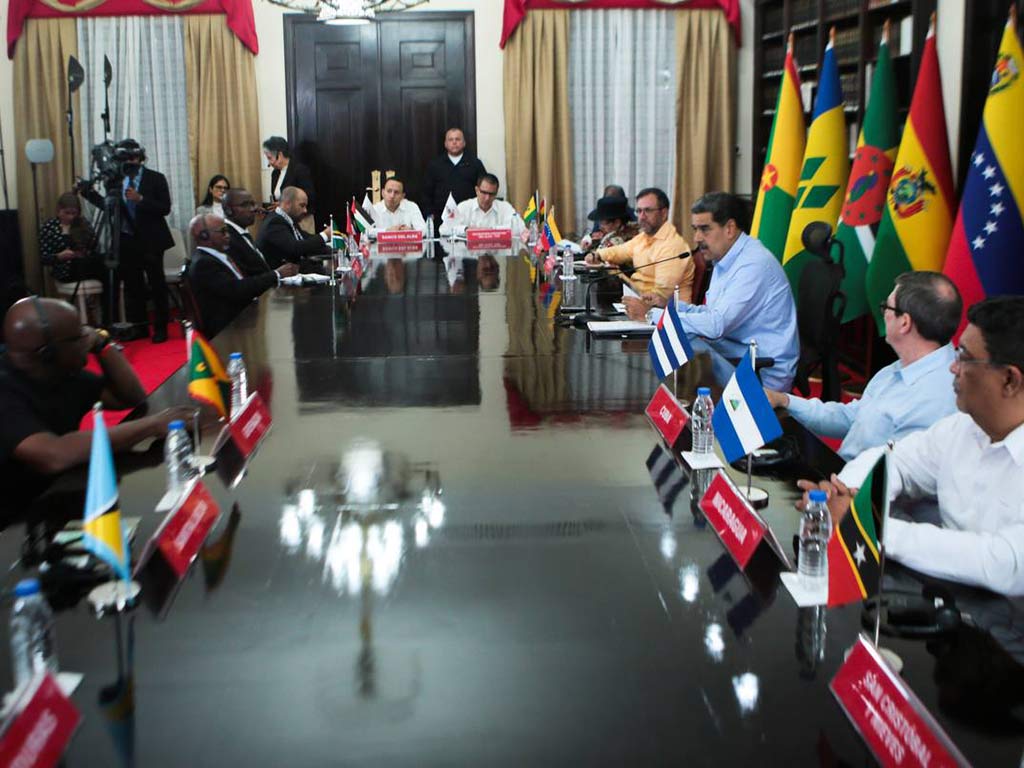
It is made up of Algeria, Belarus, Bolivia, China, the Democratic People’s Republic of Korea, Cuba, Eritrea, Equatorial Guinea, Iran, Laos, Mali, Nicaragua, Palestine, Russia, Saint Vincent and the Grenadines, Syria, Uganda, Venezuela and Zimbabwe.

arc/otf

Posted in The Blockade? | Leave a comment

Trinidad and Tobago defends medical cooperation program with Cuba

Port of Spain, Mar 10 (Prensa Latina) Trinidad and Tobago Prime Minister Keith Rowley today defended Cuba’s medical assistance and rejected accusations of alleged slave labor trafficking.

Speaking at the inauguration of facilities at the General Hospital in the capital, Rowley said that Trinidad and Tobago has long received medical assistance from countries such as India, the Philippines, Africa and especially Cuba, as part of its policy of cooperation with other nations.

The president said he was surprised when authorities from another country (referring to the United States) suddenly labeled them as slave labor traffickers, and he assured that as prime minister this had not happened because the payment conditions were the same as those of local personnel.

“I have just returned from California,” he said, “and even if I never go back there again in my lifetime, I will make sure that the sovereignty of Trinidad and Tobago is respected by all.”

In a press release on February 25, U.S. Secretary of State Marco Rubio announced a visa restriction policy on the grounds of alleged labor trafficking, particularly in Cuban medical missions abroad.

haha/ohh

Posted in Healthcare, The Blockade? | Leave a comment

Cuba, voice for Palestine on behalf of defenders of the UN Charter

United Nations, Mar 10 (Prensa Latina) Cuba, on behalf of the Group of Friends in Defense of the UN Charter, today denounced the humanitarian situation in Palestine, describing it as one of the most painful conflicts in modern history.

During the opening segment of the 69th session of the Commission on the Status of Women (CSW69), the Second Secretary of the Federation of Cuban Women (FMC), Zonya Rivero, mentioned the unprecedented levels of violence, death and destruction in the Gaza Strip over the past 17 months.

The Cuban female leader lamented the tragic toll of more than 48,000 civilians killed and 110,000 wounded as a result of the Israeli aggression against Gaza.

“This brutal Israeli military aggression in the Occupied Palestinian Territory and the illegal colonial occupation of Palestinian lands continue to cause suffering and pain, while hindering the full enjoyment of human rights,” he warned.

The Second Secretary of the FMC also highlighted the disproportionate impact that the conflict has had on women and girls, who make up a large part of the fatal victims.

According to data from the Office of the High Commissioner for Human Rights, Rivero said, almost a third of the fatal victims are women.

She added that UN Women has raised the alarm about the health crisis facing women in the Gaza Strip, including pregnant women and new mothers.

The representative of Cuba reaffirmed the position of the Group of Friends in Defence of the UN Charter in its unwavering solidarity with the Palestinian cause and its commitment to support women and girls who resist the occupation.

She also called on the international community to commit to fulfilling its obligations and not allow Palestinian women to suffer this unjust fate.

Rivero reiterated the Group’s deep concern over recent statements showing intentions to seize Gaza, forcibly displace the Palestinian people and promote Israeli annexation plans in the West Bank.

The Group of Friends in Defence of the UN Charter reaffirmed its commitment to support the Palestinian cause, achieve the independence of the State of Palestine and reach a just, comprehensive and lasting solution to this issue.

A two-state solution that would allow for the realization of the independence of a sovereign and viable Palestinian state, based on the pre-1967 borders, with East Jerusalem as its capital.

“The future of Palestinian women and girls, their comprehensive development and full respect for their sacred history and culture, as well as their central role in society, are an integral part of the foundations of the State of Palestine, vital to overcoming decades of relentless acts of violence, oppression and siege,” she argued.

“It is our common duty to honour the historic debt owed to Palestine and to fulfil its inalienable rights to self-determination and independence,” concluded Rivero López on behalf of the Group of Friends in Defence of the UN Charter.

rc/dfm

Posted in The Blockade? | Leave a comment

Cuban Foreign Minister held a meeting with his South African counterpart

Havana, Mar 10 (Prensa Latina) Cuban Foreign Minister Bruno Rodríguez spoke today with Ronald Ozzy, Minister of International Relations and Cooperation of South Africa, a nation where he began a working visit.

According to the Cuban Ministry of Foreign Affairs, during a meeting between the two “the excellent state of bilateral political relations was confirmed.”

The notice states that Rodriguez and Ozzy expressed “the common interest in expanding and diversifying ties in the economic-commercial and cooperation fields.”

“The position of the two nations in defense of the causes and interests of the peoples, especially those of the nations of the South, was ratified,” he said.

The officials also discussed Cuba’s “support for South Africa’s lawsuit against Israel for genocide in Palestine before the International Court of Justice” and other issues of global interest.

The island’s foreign minister also thanked South Africa for its support for Cuba’s fight against the US economic blockade and its inclusion on the list of State Sponsors of Terrorism, drawn up unilaterally by the White House.

According to the text, Rodríguez will hold meetings with representatives of political forces that make up the Government Alliance.

“Cuba and South Africa are united by historical ties of brotherhood, forged by the historic leaders of both countries, Fidel Castro and Nelson Mandela,” he said.

Diplomatic relations between the two countries were officially established on 11 May 1994, which was the first foreign policy act of the democratic South African Government.

ode/raj

Posted in Exchanges | Leave a comment