Havana, April 13 (Prensa Latina) Cuban Foreign Minister Bruno Rodríguez reiterated today the Caribbean country’s support for the Bolivarian and Chavista Revolution, its Civic-Military Union, and President Nicolás Maduro, in the face of external threats and sanctions.
This was stated by the highest representative of Cuban diplomacy in X, on the occasion of the 23rd anniversary of the defeat of the fascist coup d’état by the people of Venezuela and Commander Hugo Chávez (1954-2013).
On April 11, 2002, the Venezuelan right launched a coup attempt against Chávez, following a brutal media campaign aimed at tarnishing the Bolivarian leader and the progressive ideals he represented.
The leadership of the business association Fedecámaras and the private media, in complicity with sectors of the opposition and the ecclesiastical hierarchy, conspired with members of the military high command to overthrow the president and place Pedro Carmona as de facto president.
The coup was pre-planned with a massacre of the Venezuelan people in the streets near the Miraflores Palace (the headquarters of the Executive Branch), using snipers, in order to hold the Chávez government responsible.
Hugo Chávez remained kidnapped by the plotting forces until his rescue on April 13 by military personnel loyal to the constitutional order, who, along with the popular uprising in the streets, thwarted the coup d’état.
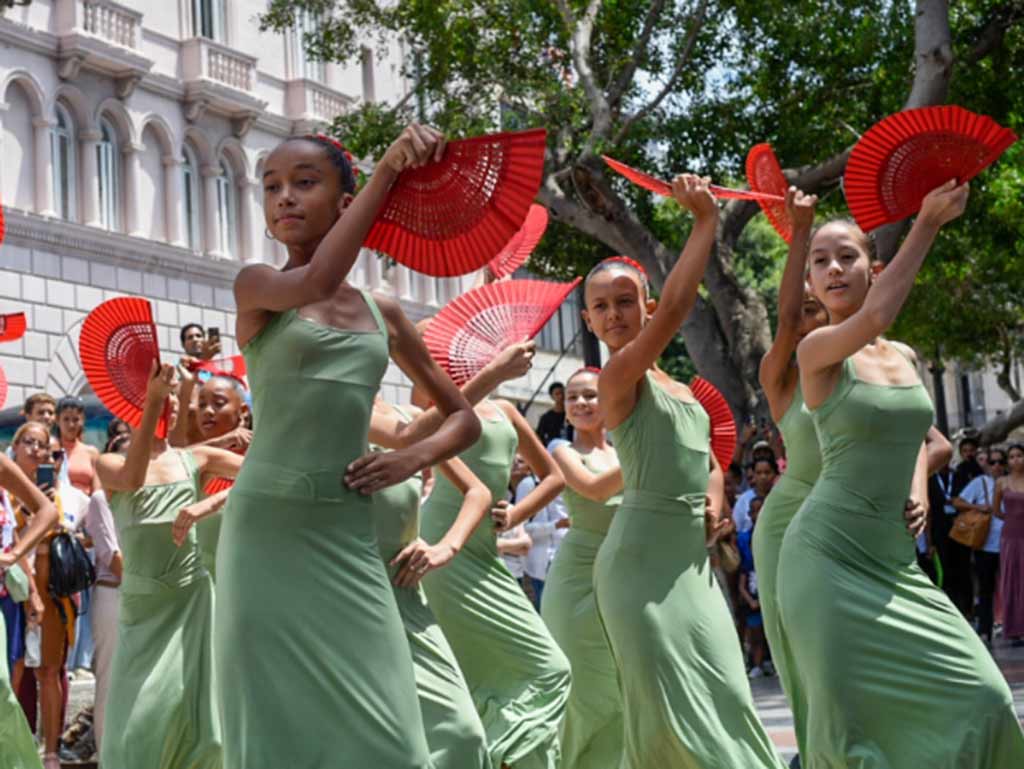
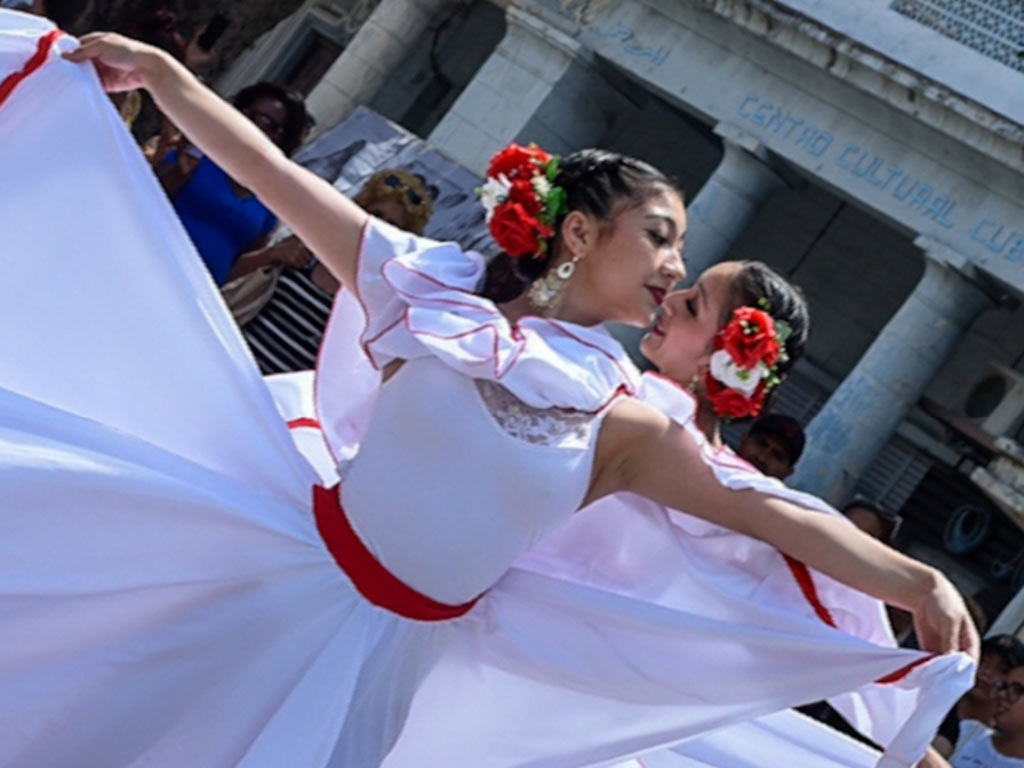
Havana, April 12 (Prensa Latina) The 30th International Meeting of Ballet Teaching Academies officially began today in Havana with a beautiful inaugural parade along the Paseo del Prado.
The young participants, carrying the flags and traditional costumes of their countries, traveled from the Alicia Alonso Grand Theater of Havana to the Fernando Alonso National Ballet School, the institution hosting the event.
Students from Colombia, Peru, Mexico, the Netherlands, South Africa, the United States, Brazil, the Dominican Republic, Guatemala, Venezuela, Ecuador, and Cuba are taking part.
This artistic event will run until April 20th, bringing together more than 400 participants and 40 academies from more than a dozen countries. It invites exchange through conferences, workshops, galas, the Havana International Ballet Competition, and other activities.
It features a broad academic program, along with performances at the Yara cinema, the Covarrubias Hall of the National Theater, and the Fernando Alonso National Ballet School as its main venue. Performances are planned for other areas of the city.
Dedicated to the maestro Ramona de Saá Bello and the Cuban filmmaker Alfredo Guevara, the event will be a space for exchange among students, teachers, specialists, critics, and prestigious ballet figures.
The international guest principal artist is Joseph Gatti, Artistic Director of United Ballet Theatre & Academy and a member of the competition’s jury, confirmed by prestigious figures in the world of dance.
The program includes side events such as the cancellation of the “30th Anniversary” Postage Stamp and the presentation, by Ahmed Piñeiro Fernández, of the book “Ballet, Its World” by Roberto Mendéz Martínez.
There will be theoretical courses, practical workshops, and specialized training for teachers. A key component of this program will be the International Ballet Student Competition.
A highlight will be the meeting with international institutions that apply the Cuban teaching method.
Young talents and masters from diverse latitudes are now gathering in Havana to share knowledge, styles, and dreams, where art becomes a legacy and dance is celebrated as a universal language and a bridge between cultures.
Havana, April 12 (Prensa Latina) Vietnam today donated 10,000 tons of rice to Cuba, as a sign of the close and historic ties between the two nations.
The gesture of solidarity was carried out in compliance with the agreements established during the visit of the General Secretary of the Communist Party of Vietnam, To Lam, to the Caribbean country in September of last year, reported the Cubadebate website.
During the delivery ceremony, held in the Mariel Special Development Zone, the donation of another 1,500 tons of rice was announced on behalf of Vietnamese Deputy Prime Minister Ho Duc Phoc.
At the event, Vietnamese Deputy Finance Minister Le Tan Can expressed the country’s willingness to continue expanding and strengthening economic, trade, and investment relations with Cuba.
“Vietnam will always stand by Cuba, as it has demonstrated throughout history. This donation is a gesture of gratitude and solidarity with the Cuban people,” he emphasized.
For her part, Deputy Minister of Domestic Trade Aracelys Cardoso emphasized the importance of the donation and highlighted that it symbolizes the unbreakable brotherhood between Vietnam and Cuba, based on decades of mutual support and cooperation.
“Once again, Vietnam is reaching out to us in difficult times,” Cardoso reiterated, adding that “this rice donation demonstrates the special nature of the ties between Cuba and Vietnam, as this grain is an essential part of the Cuban people’s diet.”
As part of the ceremony, Ana Teresa Igarza, Director General of the Mariel Special Development Zone Office, briefed the Vietnamese delegation on the businesses and projects established in the business enclave, as well as the benefits of investing in the area.
Igarza highlighted Vietnam’s participation as the main Asian investor in Cuba, with seven deals in sectors such as light industry, fertilizer and food production, and renewable energy.
Havana, April 11 (Prensa Latina) Cuban Foreign Minister Bruno Rodríguez criticized the global economic order today and called for a change to a more just and democratic one.
As he commented on the social network X, “58.9 percent of the reserves allocated by central banks around the world are held in dollars.” This, the Chancellor added, is an “advantage that the North exploits to snatch almost a trillion dollars a year from the South.”
“There is an urgent need to create a new international order that guarantees the right to development for all states,” he concluded.
In various national and international forums, Cuban authorities have called for transformations in the World Bank, the International Monetary Fund, and the World Trade Organization, among other multilateral institutions with essential roles in the global economic dynamic.
For the Caribbean nation’s government, the international economic order must guarantee sovereignty, peace, balance, environmental sustainability, and equal opportunities for growth for all nations of the world.
Managua, April 11 (Prensa Latina) The Cuban ambassador to Nicaragua, Iliana Fonseca, today denounced the hostility of the United States blockade against her country and affirmed that it constitutes a policy of permanent aggression.
In a meeting with members of the National Assembly (Parliament), the diplomat explained the law on trade with the United States’ enemy, the legal basis for which the economic, commercial, and financial siege imposed on the island for more than six decades has been underpinned.
In this regard, he referred to the Torricelli (1992) and Helms-Burton (1996) laws, legal instruments that became a strangulation mechanism towards Cuba.
Both regulations seek to eliminate all forms of economic support for the Caribbean nation and seek to legalize intervention in its internal affairs.
During the presentation, which was attended by the legislative board of directors, as well as the Nicaragua-Cuba parliamentary friendship group and other guests, the ambassador also addressed the maximum pressure policy pursued by the Donald Trump administration (243 measures) and Joe Biden.
Fonseca explained to the Nicaraguan deputies the difference between “embargo” and “blockade,” pointing out that an embargo is a technical-legal term, while a blockade is “an act of war that seeks to cut off, close off, and isolate communications with the outside world in order to achieve the surrender of the besieged by force or starvation.”
Along these lines, he outlined the prohibitions imposed by Washington’s unilateral measure against Havana and noted that Cuba cannot import or export to the northern nation.
Furthermore, Americans are prohibited by law from traveling to the island; Cuba cannot conduct transactions in dollars, nor does it have access to credit from international institutions.
Likewise, he clarified that no products with Cuban components can be exported to the United States, while the largest of the Antilles can only access products that have less than 10 percent American components.
The diplomat described the blockade as a violation of international law and an act of unilateral aggression, as well as a threat to Cuba’s stability.
“It constitutes a massive, flagrant, and systematic violation of human rights. Given its stated purpose and the political, legal, and administrative framework on which it is based, it qualifies as an act of genocide,” Fonseca emphasized.
For their part, the Nicaraguan deputies expressed their solidarity with Cuba, while reiterating their condemnation of the aforementioned policy, which affects all sectors of the Caribbean country’s political, economic, and social life.
According to the Cuban Ministry of Foreign Affairs, it is unacceptable, legal, and unethical for a small country to be subjected to a criminal policy of suffocation for decades, with economic damages exceeding $164.141 billion at current prices, and $1.499 trillion, considering the value of gold on the international market.
According to the most recent report presented by Cuba to the United Nations, between March 2023 and February 2024 alone, the blockade caused damage to the island estimated at approximately $5.568 billion.
Havana, Apr 11 (Prensa Latina) Foreign Minister Bruno Rodríguez thanked the Community of Latin American and Caribbean States (CELAC) for its support in Cuba’s confrontation with the hostility of the United States government, with a message published today in X.
“Cuba has faced more than 60 years of a genocidal economic, commercial, and financial blockade with grave humanitarian consequences for our people,” said the Cuban Foreign Minister.
He also asserted that the effects of this policy “are aggravated by Cuba’s arbitrary reinstatement, on January 20, to the infamous and unilateral list of states supposedly sponsoring terrorism.”
What happened, he said, “demonstrates the inconsistency, irrationality, and lack of legitimacy of the U.S. government’s conduct toward Cuba.”
“I wish to express my gratitude for CELAC’s historic and sustained support in this regard,” he emphasized.
During the 9th Summit of Heads of State and Government of CELAC, which concluded last Wednesday in Tegucigalpa, Honduras, several presidents of member nations demanded an end to the U.S. embargo on the island.
Mexican President Claudia Sheinbaum asserted that this policy harms the well-being of the people and does not contribute to building regions of peace and prosperity.
Similar terms were used in their speeches by the presidents of Uruguay, Yamandú Orsi, and Brazil, Luiz Inácio Lula da Silva, as well as other leaders attending the Summit.
Likewise, the Tegucigalpa Declaration, adopted by 30 States, rejects the imposition of unilateral coercive measures contrary to international law, including those restricting world trade.
At the close of the IX Summit of the Community of Latin American and Caribbean States (CELAC), the Tegucigalpa Declaration recognized the work carried out by the Republic of Honduras at the helm of the organization and welcomed Colombia’s Pro Tempore Presidency for the 2025-2026 period.
April 9 (teleSUR) As the culmination of three days of work at the Central Bank of Honduras, which included meetings of national coordinators and foreign ministers, the IX Summit of Heads of State and Government of CELAC concluded with the signing of the Tegucigalpa Declaration, adopted by “sufficient consensus” by 30 member states of the organization .
Thus, the majority of delegations—with the exception of Argentina, Nicaragua, and Paraguay, as indicated in the official document—reaffirmed their commitment to strengthening CELAC as the political coordination mechanism that integrates all the countries of the region and is based on the wealth of declarations adopted at previous summits.
The Tegucigalpa Declaration ratifies the full validity of the so-called Proclamation of Latin America and the Caribbean as a Zone of Peace . This is based on respect for the purposes and principles of the Charter of the United Nations and international law, international cooperation, democracy and the rule of law, multilateralism, the protection and promotion of all human rights, respect for self-determination, non-interference in internal affairs, sovereignty, and territorial integrity .
The text also rejects the imposition of unilateral coercive measures contrary to international law, including those restricting international trade.
The declaration notes that it is appropriate and fitting that a national of a Latin American and Caribbean country should serve as Secretary-General of the United Nations . In this regard, it argues that, of the nine Secretaries-General the UN has had to date, only one came from a state in the region and points out that the position has never been held by a woman.
In addition to underscoring the importance of joint CELAC interventions in multilateral forums on issues of common interest, the leaders expressed their appreciation to the Republic of Honduras for its work as the organization’s Pro Tempore Presidency (PPT) . In this regard, they highlighted its efforts to facilitate high-level meetings to share efforts and experiences in the areas of food security, women, education, coffee, energy, financial cooperation, climate change, and human mobility.
On another point, the Tegucigalpa Declaration reaffirms the will to continue political dialogue to deepen CELAC’s cooperation ties with other countries and regional groups , while recognizing the progress made during the meetings convened by the PPT of Honduras on the sidelines of the 79th session of the United Nations General Assembly.https://www.youtube.com/embed/6XF2UOEt_U0?si=Eqe4YejiY14T2PJh
The document certainly welcomes the Republic of Colombia as a PPT member of the mechanism for the 2025-2026 period and reaffirms its identified priorities for CELAC’s work . It specifically highlights those related to energy (energy transition and interconnection), human mobility, health and health self-sufficiency, food security, the environment and climate change, and Indigenous and Afro-descendant peoples. It also emphasizes issues of science, technology, and innovation; connectivity and infrastructure; strengthening trade and investment; transnational organized crime; and education and gender equality.
The Tegucigalpa Declaration reaffirms its strong support for the stability of the Republic of Haiti . It also reaffirms a commitment to contribute, in accordance with each nation’s capabilities, to support this country in its efforts, together with the international community and the United Nations, to establish a human security environment to normalize its political, economic, and social situation.
Tegucigalpa, Apr 9 (Prensa Latina) Cuban President Miguel Díaz-Canel held talks with his Bolivian counterpart, Luis Alberto Arce, in this capital, in the context of the IX Summit of the Community of Latin American and Caribbean States (CELAC), it was revealed today.
Sincere and pleasant meeting with the brother president of Cuba, Díaz-Canel, Arce wrote in a message on X, which was published on the account of the Presidency of the Caribbean country on that same social network.
According to the Bolivian president, during the exchange they shared “more than just the history and struggles of our peoples.”
We share, he noted, “the same worldview with greater inclusion, opportunities, and social justice.”
Díaz-Canel and Arce participated this Wednesday in the high-level segment of the IX CELAC Summit, held in Tegucigalpa, the capital of Honduras, with delegations from the 33 member countries of this political coordination mechanism.
Tegucigalpa, April 9 (Prensa Latina) The IX Presidential Summit of the Community of Latin American and Caribbean States (CELAC) committed here today to strengthening the bloc as a mechanism for political coordination that integrates all countries in the region.
In light of the region’s current challenges, the heads of state and senior representatives of CELAC agreed by consensus on the Tegucigalpa Declaration, the main document emerging from these forums.
The 11 leaders present in Honduras, including host President Xiomara Castro, highlighted the full validity of the Proclamation of Latin America and the Caribbean as a Zone of Peace, 11 years after its signing, during the Second Summit held in Havana, Cuba.
A zone of peace based on the promotion and respect for the purposes and principles of the United Nations Charter and international law, international cooperation, democracy and the rule of law, and multilateralism.
The document also emphasizes the protection and promotion of all human rights, respect for self-determination, non-interference in internal affairs, sovereignty, and territorial integrity.
Likewise, representatives from 30 of the 33 CELAC member countries rejected the imposition of unilateral coercive measures contrary to international law, including those restricting international trade.
They affirmed their shared conviction that it is timely and appropriate for a national of a Latin American and Caribbean State to serve as Secretary-General of the UN.
They noted that of the nine UN secretaries-general to date, only one came from a Latin American nation, and that the position has never been held by a woman, they emphasized.
The high-level meeting underscored the importance of coordinating joint CELAC interventions in multilateral forums on issues of common interest.
The members of the intergovernmental organization recognized Honduras for the work it has done in its capacity as Pro Tempore Presidency (PPT) since 2024.
They highlighted, under the leadership of this Central American state, the holding of high-level meetings to share efforts and experiences in the areas of food security, women, education, coffee, energy, financial cooperation, climate change, and human mobility.
They also reaffirmed their willingness to continue political dialogue to deepen CELAC’s cooperative ties with other countries and regional groups.
In this regard, they praised the progress made during the meetings convened by the Honduran PPT, on the sidelines of the 79th session of the United Nations General Assembly.
They welcomed Colombia as a CELAC PPT (2025-2026) and endorsed its identified priorities for the mechanism’s work regarding energy (energy transition and interconnection); human mobility; health and health self-sufficiency; food security; the environment; and climate change.
Colombia’s pro tempore presidency will also focus on the situation of Indigenous and Afro-descendant peoples; science, technology, and innovation; connectivity and infrastructure; strengthening trade and investment; transnational organized crime; education; and gender equality, among other issues.
The leaders expressed their firm support for Haiti’s stability and their commitment, based on each country’s capabilities, to supporting its efforts, together with the international community, to reestablish an environment of human security for the normalization of the political, economic, and social situation, with a comprehensive approach to development.
Tegucigalpa, April 8 (Prensa Latina) Cuban President Miguel Díaz-Canel today honored in this capital the firm stance of the government of Honduran President Xiomara Castro in favor of the unity and integration of Latin America and the Caribbean.
Díaz-Canel, who is in Tegucigalpa to participate in the 9th Summit of the Community of Latin American and Caribbean States (CELAC), praised the socioeconomic and political transformations implemented by Castro’s progressive administration in just three years of administration.
The dignitary made these remarks during a fraternal meeting with members of the Honduran solidarity movement with Cuba, members of the island’s medical and educational brigades, and staff from Havana’s diplomatic mission in the Central American nation.
Referring to Honduras’s first female president, the president praised her determination to work for the well-being of her fellow citizens by implementing numerous initiatives to end decades of poverty and inequality.
Xiomara Castro’s administration is focused on its people, and that, he asserted, is one of the main reasons for the presence of our health and education professionals in this country, contributing our modest experience in these fields, he emphasized.
Despite the United States government’s furious attacks on Honduras’ medical and educational collaboration with more than 50 other nations, Díaz-Canel emphasized the courage of Honduras and other nations in the region to maintain these specialists.
Improving the health indicators of the Honduran people and teaching literacy, as we have done in more than 52 countries, is the sole purpose of this selfless cooperation, the president emphasized.
“What can we say about the solidarity of the people of this country with Cuba, which responds to historical reasons,” ties that are impossible to break, he asserted.
During her speech, she acknowledged the defense of the Cuban people’s causes by the solidarity movement and the Castro administration, whom she described as a sister, a friend of the Caribbean nation, and a “true lineage of Latin American women” in the struggles of Latin America and the Caribbean.
“You have a woman with qualities we greatly appreciate, one of the Latin American leaders who decided not to attend a summit because of Cuba’s exclusion,” the president emphasized, also thanking Castro for denouncing the U.S. blockade against the island in all international forums.
Díaz-Canel stated that his presence in Honduras—for just a few hours and the first visit by a Cuban president—was necessary due to Cuba’s commitment to “our sister President Xiomara Castro” and to CELAC, to which we bring a message of peace, he specified.
“Rest assured that the Cuban Revolution will emerge victorious from these imperialist attacks, and that the people of Honduras can always count on our unconditional support,” concluded the head of state, who will participate tomorrow in the summit of the largest regional coordination mechanism.
During the emotional meeting, attended by several Honduran ministers, Díaz-Canel was accompanied by Cuban Foreign Minister Bruno Rodríguez and Havana’s ambassador to Tegucigalpa, Juan Loforte.