Cohiba Vs. Cohiba: Another Win For Cuba

Judge dismisses General Cigar’s lawsuit in the decades-long legal battle over the Cohiba trademark

May 8, 2025 | By Gregory MottolaCigar Aficionado

he legal battle for Cohiba, Cuba’s flagship luxury cigar brand, has been going on for nearly 30 years, and a judgement has just gone in favor of the Cubans—again. 

This most recent ruling is a result of a suit filed in February 2023General Cigar Company v. Empresa Cubana Del Tabaco d.b.a. Cubatabaco. General sought to reverse a decision made by the Trademark Trial and Appeal Board (TTAB) in 2022, which ruled to cancel General’s Cohiba trademark registration in the United States. Yesterday, General lost the case. 

General Cigar currently sells many non-Cuban versions of the Cohiba cigar brand in the United States, where Cuban Cohibas cannot legally be sold. Cuban company Cubatabaco, which owns the Cohiba name and the rights to market Cohiba internationally, challenged the legality of the U.S. trademark and first filed suit in January 1997. The case has been in litigation ever since with losses and victories for both sides. 

Cohiba

The Cohiba Serie M is one of many non-Cuban versions of the Cohiba brand sold in the United States.

Judge Leonie M. Brinkema of the United States District Court for the Eastern District of Virginia upheld the TTAB’s 2022 decision to cancel General’s use of the Cohiba trademark, an issue that’s been in contention since the Clinton Administration. According to the judge, Cubatabaco’s trademark was protected under the Inter-American Convention (IAC), a 1929 law that protects international trademarks. The court ruling reads:

“Because the Court finds that Cubatabaco has established that the TTAB’s cancellation of General Cigar’s registrations was proper under Article 8 of the Inter-American Convention (IAC) and that the Cuban Assets Control Regulations do not prohibit such cancellation, General Cigar’s requested relief will be denied and its Amended Complaint will be dismissed without prejudice.”

According to the legal document, Cubatabaco applied for the Cohiba trademark in September 1969 and was granted registration on May 31, 1972. Nearly six years later, on March 13, 1978, General Cigar applied to register Cohiba with the United States Patent and Trademark Office (USPTO). Registration was issued on February 17, 1981. One of General Cigar’s primary arguments in the suit was the claim that Cuba allowed the Cohiba trademark to lapse from non-usage in the 1970s, but the court rejected this notion. An article published in Forbes magazine in 1977—presented as evidence by the Cubans—states the existence and use of a Cohiba brand. The fact that Cohiba cigars were disseminated noncommercially at the time (as diplomatic gifts, as Fidel Castro’s personal brand, etc.) was deemed irrelevant—the trademark was still protected. Cohiba was released commercially by the Cubans in 1982.

“Because. . . General Cigar had knowledge of Cubatabaco’s use of ‘Cohiba’ for cigars in Cuba, the Court finds that the TTAB validly cancelled General Cigar’s registration under Article 8 of the IAC,” the ruling states.

Cohiba

Gold highlights, holographic elements and the iconic Taino profile are the unmistakable hallmarks of the cigar bands found on all Cuban Cohibas, perhaps the most prestigious cigars in the world.

So what does this mean for General? Does the company have to now cease production and sale of its Cohiba cigars? That doesn’t seem likely. In addition to this suit, General has a pending appeal with the TTAB that has yet to be resolved. The appeal was filed in 2023 as well. According to a statement from General issued today, the company will also consider appealing yesterday’s decision.

 “We are of course disappointed by this decision,” says Régis Broersma, chief commercial officer of Scandinavian Tobacco Group, the owner of General Cigar Co., “but we and our advisors will now study the ruling closely and of course consider the opportunity to appeal to the U.S. Court of Appeals for the Fourth Circuit. Our federal trademark registrations which are the subject of the dispute, would remain valid and enforceable during a pending appeal. We expect the long dispute to continue before the courts.”

Furthermore, General added that the recent ruling “deals with the federal trademark registrations and does not impact General Cigar Co.’s common law trademark rights based on its long use of the Cohiba mark on its cigars marketed and sold in the U.S. These trademark rights remain valid and enforceable irrespective of the current dispute.”

Habanos S.A. has yet to issue a statement, but fans of non-Cuban Cohibas don’t need to worry, as it appears that these cigars won’t be disappearing from retail shelves any time soon. 

For a complete timeline of the Cohiba case and its back-and-forth legal decisions since 1997, click here.

Posted in Uncategorized | Leave a comment

President of Cuba congratulates Pope Leo XIV

Havana, May 8 (Prensa Latina) Cuban President Miguel Díaz-Canel today congratulated American Robert Prevost, the newly elected Supreme Pontiff who took the name of Leo XIV, as revealed this Thursday by Cardinal Protodeacon Dominique Mamberti.

In addition to congratulating Pope Francis’s successor, the head of state also expressed his willingness to collaborate with the Catholic Church in promoting dialogue and peace.

“We share the desire to promote dialogue and peace,” Díaz-Canel stated in separate messages on WhatsApp and Telegram.

He also stated that the island will continue working to strengthen “relations between Cuba and the Holy See,” which will celebrate their 90th anniversary in 2025.

Cuban Foreign Minister Bruno Rodríguez also greeted the first American pope.

“We join in congratulating His Holiness Pope Leo XIV on his recent election,” the Chancellor wrote on the social network X.

“We reiterate the Cuban government’s willingness to continue strengthening the positive relations between Cuba and the Holy See,” he added.

Son of Louis Marius Prevost, of French and Italian descent, and Mildred Martínez, of Spanish descent, Prevost was born on September 14, 1955, in the American city of Chicago.

He studied at the Catholic Theological Union in Chicago, where he earned a Master’s degree in Theology with a specialization in Intercultural Mission in 1982, and his doctorate at the Angelicum University in Rome.

He speaks English, Spanish, Italian, French, and Portuguese, and in his first speech after his election, he emphasized the importance of building bridges to promote peace, guarantee justice, and solve the problems affecting humanity.

rc/raj

Posted in Uncategorized | Leave a comment

Russian embassy in Cuba invites to the Friendship Race

cuba news/acn 07 May 2025

HAVANA, Cuba, May 7 (ACN) On the occasion of the 65th anniversary of the reestablishment of diplomatic relations between Cuba and Russia, the embassy of the Eurasian country called on the Cuban people to participate in friendship race, to be held on May 10.

The race, organized by the National Commission of Marabana-Maracuba Races and Walks (CNCCMM by its Spanish acronym), reaches its 10th edition and is being held in the context of the 80th anniversary of the Victory over Fascism.

Victor Koronelli, Ambassador of the Russian Federation to Cuba, said that not only the race will be held but also the march for the Immortal Regiment will take place on the 8th, to highlight the friendship ties that unite both nations.

Carlos Raul Gattorno Correa, national commissioner of Marabana-Maracuba Races and Walks, commented that the circuit, of almost four kilometers, will start in the area of the embassy’s parking lot and a thousand runners are expected to participate.

Posted in Cultural | Leave a comment

Defending champions Cuba announce expanded roster for WBSC Youth Baseball5 World Cup

Defending champions Cuba announce expanded roster for WBSC Youth Baseball5 World Cup

07/05/2025 WBSC News

The 16 players selected – eight boys and eight girls – represent the six provinces competing in the National Championship. Eros Bernal Morales, the technical head of Baseball5 in Cuba, will be the general manager. Sergio Arturo Pérez Echevarria will be the head coach.

World champions Cuba announced an expanded roster of 16 for the Youth Baseball5 National Team. The pre-selection includes players from the six provinces competing in the National Championship. Havana, Ciego de Ávila and Santiago de Cuba have four players each, Guantanamo has two players, and Artemisa and Sancti Spiritus have one player each.

The eight girls include Amanda Diaz Jimeno and Adis Yudith Espinel – who helped Cuba win the inaugural WBSC Youth Baseball5 World Cup in Türkiye in 2022 – Geisel Camila Pupo Fernandez, Rachel Medina Isaac, Arianna de la Caridad La O, Dailenis Guillen Almeida, Mari Karla Pedroso and Raidi Marlen Tamayo Legrat.

The eight boys are Kevin Hidalgo, Carlos Rivera, Deivis Hodelin Cause, Rafael Alejandro Socarras, Sergio Leando Matamoros and Yandro Moracen.

Eros Bernal Morales, Baseball5 Technical Head in Cuba, will be the general manager. Sergio Arturo Pérez Echevarria will be the head coach.

Mexico will host the WBSC Youth Baseball5 World Cup 2025 in the Nayarit State from September 24 to 27. The venue is still be announced.

Ten teams have already qualified for the WBSC Youth Baseball5 World Cup 2025:

The rest of the participation quota is as follows:

  • Americas (4)
  • Wild Cards (2).

* In October 2024, the WBSC Executive Board approved an increase in the number of participants from 12 to 16 teams

Defending champions Cuba announce expanded roster for WBSC Youth Baseball5 World Cup

Defending champions Cuba announce expanded roster for WBSC Youth Baseball5 World Cup

Defending champions Cuba announce expanded roster for WBSC Youth Baseball5 World Cup

Posted in Cultural, Exchanges | Leave a comment

In Trump’s Crackdown on Immigrants, Cuban Mother Is Separated From Her Infant Daughter

By Eileen Sosin — Belly of the Beast May 7, 2025

HAVANA, Cuba — Heidy Sánchez lived in Florida for five years after immigrating from Cuba. She worked in Tampa as a nursing assistant, paid her taxes and had no criminal record.

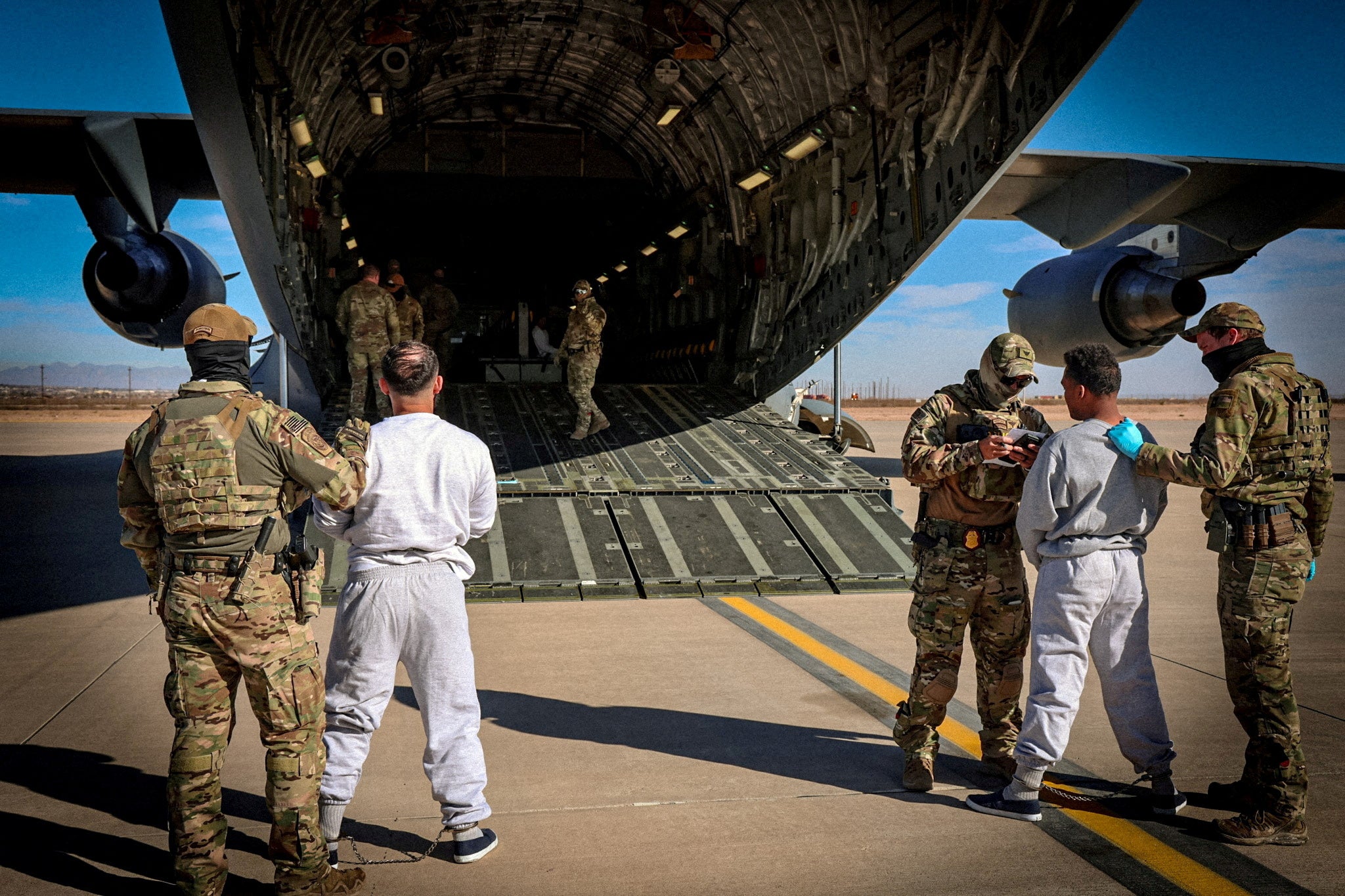
None of this would stop her world from being torn to pieces. On April 22, Heidy was detained while attending a routine check-in at Immigration and Customs Enforcement (ICE) offices in Tampa. She was separated from Kailyn, her 17-month-old, U.S.-born daughter whom she was still nursing.

“My husband said he heard my screams from the other side of the door. ‘Please don’t take her away! Please!’” said Heidy, her voice breaking.

Two days later, Heidy was deported.

The separation was abrupt. She wasn’t allowed to pack any clothes or other belongings or say goodbye to her family. Her purse was left in her husband’s car.

Two weeks later, Heidy is back in Cuba, desperately hoping she will somehow be reunited with her daughter.

“My life is there in Tampa,” she said. “I breathe for that little girl in Tampa. I have nothing here.”

“SHE WAS MY MIRACLE”

Kailyn is Heidy’s only child.

Heidy and her husband Carlos went through a long fertility treatment before finally giving birth to Kailyn.

“She was my miracle,” Heidy said through tears. “She was the child we had longed for.”

Heidy and Kailyn were inseparable.

“I woke up each day to take care of my baby girl,” said Heidy. “She’d wait for me to breastfeed her, bathe her, take care of her. All my attention was focused on her.”

Heidy says that since she was deported, her husband has struggled to get Kailyn to eat. Kailyn looks for her all over the house, grabs her shoes, and keeps asking where her mother is.

“She’s awake until the middle of the night,” she said. “I had to record myself singing lullabies to get her to sleep.”

Heidy describes Kailyn as an active, happy, and playful child. However, she is undergoing treatment for epileptic seizures.

“Just yesterday she had a scan, and I’m not there,” said Heidy. “They say that she shouted: ‘Mom mom, mom!’ for me to defend her, to hold her, to support her.”

FAMILIES RIPPED APART

Immigrant families have been ripped apart by the Trump administration’s deportation policy. Trump officials have said that immigrants who are detained can decide whether to take their U.S.-born children with them when they are deported.

“That’s up to their family to decide where the children go,” Secretary of State Marco Rubio recently ​told NBC​.

But Heidy said she was given no choice: “The [ICE] officer saw my phone, which had a photo of my daughter, her father and me. He said: ‘Oh, she has a family photo. Call the father and have him come and get her.'”

Heidy is not the only immigrant who has been unwillingly separated from their children since Trump assumed office.

“There’s a Venezuelan mom who was deported to Venezuela and the child was left here in foster care,” said Claudia Cañizares, Heidy’s lawyer. “In the same flight that we had Heidy, there was actually one of our clients that was a dad. He was the main provider of his family and he was removed to Cuba.”

Heidy immigrated to the U.S. in 2019 through a U.S. program which involved her waiting in Mexico, near the Texas border, before being summoned to the U.S. for an immigration court hearing.

She said she couldn’t attend the hearing because she feared for her life.

“People [trying to cross the border] were being kidnapped, were being robbed over the documents and they would lose them,” said Cañizares. “We kept pleading for the program to be cancelled because of this, because people could not show up to the hearings…Heidy was one of those people.”

When Heidy was finally able to cross the border, she was detained. She spent nine months in detention centers before being released. She was allowed to stay in the United States as long as she attended regular check-ins at ICE offices.

“They would give me an appointment for another date, within six months, or a year, and everything stayed the same,” she said. “I could go on with my normal life, and go to my appointments with ICE, and that’s what I did.”

Heidy says she became apprehensive after Trump’s election.

“When he said he was going to do mass deportations, you always tense up 

a little bit, and say, ‘Wow, I could be on that list, it could happen to me,'” she said. “We always had the fear that it could happen. And it did.”

CUBANS NO LONGER THE EXCEPTION

During his first term, Trump adopted a “zero tolerance” policy toward undocumented immigrants, which led to children being stripped from their parents at the U.S. border. 

Cuban immigrants, who had long enjoyed a relatively privileged status compared to people coming from other countries, were largely exempt from Trump’s crackdown.

That may be changing.

Heidy was one of 82 Cubans deported in handcuffs to Havana last month. Other Cuban immigrants report being detained while attending regular check-in interviews at ICE offices.

Cañizares said that she hopes that Heidy’s case will create more awareness of the suffering caused by the Trump administration’s migration policies.

“We want the public to turn out to bring awareness about what is going on currently in the U.S.,” she said.


Follow Us on WhatsApp and Telegram!

We’ve launched our Telegram and WhatsApp channels so you never miss a story. 

​Join WhatsApp ​| ​Join Telegram​


¿Hablas Español? We Have a Newsletter in Spanish! 

If you or someone you know prefers to read in Spanish, now you can receive our reporting, documentaries and exclusive insights directly in your inbox.

Suscríbete a Belly of the Beast en Español ​aquí​.

Help us grow our Spanish-speaking community by forwarding this to friends, family and colleagues!

Posted in The Blockade? | Leave a comment

Cuba: International Solidarity Conference Follows up Massive March of the People

May 6 (Cuba Si/Orinoco Tribune) In a strong display of defiance and solidarity, over 5 million people marched in the cities of revolutionary Cuba on May 1. Through these impressive marches, the Cuban people stood united and strong against US designs to crush Cuba for its refusal to succumb to imperialism or go back to the neo-colonial status it held prior to 1959. Just as the over 60 year old blockade of Cuba seems to reach its most draconian, more still is piled on, yet now more than ever, the US finds itself isolated as the Cuban people stand strong and solidarity with them grows.

International meeting of solidarity with Cuba, anti-imperialism and against the resurgence of fascism
The day following the march, the theme of solidarity was carried forward to the International Meeting of Solidarity with Cuba, which took place at the Palace of the Conventions. 969 delegates were present, representing 269 organizations from 39 countries.

The dialogue was led by the first secretary of the central committee of the communist party and president of the republic, Miguel Díaz-Canel Bermúdez; member of the political bureau and secretary of organization of the central committee of the party, Roberto Morales Ojeda; the minister of foreign affairs, Bruno Rodríguez Parrilla; the secretary general of the CTC, Ulises Guilarte de Nacimiento; and the president of ICAP, Fernando González Llort.

The meeting was dedicated to the legacy of Commander-in-Chief Fidel Castro, on the 25th anniversary of the concept of revolution, the 65th anniversary of the Cuban Institute of Friendship with the Peoples (ICAP), and the 22nd Congress of the Cuban Workers’ Central (CTC).

President Miguel Díaz-Canel Bermúdez emphasized in his talk that solidarity is not just a word but an essential component against the increased aggression of the Trump administration.

“Thank you for being the voice of Cuba in the world. This meeting shows that, before the empire, the answer is more solidarity, a solidarity that symbolizes resistance to neocolonialism and support for the self-determination of peoples; a solidarity that becomes a weapon of struggle, that transcends borders and that we assume, as Fidel said, to be an ethical duty in the fight against neocolonialism.”

The inhumane policy of the United States against Cuba
Carlos Fernández de Cossío, director general for the United States at the ministry of foreign affairs, spoke about the damage caused to Cuba by US policy.

“Our country is going through times of great adversity, reflected in the material and economic conditions of our people. This is a scenario planned by the US government to try to make life as difficult as possible for Cubans,” he said.

He recalled the words of the popular leader of the US, Malcolm X, warning that nothing teaches more than adversity.

“The people of Cuba are not discouraged by the current circumstances. They take on challenges and develop their creativity, the fruit of the teachings of the revolution,” he said.

The sentiment in the US, according to the diplomat, is that the largest of the Antilles belongs to them and that they have the right to dictate the course of the nation, which explains the incessant dispute since Cuba achieved true independence and began to exercise its right to self-determination.

This prohibits the importation of products originating in the United States and the use of the most important international payment systems. Most Americans are denied the right to travel to Cuba, and threats are made against investors who bet on the national market.

Regarding Cuba’s inclusion on the list of state sponsors of terrorism, Fernández de Cossío said that it has had serious repercussions for tourism on the island and is exacerbating its economic situation.

Solidarity: the bridge that unites the oppressed of all latitudes
The hero of the republic and ICAP president, Fernando González Llort, referred to the need to promote cooperation and the right of peoples to self-determination in his speech.

“The response to neo-liberal capitalism must be unity and internationalism. We have a duty to forge alliances against the common enemy: the great elites who control the world,” he said.

“If capital and imperial ambitions are transnational in nature, solidarity among peoples must also transcend borders,” he said.

According to González Llort, the rise of figures such as Donald Trump is a reflection of a world in crisis and of a 21st-century fascism, which seeks technological advances to control and alienate the working class.

ForGonzález Llort, the promotion of dignified peace in defense of sovereignty is key in the battle against imperialism. However, it must be a peace that respects the full dignity of people and is grounded on social justice.

“That is why Cuba stands with Palestine against the Zionist regime that, for more than 75 years, has murdered, kidnapped, abused, and besieged the Palestinian people. We stand with Puerto Rico in its struggle for independence, we support the cause of the Sahrawi people, we support the legitimate rights of indigenous communities, and we endorse the declaration of Latin America and the Caribbean as a zone of peace.”

González Llort conveyed the opposition of the largest of the Antilles to NATO interference, as well as its desire for a world free of nuclear weapons.

“While the military-industrial complex of the great powers manufactures wars for its own benefit, Cuban medical collaboration, which has helped more than five million people around the world, is denigrated,” he said.

He criticized the way in which hegemony is established through cultural colonization, which makes what is foreign seem desirable and what is one’s own seem inferior. In this scenario, resistance means creating art, schools, and popular communication.

“Unity and solidarity play a decisive role. The latter, not as charity, but as a revolutionary and humanist bulwark. It is the bridge that unites the oppressed of all latitudes,” he said.

González Llort condemned those who do not defend their sovereignty are as appendages of the empire.

Medals of Friendship
Near the end of the event, the Cuban president awarded medals of friendship to 2 long-time Cuban solidarity activists: Cheryl Labash, co-chair of the National Network of Solidarity with Cuba in the United States, and André Chassaigne, former deputy and president of the France-Cuba Friendship Group of the French National Assembly.

As per usual, the event went out with a performance of love and solidarity from the Cuban National Children’s Theater; La Colmenita.

Posted in The Blockade? | Leave a comment

Cuban Cardinal before the conclave: “There is a desire to maintain the legacy of Pope Francis”

Archbishop of Havana proclaimed cardinal by Pope Francis in 2019. Photo: CNS/Paul Haring.

The Archbishop of Havana said there is a will to continue the work of Francis and admitted that he had candidates in mind.

by  OnCuba Staff May 6, 2025 OnCuba News

Cuban Cardinal Juan García Rodríguez, Archbishop of Havana, is one of the 133 members of the College of Cardinals who, starting tomorrow, May 7, will vote to elect the next pope.

In an interview with National Catholic Reporter (NCR), the cardinal, already in the Vatican, stated that the mood in the pre-conclave congregations is shaped by Pope Francis’s legacy and a shared desire for unity.

The outlet reported that García Rodríguez emphasized that these congregations are not marked by political or regional maneuvering but by a spiritual current.

There is a desire to grow what Pope Francis left as his legacy—with his life, his words, his example,” García told *NCR*, underscoring the cardinals’ commitment to following the synodal path championed by the pontiff.

According to the report, 12 years after the conclave that elected FrancisLatin American voices continue to resonate in the Catholic Church’s deliberations at the Vatican.

Cuban Cardinal Juan García on the upcoming conclave

For the Archbishop of Havana, who was named a cardinal by Pope Francis, there are no planned strategies or names whispered in corners during the pre-conclave meetings.

“The conclave and the general congregations are acts of faith,” he said, adding, “We believe the Holy Spirit is there.”

In his remarks to NCRthe Cuban cardinal spoke about the present and future of the Church, rooted in synodality—a concept introduced by Francis that, for García, is nothing more than a return to the origins of the Gospel.

According to NCR, synodality is defined as “the Church’s new inclusive way of walking together and sharing ecclesiastical power between lay Catholics and the clergy.”

The Cuban cardinal stressed that, for him, “there is a general desire for unity, a desire to preserve Pope Francis’s legacy, to maintain synodality.”

Along those lines, he added that he sensed a collective desire among the cardinals to continue what Pope Francis sowed during his pontificate.

“A desire to go to our neighbor, who is ultimately Christ, a desire for peace—so needed in the world,” he said.

The Archbishop of Havana noted that, for him, faith means trusting that the Spirit will speak in the upcoming conclave, despite differences in language, experiences, or pastoral priorities.

“There may be many bets”

García is staying with the Jesuits of St. Ignatius of Loyola in Rome, a community that over the past 30 years has sent numerous lay volunteers and missionaries to support impoverished Catholic communities in Cuba, NCR highlighted.

Outside the morning sessions of the pre-conclave general congregations, held daily from 9 a.m. to 1 p.m., García remains at St. Ignatius. There, the Cuban cardinal celebrates Mass in the afternoons and hears confessions.

“Among those cardinals, there are holy men, missionary men, charitable men, men who have lived or are living their faith fully,” García said.

“There may be many bets, there may be many opinions, but it is an act of faith in which the Holy Spirit manifests Himself,” he added.

Are there pacts to elect the pope?

When asked whether Latin American cardinals would vote as a bloc, he denied the existence of pacts or alliances. According to him, their conversations have not revolved around specific names or regional interests.

For him, the essential thing is the process, guided by prayer, dialogue, and an open attitude.

“There in the conclave, with prayer and conversation—well, with the light of the Holy Spirit—it will come. The one already chosen by God,” García said.

What the next pope should be like, according to the Cuban cardinal

When asked what the next pope should be like, García responded candidly:

“A mystical man, a missionary, a man of charity, a synodal man, a synodal successor, with affection for people—because all over the world, we all need affection.”

That affection, he explained, goes beyond mere gestures; it represents the core of Christian witness.

“When the pope shakes a hand, lifts children onto the popemobile, writes to those who suffer, or washes the feet of prisoners, he is expressing affection. That is what Jesus Christ did,” he said.

“I have candidates in mind”

Though he acknowledged that the world today is wounded and divided, García remains hopeful.

He believes that despite differences, there is a deep longing for unity among the cardinals.

“There is a common current, a common path. It’s not exact, it’s not uniform, but what is common—and the desire is—that we all move forward,” he said.

Even as analysts and observers circulate names of possible papal candidates, García stressed that he, like many of his Latin American peers, focuses less on individual figures and more on spiritual preparation.

“I have candidates in mind,” he admitted. “But in the conclave, through prayer and dialogue, with the illumination of the Holy Spirit, God’s chosen one will be revealed,” he concluded.

A Cuban cardinal in the election of the next pope

Tomorrow, Cuban Cardinal Juan de la Caridad García Rodríguez (76) will enter the Sistine Chapel as one of the 133 members of the College of Cardinals who will vote to elect the next pope.

García is the only Cuban in the conclave and will participate after being proclaimed a cardinal on October 5, 2019, by Pope Francis himself.

Currently, he is a member of the Permanent Committee of the Cuban Bishops’ Conference and president of the National Commission for Mission and Family.

His pastoral vision aligns with the principles that defined Francis’s pontificate, which left as its legacy a more human, inclusive Church committed to the social reality of its followers.

Posted in Uncategorized | Leave a comment

Papushi: the Cuban king of Tex-Mex

Papushi. Photo: Taken from his Facebook profile.

In February, he won the Tejano Mundial Award in the Cumbia Pop Song of the Year category with his song “Te digo adiós.”

by Brenda González OnCuba News

 May 5, 2025 in Music

Jorge Soto (Holguín, March 12, 1986) took his first steps in music in his native Holguín. At the beginning, he performed songs by world pop celebrities such as Ricky Martin and Chayanne.

In 2005, after moving to Havana in search of work opportunities, Papushi, as he is known in the artistic world, recorded his first two songs under the musical production of Ernesto Blanco.

“Sexy” was his debut song on Radio Cadena Habana, and Soy Papushi (2007) was his first solo album.

In 2009, he joined the roster of the Barbarito Diez Provincial Music Company of Las Tunas as a professional singer.

He then returned to Havana, where he recorded his second album, Como un niño bueno (2014).

Between those beginnings and his recent win at the Premio Tejano Mundial in the Cumbia Pop Song of the Year category (2025), there’s a long and arduous journey.

Photo: Courtesy of the interviewee.

Your beginnings were filled with a lot of activity in terms of music and the places you visited throughout Cuba. What memories stand out from those early years?

It was 2002. I went to a disco bar in Holguín where they held karaoke competitions as part of a show. The friends I’d gone with told me to go ahead and sing; they knew I really liked music, but I’d never sung in public. I did so with the song “Laura no está,” a hit by the Italian singer Nek, and it was so well received that I returned to that place night after night, eager to sing again.

The decision I made when I moved to Havana, a place completely unknown to me and very different from Holguín, took me a little time to adapt to, but I had to do it. I wanted to begin my professional career in music. That was in April 2005.

If you had to briefly describe how your career has developed from the beginning to the present, what would you say?

It has been a journey of great perseverance, total dedication, and a lot of sacrifice. Music has been a dream that I have had to fight for practically alone, especially in the beginning.

Photo: Courtesy of the interviewee. 

You started singing house and pop songs, and composing ballads and rancheras. You ended up transforming Selena’s Tex-Mex into urban music with the 2018 release of the album Por siempre Selena. Why did you decide to venture into such different genres?

They were different stages of my life. I’ve been in music for 20 years now, and I initially wanted to experiment with dance and house, then urban, bachata, pop ballads, and others, until recently arriving at the Tex-Mex genre. The truth is, I like to test myself as a performer, to feel like I can do different genres. Maybe I was looking for the style I felt best with, but I’ve liked them all.

What musical genre do you prefer?

Without a doubt, Tex-Mex cumbia, which is what I’ve been doing for over a year. It was the first musical genre I became interested in as a child, through Selena’s music.

You’ve also written songs for singers like Yolie, Yenisey del Castillo, Rafael Espín and Leyanis López. They’ve become hits. Between writing and performing, which facet do you enjoy the most?

I love writing. It doesn’t matter if there are many songs already written that haven’t been recorded; composing is a form of expression that comes from my soul and heart. Almost everything I write I’ve lived and felt.

What do you consider to be the hallmark of your lyrics and performances?

Feeling. When I write and sing, I always try to give them that, since I almost always write about love or heartbreak.

Photo: Courtesy of the interviewee.

Are there any differences in your creative process when you compose for another artist?

I usually write the song as if I were going to perform it myself. Then I suggest to the singer what I think would fit them. I did that from 2013 to 2021. After that, I dedicated myself more to writing for myself. Doing both at the same time took up a lot of my time; singers are very demanding.

Among the achievements you’ve reached during your two-decade career was the song “Bailando con Juana” (2017), a duet with Juana Bacallao. It became a radio hit, as well as number one on the Pistacubana website and the annual Los Lucas video. Has there been another moment like that that you consider a turning point in your career?

Yes; it was in 2015, when I achieved my first success composing for other artists in Cuba. The ranchera-pop ballad “Te borré de mi vida,” performed by Leyanis López, became a hit in Cuba, despite the fact that this musical genre isn’t very common on the island’s music scene. After two years writing songs for Cuban singers, that song gave me the recognition I needed as a composer.

Who have been the main musical influences, both Cuban and foreign, in your career?

I admire many Cuban and international artists, but Selena is the main inspiration in my music. There are also others like Celia Cruz, Benny Moré, Gloria Estefan, Paulo FG, Juan Gabriel, Polo Montañez, Madonna, Luis Miguel, Ricky Martin, and many more. Although they have different styles and eras, they are exemplary artists to follow in music.

What collaboration did you really want to achieve, and did it come to fruition?

I always wanted to unite my voice with Selena’s, because she is my inspiration in music, but she was no longer physically with me. But thanks to technology, in 2016, the first duet I made with her was released: her hit “Si una vez,” with music producer Carlos Lara “El Anarkiologo.”

Then came two more duets of the songs “Como la flor” and “No debes jugar”; in which we experimented with the urban genre. It was a dream come true, especially because of the acceptance it achieved.

What has been the biggest challenge you’ve faced since beginning your career?

To never give up on anything or anyone, and to always defend what I believe in and what I want to achieve.

How do you long for public recognition?

As a Tex-Mex singer, I think I’m achieving it, both in Cuba and in Texas and Mexico.

After the release of albums like Por siempre Selena (2018) and El irrepetible (2020), you’ll release El rey del tex-mex in February 2024. On this compilation, you included the song “Te digo adiós,” which a few months ago received the Premio Tejano Mundial in the Cumbia Pop Song of the Year category (2025). What does it mean to you to be the first Cuban to win an award in this competition?

It’s very important. I still can’t believe it. It’s a sign that this is the path I should follow in music.

Do you feel it as a personal or collective victory?

Both. Personally, if I hadn’t decided to make this album, it wouldn’t have been released and I wouldn’t have won the award. But it’s also a collective victory. Music producer Carlos Cartaya did a great job on this album. Other people supported me and believed in me.

“Te digo adiós” was one of five songs nominated in the category during the fifth edition of the event, which recognizes Tejano music hits worldwide and was held in San Antonio, Texas, United States. What’s next for Papushi’s artistic career after achieving this triumph?

Finishing my album El rey del tex-mex, which I decided to name in honor of Selena, the queen. Then, I want to tour Texas and Mexico first, and maybe this year, perform a duet with Alicia Villarreal, the queen of Regional Mexicano, who knows my work and has shown admiration for it.

Brenda González

Brenda González

Next Post

Leave a Reply

Posted in Cultural | Leave a comment

Buena Vista Social Club Will Take the Music of Cuba Across the Country on a National Tour

The cast of “Buena Vista Social Club”
(Photo: Matthew Murphy)

by Darryn King • May 6, 2025 — Broadway.Com

Buena Vista Social Clubthe musical telling of the story behind the landmark Afro-Cuban jazz album of the same name, will embark on a North American tour next year. The tour will launch in Buffalo in September 2026, with planned stops in Washington, D.C., Chicago, Los Angeles and many other cities. Casting, exact dates and additional cities will be announced at a later date.

“It is an incredible honor to bring Buena Vista Social Club to Shea’s Performing Arts Center as the first stop on its tour,” said Albert Nocciolino, President & CEO of NAC Entertainment, in a statement. “We’re proud that Buffalo audiences will be the first to experience this brilliant, electrifying production where live music is the heart of the show, and with exceptional performances that honor the Buena Vista Social Club legacy.”

Buena Vista Social Club is currently nominated for 10 Tony Awards, including for Best Musical. It features a book by Marco Ramirez and choreography by Justin Peck and Patricia Delgado. Saheem Ali directs.

Step into the heart of Cuba, beyond the glitz of the Tropicana, to a place where blazing trumpets and sizzling guitars set the dance floor on fire. Here, the sound of Havana is born—and one woman’s remarkable journey begins. A tale of survival, second chances and the extraordinary power of music, Buena Vista Social Club brings the Grammy-winning album to thrilling life and tells the story of the legends who lived it.

Posted in Cultural | Leave a comment

Vietnam, Cuba expand high-tech shrimp farming cooperation

Illustrative Image (Photo: VNA)

With continued support from Vietnamese experts, the “shrimp farming for hunger elimination” model is gradually taking shape in Cuba, creating jobs for thousands of local workers.

May 5, 2025

Havana (VNA) – Despite the geographical distance, the Vietnam–Cuba friendship has been continously fostered through practical cooperation projects, notably a high-tech intensive shrimp farming model in Camagüey province.

The initiative stands as a vivid testament to the comprehensive cooperation between the two nations, contributing not only to increased aquaculture productivity but also paving the way for sustainable development of Cuba’s fisheries sector.

Launched in 2024, the project’s first production cycle has yielded encouraging results. After just 121 days, five pilot ponds in Santa Cruz del Sur, Camagüey province, harvested 20 tonnes of shrimp or 4 tonnes per hectare, a significant achievement given the current challenges facing Cuba’s aquaculture industry.
Vietnamese expertise has played a key role in this success, with a team of four seasoned engineers working closely alongside Cuban technicians throughout project implementation.

Building on initial success, both sides are working to expand the model to 10 hectares in Camagüey, aiming to reach a yield of 45 tonnes in the second half of 2025. The project fully applies Vietnam’s advanced shrimp farming technology, including modern aeration and water filtration systems, along with high-quality feed and care protocols.

Miguel Antonio Manso Díaz, head of production at the Cultisur Unit in Santa Cruz del Sur, noted that the second production cycle began in late April on a 5-hectare site. They have prepared 10 out of 30 ponds, stocking at a density of 100 shrimps per square metre, targeting a productivity of 900 to 1,000 kg per hectare.

The model is being replicated beyond Camagüey in key provinces such as Villa Clara in central Cuba and Pinar del Río in the west, bringing practical benefits as Cuba strives to overcome sanctions-related challenges. The project not only boosts productivity but also facilitates comprehensive technology transfer, from cultivation techniques to production management.

This cooperation project is opening new prospects for Cuba’s aquaculture sector, addressing food security, while laying the groundwork to attract investment in high-tech agriculture. With continued support from Vietnamese experts, the “shrimp farming for hunger elimination” model is gradually taking shape, creating jobs for thousands of local workers.

Cuba is steadily mastering modern shrimp farming technology, moving toward sustainable and self-reliant aquaculture development. The success of the project once again underscores the enduring vitality of the traditional Vietnam–Cuba friendship and marks a new chapter in bilateral economic and technical cooperation based on mutual benefit and sustainable development./.

VNA

Posted in Exchanges | Leave a comment