The concerts were recorded at venues in New York, Chicago and the Bay Area, California. They will be broadcast on YouTube and Facebook Live.
OnCuba News – March 25, 2025
On April 5, Concerts for Cuba 2025, a United States initiative to raise humanitarian aid for the island, which is going through an unprecedented economic crisis, will be broadcast via streaming, according to the organizers.
Projects composed mainly of Cuban émigrés participated in these shows, according to a press release. The release mentions the Orquesta Moderna Tradición and the group Pellejo Seco, as well as DJ Luis Medina, Javier Navarrete, Norberto Guerra, and Charlie Mejías, among others.
We’re Supporting Concerts for Cuba 2025!
Cuba is suffering an unprecedented economic crisis, fueled by U.S sanctions, which have severely restricted access to fuel, medicine, and essential supplies. Hurricanes and blackouts have only deepened the crisis.
In response, a coalition of artists and concert producers across the U.S. have come together to raise funds for humanitarian aid for Cuba. On April 5, three incredible live performances from NYC, Chicago and the Bay Area will be streamed worldwide.
100 Musicians | 3 Cities | 1 Powerful Concert
We’re helping spread the word about this initiative and encourage you to join!
The performances were filmed live and edited by professional crews to create this two-hour streaming concert, which will be disseminated through HotHouseGlobal’s YouTube channels and Facebook Live.
The concerts were recorded on stages in New York, Chicago, and the Bay Area, in California, according to a report by Prensa Latina (PL)
Marguerite Horberg, one of the organizers of the project, quoted by PL, assured that the initiative is due to the gathering of artists and musicians who lent their voices to “support the delivery of humanitarian aid” and “alleviate the acute suffering that our families and friends are experiencing”.
Renowned Cuban pianist and composer Chucho Valdés has been honored with the 2025 Jazz Master Award, the highest honor for a jazz musician in the United States.
This is the first time a foreign Latin American artist has received this distinction, which is presented annually by the National Endowment for the Arts (NEA).
The awards ceremony will be held next Saturday, April 26, at the Kennedy Center in Washington, DC, during the traditional annual concert organized by the NEA, reported Prensa Latina news agency.
Along with Valdés, three other prominent exponents of U.S. jazz will be recognized: saxophonist Marshall Allen, pianist Marilyn Crispell, and music critic Gary Giddins, all honored for their exceptional contributions to the genre.
Chucho Valdés, considered the most influential figure in modern Afro-Cuban jazz, currently resides in the United States, adding yet another recognition to his extensive career.
Can music be the gateway to closer relations between Americans and Cubans and help provide relief amidst the economic downturn and isolation? That is the hope of a group of musicians who have been forging a bond between young students.
PBS News – Feb. 10, 2025
Geoff Bennett:The future path of Cuba has been in the headlines lately. Can music be the gateway to closer relations between Americans and Cubans and help provide relief amid the economic downturn and isolation?That’s the hope of a group of high-profile musicians who’ve been forging a bond between young students on and off the island.Jeffrey Brown has the first of three reports from Havana for our Canvas coverage and Art in Action, exploring the intersection of art and democracy.
Jeffrey Brown :On a rooftop under the stars in Havana, the sounds of a youthful New Orleans brass band, followed by those of Cuban teens, members of a group called Primera Linea. meaning First Line, named after the famous second line musical tradition in New Orleans.A battle of the bands? Not really. More a blast of joy and connections.
Daniela Hernandez, Musician (through interpreter ):Every time we hear them, we learn about their music, because we like learning about that culture, and it helps us teach them about what we do so they can learn as well.
Kennedy Jackson, Musician:They’re just so energetic, and they’re very passionate about it, and that’s what I really love. I like to see people who are passionate about what they do, doing what they love, like how I do.
Jeffrey Brown :A connector in chief of this four-day gathering, Troy Andrews, better known as Trombone Shorty, a Grammy-winning international star who fuses jazz, punk and more.Troy “Trombone Shorty” Andrews, Musician: Some of these kids’ music is life. When I come here, it’s the same thing as New Orleans. What they play is life here.You can hear the culture. You can hear the struggle. You can hear the pain and the happiness through that music.
Jeffrey Brown :We first met Andrews seven years ago in New Orleans to learn of how he got his nickname — he started out as a child, a shorty, playing in the streets of the famed Treme neighborhood — of his commitment to music and to his Trombone Shorty Foundation, an after-school program offering local students music and life lessons.As a 12-year-old himself, he’d had the opportunity to come to Cuba as part of a cultural exchange program, a formative experience.Troy “Trombone Shorty” Andrews: This place and the music has never left me since that day in 1998, since that trip. And my goal was to always be able to come back because it had that major of an impact on me at that young age, very impressionable age, that it never left me.
Jeffrey Brown :Five years ago, he began bringing student musicians from the foundation to Havana to play for and interact with students here. That’s now grown into an event called Getting Funky in Havana, an exchange in music and broader culture for the young musicians, for a group of American music lovers basking in the chance to visit Cuba, and for Cuban fans attending a series of outdoor concerts.Participating all along the way, stars like legendary blues man Taj Mahal, soaking in the performances of the young Cubans, and later performing at an old Havana church, before joining a panel discussion that included the Funkadelic master himself George Clinton.
George Clinton, Musician:And as a songwriter, you start employing all those different cultures and different tones and the way we converse with each other.
Jeffrey Brown :Also serving as one of the leaders of this gathering, the rising Cuban superstar Cimafunk, who is seemingly everywhere, performing with the young musicians, taking in a jam at a local school, even walking the runway in a fashion show.He’s made his name mixing the sounds of Cuban salsa and American funk. And he sees this musical exchange as crucial for young people here.
Cimafunk, Musician:Imagine that you’re a kid in Cuba, for example, or in a country that doesn’t have a lot of resource, and you start to feel that after so many years without connection with all the musicians, with no — nothing about connection, nothing to see some musicians from outside, and you can see how kids are like saying, like, yes, OK, we’re part of the world.Even if we are here or we’re dealing with things, we’re part of the world, and we can do it, because people believe in us.
Jeffrey Brown :In fact, any highs amid this gathering had to be balanced against the realities of Cuba today, a deeply depressed economy where electrical power shortages have crippled the country, and lines to get gas, money from the bank, and subsidized bread are the norm.More than a million have left. Official data show a stunning 10 percent drop in population in recent years. Actual numbers are likely higher. And the one-party government is still led by the heirs of Fidel Castro, his image still prominently displayed around Havana.Mass demonstrations in 2021 protesting the power and other shortages were quickly put down. There’s also the continuing whipsaw of U.S.-Cuban relations. I last visited 10 years ago, soon after President Obama restored diplomatic relations and relaxed strict rules that had kept most Americans from visiting the island.The grand squares and streets of Old Havana were alive with tourists, spending much-needed dollars. Today, they’re still dancing, but the numbers are way off. Cuban officials say just two million tourists visited in 2024, down from some four million in 2019.
Carmen Laeyre, Shopkeeper (through interpreter):There’s not a lot of tourism. There’s less tourism with the problems that you know already exist. But we’re here. The problem is getting by and supporting oneself.
Jeffrey Brown :The streets are quieter, the cruise ships mostly gone. Even the famous classic cars aren’t doing much cruising. Milton Telles has been driving for 15 years.
Milton Telles, Antique Car Driver:In comparison of the first time, when I start, it’s down. It’s in the floor.
Jeffrey Brown :It’s in the floor?
Milton Telles:Yes, tourists, it’s not a lot of visit. The people complain. I hope it change.
Jeffrey Brown :Since President Trump reversed course on diplomatic ties and sanctions in his first term, strict travel restrictions have applied.And the back-and-forth continued even in recent days, with outgoing President Biden ending Cuba’s designation as a state sponsor of terror, only to have incoming President Trump immediately restore it.
Milton Telles:Everybody is afraid of what Donald Trump can do in his presidential time, because the people is who’s suffering those political issues.
Jeffrey Brown :Against this backdrop, the cultural exchange program focuses on smaller, more manageable goals, including bringing new instruments to Cuban students at a leading music school on Havana’s outskirts.Crumbling and outdated facilities didn’t diminish the enthusiasm.Troy “Trombone Shorty” Andrews: Some of the instruments are beat up and they’re making the best of it, but I’m no stranger to that. As they’re continuing to play and grow, every year we come back, those kids are phenomenal.(Crosstalk)
Jeffrey Brown :You can hear the difference?Troy “Trombone Shorty” Andrews: Oh, I definitely hear the difference.
Jeffrey Brown :New Orleans student musicians led a second line parade through the crowd, and players from both countries joined in to perform and dance inside and out.Fifteen-year-old trombonist Daniela Hernandez lives nearby with her very proud extended family. She’s also a member of the Primera Linea band that performed for the visitors and locals alike.
Daniela Hernandez (through interpreter):When they listen to us, I want them to be like, wow, how delightful, and that they start dancing and enjoy what we do to the fullest, because in the end we do this so they can have fun with us.
Jeffrey Brown :Also in the band, 14-year-old percussionist Hollden Ortiz.
Hollden Ortiz, Musician (through interpreter):It has been my passion since I was small. I dream with the music. I dream with everything I can create when I have a few more years in. I dream of continuing with my music, with other bandmates, with being a great musician.
Jeffrey Brown :That’s a universal dream, of course, and 17-year-old New Orleanian Jarnell Demesme brought along a personal dream of seeing the homeland of his father’s family. He was also getting a taste of being a role model.
Jarnell Demesme, Musician:You can tell they love what they do. They love to play their horn. They love to learn. They love to interact with music with other people. It’s really inspiring, because, if they can look up to me like that at my age now, I can just imagine, even when I grow up, how people will look up to me then, and how I can give back to the community.
Jeffrey Brown :That’s what it’s all about for Trombone Shorty as well, who could be found throughout interacting with young musicians, including them in super-jam performances at major Havana venues.This kind of cultural exchange, what can it actually accomplish? I mean, we can all have a good time.Troy “Trombone Shorty” Andrews: Yes.
Jeffrey Brown :And we are.Troy “Trombone Shorty” Andrews: Yes.
Jeffrey Brown :But what does it accomplish, do you think, in the end?Troy “Trombone Shorty” Andrews: We have been able to have a great impact on some of the kids, and, plus, some of the kids that we brought here from New Orleans, they won’t forget this experience.And hopefully the accomplishments that we’re trying to get out here is helping these kids go to be professional musicians, and they can come back and also have an impact on the next generation to do the same thing, and we can save lives through music.
Jeffrey Brown :Trombone Shorty says he doesn’t know what the future will bring for U.S.-Cuba relations or its impact on the work of his foundation, but he vows to return as often as he can.For the “PBS News Hour,” I’m Jeffrey Brown in Havana, Cuba.
In his more than 30-year career with the News Hour, Brown has served as co-anchor, studio moderator, and field reporter on a wide range of national and international issues, with work taking him around the country and to many parts of the globe. As arts correspondent he has profiled many of the world’s leading writers, musicians, actors and other artists. Among his signature works at the News Hour: a multi-year series, “Culture at Risk,” about threatened cultural heritage in the United States and abroad; the creation of the NewsHour’s online “Art Beat”; and hosting the monthly book club, “Now Read This,” a collaboration with The New York Times.
Ah, Cuba. Land of cigars, rum, and sunburned Canadians.
While those habits define the country for many, it should also be known for its emphasis on training doctors and nurses — they are plentiful, practicing their craft on nearly every street corner and in every small town. Several years back a First Nation community in northern Manitoba petitioned Canada’s federal government to allow Cuban doctors to fill vacancies in its health-care system. The government felt such a proposition was not worthy of consideration. What do Cubans know about serving a marginalized people? I digress.
But I wrote about this last year, after joining the Calixto Garcia Solidarity Brigade. This year I want to focus on something new from my just-completed 12-day trip touring southeastern Cuba: the abundance (and popularity of) schools for the performing arts. Cubans love their arts. This year’s trip focused on seeing the country beyond the resorts. This meant days on a bus touring the countryside and the towns, chatting with real Cubans who do more than bring you a mojito or talk about the exploits of Blue Jays pitcher Yariel Rodriguez.
(Drew Hayden Taylor)
There is a saying there, “Cuba is culture.” One of the more prominent manifestations of any culture is the arts. And in Cuba, they take their art seriously. Art, like any profession, takes training. And so in Cuba they take their training seriously, too. As somebody who has spent almost 40 years in the arts, I was humbled and impressed.
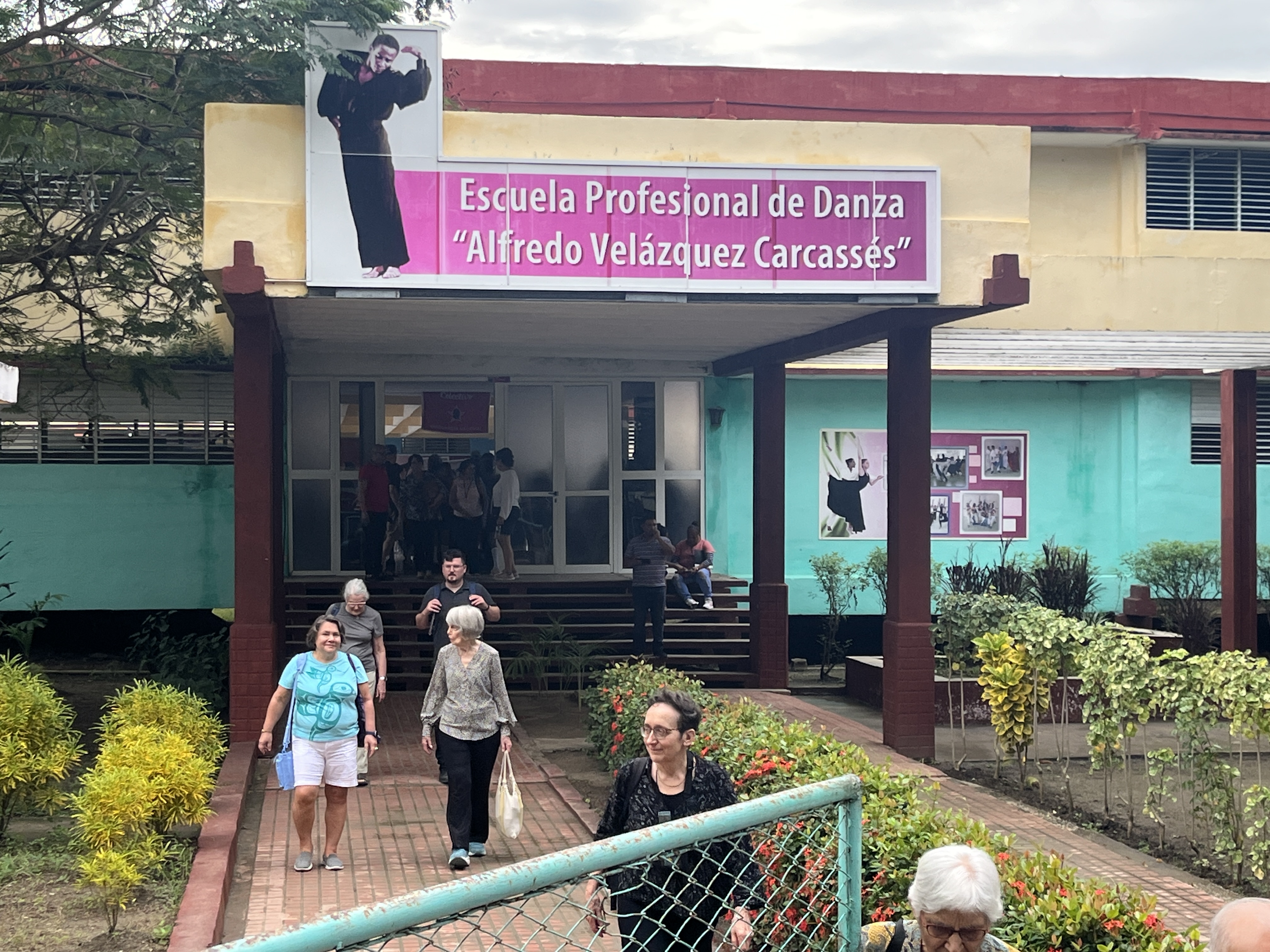
The troupe I was a part of had the opportunity to visit several educational art institutions in four of the country’s southeastern provinces: Holguin, Guantanamo, Santiago De Cuba, and Las Tunas.
There are 37 schools for the performing arts throughout Cuba, a country of 11 million people. These are public schools, meaning there are no extra fees or tuition. How many such public schools exist in Ontario?
(Drew Hayden Taylor)
In Ontario, students who want to attend a performing arts school often have to audition, or sometimes are chosen by a lottery system. They also frequently have to pay. In Cuba, these schools are viewed no differently than what could be called academic schools — and there is no shame in pursuing the arts. One woman told me that if their child wants to be a doctor, many parents roll their eyes. There are so many doctors in Cuba; what are their children going to do? Where are they going to work? Is there an unemployment office for surplus doctors? They’ve heard rumours of potential work in northern Manitoba.
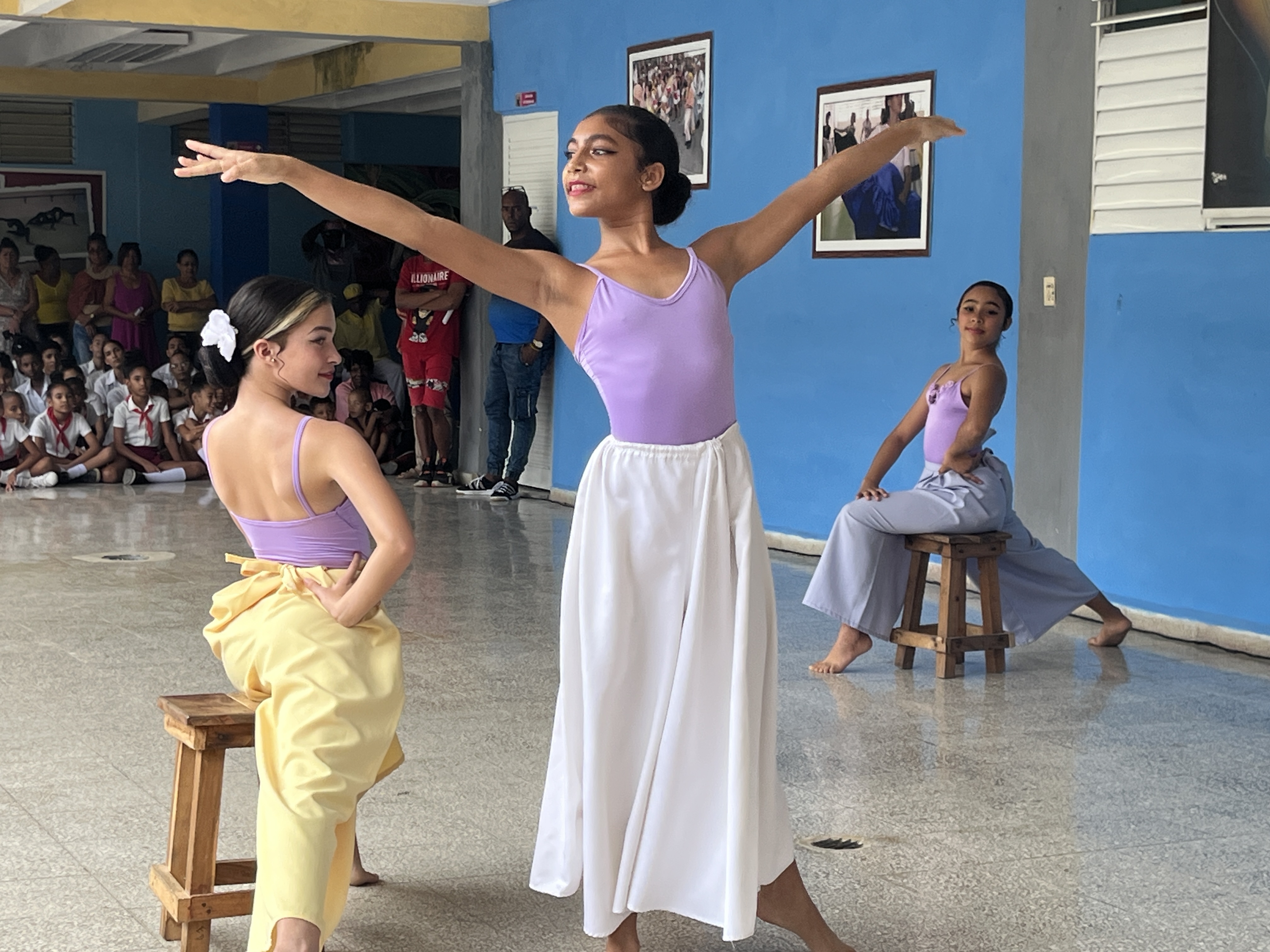
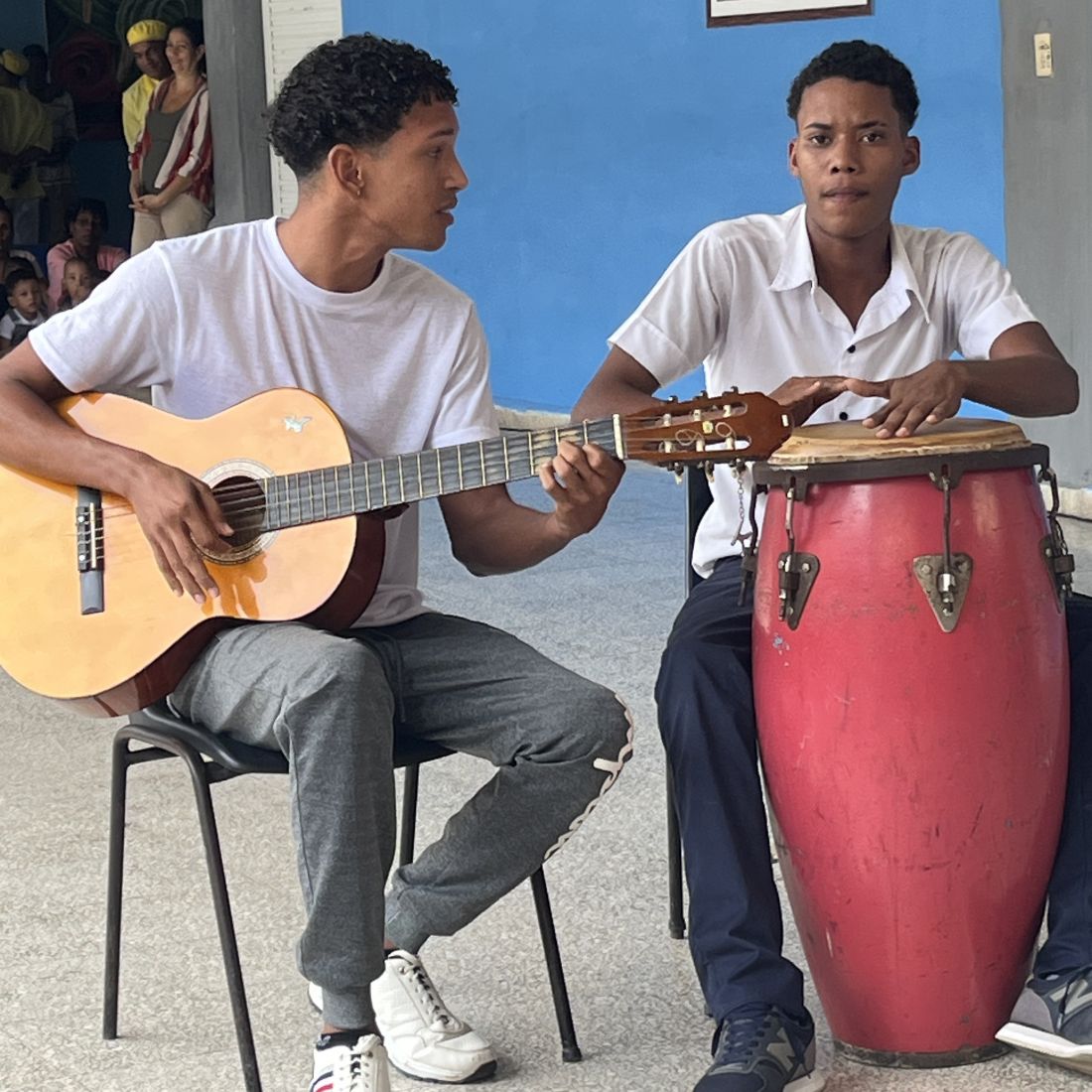
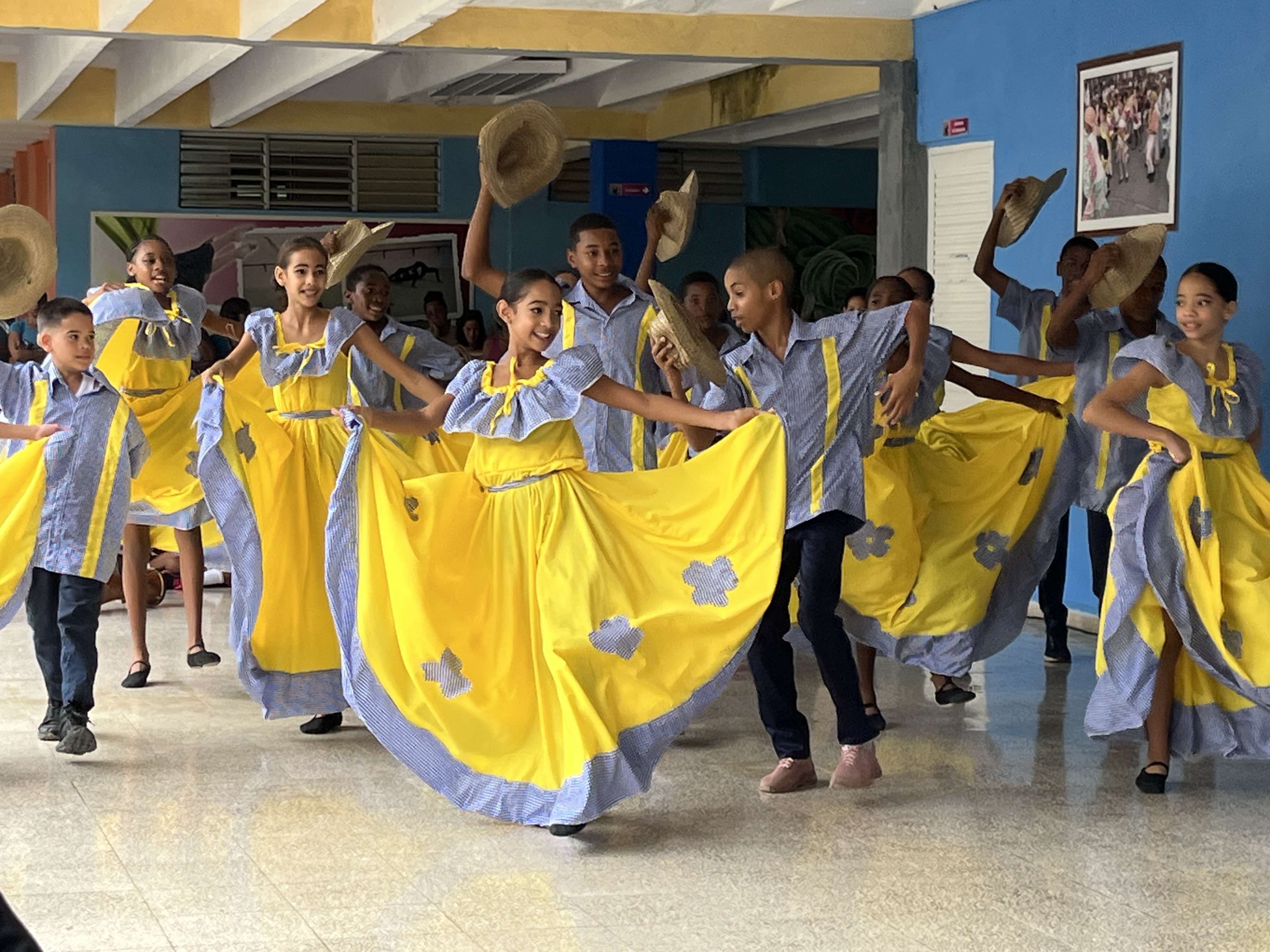
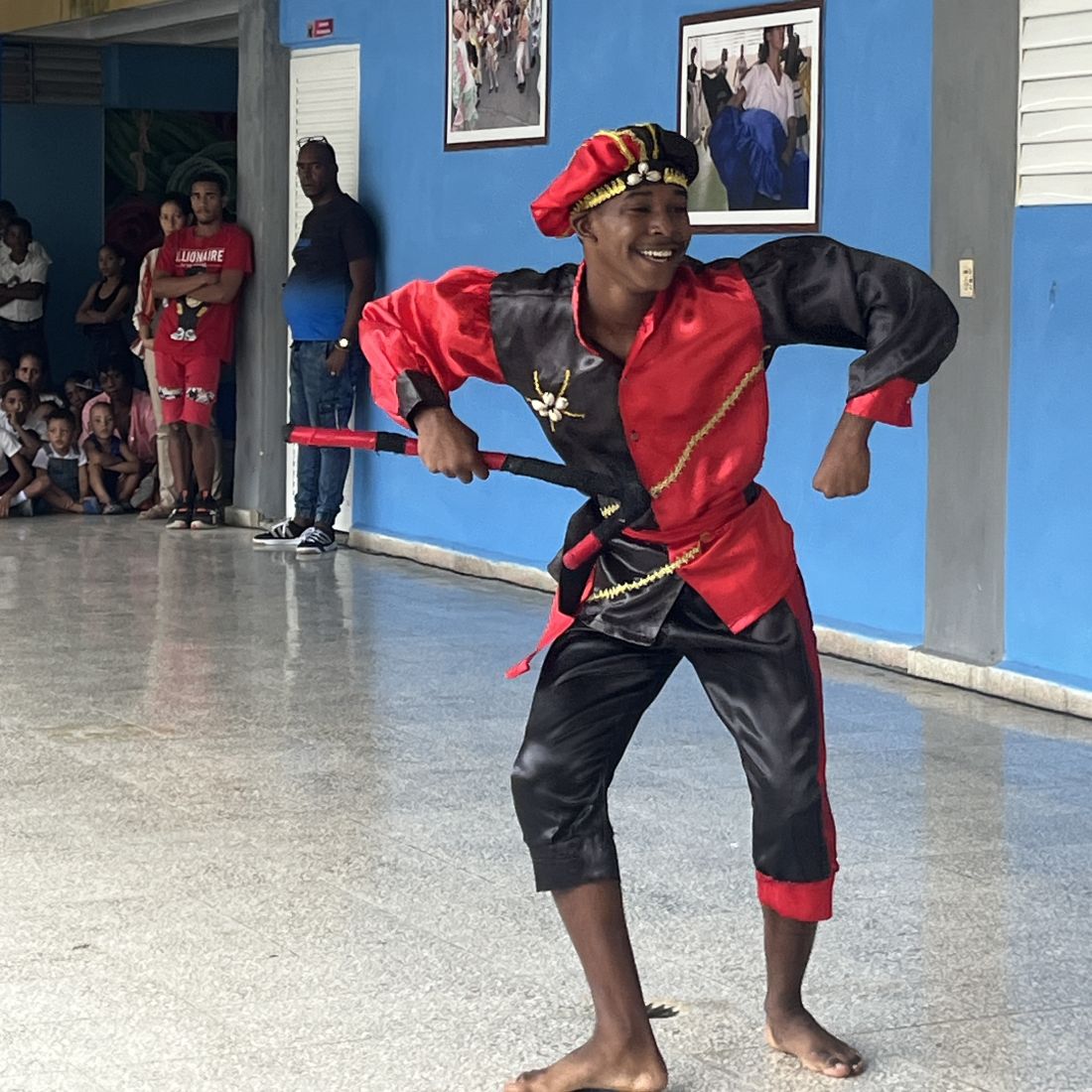
Instead, children want to be performers. In one Holguin arts school alone there were 369 students. They had a teacher for every 20 students. I watched a morning of performances from students, including practitioners of dance, singing, and acting. It was amazing. The school also taught classical ballet, music, and visual art. I visited at least three other similar intuitions with equally fascinating programs.
(Drew Hayden Taylor)
There are also 115 cultural centres spread across the country — places where these unique gifts can be exercised and developed outside the schools.
At one school we witnessed a teenage girl standing before us, beginning to sing. It took a few seconds before we recognized the song. We watched this little girl from an impoverished Caribbean island, belt out a kick-ass, seriously affecting version of “Hallelujah” by Leonard Cohen. In Spanish. The funny thing was her teachers didn’t know it was written by a Canadian.
(Drew Hayden Taylor)
Cuba is also politics — and the arts frequently reflect this. In a country dealing with the crippling effects of the U.S. embargo, much of the work explored by the schools deals with extolling the virtues of the Cuban Revolution. Other prior conflicts that help define the people and the culture are frequently highlighted. On two separate visits I saw young students reenacting the infamous execution of eight medical students during a Cuban revolutionary conflict in 1871. It was kind of weird watching 10- and 12-year-olds stand proudly to be “shot.”
(Drew Hayden Taylor)
I’ve always believed the arts can change the world, or at the very least, influence it. Cuba has many faults, many not its fault. But how the Cubans have embraced the arts and woven it into their culture makes you want to sing. Ontario could learn a lesson.
Drew Hayden Taylor is an award-winning playwright, novelist, journalist, and filmmaker from Curve Lake First Nation. His most recent book, “Me Tomorrow,” was released in October.
To protest against new measures by President Donald Trump, a group of supporters of Cuba and other social justice causes gathered in front of the office of Congresswoman María Elvira Salazar in Miami, Florida.
Right at the intersection of 57th Avenue and 8th Street, several activists demanded an end to the social security cuts that the White House president wants to impose to benefit his country’s business oligarchy.
Activist Jesús Pérez Rodríguez told Radio Havana Cuba that the protesters demanded an end to the deportations of undocumented migrants and the continuation of health insurance programs such as Medicare and Obamacare, which benefit the elderly and vulnerable.
The banners held and slogans chanted demanded the lifting of the genocidal economic, commercial, and financial blockade imposed by the United States on Cuba more than 60 years ago, which was intensified by the Caribbean island’s inclusion on the spurious list of state sponsors of terrorism.
The demonstration took place at noon this Thursday and was organized by several organizations, including the Alianza Martiana, the José Martí Cultural Association, Paz y Amor, and Miami Today radio.
Similarly, Spanish-born solidarity activist Arianna accused María Elvira Salazar of not wanting to meet with her constituents and of having to explain how the county budget is being executed. “We don’t know what programs they’re going to cut, but we do know that many are going to disappear,” activist Jesús Pérez Rodriguez told the activist in a video posted on social media.
She called on the Cuban community living in the United States to join the demonstrations so that the struggle will serve to prevent the loss of more social programs that could widen the gap between a minority of the wealthy and the majority of the poor.
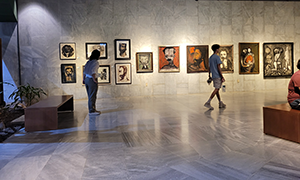
Students visited many cultural sites in Cuba, including the Patio del Pelegrín artist colony.
By Kat Oak On April 23, 2025 University of Michigan – f
“The Cuban people are some of the nicest you’ll ever meet; they’re so brave and resilient, and our host families were incredibly kind and generous. Connecting with them was my favorite part of the experience,” said Drew Conner, a junior computer science major from Flint who visited Cuba this March as part of the 2025 Wyatt Exploration Program.
“It surprised me because it’s so different from here, where I feel like we try to avoid each other when walking down the street,” Conner said. “Everyone greets each other there, even in a big city like Havana. One of our faculty guides, Stephanie Vidaillet Gelderloos, would say that they’ve adopted the socialist ideal, that everyone is somebody’s brother or sister, and you could feel that familial vibe everywhere we went.”
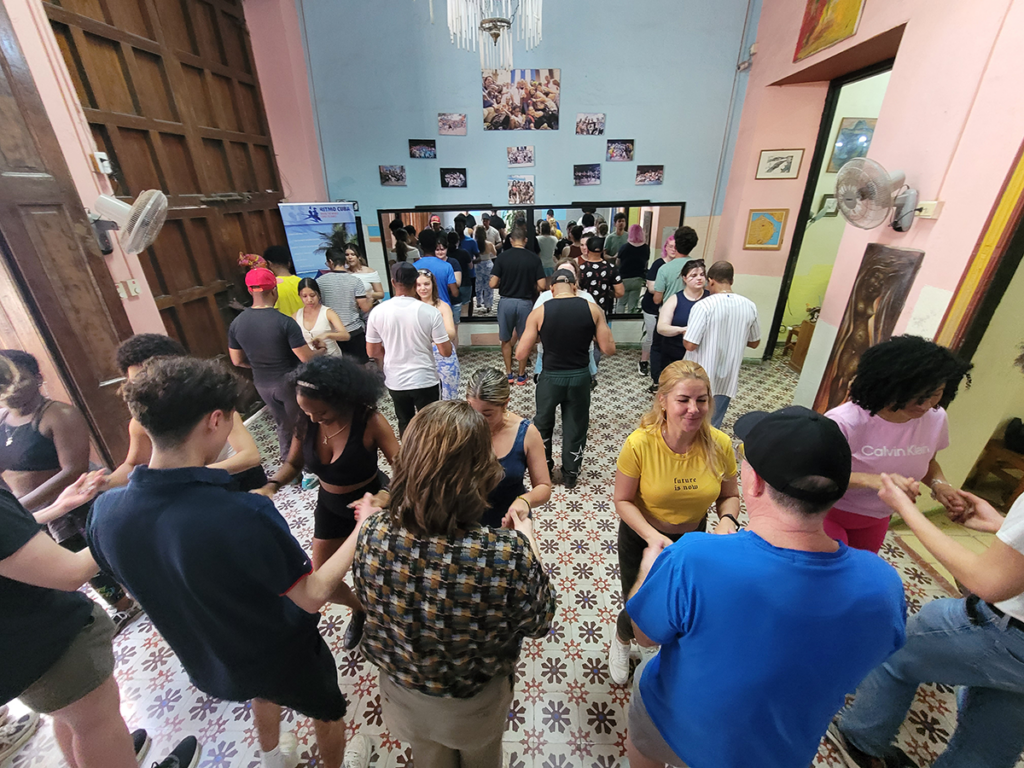
Another cultural activity was a group salsa lesson with local instructors and dancers.
Conner was one of 14 students who took part in the fully funded Wyatt Exploration Program trip to Cuba. Sponsored by the University of Michigan-Flint history program and supported by the Dorthea E. Wyatt Endowment, programming for every trip begins each year during the fall semester with a series of on-campus events that explore the culture and history of the selected destination. For the journey to Cuba, the history program presented a documentary series about Cuban culture, collaborated with the student organization Latinos United for Advancement to host salsa dance lessons and a social event, and featured an expert lecture on historical Cuban artifacts. UM-Flint students who attended the events were eligible to apply for the study abroad opportunity.
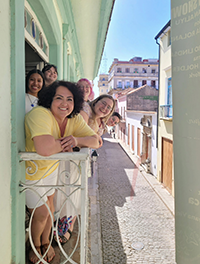
Vidaillet Gelderloos and students in Havana, Cuba
While Cuba was selected by professor of history Thomas Henthorn, Vidaillet Gelderloos, lecturer IV in the English program and advisor for LUNA, was also instrumental in the trip’s planning process and one of three UM-Flint faculty members on the trip. “This was the first time that the Wyatt program was open to all students, regardless of their major, so I wanted to make sure that the trip was culturally relevant, that students had an opportunity to speak Spanish and connect with local families,” said Vidaillet Gelderloos. “We selected a variety of cultural activities in and around Havana and the rural town of Viñales, specifically to offer a well-rounded perspective of Cuban life. The students were all in, even when they encountered difficulties related to access to modern conveniences or limited food options. They fully embraced Cuba and its people.”
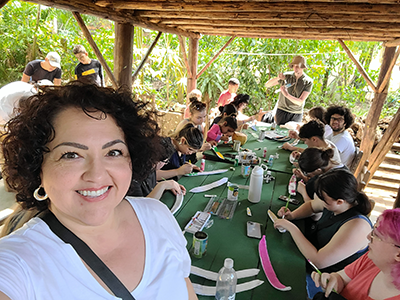
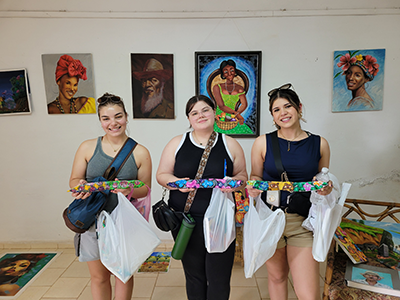
Students painted seed pods at the Patio del Pelegrín.
For Patience Jones of Flint, a junior majoring in fine arts, visiting the artist colony Patio del Pelegrín on the way to Viñales was a fascinating experience.
“What stood out to me is how they reuse everything there; there was no texture to their paintings, they spread the paint so thinly because they have to be economical with their supplies,” said Jones. “It’s a mentality that I plan to apply to my own work, to be less wasteful and more economical, not to overuse things.”
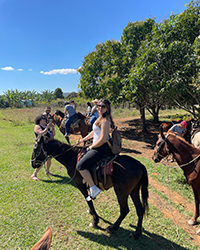
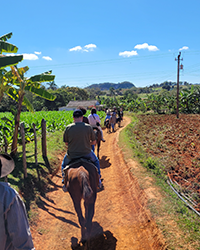
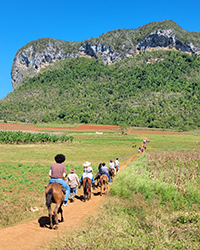
In Viñales, the group visited tobacco and sugar plantations, where they learned about the local agriculture, and then embarked on an hour-long horseback ride through the Viñales Valley, a UNESCO World Heritage site. “The landscape was so diverse, from mountains to caves to palm trees, it was a different kind of atmosphere compared to Havana; it just felt more free,” said Paulina Rivera, a junior from Ortonville studying human biology with a concentration in pre-med.
The group rode on horseback through the Viñales Valley.
Back in Havana, the group visited cultural sites such as the Fidel Castro Center, the Fine Arts Museum, Revolution Square and the José Martí Memorial, and Casa de Africa. They also attended a lecture at the University of Havana, where they gained a deeper understanding of Cuban history. Visiting the Memorial de la Denuncia was particularly eye-opening for many students.
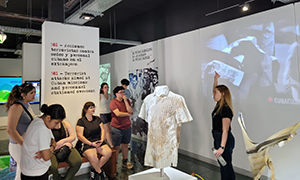
Students toured several museums, including the Museum of Fine Arts and the Memorial de la Denuncia.
“I knew some of the history, but I learned more about the cycles of violence between the U.S. and Cuba after the revolution, including some horrible things that the U.S. did to destabilize the country and inspire a regime change,” said Evan Karr, a senior economics major from Davison. “It’s told from their point of view, of course, so you know that there’s some propaganda there, but the fact that we don’t learn about those things is also another form of propaganda. It’s a lot more peaceful there now. Instead of engaging in violent tactics, the U.S. is trying to use economic tools to inspire them to change, and our guide was very outspoken about how many Cubans want more capitalism, so maybe change will come.”
Ethan Sage, a sophomore from Howell majoring in political science and history, echoed Karr’s perspective.
“It has inspired me to think very critically about the information I receive, and I’ve already seen changes in how I react to and engage with information. When I started at UM-Flint, I was much more reactionary, and I struggled with sharing my point of view when I disagreed with people,” Sage said. “Visiting the Memorial de la Denuncia showed me how there are multiple perspectives to every story. Now I am much more skilled at absorbing different ideas, documenting them in my mind and using that to make more sound arguments in debates on ideology, law, or politics. I wouldn’t have guessed that would be one of my main takeaways from this experience, but it has made a major impact on me.”
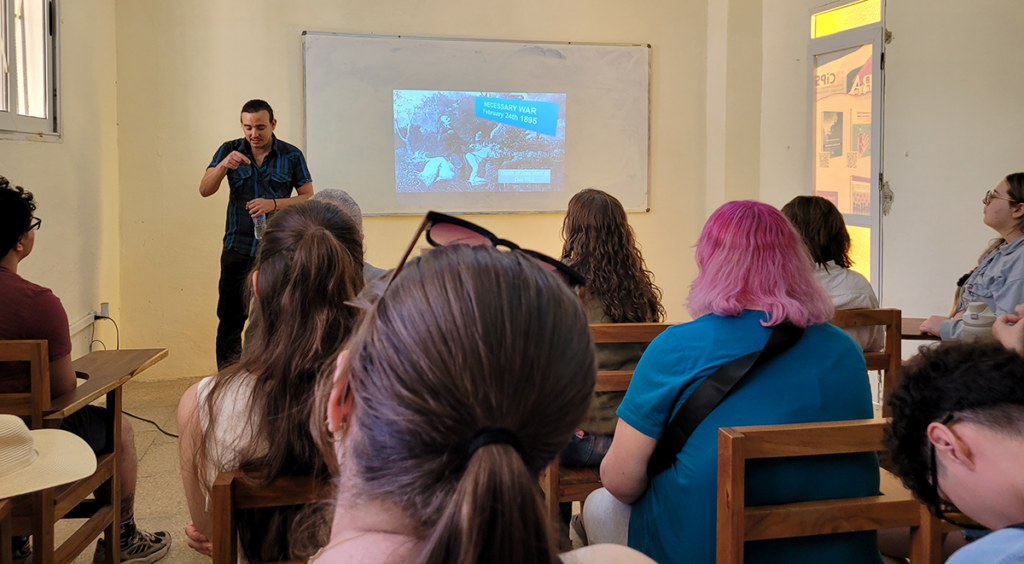
Students attended a lecture at the University of Havana, learning about Cuba’s history from settlement to the present.
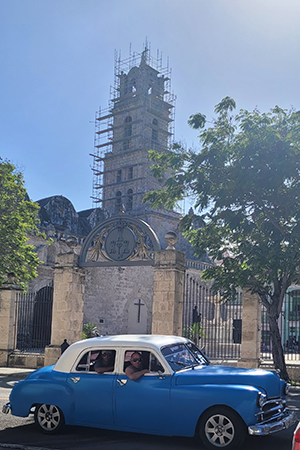
Other cultural experiences that impacted the group included their visit to Old Havana. “There are so many remnants of the past (there), older architecture and buildings that meant something to their culture. It was the site of the original settlement in Cuba,” said Maggie Orwig, a senior from Lapeer in the social studies teacher certificate program. “Our guide shared a lot about how life has changed through the years, but also how they’re kind of ‘stuck,’ because of their political and economic issues. All the cars from the 1950s are a symbol of their lack of progress, of how they’re frozen in time, in a way. Having the opportunity to be in the place where the history we were learning about actually occurred has inspired me to bring that experience into my work as an educator. I think it’s essential to express different perspectives and to encourage curiosity about what we learn, who is telling the story, and to interrogate its source. My goal is to continue to travel, expand my knowledge and share that with my community here in Michigan.”
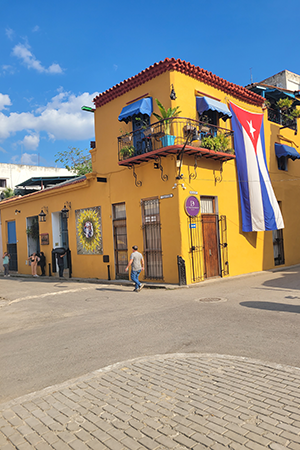
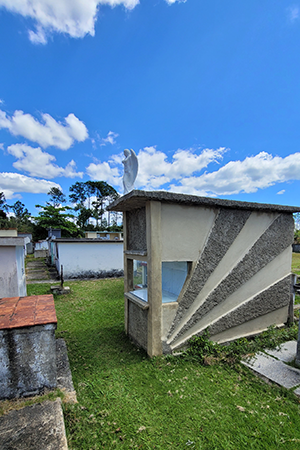
The group went on walking tours of Old Havana and various cemeteries.
Connecting with Cuba’s people, learning about its history, and experiencing its culture had a profound impact on all the students. However, one of the most significant aspects of the experience was the lifelong friendships they formed among themselves.
“The other students were truly amazing. We have such different personalities and are all studying different things, so we had different perspectives and interests to share,” said Rivera. “For anyone who hasn’t gone on a Wyatt trip — or any study abroad experience — do it if you can! You’ll make friends and connections with people who share the mindset and curiosity to learn. I loved the trip overall, but who I got to experience it with was special.”
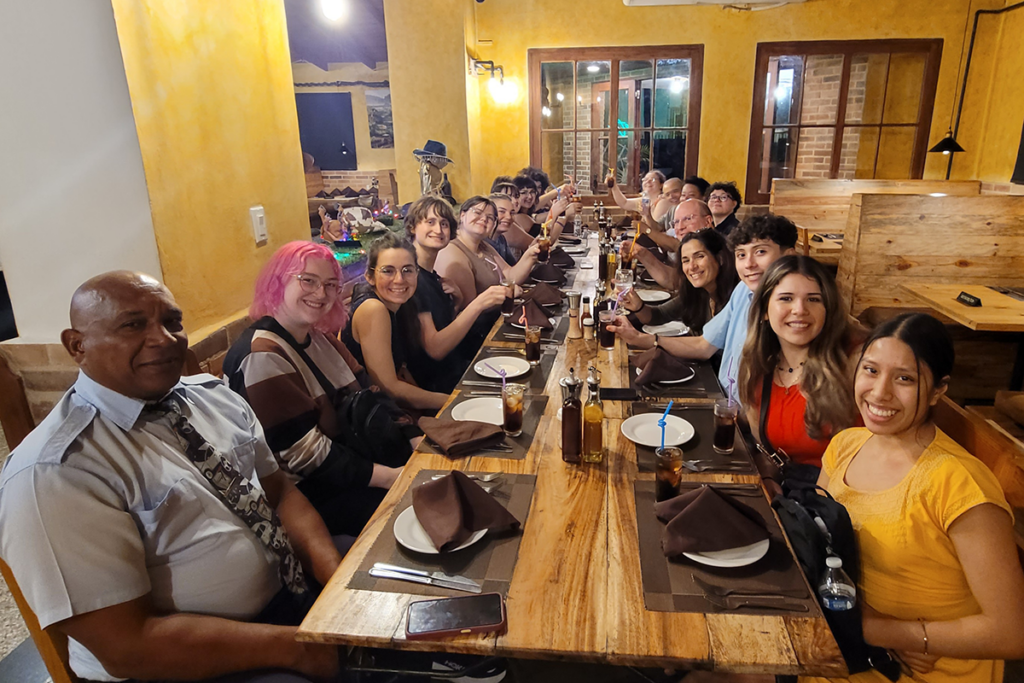
Students, faculty and guides at dinner in Havana.
“I am a transfer student, and when I told people that I was going on this trip, they were shocked that a program like this exists at UM-Flint. I know that I wouldn’t have ever had this opportunity at the school I was at before or a bigger university,” said Elizabeth Huggler, a sophomore fine arts major from Otisville. “This is just an example of what you get to experience at UM-Flint — the professors are great, you get one-on-one attention and programs like Wyatt offer a unique way to expand your knowledge and experience. I tell everyone that if you’re considering UM-Flint, do it. You’re not going to have a better experience anywhere else.”
Learn more about studying history and future Wyatt program offerings on the UM-Flint history program webpage.
By Daniel Montero, Justin Jimenez and Reed Lindsay – Belly of the Beast
August 14, 2024
If any single event encapsulated the historic opening between Cuba and the United States, it was the March 2016 exhibition baseball game between the Tampa Bay Rays and Cuba’s national team at Havana’s Latin American Stadium.
The 70-year-old stadium, known as “El Latino” in Cuba, was jam-packed hours before the game even started.
“As great as our fans are in the U.S., they don’t come six hours before the game,” Major League Baseball (MLB) commissioner Rob Manfred told Belly of the Beast journalist Reed Lindsay from the field before the first pitch.
The final score (Tampa Bay won 4-1) did nothing to dampen the fans’ – and the players’ – excitement.
“Beyond baseball, this is about people from both countries growing closer with these new relations,” said Yosvani Torres, the starting pitcher for Cuba’s national team. “I hope a lot of good things come from this.”
The game marked the crowning moment of Barack Obama’s historic visit to Cuba. There are no luxury suites at El Latino, and Obama watched the game in the stands behind home plate alongside then Cuban President Raúl Castro.
But the biggest applause was reserved for a relatively obscure AAA player on the Tampa Bay Rays.
Dayron Varona, a Cuban-born outfielder who used to play for the Camaguey Bulls of Cuba’s national league, led off the game for the Rays. Varona had left Cuba via speedboat in 2013 in an attempt to establish residency in another country, a requirement before a Cuban player can sign with an MLB team due to U.S. sanctions. He later spent five months in Haiti before being kidnapped on his way to the Dominican Republic.
Varona became the first player who had abandoned his team in Cuba to come back to the island to play.
“There’s no greater feeling than that,” said Varona. “I could feel it rush through my body, from my toes to the ends of my hair.”
“The doors are opening”
The Tampa Bay game was purely symbolic but it heralded tangible progress in the relations between the two countries’ governments and their biggest baseball leagues.
With Obama loosening U.S. sanctions, an agreement between MLB and the Cuban Baseball Federation (FCB) seemed inevitable.
“The doors are opening,” Adolis García, who started that day in right field for the Cuban team and last year set playoff records with the Texas Rangers, told Lindsay before the game. “Cuba’s national sport is baseball and through it a lot of connections can be made.”
Three months earlier, an MLB goodwill delegation had visited the island, composed of current and future Hall of Famers Dave Winfield, Joe Torre, Clayton Kershaw and Miguel Cabrera as well as Cuban ballplayers Yasiel Puig, José Abreu, Brayan Peña and Alexei Ramírez.
“It’s been almost 17 years without seeing [my family], and for me to come back here and hug them and shake their hand, and baseball is what made everything possible,” Peña said in Havana at the time.
It took more than two years, but MLB and the FCB finally signed a deal in December of 2018, modeled off MLB’s agreements with other prominent leagues such as the Korea Baseball Organization (KBO) and Japan’s Nippon Professional Baseball (NPB). In addition, the deal with Cuba would have eliminated the requirement that Cuban baseball players establish residency in another country in order to sign an MLB contract.
“Knowing that the next generation of Cuban baseball players will not endure the unimaginable fate of past Cuban players is the realization of an impossible dream for all of us,” said Abreu, a Cuban-born all-star first baseman playing with the White Sox at the time. “Dealing with the exploitation of smugglers and unscrupulous agencies will finally come to an end for the Cuban baseball player.”
Four months later, what came to an end was not the trafficking of Cuban ballplayers, but the MLB-FCB agreement.
Trump puts an end to ending human trafficking
In April 2019, Donald Trump squashed the MLB’s deal with the FCB.
The Trump administration labeled the MLB deal, which was designed to end the human trafficking of baseball players from Cuba, “a form of human trafficking” because the FCB would have received payments when its players signed with MLB teams.
This type of arrangement was not new for MLB.
When an MLB team signs a player from the NPB, it is required to pay a sizable percentage of their contract as part of a “release fee” or “posting fee” to gain the rights to the player.
For example, the contract for Japanese pitcher Yoshinobu Yamamoto, who signed with the Dodgers for 12 years and $325 million last December, included a $50.6 million posting fee sent to his former team, the NPB’s Orix Buffaloes.
The fees paid to NPB teams before the posting system was standardized in 2018 were even greater. In 2006, the Boston Red Sox paid the NPB’s Seibu Lions $51.1 million for the rights to negotiate exclusively with Japanese ace Daisuke Matsuzaka.
Similarly, the FCB would have received payments when its players signed with MLB teams, which would have presumably been used to help sustain Cuba’s financially-strapped league and baseball development system.
According to one estimate, if such an agreement had been in place from 2000 until 2016, the Cuban Baseball Federation would have received $181 million via posting fees for 49 Cuban players who ultimately signed with MLB clubs during that period.
Needless to say, Cuba’s baseball players did not see the MLB deal as “a form of human trafficking.”
“Every ballplayer here felt bad when they heard the news that Trump closed the doors to play in the MLB,” Cuban ballplayer Xiam Vega told Belly of the Beast journalist Liz Oliva Fernández in the first episode of the documentary series The War on Cuba. “[Right now] I’d have to renounce my country and I wouldn’t want to do that. I’d want to play [in the U.S.] and return to my country to be with my family and not far from them.”
Cuban baseball in crisis
With the MLB deal scuttled, Cuba’s best ballplayers have continued to risk their lives trying to make it to the big leagues.
Some make the often dangerous journey to other Latin American countries and then sign with MLB teams once they receive legal residency, such as Yordan Álvarez (Haiti), Randy Arozarena (Mexico) and Adolis García (Dominican Republic). Others abandon their teams while competing in international tournaments.
Hundreds of Cuban baseball players have left in recent years.
And they are doing so at younger and younger ages. Two of the players who represented Cuba in the Little League World Series last year – the first time a Cuban team played in the tournament – have since migrated to the Dominican Republic with their families in the hopes of eventually signing a contract with an MLB team when they turn 16.
Meanwhile, baseball in Cuba is facing an unprecedented crisis. With its best players gone, attendance at national league games is lower than ever as is investment in youth baseball. These days, it’s more common to see Cuban kids playing soccer – which is cheaper and more accessible – than baseball.
“U.S. sanctions make it hard”
There is no sign MLB has taken any actions to revive the deal, even since Trump left office. With the Biden administration embracing Trump’s Cold War-era policy, big business interests like MLB have steered clear of Cuba.
“A lot of people who were very involved in Cuba all of a sudden disappeared because it was politically risky,” Cuban-American businessman Carlos Gutierrez, a former commerce secretary under George W. Bush who had encouraged corporations to invest in Cuba during the Obama opening, told Oliva Fernández in the documentary Uphill on the Hill. “We used to call meetings with business people and get 40 CEOs. Today it’s very hard to get two or three.”
Rob Manfred may be afraid of engaging with Cuba, but Dayron Varona hasn’t stopped trying to build bridges between the two countries.
Last month, Varona, who now coaches Little League baseball through his Miami-based Varona Bulls Academy, took two of his teams to play in Havana.
Most of the kids’ families are Cuban American.
“We decided to do this trip no matter what anyone could think,” said Teresa Hernández, the grandmother of one of the Bulls players.
“Being here with my family and having my Cuban family see my son play was a great idea,” said Ayleen Monteagudo, the mother of another Bulls player. “I think most people want to do this again.”
For Varona, it was special to be back too.
“Amazing, it reminded me of when I played as a kid,” he said.
Still, Varona laments what could have been had the dream of normalized relations, which appeared so close when he led off for Tampa Bay at El Latino in March 2016, not been snuffed out.
“The [U.S.] blockade makes things hard,” said Varona. “I want Cuban players to be able to play wherever they want without having to make decisions like riding a speedboat, risking their lives, that they can play in the U.S. without leaving Cuba.”
Updated on: April 22, 2025 / 7:00 PM EDT / CBS Miami
Twenty-five years after federal agents stormed a Miami home to seize 5-year-old Elian Gonzalez and return him to Cuba, the now 30-year-old industrial engineer and Cuban National Assembly member reflects on his simple life in Cardenas, his mother’s sacrifice and his desire to unite Cubans across the Florida Straits.
A life shaped by tragedy and resilience
The fight over custody of Elian Gonzalez ended on April 22, 2000, when heavily armed federal agents raided the Little Havana home of his Miami family. Elian was seized at gunpoint and returned to his father, Juan Miguel Gonzalez, who was soon back in Cuba with his 5-year-old son.
Today, Elian still lives in the house where he grew up.
“I grew up with my family. I grew up with those I had to be with and that makes me very happy,” Elian said during a 2023 interview with Liz Oliva Fernandez, an independent Cuban journalist for the U.S.-based media outlet Belly of the Beast.
Elian said during the interview that his life is simple, he is married and has a 4-year-old daughter. Her name is Eliz in honor of his mother Elizabeth, who died at sea during the ill-fated attempt to escape from Cuba.
“My mother was an excellent mother,” Elian said. “She lost her life trying to save me. And looking for a better place to live. She was also a victim of that policy of sanctions against Cuba that makes Cubans want to emigrate.”
From international crisis to national service
Elian was elected to a seat in the Cuban National Assembly. He represents the city of Cardenas. He says he has never regretted returning to Cuba and that he’s led a normal life despite the popularity he gained during the international custody fight that saw protests on the streets of Miami and Cuba.
“Oh, I’ll never forget that day,” said former Miami Mayor Manny Diaz. He was an attorney for Elian’s Miami relatives. Diaz fought court battles to keep the boy in the U.S., facing off against then-Attorney General Janet Reno, whose hometown was Miami. Reno knew the passion Elian’s story ignited in Miami.
“The whole thing became very political.” Diaz said. “It took on a life of its own with the family pitted against each other in a very adversarial way that didn’t have to be.”
Liz Oliva Fernandez, the Cuban journalist who interviewed Elian in 2023, said Elian wants to reunite Cubans on both sides of the Florida Straits. You can see the entire interview here at www.bellyofthebeastcuba.com
“I really believe he wants to build bridges between Cuba and the United States,” Oliva Fernandez said. “I believe he wants to find a balance between the two sides.”
Elian added that he wants to make sure no other mother risks her life or the life of a child trying to escape conditions in Cuba like his mother did 25 years ago.
Washington, April 22 (Prensa Latina) Prestigious Cuban pianist and composer Chucho Valdés will receive the Jazz Master Award, the highest distinction currently awarded to a jazz musician in the United States, and which in its 2025 edition will be awarded for the first time to a foreigner and Latino.
The National Endowment for the Arts (NEA) will present the 2025 Jazz Master Awards during an annual concert on Saturday, April 26, at the Kennedy Center in Washington.
Along with Valdés, Americans Marshall Allen (saxophonist), Marilyn Crispell (pianist) and Gary Giddins (critic) will be recognized for their outstanding contributions to the genre.
Considered the most influential figure in modern Afro-Cuban jazz, the US-based musician from the island was awarded the 2025 Leonard Bernstein Lifetime Achievement Award last week, presented by the Longy School of Music in Cambridge.
Valdés received the award from the center’s president, Karen Zorn, and Jamie Bernstein, daughter of the prominent American composer and conductor (1918-1990) after whom the prize is named.
In justifying its decision, the academic institution emphasized that Valdés, 83, “embodies many of the key values cultivated at Longy, including the freedom to explore, creative thinking and innovation, and the joy of making and sharing music with others.”
He also praised Valdés’s six-decade career, “both as a soloist and as a conductor, in which he has distilled elements of Afro-Cuban musical tradition, jazz, classical music, rock, and more into a deeply personal style.”
Born into a family of musicians on October 9, 1941, his training began in childhood under the guidance of his father, the great Bebo Valdés, pianist, composer, and conductor, and his mother, Pilar Rodríguez, a singer and piano teacher.
During his long and successful career, the founder of the iconic group Irakere has, among others, the National Music Award in Cuba (2020), has won 13 Grammys (seven of them Latin Grammys) and in 2018 was inducted into the Latin Songwriters Hall of Fame.
Havana, April 21 (Prensa Latina) Army General Raúl Castro expressed his deep gratitude and affection for Pope Francis, who died today, calling him a dear friend and a man of integrity and consistency.
In his message, broadcast on national television, the leader of the Cuban Revolution stated that the death of the Supreme Pontiff of the Catholic Church deeply moves him.
I have fond memories of the meetings we held and greatly appreciate his affection for the Cuban people and his personal contribution to fostering fraternal dialogue and understanding in relations between Cuba and the Holy See, which have strengthened during his pontificate, he noted.
He also emphasized that Francis’s life and papacy were examples of tireless struggle in defense of peace and brotherhood among peoples.
His constant concern for the pressing challenges facing humanity and his dedication and commitment to finding a viable yet sustainable solution to these problems will serve as an example to all.
Just as he told me on one occasion, I will also carry him forever in my heart, he expressed.
Cuban President Miguel Díaz-Canel declared this day a day of official mourning for the death of Pope Francis.
The measure will be in effect from 6:00 a.m. local time on April 22nd until midnight on April 24th.