Thousands of Cubans gathered Thursday in Havana’s Plaza de la Revolucion to commemorate May Day, reviving a tradition that had been put on hold in recent years. (AP Video/Ariel Fernández and Milexsy Durán) Published May 1, 2025
Thousands of Cubans gathered Thursday in Havana’s Plaza de la Revolucion to commemorate May Day, reviving a tradition that had been put on hold in recent years. (AP Video/Ariel Fernández and Milexsy Durán) Published May 1, 2025

Havana, May 1 (Prensa Latina) President Miguel Díaz-Canel today highlighted the massive mobilization of the Cuban people on International Workers’ Day and emphasized the commitment to the Revolution amid a complex economic situation.
“600,000 Havana residents, millions across #Cuba? No one can say a number with certainty, because any figure seems small compared to the emotion provoked by that sea of people rising from the Malecón into history,” the president highlighted on the social network X.

The head of state emphasized that at the most difficult moment for the country, amid the most brutal pressure and threats ever, from Maisí (Guantánamo) to Mantua (Pinar del Río) and vice versa, the Cuban archipelago shook as a people.
Through the same digital platform, the Secretary of Organization of the Cuban Communist Party, Roberto Morales, confirmed that more than 600,000 people marched in Havana and more than 5.3 million across Cuba.
Numerous Cuban demonstrations, under the slogan “For Cuba Together We Create,” took to the streets of the Caribbean country this Thursday morning in support of socialism and the Revolution.
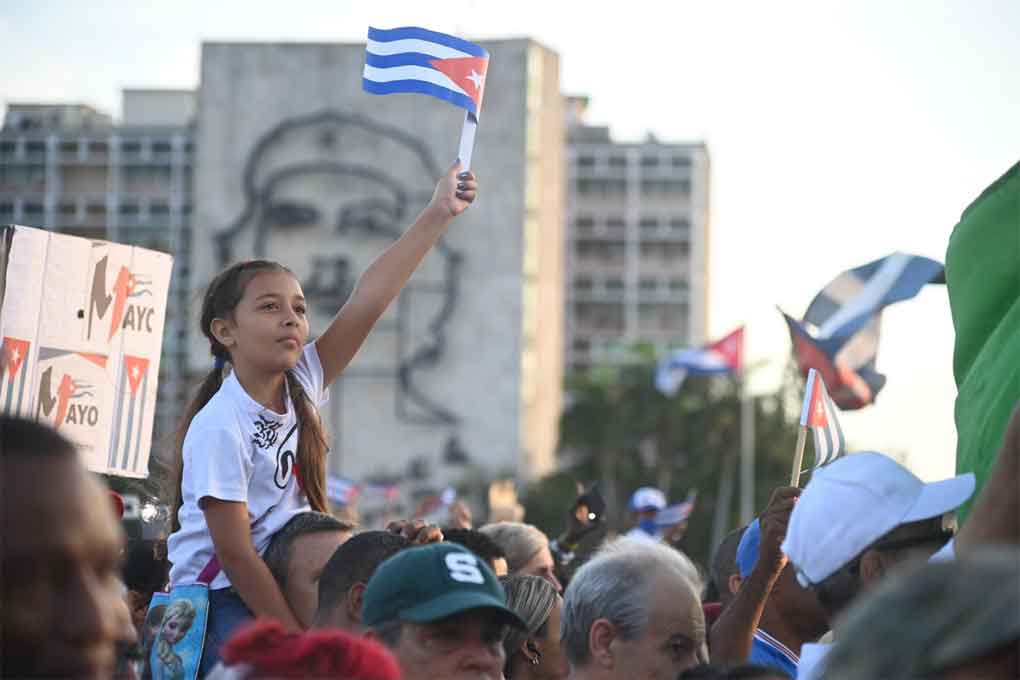
In the capital, the health sector inaugurated the massive event in recognition of its work protecting the public’s health and denouncing the campaigns orchestrated by the United States government against Cuban medical missions.
On behalf of the Cuban labor movement, the secretary general of the Cuban Workers’ Central Union (CTC), Ulises Guilarte, reaffirmed the Caribbean country’s commitment to a peaceful, prosperous, and just future.
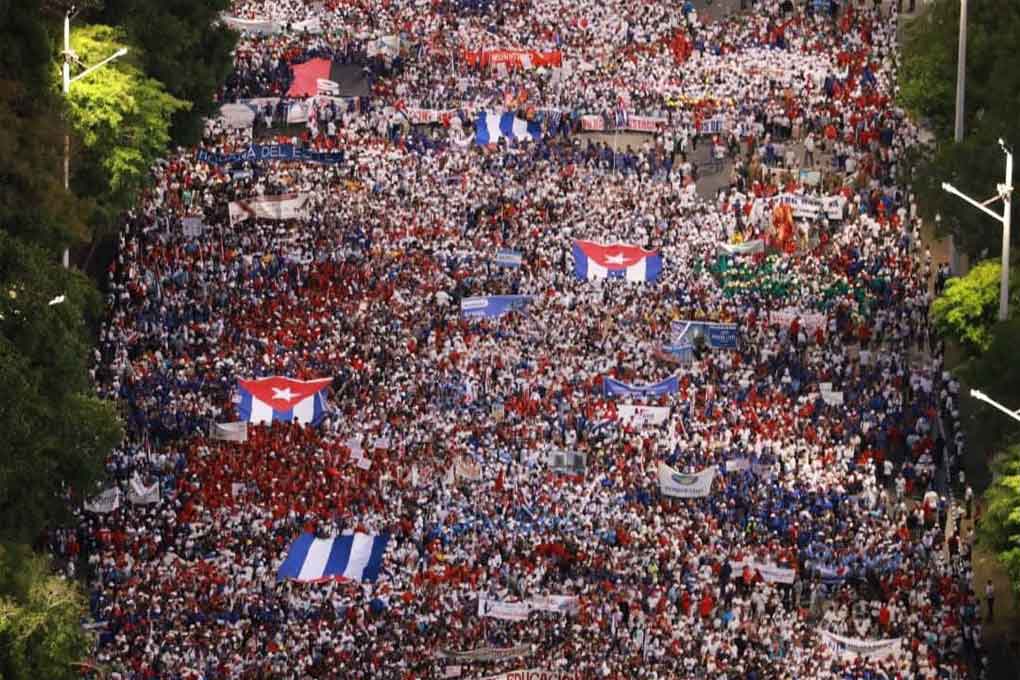
Guilarte emphasized that the sea of people that flooded the squares across the country today confirms the people’s determination to resist the counterrevolutionary attacks, and reaffirmed the will to maintain internal unity and solidarity with other nations.
As a demonstration of global support for Cuba, some 1,000 international delegates from more than 30 countries rallied around the squares alongside the people to condemn the economic, commercial, and financial blockade.
arc/mks

The awards ceremony will be held Saturday, April 26, at the Kennedy Center in Washington, DC.
April 24 (OnCuba News) Renowned Cuban pianist and composer Chucho Valdés has been honored with the 2025 Jazz Master Award, the highest honor for a jazz musician in the United States.
This is the first time a foreign Latin American artist has received this distinction, which is presented annually by the National Endowment for the Arts (NEA).
The awards ceremony will be held next Saturday, April 26, at the Kennedy Center in Washington, DC, during the traditional annual concert organized by the NEA, reported Prensa Latina news agency.
Along with Valdés, three other prominent exponents of U.S. jazz will be recognized: saxophonist Marshall Allen, pianist Marilyn Crispell, and music critic Gary Giddins, all honored for their exceptional contributions to the genre.
Chucho Valdés, considered the most influential figure in modern Afro-Cuban jazz, currently resides in the United States, adding yet another recognition to his extensive career.
Chucho Valdés and the 2025 Leonard Bernstein Award

Havana, April 30 (Prensa Latina) Havana’s Acapulco cinema hosted a special day of screenings and discussions today to mark the fifth anniversary of Belly of the Beast, a U.S. media outlet based in Cuba.
Belly of the Beast specializes in the production of documentaries and videos about the impact of US sanctions, Cubacine Icaic highlighted on its Facebook profile, while praising the work of the media with the phrase: “Cinema that denounces, cinema that humanizes: Belly of the Beast celebrates five years in Cuba!”
With the support of institutions such as the Cuban Institute of Friendship with the Peoples (ICAP), the Ministry of Foreign Affairs, and the International Press Center (CPI), and with the presence of international delegations that will participate in tomorrow’s May Day celebrations, two documentaries were screened.
According to Cubacine, these films embody the spirit of committed journalism, and the opening remarks at the Acapulco celebration were given by Reed Lindsay, director of Belly of the Beast and producer of both documentaries.
From Gaza to Cuba, directed by Frank Rojazz, tells the story of Murid Abukhater, a young Palestinian born and raised amid the ravages of war in Gaza, who is currently training as a doctor on the island with the hope of one day returning to serve his people. His story is a testament to resilience, solidarity, and the future.
The premiere of El sueño de Teresita, by Daniel Montero Pupo, took place. It stars Dr. Teresita Rodríguez and the Cneuro team, creators of the drug NeuroEpo (brand name: NeuralCim).
This is a Cuban innovation in the treatment of Alzheimer’s with promising clinical results, with an 84 percent effectiveness rate in clinical trials.
The documentary exposes how the embargo hinders global access to this breakthrough, while also revealing a moving personal story: that of the first woman to try the drug, motivated by her daughter’s love for her mother.
Both screenings opened the way for direct exchange with their protagonists and filmmakers, in a meeting where cinema not only documents but also calls for debate, empathy, and transformation.
From the Cuban Institute of Cinematographic Art and Industry (ICAIC), we celebrate the power of cinema to amplify voices, challenge silences, and remind us that every well-told story can change the way the world looks, concluded the institutional post on social media.
arc/dla

Havana, April 30 (Prensa Latina) Members of the 18th International May Day Brigade of Voluntary Work and Solidarity with Cuba visited several state and social institutions in Cuba today.
Since their arrival in the Caribbean territory, the brigade members from 16 countries have made numerous trips to learn about the consequences of the economic blockade imposed by the White House on the Cuban people.
During this day’s tour, brigade members from the United States and Germany arrived at the Azumat Logistics Company.
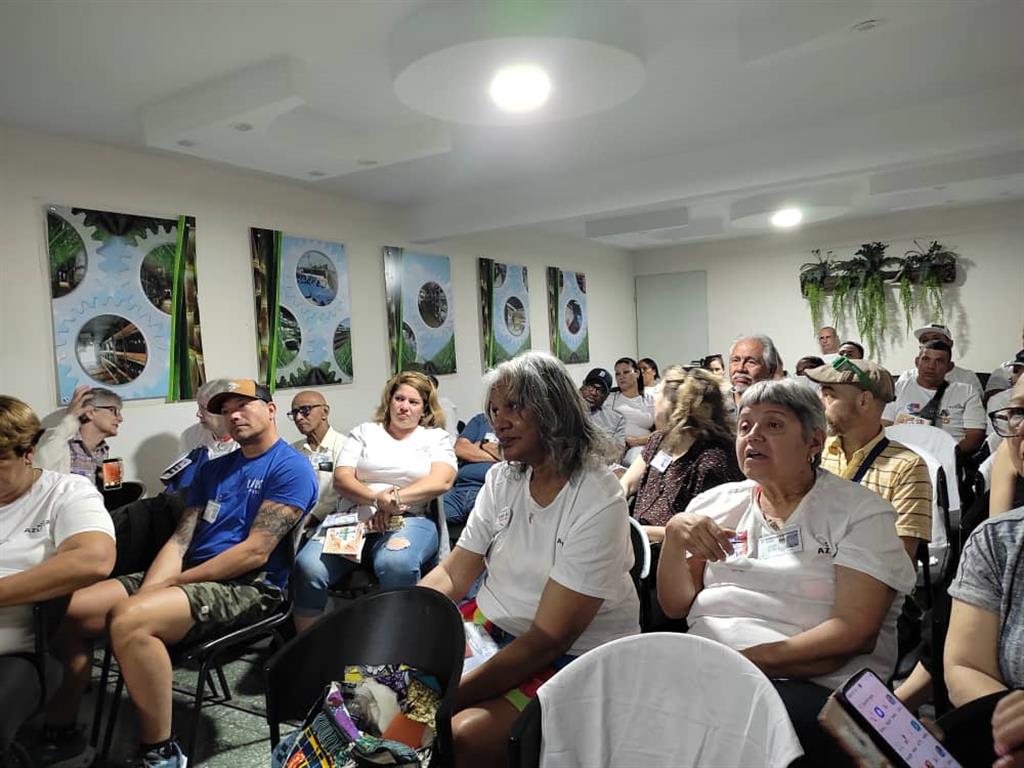
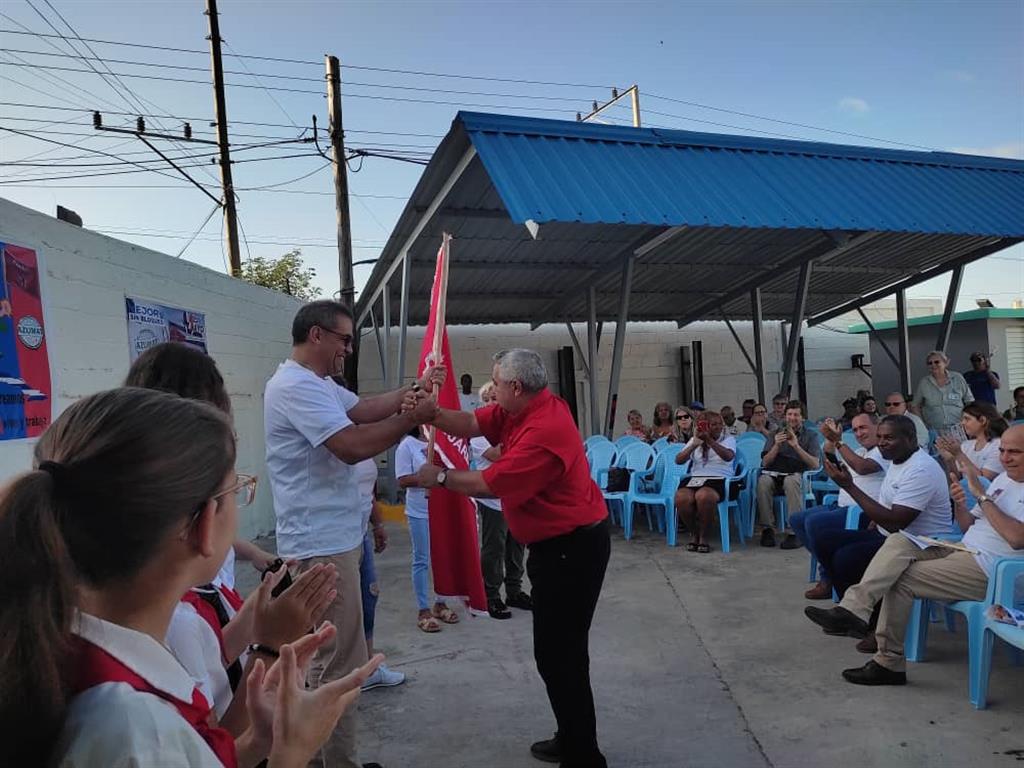
This organization was recognized as a National Vanguard for “its favorable results in fulfilling its missions, despite the current situation in the country,” said Ulises Guilarte, secretary general of the Cuban Workers’ Central Union (CTC).
In an exclusive interview with Prensa Latina, José R. Martínez, the company’s Director of Information and Communications, stated that the company aims to improve and advance the implementation of its Strategic Development Programs; therefore, “this distinction is more than an achievement, it represents a commitment and an opportunity.”
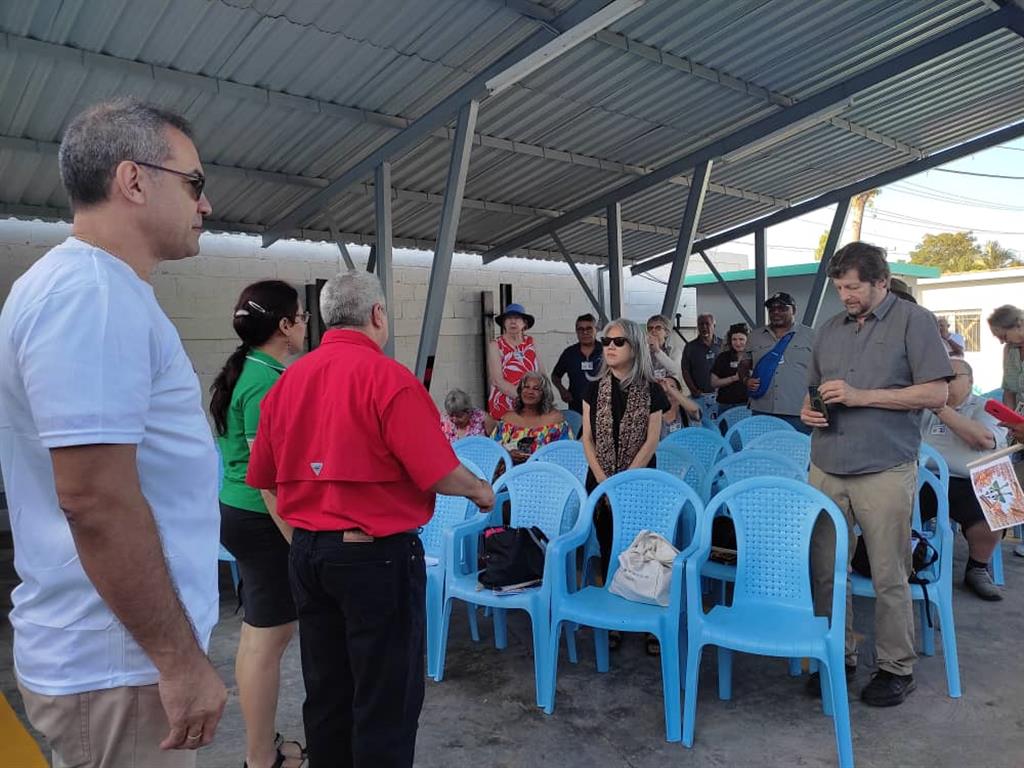
The directors of the institution, whose social objective is to market and distribute products and supplies to the entire Cuban sugar industry, participated in another meeting with foreign visitors, where they explained its operation and answered questions on topics such as its internal policies and salary system.
At the event, Guilarte emphasized to the delegation the need for collaboration and support among countries, the resilience of the Cuban people in the face of the tightening of economic sanctions imposed by the United States, and reiterated the invitation to participate in the May Day Parade in Cuba.
Other delegations from the internationalist brigade carried out activities that included visits to other companies located in the capital, such as the Cuban International Insurance Company SA and the Prodal Food Production Company.
The more than 300 brigade members will extend their stay on the Caribbean island until May 16.
rc/ale/lcs

April 29 (Radio Rebelde) Nearly 1,000 activists, representing 260 organizations from 39 countries, are in Cuba today to accompany the people in the celebrations for International Workers’ Day, said ICAP President Fernando González.
During an appearance Monday evening on the news program Mesa Redonda, the head of the Cuban Institute of Friendship with the Peoples (ICAP) reported that of that number, 325 friends of the island form the 18th contingent of the May 1st Brigade of Voluntary Work and Solidarity with Cuba this Monday.
Of the nearly 1,000 delegates present, 324 come from Latin America and the Caribbean, 263 from North America, including 211 from the United States, 230 representatives from European countries, 67 from Africa, and nine from Asia, González explained.
He also emphasized the value of the U.S. delegation’s presence here at a time of internal pressure and hostility toward progressives and political activists in that nation.
Convened by that organization, the Workers’ Central Union, and the Communist Party of Cuba, the visitors are paying their own expenses and living in conditions similar to those experienced by millions of Cubans on the island today.
Their enemies use the false argument that the Cuban government pays them to take part in the May Day parades, the leader denounced, describing the conditions in which they are housed in camps for those mobilized for productive labor.
Despite the rigors of prolonged blackouts and water shortages, they fully understand the situation, because they come to support the people in their current difficulties, obstacles, and hardships, he emphasized.
He reported that they will carry out three days of activities, which will take them to work centers in the capital on April 30th to learn about the reality in “Anti-Imperialist Forums,” organized by unions and government agencies.
There, they will learn about the real impact of the United States’ economic, commercial, and financial blockade policy, and the actions to suffocate the economy and the people.
In addition, they will view audiovisuals about the Israeli genocide in Gaza and the development of vaccines in Cuba.
The island’s medical brigades abroad and the humanitarian service of their professionals will receive tribute from the foreigners who are in Cuba for the activities for International Worker’s Day.

Each reflects personal explorations, cultural tributes, and a deep connection with Afro-Cuban roots.
Almost three months after the 40th edition of the Jazz Plaza International Festival and on the eve of International Jazz Day on April 30, Havana still seems bathed in the free winds of this versatile genre.
From those days and nights, we are left with the aftertaste of Afro-Cuban jazz, timba, and traditional Cuban music rhythms, blended with blues, soul, and folk sounds from different latitudes—a myriad of emotions renewed with each jazz improvisation. And, of course, thanks to the album and the music of the authors contained therein, the journey never ends.
There is something confessional about listening to an album. Note by note, song by song, we build an emotional edifice that can collapse on the third track or stand strong, sturdy, for the rest of our lives.
Any analysis that attempts to portray Jazz Plaza’s past may prove insufficient, as 40 years of shared creation make it difficult to accurately summarize, although some presences are unavoidable.
What can best tell what that was like are the valuable recordings. If you want to know what the most recent edition of the jazz festival in Cuba sounded like, you only have to turn to them.
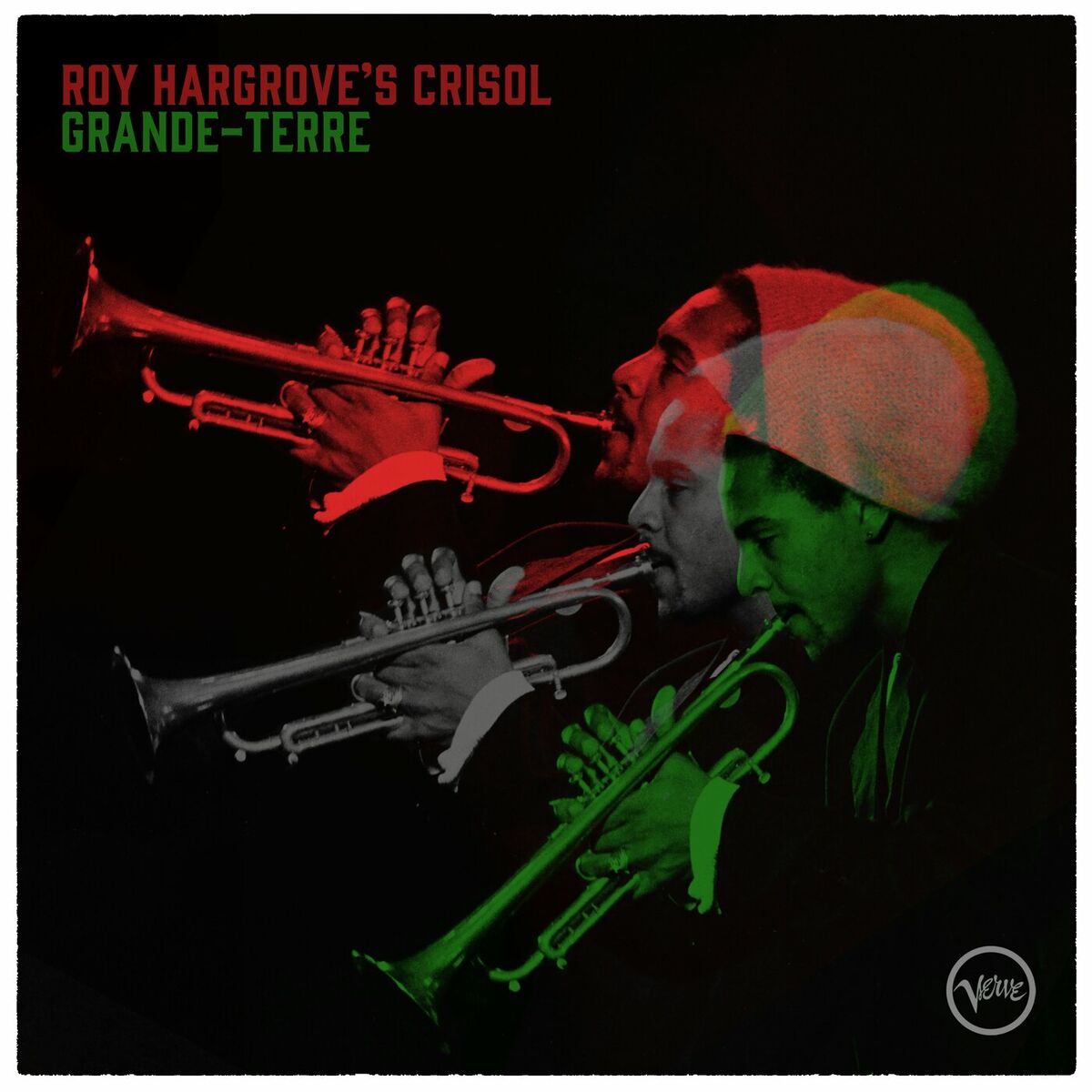
This album is a sensational discovery for any jazz lover. Roy Hargrove passed away in 2018, at the age of 49. He left behind a colossal body of work as a trumpeter and composer; however, it is said that he didn’t leave much on record.
His intense creative work was recognized with two Grammy Awards, and we are still learning about new releases today. An example of this is this material, recorded in 1998 and released in late 2024. His widow and the foundation she heads, Hargrove Legacy, have been instrumental in this endeavor, rescuing and assessing unreleased material and extracting big band arrangements from the notes and recordings left by the notable musician.
It turns out that after winning his first Grammy for Best Latin Jazz Performance with Habana — this album was the result of the trumpeter’s first visit to the Cuban capital in 1996 and his meeting with Chucho Valdés, a prelude to several collaborations between the two — Hargrove proposed to the members of his Crisol that they record a new album during a trip to the Caribbean island of Guadeloupe.
He asked each of them to write two arrangements, and with that, they went into the studio. This is what Gabriel Hernández, who joined that Crisol to replace Chucho and played with Roy Hargrove for a decade, told me during the days of Jazz Plaza 40. “You listen to this album and travel back in time; it’s wonderful,” the renowned Cuban pianist, who has lived in Mexico for more than 30 years, assured me.
Grande-Terre (Verve Records, 2024) is a one-hour journey. Roy Hargrove’s trumpet shines with its unmistakable tone, accompanied by a troupe of excellent artists, both Cuban and American. “Rhumba Roy,” by Gabriel Hernández, opens the door to this album of marked Afro-Cuban influence, imbued with bebop and naturalness.
From the ballad “Another Time” to his clear look at the mother continent with “Ethiopia,” or the savory flavor unleashed in Cedar Walton’s “Afreaka,” the album inhabits emotional spaces that contemporary jazz has been able to portray in its sounds and the power of percussion. Cuban legend José Luis Quintana “Changuito” can be heard as part of the ensemble.
Roy Hargrove sings “Lake Danse” and “Kamala’s Dance” (dedicated to his daughter, born that same year) and closes with his “Priorities,” amidst Abakuá chants and in a musical trance of excellence.
Completing the roster are Sherman Irby on alto sax, Gerald Cannon on bass, Willie Jones III and Julio Barreto on drums, Ed Cherry on guitar, and Larry Willis on piano; Jacques Schwarz-Bart on tenor sax, and Frank Lacy on trumpet.
We don’t know why it took so long for this material to see the light of day or why its author never published it during his lifetime. The truth is, according to Hargrove Legacy, the trumpeter lived in an intense creative frenzy, between jamming, studio work, and diverse experiences surrounding jazz. Everything seems to indicate that there is more to be discovered about Roy Hargrove and the influence of Afro-Cuban sounds in his compositional work. This album is a testament to that.
Formed in the heat of jamming at Jazz Plaza from a very young age, Oliver Valdés and Rodney Barreto proved themselves to be top-notch drummers. From this CD/DVD, their debut album together, they showed the public that they wouldn’t settle for a limited space in music. They wanted to explore, to go beyond, everything their talent and experience could allow.
Drums La Habana (Bis Music, 2010) was a fine introduction, and we celebrated its 15th anniversary during the recently concluded Cuban Jazz Festival. Clearly, time has not passed for nothing, and it has broadened the musical discourse of both performers, imbuing them with undeniable versatility. They reissued the same concert contained in this album, which was released fifteen years ago, and demonstrated that their creative dialogue is solid, collaborative, natural, and enriching.
From the outset, Valdés and Barreto tell us they’re writing their own story: you just have to get into the game, feel that sound produced by the typing of the typewriters from which they are able to create music.
Then the creation takes place, the party begins. First, Oliver and Rodney, face to face, in a percussion interview, an appetizer for the extravaganza that will follow.
Oliver Valdés chooses a quintet to showcase his creations, and Rodney Barreto prefers to move between trio and quartet — on the DVD — along with friends who come and go on stage, such as Robertico Carcassés and Tony Rodríguez on piano, Carlos Miyares on saxophone, Juan Carlos Marín “El trombonón de Santa Amalia,” and Yandy Martínez on bass.
Between “Latin Twins” and a cover of Jaco Pastorius’s “Havona,” this album is a celebration of friendship.
Jon Cleary and his band, The Absolute Monster Gentlemen, shook the foundations of Jazz Plaza with an explosive dose of funk and R&B. Of course, there was still room for experimentation with Cuban artists, those the American called the “Cuban Monster Horns.”
The levels of artistic “monstrosity” reached relevant heights with this troupe led by the unique creator. Jon Cleary (United Kingdom, 1962) is a skilled multi-instrumentalist, a kind of one-man band who can play a tumbao on the piano as if he were an authentic Cuban, or interpret José White’s “La bella cubana” on a ukulele, accompanied by pianist Ernán López-Nussa. This natural ability to cohabitate different spaces in music owes much to his stay in New Orleans for more than two decades, a fact that has magnified his talent and creative work.
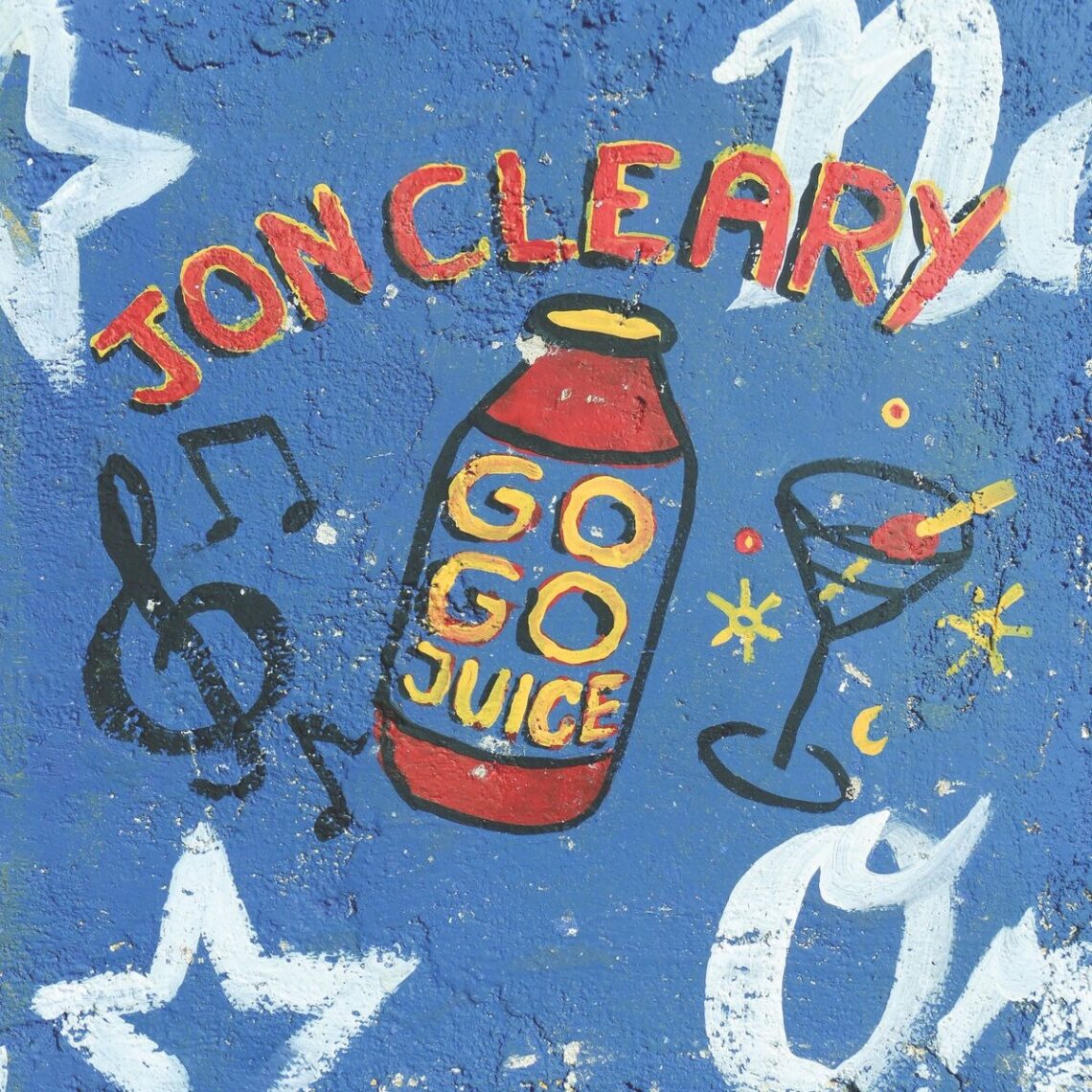
This is something we can appreciate in Gogo Juice (FHQ Records, 2015), a celebrated album that earned him a Grammy for Best Regional Roots Music Album in 2016. The artist gave us some tracks from this album during his recent visit to Havana (his first visit to the island was in 2019).
Cleary appropriates Creole elements and forms from Louisiana music and filters them through sounds native to New Orleans, such as funk and other strains of R&B, like soul.
There’s an abundant and spicy boogie-woogie in this album, that blues style that demands rapid piano playing and encourages dancing: Cleary is a monster at it.
From the opening “Pump it Up,” this album puts us in a state of grace, a level that continues until the closing “Love on Condition.”
And how gratifying it was to learn that he was the original composer of “Brother I’m Hungry,” also on the album, a song with social content that a year later Snarky Puppy included, in a cover version, in his album Family Dinner-Volume Two.
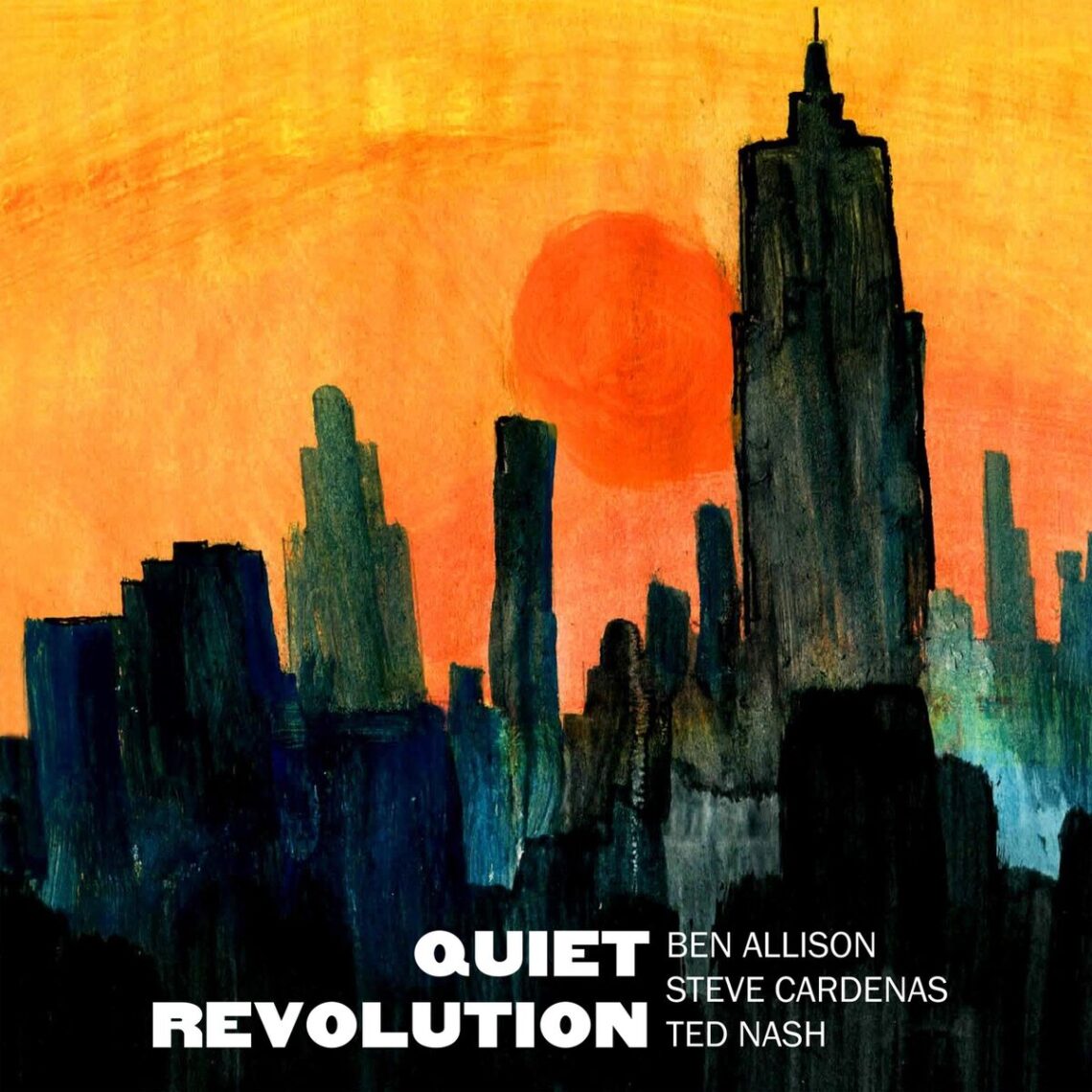
Saxophone, electric guitar, and double bass. The trio formed by these three masters of the U.S. jazz scene is as inspiring as it is surprising; their sound is distinguished and invigorating. The three creators carry out educational and research work around music, which has guided many of their projects over more than 25 years of collaboration.
The group follows the model of the drumless trios that Jimmy Giuffre (1921-2008) pioneered in the 1950s and 1960s, eschewing bombast in jazz. This is how Allison explains it, noting that with this format, “they envisioned a calmer music that retained elements of blues and folk, but also embraced the emerging qualities of freestyle. We created intimate music with a very conversational tone: a ‘musical trilogue,’ where group interaction is the focus.”
With that commitment, Quiet Revolution (Sonic Camera, 2018) first appeared, a calm and fertile dialogue between guitar, saxophone, and double bass. It is a clear exposition of free jazz until it closes with “Love Theme from Spartacus,” something that whets the appetite to continue exploring this creative work in other facets.
Ted Nash returned once again to Cuba, to Jazz Plaza, and this time he did so in the company of these two masters, Ben and Steve, with whom he did not want to miss the opportunity to offer the audience a unique creative experience. Jazz x Art, the project Nash put together in 2023, united jazz with the visual arts in a concert of intertwined inspirations in a jazz band format, conducive to collective improvisation.
This time, they returned to that experience, but in a trio format. Ted, Ben, and Steve arrived at the Museum of Fine Arts on the morning of their last day in Havana, and there they created the work in situ. They took inspiration from a brief tour of the paintings in the galleries and turned it into an improvised concert in the museum’s courtyard.
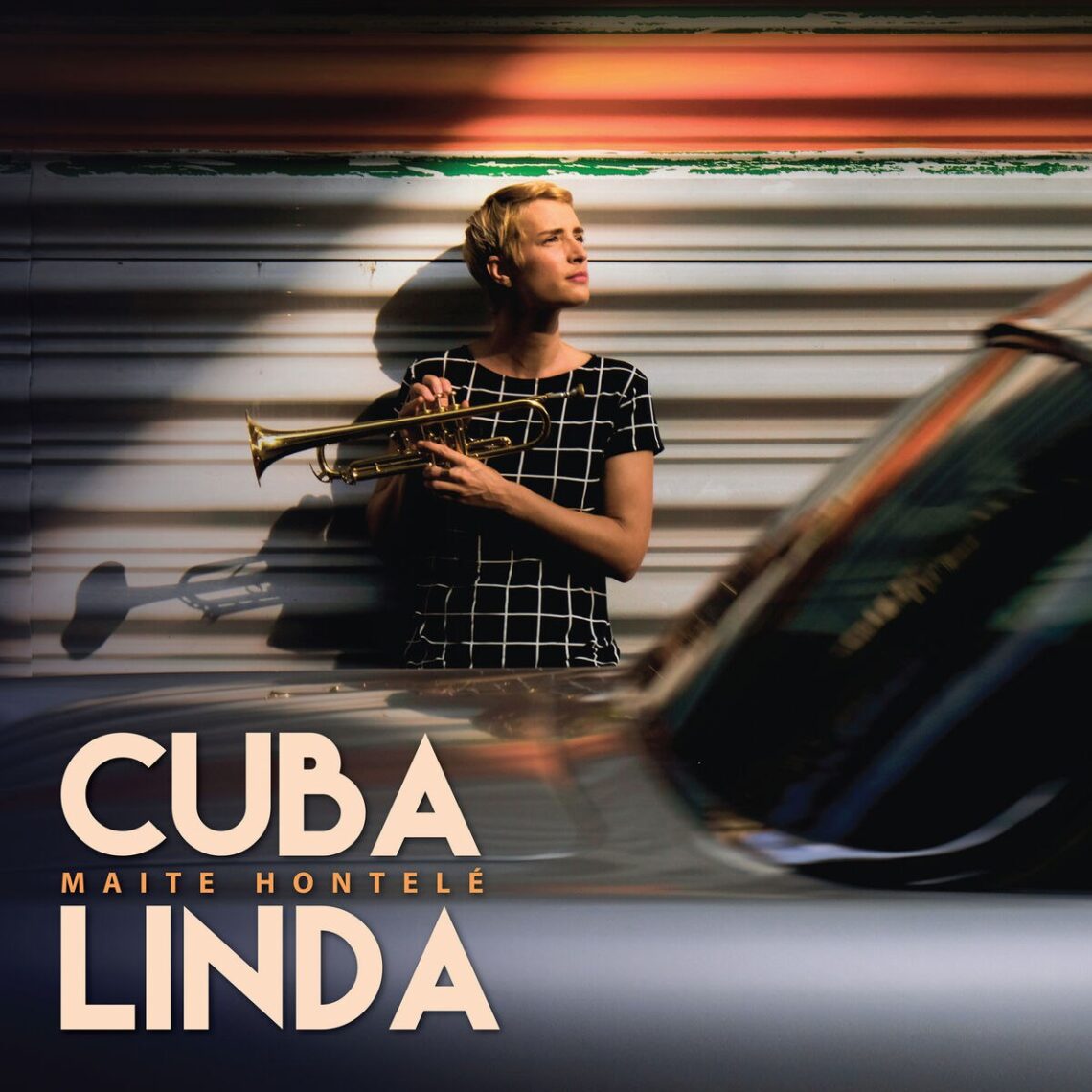
Maite Hontelé arrived at the 40th edition of Jazz Plaza in a creative moment that was superior, more ethereal, than what we’ll hear on this album I’m proposing. Now she’s joined Ramón Valle in an exquisite creative duo — piano and flugelhorn — that has already recorded an album.
But Cuba Linda was the last stop for this Dutch trumpet player, trained in the cult and interpretation of Cuban music, in the dance music orchestra format, before a five-year hiatus that convinced her to take this new path that we now enjoy on stage.
The artist told me: “Cuba Linda was the climax of my career at that time. It represented a lot, but then another important era began for me; after releasing the album, I decided to stop playing the trumpet for five years.”
She took a break after years of working with bands, recording salsa albums, and collaborating with exponents of the genre like Oscar de León and artists from across the Cuban spectrum.
The result of this album is a wonderful celebration where Hontelé’s trumpet is in its element, with musical production by none other than maestro Alain Pérez and some arrangements by Juancho Valencia.
Also featured are heavyweights such as Robertón from Van Van, Gilberto Santa Rosa, Osaín del Monte, the Aragón Orchestra, among others.
Maite Hontelé’s creative climax is worth checking out.
Harold López-Nussa arrived at the jazz festival in Cuba from Toulouse, France — his current home. His was one of the most anticipated performances, as he hadn’t performed on the Havana scene since late 2023, and he brought with him this album, which, while circulating online and available to the public, had not been presented in a live concert in Cuba.
This is an album born from a distance, a beautiful ode to the Cuba Harold sees from afar, to the new creative life he is building, day by day, in another latitude. “From afar, you can see Cuban music from a different perspective. When you’re on the island, it becomes a part of you, and you don’t pay attention to it in the same way, because all of that is you; it’s part of your being. From outside, you’re constantly searching for it and seeing it differently. I’d heard that from many Cuban musicians who’d been living abroad for years, but experiencing it has also been eye-opening for me,” the musician said at the end of last January.
As you scroll through the album, vibrant tracks emerge, full of sonic blends, from “Funky” and “Cake a la Moda” to “Conga a la Americana” and “Hope.” Michael League’s work in the production, some of his arrangements, and his use of the synthesizer are evident.
“Mal du pays” is a track where the pianist and composer pours out his nostalgia, his longing for a distant land; something similar happens in “Afro en Toulouse,” where Harold attempts to musically connect his current city with the street where he was born in Centro Habana.
Timba a la Americana is the Cuban’s first production released under the Blue Note label, and alongside him, Luques Curtis on bass, Bárbaro Machito Crespo on congas, Grégori Maret on harmonica, and Ruy Adrián López-Nussa on drums shape the journey.

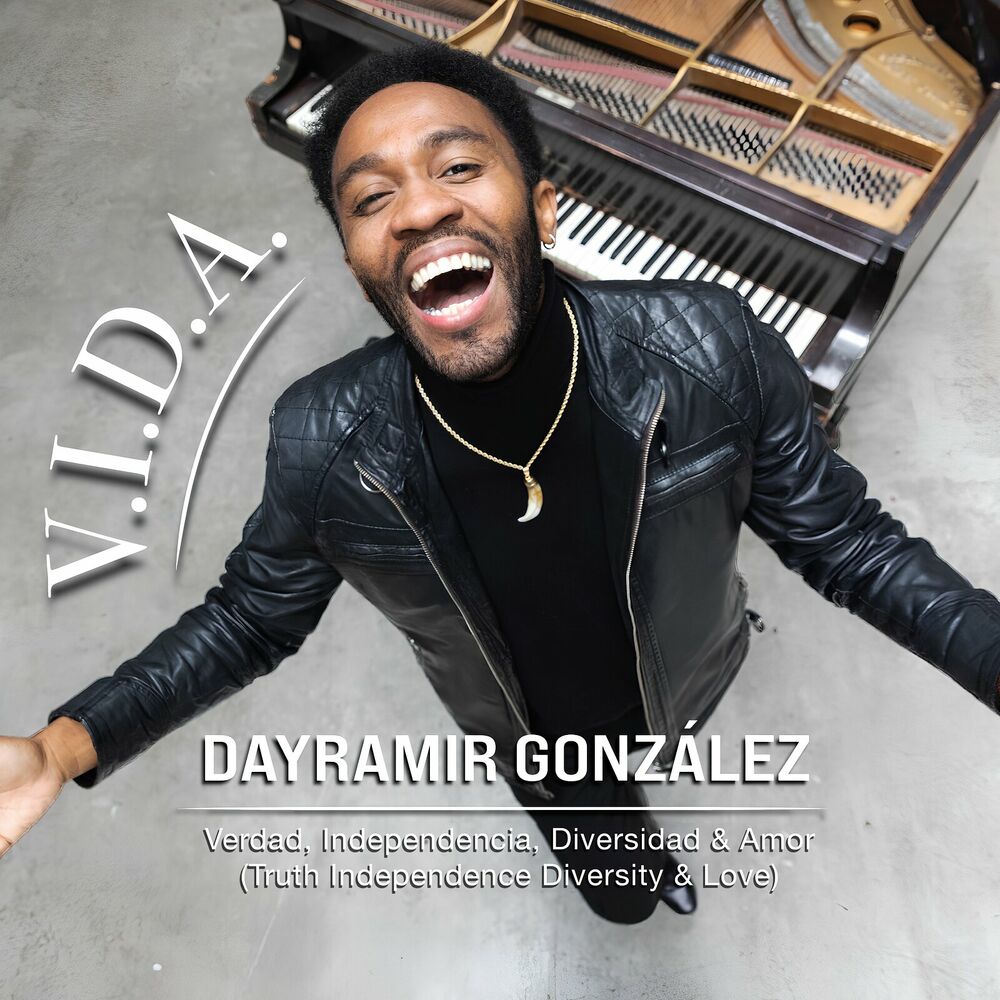
“I celebrate the truth of the musician that I am: an Afro-Cuban jazz pianist, Black, Yoruba, a lover of his country, who enjoys coming here and seeing his family and his audience. Independence refers to my autonomy as an artist, to the fact that today I have control of my career, I know my business inside out. Love, for its part, has always been in my path. Diversity because I am Black and I live in a society where we must continue to work on this element in all its forms: racial, gender, musical, artistic, so that there is room for everyone.” Dayramir González commented in an interview with OnCuba about the concept of this album, with which he celebrates his 25-year career.
It is an honest album of overflowing spirituality.
It also had its moment during Jazz Plaza 40; Cuban music made in New York that arrives in the form of a powerful album featuring excellent musicians such as Pedrito Martínez, Daymé Arocena, Jadele McPherson, Edrey Ogguere, among others.
From “Transiciones en azul,” dedicated to Yemayá, to “V.I.D.A. Soy Cubana,” where Dayramir talks to Ochún, the pianist builds an emotional journey that combines references to the traditions of our culture with a version of “The Peanut Vendor,” songs dedicated to his children like “Principito,” “Rosas & Dahlias,” and the memory of his creative phase with Habana Entrance.

El Comité synthesizes the work of a generation of artists who have defined the history of Cuban jazz over the last 20 years. Just look at the composition of the band. It was formed in 2017 out of the simple need to bring together friends who wanted to express themselves through music.
Rolando Luna, Harold López-Nussa, Gastón Joya, Yaroldy Abreu, Irving Acao, Rodney Barreto, and Carlos Sarduy make up El Comité. From time to time, they get together, entertain their audiences, and, in the process, record a good album to record the spicy part.
In mid-2024, Carrousel was released on Caramba Records. This is the team’s second album, something we’ve been eagerly awaiting since enjoying their debut with Y qué!? So what (Not on label, 2019).
The first offers a provocative dose of groove-laced Afro-Cuban jazz, in which each member infuses compositional concerns ranging from references to the commotion on Gran Vía (Madrid, Spain) to the Alamar neighborhood in East Havana.
There’s also a musical look at those who paved the way in jazz before them; masters like Emiliano Salvador (“Son a Emiliano,” with an arrangement by Rolando Luna based on a composition by Gabriel Hernández) and Miles Davis (“So What”).
Now, with Carrousel, things become more diverse, encompassing Latin jazz, timba, rumba, Afrobeat, folk, and a touch of country. There’s a more world music aesthetic to this album; a true musical merry-go-round where the members once again spin their own arrangements and compositions.
The carousel kicks off with “Alusión,” a psychedelic piece by Rolando Luna, opening the door to the musical volley, amid the enjoyment of original creations and the surprise of discovering versions of iconic songs that are part of contemporary universal popular culture, such as “Wonderwall” by the British rock band Oasis and “La Fama” by the Spanish singer Rosalía.
The album closes with a reference to the event that has united them all for years from a very young age; where they took their first steps toward becoming the true masters they are today: “Jazz Plaza,” composed by Carlos Sarduy.

Here’s the latest from Arturo O’Farrill and his Afro Latin Jazz Orchestra, released days before the six-time Grammy winner landed in Havana to participate, as has been the custom since his first visit in 2002, in the jazz festival.
Arturo O’Farrill (Mexico City, 1960), the son of Chico (1921-2001) — that Cuban totem of Latin jazz — strengthens his ties to his Cuban roots with each visit.
“I set a rule for myself and I try to live by it: play the music I love, with the people I love, for the people I love. If I can’t be that kind of musician, I’ll drive a taxi,” is a quote from this distinguished pianist that can be read in his section on the Grammy Awards website. This philosophy of life and creation can be felt in his new album.
O’Farrill defines the creation of Mundoagua… as his greatest musical mission with the Afro Latin Jazz Orchestra. They are two ambitious jazz suites composed by him, which, along with “Blue Palestine,” by the iconic composer Carla Bley (1936-2023), form an orchestral triangle. Although they are very different compositional and conceptual moments, there is unity in the sonic discourse, with dissonances as a very present resource throughout.
The first suite is “Mundoagua,” a three-movement composition, a story about humanity’s challenges in the face of global warming and the water cycle. It is followed by “Blue Palestine,” in four movements, by the renowned Carla Bley, considered a benchmark of free jazz, one of the great composers of contemporary jazz. She is the reason for this compilation/celebration of suites, which closes with the three movements of Día de los Muertos (Day of the Dead). A sonic journey where Arturo O’Farill leaves us with a sublime musical narrative.

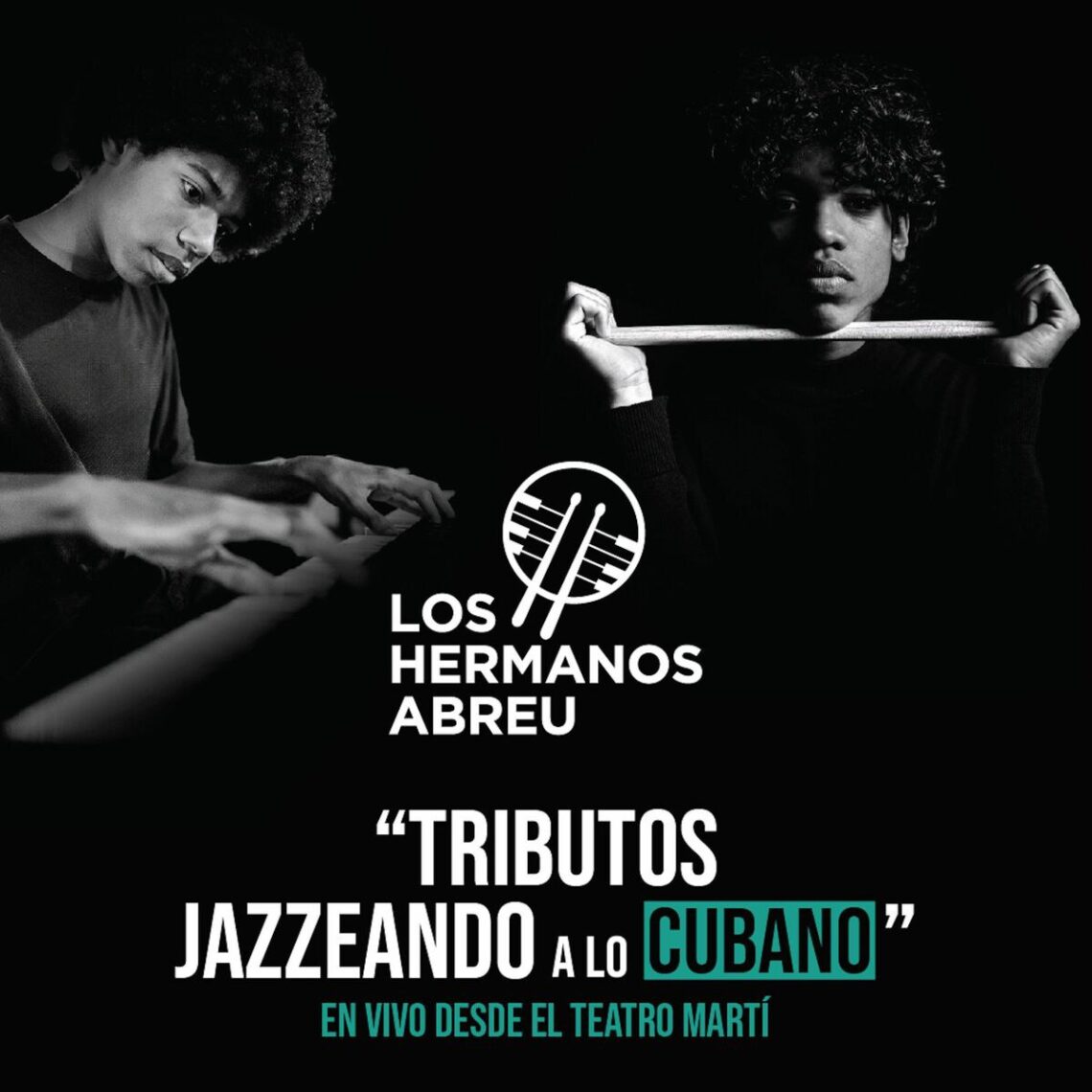
The debut album by Los Hermanos Abreu was recently released on digital platforms. The young men are barely 20 years old, but they have already joined forces with other colleagues to bring life to the Cuban scene, through jamming and performances at events.
Fabio and Diego, the Abreu brothers, released their first album a year and a half after beginning their creative journey. Of course, they were already immersed in jazz and music from the cradle. Sons of the imposing percussionist Yaroldy Abreu and the notable musicologist Nerys González Bello, the brothers have successfully embarked on their own artistic journey.
The two most recent Jazz Plaza events have featured the notable participation of this piano and drum duo, who compose their creations. If they have to cover other artists’ works, the arrangements are a delight, as if they were mature creators. As proof of this, we now have these Tributos…, a concert the duo gave in May 2024 at the Teatro Martí, now released on CD and audiovisual format under the La Casa Producciones label and produced by Nerys González Bello.
You can enjoy works by Fabio and Diego, such as “Papá en la luna,” “Rastros etéreos,” “Latin va,” “Afrunk,” and “Conga desértica,” along with jazz versions of classics like “Lo feo,” “Seis semanas,” and “Alma mía,” accompanied by a group of notable performers such as Alain Pérez, Beatriz Márquez, Julito Padrón, Jorge Reyes, Rafael Paseiro, Orlando Valle “Maraca,” and Germán Velazco, among others.
With this album, we have a great testament to the current state of Cuban jazz and its scene. It’s also a reason to keep an eye on these young performers who, like so many giants who came before them — and who accompany them — still thrill us.

“You give us a lot of work,” religious affairs leader jokingly tells Maranatha leaders.
Marcos Paseggi, Adventist Review – 29 Apr 2025
When Caridad Diego Bello, head of the Office of Religious Affairs of the Central Committee of the Communist Party of Cuba, began her tenure more than three decades ago, she found a to-do list of pending projects coming down all the way from notes from Ernesto “Che” Guevara. One of them said, “Assess the possibility of authorizing Seventh-day Adventists to have a theological seminary.”
Now, after her more than three decades working in religious affairs, Diego has attended multiple inaugurations and church events, including the Cuba Adventist Theological Seminary (CATS) groundbreaking ceremony in Santiago de las Vegas, Havana, in 1995. There she met former General Conference president Robert Folkenberg and former Inter-American Division president Israel Leito, who, she said, “always showed special affection for Cuba.” Through the years Diego has worked with three Cuban Union Conference presidents, including Aldo Pérez Reyes, who has led the Adventist Church in the island for the past 15 years.
But through the regular changes of Adventist Church leaders, there has been one constant: her relationship and friendship with Maranatha Volunteers International president Don Noble and other ministry leaders. During all these years, regional church leaders shared, almost every Adventist Church project across Cuba has been facilitated and led by Maranatha, a volunteer- and donor-based supporting ministry based in the U.S. They even funded the construction of CATS.
 Leira Sánchez Valdivia, in charge of all Protestant and Evangelical Christian denominations in Cuba, inspect some of the repair and paint projects in the school cafeteria on April 18. [Photo: Marcos Paseggi, Adventist Review]
 Maranatha vice president Kenneth Weiss (left) greets Caridad Diego Bello, head of the Office of Religious Affairs of the Central Committee of the Communist Party of Cuba, on April 18. [Photo: Marcos Paseggi, Adventist Review]
 From left to right: officials from the Office of Religious Affairs from the Cuban government Eloísa Valdés Pérez, Caridad Diego Bello, and Leira Sánchez Valdivia after their arrival to Cuba Adventist Theological Seminary outside Havana. [Photo: Marcos Paseggi, Adventist Review]Leira Sánchez Valdivia, in charge of all Protestant and Evangelical Christian denominations in Cuba, inspect some of the repair and paint projects in the school cafeteria on April 18. [Photo: Marcos Paseggi, Adventist Review]Maranatha vice president Kenneth Weiss (left) greets Caridad Diego Bello, head of the Office of Religious Affairs of the Central Committee of the Communist Party of Cuba, on April 18. [Photo: Marcos Paseggi, Adventist Review]
Maranatha vice president Kenneth Weiss (left) greets Caridad Diego Bello, head of the Office of Religious Affairs of the Central Committee of the Communist Party of Cuba, on April 18. [Photo: Marcos Paseggi, Adventist Review]
On April 18, Diego and two other religious affairs officials stopped by once more to meet Maranatha and the country Adventist Church leaders. The visit, which took place in conjunction with a volunteer-based project rollout organized by Maranatha at the school, highlighted the long-standing collaboration between the country government and the Adventist Church organization and its lay-led supporting ministries.
“I want to thank each one of the Maranatha leaders and all of you for supporting the Adventist work in Cuba and, as a result, supporting the Cuban people,” Diego said. “People who attend a church are believers, and as such, they are also part of our people. We have seen a church that is honest, sincere, that follows values, that has grown, and that is part of the 1,850 religious organizations and fraternities across Cuba.”
She also highlighted the reach of the Adventist Church in Cuba. “It’s impressive,” she said. “You are everywhere; there’s no county you haven’t reached!”
 “You [Adventists] give us a lot of work,” quipped Caridad Diego Bello, head of the Office of Religious Affairs of the Central Committee of the Communist Party of Cuba. “But we want to keep working together.” [Photo: Marcos Paseggi, Adventist Review]
 Maranatha president Don Noble (left) greets Caridad Diego Bello. They have known each other since Maranatha’s first visits to Cuba more than 30 years ago. [Photo: Marcos Paseggi, Adventist Review]
 Cuban Union Conference president Aldo Pérez Reyes introduces the visitors from the Office of Religious Affairs of the Cuba government, with whom he has interacted during several initiatives and projects of the Adventist Church in that country. [Photo: Marcos Paseggi, Adventist Review]“You [Adventists] give us a lot of work,” quipped Caridad Diego Bello, head of the Office of Religious Affairs of the Central Committee of the Communist Party of Cuba. “But we want to keep working together.” [Photo: Marcos Paseggi, Adventist Review]Maranatha president Don Noble (left) greets Caridad Diego Bello. They have known each other since Maranatha’s first visits to Cuba more than 30 years ago. [Photo: Marcos Paseggi, Adventist Review]
Maranatha president Don Noble (left) greets Caridad Diego Bello. They have known each other since Maranatha’s first visits to Cuba more than 30 years ago. [Photo: Marcos Paseggi, Adventist Review]
In the next few minutes Diego recounted how former Cuban Union Conference president Daniel Fontaine came to see her one day in the mid-1990s. Fontaine talked to her about Maranatha, which, he said, could help Adventists on the island have new churches.
“Tell me what your ideas are,” Diego remembers she told Fontaine.
“I have them right here,” Fontaine replied. “We want to build at least 100 church buildings.”
“One hundred churches! Really? Let’s start small,” she advised.
Fontaine agreed. “This is not a one-year project,” he told her. “Let’s do it little by little.” The project ended up with 114 new Adventist churches in Cuba. And as of early 2025, Maranatha had built or completed major renovations in more than 200 Adventist church buildings across the island, its leaders reported, including the flagship Cardenas Seventh-day Adventist Church in the Matanzas Province.
 The church building on campus that Maranatha Volunteers International built with government permission and that General Conference president Ted N. C. Wilson inaugurated in 2011. [Photo: Marcos Paseggi, Adventist Review]
 Cardenas Seventh-day Adventist Church on its official inauguration day in April 2017. Caridad Diego Bello and other officials who were instrumental in securing the relevant permissions attended the inauguration. [Photo: Marcos Paseggi, Adventist Review]
 A Maranatha volunteer asks a question during the Q&A session after Caridad Diego Bello’s presentation at Cuba Adventist Theological Seminary on April 18. [Photo: Marcos Paseggi, Adventist Review]The church building on campus that Maranatha Volunteers International built with government permission and that General Conference president Ted N. C. Wilson inaugurated in 2011. [Photo: Marcos Paseggi, Adventist Review]Cardenas Seventh-day Adventist Church on its official inauguration day in April 2017. Caridad Diego Bello and other officials who were instrumental in securing the relevant permissions attended the inauguration. [Photo: Marcos Paseggi, Adventist Review]
Cardenas Seventh-day Adventist Church on its official inauguration day in April 2017. Caridad Diego Bello and other officials who were instrumental in securing the relevant permissions attended the inauguration. [Photo: Marcos Paseggi, Adventist Review]
Noble, Maranatha vice presidents Kenneth Weiss and Karen Godfrey, and a team of volunteers—several of them visiting Cuba for the first time—welcomed the religious affairs team from the Cuban government.
“It’s so nice to see you again, after so many years working together,” Noble told Diego and her team. “And we appreciate that each one of you has taken the time to visit us.”
Together with Diego came Leira Sánchez Valdivia, who oversees all Protestant and Evangelical Christian denominations in Cuba; and Eloísa Valdés Pérez, head of the administrative office of the Office of Religious Affairs of the Council of Ministers of Cuba. The three of them have been instrumental in moving building and renovation applications forward, securing construction permits, authorizing the clearance of containers arriving with food and construction materials through customs, and supporting religious visa applications to volunteer groups visiting the island for outreach or evangelistic initiatives. It is something that Pérez stressed as she introduced the visitors to the group of Maranatha volunteers repairing and repainting CATS.
“Some people ask me how the nature of the relationship between the [Adventist] Church and the government of Cuba is,” Pérez said. “Let me say that we have a very good relationship, open communication, and we get along well. And I think the presence of these ladies here today show that the relationship has been maintained for many years.”
During her remarks to the group, Diego emphasized how rewarding it is to know that CATS has grown and been used to train hundreds of Adventist pastors to serve across the island and beyond. “You [Adventists] give us a lot of work,” she quipped. “But we want to keep working together.”
Diego also called everyone involved to keep working on behalf of others. Drawing on her experience, she said that she learned how important is to find your place among your people to serve your country and the world. “It’s not just giving from your leftovers but sharing all that you have,” she told volunteers. “And this is what I see you doing here as you came to serve the people of Cuba on behalf of the Seventh-day Adventist Church. . . . My wish is that when you leave, you might take a little bit of Cuba and its wonderful people in your heart.”
Maranatha Volunteers International is a nonprofit supporting ministry that is not operated by the corporate Seventh-day Adventist Church.

Havana, April 28 (Prensa Latina) The Mexican Navy’s training ship ARM Cuauhtémoc arrived today at the Sierra Maestra Cruise Terminal in Havana with a message of peace and friendship.
The sailboat, known as the Ambassador and Knight of the Seas, was received by flotilla captain José Luis Souto, second-in-command of the Revolutionary Navy.
On board the ship, the Mexican ambassador to the Caribbean nation, Miguel Ignacio Díaz, thanked the crew for their welcome and highlighted the historic brotherhood between the two countries.
He emphasized that this visit comes at a time when the island is experiencing economic difficulties and is an expression of the willingness of his country and its president, Claudia Sheinbaum, to extend a helping hand and reaffirm that Cuba can count on Mexico’s solidarity.
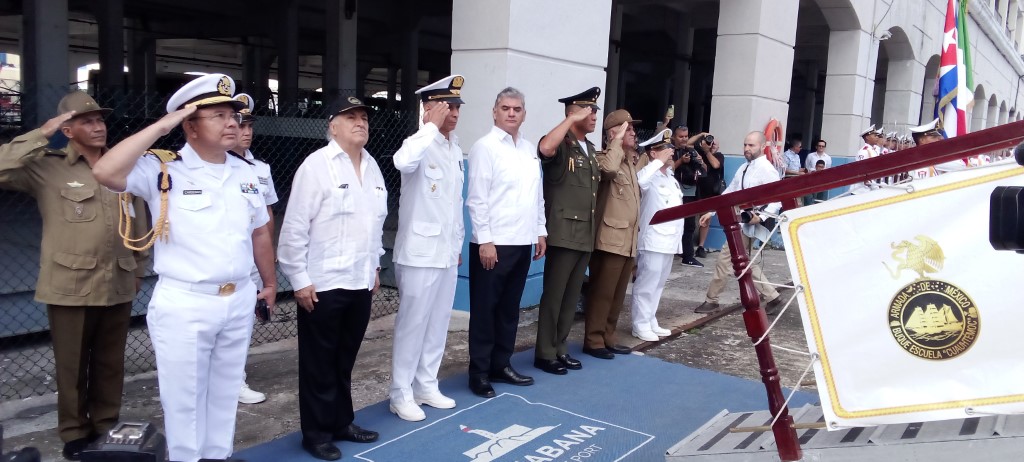
He stated that during their stay, until April 30, the sailors will be able to visit emblematic sites in the Cuban capital and gain a deeper understanding of this sister nation, connected to their nation by the Gulf of Mexico and significant historical events.
This cruise, with a crew of 277 (64 women and 213 men), commemorates the bicentennial of the Consolidation of Mexico’s Independence (1825-2025) and will visit 22 ports in 15 countries over 254 days.

During their stay, the visitors will participate in a program of activities that includes official visits to Cuban authorities, floral tributes at the monuments to José Martí and Benito Juárez, and exchanges with the Granma Naval Academy.
The public will be able to tour the vessel starting today, from 1:00 p.m. to 5:00 p.m., and on April 29, from 12:00 p.m. to 7:00 p.m., local time.
jha/evm

April 28, 2025 – Haiti Libre
Haitian Minister of Health Bertrand Sinal highlighted the importance of Cuba’s international medical assistance at the 5th Cuba Salud 2025 Health Conference. The conference concluded on April 26 after five days of discussions with more than 5,000 delegates from 88 countries in over 400 activities.
In his remarks to the Cuban News Agency, Sinal highlighted Cuba’s crucial contribution to populations in need, both through its medical brigades and the training of doctors from various nations.
He cited his own country as an example, having benefited from the training of more than 2,000 doctors in Cuba, including himself, emphasizing, “Cuba is an example for Haiti to follow in its efforts to reduce maternal and infant mortality and to strive for health sovereignty through bilateral relations.”
Minister Sinal reported that 78 Cuban doctors are currently working in areas of Haiti where medical coverage is precarious, helping to diagnose and treat diseases such as malaria and dengue fever.
Furthermore, he joined representatives of other governments in the Western region and around the world who have expressed support for the assistance of Cuban international medical brigades in the face of Washington’s ongoing attacks on Cuba’s medical cooperation agreements.
It should be recalled that in early March, U.S. Secretary of State Marco Rubio announced sanctions against Cuban officials, past and present, as well as anyone, including foreign government officials, suspected of involvement in the Cuban labor export program, particularly Cuban medical missions abroad. According to the State Department, this policy also applies to the immediate families of those targeted.
Marco Rubio claims that this policy aims to protect the Cuban people from forced labor orchestrated by the Cuban government to the detriment of health professionals deployed in several Caribbean countries. Fortunately, “so far” the State Department appears unwilling to follow through on its threats…
S/ HaitiLibre

 teleSUR Latin America Cubadebate (English)