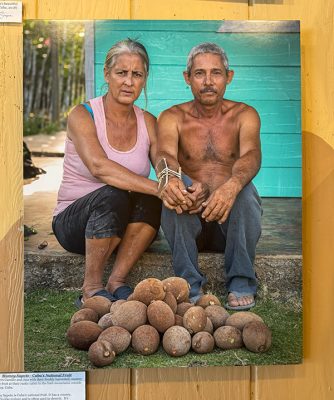
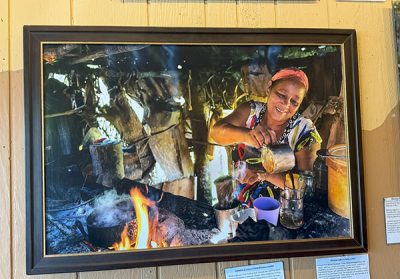
Photographs from Todd Shapera’s Portraits From the Cuban Backroads, on display at The Black Cow Coffee Co. in Pleasantville.
By Ava McGinty – The Examiner News – Mt. Kisco, New York
May 19, 2025
Customers walking into The Black Cow Coffee Co. in Pleasantville are greeted with a smile from the staff and Nilda Guttierez Romeriez.
Dressed in a patterned shirt, pouring a rich cup of Cuban coffee into a glass jar, she looks entirely at home, a story that lives in a moment frozen in time.
She is one of many featured in Portraits From the Cuban Backroads, photographer Todd Shapera’s tribute to rural Cuba, on display at the café through May.
From 2016 to 2023, the Pleasantville resident took numerous trips to Cuba, each time with the same goal: telling the stories of the people he met.
His work earned the 2023 Larry Salley Award for Photography from ArtsWestchester.
“I want to demonstrate our shared humanity, to show their inner spirit,” Shapera said in a recent interview.
The exhibit mirrors Shapera’s travel approach. Rather than rushing to see a vast portion of the island, he chose to focus deeply on specific regions and truly get to know the people and their culture.
Traveling by cycling or hiking, Shapera often spent anywhere between a few hours or even days with the people he photographed, often waiting to introduce the camera, allowing for a more natural connection. He said it helped him connect with people and tell their stories more authentically.
“Going to Cuba, this type of travel is in my comfort zone. I’m happy when I do this,” he explained.
Many of the people he met shared stories of hardship, pride, and resilience.
Shapera’s work captures everyday life in rural Cuba, from quiet resilience to moments of joy.
In one passing exchange while traveling through the Sierra Maestra mountains, Shapera photographed a man he described as looking friendly and kind. Later, he found out that the man in the picture is Luca Castillo Perez, grandson of the munitions supplier to Fidel Castro during his time in the Sierra Maestra mountains in the 1950s.
Another story that stood out to Shapera came from a former doctor. He photographed the man holding his young daughter, who told Shapera he had once practiced medicine but left the profession due to low pay, eventually turning to taxi driving instead.
However, after the sharp decline in tourists starting in 2017, partly due to the U.S. embargo and travel restrictions, his income dropped even further, prompting many people he knew to leave the island.
In another conversation, a woman told Shapera, “There is no future for my children here.”
On a trip in 2021, Shapera met a couple on a farm in the mountains outside of Barroca, Cuba. Just hours earlier, the man had taken a 20-foot fall from a tree while harvesting mamey sapote, the country’s national fruit. He injured his wrist breaking the fall and is photographed with a makeshift splint, seated behind a pile of fresh harvest. A few years later, the couple’s daughter and grandchildren immigrated to America, eventually connecting with Shapera after their journey.
These chance encounters gave Shapera a deeper perspective on life in rural Cuba, a perspective he hopes café visitors will carry with them.
“It really is the luck of the draw where you are born; we are lucky to be here in Westchester,” noted Shapera, who has lived in Pleasantville for nearly three decades.
Every month, The Black Cow Coffee Co. highlights a new artist and their work by displaying it on their wall for customers to see.
“Displaying the photos in the café is an opportunity to share art with the community,” Shapera said.
He said he finds it grounding to capture the lives of the Cuban people and then return to Westchester, where he photographs weddings and other local events. While his photography in Cuba and Westchester may seem wildly different, he sees a shared purpose in both: storytelling.
A joyful moment in rural Cuba—part of Shapera’s effort to highlight the spirit and humanity of the people he met.
Above all, Shapera wanted the people he photographed to feel remembered. On return trips to Cuba, he brought back printed copies of portraits from previous visits to give to people he had met.
Community members have responded warmly to the exhibit, with several approaching him at The Black Cow to compliment his work.
Reflecting on his project, Shapera said, “Right now, it is so important because political dialogue can be so cruel to them [immigrants]. They are so kind and humble.”
A panel on the café wall echoes this sentiment, briefly explaining the exhibit and concluding: “The humble Cuban people deserve a kinder, more humane, more engaged U.S. neighbor.”
As U.S. restrictions tighten, Cuba’s efforts to protect its ecosystems are faltering — with rising deforestation, strained conservation programs, and growing pressure on protected areas.
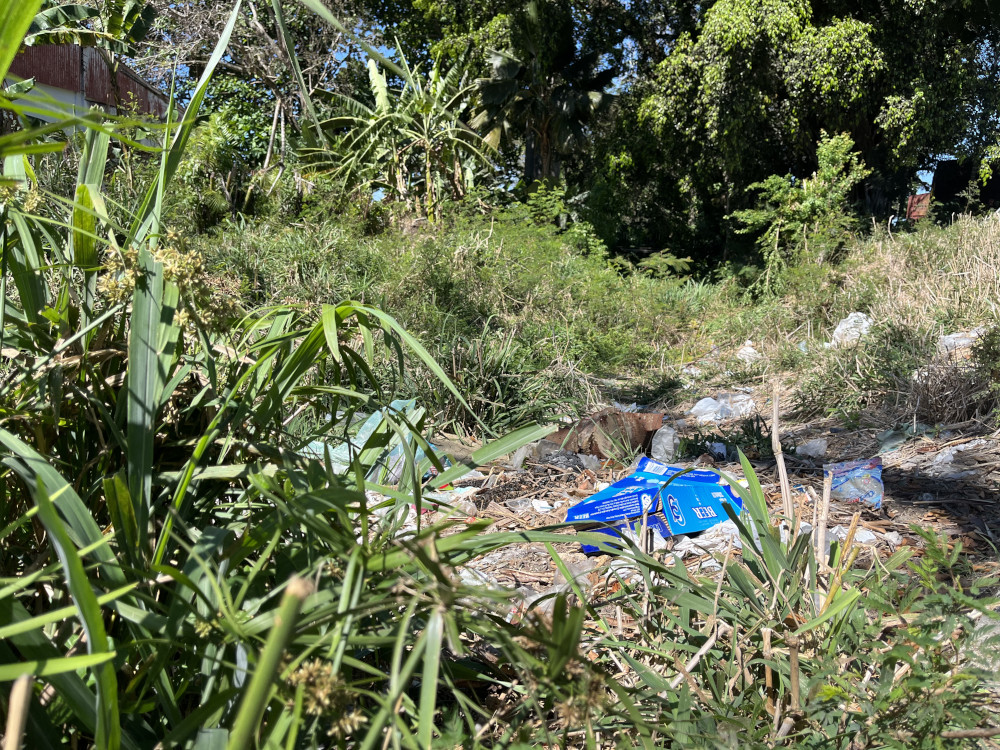
Music, cigars, and vintage cars — these are the most common clichés about visiting Havana, Cuba’s capital. They’re all still common sights, but now visitors may also encounter a different scene: mounting garbage in the streets, forest fires, and chemical waste dumped in residential areas.
These are all symptoms of the country’s worst economic crisis in three decades — which started during the COVID-19 pandemic and is now compounded by renewed political pressure from the United States.
On top of the decades-long U.S. embargo, the new Trump administration quickly re-added Cuba to the State Sponsors of Terrorism list. The designation, announced by Secretary of State Marco Rubio in the administration’s first few days, allows for harsh sanctions: trade restrictions, export bans, frozen assets under U.S. jurisdiction, and limited access to international financial markets.
This political label, though aimed at Cuba’s government, severely restricts the entire island’s access to international funding, technology, and scientific collaboration. It also hinders any attempt at a genuine energy transition and makes the protection of Cuba’s rich biodiversity — among the most unique in the Caribbean — increasingly difficult.
Sergio Jorge Pastrana, executive director of the Cuban Academy of Sciences, blames the “mismanagement of solid waste in Havana and other cities” on the policies of the United States government. “Fuel is so scarce that basic environmental services, once a hallmark of Cuba’s public systems, can no longer be sustained,” he says.
On the streets of the country, residents feel a sense of nostalgia for the era of the Obama presidency, when relations between Cuba and the United States started to normalize.
“Back then, there was hope,” says José Mendez, a resident of Havana. “The biggest problem for me is that, since Trump was elected, that hope has vanished. There was a glimmer with Biden, but he’s done very little to ease the pressure on us. Now there’s no prospect for economic or environmental improvement here.”
A Political Tool With Environmental Costs
The State Sponsors of Terrorism list is maintained by the U.S. State Department and includes governments accused of financially, logistically, or politically supporting terrorist groups. As of now, only Cuba, North Korea, Syria, and Iran remain on the list.
The designation carries not only commercial restrictions but also cuts off foreign companies and nongovernmental organizations from operating in the country, for fear of legal complications or reputational damage. It further isolates Cuba diplomatically and reinforces its pariah status on the world stage.
“This list functions more as a tool of geopolitical leverage than an effective mechanism for curbing terrorism,” says Carolina Silva Pedroso, a professor of international relations at the Federal University of São Paulo in Brazil. “It weakens regimes that don’t align with U.S. policy while overlooking allies involved in equally questionable actions.”
Cuba was originally placed on the list in the 1980s for offering medical aid and asylum to groups such as Colombia’s FARC and Spain’s ETA. The country was removed during the Obama–Raúl Castro rapprochement in 2015.
Barack Obama’s presidency tried to normalize bilateral relations between Washington and Havana by easing economic blockade measures, removing Cuba from the list of state sponsors of terrorism, and allowing U.S. cooperation in sectors such as tourism and agronomy — steps that boosted the island’s economy.
The nation’s environment quickly benefited. Between 2015 and 2021, the Cuban government significantly increased its financial commitment to environmental conservation from 534 million pesos ($22.2 million) in 2015 to 2.3 billion pesos in 2021 ($95.8 million) — a more than 330% increase, according to Cuba’s National Office of Statistics and Information.
During this period Cuba’s increased investment in environmental conservation led to several tangible outcomes on the ground — including the launch of coastal wetland restoration programs, the promotion of organic and sustainable agriculture, and the implementation of national strategies to adapt to climate change.
But Trump reinstated Cuba to the terrorism list in his first term — sparking formal protests from the Cuban government.
President Joe Biden’s administration removed Cuba from the list again in the final hours before he left office. But Trump again reversed that decision, making the designation one of the first symbolic acts of his second presidency.
Triple Crisis: Economy, Energy, and Ecosystems
As Cuba struggles with soaring three-digit inflation, widespread rationing of food, fuel, and public services, and a GDP drop of 12% since 2019, its ecosystems are quietly collapsing.
In Santa Marta, a town in the province of Villa Clara where thousands of tourists flock to visit the white beaches of Cayo Santa María, the tension between economic survival and environmental conservation is palpable. According to a Cuban government report, unregulated tourism is degrading coral reefs and mangrove forests in the area.
The once-pristine sands and turquoise waters now coexist with waste and pollution. In 2019 Villa Clara collected 1.9 million cubic meters (67 million square feet) of waste, according to Cuba’s National Office of Statistics and Information. By 2023, the latest data available, the figure dropped to 911,000 cubic meters (32 million square feet) — not because there’s less waste, but because the system can no longer operate properly.
The lack of resources for environmental enforcement and infrastructure makes it difficult to contain deforestation, poaching, and overexploitation of natural resources.
Investment in environmental protection has grown by only 47% since 2021, but hyperinflation — estimated at around 200% over the same period — has severely undermined these efforts. As the cost of living soars, locals increasingly turn to protected areas for income, guiding tourists through fragile ecosystems and hunting during restricted seasons.
Cuba’s biodiversity includes more than 35,000 species, with more than 42% endemism, according to government data — a staggering concentration for an island of its size. According to Cuba’s Institute of Ecology and Systematics and the Ministry of Science, Technology and Environment, numerous endemic species face increasing threats. Among the island’s native flora, 772 species are critically endangered, 512 are endangered, and 396 are classified as vulnerable.
Notably, the zunzuncito (Mellisuga helenae) — the world’s smallest bird — is threatened by habitat loss, while the almiquí (Solenodon cubanus), a rare nocturnal mammal endemic to Cuba, is critically endangered and remains under close study by the IES. Both species are particularly sensitive to habitat disruption and human encroachment.
While the government doesn’t openly admit it, locals told me that deforestation has increased as families cut trees for firewood to escape Cuba’s frequent blackouts.
Forest fires, 95% of which were caused by human activity, also surged by 97% last year, with economic losses estimated at 338 million pesos (about $14 million) according to the Ministry of Agriculture. In Villa Clara, tree planting fell from 1,220 acres in 2019 to just 444 acres in 2023.
“I know many people who clear forests just to be able to cook or start planting something,” says Héctor Muñiz, a resident of Santa Clara. “Illegal fishing and dumping waste … are also increasing. A lot of what we see is simply a result of … the economy.”
Illegal dumping of trash and chemical products near Cayo Santa María. Photo: Vinicius Pereira
Beyond biodiversity, Cuba is also struggling to finance its renewable energy transition. The country’s aging power grid relies heavily on oil-powered thermoelectric plants, which are frequently offline due to lack of fuel.
“Cuba’s goal is to generate 24% of its electricity from renewable sources by 2030,” says Bernardo Pericás, a researcher and author of several books on Cuban politics and economy.
But progress is slow. The U.S. embargo and the terrorism designation make international financing nearly impossible. The amount of energy generated from renewables fell from 1.3 million tons of oil equivalent to just 624,000 over five years, around 15.1 billion kWh to 7.2 million kWh. The number of solar panels installed increased only slightly — from 4,000 per year to 6,000 in the same period, according to ONEI data.
“Paradoxically, for Cuba to become more autonomous and less dependent on external systems, it still needs outside investment,” Pedroso explains. “The current restrictions make that impossible.”
Cuban espresso, rated 4.6 stars out of a total of five, tops the list by Taste Atlas, a prestigious gastronomic guide that considered 80 other preparations from different countries.
April 22 (OnCuba News) The prestigious gastronomic guide Taste Atlas published a ranking of the best coffee preparations in the world, and Cuba surprisingly topped the list, ahead of 80 other globally recognized preparations.
Cuban espresso, rated 4.6 stars out of a total of five, tops a list that considered its roasting, fermentation, and the details that distinguish each product as a comprehensive sensory experience, Clarín states in the list review.
“A unique type of pre-sweetened espresso, originating in Cuba. It is often known as Cuban espresso, Cuban coffee, Cuban tirada, or Cuban shot,” explains Taste Atlas, which recognizes the popularity of this preparation beyond the island’s borders.
“While it enjoys a unique status in Cuba, where it has traditionally become an essential social and cultural beverage, Cuban espresso is also very popular and widely available in Latin America and Florida,” it explains.
This preparation consists of a sweetened shot of espresso, blending the darkest roasts with brown sugar, resulting in a light brown foam on top of the coffee.
“Cuban-style espresso is considered a mid-afternoon classic, often served with a glass of water,” adds the publication, which included three brews from Greece and an equal number from Italy in its Top 10.
However, the second position in the ranking goes to filter coffee from India, with a 4.4-star rating. “The filter consists of two chambers: the upper one, with a perforated bottom, for the ground coffee, and the lower one, where the brewed coffee is slowly poured. This technique results in a full-bodied, intensely flavored coffee, which is usually mixed with milk and sweetened with sugar,” it notes.
The rest of the top positions are occupied in this order by the freddo espresso from Greece, the cappuccino from Turin (Italy), the Italian ristretto, the Vietnamese iced coffee, the freddo cappuccino from Greece, the Italian espresso, the Turkish coffee (Türk Kahvesi) and the frappé coffee from Thessaloniki (Greece).
Havana, May 17 (Prensa Latina) Cuban President Miguel Díaz-Canel met today with Caroline, Princess of Monaco and Hanover, who is on an official visit to the island as president of the Monte Carlo Ballet.
This meeting, held in one of the halls of the Havana Convention Center, was described as cordial by the president, who emphasized that it took place 10 years after His Royal Highness’s first visit to Cuba.
A country, even a small one, can achieve great things. Her Royal Highness Caroline, Princess of Monaco and Hanover, expressed this beautiful idea with her nation and ours in mind, the head of state wrote on his X social media profile.
According to Radio Rebelde on its website, Díaz-Canel commented on the visitor’s busy schedule in Cuba and took the opportunity to extend a warm greeting to Prince Albert II of Monaco, confirming his invitation to visit Cuba.
He also highlighted the common ground on issues of interest such as childhood, and noted that this Caribbean nation has just approved a policy on children, youth, and adolescents that is on its way to becoming law after its approval in Parliament.
His Royal Highness, for his part, highlighted the wealth of Cuban youth and spoke of the efforts to strengthen ties between the Cuban National Ballet and the National School.
Expressing interest in familiarizing himself with the draft law on children and youth that Cuba is working on, he believed it “could serve as a model for other countries.”
The meeting was also attended by the Minister of Culture, Alpidio Alonso, and the prima ballerina and general director of the Cuban National Ballet, Viengsay Valdés.
Havana, May 17 (Prensa Latina) President Miguel Díaz-Canel today congratulated those who have been organizing rallies against discrimination based on sexual orientation or gender identity in Cuba for 18 years.
On the occasion of the International Day Against Homophobia, Transphobia and Biphobia, the president stated on the social network X that this fight is part of the ideals of equity and justice of socialism in this Caribbean nation.
Congratulations to those who have organized the Conference for 18 years to educate and overcome prejudices and stereotypes. Love is now the law. Let’s always make it triumph, he noted.
Foreign Minister Bruno Rodríguez also reiterated on that platform the Cuban State’s position of rejecting all forms of discrimination.
Since 1990, May 17 has been celebrated as the International Day Against Homophobia, Transphobia, and Biphobia to raise awareness and combat these attitudes.
Recent years have seen significant progress in the rights and equality of this group at the international level, particularly with the United Nations’ launch this year of the largest declaration against discrimination on this ground.
Washington, May 16 (Prensa Latina) The U.S. Supreme Court today blocked President Donald Trump’s plans by rejecting his decision to move forward with the deportation of a group of immigrants under the Alien Enemies Act of 1798.
The decision, a setback for Trump, sided with some 200 Venezuelan immigrants held at a Texas detention center, who were facing deportation if the sweeping powers of the archaic wartime law were invoked.
The justices returned the case to an appeals court to decide the underlying questions, including whether the president’s action is legal and how much advance notice migrants who would be affected by the measure should have.
Trump—who has other challenges to his executive orders in other courts across the country—wants to use this law to expedite deportations and avoid the reviews normally required before any such procedure.
Conservative Justices Clarence Thomas and Samuel Alito publicly dissented.
There is a precedent. On March 15, the Trump administration—despite the opposition of a federal judge—sent more than 250 migrants to a mega-prison in El Salvador, most of them Venezuelans whom the United States, without providing evidence, associates with the Tren de Aragua criminal organization (gang).
Trump invoked the Alien Enemies Act to transfer these migrants to the Terrorist Confinement Center in the Central American nation.
May 16 (Cuba Si) Cuba achieved a solid performance of three titles out of a possible four, and a silver medal, in the first stop of the World Series of beach wrestling, held in Monterrey, Mexico.
This event was the historic debut of the Island in this dynamic modality, in which it presented a quartet of the eight gladiators who had participated in the Pan American Wrestling Championship 2025 held in the same Mexican city.
In the final, Yaynelis Sanz (60 kg), gold medalist in the Junior Pan American Games of Cali-Valley 2021, defeated Argentina’s Adrianny Castillo 3-0, similar to the score of her previous four victories.
Havana’s Olympic bronze medalist Milaimis Marín (+70 kg), who beat Linda Machuca from Guanajuato, 3-0, also won gold.
Geannis Garzon Jr. from Santiago (80 kg) also climbed to the top of the podium, beating Georgian Nika Kontadchadze 3-1.
World champion Oscar Pino (HAB, +90 kg), who lost 0-3 in the final against Georgian Mamuka Kordzaia, will return with silver.
The final score of the four Cubans in this first stop of the World Series was 18 wins and only one loss, with 53 points scored and six against.
It is worth highlighting the performance of Yaynelis Sanz, who in one month has won the qualifying tournament for the Junior Pan American Games of Asuncion 2025 as well as the competitions held in Monterrey: the Pan American Championship for seniors and this beach event.
Meadows’ upcoming project will lead her towards the development of her second book, which explores the intersection of gender, tradition and transformation within Cuba’s evolving jazz landscape
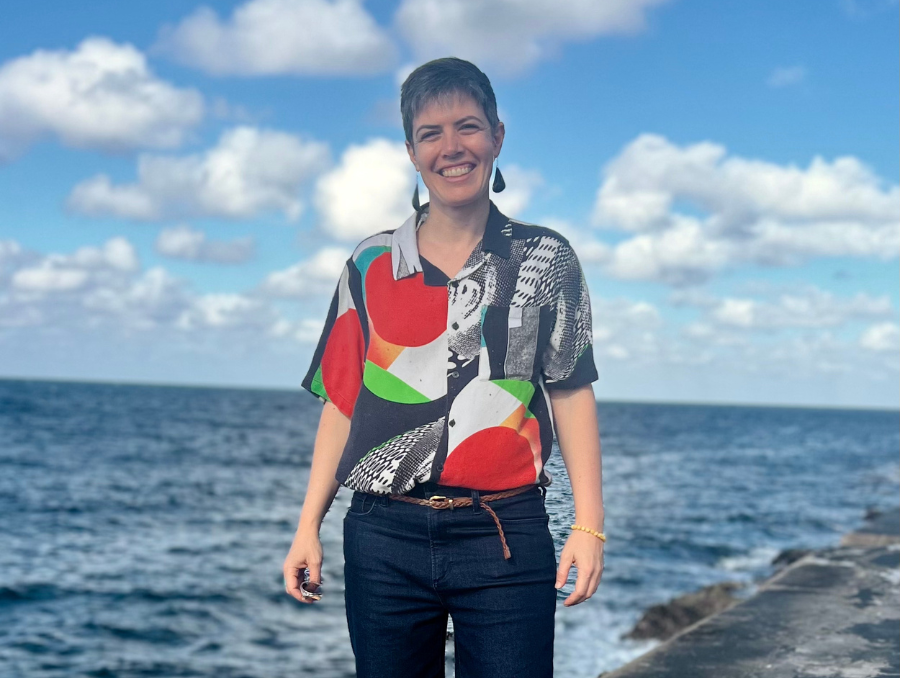
May 16, 2025 —- Nevada Today – University of Nevada, Reno Marina Bucini, ’23
Ruthie Meadows, ethnomusicologist, writer and associate professor of ethnomusicology within the College of Liberal Arts, has been named as one of the two 2025-2026 Roberto C. Goizueta Distinguished Presidential Fellow’s at the University of Miami’s Cuban Heritage Collection. This prestigious fellowship will support Meadows’ continued research into the overlooked contributions of Cuban women in jazz, culminating in her second book – an exploration of gender, tradition and transformation within Cuba’s evolving jazz landscape.
Meadows’ interest in Cuban jazz began during her undergraduate journey in Latin American studies and Spanish at Tulane University. During that time, she developed a deep appreciation for the Latin jazz band, Los Hombres Calientes, who were very popular in New Orleans. In addition to that, a Tulane course on Cuban culture and increasing interest in New Orleans’ historical ties to the island helped spark her passion for Cuban music.
This same passion for music continued to drive her academic endeavors, guiding her to pursue graduate studies in ethnomusicology at the University of Pennsylvania.
It was during her time at Penn that Meadows first traveled to Cuba, leading a study abroad program and beginning her on-site research into Cuban ritual music and jazz. Her focus quickly turned to the stories and struggles of women musicians, figures too often overlooked or marginalized within both Cuban and international jazz circles.
Meadows’ first book, the result of four years living and researching in Cuba, centered on Ifá divination, a form of Yoruba roots that developed during the transatlantic slave trade in Cuba. Her work illuminated how music, ritual and gender intersect within Cuban culture.
Now, with support from the Goizueta Fellowship, Meadows will take a year away from teaching to conduct archival research on Cuban women in jazz at the Cuban Heritage Collection, home to the largest U.S.-based archive of Cuban cultural materials. Additionally, she will conduct ethnographic fieldwork with Cuban women jazz musicians both on the island and in the United States.
This project will explore gender discrimination in Cuban and U.S. music industries as well as in academic and popular understandings of jazz. Meadows’ second book will also examine how Cuban women have incorporated Santería: an Afro-Cuban religion, into jazz, particularly through their use of the batá drums, sacred instruments central to ritual practice and rhythmic innovation in Cuban women’s jazz and fusion.
Throughout her research, Meadows is inspired and continuously supported by a growing network of women Cuban jazz artists, including Daymé Arocena, whose work has been featured in Rolling Stone and The New York Times. Groups like Okán, a Miami-based Afro-Cuban jazz duo, have also provided crucial insights and connections.
“Cuba is essential to the history of jazz,” Meadows said. “But Cuban women’s contributions remain underrepresented in popular and academic conceptions of the genre. This fellowship aims to center the contributions of Cuban women to island-based and U.S. American jazz histories, contributing to a women-inclusive jazz historiography both in Cuba and the United States.”
In addition to her work in Cuba and Miami, Meadows will conduct fieldwork in New Orleans, a city with deep ties to Cuban music and jazz history. Her second book aims to shine a light on the lineage of women artists who have shaped and expanded the boundaries of jazz across the Americas.
Meadows is embracing this next chapter of her career with gratitude and excitement, sharing how thrilled she is for the opportunity and eager to delve deeper into these powerful stories.
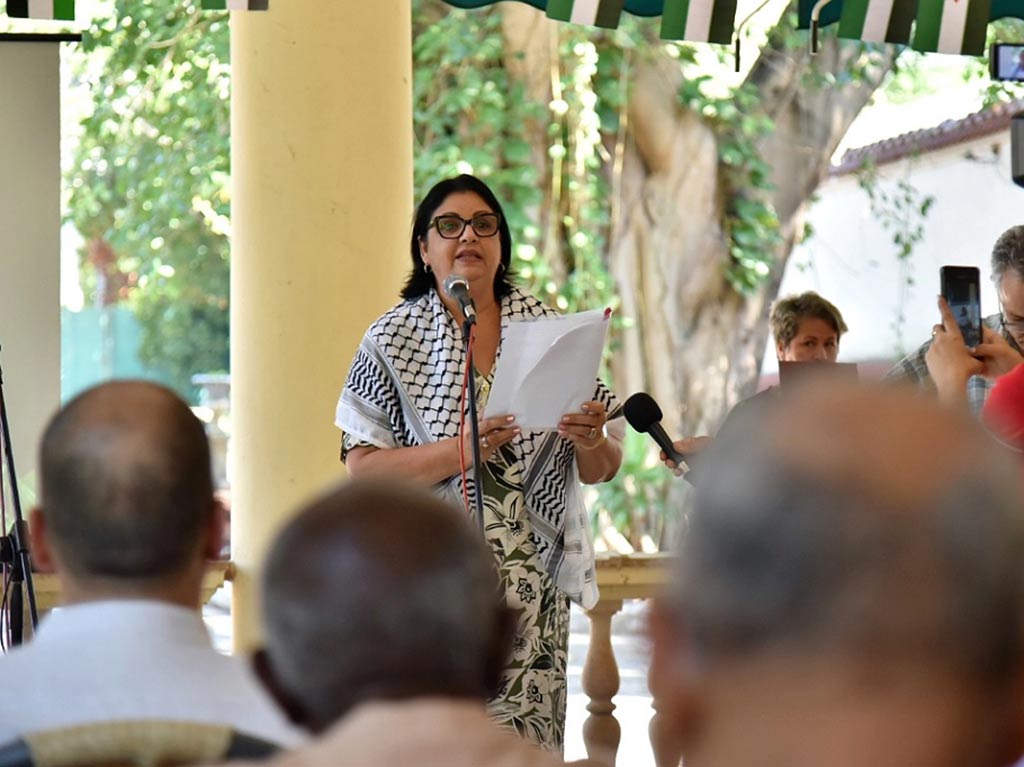
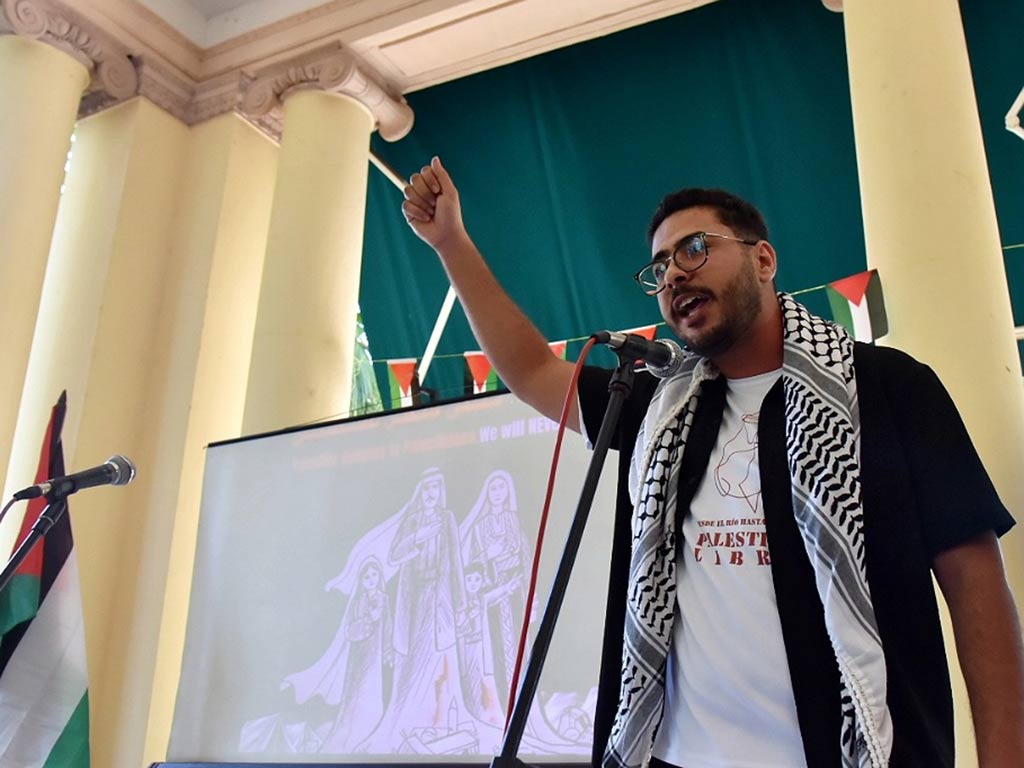
Havana, May 15 (Prensa Latina) Cuban President Miguel Díaz-Canel reaffirmed his country’s solidarity with the Palestinian people today, on the occasion of the 77th anniversary of the Nakba (catastrophe), one of the most tragic episodes experienced by the Arab nation.
Photos: Abel Rojas Barallobre, Prensa Latina
Through the social network X, the head of state reiterated his denunciation of the genocide perpetrated by Israel and assured that the Caribbean nation will not forget the Palestinian people “under the shrapnel of extermination.”
“77 years after the Nakba, a catastrophe that marked this lineage that endures despite death, we continue to uphold the dignity of those who refuse to give in, and tirelessly denounce Israel’s genocidaires,” the platform emphasized.
On the occasion of the anniversary, this Thursday the Cuban Institute of Friendship with the Peoples (ICAP) denounced that the Nakba is not a thing of the past, but rather an ongoing process of colonization, apartheid, and ethnic cleansing that continues to tear Palestine apart.
At an event held at its headquarters, ICAP’s first vice president, Noemí Rabaza, emphasized that Cuba, true to its anti-imperialist tradition and commitment to justice, is once again raising its voice to denounce this genocide.
“The Cuban Revolution has witnessed the complicity of the powerful: the same people who blockade Cuba are the ones who arm and protect the Zionist regime,” he emphasized.
According to the Cuban News Agency, Rabaza condemned the frequent acts of violence against the Palestinian civilian population, including bombings, burning of displaced persons and refugee camps, and brutal attacks on hospitals and ambulances.
“We demand a ceasefire and the immediate entry of humanitarian aid, the release of all prisoners, and an end to the occupation and genocide,” he said.
For his part, Palestinian student Mohammed Dalloul expressed his gratitude for the solidarity and affirmed that Cuba understands the struggle of its people like few other nations, as it is the victim of a genocidal blockade.
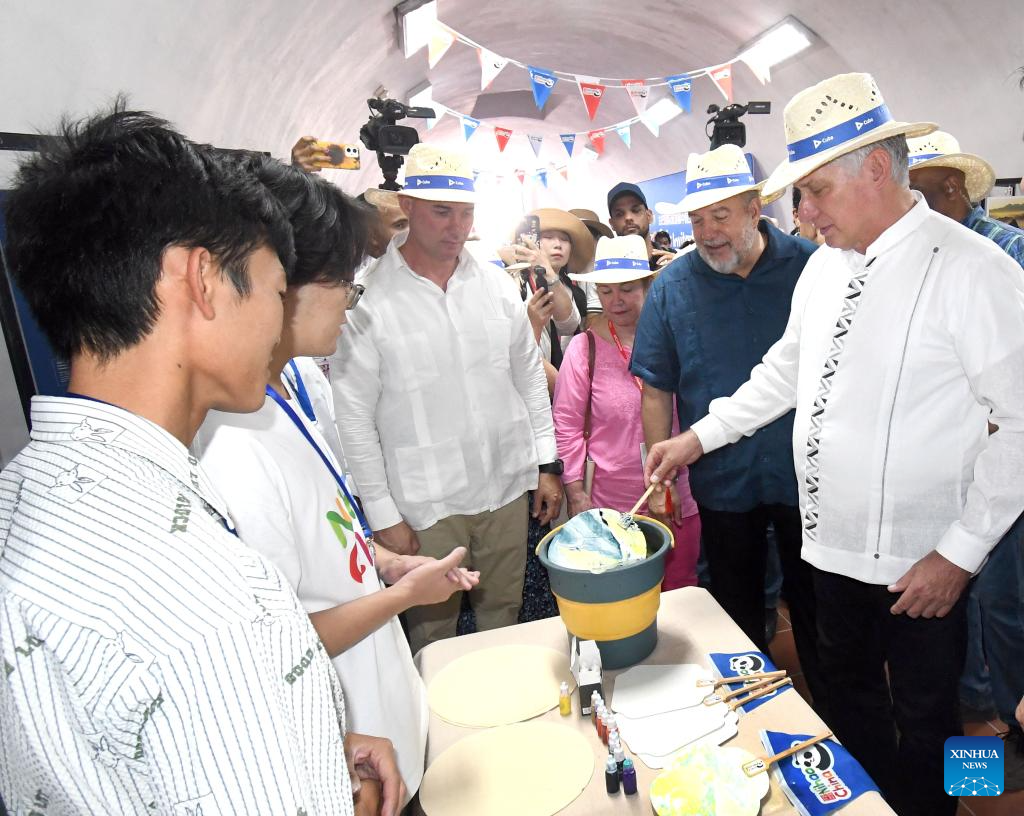
Cuban President Miguel Diaz-Canel (1st R) visits the China Pavilion at the 43rd International Tourism Fair of Cuba (FITCuba 2025) in Havana, Cuba, on May 2, 2025. (Photo by Joaquin Hernandez/Xinhua)
Cuban President Miguel Diaz-Canel (1st R) visits the China Pavilion at the 43rd International Tourism Fair of Cuba (FITCuba 2025) in Havana, Cuba, on May 2, 2025. (Photo by Joaquin Hernandez/Xinhua)