
June 9, 2025 — teleSUR
The Venezuelan Navy’s training ship AB Simón Bolívar has arrived in Cienfuegos as part of its 35th Overseas Training Cruise. More details in the following report of our correspondent Fabiola Lopez. teleSUR
June 9, 2025 — teleSUR
The Venezuelan Navy’s training ship AB Simón Bolívar has arrived in Cienfuegos as part of its 35th Overseas Training Cruise. More details in the following report of our correspondent Fabiola Lopez. teleSUR
June 9, 2025 — Al Jazeera
The Trump administration’s travel ban has kicked in and Cuba is one of the countries affected. Travel from the island will be further reduced and the US Embassy in Havana will stop issuing visas. It’s just the latest in a series of sanctions from Washington. Al Jazeera’s Ed Augustin reports from Havana, Cuba.

By Hannah Brockhaus — Catholic News Agency
Vatican City, Jun 6, 2025 / 11:53 am
The Vatican’s foreign minister is in Havana this week, where he met with local Catholics and political authorities during a visit marking 90 years of diplomatic relations between Cuba and the Holy See.
Archbishop Paul Richard Gallagher, secretary for relations with states, spoke Thursday at the Palacio de la Revolución, the house of the Cuban government and the office of the first secretary of the Cuban Communist Party, after meetings with President Miguel Díaz-Canel and Prime Minister Manuel Marrero Cruz, earlier in the day. He also met Foreign Minister Bruno Eduardo Rodríguez Parrilla on June 4.
According to a post on X by the Secretariat of State, Gallagher’s presentation at the conference June 6 was on the diplomacy of the Holy See, “animated by evangelical values in the promotion of peace and human dignity, as an expression of the very catholicity of the Church.”

Cuba and the Holy See established diplomatic relations on June 7, 1935. Despite the 1959 Cuban Revolution, when Prime Minister Fidel Castro embraced Marxism-Leninism and imposed state atheism, diplomatic ties between the two states have never been broken.
According to the Vatican, 60% of Cuba’s population of over 11.2 million people is Catholic. There are over 300 parishes and more than 2,000 pastoral centers across three archdioceses and 11 dioceses.

On June 4, Gallagher met the bishops of Cuba, of which there are around 15 resident in the country, and celebrated Mass in Havana’s Cathedral of the Immaculate Conception of the Virgin Mary.
In his homily, according to Vatican News, the archbishop emphasized the valuable role the Catholic Church plays in Cuban society, saying “truth makes peaceful relations and constructive dialogue possible.”
He also indicated that peace, justice, and truth are principles that guide both the pastoral action and the diplomatic work of the Holy See, and noted that these principles can serve as a basis for cooperation with state institutions.
“The Church perpetuates this mission of caring for the flock that the Spirit has entrusted to her,” he said. Gallagher also mentioned that the Holy Father’s presence in the life of the Church in Cuba has been manifested not only through the apostolic nuncios but also through the visits of Popes John Paul II, Benedict XVI, and Francis.
Bringing the greeting of Pope Leo XIV to the Church in Cuba, the archbishop called on Mary, that she “who infused the radiance of heavenly light into Cuban souls, [may] turn tears into smiles, and may she return peace to those who are sad, so that the power of charity may live on among us.”
“The pope invites us to the ‘Hour of Love,’ where charity — not as alms but as love that gives life — must prevail. It is a pillar, along with peace, justice, and truth, of our action in society. Therefore, the Holy See reiterates its collaboration with Cuba for the common good,” Gallagher said, according to the website of the Cuban bishops’ conference.
Bringing the message of the Holy Father, the diplomat added: “Pope Leo XIV asked me to assure you that bishops, priests, seminarians, religious sisters, and all Cubans have ‘a little corner in his heart.’ He prays that, united with the successor of Peter, we may live our faith with a missionary spirit and achieve the peace that Christ left us.”
The Vatican’s secretary for relations with states also referred in his homily to the role of religious figures linked to Cuba’s spiritual history, such as Blesseds Olallo Valdés and José López Piteira, and Venerable Félix Varela, whom he described as “a great propagator of love among Cubans and among all people.”
According to the Cuban bishops’ conference, the Mass was attended by members of the Communist Party of Cuba, including Vice President Salvador Valdés Mesa and Foreign Minister Bruno Rodríguez Parrilla.
Representatives of the Orthodox Church and other Christian denominations also participated, according to official Cuban newspaper Granma.
On the last day of his June 4–6 trip, Gallagher was also scheduled to visit the nursing home Hogar de Ancianos San Francisco de Paula.
Victoria Cardiel of CNA’s Spanish-language news partner, ACI Prensa, contributed to this report.

By: Nuria Barbosa León — June 8, 2025 — Radio Havana Cuba
At the Union Hall of the International Association of Machinists in Los Angeles, California, the commitment to continuing the fight against the criminal economic, commercial and financial blockade imposed by the United States on Cuba was reaffirmed.
Cuban diplomats David Ramírez and Yasser Ibarra highlighted the suffering caused by this cruel interventionist policy, explaining how former President Donald Trump added 243 measures during his first term that were not reversed by Joe Biden. These measures have continued to increase in Biden’s second term.
They also explained that Cuba was placed on the spurious list of state sponsors of terrorism just days before Trump left the White House in 2021, in an attempt to intensify coercive measures. Biden later removed Cuba from the list shortly before leaving office, only for the current administration to reinstate it within its first few days — without providing any evidence to justify the designation.
The only reasonable explanation for such actions is to inflict further hardship on the Cuban people, who are currently experiencing a severe economic crisis marked by prolonged power outages, shortages of food and medicine, fuel scarcity and an almost non-existent public transport system — all consequences of the blockade.
‘We resumed diplomatic relations during the Obama administration, which saw several sanctions being lifted. Within a very short time, improvements in our country could be seen by the Cuban people and people around the world. For the first time in decades, our GDP grew by 3.6%, rather than the usual annual growth of 1%. You could visit Havana and see thriving businesses and bustling streets, as well as U.S. cruise ships arriving. It was a very dynamic city. ‘All of this is based on facts. I am not trying to boost propaganda or anything like that,’ explained David Ramírez, according to Mark Friedman, a member of the International Association of Machinists Local 1484 and an activist with the ‘Cuba in Los Angeles’ committee.
However, Yasser Ibarra emphasised that ‘amid this adversity, we have never been alone. You, our friends in solidarity, have organised campaigns, demonstrations and public actions to demand an end to the blockade. You have collected medicines, medical supplies and food, and delivered them to our people.’
He also expressed gratitude for these gestures, as well as for the times when those present had risked their lives by travelling to Cuba and defying prohibitions designed to prevent people-to-people exchanges. ‘Every act of solidarity — a donation, a letter, a march or a visit to Cuba — is an act of love that Cuba deeply values. It gives us strength to resist, inspires us to keep fighting, and reminds us that solidarity is the noblest language”, he affirmed.
During the event, participants shared experiences from the delegation that attended May Day celebrations in Cuba and expressed their desire to return for similar events.
The Los Angeles branch of the Hands Off Cuba Committee reaffirmed its commitment to continuing to demand the removal of Cuba from the list of state sponsors of terrorism, the lifting of all travel and trade restrictions imposed by U.S. blockade laws, and an end to the occupation of Guantánamo, where an illegal military base exists.
Kevin Kucera, a board member of the California Machinists Union, Mike Vera, a representative of the Inland Boatmen’s Union and the maritime division of the International Longshore and Warehouse Union, and Jensen Walsh, co-chair of the Democratic Socialists of America in Orange County, endorsed this stance.
Additionally, Jenny Álvarez, a former Charles Drew University of Medicine and Science student, proposed forming another delegation to visit Cuban healthcare institutions, as has been done in the past.
Erika Feresten supported this idea, sharing her experiences of visiting Havana’s Calixto García Hospital. “On our website, we published our first initiative, titled ‘From the Heart to Cuba’. We have three initiatives: sending pacemakers to Cuba, ending the blockade and defending Cuban medical brigades, which are also under attack. Tonight, we are here to discuss the pacemaker campaign. It is imperative that we mobilise and face this challenge. I am pleased to announce that Health Care 4 Us donated $500. Their fundraising campaign raised an additional $750, bringing the total to $1,250,” she stated.
Other speakers proposed additional actions to challenge blockade laws and strengthen the bond between the two peoples, despite the negative policies promoted by the US government to exert control over Cuba.

Havana, June 7 (Prensa Latina) The concert “I Know You Will Return: Tribute to Manzanero in Cuba” was held today in the Avellaneda Hall of the National Theater to honor the figure and work of the legendary Mexican artist of romantic music in Latin America.
The gala began with remarks from Marco Antonio Lugo, executive president of the Bolero Institute of Mexico, who thanked all the artistic talent from both countries.
Mexico and Cuba are united by our struggles, our efforts, our hopes; however, I believe the most important bond in this union has been music, especially the bolero, Lugo said.
I also think that the most significant relationship between both peoples today is the infinite love for Manzanero, who taught us “I don’t write songs, I write life,” the executive emphasized.
“Yo sé que volverás” (I Know You Will Return) is a successful title, not only because of the song immortalized by Luis Miguel, with lyrics by Luis Pérez Sabido and music by our unforgettable Manzanero; it’s a premonitory song title for those of us who have visited Cuba, to which we will surely return, noted the executive president of the Bolero Institute of Mexico.
Lugo concluded his welcoming remarks by thanking the diplomatic mission in Cuba, especially the Mexican ambassador to the island, Miguel Díaz Reynoso.
Thanks to all who admire the common denominator of Mexicans and Cubans: Armando Manzanero, the executive added.
The diplomat responded to the audience’s applause and spoke of the unity between the peoples “of the two shores united by the Gulf of Mexico.”
The artistic performance began with the strains of “Te extraño” and “Esta tarde vi llover” (I Miss You) and “Esta tarde vi llover” (This Afternoon I Saw It Rain), performed by the Cuban Radio and Television Orchestra under the direction of maestro Miguel Patterson, accompanied by the choirs of both media outlets.
“Contigo aprendí” was included as a poem by Manzanero’s co-author, Pérez Sabido, who recalled details of his life, including when he met his friend and partner in romantic compositions.
From Cuba, Beatriz Márquez, Sergio Farías, Vania Borges, Waldo Mendoza, Karel Bartutis and Haila María Mompié lit up the stage.
While artists from the neighboring country arrived, such as Aranza – who already visited Cuba in 2018 when Manzanero offered a single concert on the island -, Carlos Cuevas, Alejandra Ávalos, Laura Flores, Los Miranda and Marco Antonio del Muro.
Among the songs performed were unforgettable pieces such as “Contigo aprendí” (I Learned with You); “Esperaré” (I Will Wait); “Señor amor” (Lord Love); “Somos novios” (We Are Boyfriends); “Yo soy no tu amigo” (I Am Not Your Friend); “Felicidad” (Happiness); “To the One Who Lives with You.”
A repertoire full of nostalgia, which also included the songs “Parece que fue ayer” (It Seems Like It Was Yesterday), performed by Cuban Farías, owner of a powerful voice and to whom the audience requested another song.
Hayla María Mompié capped the concert with the song “Me vuelves loca” (You Make Me Crazy), ending with a medley after introducing the team of artists; melodies such as “Por debajo de la mesa” (Under the Table), “Esta tarde vi llover” (This Afternoon I Saw It Rain), “Entre tú y yo” (Between You and Me), and “Nosotros” (Under the Table) brought the tribute to the little giant of romantic song, Armando Manzanero, to a close.
lam/dpm

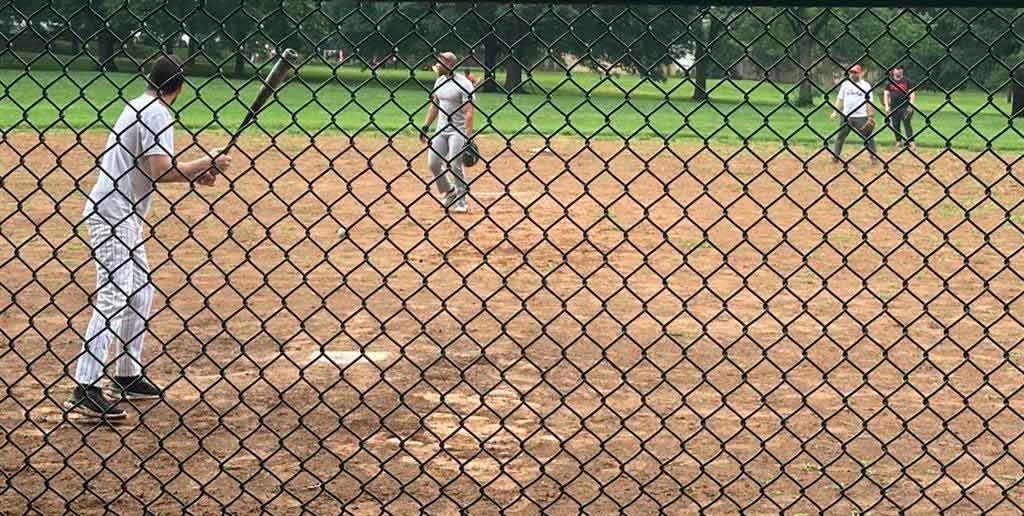
Washington, June 7 (Prensa Latina) Baseball, Cuba’s national sport, united Cubans from both shores of the Caribbean today in a fraternal game, organized here by the diplomatic representation of the largest Caribbean island in the United States.
Bad weather – a drizzle that suddenly became intense – could not prevent the clash scheduled for five innings, but which was decided in a sixth inning in favor of the Rebeldes team (11 runs) against the Mambises (nine).
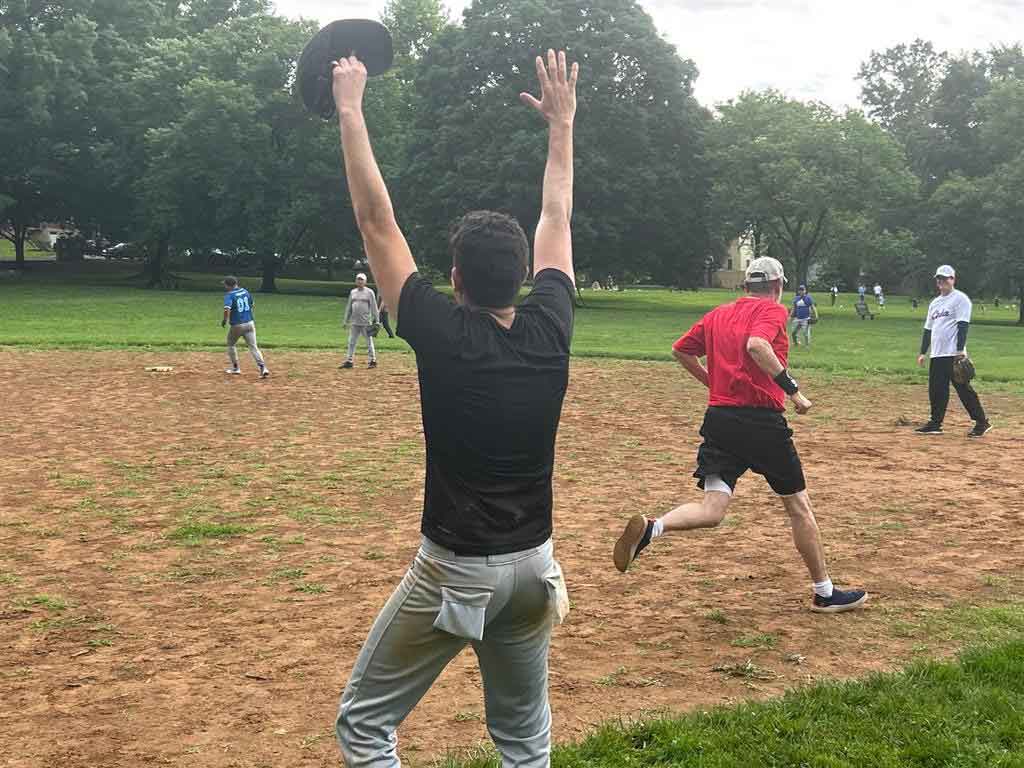
Luis Lauzarique led the Rebels’ comeback with shots that left the Mambises unable to recover. The loser was Ariel Vaillant.
Before the start, the Chargé d’Affaires of the Cuban Embassy, Lianys Torres, highlighted the importance of meetings like these, “which are already becoming a tradition,” and she hopes that “others can be held, always with the spirit of building bridges.”
He said the Cuban government’s intention “is to continue advancing the ties that unite us.”

Johana Tablada, deputy director general for the United States at the Cuban Foreign Ministry, was a special guest at the game. This activity concluded her work schedule in the capital.
jcm/dfm

June 7, 2025 — League of United Latin American Citizens (LULAC)
Washington, D.C. — The League of United Latin American Citizens (LULAC) expresses grave concern and disappointment following today’s U.S. Supreme Court decision letting a lower court ruling to stand. The action permits the Trump administration to revoke humanitarian parole protections for approximately 500,000 immigrants from Cuba, Haiti, Nicaragua, and Venezuela. The individuals affected include some in the country for as long as 10 years who were legally admitted and now face imminent deportation, stripping them of their right to work and contribute to our society.
This decision endangers the futures of hundreds of thousands of families who came to the United States seeking safety, dignity, and a fair chance to contribute to our nation’s fabric. LULAC stands firmly in support of these men, women, and children and urges immediate congressional action to address our nation’s broken immigration system.
“The strength of America has always been its ability to welcome newcomers who bring courage, talent, and determination. Immigrants from Cuba, Haiti, Nicaragua, and Venezuela fleeing persecution, poverty, and violence are not a burden on our nation but a beacon of what makes us great,” said Roman Palomares, LULAC National President and Chairman of the Board. “They come here with a dream to build a better life, and in doing so, they help build a better America. We must never forget that immigrants founded and forged this country.”
The Supreme Court’s brief but impactful order means the case will be first litigated at the lower court level. In the meantime, extensive damage with mass deportations is anticipated, instead of case-by-case review of immigration status revocations. Without explanation, the justices’ majority decision leaves over a million migrants—including others from Ukraine, Afghanistan, and Central America—vulnerable to uncertain futures.
“Xenophobia is not a policy. It is a symptom of fear that ultimately harms our economy and diminishes our moral standing,” added Palomares. “These workers are filling labor gaps, contributing to our GDP, and strengthening industries that power our daily lives. Denying them the right to stay and work legally in the U.S. is not only unjust—it is economically self-defeating. We must replace politics with purpose and hatred with hope.”
LULAC calls on every American to contact their elected officials in Congress and demand comprehensive immigration reform that reflects our values and meets the moment. The future of our nation must include a humane and rational pathway for migrants who seek lawful, productive lives in this country.

June 6, 2025 — The Richmond Standard
The Richmond City Council passed a proclamation Tuesday urging the U.S. to remove Cuba from its list of state sponsors of terrorism and to lift the long-standing trade embargo with the island nation.
The proclamation coincided with a visit from Cuban diplomats Yasser Ibarra and David Ramirez Alvarez, both secretaries at the Cuban Embassy in Washington, D.C. The two were honored by the City Council as part of Richmond’s ongoing sister-city relationship with Regla, Cuba.
Richmond Mayor Eduardo Martinez, a member of the Richmond Progressive Alliance (RPA), introduced the resolution and cited decades of hardship imposed by the U.S. embargo, which cost Cuba over $164 billion since its inception, according to the city proclamation.
“Cuba is a social experiment in creating a society where everyone is cared for. Having these guarantees is also a form of freedom,” the mayor said. “The embargo creates obstacles. When in Havana last year, I saw a magnificent city in disrepair—a city that could rival many other cities if it only had the capital to make those repairs.”
Martinez pointed out that Israel also supports the sanctions on Cuba.
“Like the Zionists in Israel, our nation is punishing the people of Cuba for a wrong they did not commit,” the Richmond mayor said. “It’s time to end this embargo.”
Cuban First Secretary Ibarra said Richmond’s action Tuesday “represents that another path is possible.”
“You know, and all of you know that on the other side of the Caribbean Sea there is a country — there are people — that want to engage with the American people, that want to create bridges of love,” Ibarra said.
Tuesday’s ceremony also referenced gifted artwork from Regla to the City of Richmond, celebrating the cultural and artistic ties fostered through their sister-city partnership.
The U.S. embargo on Cuba began in 1960 after the Cuban Revolution, when the U.S. imposed trade restrictions in response to the Cuban government’s nationalization of American-owned properties without compensation, according to the National Security Archive. It was expanded into a full economic embargo in 1962 under President John F. Kennedy and has remained largely in place, restricting trade, travel, and financial transactions, despite periodic calls for its repeal. The embargo is codified in U.S. law and can only be fully lifted by congressional action.

Moscow, June 6 (Prensa Latina) The Russia-Cuba youth event dedicated to the friendship between the two countries was held at the Yuri Gagarin Cultural and Recreation Park in Simferopol, Crimea, Prensa Latina learned today.
Irina Kiviko, Deputy Chairwoman of the Council of Ministers of the Republic of Crimea, who led the event, explained that the important event included young representatives of various organizations from the peninsula, who united under the slogan: “Russia and Cuba: Together we will win
The president of the Crimean regional branch of the Russian Society for Friendship with Cuba also recalled that in May, the two nations celebrated the 65th anniversary of the reestablishment of diplomatic relations.
In recent decades, a truly fraternal union has been forged between the countries, based on friendship, respect, and the desire for shared development, Kiviko said.
“I am extremely pleased that Crimea’s patriotic youth are actively involved in public diplomacy. As proof of this, the students participated in the national competition of student projects on Russian-Cuban relations and the role of public diplomacy in their development, dedicated to Che Guevara and Gagarin,” he said.
The competition was held in the context of the 60th anniversary of the Russian Society of Friendship with Cuba, and the results were summarized in May.
Of 200 entries from 20 regions across the country, 120 were submitted from the Republic, and 10 were chosen as winners. Therefore, I am completely confident that public diplomacy will develop, Kiviko emphasized.
mem/gfa

Washington, June 5 (Prensa Latina) The Green Party in California urged the United States government to remove Cuba from the list of state sponsors of terrorism and to end all economic sanctions currently imposed on the Caribbean nation.
President Donald Trump reinstated Cuba under the arbitrary State Sponsor of Terrorism (SSOT) designation almost simultaneously with his reinstatement to the White House on January 20, reversing a decision made by his predecessor, Joe Biden, six days earlier.
“Cuba’s arbitrary designation has subjected it to new international sanctions and financial restrictions that further limit the country’s ability to conduct crucial financial transactions, such as the purchase of food, medicine, and oil to supply its national electricity grid,” the document emphasized.
Therefore, the Green Party of California “strongly urges the President to remove Cuba” from SSOT and to oppose “any legislation that seeks to prevent Cuba’s removal from said list.”
Furthermore, it resolves to urge members of Congress from California “to pass legislation that eliminates those aspects of the embargo (blockade) that have become law and eliminate all sanctions imposed by the United States against Cuba.”
At the same time, “allow the people of the United States and Cuba to travel and trade freely between the two countries, and oppose any legislation that seeks to codify the embargo, the SSOT, or other sanctions against Cuba.”
The text also emphasized the damage caused to Cuba by the economic, commercial, and financial blockade of the past 64 years, which impedes most Cuban relations and trade not only with the northern nation but also penalizes third countries.
“The consequences of this embargo (blockade) continue to inflict daily hardship and deprivation on the Cuban people, generating shortages of basic goods such as food and medicine, and severely restricting international financial and trade opportunities,” the resolution stated.
He also explained that the economic blockade “prevents Cuba from obtaining vital medical equipment and supplies, and even hinders the humanitarian response to natural disasters.”
President Trump, he said, has the authority to remove Cuba from the SSOT list by executive order.
The UN estimated last year that at current prices, the annual cost of this hostile policy is around five billion dollars.
On October 30, the UN General Assembly voted for the thirty-second time to lift the embargo on Cuba, with the almost unanimous support of the international community (187 of 193 countries) and opposition only from the United States and its staunch ally Israel.
arc/dfm

 teleSUR Latin America Cubadebate (English)