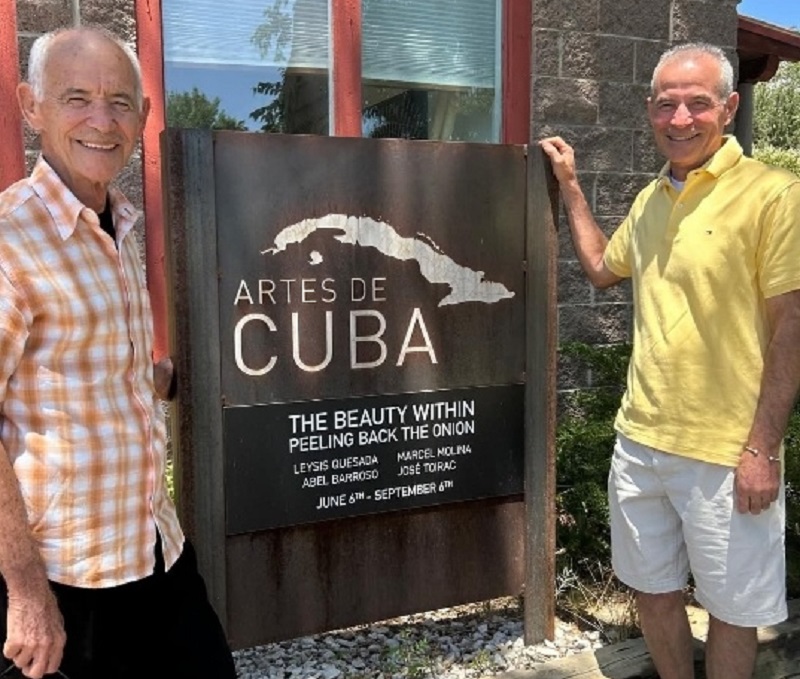
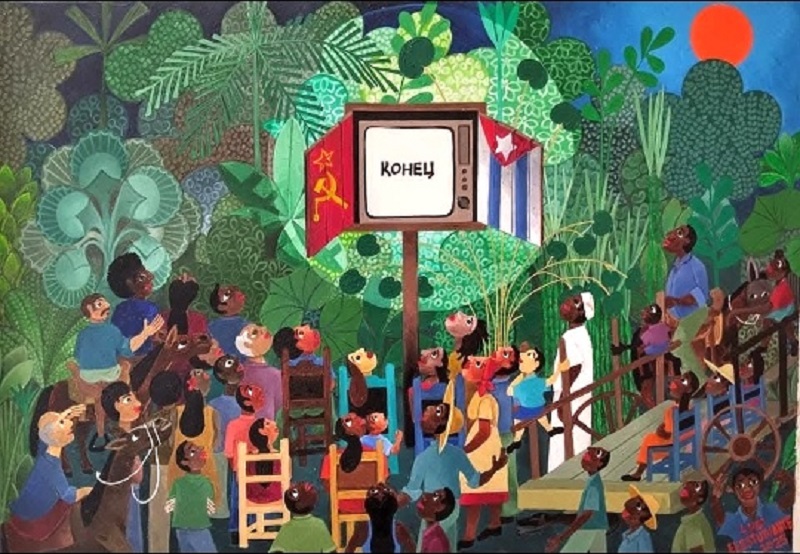
Santiago de Cuba, July 23 (Prensa Latina) Folk art is drawn from nature and everyday life, where all the power lies, Luis Rodríguez, leader of the Bayate Group, told Prensa Latina today. He represented Cuba at an international fair in the United States.
Known as “the student,” Rodríguez added that in addition to exhibitions, the fair featured an academic event with topics such as Biodiversity Protection linked to the arts, entitled “Illuminating the Miracle of Nature.”
Another topic looked at the art market as a space where it’s possible to preserve the authenticity, communication, and values conferred by the stories told by works of art, he explained.
The fair, held annually in Santa Fe, New Mexico, United States, featured the participation of some 150 artists from 50 countries, including Spain, France, Ukraine, Japan, China, Mexico, Peru, Ecuador, Bolivia, Panama, as well as Cuba and the host countries.
The Bayate Group, which brings together Cuban Naif artists, exhibited at Stand 2, with 120 works by 20 painters from the provinces of Cienfuegos, Holguín, Granma, Guantánamo, and Santiago de Cuba. This is Bayate’s eleventh participation in the Santa Fe International Folk Art Fair.
Havana, July 23 (Prensa Latina) The United States government despises multilateralism and UN institutions, Cuban Foreign Minister Bruno Rodríguez asserted today, commenting on Washington’s announcement that it is withdrawing from UNESCO.
“The announcement of the #US withdrawal from @UNESCO is yet another demonstration of the US government’s contempt for multilateralism and the @UN_es institutions focused on promoting peace, which it financially pressures to impose its failed doctrine of global domination.
The White House announced its decision yesterday to leave the United Nations Educational, Scientific and Cultural Organization (UNESCO), citing the cultural and educational agency as biased against Israel and promoting divisive causes, media reported.
“Today (Tuesday), the United States informed Director-General Audrey Azoulay of its decision to withdraw from UNESCO. Continued participation in UNESCO is not in the national interest of the United States,” State Department spokeswoman Tammy Bruce said in a statement.
The US official called UNESCO an organization that “promotes divisive social and cultural causes” and focuses excessively on the UN’s sustainability goals, which she described as a “globalist ideological agenda.”
For her part, from the organization’s headquarters in Paris, France, its Director-General, Audrey Azoulay, deeply regretted President Donald Trump’s decision to once again withdraw the United States from the UNESCO community of Member States—a decision that will take effect at the end of December 2026.
Azoulay assured, however, that the organization has undertaken important structural reforms and diversified its funding sources, so that currently the U.S. contribution amounts to barely eight percent of the organization’s total budget.
Havana, July 22 (Prensa Latina) A broad plan of activities will be held in Cuba in connection with World Breastfeeding Week, from August 1 to 7, including an extension of the program to 2026 to promote this act of love.
At a press conference in this capital, the Ministry of Public Health (MINSAP) and the United Nations Children’s Fund (UNICEF) provided details of the event, and the “Gotas de amor” movement, a year promoting breastfeeding, was presented.
Sunny Guidotti, UNICEF’s deputy representative in Cuba, emphasized that they are working hand in hand with the Ministry of Public Health (MINSAP) to promote this practice, which provides protection and development for both babies and mothers, reduces the risk of chronic diseases, and, most importantly, fosters a connection between the two.
It’s proven that growing up on breast milk, not just in the first hour of life, but exclusively for the first six months, ensures that children can have their lives saved and also develop optimally, the UNICEF representative stated.
She also mentioned the importance of family support for breastfeeding women, emphasizing that this exercise supports the newborn’s cognitive development and immune system, and reduces the risk of chronic diseases, among many other benefits for the mother as well.
Dr. Mercedes Esquivel, of the National Pediatric Group and the Commission on Breastfeeding and Human Milk Banks, emphasized that Cuba promotes a sustainable support system to enhance this successful breastfeeding practice, from conception through the baby’s first two years of life.
He specified that this effort is supported by scientific and epidemiological data and seeks to involve the entire society.
Dr. Esquivel offered statistics that support the relevance and importance of breastfeeding, stating that a non-breastfed baby is six times more likely to die compared to a breastfed baby.
Together, the Ministry of Public Health (MINSAP) and UNICEF promote exclusive breastfeeding for the first six months and complementary breastfeeding for children up to two years of age.
The plan of activities in honor of this beautiful example of mother-child love and mutual protection includes a virtual scientific event, activities to encourage breast milk donors and mothers who have achieved exclusive breastfeeding, awareness-raising workshops, and regional courses on community interventions.
A concert by singer-songwriter Enid Rosales is scheduled for August 7 at 4:00 p.m. local time at the National Museum of Fine Arts, where a video clip about breastfeeding, created by May Reguera, will be presented.
On August 9, Havana’s Quinta de los Molinos will host a celebration under the 2025 theme “Let’s Prioritize Breastfeeding: Building Sustainable Support Systems.”
The press conference welcomed the fact that today is World Brain Day, and on the occasion, breastfeeding was praised as the first act of protecting a newborn’s brain, one that will have repercussions throughout their lives.
The media was also encouraged to do more work promoting and highlighting this practice, which is so full of health, beauty, protection, and love.
Caracas, July 22 (Prensa Latina) A new air route between Valencia, capital of the state of Carabobo in northern Venezuela, and Havana, Cuba, was inaugurated to boost international tourism, the state government reported today.
The organization stated on its official Telegram account that this project took place in the context of “international integration policies and strengthening the tourism sector.”
He specified that the new route will be operated by the Venezuelan airline Rutaca, with a frequency of two weekly flights on Mondays and Fridays.
The message indicated that 13 passengers arrived on the inaugural flight at Arturo Michelena International Airport in Valencia, from the José Martí International Airport in the Cuban capital.
While 42 travelers departed from the capital of Carabobo bound for the Caribbean island, generating a flow of 57 travelers on this first leg, the statement detailed.
Madrid, July 22 (Prensa Latina) A brigade of 33 people representing Medicuba Spain traveled to Cuba to perform volunteer work for 10 days, a source close to the group said today.
By Fausto Triana
The delegation will remain in Santiago de Cuba until August 6 and will be responsible for repairing and painting educational centers in the eastern province, thus contributing to the maintenance of infrastructure affected by the limitations imposed by the United States’ economic, commercial, and financial blockade against the island, Cubainformación reported.
He also indicated that the group is transporting 66 packages of medical, school, and sports equipment, in addition to their personal belongings, donated by charitable organizations and individuals.
“These supplies seek to alleviate the shortages generated by the unjust U.S. blockade, which for more than six decades has hindered Cuba’s access to essential resources and has been reinforced with 250 new sanctions in the last seven years,” the source said.
Before their departure, members of the brigade emphasized the humanitarian and solidarity nature of the project and reiterated their commitment to Cuban sovereignty and resistance. “Our work is a grain of sand in the face of the hostility of the blockade, but above all, it is a message that Cuba is not alone,” they noted.
While ocean warming and coral bleaching events make the headlines around the globe, there’s a team of pioneering marine researchers quietly working on new methods to rebuild coral populations more resilient to rising temperatures through groundbreaking means. And it’s all happening in Cuba.
It’s the middle of the night. The sky is dusty white with stars, so many that it’s difficult to distinguish one from another. The full moon hangs low above the ocean’s inky surface and creatures scuttle across the seafloor. Stripy lionfish dance their poisonous dance, fins fanned in dazzling display. And throughout the intricate passageways of an extensive reef, corals get ready to spawn.
Each August, under the cover of darkness, a species of coral at Playa el Coral – off the northern coast of Cuba – releases a cloud of eggs and sperm. The underwater world comes to mirror the sky above, the sea sprinkled with millions of microscopic particles.
Coral species reproduce either through “brooding” or “broadcasting.” The former release fully fertilised juveniles; the others, called broadcast spawners, release sperm and eggs separately. If all goes well, somewhere in the vast water column, a tiny sperm and egg will find each other.
If by a moon dance miracle, the two gametes do connect, they become a planula, or coral larvae. They are carried by currents or settle on the reef below, trying to beat the odds: only 1% of corals survive their first year of life.
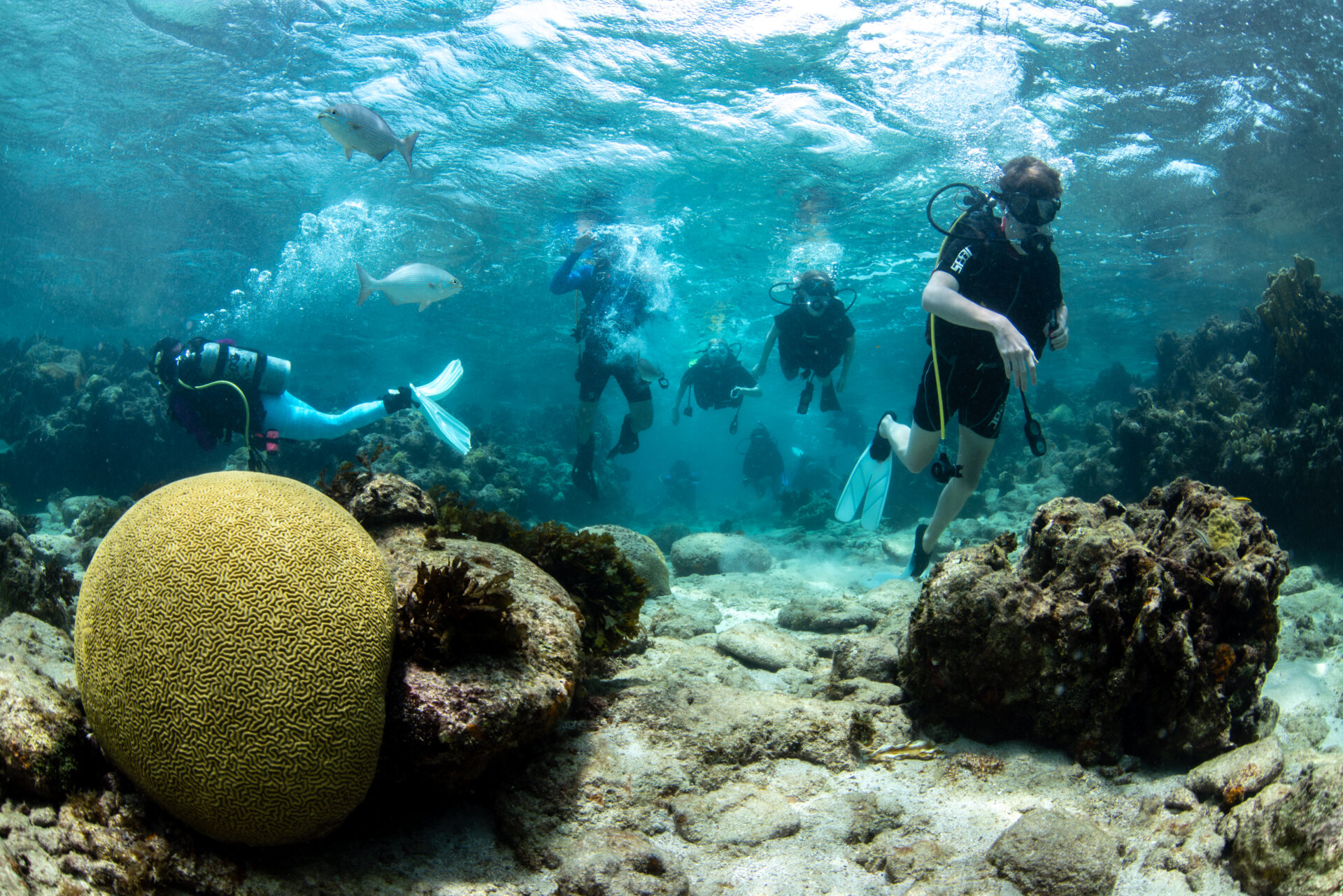
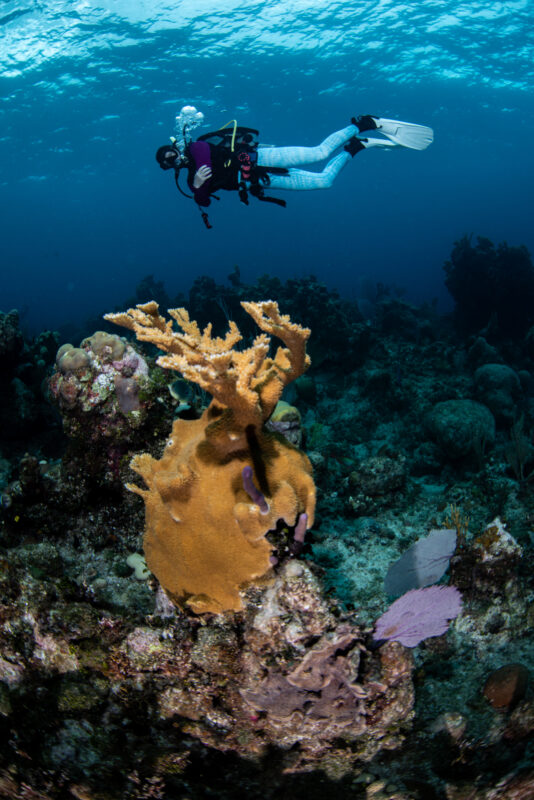
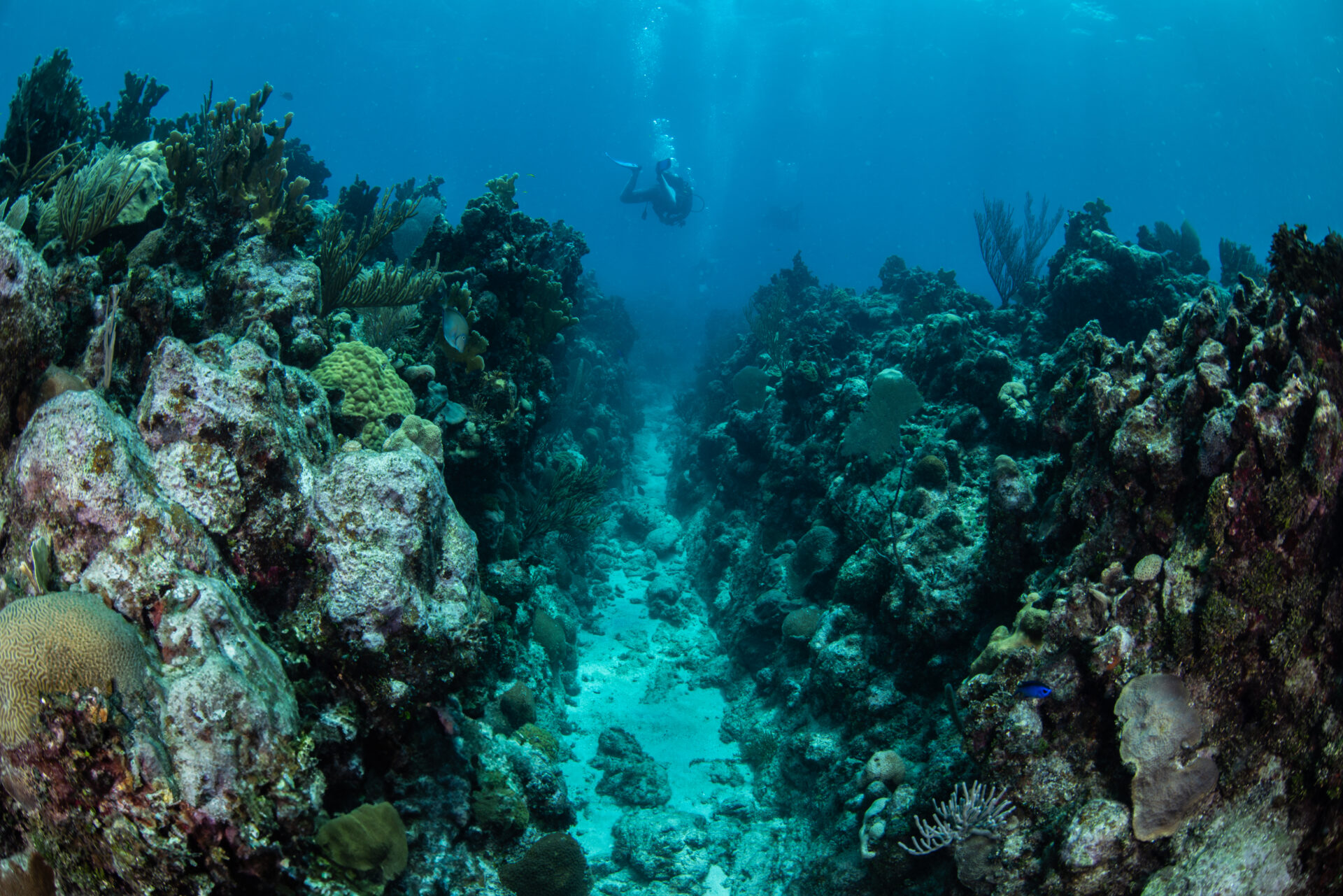
Along the two square kilometres of Playa el Coral, hundreds of species reproduce this way: the vibrant purple fan coral, the branching orange elkhorn, and the boulder star coral that encrusts rocks in tiny green polka dots. The scientists and divers who know this spot well all agree: it is one of the healthiest reefs in the Caribbean, if not the world.
Many narratives about coral reefs are centred on bleaching, death, and extinction. Which is, for the most part, accurate. According to the World Economic Forum, 14% of reefs have been lost since 2009. In Australia, over 70% of the Great Barrier Reef has bleached. In Florida, 90% of the reefs – stretching some 350 miles – have disappeared in just the past 40 years.
Many things contribute to reef loss: overfishing and trawling, destructive tourism practices, and pathogens like stony coral tissue loss disease. The biggest threat facing corals, however, is climate change-induced marine heat waves. This type of oceanic warming causes corals to bleach, a process that can end in fatality.
“We have a serious extinction risk for many of these corals,” said Margaret Miller, who works for SECORE International, a non-profit that specialises in coral restoration.
Most of the planet’s over 100,000 square miles of reef are concentrated around the equator, where, for millions of years, corals have historically been happiest. This is mostly because temperature and light conditions were just right for their survival and reproduction. (A few cold water corals are the rare exception.) But the earth’s tropics are growing increasingly inhospitable for the over 6,000 known species of coral.
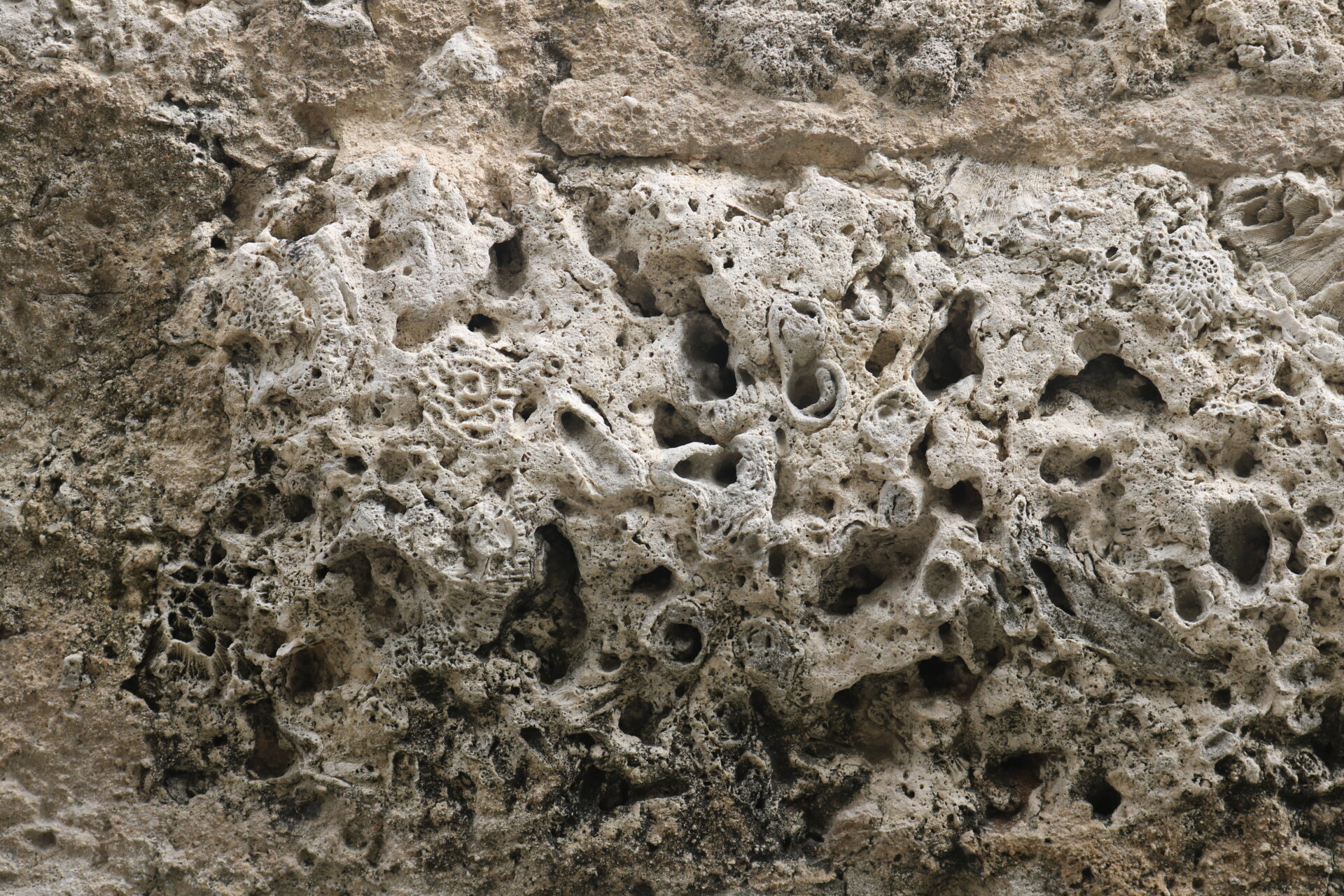
Corals are animals, communal organisms made up of individuals called polyps, living together in a colony. The foundation of these colonies is the corals’ skeleton, made primarily of calcium carbonate. Covering this limestone skeleton is their tissue, which includes not just coral polyps, but symbiotic algae, roommates of sort, without which the coral could not survive.
These algae, which are called zooxanthellae, provide valuable, life-giving nutrients to the coral. The algae also give coral their colors: without them, the polyps would appear white.
When ocean temperatures get too warm – sometimes by just 1.8 degrees Fahrenheit (1 degree Celsius) – corals become stressed and expel the symbionts that sustain them, exposing the ghost white skeleton beneath through their transparent tissue. Bleached coral doesn’t necessarily mean dead coral, but often, bleaching can be the first step towards mortality.
In 2023, the Caribbean Sea broke records with the average temperature staying above 66 degrees Fahrenheit – 19 degrees Celsius – for nearly two months. This is well above the 20th century average of 57 degrees Fahrenheit (13.9 degrees Celsius). This February, news came from western Australia about a severe bleaching event on the Ningaloo reef, where divers and scientists alike were shocked by water temperatures that skyrocketed above 120 degrees Fahrenheit, roughly 50 degrees Celsius.
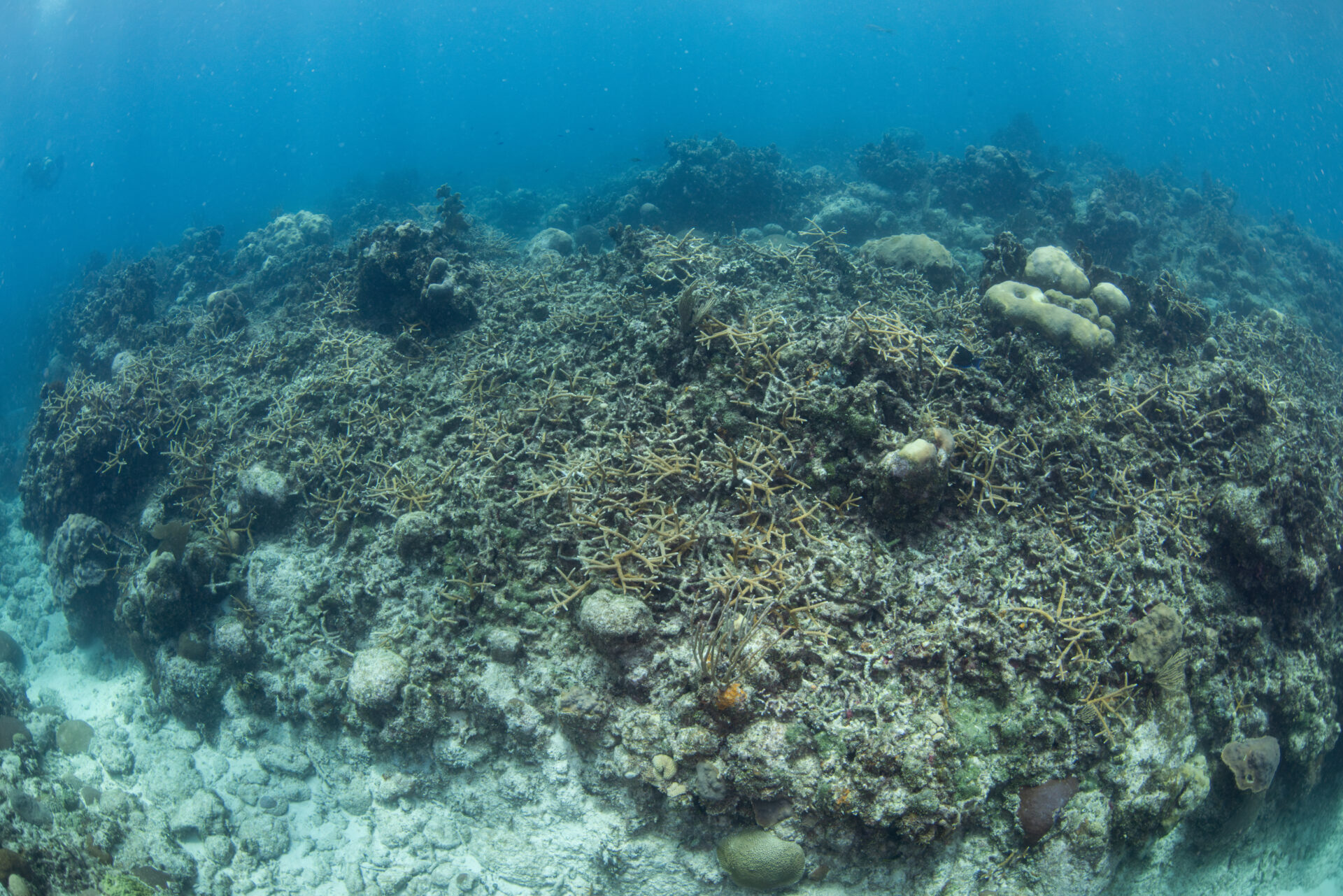
In both places, vast stretches of coral bleached and then died. Their limestone foundations became vulnerable to overgrowth by seaweed, a sure sign that a coral is dead. Engulfed in a fuzzy shock of algae, these corals won’t regrow. Instead, they will turn to rubble, piling up in dark mounds on the ocean floor.
Many things contribute to reef loss: overfishing, destructive tourism, and pathogens like stony coral tissue loss disease. But the biggest threat is climate change.
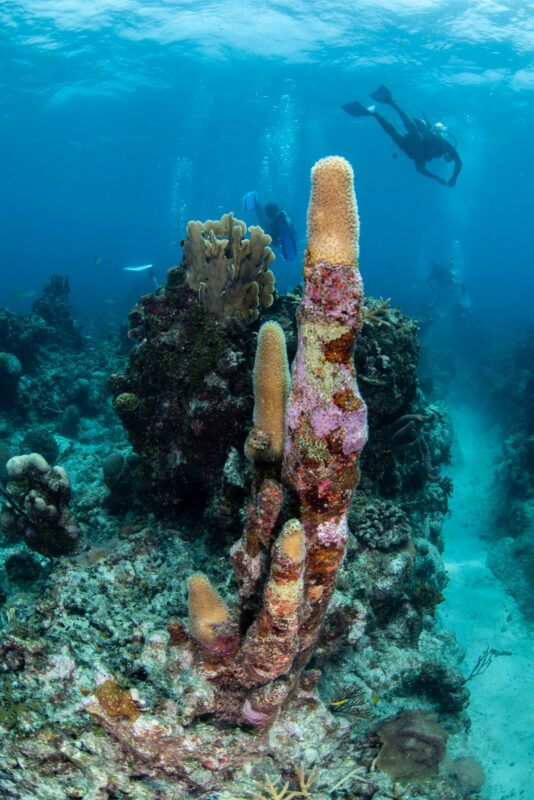
Marine biologist Fernando Bretos remembers the first time he saw coral, more than three decades ago, in the Florida Keys. As a teenager, he was awestruck by the underwater world. He recalls how the tissue of pillar coral, a species now facing extinction, was almost fluffy in appearance, jutting up from the seafloor in cylindrical shoots like small buildings, part of a miniature underwater city.
He was smitten. But when Bretos returned to Florida’s Pennekamp State Park in 2018, what he discovered was shocking. “Everything was rubble,” he said. “I could only see their skeletons,” said Bretos of the brain coral that had been thriving there just six months before.
In early 2019, Bretos traveled to Cuba, the island from which his parents had fled decades earlier. Travel to Cuba had become a regular part of his professional life, but this time he carted curious cargo: three suitcases, each filled with ceramic disks wrapped tightly in newspaper inside cardboard boxes.
Scientists and innovators are devising ways to protect coral ecosystems in the warming oceans. The projects range from land-based, Noah’s Arc-style coral seed banks to immense geo-engineering projects. The majority of these methods fall into two main categories: asexual reproduction or assisted sexual reproduction.
Asexual reproduction is more commonly known as fragmentation. Researchers break small bits of coral off a large colony, care for them while they grow larger, and then affix them to an unhealthy or sparse part of the reef. But the coral fragments, which are genetic clones, are no better at surviving warmer waters than their parents – there is no genetic mixing that might introduce a climate adaptation.
Bretos notes that the approach is much more widespread than assisted sexual reproduction; “for every sexual propagation project, there’s a hundred fragmentation ones,” he said.
The second approach – assisted sexual reproduction, that the team is attempting in Cuba – offers that very possibility. This method is based on what corals do naturally – on what can be seen each August along the expanse of the Playa el Coral reef as broadcasting corals send out their gametes. Ideally, a coral sperm and egg from two separate colonies, or a different reef altogether, meet and grow into an adult coral. But in this method, scientists are facilitating this early connection. The offspring is thus a genetic combination of its parents, one of which may have an adaptation that allows it to survive increasingly warm environments.
To Miller, the approach makes the most sense right now. “Restoring successful sexual reproduction on coral reefs is just a prerequisite for them to ever be able to adapt and regain a self-sufficient, sustainable status,” she said.
In a recent paper in the journal PLoS, Miller and twelve colleagues showed that corals from assisted sexual reproduction experiments showed more tolerance to the 2023 Caribbean marine heatwave than individuals derived from fragmentation – asexual reproduction – or than naturally occurring corals of the same species. This means that baby corals born from the assisted sexual reproduction method were more resilient than all the others to the main threat they face: oceanic warming.
Bretos and a small team have been piloting this method in Cuba. It is no secret that Cuba presents logistical difficulties, especially for Americans. An economic crisis has been left in the wake of the Cuban Revolution and ensuing U.S. embargo. Access is hard, funding for projects is scarce, and politics entrench even the smallest of decisions.
Due to permitting hurdles, Cuba couldn’t be included as one of the fifteen sites in the PLoS study. But with support from the Caribbean Biodiversity Fund and SECORE international, Bretos and the Cuban team are rolling out the method along the island’s shores. And a key piece of this project is ceramics… and suitcases.
“This is a hope story. This is not a ‘look what we’ve done’ this is a ‘look what we’re doing.’”
Mara Haseltine, an artist and nature-based designer, met Bretos in 2021 and learned that he had, in three trips, lugged 11,000 ceramic discs to Cuba for a coral restoration project. The pale white ceramics, about three inches in diameter, provided a surface for the baby corals to grow on.
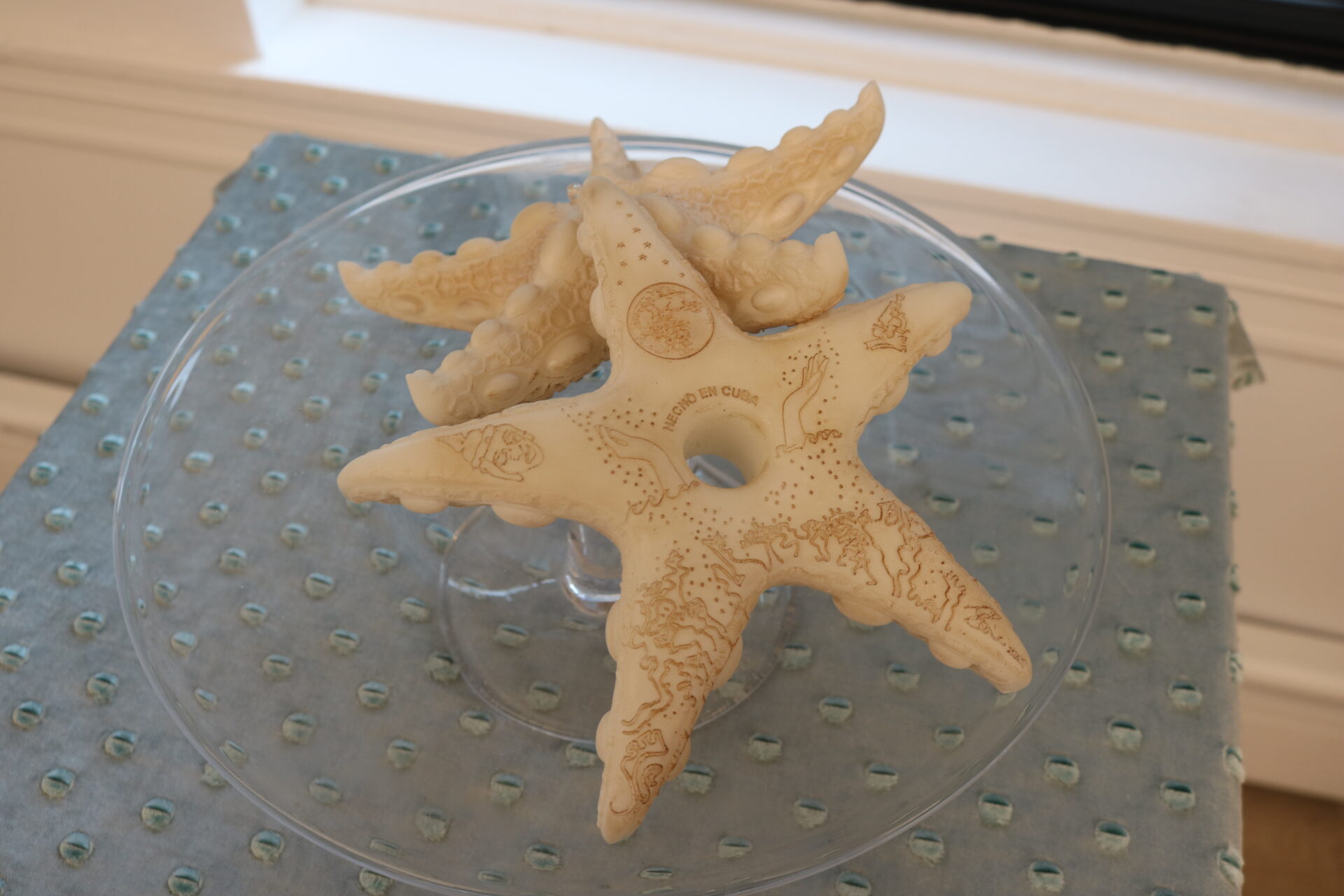
Haseltine wasn’t sure how, but she knew she wanted to help Bretos with his coral substrate supply problem. She decided that she wanted to make the homes for the tiny coral larvae into works of art – and that she wanted the ceramics to be produced in Cuba, providing income for artisans there.
Haseltine knows art and she knows science. What she didn’t know was Cuba. So she was introduced to Israel Dominguez, a Babalawo, or priest, of Santería, the most widely practiced religion in Cuba. Though Dominguez is a public person, he’s also soft-spoken, and Haseltine slowly earned his trust through a series of meetings. “She wanted to understand our culture,” said Dominguez. The pair spent days together, designing estrellas del oceano, or stars of the ocean.
The small, palm-sized sculptures that will host the coral larvae are intricate and sea-star shaped. On the bottom are the images that Haseltine and Dominguez settled on: corals spawning, their gametes drifting to the centre of the star, where the hands of Yemaja, the goddess of water, lift them up. Between Yemaja’s hands: the words “Hecho en Cuba,” meaning “made in Cuba.” All this below a full moon, the coral’s secret signal that it’s time to spawn.
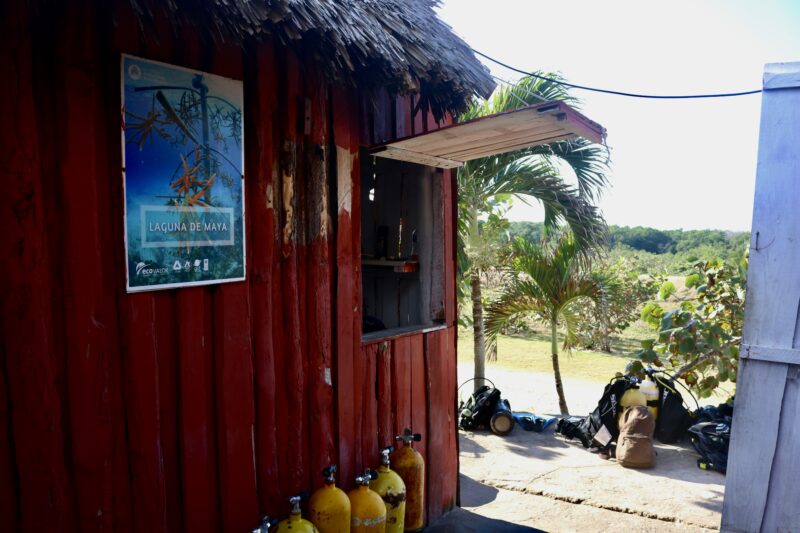
The first two sites Bretos and the team chose for the restoration project are Jardines de la Reina off the south coast and a bay off the Guanahacabibes peninsula, to the southwest. Playa el Coral and Jardines del Rey will be next. Bretos hopes to use Haseltine’s stars for the gametes from Playa el Coral.
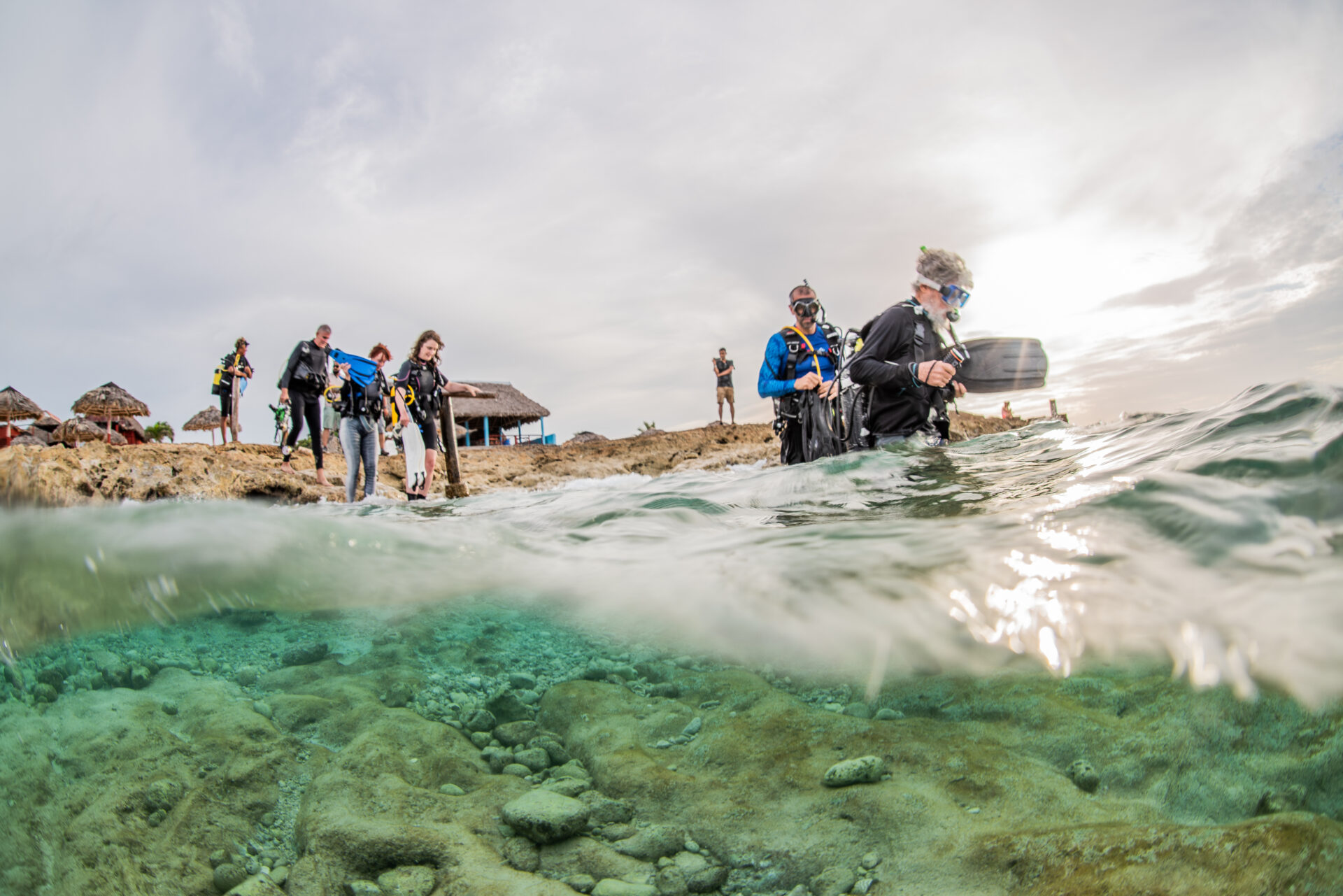
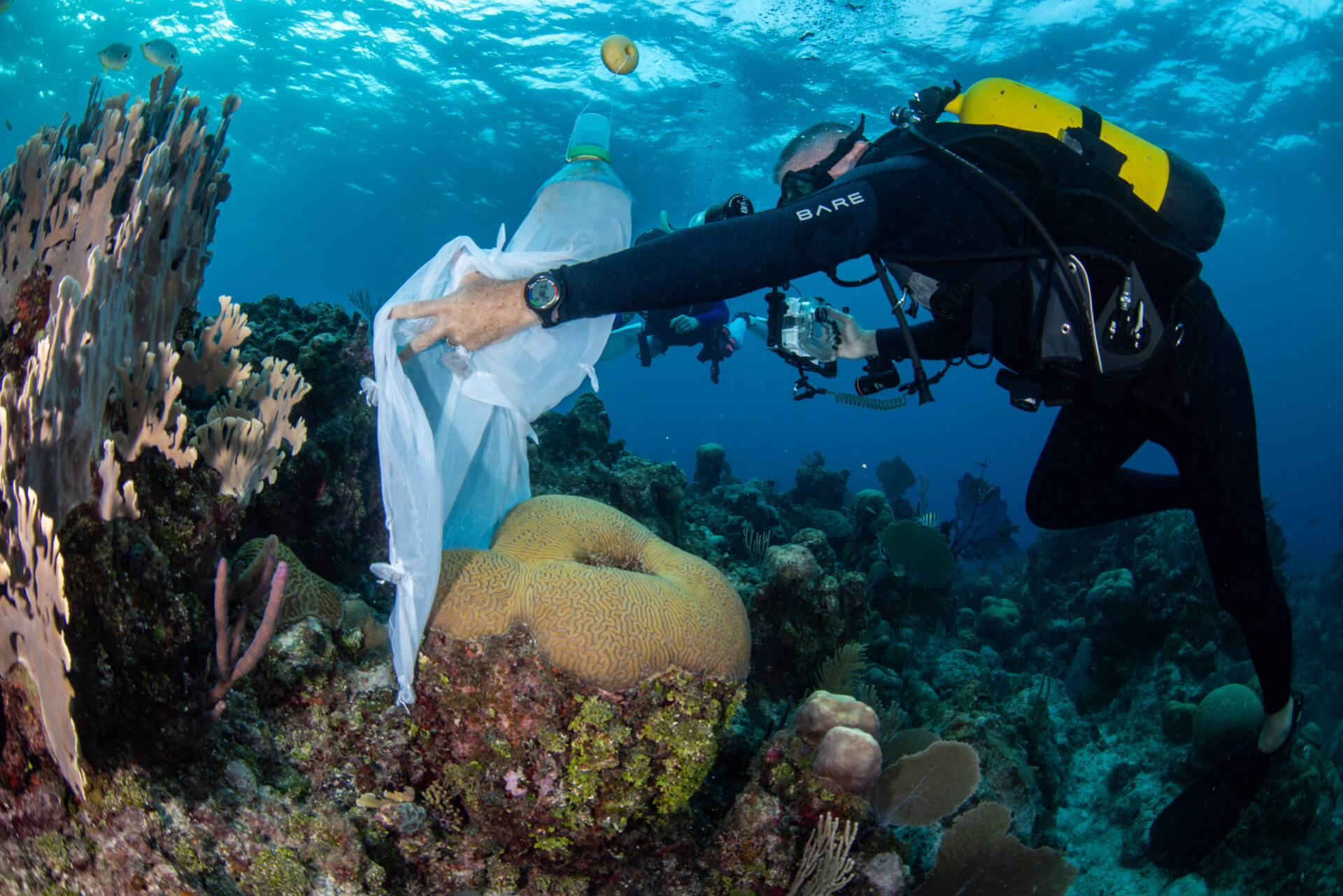
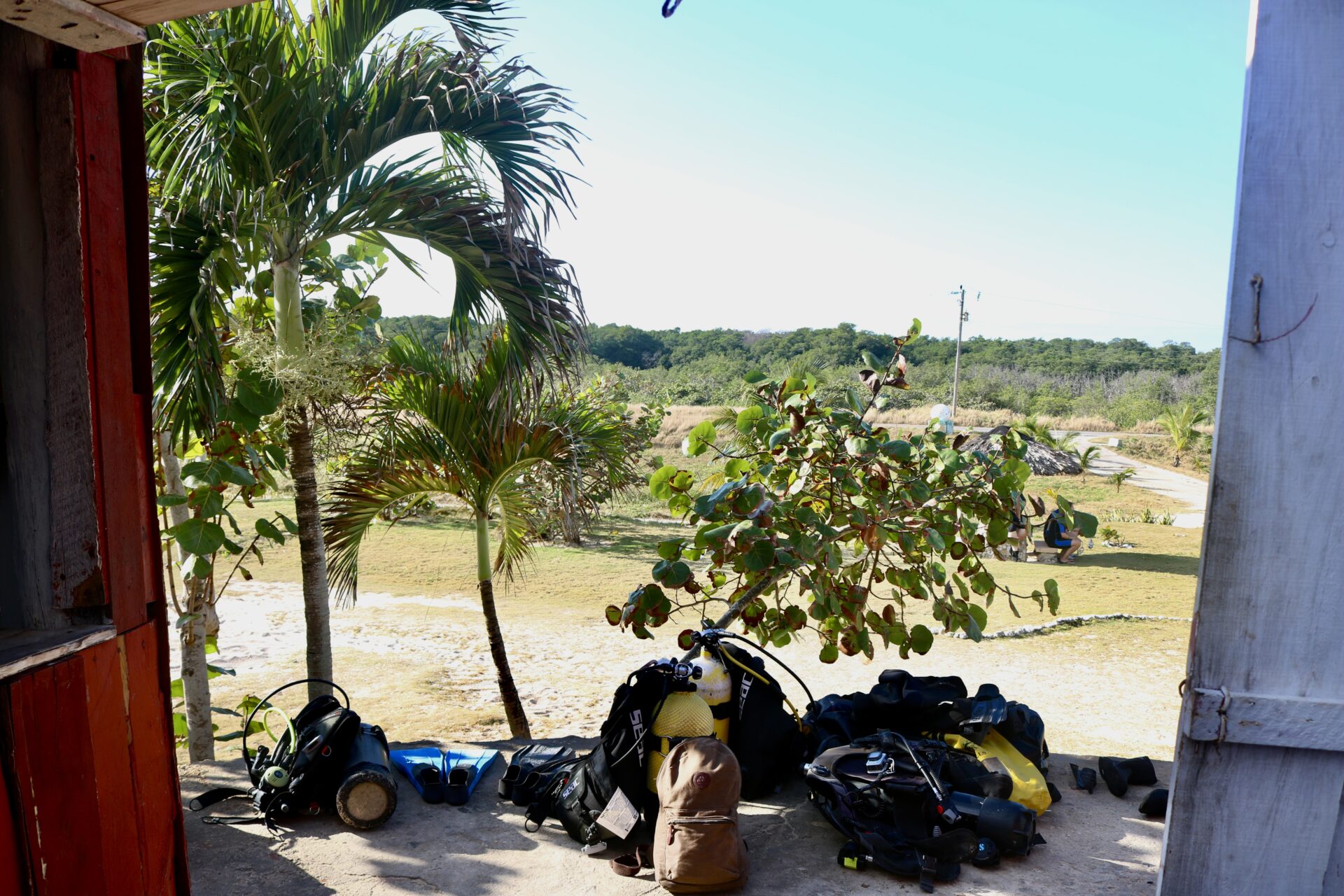
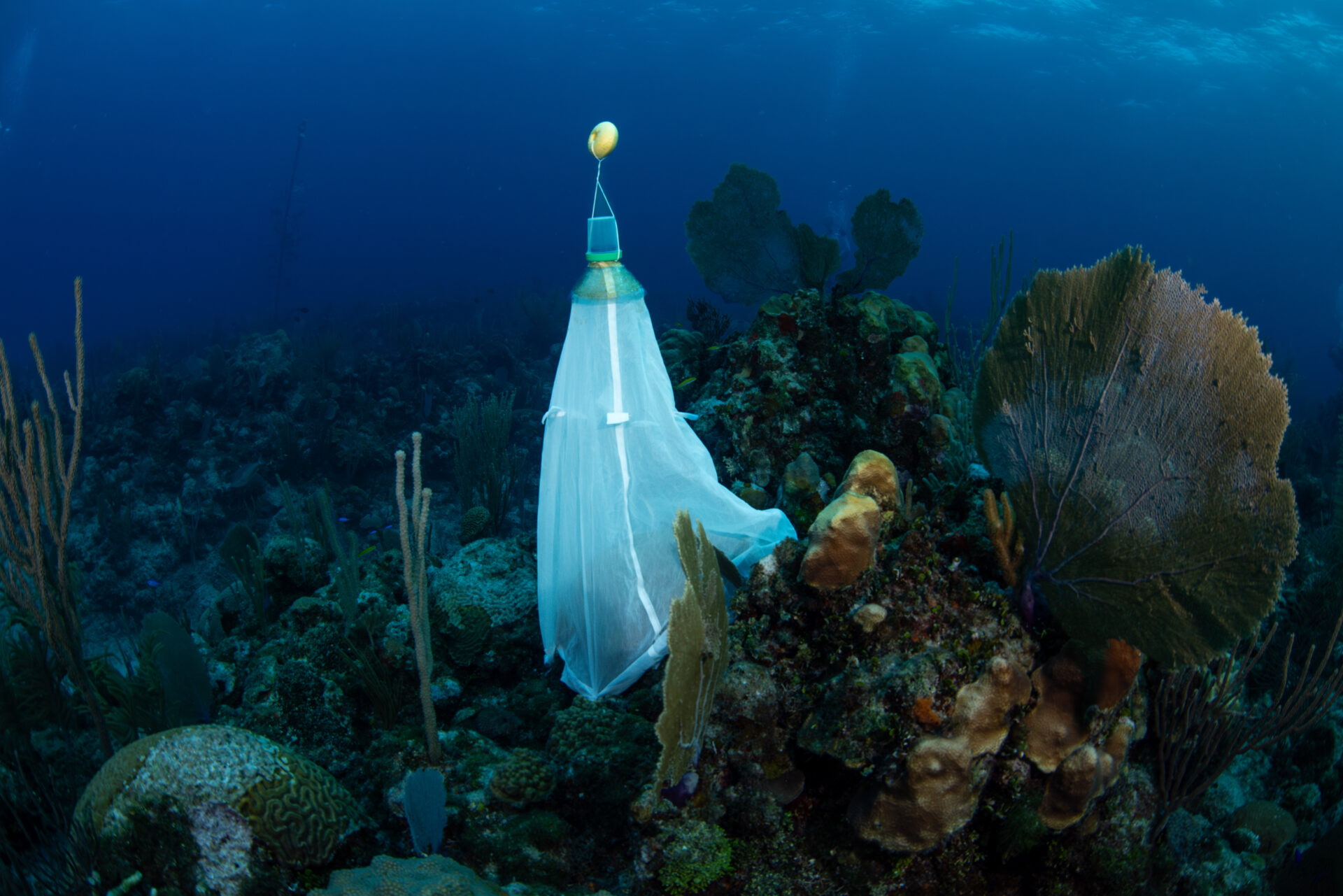
Assisted sexual reproduction requires much more time than fragmentation does. When Acropora coral spawn in August or, sometimes, September, divers cover the parent colonies with a fine mesh net that allows only water to pass through. The tapered end of the net funnels into a small glass jar where the coral’s broadcast is caught. If all has gone well, this mixture of eggs, sperm, and seawater is collected from the reef.
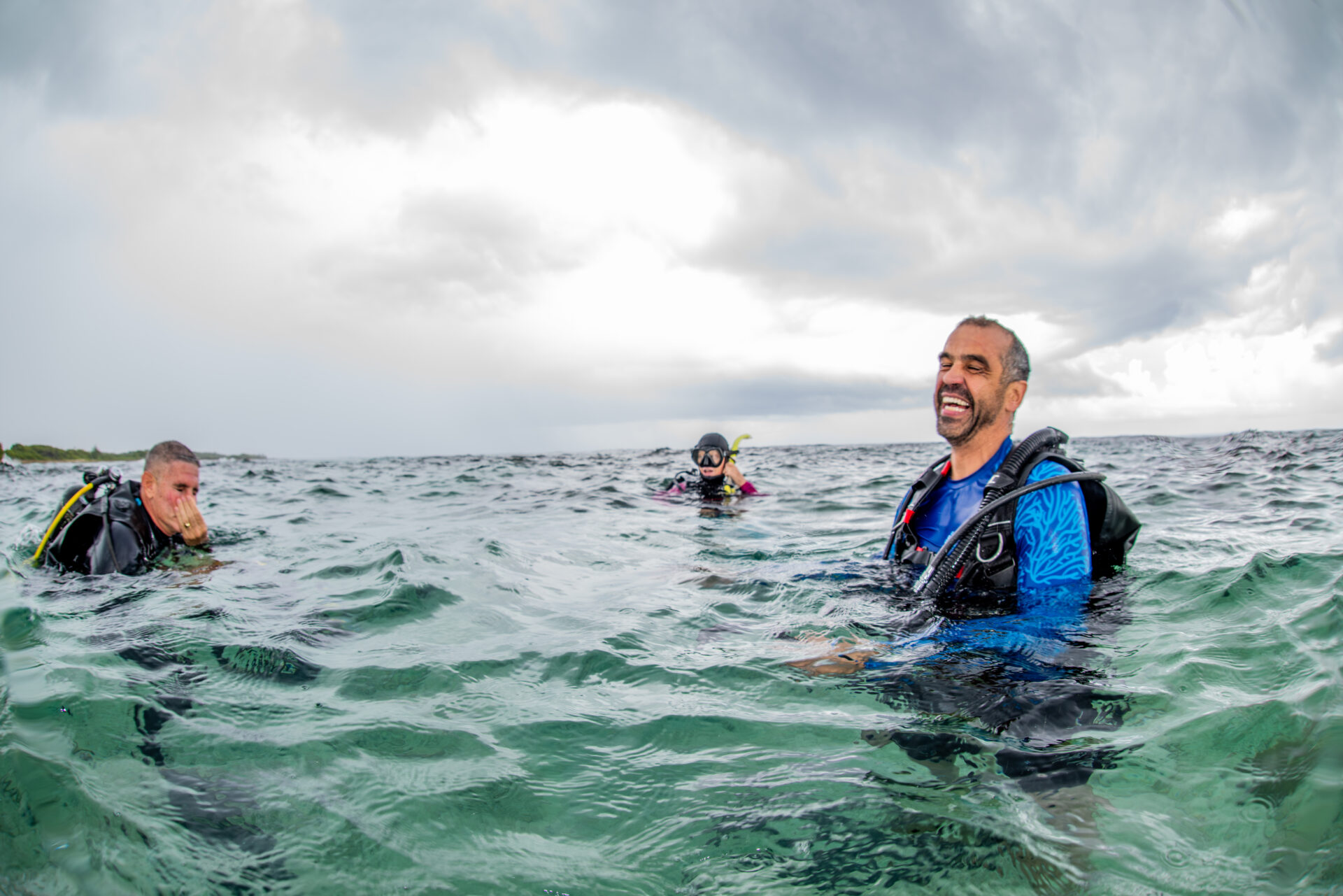
The divers then deliver the baby corals to labs or the aptly named Coral Rearing In-situ Basins (CRIBs). These floating blue hexagons “look like bounce houses,” said Bretos. The ceramic substrates rest inside these inflatable labs, about a foot below the surface of the water, on nets suspended between the two sides.
Inside the CRIBs, jars of larvae are poured over the substrates. Many young gametes fall to the ocean floor. But some land successfully on the substrates, protected from the fish and other predators that feed on coral spawn. Once the planulae have grown big enough to make a go of it on their own, divers place them on the reefs. Often wedged in a crevice or nearby other, older coral, the new, genetically diverse juveniles begin what the team hopes will be long lives.
Cuba has made significant efforts to protect their seas, establishing marine protected areas safeguarding 25% of their ocean.
Cuba’s corals are, for now, doing better than many of their neighbouring Caribbean reefs. Because tourism in Cuba has been limited, little damage has come from cruise ship pollution, waste dumping, and anchor dragging – or from tourists standing on or damaging the corals.
Cuba has also made significant efforts to protect their seas, establishing marine protected areas safeguarding 25% of their ocean, according to the Nature Conservancy.
However, the rate of coral loss in Cuba vastly outpaces the restoration efforts at the two initial sites: Guanahacabibes and Jardines de la Reina. At Jardines de la Reina, due in part to the isolated location of the site and faltering funding, the baby corals are not coming back.
During the global marine heatwave of 2023, all the elkhorn coral at Guanahacabibes died. Now, crumbles of elkhorn limbs litter the sand. “There we are, we need to begin from zero again,” said Cuban coral scientist Pedro Chevalier.
For many coral experts, the Caribbean is a focal point because it has experienced the most catastrophic reef loss thus far. Bill Precht, a renowned coral scientist, said he sees value in the assisted sexual reproduction method, yet remains skeptical. Scientists involved in assisted sexual reproduction often try to capture spawn from parent colonies that appear resistant to heat stress. Sometimes, even when this is done successfully, said Precht, the water will get a bit hotter and everything will die anyway. “There’s a lot of papers that say, ‘oh, we’ve found it,’ ‘we’re finding it,’” he said. “But there’s no end of the rainbow yet.”
Miller is more hopeful. She knows larval propagation “is always going to take longer,” which is why she encourages the simultaneous use of many methods, including fragmentation. Bretos agrees, “The science is saying that sexual restoration has higher survivability and more scale but it’s not there yet, so we need both.”
Pedro Chevalier has been a leader in Cuban coral restoration for decades. He wants to help young Cubans fall in love with the undersea world, with the magic of coral reefs. But even if young people do become passionate about marine biology, many dream of leaving Cuba to find opportunities elsewhere – like many small island nations, Cuba suffers from persistent brain drain.
Between 2022 and 2023, over one million Cubans left the island, an estimated 10% of the total population. For Chevalier and Bretos, the coral restoration project has the potential to show young Cubans that there is work to be done protecting and restoring their natural world, right in their own backyard.
“This is a hope story,” Bretos said. “This is not a ‘look what we’ve done.’ This is a ‘look what we’re doing.’”
Chevalier worked at the National Aquarium of Cuba for nearly ten years. As part of a campaign of environmental education programs, they created a coral “garden” just off Havana. Here, they employ the asexual, fragmentation method of restoration. In a calm channel close to shore, divers bring strings of corals from the garden to the shallows where young children can interact with them. The children get to choose a fragment to name, and many pick based on colour or shape. The aquarium then posts photo updates of the growth of the juvenile corals on Facebook.
They’ll say, “‘Look, it’s my coral!’” said Chevalier. The aquarium staff have even had birthday parties for young corals with the children, who become just as excited about the science as the scientists themselves. They even bake cakes and desserts for the baby coral’s birthdays, celebrating the life they’ve helped nurture.
Whenever Chevalier talks about the kids and the corals, the skin around his eyes wrinkles and he grins. “Those kinds of people, children,” he said, “they love the sea.”
Cairo, July 21 (Prensa Latina) The Egyptian newspaper Al Ahram today criticized the United States’ decision to impose sanctions against Cuban President Miguel Díaz-Canel and the blockade that Washington has imposed on the island for more than six decades.
The measures adopted against the president and other Cuban officials represent a violation of the basic norms and conventions of coexistence among nations and a disregard for the Caribbean and Latin America, said journalist Kamal Gaballa.
While the northern power is taking these actions, it is hosting Israeli war criminal and Prime Minister Benjamin Netanyahu, he stressed.
The publication considered the U.S. State Department’s decision to bar the president from entering the country under the pretext of committing serious human rights violations in Cuba to be unprecedented.
“Secretary of State Marco Rubio, who is of Cuban origin and dreams of returning to Havana as the island’s leader, announced punitive measures against Cuban officials and various properties, including hotels, he emphasized.
He recalled that the economic, commercial, and financial siege against the Caribbean nation prohibits, among other actions, direct financial transactions and U.S. tourism, which, he believed, seeks to increase pressure on the Cuban government.
Al Ahram blamed the tightening of the US blockade for “the shortcomings and challenges facing the Cuban economy.”
I repeat what I always write about Cuba, that small Caribbean island, its people, and its government: it aspires to live in security and peace, and to protect its security and independence, the columnist asserted.
When will human conscience awaken to save Cuba, especially from the measures of the Donald Trump administration, which imposes even more unjust siege and sanctions? he asked.
Speech delivered by Miguel Mario Díaz-Canel Bermúdez, First Secretary of the Central Committee of the Communist Party of Cuba and President of the Republic, at the closing of the Fifth Ordinary Period of Sessions of the National Assembly of People’s Power in its 10th Legislature, at the Convention Palace, on July 18, 2025, “Year 67 of the Revolution”
Dear Army General Raúl Castro Ruz, leader of the Cuban Revolution;
Dear comrade Esteban Lazo Hernández, President of the National Assembly of People’s Power;
Dear deputies;
Compatriots:
This has been an authentic Assembly of the people, as the young deputy Danhiz expressed here. It has been so because its debates were the debates of today’s Cuban society on the enormous challenges ahead of us, but also because they once again revealed the impressive willingness of this people to fight when everything becomes more difficult.
Neither pessimism, nor defeatism, nor discouragement. What we found here were sober presentations, criticisms based on commitment and, above all, concrete proposals and demands to change what must be changed without delay.
The wisdom and enthusiasm that has characterized practically all the interventions of these days do not surprise me, it is what I have seen in the tours through the provinces. Just where the situation is hardest, after long hours of blackout, you always find the extra of Cubans.
It is not the first time nor will it be the last time that the Cuban Revolution faces its “most difficult moment”, although it will always seem to us that nothing can be worse than what we face at the instant we face it.
I will cite a few episodes in the history of Cuba: the Zanjón Pact after ten years of a bloody war that ended with the death or exile of its leaders; the fall in combat of José Martí and Antonio Maceo; the Yankee intervention that robbed us even of the right to enter the heroic city and to attend the signing of the Treaty of Paris because there two empires negotiated our freedom; the neocolonial republic with its appendix, and the Yankee military base where human dignity is tortured and violated.
Then comes the Machado times with its pomp and misery, and Julio Antonio Mella assassinated, and the Revolution that went to the dogs, and Antonio Guiteras massacred in El Morrillo for his profoundly anti-imperialist action. And the corruption of the authentic ones, and Batista’s coup d’état, and the murders of “our children” denounced by the Cuban mothers, and the repressed students and the massacre of the assailants of the Moncada, the Presidential Palace, the Goicuría.
With all this inheritance of heroism and frustrations of the revolutionary struggles, the Centennial Generation entered history, with its setback marking the victory in the attack to Moncada. They already had a program, an ideal and a willingness to carry it to the ultimate consequences. And so they did.
When we review all the periods of the 66 years of the Revolution in power, what we find, in addition to victories, are third world challenges, enemy obstacles and also our own mistakes and lessons learned, all fruits of the never abandoned eagerness to conquer and sustain social justice as a supreme aspiration, in a completely adverse world context, since the Soviet Union and the socialist camp ceased to exist.
If, in spite of all that, the Cuban Revolution is standing and fighting for the possible prosperity, it is because of its authentic and genuine character. We are not an accident of history. We are the logical consequence of a history of resistance and rebellion against abuse and injustice that has very deep reasons to believe in its own strength.
That is why the national dignity is offended by those who play at comparing times to praise “how well Cuba was before 1959”, posting photos of the palaces and the elegance of its ladies and gentlemen, but hiding those of the eviction, the machete plan, the misery, the children swollen with parasites who worked when they should have gone to school, the prostitutes, and the Italian-American mafias sharing the spoils of the hotels and cabarets for whites only in a mestizo country.
Because the Revolution that finally took power in 1959 was started by a small group of revolutionaries, but it was made by a whole people. And the people who made it have defended it and defend it today even with their teeth, let there be no doubt about it! (Applause).
Otherwise, it will never be possible to explain its existence in this uncertain decade of the 21st century, where dissidence from the single way of thinking, imposed by predatory capitalism, is paid for with smart bombs, the destruction of entire nations or with asphyxiating economic blockades, like the one that this small country of courageous people has been enduring for more than 60 years.
It is deeply insulting to human dignity that those who use the Internet in campaigns to denigrate the Cuban people do not react with equal indignation in the face of the scandalous crimes of those who blockade the country; They avoid calling by name the Israeli genocide in Gaza and Lebanon, and do not protest, do not rebel, do not have the courage to point the finger at those guilty of so much xenophobia, so much war, so many weapons and so much injustice, competing in news prominence with the rampage of billionaire pedophiles and the deportation or imprisonment, without proven crimes, of tens of thousands of migrant workers and their families.
What we learned from the Cuban Revolution is that ideals are not changed because circumstances change; that the trench is not abandoned when the enemy siege tightens. We learned that only by having clear convictions as principles is it possible to sustain and win battles. And we also learned that we can fight our way out of the siege! (Applause).
Fellow Members:
I am not going to expand on the topics already addressed. The gravity of the times demands more actions than words, although we will always have the duty to say them and above all to honor them before the people who elected us. The guide is in the concept of Revolution that Fidel bequeathed us: “Never lie or violate ethical principles”.
These working sessions leave us with an important lesson. This is the Assembly of the Cuban people and everything that is discussed and approved in it has to connect with the feelings, needs and demands of the Cuban people. But let us not forget, as we rethink these days, the revolutionary ethics, that which Fidel taught us; let respect and not hatred prevail in us after learning, we cannot for any reason resemble our enemies.
On the other hand, it would not be realistic or honest to commit ourselves to fulfill the solution of all those needs and demands, always growing, where the main obstacle to achieve it is external. What we can and have the duty to commit is our energy, our effort, our tireless search for new ways and actions towards the satisfaction of those demands.
As the main obstacle is not within reach, all solutions depend entirely on the ability to foresee, to anticipate events and to face them with intelligence, effort and innovation. But, first of all, with the indispensable participation of our heroic people.
The recently launched Soberanía information and services platform and the proposal of several deputies to reach a consensus and make transparent the measures of the Government Program to correct distortions are strengths of the digital transformation, which should speed up processes that are still running too slow for the seriousness of the urgencies.
The Cuban economy operates under many risks for any decision, largely derived from the fierce enemy persecution. We cannot add more with our own inadequacies. We maintain the conviction reiterated by Army General Raúl Castro Ruz that it is possible to move forward and overcome the current situation through our own efforts and results; but to achieve this, more discipline, organization, awareness and perseverance are required.
I believe that the reports of the Prime Minister and the Ministers of Economy and Planning and of Finance and Prices have been sufficiently commented on and received observations and proposals that should be taken into account.
An encouraging example is the fiscal results analyzed in this Assembly. I will not dwell on the details, but I do think it is good to remember that we will close the year 2023 with a 35% increase in the fiscal deficit. Many will remember the alarm that this caused and the fatalistic prediction of those who calculated up to a decade to recover that indicator. A year and a half later, the encouraging news is that we were able to achieve a significant reduction. In fact, during the first four months of this year we had surplus results and up to this moment the current account closes without deficit, which had not been achieved for more than ten years.
This has been an authentic Assembly of the people. Photo: José Manuel Correa
How was this possible? The main formula: discipline and exigency in the fight against tax evasion, in the collection of taxes and fines. The work is not perfect yet, this is an area in which a lot of awareness and control work is needed, until we gain in tax culture.
This result, very important for the economy, has a transcendental social impact: it will allow us to redistribute that income to the most vulnerable sectors, such as our retirees. This is what has enabled us to bring their pensions to a level that, while not sufficient, does put them in a better condition.
The main currency in fiscal policy is and will continue to be to attend to those, in society, who suffer most severely from the difficult situation of the country under the noose of the asphyxiation plan contained in Mr. Trump’s Presidential Memorandum.
With the conviction that “Yes we can”, we have to turn to other vital areas for development, such as achieving an increase in foreign currency income, in the midst of a very hostile scenario in which the United States Government is reinforcing its siege to prevent the entry of a single cent into the country every day.
We cannot remain impassive, much less feel defeated. We must focus on all our export capacities, which inevitably start from an increase in production in all possible areas, to do so in sufficient quantity and quality, which will then allow us to impose ourselves against the siege and global competition.
It is up to us, and only us, to be sufficiently efficient, even in the difficult circumstances of acting with our hands tied by the blockade that some try to avoid. It is a challenging challenge, but not an impossible one.
Here, I would like to return to what we find in every tour we make week after week through the country’s municipalities: how some, in the same circumstances of shortages, can overcome difficulties and demonstrate results.
An undeniable answer to this question, which we constantly ask ourselves, lies in the potential of leadership and the value of successful collectives.
The import mentality that has corroded us for years, in addition to generating dependence, whose negative effects are felt more in times of crisis, curbs internal capacity and potential and facilitates the actions of persecution against Cuba.
We cannot say that we will renounce imports, they will always be necessary at some level; but it is urgent to change the matrix and work on the basis of consuming more of what we produce internally than what is imported.
These productive processes, which we urgently need to dynamize, we cannot expect them to be only from large structures or companies.
As a way of contributing to municipal development, we must bet on boosting local production systems. Let us defend once and for all that the municipalities finally occupy the leading role they should have in national development.
Dear deputies:
We are facing a world in which an attempt is being made by the main military and economic power to impose a hegemonic and neoliberal approach.
During this semester we have consolidated foreign relations, which are being strengthened in the midst of constant pressures from sectors of extreme anti-Cuban hatred to promote economic and political isolation, which they will never achieve.
Cuba continues to be that benchmark of dignity and national sovereignty that many governments and peoples of the world look up to with admiration.
We have reached a higher level in strategic relations with China, Vietnam, Russia and other friendly countries that participate in a growing and mutually beneficial way in economic and social development plans.
Our support for the Bolivarian Revolution, the Sandinista Revolution and the ever-sister nation and people of Mexico is ongoing.
We have continued the respectful dialogue and cooperative relations with the member countries of the European Union, on the broad basis and legal framework offered by the Political Dialogue and Cooperation Agreement between Cuba and that bloc of countries.
Cuba will maintain its solidarity and cooperation with the sister nations of Africa and Latin America and the Caribbean that continue to denounce the blockade and the arbitrary certifications, in spite of the different pressures to which they are subjected.
In the important events we have participated in this year, such as CELAC, the summits of the Eurasian Economic Union and the BRICS, the understanding, sensitivity and willingness to insert and support Cuba in these international mechanisms have been ratified.
We observe in the reactions of the people many favorable expectations about the strengthening of these exchanges and their results. Although it takes time to consolidate the incorporation into these mechanisms, they mean new and hopeful opportunities.
For this we also have to work together, at all levels, with a high sense of belonging, responsibility and without that persistent bureaucracy that we still encounter and not infrequently hinders and frustrates important projects. Any strategy to move forward must take into account that the new U.S. doctrine, which seeks to impose peace by force, is a latent threat to true peace at the global level, which poses, in the particular case of Cuba, a very dangerous scenario.
No one is safe when the most powerful empire in history breaks all the rules of international relations to impose its hegemonic will against countries it intends to subjugate, even, as we have seen, its own traditional allies.
In our case, the attempt to subjugate us, much older than the Revolution, has intensified in recent years, and very recently the current Republican administration has taken it upon itself to declare it, formally and publicly, in a Presidential Memorandum on National Security.
The main measures contemplated in this Memorandum have actually been applied since Donald Trump’s first term in office and are aimed at closing all access to the financing that is essential for the normal performance of the economy.
This brutal siege, in combination with the unacceptable inclusion of Cuba on the list of alleged sponsors of terrorism, reinforces the blockade policy to unprecedented levels and causes a multiplied impact of the coercive measures on the economy and, by extension, on the standard of living of the Cuban population. We cannot hide or ignore this effect, much less its destructive purpose.
The combination of the limited availability of foreign currency income, as we have already mentioned, the high dependence on imports and the transversal effects caused by the instability of the national electro-energy system cause a significant paralysis or slowdown of economic activity which imposes a deficit in the supply of goods and services to the population, and a contraction of exports.
Consequently, the capacity to import foodstuffs for the basic food basket and the fuels necessary for the generation of electricity and the functioning of the economy is limited. The scarce availability of medicines, the decrease in transportation services, solid waste collection and water supply, among others, make up the harsh panorama that our people face every day.
To overcome this situation, we have been forced to accept the partial dollarization of the economy, which undoubtedly, in some way, favors those who possess certain capital resources or receive remittances, which translates into an undesired widening of the gaps that mark social inequality.
In this context, we must increase the effectiveness of the redistributive social function of the State with public and fiscal policies that, without restricting solutions, prevent the concentration of wealth in the hands of a few, thus increasing inequality and poverty. And to pay the greatest attention to inflation which, although maintaining a slight deceleration, is still very high, limiting the purchasing power of workers’ salaries and the lower income of pensioners and retirees.
It is urgent to reorder the relations between the state sector and the private sector to correct distortions, bad practices and negative tendencies that deviate from the principles of socialist construction. Strengthen business ethics to avoid bribery, favoritism and corruption.
It is precisely in this scenario that we are working to enforce and support the Government Program to eliminate distortions and re-drive the economy, whose progress, results and projections were presented by comrade Marrero.
It is essential to make it known, from its foundations to its actions, so that it can be truly supported with popular participation and control.
The eminent scientist and member of our Council of State, Yury Valdés Balbín, very graphically exposed here the importance of the people’s participation in the control and in all the processes that have an impact on their welfare, always from a perspective free of formalisms, which really connects with the interests of those who participate. It is necessary to articulate and promote in municipal and community spaces participatory forms to meet the needs of citizens. And municipal management must be based on avoiding and preventing problems in the community, leaving behind tolerance and justifications, and designing a true and effective popular control, exercising it on the fulfillment of approved public policies and their effective implementation.
Another decisive front of national sovereignty is the battle in the digital ecosystem. This is demonstrated by the constant discrediting operations against the country; the networks of influencers, media and algorithms that amplify negative narratives; digital weapons such as bots and fake accounts that saturate that space with distorted narratives. It is also confirmed by the use of emotional techniques that seek to erode the credibility of leaders, institutions and public media.
There we also have to be able to defend the truth with ethics, decency, ingenuity, optimism, confidence and energy; go on the ideological offensive; seek international alliances that allow us to break the media encirclement; promote sovereign technological solutions and, increasingly, build an articulated cyberspace of emancipation.
Ladies and gentlemen:
In the Session that concludes today, four laws were approved, all with a gender focus, which will strengthen the institutional order of the country, with a determining role in the economic and social sphere of the nation.
The Law of the Cuban Sports System establishes and regulates the areas, objectives, principles, components, organization and its operation, favoring its integral development in the midst of the current challenges.
The Law of the General Regime of Contraventions and Administrative Sanctions provides modifications that bring its content into greater harmony with the constitutional postulates and with the legislative provisions adopted lately, related to public administration to guarantee compliance and respect for legality.
The Civil Registry Law makes it possible to set up a single civil registry for the whole nation that contributes to achieve a more agile and efficient processing of the population’s affairs, incorporating the use of new information and communication technologies.
They are all important norms, but one, in my opinion, stands out among them all and reveals in all its beauty the importance of what we do as legislators: I am referring to the Code of Children, Adolescents and Youth. By approving it, we legislate on the most sacred rights in our society, according to the future that is already walking with us.
The Code of Children, Adolescents and Youth is a source of pride for Cuba, as was and still is the Code of Families. Photo: José Manuel Correa
The Code is a guide and a tool. Everyone who has to do with the formation of Cuban children, adolescents and youth must imbibe the spirit and the letter of the norm so that the future they symbolize finds its life project in the nation. And that this project is saved from the terrible plagues of this era, such as drugs and violence.
This Code is a source of pride for Cuba, as was and still is the Code of Families, in the midst of an increasingly hostile and aggressive world. It is also a tribute to Vilma, who dedicated her life to Cuban children, adolescents and young people, and opened the way for us with her always humanist, feminist and, above all, revolutionary vision (Applause).
Nothing of what we dream and do would make sense without our greatest treasure: the new generations. Or to put it in more personal words: our children and grandchildren. Their happiness and the better possible world we want to bequeath to them is what the Code seeks to promote. Thanks to those who made it possible in such a short time (Applause).
On the other hand, the approved constitutional reform constitutes a legitimate and fair fact, responds to the current realities of the country and is faithful to our history. In such a way that the Constitution favors the possibility of a wider selection of comrades with conditions to be elected as President of the Republic. Finally, we defend the future of the nation with the approval of this constitutional reform (Applause).
Compatriots:
Today, when only hours away from a new commemoration of that key moment in history that was July 26, 1953, it is worth remembering what Fidel said at the Fourth Party Congress in 1991, the year that would end with the disappearance of the USSR and the socialist camp.
Faced with the challenging uncertainty that this scenario posed for Cuba, the Commander-in-Chief responded as follows: “To those who say that our struggle would have no perspective in the current situation and in the face of the catastrophe that has occurred, we must respond categorically: The only thing that would never have any perspective is if the homeland, the Revolution and socialism were lost. It is as if we had been told that we had no perspective after the Moncada attack…”.
His legendary optimism is summed up in that phrase and in the ways out that he always saw, not outside but within the people, with his tremendous intelligence potential, which is one of the great resources at hand. Aware of the absolute validity of those ideas, I reiterate today what Fidel told us then: “There are possibilities, that is the important thing, there are possibilities, but the possibilities are for the peoples who fight, the firm peoples, the tenacious peoples, the peoples who fight; the possibilities exist for a people like ours” (Applause).
That is the Cuban people who, represented by you, have illuminated the days to come and have done so with just criticisms and hopeful proposals, from the magnificent sessions of this Assembly that has left us with lessons, lessons learned, heartbreaks, but above all an extraordinary inspiration to undertake today’s decisive combat: to prepare ourselves to leap over the obstacles of the economic war that the greatest empire in history is waging against us with its infamous Memorandum and its plan to suffocate our sacred independence and sovereignty.
On July 26th in Ciego de Avila, whose industrious people we congratulate, we shall celebrate the certainty that Yes we can! History says so and the present certifies it! (Applause).
On behalf of the Party and the Government, I extend my congratulations and deepest gratitude to all the people of Cuba (Applause). For their resistance to so many difficulties. For their inexhaustible creativity. For never giving up when everything is lacking, sometimes even the indispensable communication that we are obliged to give them.
In less than a month we will be celebrating the beginning of Fidel’s centennial year, which will take place in August 2026. The best tribute to the political-military genius, the educator, the scientist, the leader of just causes in Cuba and the world, is the work of the Cuban people! (Applause).
Thank you, Cuba! The beauty of this difficult hour lies in knowing that we are part of an undefeatable people.
Surrender has never been an alternative. Independence or death, yes! Homeland or death, yes! Socialism or death, yes! Surrender, never! (Applause).
This was certified with his powerful voice by Commander Juan Almeida under a hail of bullets in Alegria de Pio:
Managua, July 20 (Prensa Latina) Sandinista media outlets today highlighted the presence in Nicaragua of Cuban Vice Prime Minister Jorge Luis Tapia at the central event commemorating the 46th anniversary of the triumph of the Revolution, celebrated this Saturday.
El 19 digital cited a note published on the Cuban Foreign Ministry’s website, which highlights that the high-ranking leader of the Caribbean country attended the celebration led by Nicaraguan co-presidents Daniel Ortega and Rosario Murillo.
He added that the event highlighted the milestone that the Sandinista Popular Revolution represented in the struggle for sovereignty, justice, and democracy in Nicaragua.
He also emphasized that this victory not only marked the end of more than four decades of the Somoza dictatorship, but also of U.S. interference in the destiny of this Central American nation.
As part of the visit, Tapia met on Saturday with a broad representation of Cubans residing in Nicaragua, with whom he discussed the current situation facing Nicaragua.
At the Caribbean nation’s diplomatic headquarters here, the member of the Central Committee of the Communist Party of Cuba reviewed the main issues facing the country and how, despite the obstacles, the Executive branch is developing strategies to boost the nation’s economic development.
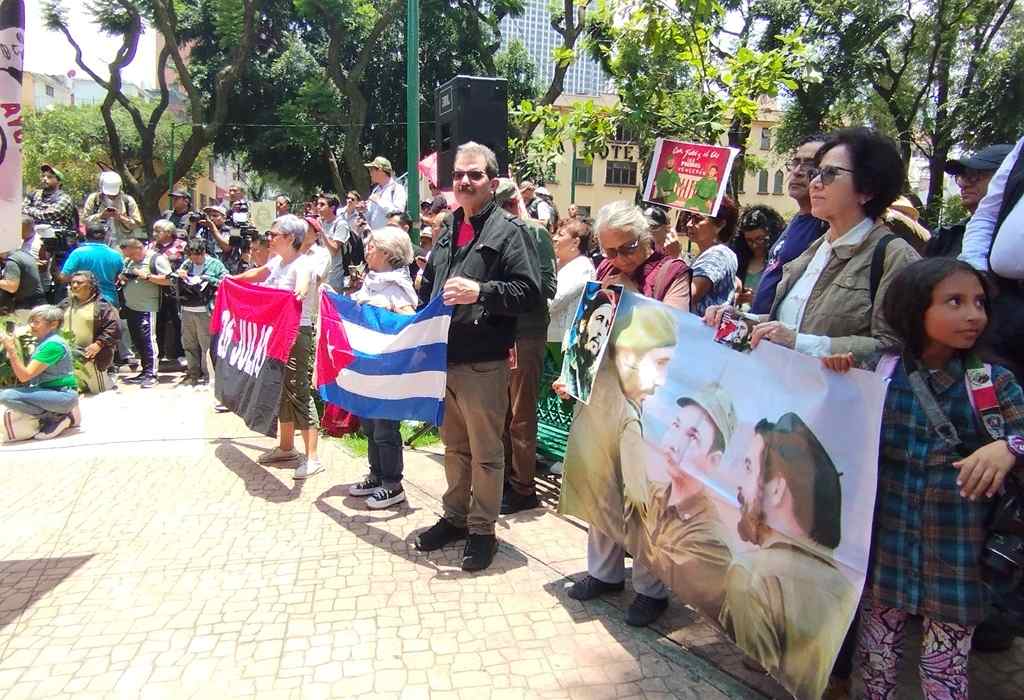
Mexico City, July 20 (Prensa Latina) Mexicans and Cubans living here today reaffirmed their support for the Caribbean country and demanded the return of statues of the historic leader of the Revolution, Fidel Castro, and Argentine guerrilla Ernesto Guevara, removed by a local mayor’s office.
At a ceremony in Tabacalera Park, where the sculptures were installed, diverse organizations, including the Mexican Movement of Solidarity with Cuba, the driving force behind the initiative, and the José Martí Association of Cubans Residing in Mexico, rejected the Cuauhtémoc City Hall’s decision.
The decision to remove the statues was made in recent days by the mayor of that district, Alessandra Rojo, who alleged that the monument lacked the required permits, an argument later denied.
Chanting “Fascism out of the Cuauhtémoc mayor’s office,” “This park belongs to Fidel, this park belongs to Che,” and “Yes to Cuba, no to Alessandra,” the protesters, who also included residents, political parties, and unions, demanded that the mayor be sanctioned.
In an interview with Prensa Latina, Luis Flores of Jóvenes por el Socialismo, the youth wing of the Popular Socialist Party of Mexico, considered Rojo’s decision evidence of his ignorance of the major social movements centered around Fidel and Che Guevara.
She also pointed to the right-wing orientation of the parties the mayor represents (Institutional Revolutionary Party and National Action), which seeks to attack left-wing and revolutionary movements to prevent public awareness.
“The reactionary attempt to erase the revolutionary memory of Commander Fidel and Ernesto Guevara has met with a similarly powerful response. Just as they want to erase it with a stroke of the pen, we are also here filling this plaza and vindicating them,” said Emiliano Jijón.
In a conversation with Prensa Latina, the member of the Mexican Communist Party defined the Cuban Revolution as a beacon that continues to shine in Latin America and the world, and rejected the continued existence of the economic, commercial, and financial blockade imposed on the island by the United States.
“We come here today because Fidel and Che Guevara represent the struggle of the peoples of the world, the fight against injustice and in favor of the people who have been trampled by nefarious governments always supported by the United States,” said federal representative María Magdalena Rosales.
Speaking at the demonstration, where Cuban flags and images of both figures were seen, the legislator for the ruling Morena party called for continued fighting for the statues to be reinstated and for demands that a similar incident not occur again.
The activists, who also expressed their proposal to name the park after Fidel Castro, called for a march to begin in the Cuauhtémoc borough of Cuba on July 26th, Cuba’s National Rebellion Day.
Last week, President Claudia Sheinbaum rejected Rojo’s decision, and the head of the capital’s government, Clara Brugada, announced that she would seek to recover the sculptures, which commemorate the first meeting between Che Guevara and Fidel Castro and are considered a symbol of friendship between Cuba and Mexico.