Cuba has introduced a resolution every year for the last three decades at the United Nations General Assembly calling on the world to condemn the U.S. embargo against Cuba.
The result has been almost exactly the same every time: nearly every country in the world has condemned the embargo. The two countries that have consistently voted against the resolution have been the United States and Israel.
But the Trump administration wants a different outcome this time round.
An internal State Department cable seen by Reuters is directing U.S. diplomats worldwide to lobby against the resolution by pointing to Cuba’s supposed support of Russia’s war in Ukraine.
Diplomats will tell countries that there are 5,000 Cuban troops in Ukraine. The number stems from Ukrainian intelligence reports, and has not been verified.
There are many reports of Cubans fighting in the war, with several losing their lives. According to some of these Cubans (in Spanish), they have been manipulated into entering the war, following the promise of jobs and passports in Russia.
But there is no credible evidence that the recruitment is taking place with the collaboration or support of the Cuban government. Cuba has denied (in Spanish) any involvement and prosecuted individuals on the island involved in such cases.
The Dominican Republic announced (in Spanish) last week that Cuba, Venezuela and Nicaragua would not be invited to the Summit of the Americas in December, which it is hosting, due to the “current context of political polarization.”
Cuba’s Ministry of Foreign Affairs blamed the decision (in Spanish) on the “brutal and unilateral pressure” from Secretary of State Marco Rubio.
Since becoming the U.S.’s top diplomat, Rubio has ramped up pressure on Cuba, targeting its medical cooperation programs and other sources of foreign currency. In February, he labeled Cuba, Venezuela and Nicaragua “enemies of humanity.”
The Summit of the Americas has been held every three years since 1994 by the Organization of American States. Cuba was expelled from the OAS in 1962, while Venezuela and Nicaragua withdrew from the organization in 2019 and 2021, respectively. All three have participated in the summit in the past.
The Biden administration also refused to invite Cuba to the 2022 Summit of the Americas in Los Angeles, triggering a boycott from several Latin American leaders, including the presidents of Mexico, Bolivia and Peru.
“It’s difficult to imagine that this year’s exclusion of Nicaragua, Venezuela, and Cuba from the Summit will provoke the kind of protest seen in 2022,” Francesca Emanuele, an expert on the OAS at the Center for Economic and Policy Research, told Lee Schlenker in an article in Responsible Statecraft. “The Trump administration’s economic threats and coercive measures have spread fear throughout the region.”
Havana, Oct 7 (Prensa Latina) Cuba’s Foreign Minister, Bruno Rodriguez, today denounced the corrupt behavior of the US to put pressure on its allies and withdraw support in united nations for the resolution against the blockade.
The Cuban minister, in the social network X said, “The US State Department, following its Secretary’s corrupt agenda, lobbies with lies and pressures allies to withdraw support for the resolution of #AGNU vs blockade of #Cuba”.
In the publication itself, the island’s foreign affairs official referred to the objectives of such conduct, “It is intended to deceive the international community and conceal serious damage caused to Cuban families”.
The United Nations General Assembly is scheduled for October 28 and 29 to implement its resolution 79/7 when Cuba presents an update on the “Need to end the economic, commercial and financial embargo imposed by the United States of America against Cuba”.
The report for the period March 2024 – February 2025, recently published in Havana, states that at that time the blockade caused material damage to Cuba estimated at $7,556.1 million.
Meanwhile, such a hostile policy of more than six decades of blockade, today intensified, reports historical accumulated damages that at current prices, amount to 170,677 million dollars. Meanwhile, compared to the gold value it is equivalent to two trillion 103 billion dollars
At the close of the High-Level Segment of the 80th session of the UN General Assembly, the request to lift the US blockade on Cuba was heard here more than 40 times
At the close of the High-Level Segment of the 80th session of the UN General Assembly, the call to lift the US blockade of Cuba was heard here more than 40 times.
The speech that closed the marathon succession of speakers on Monday, who had taken the podium of the General Assembly since September 23, was that of Ambassador Dionisio Da Costa Babo Soares, permanent representative of Timor-Leste to the UN, and his words did not fail to condemn the long-standing unilateral blockade against the Caribbean country.
“Timor-Leste supports the elimination of the economic, commercial, and financial blockade against the Republic of Cuba, which is, in our opinion, a violation of human rights that harms the Cuban people by limiting their access to essential goods,” said the diplomat.
Cuba is one of Timor-Leste’s closest partners in the health sector, said the Timorese representative, who argued that the Caribbean nation has trained “more than a thousand professionals and provided direct assistance to our patients in hospitals.”
He added that “the inclusion of Cuba on the list of states that sponsor terrorism is totally unjustified and we therefore request that it be removed from the list immediately.”
For his part, Nicaraguan Foreign Minister Denis Moncada said: “We denounce and condemn, together with all the peoples of the world, the horrific, hateful, and despicable policies of criminal economic blockade, aggression with coercive, arbitrary, unilateral measures.
“We ratify here our full and unequivocal solidarity and brotherhood with Cuba and Venezuela,” Moncada stressed.
The list of countries that expressed their support for Cuba includes Brazil, Suriname, South Africa, Mozambique, Colombia, Vietnam, Angola, Nauru, Namibia, Guyana, Congo, Bolivia, Gabon, Ghana, Guinea Bissau, Equatorial Guinea, Gambia, Dominica, Tanzania, Uganda, Sao Tome and Principe, and Mexico.
Saint Vincent and the Grenadines, Barbados, Jamaica, Belize, Lesotho, Antigua and Barbuda, Tuvalu, Zimbabwe, Venezuela, the Bahamas, Grenada, Burkina Faso, Saint Kitts and Nevis, Laos, Russia, Belarus, Eritrea, Saint Lucia, and Honduras also made reference to the Caribbean nation.
On Saturday, speaking at the UN General Assembly, Cuban Foreign Minister Bruno Rodríguez said that the blockade against his country persists and is becoming extremely harsh.
“This is a true, comprehensive and prolonged economic war, aimed at depriving Cubans of their livelihoods and sustainability, of their existence as a united, cultured and joyful people,” he added.
Anyone who claims otherwise is deliberately lying, he stressed. The very promoters of this war boast of its destructive effect and its ability to strike at the standard of living of an entire people from any corner of the planet, he argued.
He also pointed out that “it is cynical that the United States government, for purposes of political and economic coercion, labels Cuba a state sponsor of terrorism, a slander that is not shared by this Organization or any of its Member States.” He recalled that the island has been a victim of this scourge.
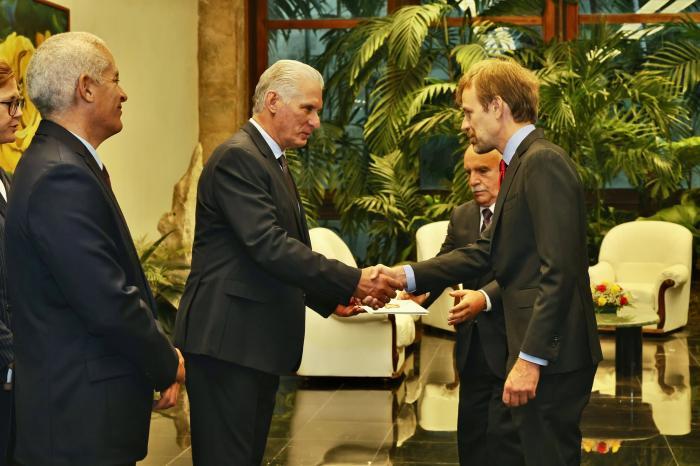
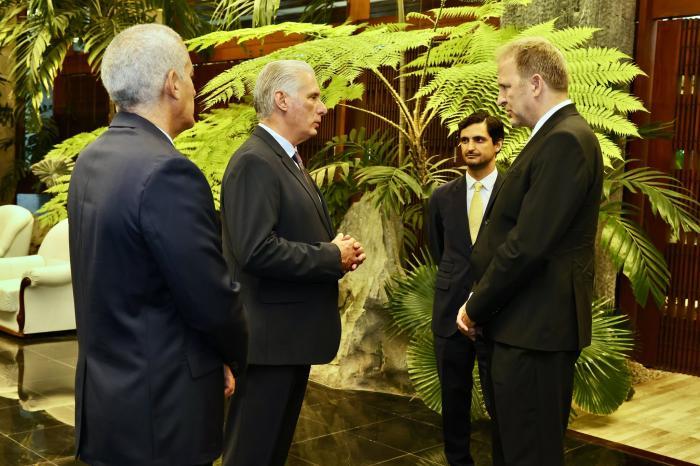
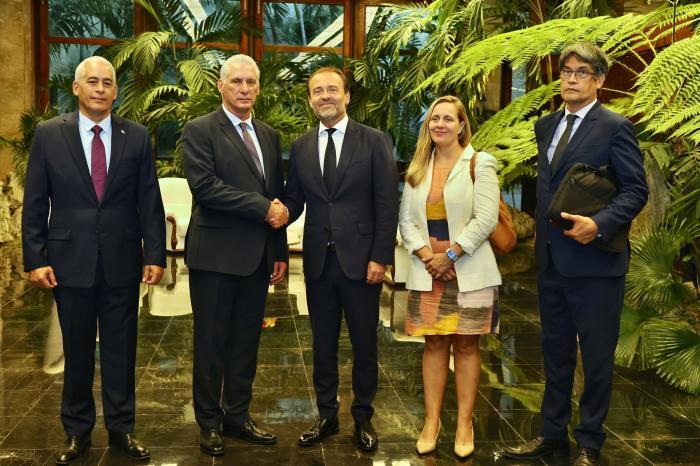
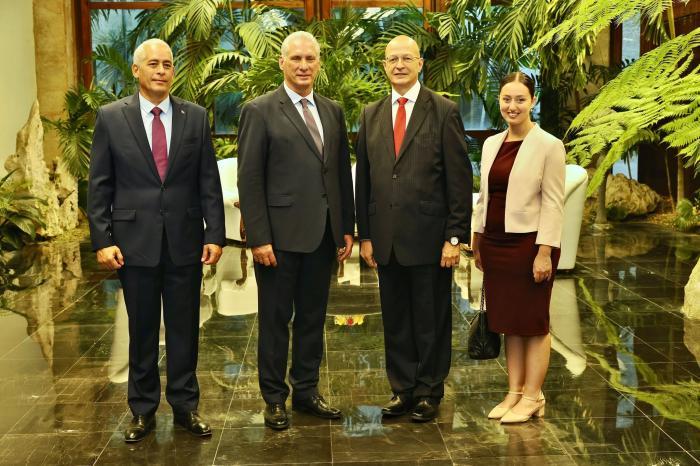
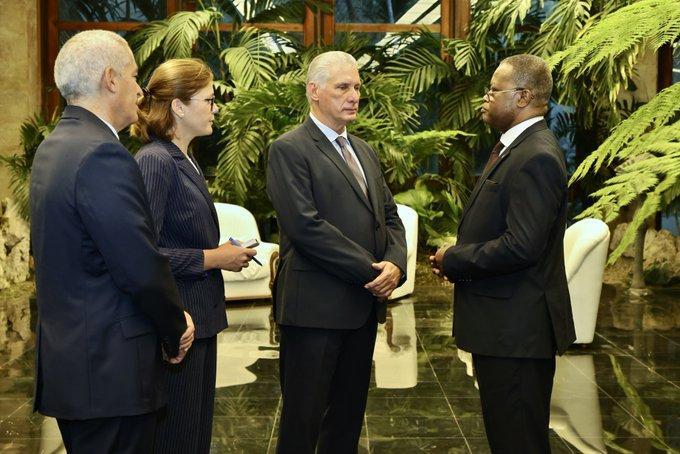
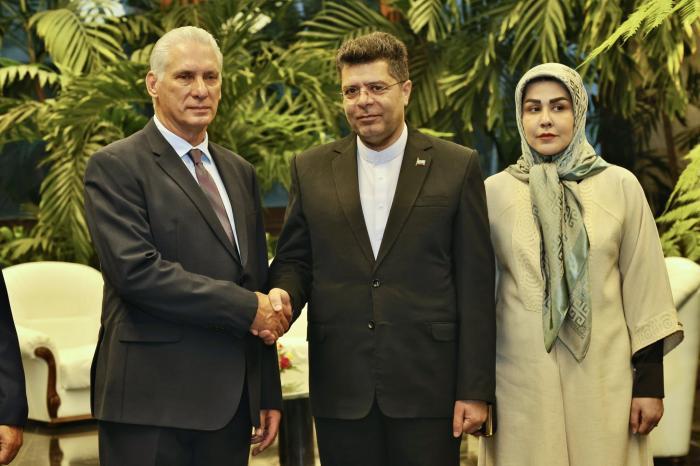
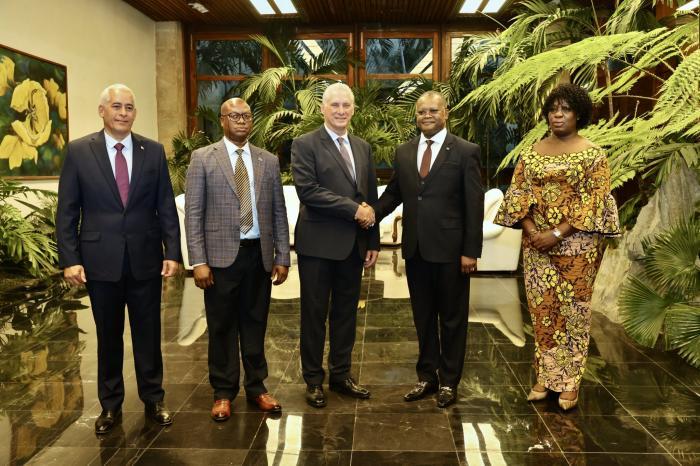
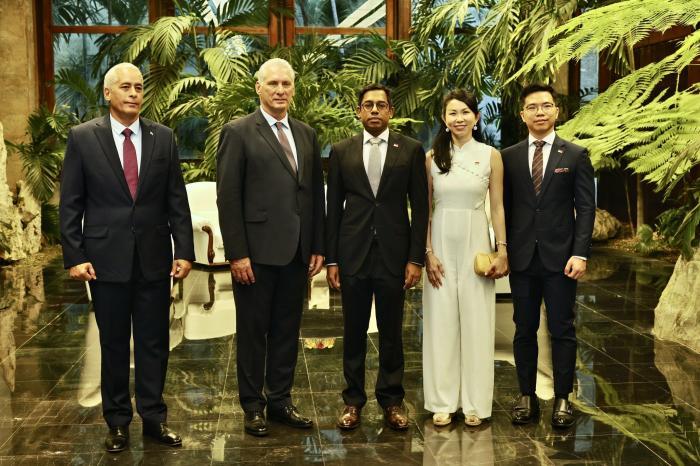
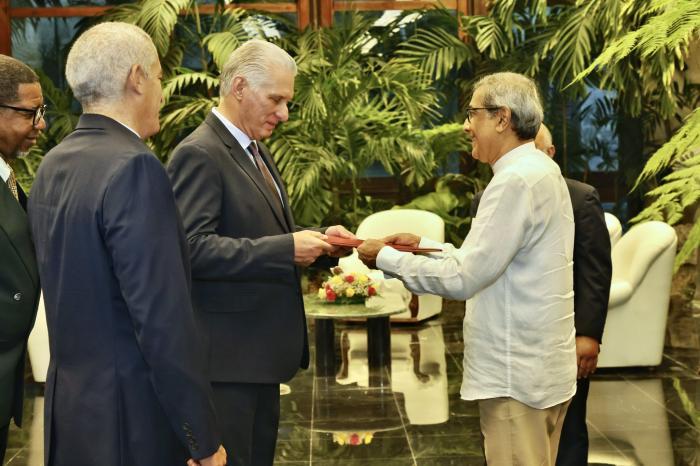
First Secretary of the Central Committee of the Communist Party and President of the Republic Miguel Díaz-Canel Bermúdez received the credentials of ten new ambassadors this Tuesday morning
With gratitude and a willingness to provide whatever support is needed to carry out his duties, First Secretary of the Central Committee of the Communist Party and President of the Republic Miguel Díaz-Canel Bermúdez received this Tuesday the credentials of ten new extraordinary and plenipotentiary ambassadors accredited to Cuba.
The Cuban President, who was accompanied by interim Minister of Foreign Affairs Gerardo Peñalver Portal, thanked the Cuban government for its support in the fight against the economic, commercial, and financial blockade imposed by the United States government, as well as for its removal from the list of alleged state sponsors of terrorism.
The dignitary reaffirmed the willingness of the Cuban government, the Ministry of Foreign Affairs, and other authorities to work together to contribute to the success of his service in our country.
The protocol ceremonies began with a welcome from Yves Patrick Lihau Moleli of the Democratic Republic of the Congo, who assured Díaz-Canel that he feels at home in Cuba. The relations between the two countries are historic and respectful, and the Cuban leader reiterated his willingness to continue expanding and strengthening them.
Ratnayake Mudiyanselage Mahinda Dasa Ratnayake, Ambassador of the Democratic Socialist Republic of Sri Lanka, a sister country, then entered the Hall of Heroes of the Palace of the Revolution. The President said, “We share excellent ties of respect, friendship, and solidarity with each other.”
Then, welcoming Ambassador of the Islamic Republic of Iran, Zabihollah Naderi, the President of the Republic affirmed that “Cuba will continue to denounce the sanctions to which his country is subjected.” It is our will to strengthen political and diplomatic relations, which are at a high level, as well as to continue advancing joint projects, the president stated, while acknowledging the importance of being united in confronting a common enemy.
For his part, the new ambassador emphasized the importance of maintaining mutual support at the international level, as well as increasing cooperation in various areas, especially health.
After receiving the credentials of the new Ambassador to the Republic of Indonesia, Djatwoko Irwantoro Soekamo, the Cuban head of state commented on the role that both countries must play as founders of the Non-Aligned Movement (NAM) in the current international context.
The Indonesian diplomat expressed his gratitude for the scholarships granted to young people from his country to study medicine in Cuba, while acknowledging the training of our doctors and the potential for establishing collaboration agreements in this area.
Together with the Ambassador of the Kingdom of Sweden, Anna Kristina Craenen, the dignitary spoke about the importance of bilateral relations and the opportunities for developing mutually beneficial business.
MULTILATERALISM, COOPERATION, SUPPORT
President Díaz-Canel spoke to French Ambassador Raphael Trannoy about continuing to defend the principles of multilateralism that both nations share. Trannoy stated that his country is a partner of Cuba and will continue to be so, while expressing his intention to continue strengthening ties.
We are willing to strengthen our cooperative relations with Cuba, Belgian Ambassador Mathias Kende later expressed. The head of state commented on the important joint cooperation projects underway, particularly in the academic and university sectors.
This morning, First Secretary of the Central Committee of the Communist Party of Cuba and Jan Urban, the new ambassador of that community to the Republic of Cuba, discussed the importance of the upcoming CELAC-European Union Summit.
With commonalities and differences, we have developed magnificent relations, the Head of State told the diplomat, who emphasized the importance of strengthening cooperation in the economic sphere.
For his part, Shashi Jayakumar, Ambassador of the Republic of Singapore, during his talks with President Díaz-Canel, acknowledged the hardworking nature of the Cuban people and expressed his willingness to continue strengthening bilateral relations through the development of projects in areas such as tourism, energy, and digital governance.
You, the president noted, are role models for us in the advancement of digital governance, and the development of projects in the Mariel Special Development Zone represents a great opportunity for both nations.
Finally, Cuban President received the credentials of Alfred Gritci of the Republic of Malta, a nation with which Malta has maintained diplomatic relations for 50 years. The diplomat, for his part, expressed his country’s interest in exploring avenues for new projects in sectors such as tourism, healthcare, and biotechnology.
Photo: Estudios RevoluciónPhoto: Estudios RevoluciónPhoto: Estudios RevoluciónPhoto: Estudios RevoluciónPhoto: Estudios RevoluciónPhoto: Estudios RevoluciónPhoto: Estudios RevoluciónPhoto: Estudios RevoluciónPhoto: Estudios Revolución
Cuban President Miguel Díaz-Canel participated in a clean-up effort in the capital today and called on the people to multiply their efforts for the good of Cuba. The president convened in the surroundings of the Palace of the Revolution alongside Prime Minister Manuel Marrero and the Secretary of Organization of the Central Committee of the Communist Party of Cuba, Roberto Morales, to sanitize the area. Other national leaders and workers from the institution also participated.
Acknowledging Public Sentiment and Challenges
Díaz-Canel stated, “There is a national call, and the population has joined in. They have acted with a sense of responsibility, above all due to the dissatisfaction they felt with the situation we are experiencing.” He emphasized the need to combat problems daily and to set the goal of doing good for the city and the community, adding, “I believe people have responded well, and a good atmosphere has been created.”
However, he also acknowledged the challenges, noting, “Not everything is rosy. A large portion has mobilized, but others have not heeded the call and think that others have to solve the problem.” The president argued that initiatives like these reveal the country’s own inadequacies, pointing to issues related to “daily maintenance and systematicity” that should not require a general mobilization.
A Sustained Effort is Needed
Looking ahead, the head of state asserted that there is still much to do. “Although we made a significant effort over the weekend, we will not solve everything,” he said. “We will have to continue this week, and above all, what concerns the people is how this will be sustained. We will sustain it if we all work like this.”
He concluded on a hopeful note, expressing his belief that the work in Havana would inspire actions across the country. “In the end, what is multiplied is the effort of Cuban men and women for the well-being of all,” Díaz-Canel concluded.
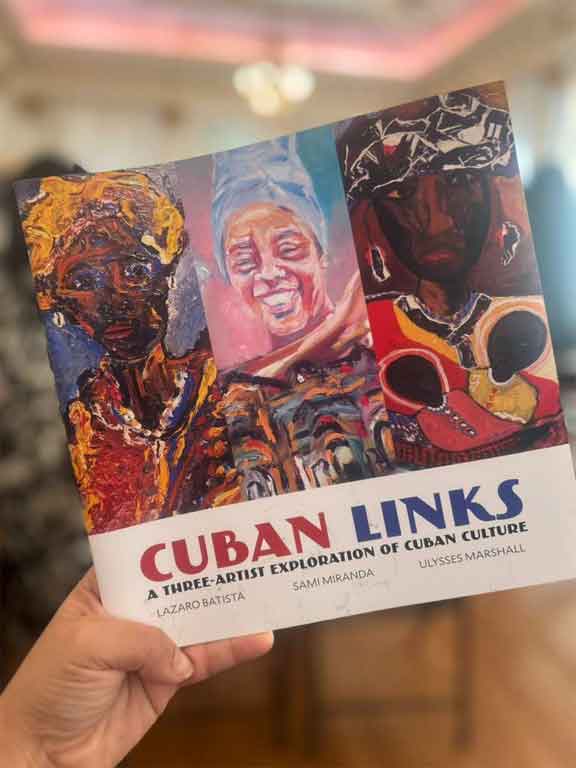
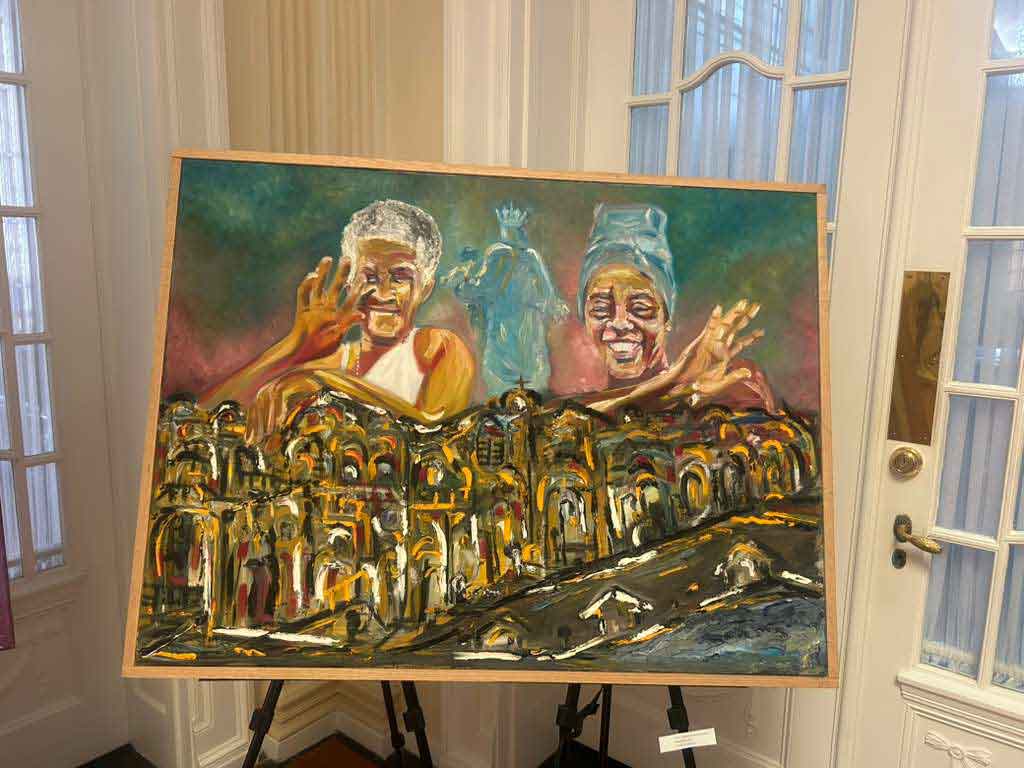
Washington, Oct 4 (Prensa Latina) The exhibition “Cuban Bonds: An Exploration of Cuban Culture by Three Artists” was inaugurated at the Embassy in this capital of the Caribbean country with the presence of guest curator Jon West-Bey.
At the opening of the exhibition, which also featured artists Sami Miranda, Lázaro Batista, and Ulysses Marshall, Alejandro Pila, the deputy head of the Cuban Mission, stated: “Our Embassy is not just a diplomatic building. For a moment, it becomes something more, a cultural bridge.”
Welcoming those present the day before, Pila emphasized that “Cuba is a living mosaic, shaped by African, European, and Caribbean roots. And from those roots emerged a vibrant, resilient, and deeply human culture.”
We are especially proud,” he said, “to inaugurate this exhibition at the beginning of Cuban Culture Month.”
He also noted that “if there’s one thing history reminds us of, it’s that Cuban and American cultures have long been connected. The rhythms of Havana and the sounds of New Orleans share a common heartbeat. Afro-Cuban percussion and African-American blues grew from common roots.”
The resulting space brought together striking and colorful works that speak to memory, heritage, and contemporary Cuba, as well as the connections between African-American history and the island’s narratives.
Music with the same powerful Afro-Cuban rhythms was also present. Roberto Dominich Olano, a Havana native who, since the age of eight, found his way of communicating with the world through drums, delighted the audience.
Olano has played timba, songo, guaguancó, salsa, jazz, and the cadences of Santería, and throughout his career he has performed on stage with major groups, including the legendary Irakere.
Since March 1980, he has lived in Washington, D.C., helping to bring Cuban music to new audiences, becoming a cultural bridge to teach young musicians, pass on tradition, and keep alive a legacy that is much more than music.
Two well-known Cuban reggaeton singers have canceled their Europe tour days after a Cuban-American politician from Florida singled them out for a trip they made to Cuba.
Dany Ome and Kevincito El 13 were born in Cuba but migrated as children to the United States. In recent years, they have become one of the most successful Cuban reggaeton groups both in Miami and on the island.
The duo traveled throughout Cuba in July and performed in several concerts. At the time, Rep. Carlos Giménez (R-FL) posted on X that artists living in the U.S. who perform in Cuba “will have to face the consequences.”
Then, on September 26, Rep. Mario Díaz-Balart (R-FL) sent a letter to Treasury Secretary Scott Bessent demanding “penalties” against the artists for violating U.S. sanctions on Cuba. He wrote that they could be “in close collaboration with the regime in Cuba” and “in a mutually beneficial commercial relationship that is channeling hard currency to a terrorist state.”
The artists announced the cancellation of their Europe tour shortly after the letter was sent.
A statement (in Spanish) from the musicians’ legal team attributed the cancellation of the European performances to the “current migratory uncertainty in the U.S.” Kevincito said on Instagram that he was applying to U.S. citizenship and was not supposed to leave the country during the process. He denied that he was facing any travel restrictions imposed due to his trip to Cuba.
There is a long history of U.S. politicians and Miami-based groups pressuring artists to not perform in Cuba and to publicly criticize the Cuban government.
The year before, musicians Alex Ubago, Andy y Lucas and Kalimba canceled their participation in a Havana festival.
In recent years, several of the most famous Cuban artists, including Gente de Zona and Lenier, have had performances in the U.S. cancelled due to their trips to Cuba.
“I’m Cuban and I want to sing in Cuba. I feel good there and I get to see my grandmother,” Dany Ome said in the podcast Destino Talk (in Spanish). “Many have their pain and feelings. I respect that. All I ask is that they respect mine.”
On the podcast, Dany Ome said that his mother belonged to the Damas de Blanco (Ladies in White), a well-known dissident group on the island, before migrating to the United States. According to Ome, she has supported his trips to Cuba.
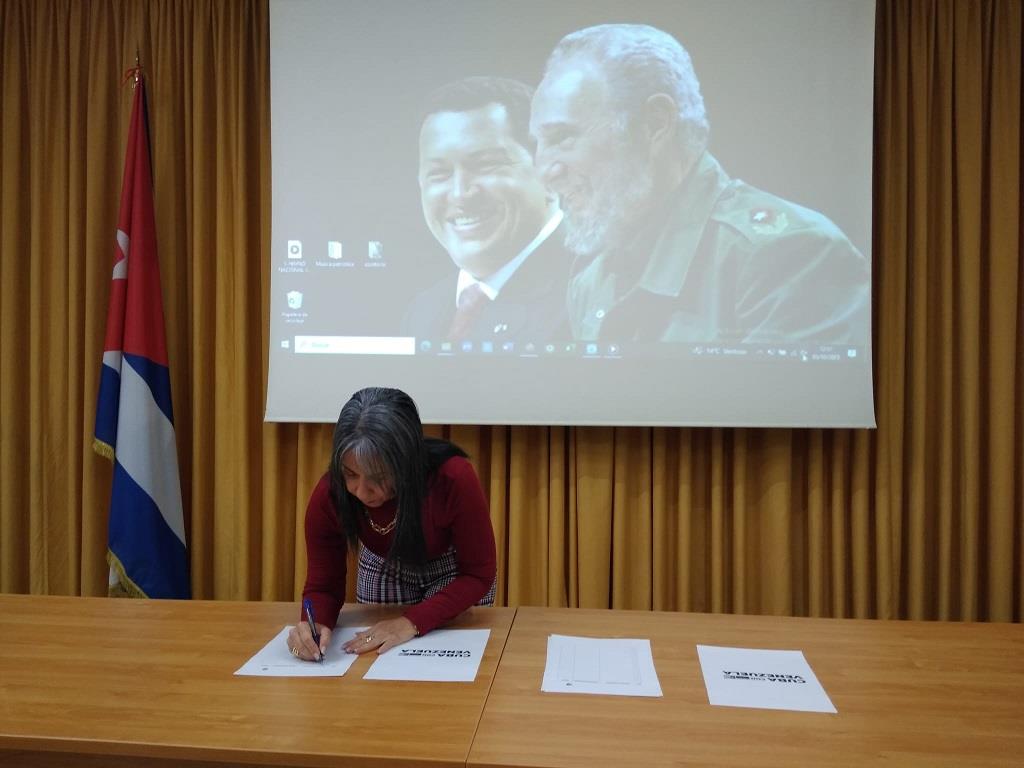
Rome, Oct 3 (Prensa Latina) In a ceremony held today at the Cuban Embassy in Italy, Cuban diplomats and other members of the State Mission signed a declaration in support of Venezuela in the face of threats from the United States.
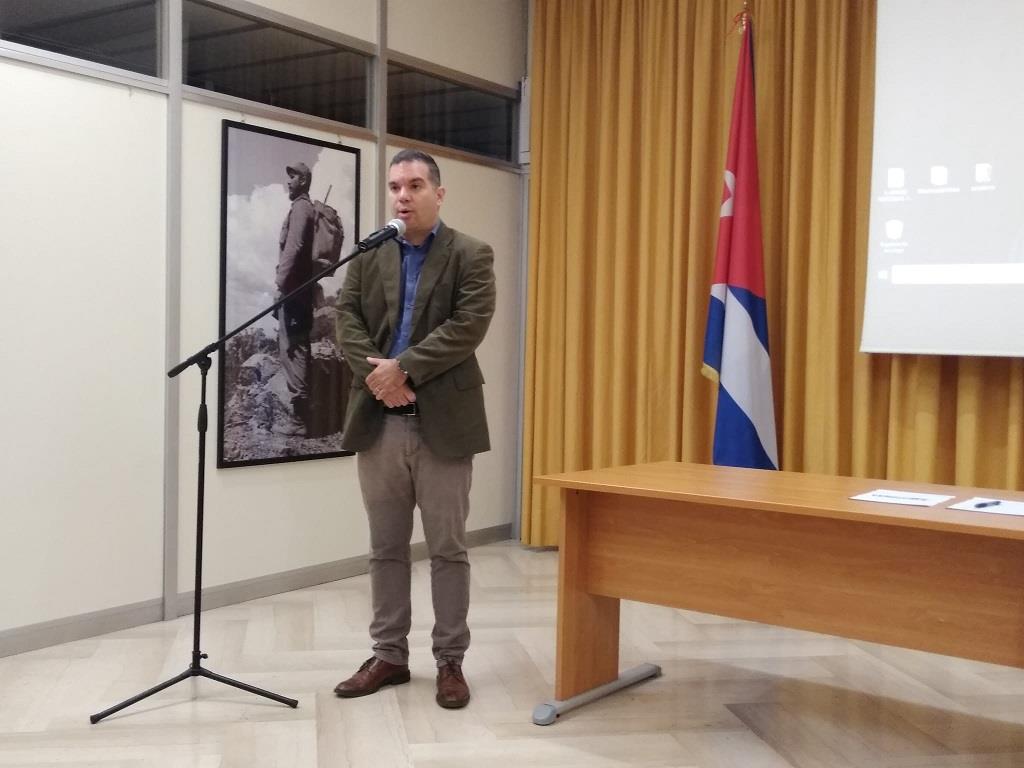
At the solemn ceremony presided over by Ambassador Mirta Granda, Political Advisor Damián Delgado, deputy head of the diplomatic mission, spoke about the importance of signing the document “It is urgent to prevent a military aggression against the Bolivarian Republic of Venezuela.”
The statement, he asserted, denounces the escalation of actions by the United States government, with the threatening presence of military personnel and assets in the Caribbean Sea, aimed at justifying a military aggression against the Bolivarian Republic of Venezuela.
The use of these naval forces to attack civilian vessels and murder their crews, as well as the unjustified interception and detention of vessels in violation of international norms, is unacceptable. These acts confirm the hostile and irresponsible nature of these maneuvers.
At the same time, the U.S. government is waging intense psychological warfare to try to legitimize these actions in the eyes of domestic and global public opinion, using the spurious argument that Venezuela represents a threat to U.S. national security and the well-being of its citizens.
These are hostile acts aimed at triggering a military conflict, with the goal of occupying that Latin American nation and seizing its oil and other natural resources, states the text, whose signatures began throughout Cuba on September 24.
Direct military aggression against Venezuela will have serious consequences for stability and security in a region that was declared a Zone of Peace in 2014 during a summit of the Community of Latin American and Caribbean States (CELAC) held in Havana.
Delgado emphasized that previously, on Thursday night, members of the Cuban Medical Brigade, which provides healthcare in the southern Italian region of Calabria, also joined this initiative, and in the coming hours, members of the Consulate General in the northern city of Milan will also join.
Harare, Oct. 2 (Prensa Latina) Zimbabwe’s Minister of Youth Empowerment, Development, and Vocational Training, Tinoda Machakaire, and Cuban Ambassador Susellys Pérez Mesa today reaffirmed their mutual desire to strengthen ties in the areas of youth care.
Upon receiving the head of mission from the Caribbean island, Machakaire praised the excellent bilateral relations and discussed the possibilities of consolidating collaboration with the Union of Young Communists of Cuba.
The Ambassador outlined the events that will take place in the Caribbean nation next October and December and provided an update on the impact of the US blockade imposed on the Caribbean nation more than 60 years ago.
In this regard, he highlighted the consequences of the hostile policy on youth and acknowledged Zimbabwe’s traditional support against the blockade, including the recent denunciation by the Minister of Foreign Affairs and International Trade, Amon Murwira, at the high-level segment of the 80th session of the United Nations General Assembly.
The minister, meanwhile, explained the priorities of the work for this sector, which encompasses some 5.4 million young people between the ages of 15 and 35 in this African nation.
Machakaire and Pérez Mesa recognized the importance of working with new generations as a guarantee for the future of their respective countries.