
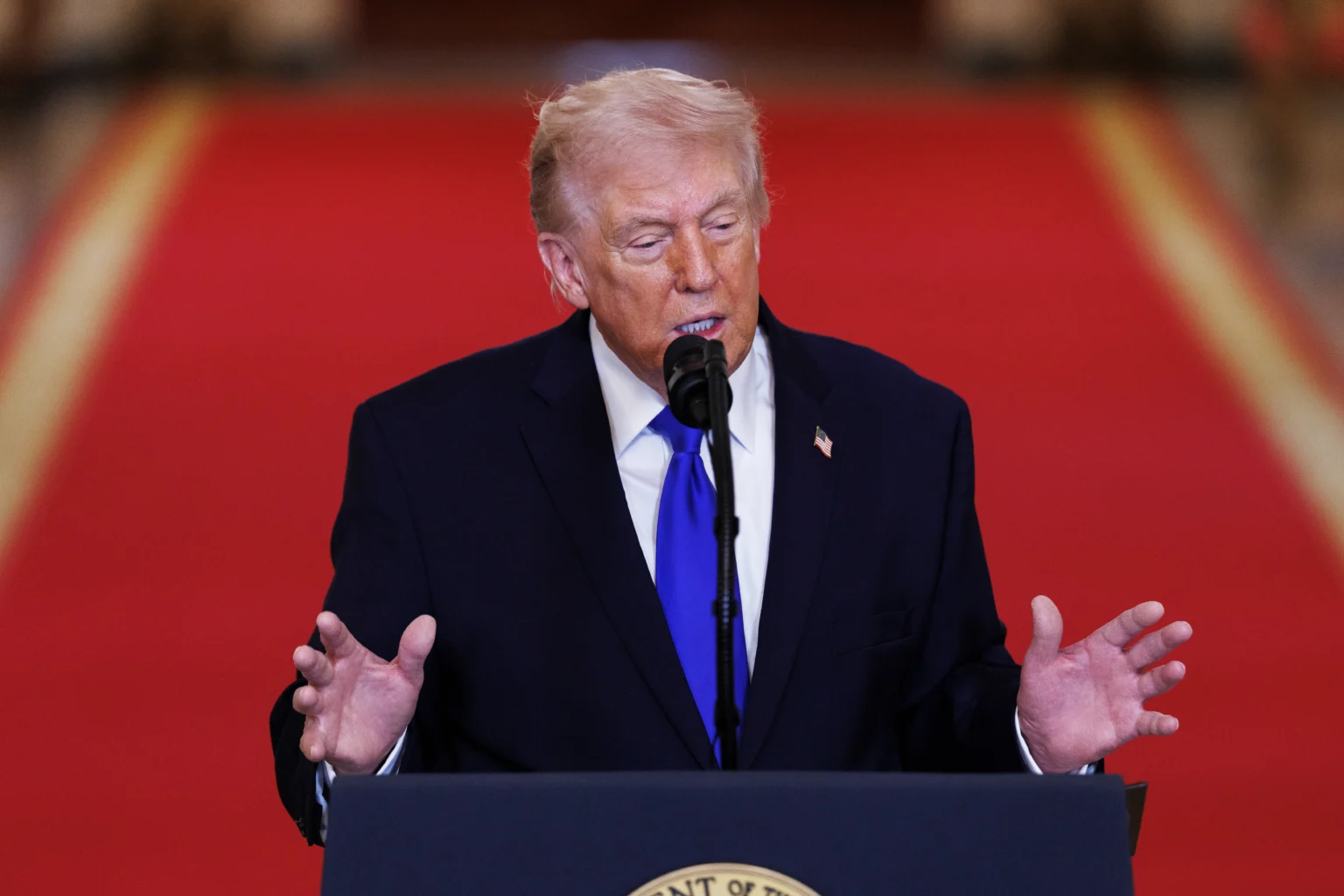
President Trump removes additional tariffs imposed under the International Emergency Economic Powers Act, including Order 14380 on Cuba, following a Supreme Court decision.
Feb 23, 2026 — teleSUR
President Donald J. Trump recently signed an Executive Order eliminating temporarily the additional ad valorem tariffs imposed under the International Emergency Economic Powers Act (IEEPA), affecting provisions against China, Venezuela, Brazil, Russia, Cuba, and Iran.
The measure, recentrly announced on the official White House website, stipulates that the additional tariffs will cease to be in effect and their collection will be discontinued as soon as possible. However, the national emergencies declared in those Executive Orders and the rest of their provisions will remain in effect, according to the official document.
The new order instructs the heads of each department and Executive agency to take immediate steps to end the collection of the additional tariffs. Furthermore, the Secretary of Commerce, the Secretary of Homeland Security, and the United States Trade Representative, in consultation with other authorities, may amend the Harmonized Tariff Schedule to comply with the presidential order.
The text clarifies that the order does not create any enforceable rights or benefits against the U.S. Government and that its implementation will be subject to existing legislation and the availability of resources. This legal clarification seeks to define the administrative scope of the measure in the face of potential legal challenges.
Supreme Court Ruling
The presidential decision is a direct consequence of the Supreme Court’s ruling, which determined by a vote of six to three that the IEEPA “does not grant the president the authority to establish or increase tariffs on imported goods simply by declaring a national emergency.”
This ruling limited the interpretive scope of the International Emergency Economic Powers Act, the legal framework under which the additional tariffs had been imposed between 2025 and 2026 in response to what Washington described as “unusual and extraordinary threats” to U.S. national security, foreign policy, or the economy.
Supreme Court Ruling
The presidential decision is a direct consequence of the Supreme Court’s ruling, which determined by a vote of six to three that the IEEPA “does not grant the president the authority to establish or increase tariffs on imported goods simply by declaring a national emergency.”
This ruling limited the interpretive scope of the International Emergency Economic Powers Act, the legal framework under which the additional tariffs had been imposed between 2025 and 2026 in response to what Washington described as “unusual and extraordinary threats” to U.S. national security, foreign policy, or the economy.

