
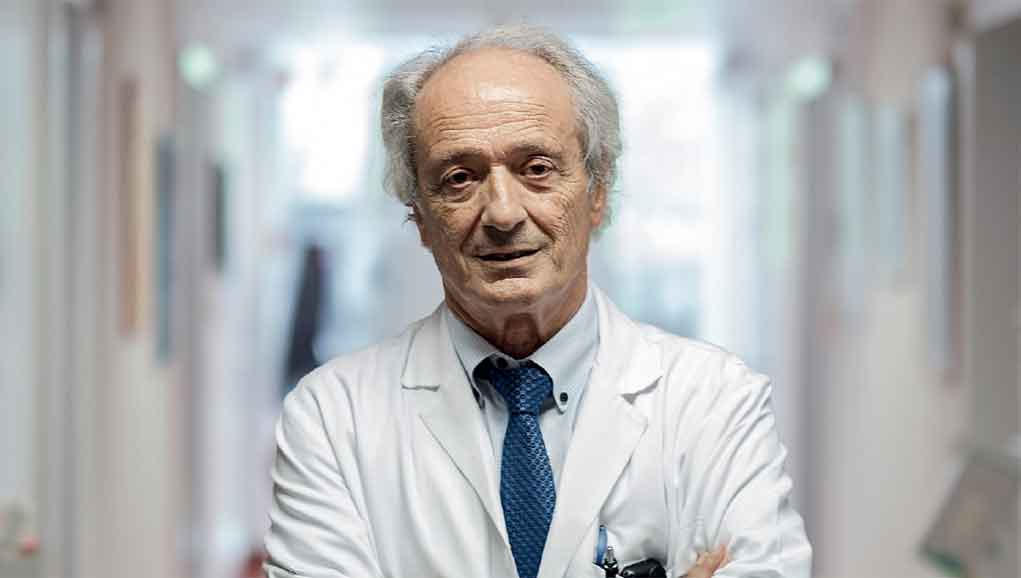
Rome, Oct 19 (Prensa Latina) Swiss oncologist and researcher Franco Cavalli warned about the consequences that, in his opinion, the tightening of the United States blockade against Cuba has on the functioning of hospitals, the availability of medicines and the care of patients.
By: Mario Muñoz Lozano
Chief Correspondent in Italy
In an interview with Prensa Latina in this capital, the president of the non-governmental organization mediCuba-Europa described Washington’s policy toward the island as an “attempted genocide,” considering that economic and energy restrictions aggravate the deprivations of the population and compromise essential services.
“This is the definition of genocide, when you try to kill a nation, a people, by starvation or disease for any reason,” explained the renowned specialist, who has been president of the International Union Against Cancer and of the Scientific Committee of the European School of Oncology.
Cavalli, who has five decades of experience in oncology, recalled that he has known and collaborated with the Cuban health system since 1986, which, he affirmed, achieved outstanding results in indicators such as infant mortality and life expectancy, and he gave special importance to family medicine.
The specialist argued that the intensification of restrictions, including what he described as an energy blockade, has aggravated the difficulties of Cuban healthcare centers.
He stated that, during visits made in recent months to hospitals in Havana and Matanzas, he observed serious problems which he attributed to the lack of electricity and resources.
According to their testimony, the power outages compromise the functioning of medical equipment, including incubators, while transportation difficulties affect the arrival of healthcare personnel to their workplaces.
He also drew attention to the shortages of medicines, limitations in performing surgical procedures, and an increase in waiting lists.
Cavalli linked these conditions to the deterioration of the economic situation of families and to possible repercussions on maternal and child health.
“Before, the blockade was criminal; now it is more than criminal, it is an attempt at genocide,” declared the oncologist, who argued that the restrictions can subject the population to deprivations capable of affecting their food and their access to medical care.
The specialist also warned about the obstacles that, as he explained, European medical aid to Cuba faces, despite the increase in contributions received by mediCuba-Europe since the beginning of this year.
He stated that the organization currently has more resources contributed by European citizens, but is having difficulty getting supplies to the island due to transport restrictions, problems moving containers to Cuba, and a lower availability of commercial flights.
According to Cavalli, some shipments remain detained in the Dominican Republic, Mexico and Jamaica, while medicines destined for Cuba are blocked in various parts of Latin America.
The scientist and former Swiss parliamentarian (1995-2007) attributed these difficulties to the tightening of US measures and their repercussions on logistical operations.
Given this scenario, he explained that mediCuba-Europa has focused part of its efforts on solar energy projects, with the purpose of contributing to maintaining essential services.
He added that the organization tries to send pacemakers, cardiac care supplies, and medications when conditions allow.
He considered that the increase in donations demonstrates greater solidarity with Cuba in Europe, although he maintained that restrictions prevent fully converting those resources into effective aid for the population.
Cavalli compared the Cuban situation to the difficulties in delivering humanitarian aid to Gaza and accused the US government, led by Donald Trump, of trying to prevent aid from reaching the island. These statements express his political interpretation of Washington’s actions.
As president of mediCuba-Europe and vice president of mediCuba-Switzerland, the doctor promotes collaborative initiatives with entities in the health system and the biotechnology industry of Cuba.
mem/mml
