
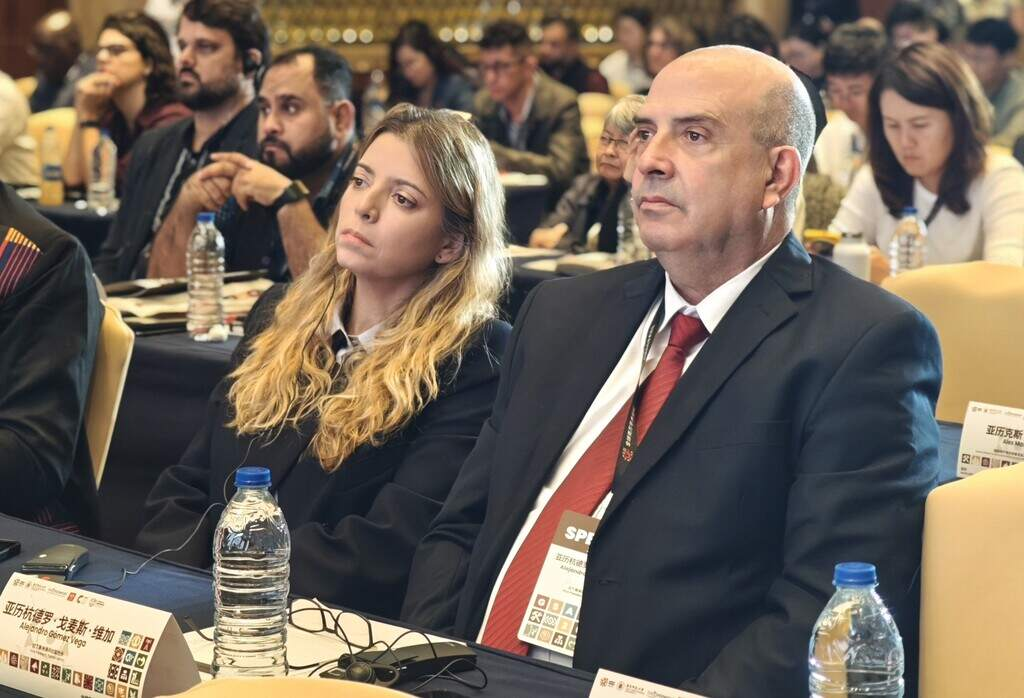
Shanghai, China, Oct 17 (Prensa Latina) Prensa Latina and teleSUR highlighted here today the importance of South-South cooperation to face the challenges of artificial intelligence (AI) and strengthen the communication sovereignty of developing countries.
Prensa Latina Vice President Alejandro Gómez pointed out that technological advances pose challenges that transcend the ethical debate on the use of AI and encompass technological sovereignty, informational independence, and the autonomy of peoples.
Gómez stated that media outlets in the Global South need to deepen the exchange of knowledge and specialized training to adapt these tools to their cultural and linguistic realities, as well as progressively develop their own models.
The executive highlighted China as a strategic partner for media outlets in developing countries, citing its advancements in artificial intelligence and opportunities for cooperation in technology transfer and professional training.
He also stressed that dependence on technologies developed abroad can limit communication autonomy and reduce the diversity of languages and perspectives present in news content.
In that context, Gómez proposed moving towards a permanent professional training mechanism in artificial intelligence for journalists and media in the Global South, through cooperation with Chinese institutions and other specialized actors.
The initiative seeks to share experiences, develop technical skills and promote the responsible use of these tools in journalistic work, as well as identify opportunities to create solutions adapted to the needs of the participating countries.
Gómez recalled that Prensa Latina was born with the purpose of offering a counter-hegemonic vision of world events and highlighted the importance of uniting wills, resources and talents to tell the stories of the people and work in the service of truth.
For her part, the president of TeleSUR, Patricia Villegas, called for strengthening networks, organization, and common strategies among the region’s media outlets in the face of current communication challenges.
In statements to Prensa Latina, Villegas affirmed that communication constitutes one of the main scenarios of contemporary dispute and warned about the prominence of the so-called cognitive war.
When addressing the impact of artificial intelligence, he considered that this technology can generate new forms of dependency and widen existing gaps, and therefore defended South-South cooperation as a way to promote technology transfer and human capital training.
Both executives are among the guests at the Global South Academic Forum and will participate in panel six, dedicated to communication, the governance of political parties and social mobilization.
The forum brings together in Shanghai more than 200 political, academic and professional representatives from different countries to exchange experiences on governance, modernization and cooperation among the nations of the Global South.
kmg/idm
