

Camagüey, Cuba, April 15 (Prensa Latina) Peruvian Ambassador to Cuba Gonzalo Guillén made a working visit here today, as part of efforts by both peoples and governments to strengthen cultural ties and advance the decolonization of their national identities.
The diplomatic agenda included two important art exhibitions. The first, “Iconography,” by Felipe Guamán Poma de Ayala in his New Chronicle and Good Government, opened this Monday, April 14, at the Fidelio Ponce Gallery.
The exhibition presents a selection of prints that reinterpret the work of the 17th-century Peruvian indigenous chronicler, a symbol of cultural resistance.

Also today at the Heritage Interpretation Center, the opening of Urban Virgins, an exhibition by renowned Peruvian artist Ana De Orbegoso, took place.
The 13 works that make up the exhibition are the result of a collaboration between the Peruvian Embassy in Cuba and the Network of Cuban Heritage Cities, and are part of an artistic project that has toured more than 20 locations in Peru since 2006.
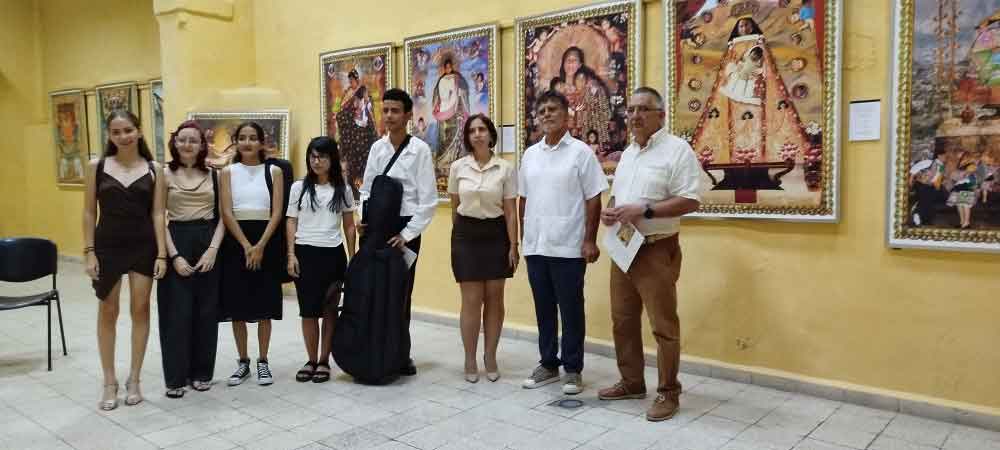
De Orbegoso, an interdisciplinary artist based in New York and Lima, explores Latin American identity through techniques such as photography, video, sculpture, and painting.
Urban Virgins reinterprets colonial religious iconography, fusing Catholic representations with Indigenous and mestizo traits in a symbolic act of cultural decolonization.
During the inauguration, Ambassador Guillén highlighted the importance of these initiatives: “Culture unites people. This type of dialogue, like the one we have today through art, allows us to recognize our shared histories and the struggles to preserve our identities.”
The Peruvian diplomat also visited Camagüey’s House of Cultural Diversity, where he learned firsthand about the region’s rich multicultural heritage, influenced by African, Hispanic, Arab, and Jewish roots. Local experts explained how this fusion has shaped Camagüey’s traditions, from music to religious expressions.
“In Peru, as in Cuba, the arrival of the Spanish brought a process of cultural imposition, but also of resistance and syncretism,” Guillén reflected.
“The virgins we see in these works today are not the same ones that arrived with the colonizers; they have been transformed by local beliefs, acquiring new meanings.”
The Urban Virgins exhibition is part of a broader strategy to revalue popular art and ancestral memories. According to De Orbegoso, her work seeks to “spark recognition and critical analysis of our culture, showing how the sacred and the everyday are intertwined in Latin America.”
This visit is part of the activities following the Pride of Being Cuban Colloquium, held last weekend, which promotes the reaffirmation of indigenous identities in the face of the vestiges of colonialism.
With traditional music and an exchange between artists and diplomats, the day concluded with a clear message: art remains an essential tool in the struggle for cultural sovereignty of the Latin American peoples.
jha/fam

