Voting Results from the UN General Assembly’s Annual Vote on the Resolution to End the Blockade in 2023.
Oct 30 (Belly of the Beast) Later today (Oct. 30th), the UN General Assembly will vote, yet again, on a resolution to end the U.S. embargo against Cuba. Every year nearly the entire General Assembly votes in favor of the resolution with only two countries consistently voting no: the U.S. and Israel.
The U.S. government has embraced its isolationist position.
Will this year be any different? Watch HERE to learn more.
Havana, October 31 (RHC)– “Little David has once again defeated the giant Goliath. Little Cuba has once again defeated the neighboring empire that will surely arrogantly ignore the world’s demand, but the dignity of this people and universal solidarity have defeated it once again.”
United Nations, October 30 (RHC/Prensa Latina)– The United Nations General Assembly on Wednesday adopted with 187 votes in favor, two against and one abstention the thirty-second resolution that demands the cessation of the United States blockade against Cuba.
The result confirms Washington’s international isolation in its policy against Havana, described as obsolete and meaningless.
The delegations of the United States and Israel voted against — in favor of the blockade — while Moldova abstained.
The resolution calls on states to refrain from enacting and applying laws and coercive measures, in accordance with their obligations under the United Nations Charter and international law, which, among other things, reaffirm freedom of trade and navigation.
It also urges the adoption of the necessary provisions to repeal or render them void as soon as possible.
The vote was accompanied by a detailed report prepared by the UN General Secretariat with input from 180 countries and thirty organizations affiliated to the forum.
Agencies such as the United Nations Children’s Fund, the Food and Agriculture Organization, the World Food Program or the global entities for Trade and Tourism point out the critical effects of this policy in each of their areas of interest.
According to the Cuban delegation, the blockade is the cornerstone of the policy of maximum pressure against the Caribbean island. The prolongation of the unilateral measures with the greatest impact on the people and the economy continue to reproduce and aggravate the devastating effects of the blockade, the longest and most comprehensive in history.
This policy is maintained with the historical objective of depressing the economy and salaries, creating material shortages and damage to public services, causing dissatisfaction and despair in the population and subverting the legitimately established constitutional order.
“The blockade is a crime against humanity, an act of genocide and a flagrant, massive and systematic violation of the human rights of more than 11 million Cubans. It is a cruel policy of punishment,” the document also acknowledged.
The report presented by Cuba estimates losses worth 5,056.8 million dollars as a result of the blockade between March 2023 and February 29, 2024, which represents an increase of 189.8 million compared to the previous report.
The aggressive policy causes an approximate monthly impact of more than 421 million dollars, more than 13.8 million daily, and more than 575,683 in damages per hour.
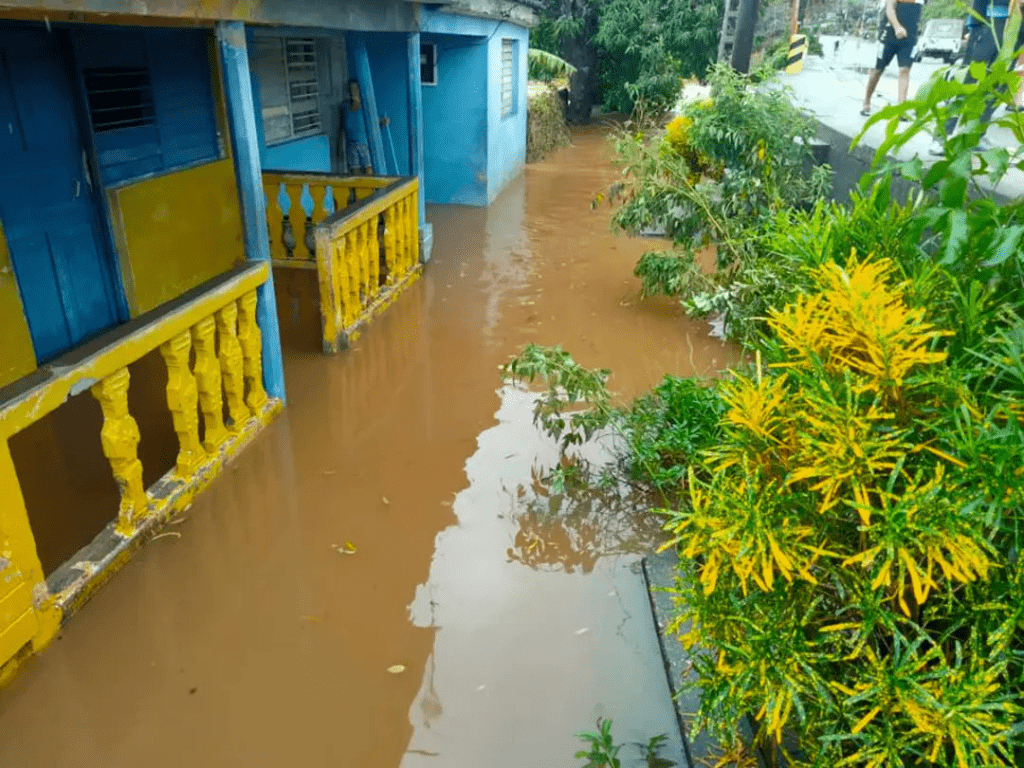
Mexican Embassy in Cuba and Richmeat company donated 100 tons of meat. United today and always, they proclaim. Heavy rains in Baracoa and Moa
Regeneration, October 25, 2024. The Mexican government, through its embassy in Cuba, and the Mexican company Richmeat donated 100 tons of meat to support the island.
This was highlighted on social media following the passage of Hurricane Oscar, which hit the Caribbean country last week, leaving seven dead and causing serious material damage.
“After the passage of Hurricane Oscar, the Cuban people are not alone. The Mexican company Richmeat, in collaboration with the Mexican Embassy in Cuba, has sent 100 tons of meat to support the affected families. United, today and always.”
This is how the embassy published it in X.
Cuba
Portals such as La Jornada indicate that it is 100 tons of seasoned minced meat, equivalent to 250 thousand packages of 400 grams each.
In addition, 750,000 servings of prepared food can be prepared, according to a press release issued by Richmeat, a company with a presence in Cuba.
It is even reported that it was the first foreign firm to invest in the Special Development Zone of the port of El Mariel (ZEDM), in the west of the island.
Confirmado en chequeo nocturno: se trabaja fuerte para revertir daños de Oscar en municipios de Guantánamo. San Antonio del Sur ya tiene electricidad y paso abierto a Macambo; en Imías se distribuyen alimentos y agua. Está llegando ayuda de toda #Cuba.
The donation, which will be transported in five refrigerated trailers on the same day, will be delivered tomorrow to the Ministry of Domestic Trade of the Province of Guantánamo.
This, so that the Cuban authorities can make it reach the affected population.
The Cuban ambassador to Mexico, Marcos Rodríguez Costa, expressed his gratitude on Friday for the donation, which he said will help support the population of the Guantánamo region, affected by the storm.
The donation “is a worthy example of the deep relationship between our countries,” the diplomat said on the X platform.
At current prices, the damages accumulated during more than six decades of application of this policy amount to 164 141.1 million dollars.
Photo: Cubaminrex
Oct 30 (Granma) A new emphatic victory for Cuba at the United Nations General Assembly took place on Wednesday, after 187 nations voted in favor of the resolution Necessity of ending the economic, commercial and financial blockade imposed by the United States of America against Cuba.
As part of the voting process, two nations (the United States and Israel) maintained their historic position against the document and one (Moldova) abstained.
From March 1, 2023 to February 29, 2024, the U.S. blockade caused damages and material losses to Cuba estimated in the order of 5 56.8 million dollars, which means an increase of 189.8 million dollars compared to the figure reported in the previous report. This represents an approximate damage of more than 421 million dollars a month, more than 13.8 million dollars a day, and more than 575,683 dollars in damages for each hour of blockade.
At current prices, the accumulated damages during more than six decades of application of this policy amount to 164,141.1 million dollars. If we take into account the behavior of the dollar against the value of gold in the international market, the blockade has caused quantifiable damages of more than 1 trillion 499 billion 710 million dollars.
This is what Cuba’s Foreign Minister Bruno Rodríguez Parrilla said on Thursday -when presenting to the national and foreign press the updated report on the damages caused by the longest and most comprehensive embargo in history-, who argued that, in the absence of the blockade, it is estimated that Cuba’s GDP could have grown by around 8% in 2023. These data show that the current challenges of the Cuban reality would have a better and easier solution if Cuba could have at its disposal the substantial resources of which the blockade deprives it.
During the period covered by the analysis, U.S. actions focused on identifying and pursuing the main sources of income of the Cuban economy, in strict application of the provisions of the Helms-Burton Act, including those stipulating its extraterritorial scope. In this sense, the unilateral measures with the greatest impact on the Cuban population and economy remained unchanged, which reproduced and aggravated the effects of this unilateral coercive system.
Photo: Cubaminrex
Among the latest steps taken by the administration occupying the White House, the Foreign Minister summarized the ceasing, in May 2024, of the unjustified practice of labeling Cuba as a State that does not fully cooperate with that country’s anti-terrorist efforts.
That qualification, he said, constituted one more false accusation, but with no practical impact since it did not entail unilateral coercive economic measures. This means that this decision did not imply the easing or lifting of any of the measures that are part of the blockade, nor of the additional ones that cause the presence of the Caribbean nation on the list of alleged State sponsors of terrorism.
“It was a limited decision, which makes even more confusing and unjustifiable the permanence of Cuba in that list, in which it should never have been included”, he claimed. Likewise, he argued that the U.S. announcements issued on the 28th of that same month on some changes in the regulatory framework of the blockade referring to the private sector, did not modify the fundamental body of this policy either.
They do not eliminate or modify the coercive measures that today most affect the economy and public services, but “respond to the objective of fragmenting Cuban society and punishing the sector”.
Rodríguez Parrilla mentioned that the offensive against tourism, the allegation of non-existent sonic attacks on U.S. diplomats as a justification to qualify Cuba as an unsafe country, the persecution of international medical cooperation agreements, among others, respond to a perfected design, aimed at preventing the entry of essential income to meet the growing needs of the population.
The U.S. administration cleared up any doubt as to the cruel and genocidal nature of the blockade when it used the worst moment of the COVID-19 pandemic to impose additional measures on Cubans: it reinforced the prohibition of imports such as pulmonary ventilators; it applied measures that affected the industrial scale of Cuban vaccines against the virus and even prevented the import of oxygen from third countries.
All the difficulties of Cuban society are not exclusively due to the blockade -the Minister of Foreign Affairs acknowledged-, “but whoever does not identify it as the main obstacle to our development would be untruthful. No country, even with much more prosperous and robust economies, could face such a merciless aggression”.
THE BLOCKADE IN FIGURES 25 days of blockade are equivalent to the financing required to cover the needs of the country’s Basic List of Medicines for one year (approximately 339 million dollars). 9 days equals the amount required to import the medical consumables (cotton, gauze, syringes, needles, sutures, catheters, equipment for serum, among other supplies) and the reagents necessary for the national health system for one year (129 million dollars). 21 hours of embargo is equal to the cost of acquiring the insulin needed to cover the country’s demand for one year (US$12 million). 18 days is equal to the annual cost of maintenance (excluding fuel and investments) of the National Electric Power System (250 million dollars). 4 months correspond to the amount to guarantee, for one year, the delivery of the standardized family basket of products to the population (1.6 billion dollars). 38 hours reach the same level as the price of production/acquisition of the material basis of study required by the country to cover the needs of the educational system for one year (US$21,789,000). If the blockade were to cease for eight hours, Cuba would be able to acquire the toys and teaching aids for all the children’s daycare centers in the country (US$4,500,000). Half an hour is equivalent to the cost of the electric and conventional wheelchairs required to meet the needs of the country’s special education system (US$ 256,363). 44 hours are equivalent to the funding needed to guarantee computers in the country’s educational centers (US$25,200,000). 15 minutes corresponds to the funding needed to cover the demand for hearing aids for children and adolescents with disabilities in special education in the country (US$144,000). Three days are synonymous with the cost of annual maintenance of public transportation in the country (US$40 million). Nine months is equivalent to the estimated financing needed to cover the country’s new housing construction needs (US$3,893 million).
United Nations General Assembly, Oct. 30, 2024. X/ @UN_News_Centre
Once again, the United States and Israel voted against the lifting of arbitrary sanctions against the Cuban people.
Oct 30 (teleSUR) On Wednesday, the United Nations General Assembly (UNGA) met to vote on a resolution on the necessity of ending the blockade imposed by the United States against Cuba.
During the meeting, 187 countries voted in favor of lifting the blockade, Israel and the United States voted against, and Moldova abstained from voting.
This marks the thirty-second time that Cuba has introduced this resolution, which continues to gather increasing support against the U.S. economic sanctions package, now in place for 62 years.
The UNGA had asked the United Nations Secretariat to prepare a report by consulting member countries and UN system bodies on this resolution, titled “The Need to End the Economic, Commercial, and Financial Blockade Imposed by the United States of America Against Cuba.”
The final report includes strong responses against the U.S. blockade from over 180 countries and 35 international institutions, including UNICEF, the World Food Programme, the UN Development Programme, and the World Health Organization.
The resolution reaffirms “the sovereign equality of States, non-intervention and non-interference in internal affairs, and the freedom of international trade and navigation.”
Previously, Cuba’s Affairs Ministry indicated that it expects to achieve a result this year similar to that of 2023, when it received 187 favorable votes, only two against (the United States and Israel), and one abstention (Ukraine).
On Tuesday, Russia’s delegation took the floor during the first session of the UNGA debate to describe U.S. policy in Cuba as a relic of the Cold War. “It’s a clear example of neocolonialism on the part of the United States. It affects Cuba and 200 countries that wish to build trade relations with Cuba,” said Vasily Nebenzia, Russia’s representative to the United Nations.
Latin American countries, including Mexico and Venezuela, as well as members of the Group of 77 and China, shared this position. “It is a blockade that represents the most unjust, severe, and prolonged system of unilateral coercive measures against any country in modern history,” stated Venezuela’s delegation, taking a further step in their criticism of the U.S.’s “supremacist mindset.”
Washington imposed its first sanctions in 1959, shortly after the victory of the Cuban revolution, but the first major block of measures came in 1962 under President John F. Kennedy. Since then, these measures have been expanded and intensified multiple times, such as with the Helms-Burton Act (1996) and the 240 measures under the Trump administration (2017-2021). The Biden administration has largely maintained Trump’s policies.
Currently, due to the U.S. blockade, Cuba suffers from shortages of food, medicine, and fuel; prolonged daily blackouts; rampant inflation; increasing dollarization; and a deterioration of public services, including education and healthcare.
The NAM confirms that the continuation of the blockade goes against Cuba’s constant efforts to achieve sustainable development, in particular the achievement of the 2030 agenda. Photo: UN.
United Nations, October 29 (RHC)– “Cuba’s transactions in third countries are prohibited and this has especially pernicious effects,” said Uganda regarding the financial and commercial blockade that the United States has maintained against Cuba for more than 60 years.
The representative of Uganda to the UN, Richard Nduhuura, this Tuesday in the General Assembly denounced the criminal blockade of the United States against Cuba, on behalf of the Non-Aligned Movement (NAM).
Nduhuura expressed that the NAM stands in solidarity with the people and the Government of Cuba. The NAM reiterates its rejection of “the imposition of unilateral coercive measures, which are not authorized by the corresponding organs of the United Nations and which contravene the principles of international law, and are not in accordance with the Charter of the United Nations.”
He also stated that these measures contravene the principles of the multilateral trade system and are used as tools to exert political, economic and financial pressure against different states, but in particular, when they are developing countries.
The Ugandan diplomat stressed that the blockade violates international law, which is why “Cuba’s right to fully interact with the international community is being violated.”
Nduhuura mentioned the damage that the unilateral measure causes to the Cuban people, preventing them, among other things, from enjoying their human rights and making them a reality, in particular their right to development.
“The direct and indirect damage caused to Cuba by the blockade is immense and affects all essential sectors of the Cuban economy, particularly public health, nutrition, agriculture, as well as trade, investments, tourism and banking,” he added.
He also referred to the damage suffered by the banking sector: “Cuba’s transactions in third countries are prohibited and this has especially harmful effects.” The Ugandan diplomat stressed that, in February 2024, the blockade caused material damage to Cuba estimated at billions of dollars.
The diplomat denounced the obstacles that the blockade generates for the country’s socioeconomic development, such as access to the Internet, interpersonal contacts and the development of scientific, cultural and sports relations.
“The NAM strongly condemns the inclusion of Cuba on the unilateral list of states that allegedly sponsor terrorism, drawn up by the United States Department of State as announced on January 11, 2021,” he said.
Mexico, Oct 28 (Prensa Latina) Cuban Ambassador to Mexico Marcos Rodríguez on Monday described the economic, commercial and financial blockade imposed by the United States as cruel and genocidal, and stated that it violates the human rights of Cuban people.
At a press conference at the Cuban Embassy and a few hours before the start of a new debate at the United Nations General Assembly on the necessity to end Washington’s blockade, the diplomat called this policy, which has been in place for more than 60 years, the main obstacle to Cuba’s development.
Noting that one of the fundamental purposes of this policy is to weaken Cuba’s economy and tourism, he mentioned the fact that Washington has decided that the European citizens who had visited Cuba at some point lost their right to join the ESTA electronic visa system.
He mentioned other actions, such as the prohibition for Cuba to buy any equipment that contains more than 10 percent of US components, and that a ship that docks in a Cuban port cannot visit a US port for six months.
Rodríguez referred to the recent mass disconnection of Cuba’s national power system due to a shortage of fuel and the breakdowns or obsolescence of many of the power plants, which is a direct consequence of the US blockade.
The diplomat stressed the widespread rejection of Cuba’s inclusion on Washington’s unilateral State Sponsors of Terrorism (SSOT) list, and said that the Caribbean island’s presence on that list “brings very hard consequences, especially in the financial issue.”
“Anyone who knows Cuba a little, anyone who has heard of Cuba, anyone who has been to Cuba, knows that Cuba is far from being a sponsor of terrorism; on the contrary, Cuba has been a victim for many years” of this scourge, he pointed out.
The ambassador deeply thanked Mexico for its courageous stance in favor of having the blockade lifted, “a position that has been expressed historically and that we are sure will be expressed tomorrow and the day after also at the UN General Assembly.”
“Cuba will not give up on denouncing the blockade, Cuba will continue to stand by the international community, asking that this unjust measure be eliminated once and for all by the Government of the United States,” he stressed.
A rally against the U.S. blockade in NYC, Oct. 27, 2024. X/ @cubavsbloqueo
For more than 60 years, the U.S. foreing policy has caused significant damage to the well-being of the Cuban people.
Oct 29 (teleSUR) On Tuesday, the United Nations General Assembly (UNGA) opened the first debate session on the draft resolution entitled “Necessity of Ending the Economic, Commercial, and Financial Blockade Imposed by the U.S. Against Cuba.”
The representative of Honduras, the country currently holding the pro tempore presidency of the Community of Latin American and Caribbean States (CELAC), spoke in favor of lifting the blockade.
“In 2015, CELAC member states welcomed the measures taken between Cuba and the United States to begin normalizing diplomatic relations,” the Honduran diplomat said, emphasizing that these measures marked a new chapter in the history of peace and peaceful coexistence among American nations.
However, “CELAC regrets that the blockade is still a reality for Cuba,” he said, adding that the Community believes the blockade is the main obstacle to Cuba’s normal development.
The Honduran representation confirmed that the report presented to the UN outlines the costs this policy imposes on the Caribbean country, which “causes significant harm to the well-being of the Cuban people and is contrary to the Latin American peoples’ aspirations for peace as expressed in the Proclamation of Latin America and the Caribbean as a Zone of Peace.”
“The U.S. blockade is also contrary to the letter, spirit, purpose, and principles of the United Nations Charter and International Law,” the Honduran representative affirmed
“The CELAC states reiterate their opposition to the application of laws and measures contrary to International Law, such as the Helms-Burton Act, including its extraterritorial effects,” he added.
Similarly, CELAC expressed its disagreement with Cuba’s designation as a “State Sponsor of Terrorism,” which “is unfounded and has reinforced the intimidating effect of restrictions associated with the blockade, undermining Cuba’s ability to establish trade and financial relations with international partners.”
“The UN Charter establishes rights, obligations, and principles that no member should contravene or undermine. States must act in accordance with this document,” the representative of Honduras said, reiterating that the U.S. must respond to the call of the world and its own people to end the blockade.
Havana, October 29 (RHC) –The people of Cuba will be attentive today to the debate in the UN General Assembly of the draft resolution against the economic, commercial and financial blockade of the United States against the island.
It will be the thirty-second occasion in which a proposal for a decree against Washington’s hostility towards Havana will be debated and, as in the previous ones, the overwhelming support of the participating States is expected here.
In each of the previous votes, the international community declared itself in favor of eliminating the blockade and the rest of the measures against the Cuban government and people.
On Tuesday and Wednesday, the world forum of 193 countries will examine and vote on the document presented by the Caribbean nation, which explains the reasons why this U.S. policy, applied for more than six decades, should be suspended.
Foreign Minister Bruno Rodríguez heads the Cuban delegation that arrived in New York to present the project at the 79th Session of the United Nations General Assembly, among other actions.
Officially called the Need to End the Economic, Commercial and Financial Blockade Imposed by the United States of America Against Cuba, the document was presented by Rodríguez at the Foreign Ministry last September.
According to what he said then, between March 2023 and last February, the country lost five thousand 56.8 million dollars due to the blockade, which represents an increase of 189.8 million compared to the previous report.
After suffering for more than 60 years from hostile measures and laws signed by the White House, Cuba has suffered damages exceeding 1.499 trillion dollars, he added.
He also specified that without the attempts of the North American governments to suffocate the Cuban Revolution, the nation’s Gross Domestic Product was able to grow up to eight percent during 2023.
For the authorities and the majority of the people, the blockade constitutes an act of war and is the main obstacle to the integral, sustainable and inclusive growth of Cuba.
They also consider that the inclusion of the island in the List of Countries Sponsors of Terrorism, drawn up by the United States government, intensifies the harassment that its application presupposes. (Source: Prensa Latina)