Havana, Nov 14 (Prensa Latina) Cuban Foreign Minister Bruno Rodriguez on Thursday urged world leaders at the COP29 Climate Action Summit to focus on financing to guarantee actions to fight climate change.
On X, the head of Cuban diplomacy expressed that it is time to prioritize the means that will implement what has been agreed for a reinforced climate action.
Officials and experts from the Cuban Science, Technology, and Environment Ministry (CITMA) and the Foreign Ministry (MINREX) are attending the meeting.
On the first day, United Nations Secretary-General Antonio Guterres urged to tear down the walls of climate finance after acknowledging that no country is immune to such human-made challenges.
Guterres warned that the world is in a final countdown to limit global temperature rise to 1.5 degrees Celsius, and insisted on changing the current order in which “the rich cause the problem, the poor pay the highest price.”
COP29 brings together hundreds of representatives worldwide in Baku, the capital of Azerbaijan, from November 11 to 22, to prepare a new financial plan to develop clean energy and overcome the effects of extreme weather.
Havana, November 13 (RHC) — The First Secretary of the Central Committee of the Communist Party of Cuba and President of the Republic, Miguel Diaz-Canel received on Wednesday the Minister of the Russian Federation for Civil Protection, Emergencies and Elimination of the Consequences of Natural Disasters, Aleksander Kurenkov, at the Palace of the Revolution.
According to the President’s account on the social network X, the Cuban president told the visitor that his visit contributes to consolidate the ties of friendship between the two countries and is of great help to us, while conveying his warm greetings to Russian President Vladimir Putin.
Kurenkov, for his part, “ showed satisfaction for being in #Cuba and for the opportunity to exchange with our President. “We came with the aim of further strengthening the relations of collaboration with Cuba, which have a friendly and companionable character,” reflects another post.
Lieutenant General Alexander Viacheslavovich Kurenkov expressed his satisfaction for the meeting with the Cuban president and that the latter had opened his agenda to receive him, in the midst of the complex moment the country is going through.
The Russian minister is in Havana at the invitation of the Minister of the Interior, Politburo member Major General Lázaro Alberto Álvarez Casas.
Written by Robyn Wiebe – Pembina Valley Online, Canada
Wednesday, Nov 13 2024
Hard times aren’t’ new to the people of Cuba it’s been going on for many years but in recent days their resilience has been tested.
Winkler’s Giselle Brito was born in Cuba and was a university professor there. She has lived in Canada for sixteen years, the last ten in Winkler, and serves as the learning coach for Regional Connections.
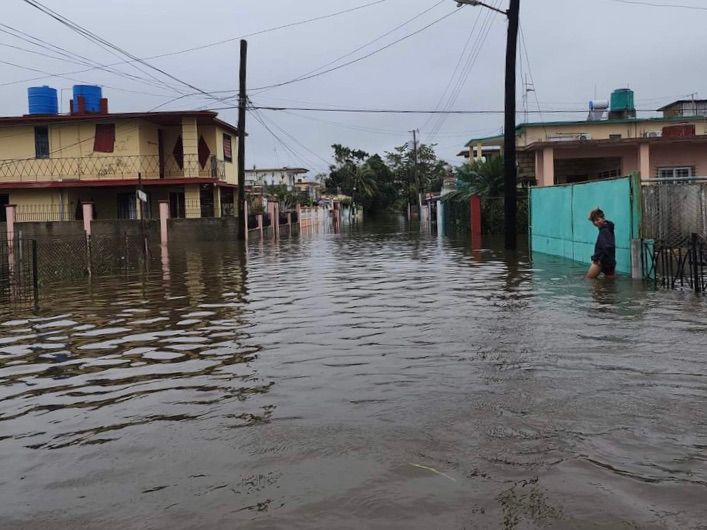
(Submitted pictures by Giselle Brito) Flooding in Bauta, Havana
She explained several things that have compounded the on-going problems for people living on the island in the Northern Carribean Sea.
She thinks God is challenging her people because they are so strong, and they always survive.
“For the last while, it’s been harder and more difficult for the population in Cuba. One of the reasons is because it is not just that we have up to 34 hours without power, it is also the American blockade is harder. It is also the hurricane. It is recently the earthquake, so it’s been one thing after another, and it is really difficult for our people.”
Blackouts have become more regular and for longer periods of time. This is particularly difficult for the most vulnerable people like seniors, children and the impoverished.
“Well, imagine food. There is no refrigerator available, so it is hard for people to keep the little bit that they get as food to last longer. And then from there, we do have power in hospitals. So that’s good. The population, imagine the weather in Cuba is really hot, they are having sleeping problems, people are depressed.”
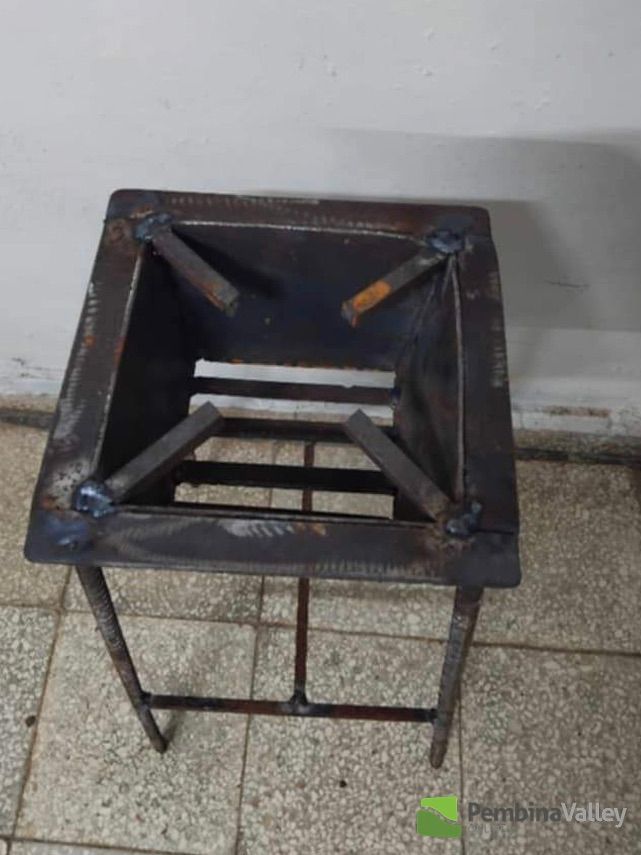
Hurricane Rafael hit the island recently causing flooding in some areas. She described what it is like for Cubans to lose their homes, community centres and malls or receive major damage from the flood.
She said there is no insurance for this type of loss. Some people have families who live in other countries who can send money to help but many don’t.
“Basically, when you lose something, you lose what you have. One thing about Cubans is that when we have situations like this, we just ask the population to donate, and they do. But it’s basically clothing, food, but it’s no furniture or anything like that.”
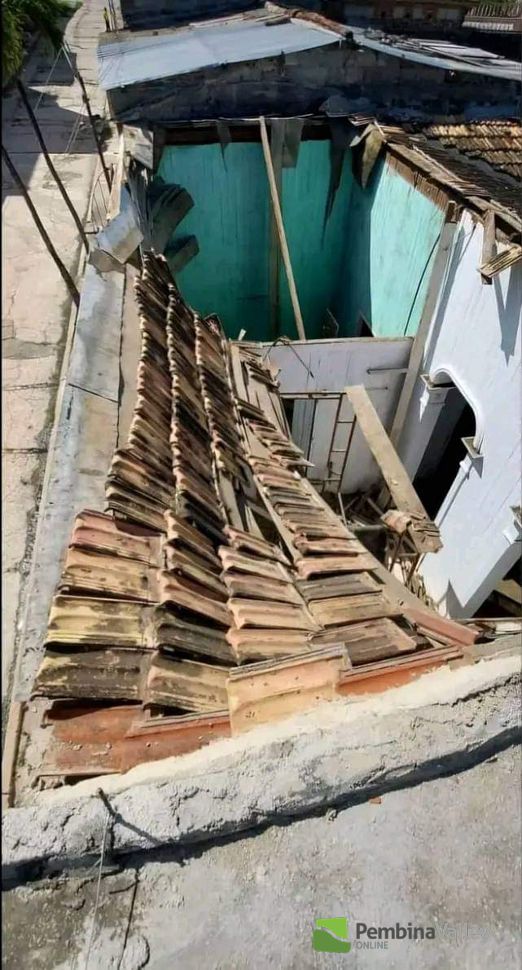
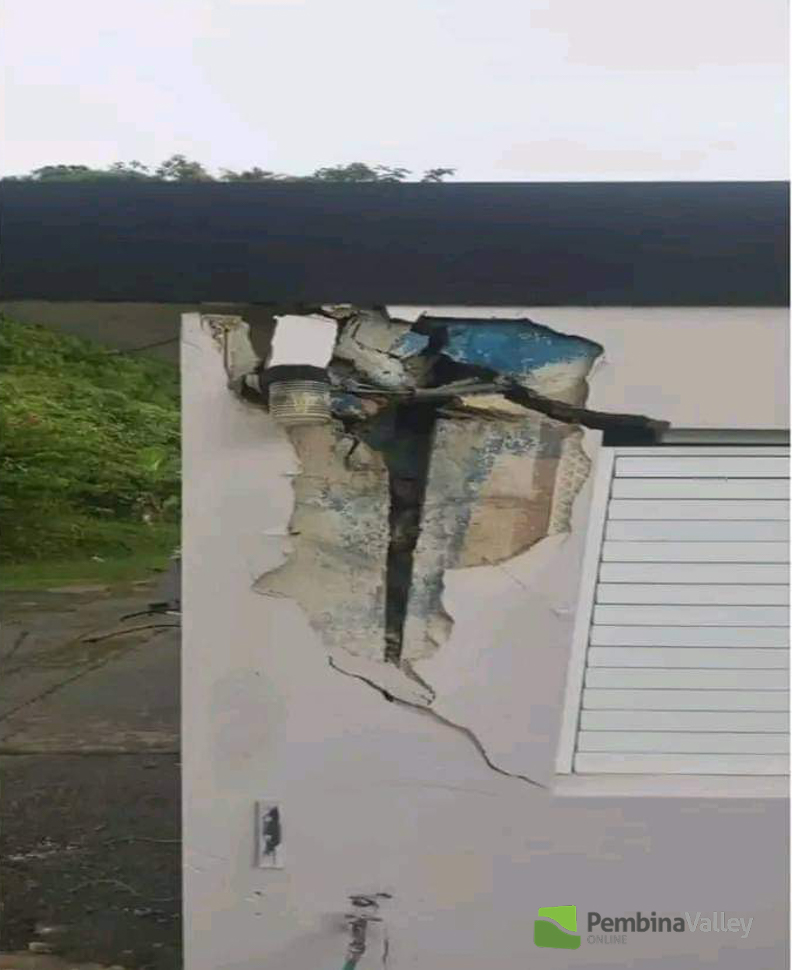
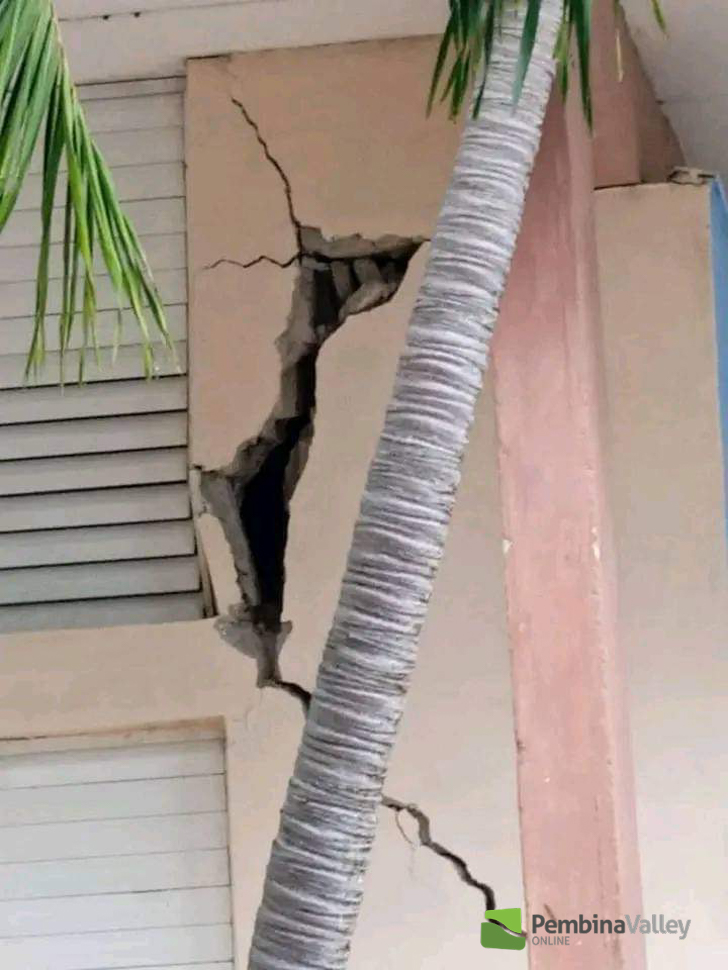
With homes still waiting for water to recede in homes, a 6.8 earthquake hit the island over the weekend.
“A lot of houses are in bad shape right now. Some of them are really destroyed. The same Cubans are trying to donate and but once again, donations are not enough because once you lose your house, basically you don’t have any way to rebuild it or to build a new one.”
Financially, Brito noted the country is struggling and not receiving the support from other countries they need.
Right now, Brito said the lack of power is affecting everyone on the island the most. Even those with more resources are finding it difficult to cope.
Brito sees many needs throughout the world and doesn’t feel comfortable asking for help for her country but did outline a few ways to support people living there.
“There are organizations out there that they do send donations to Cuba. There are people that travel to Cuba as tourists, and they bring a lot of supplies and help. So, if anybody in the community is able to do so, please join those organizations, keep traveling to Cuba. Cuba is a safe country so far. I would say we are all one world, we all need to be together and help each other no matter where you live.
Tears came to her eyes when asked why do you love your country?
“Why do I love Cuba? Because it’s my country. They are in my heart.”
Havana, Nov 12 (Prensa Latina) The Russian Spiritual Culture Days in Cuba open on Tuesday with a concert by honorary artist Nina Shatskaya at the National Museum of Fine Arts Theater in this capital.
Accompanied by guitarist Artur Marutiants, Shatskaya will perform famous Russian romances such as “By the Long Road”, “Black Eyes”, “Do Not Leave Me” and others.
As part of the initiative, the Animation Studios of the Cuban Institute of Cinematographic Art and Industry (ICAIC) will also host lectures for Cuban animation professionals and children’s workshops on audiovisual creation.
The animation workshop “Stories by Alexander Pushkin Create Your Animated Film (8+)” will take place this Tuesday.
Then, participants will enjoy the lecture “Production of animated films and Soyuzmultfilm.”
The animation workshop “Epic Heroes of Russian Lands Create Your Animated Film (8+)” was held on Monday, followed by the lecture “History of the Soyuzmultfilm studio.”
The activities will continue on November 12 and 13 with animation workshops.
Alexander F. Berezikov’s “Altai” State Youth Ensemble of Song and Dance, which promotes Russian folklore and traditions, will perform at Teatro Nacional de Cuba’s Covarrubias Hall in the capital on Friday and Saturday.
Mexican President Andrés Manuel López Obrador welcomes President of the Republic of Cuba, Miguel Díaz-Canel Bermúdez on February 11, 2023 at a bilateral meeting between Mexico and Cuba on health matters. President Andrés Manuel López Obrador reaffirmed the federal government’s commitment to consolidate a universal, free and quality public health system with the support of Cuban doctors and specialists.
Havana, Nov 13 (Press Latina) Cuban President Miguel Díaz-Canel congratulated former Mexican President Andrés Manuel López Obrador (AMLO) on his 71st birthday on Wednesday.
On his X profile, the head of State wrote, “Congratulations on your birthday, dear brother @lopezobrador. We will never forget your generous support at difficult times.”
“From #Cuba, where we always wait for you as a close friend, we send you our hug and the best wishes for health and happiness with (his wife) @BeatrizGMuller,” he added.
The Mexican political leader, who ruled the country from 2018 to 2024, defended his friendship with the Cuban people and its revolutionary process in all scenarios, which also translated into shows of solidarity in light of the limitations caused by the United States blockade against Cuba.
Brasilia, Nov 11 (Prensa Latina) Brazil today reiterated its solidarity towards the Government and people of Cuba, currently facing the aftermath of natural disasters and called for the lifting of unilateral sanctions that harm the economic and social development of the country.
In a statement from the Ministry of Foreign Affairs, the administration of President Luiz Inácio Lula da Silva indicates that it “has learned, with regret, of the 6.8 magnitude earthquake that hit the eastern region of Cuba yesterday, November 10. The episode occurred a few days after the passage of hurricanes Rafael and Oscar,” it says.
The release indicates that the successive natural disasters that have hit the Cuban archipelago in recent weeks have aggravated the critical economic framework and the energy crisis currently gripping the country.
“By reiterating its full solidarity with the Cuban government and people, Brazil renews its calls for the review and relaxation of unilateral sanctions that have been harming the country’s economic and social development for more than six decades,” the note states, in clear reference to the US blockade.
It reiterates that this blockade “directly affects the living conditions of its inhabitants and, in particular, of the most vulnerable sectors.”
Havana, Nov 13 (RHC) The Cuban Ambassador to Sri Lanka, Andrés González, and the governor of the Western province, Hanif Yusoof, have agreed today on the importance of strengthening bilateral cooperation in the fields of health and biotechnology.
During a cordial meeting, the Cuban diplomat congratulated Yusoof on his recent appointment as governor and provided an update on the progress of bilateral relations in the political and commercial spheres.
González expressed gratitude to Sri Lanka for its consistent support for the Cuban resolution against the blockade, which is annually approved by a majority at the United Nations headquarters.
Yusoof, in turn, emphasized Cuba’s friendship and cooperation with his country and the provision of scholarships to Sri Lankan students, despite the economic challenges faced by the Caribbean island.
The meeting was attended by Aritha Wickramasinghe, head of the Public Relations Office; Mohamed Cader, representative of the governor’s office;, and Maribel Duarte, first secretary of the Cuban embassy.
The Western Province is one of the nine provinces of Sri Lanka, and it is the most densely populated province in the country. It is home to Colombo, the capital as well as the administrative and commercial hub of the South Asian nation. (Source: Prensa Latina)
Nov 12 (Belly of the Beast) For Cuba, the storms keep coming. As if hurricanes, earthquakes, multiple failures of the electrical grid, and the re-election of Trump weren’t enough, it seems Sen. Marco Rubio will be Trump’s Secretary of State.
Rubio was the architect of Trump’s “maximum pressure” policy toward Cuba and has claimed it as one of his greatest accomplishments. Now, Rubio would go from being the shadow Secretary of State for Latin America to the real thing.
There’s irony to the appointment.
In 2015, in addition to making fun of each other for parts of their anatomy, Rubio labeled Trump a “con artist” and Trump called Rubio a “total lightweight” whom he wouldn’t hire to run even a small company.
A deeper irony stems from the fact that Trump’s re-election campaign was built on xenophobic rhetoric around immigration. And yet, the war on Cuba that he and Rubio unleashed — and which Biden has done little to reverse — has driven unprecedented migration of Cubans to the United States.
Making Life Harder for Cubans
Trump’s policies and the COVID-19 pandemic created the perfect storm for an economic implosion in which Cuba’s GDP contracted by double-digits. From 2022 to 2023, an estimated 18% of Cuba’s population has fled as the economic and humanitarian situation worsens.
Rubio’s appointment suggests the Trump administration, despite anti-immigrant and isolationist rhetoric, will likely accelerate a maximum pressure policy that would continue to ravage Cuba’s economy while fueling migration to the United States.
“Rubio will not only block any efforts to help Cuba through the terrible economic and social crisis that the Cuban people are enduring, he will probably propose piling on new sanctions that will make their lives even harder,” says William LeoGrande, a Cuba expert and professor of government at American University. “But he and President Trump should beware that [anything that] makes life harder for Cubans will just convince more of them that it’s time to leave and come to the United States, with or without a visa.”
Rubio and Friends (from Florida) Hijack Cuba Policy
Rubio is also emblematic of the outsized power a handful of Florida lawmakers have over the island’s fate.
When Trump was first elected, an interagency review about U.S.-Cuba policy was held. Most officials involved were “unanimous in their support for the Cuba policies already on the books, including the Obama-era normalization efforts,” Mother Jones reported.
It did not take long for Cuban-American hardliners to hijack policy toward Cuba and the rest of Latin America.
Leading the way was Rubio, who would play a key role inserting Cuban-American hardliners into top positions in the Trump administration. John Barsa was named head of USAID’s Bureau for Latin America and the Caribbean, and Mauricio Claver-Carone, a former pro-embargo lobbyist, went to the National Security Council, where he became the architect of some of Trump’s most damaging measures, including activation of Title III of the Helms Burton Act.
Rep. María Elvira Salazar and Rep. Mario Díaz-Balart, also hardliners from the Sunshine State, praised Rubio’s appointment.
Salazar is the sponsor of the FORCE Act, which aims to make the removal of Cuba from the “state sponsors of terrorism” list — a designation made by Trump during the final days of his first term — impossible without regime change. Previously, it was assumed that, should the bill pass the House, it would fail in the Senate. Now, the Republicans have a Senate majority and are expected to maintain control of the House.
Never mind that the U.S. is isolated in claiming that Cuba sponsors terrorism (there is consensus among intelligence officials that Cuba does not sponsor terrorism), much like it is isolated in defending its policy towards Cuba writ large. Last month, the entire United Nations General Assembly, save the U.S. and Israel, voted for an end to U.S. sanctions on Cuba.
Florida Republicans Take Center Stage
Florida Sen. Rick Scott, who is as hard-line on Cuba policy as his Cuban-American colleagues, is also vying to be the Senate’s next majority leader, with Trump allies Tucker Carlson and Elon Musk throwing their weight behind him. The vote takes place tomorrow.
Meanwhile, Trump has asked Rep. Mike Waltz, yet another Florida Republican, to serve as his national security advisor.
Despite Rubio’s extremist policy positions, his appointment — which LeoGrande calls “the culmination of Cuba’s annus horribilis” — seems inevitable.
Sen. John Fetterman of Pennsylvania, a Democrat, has wasted no time in expressing his support.
The far-right ideologues who dominate politics in Trump’s home state of Florida, it seems, will be running foreign policy when he returns to the White House next year.
Don’t Miss The War on Cuba
To learn more about how Marco Rubio came to “directly design” Cuba policy during Trump’s first presidency, and its devastating impact on the Cuban people, watch our award-winning documentary series The War on Cuba.
Phnom Penh, Nov 12 (Prensa Latina) King Norodom Sihamoni of Cambodia has thanked the Cuban people for the messages of congratulations sent on the 71st anniversary of the proclamation of the Kingdom’s independence from French colonial rule.
The monarch conveyed sincere words of gratitude through Cuban Ambassador to Cambodia, Milena Zaldivar, during the solemn ceremony that closed the celebrations of the transcendental anniversary on Monday.
During the meeting, the diplomat recalled the message of Cuban President Miguel Diaz-Canel when he reflected on the traditional ties of friendship and solidarity on which bilateral relations have been forged.
Zaldivar also reaffirmed the Cuban government’s will to achieve new milestones in bilateral cooperation for the progress, peace, and prosperity of both nations, objectives that have as a special motivation the 65th anniversary of establishing diplomatic relations, which will take place in 2025.
In his congratulatory message, highlighted here by national media, Diaz-Canel said “In such a special commemoration, I recall the traditional bonds of friendship and solidarity in which the bilateral relations have been forged, with the certainty that we will continue to reach new milestones for the progress and welfare of our nations.”
Cuba and the Kingdom of Cambodia established diplomatic relations on April 15, 1960, based on the legacy of feelings of mutual respect and admiration that existed between the historic leader of the Cuban Revolution, Fidel Castro, and the late Cambodian King-Father, Norodom Sihanouk.
New Delhi (Prensa Latina) At its 16th Summit in Kazan, what began as an economic grouping of Brazil, Russia, India, and China (BRIC) in Yekaterinburg, Russia 15 years ago, reached a significant turning point. Through the passage of these years, the BRICS grouping expanded to 10 core members and 13 partner countries, including one NATO member Turkey, now wanting to join this grouping.
By Sandeep Chachra*
With 30 more countries expressing interest in joining the group, the current conjecture holds great promise for the Global South and BRICS, arguably the most pivotal since the Bretton Woods Conference in 1945.
Representing nearly half of the world’s population and accounting for 35 percent of the global GDP—larger than that of the G7 combined—BRICS also contributes 40 percent of oil production and 42 percent of the world’s food production, while encompassing the majority of the global workforce. In its pursuit of equality and justice, the power of the group and the pathways it offers for economic, social, and political autonomy to its members and their populations are immense. The addition of 13 new partner members reflects the alliance’s growing influence, bringing in a diverse array of countries from Africa, Asia, and Latin America, including Algeria, Nigeria, Turkey, Indonesia, Vietnam, Bolivia, Venezuela, and Cuba, all of which hold strategic importance in global trade, energy, and geopolitics. Indonesia, which has formally sought membership and sent its Foreign Minister, just days after the newly elected President, Probowo Subianto took office, holds the promise of bringing to this group the legacy of Bandung. And with at least four, if not five, continuous civilizations – India, China, Egypt, Iran and Ethiopia as its members, the grouping today embodies the power, hopes and dreams of the majorities of the global south, young and growing.
Never extinguished by the rampage of colonial subjugation, or subdued by continued neocolonial conquests, peoples of the global south carry in their hearts a spirit of liberation. And this with an endless spring of resistance against subjugation, expulsion and genocide, as Fidel Castro once said, “to settle their (our) own debt with humanity”.
For such people don’t see humanity’s future from the rotten paralytic present, where children, women and men are butchered and where mothers in Gaza feel guilt for bringing a child into this world of war and suffering. Be it the Genocide of Gaza, or the blockades and sanctions imposed on nations of the south the idea has been to erase defiant dreams and their dreamers. The wide appeal of BRICS symbolizes the collective rise of the Global South in a growing frustration with a Western-dominated hegemonic world order. Furthermore it also lies in the inclusive messaging of BRICS. The host of 16th BRICS Summit, Russian President Vladimir Putin emphasized that BRICS is a ‘non-West’ rather than ‘anti-West’ group.
In what appears promising, the Kazan Declaration clarifies BRICS consensus positioning on some of these challenges and its articulation for change.
A tool of western hegemony, several of the BRICS members and partners are amongst most sanctioned countries in the world. Russia with more than 20,000 sanctions, Iran with 5000, Belarus with 1500, Cuba with those continuing since its revolution. It is estimated that US Sanctions killed nearly half a million children in Iraq. Together with occupation, sanctions have a devastating impact. BRICS called for elimination of sanctions “unilateral coercive measures, inter-alia in the form of unilateral economic sanctions and secondary sanctions that are contrary to international law, have far-reaching implications for human rights, including the right to development, of the general population of targeted states, disproportionally affecting the poor and people in vulnerable situations”
At a time when there is increasing frustration over the United Nations’ inability to resolve ongoing conflicts in West Asia, Ukraine, and the Sahel region, social outrage at the state of the UN and international governance is both active and growing. With wars and conflicts persisting for decades, the collective decision of BRICS to commit to finding peaceful resolutions bodes well for world peace. Chinese President Xi Jinping reiterated the BRICS call to defend peace and achieve common security around the world.
While the Kazan declaration falls short of calling out genocide in Gaza, it does acknowledge the various United National Security Council Resolutions as well as the “provisional measures of the International Court of Justice in the legal proceedings instituted by South Africa against Israel” and backs the calls for Israel’s withdrawal from the Gaza Strip and the need for a two State solution.
To build a world without sanctions, wars, conquests and genocides is a task which awaits humanity and peoples expectation from BRICS.
The call and action BRICS has taken to reform the international financial architecture to make it “more inclusive and just” such that it better reflects the changes in the international economic balance of power is a step which offers to its members room for economic manoeuvrability and a degree of economic autonomy too.
While the BRICS have not yet agreed on de-dollarisation, and while a weaponised US Dollar still remains an important tool in global finance, the announcement of BRICS Pay system, is a welcome one too. As a digital payment system promoting a unified platform for financial transactions between the BRICS nations, it will enable smoother trade within the bloc, encourage the use of local currencies, and strengthen the financial sovereignty of the BRICS countries. The Venezuelan President, Nicholas Maduro, noted “BRICS have become the global political epicenter in the new world”, one which offers autonomy for countries of the global South.
Turning points for justice, inclusivity and progress carry in their womb the need for introspection and self-reflection.
In establishing the just and equal trajectories of the future, BRICS cannot merely embody a shift in who sits at the table and makes decisions. As the Prime Minister of India, Narendra Modi stated “We have to give the world the message that BRICS is not a divisive organization but one that works in the interest of humanity”. Even as it works to reform the United Nations, the BRICS grouping in its expansion will need to avoid the dangers of a Security Council like decision making hegemony, and base itself on democratic decision-making platform with its members and partners. And in doing so to strengthen democratic and collective decision making with a unity of purpose. Despite BRICS economic strength, internal differences and political challenges could prevent them from acting as a unified force for advance and a counterbalance to the clubs of the rich and powerful such as the G7.
BRICS grouping represents all the asymmetries of our diverse world too. China’s GDP at around 18 trillion US Dollars is higher than cumulative figure of all BRICS members. India and China’s population taken together is by far higher than all other members and partners, together making up over 35 percent of the world population, and affording them greater current, and future heft. In building the future, principled approaches which premise justice and equality based on common but differentiated responsibilities will be needed, else our peoples will ever be haunted by the shadows of the colonial past.
The “past world” represented the class interests of the privileged one percent – the interests of ruling classes, capital and its most privileged holders, including corporations and war machines. Its impacts are visible in all countries of the Global South, and among the members of the BRICS, manifesting as rising inequalities, deprivation, precarity and dispossession of the working classes, regressions on human rights and gender justice, ecological disasters and conflicts. To effectually challenge this hegemony, it is crucial to foreground the role of civic movements within BRICS countries and their working class allies in the Global North. These movements must come together to cooperate, collaborate, and find common ground in building pathways toward a just, sustainable, and peaceful world. While academics and the business sectors within BRICS are organized, labour and social movements remain fragmented. By shifting focus from differences to consensus-building through dialogue, learning, and research, working class groups can create a stronger collective voice. This collaboration is essential; otherwise, war alliances like NATO will continue to prevail, siphoning resources away from meeting basic human needs, as Mia Mottley, the Prime Minster of Barbados, pointed out when she noted that wars drain money from the system that could be better utilized for societal welfare.
A global South promise, is one of liberation from the interests of and super accumulation by the rich and powerful. It is one of ensuring views and agency of all the working peoples, and those who suffer hunger, discrimination and exploitation, those who suffer patriarchy, caste, and the oppressions of privilege are represented first and foremost in and by the BRICS and in all its actions to build world peace, justice and solidarity.
As BRICS travels to Brazil later this year, its Presidency will need to shoulder these social expectations. Farce of the past cannot have space in any pact of future.
*The writer who is a leading member of ActionAid acknowledges his article gained from insights of Malhotra, Policy Researcher at ActionAid Association, India, and Amalia Pulungan, a Global South researcher from Indonesia.