Havana, December 6 (Radio Habana Cuba) — The First Secretary of the Central Committee of the Communist Party of Cuba (PCC) and President of the Republic, Miguel Díaz-Canel received this Friday at the Palace of the Revolution, the ambassadors of the Caribbean Community (CARICOM) to celebrate the 52nd anniversary of the establishment of diplomatic relations between Cuba and Barbados, Guyana, Jamaica and Trinidad and Tobago (December 8).
“I reiterated our admiration and affection, and thanked them for their solidarity and support for the Cuban people,” the president said from his X account.
Díaz-Canel confirmed to the 14 representatives of the sister Caribbean islands the Cuban government’s willingness to continue expanding ties.
“The Caribbean can always count on the Cuban Revolution, and on the support, friendship and solidarity of our people,” he assured them.
The head of state conveyed to them a hug from Army General Raúl Castro Ruz, an admirer of the dignity of the Caribbean brothers. (Source: ACN)
Havana, December 5 (Radio Habana Cuba) — The National Electric System (SEN) is working today with all its equipment available, according to a notice from the Minister of Energy and Mines of Cuba, Vicente de la O Levy.
“The SEN has been restored,” he wrote on the social network X shortly before concluding this Wednesday night. All the units that were in the process of starting up entered the system, he assured.
De la O Levy clarified that “unit 1 of Felton, which already has a boiler on and will synchronize in the next few hours” has yet to be incorporated into the generation of electric energy.
The day before, at the beginning of the morning, there was a new disconnection of the System, after the Antonio Guiteras thermoelectric plant went out due to an automatic trip, as reported by the Ministry of Energy and Mines.
During the day, work to rehabilitate it progressed and before nightfall, the Santa Cruz 1, Guiteras and Felton units were ready to start up, with 400 megawatts more than those existing until then.
Likewise, the provinces of Pinar del Río and Holguín had been incorporated into the SEN, always according to official reports.
The SEN has suffered significant damage in recent months, including service outages, causing prolonged blackouts throughout the island.
Cuban authorities denounce the consequences in the sector of the economic, commercial and financial blockade imposed by the United States on the Caribbean country for more than six decades, a policy that has been intensified in recent years. (Source: Prensa Latina)
The U.S. continues to fund Israel’s genocide in Gaza, while Cuba, branded a State Sponsor of Terrorism by the U.S., is quietly training hundreds of Palestinian doctors for free. From Gaza to Cuba tells the story of Murid Abukhater, a Palestinian medical student from Gaza studying at Cuba’s Latin American School of Medicine (ELAM). While his family and friends face the daily onslaught of Israel’s bombing, Murid struggles to focus on his studies. He dreams of returning to Gaza as a doctor to help save lives.
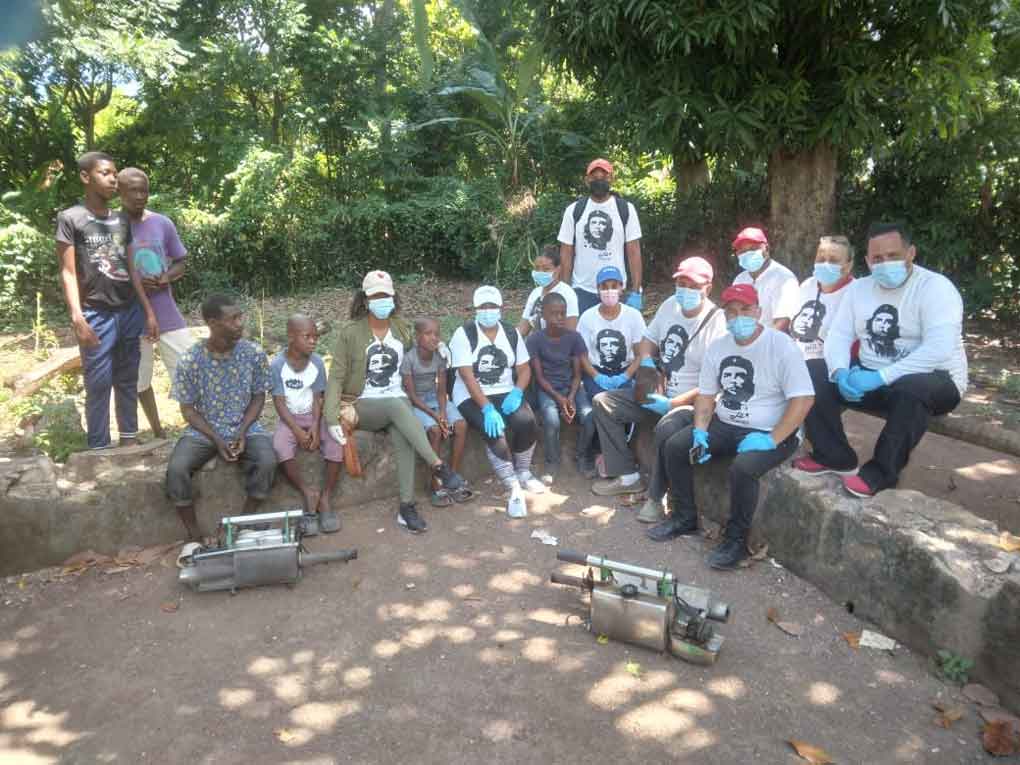
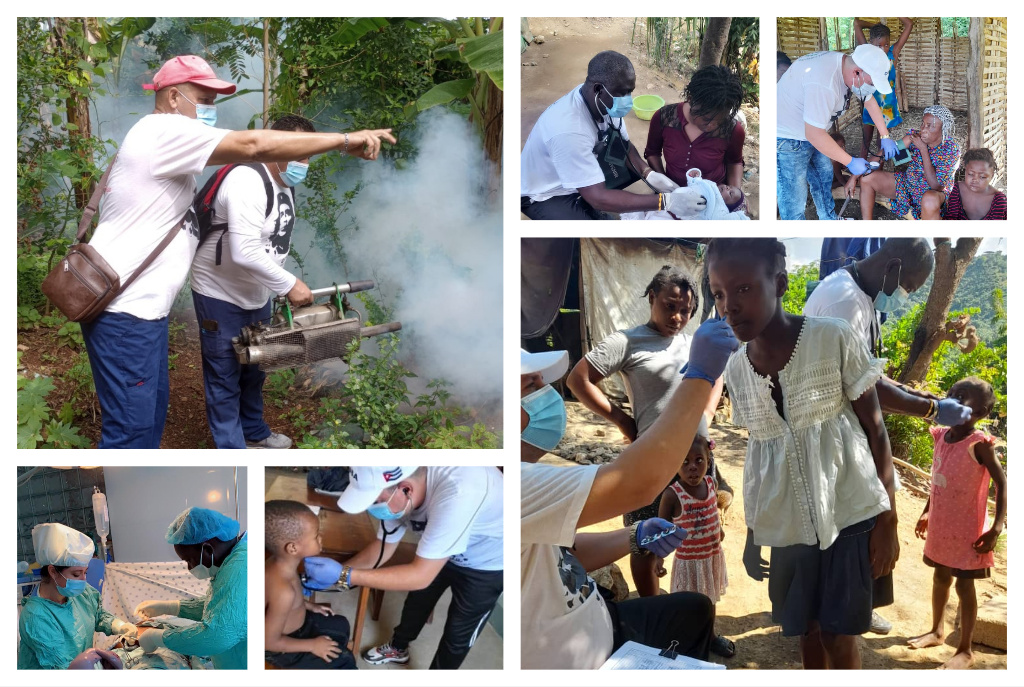
Port-au-Prince, Dec 4 (Prensa Latina) The Cuban Medical Brigade in Haiti celebrates Wednesday 26 years saving lives in this Caribbean nation, thus making late Commander in Chief Fidel Castro’s dream come true.
Under his instructions, the first Cuban medical group arrived in Haiti on December 4, 1998, to support the local population in the aftermath of Hurricane George.
For 25 years, the Medical Brigade has provided uninterrupted services to Haitians, despite extreme weather events, earthquakes and the chaos caused by the ferocity of armed gangs, a genuine by-product of poverty.
This anniversary has a historical, as statistics endorse the affection and gratitude Haitians have develop towards the 14,308 Cuban collaborators that have tried to heal their pains since 1998.
The Cuban Medical Brigade in Haiti are responsible for 36,167,339 consultations, 200,827 births, 22,582 cesarean sections, 725,093 surgical interventions, 249,318 of which were of the major type, and for the rehabilitation of 210,100 patients subject to physical therapy.
Operation Miracle, which sought to improve the vision of Haitians, had 73,404 patients operated on by Cuban ophthalmologists. As for laboratory tests, Cubans performed 1,270,416 tests, 39,034 x-rays, 745,651 ultrasounds, 114,996 endoscopies, 115,309 electrocardiograms and saved a total of 77,391 lives.
In addition, the Brigade helped training 565 graduate specialists in Comprehensive General Medicine, as part of the plan to develop human resources.
For the past quarter of a century, Haitians have come to highly appreciate the work by Cuban health workers. Not in vain many of them often prefer to be treated by Cuban doctors instead of their own compatriots.
According to the head of Cuban diplomacy, the objective of the new regulation is to illegally grant access to Cuban trademarks that have been legally registered in the United States
Havana, Dec 3 (Radio Habana Cuba) The Cuban Minister of Foreign Affairs, Bruno Rodríguez, this Monday criticized U.S. President Joseph Biden for signing a bill that prohibits the application or validation of trademarks confiscated by the Cuban government.
The head of Cuban diplomacy expressed on a post on X that that the objective of this regulation is to illegally grant access to Cuban trademarks that have been legally registered in the United States.
The White House announced that Biden signed a proposal approved by the U.S. Congress, which prevents the Patent and Trademark Office from recognizing, enforcing, or otherwise validating any claims to rights in these trademarks.
According to Johana Tablada, the deputy director of the General Directorate of the United States at the Ministry of Foreign Affairs, there are 6,448 registered U.S. trademarks in Cuba and 1,177 in the process of registration.
On social media, Tablada stressed that all of them are protected by the Cuban Intellectual Property Authority, in contrast to the approach taken by the U.S. government when it signed the Stolen Trademarks Law.
The diplomat refers to the ongoing dispute between Cuba and the Bacardí company over the distribution rights for the island’s iconic rum, Havana Club, worldwide.
Biden signed the document, while numerous organizations and individuals from around the world are urging him, directly or through international forums, to revise the White House’s policy towards Cuba.
The demands include lifting the economic embargo, reversing the restrictions imposed by Donald Trump during his first term, and removing Cuba from the list of countries that sponsor terrorism. (Source: Prensa Latina)
Budapest, Dec 2 (Prensa Latina) The director of Sports of the Ministry of Foreign Affairs of Hungary, Dániel Gyurta, today highlighted the greatness of former Cuban wrestler Mijaín López, five-time Olympic and world champion.
Gyurta welcomed the Cuban at the institution’s headquarters and expressed his satisfaction at meeting him and discussing the results achieved by the former gladiator throughout his sporting career.
He particularly highlighted the significance and greatness achieved by the Caribbean athlete in the Olympics with his five crowns and the example he represents for the sport.
The Olympic and world swimming champion also referred to the potential for strengthening bilateral relations between Hungary and Cuba in various sports disciplines.
He also reiterated his commitment to visit the largest of the Antilles in 2025 and sign several cooperation agreements.
The 42-year-old Cuban legend thanked the team for their attention and their full support for the initiatives for the development of sport between both nations.
The Cuban ambassador to the European country, Guillermo Vázquez, and the Hungarian Olympic wrestling champion Tamas Lorincz also participated in the meeting.
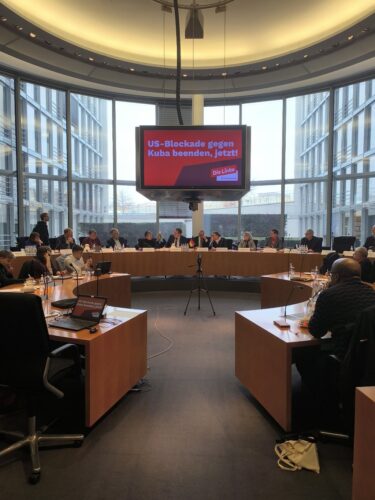
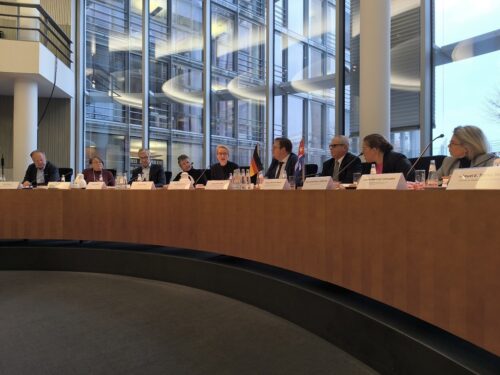
Berlin, Dec 2 (Prensa Latina) The Socialist Party of Germany (The Left) today received the Secretary of the National Assembly and the Council of State, Homero Acosta Álvarez, for a discussion of experts on the blockade against Cuba in the Bundestag (Parliament).
The event was organized by the Left Party, the Foundation
Rosa Luxemburg and the working group of that group, Cuba Sí, to address the topic “End the United States blockade against Cuba, now” at Paul Löbe’s house, near the Bundestag.
The meeting was attended by Acosta Álvarez and the Cuban ambassador to this country, Juana Martínez González, and her deputy, Miguel Torres Tesoro.
Present on the German side were Bundestag members from the Left Party, Sören Pellmann and Dietmar Bartsch, as well as the party chairwoman, Ines Schwerdtner.
Among the 60 participants were activists, former parliamentarians and Cubans living in Germany.
Acosta Álvarez explained the difficult situation Cuba is experiencing due to the blockade and global crises, such as the Covid-19 pandemic, the conflict in Ukraine and recent disasters, which have an even greater impact on Cuba due to US sanctions.
The Cuban leader emphasized that during the era of former Democratic President Barack Obama, it was possible to see how quickly ties between Cuba and the United States can improve.
But under Republican Donald Trump, all progress was reversed and numerous sanctions were then imposed, he recalled.
Although the United States sought to force the overthrow of the Cuban government with measures that violate international law, Cuba moved forward and was transformed with the participation of its population in the 2019 constitutional referendum, the Cuban politician explained.
Meanwhile, lawyer and professor Norman Paech explained the need for new courts, such as the one in Brussels this summer, to condemn the blockade, which he considered a crime against humanity.
A representative of the Rosa Luxemburg Foundation, Heinz Bierbaum, spoke of the planned intensive exchange and far-reaching cooperation between the Left Foundation and Cuba.
The Bundestag member and former party chairman Dietmar Bartsch said that in the context of a very tense crisis in the Left Party in Germany, it is a sign that its senior members are consulting on Cuba shortly before the upcoming elections in the Federal Republic.
The newly installed president of the Left Party, Inés Schwerdtner, also announced that the decision of that organization, starting in 2022, to maintain unconditional solidarity with socialist Cuba, remains in force and will be applied.
Other activists and party members stressed that not only does Cuba need the support of the world, but the world needs a socialist Cuba, an alternative form of society with more social justice than in the capitalism of Western countries.
At the end of the event, a statement condemning the blockade was presented, which aims to continue to demonstrate solidarity with Cuba.
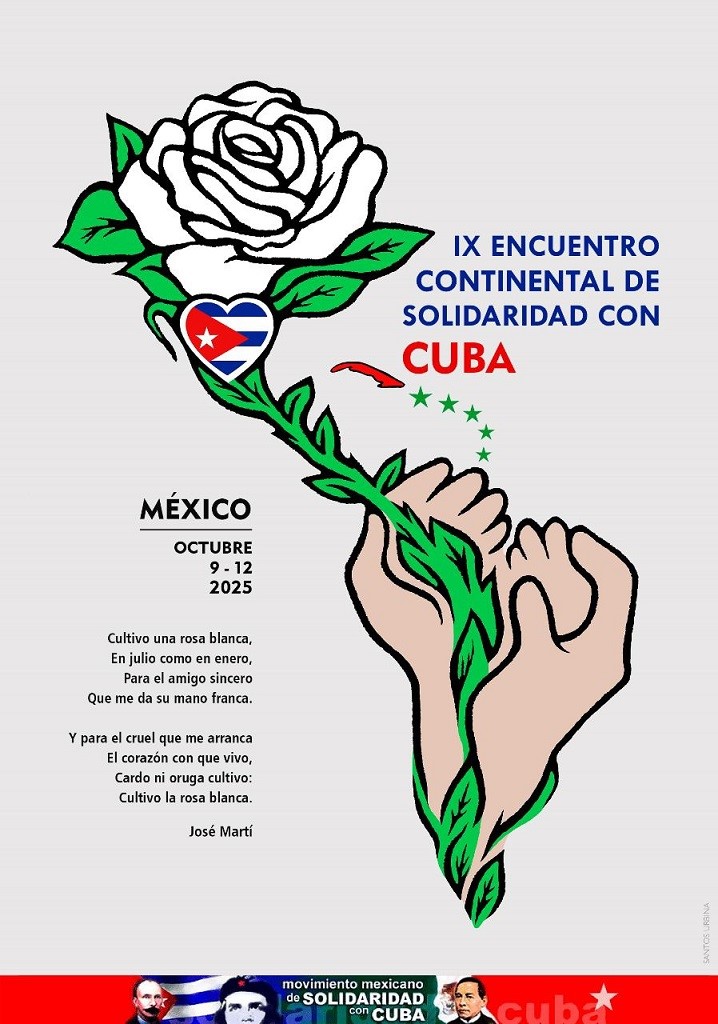
Mexico City, Dec 2 (Prensa Latina) The 9th Continental Meeting of Solidarity with Cuba will take place in Mexico from October 9 to 12, 2025, focused on defending the island’s causes, members of the organizing committee reported today.
In an interview with Prensa Latina, Aline Pérez, from the Mexican Movement of Solidarity with Cuba, highlighted the strengthening of regional integration and support for the Revolution as the main objectives of the event to be held in this capital.
As part of this, he emphasized the fight against the economic, commercial and financial blockade imposed by the United States on the Caribbean nation, as well as the demand to exclude it from Washington’s unilateral list of countries that allegedly sponsor terrorism.
He also stressed the importance of supporting the work of Cuban medical brigades and thanked the presence of these health professionals who help and save lives even in remote areas of this country where local specialists have not gone.
For his part, Israel Bretón, also a member of the Movement and part of the organizing team, told this agency that another relevant element will be how to orchestrate actions at a continental level to directly benefit Cuba, in the face of the continued US blockade.
He also mentioned the importance of defending the island’s right to self-determination.
Speaking online at a press conference held at the Havana embassy here to launch the meeting, the president of the Cuban Institute of Friendship with the Peoples, Fernando González, pointed out the efforts of the different US administrations to destroy the Cuban Revolution.
“We must aim to make the meeting a real contribution to confronting the current counterrevolutionary offensive of US imperialism, in the search for the broadest possible unity of leftist forces in the region, strengthening militant solidarity for Cuba and for the just causes defended by our peoples,” he said.
He called for finding new ways to articulate and globalize solidarity, adapted to the current scenarios in the geographic area and the world.
González stressed that the meeting in Mexico will close an important cycle of continental meetings for the period 2024-2025, events of great importance, as they constitute collective spaces for articulation to strengthen the solidarity work for Cuba in the face of the hostility of the United States.
We will work on coordinating strategies in defense of the Cuban Revolution that compel us to the necessary strengthening, from our spaces, of a common front to strengthen the resistance and Latin American and Caribbean unity in support of the proclamation of the region as a zone of peace, he added.
He expressed his gratitude to the Latin American and Caribbean Solidarity Movement for the support received in the face of the recent energy contingency, as well as the effects resulting from hurricanes Oscar and Rafael and the earthquakes that affected the eastern provinces of Granma and Santiago de Cuba.
José Maury, political advisor to the diplomatic mission in Mexico, mentioned in conversation with Prensa Latina that at this time the media war against the island is also aimed at demobilizing friends.
We believe that the IX meeting first and foremost strengthens the cause of Cuba and contributes to the inclusion of new friends, Maury pointed out, adding that another objective is to strengthen the organization of solidarity with his country and to articulate support movements.
Díaz-Canel (D) sent greetings to his counterpart Xi Jinping, whom he described as a friend of Cuba. Photo: @DiazCanelB
Havana, December 1 (Radio Habana Cuba) — The First Secretary of the Central Committee of the Communist Party of Cuba and President of the Republic, Miguel Díaz-Canel, highlighted the excellent state of relations with China and expressed his admiration for the international leadership of the Asian giant.
This was stated by the president when holding a meeting, this Saturday, with General Commissioner Wang Xiaohong, State Councilor and Chinese Minister of Public Security.
In his X account, Díaz-Canel pointed out that the visit of the general commissioner shows that “in the area of citizen security, and in the confrontation with the policies of cultural colonization, hegemonic and subversion that the empire exercises on our nations, there is also an expression of the excellent state of our relations.”
During the exchange, the head of State sent greetings to his counterpart Xi Jinping, whom he described as a friend of Cuba, and highlighted the historic ties of friendship that exist between both peoples, governments and parties.
He indicated that in “the current moments the links are consolidated from a group of consensus that have been achieved in the meetings that we have been able to hold with our friend, the general secretary of the Communist Party of China and president of the Chinese Republic, Xi Jinping.”
The Granma newspaper reports that the president referred to the follow-up that Cuba has given to the proposals made by the Asian country to the international community, to launch a group of “global initiatives that express the will to defend peace in the world, (…) while rejecting hegemonism and sanctions policies.” (Source: Prensa Latina)
Cuba and Venezuela present themselves as nations that have managed to strengthen their bond of cooperation over the years. Photo: Cubaperiodistas/ Archive.
Caracas, December 1 (Radio Habana Cuba) — This Saturday marked the 24th anniversary of the signing of the health cooperation agreement between Venezuela and Cuba, an initiative that has resulted in a notable improvement in the quality of life of many citizens, as Venezuelan President Nicolás Maduro recalled.
According to President Maduro, humanism and professionalism have been the pillars of the performance of the health professionals who have participated in this agreement, which demonstrates the viability of guaranteeing access to quality medical care, even in the face of external pressures.
He also stressed the unprecedented success of bilateral collaboration, highlighting that, beyond the longevity of the agreement, other sociopolitical factors have contributed to the economic and cultural development of both nations.
Cuban-Venezuelan strategic cooperation has covered, for more than two decades, various areas: health, sports, education, communication, food, science and energy.
On November 30, 2000, Fidel Castro and Hugo Chávez signed the agreement, paving the way for the first humanitarian flight that transported Venezuelans to Cuba to receive medical care.
Last July, representatives of both countries reviewed joint strategic plans to strengthen mutual support in the tourism and cultural sectors. It is worth noting that the Cuban Deputy Ministers of Culture and Tourism, respectively, participated in this meeting, held in Caracas.