The vocalist and composer from Cleveland, Ohio, was in Havana in April and shared part of her repertoire with the Cuban audience.
by Sergio Murguía — OnCuba News – May 15, 2024
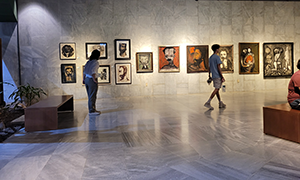
It’s almost evening in Havana. I hurriedly pass by the crowd of cars parked around the entrance to the Cuban Art Building of the National Museum of Fine Arts. The magical moment that U.S. singer Laurin Talese is about to star in awaits me.
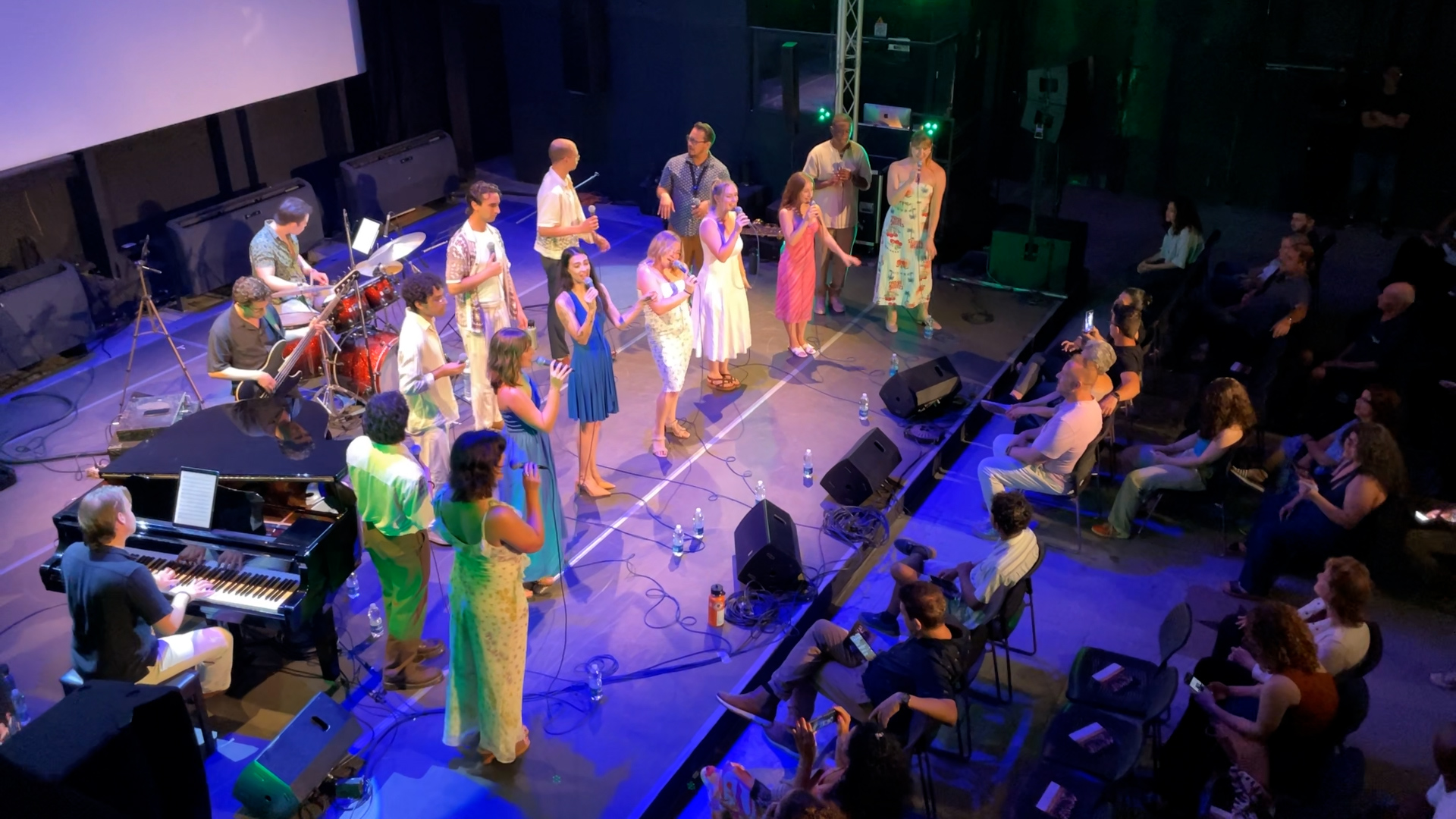
The first days of April in Havana were impregnated, for those of us who lived it, with the energy of this vocalist and composer from Cleveland, Ohio, making her debut on the Cuban stages with two concerts, one at the Teatro Martí and the other at the Museum of Fine Arts room.
A year ago, Tonya Boyd-Cannon, a contemporary New Orleans jazz pianist and composer, came. She was followed by J. Hoard and his troupe of extremely talented friends; then it was Big Freedia, who arrived with a masterful dose of bounce on the first of other visits that followed — her participation in Getting Funky Havana, earlier this year, produced by Cimafunk and Trombone Shorty, was extraordinary.
In early February, Fábrica de Arte Cubano vibrated with the music of Robert Glasper (that lasted until 3 in the morning and we would have continued until dawn if Glasper had proposed it).
Without a doubt, they are examples of the success of the collaboration between the United States Embassy in Cuba and the Cuban Institute of Music.
The most recent planning made possible the visit of Talese (Cleveland, 1982), cultural ambassador of American Music Abroad, a program of touring performances for musicians in bands, choirs, musical theaters, and orchestras of high schools, universities, and adults. Her work promoting jazz worldwide has taken her to several countries such as Montenegro, Ukraine, and Poland. She landed in Cuba to celebrate Women’s Month (March), during the first days of April.
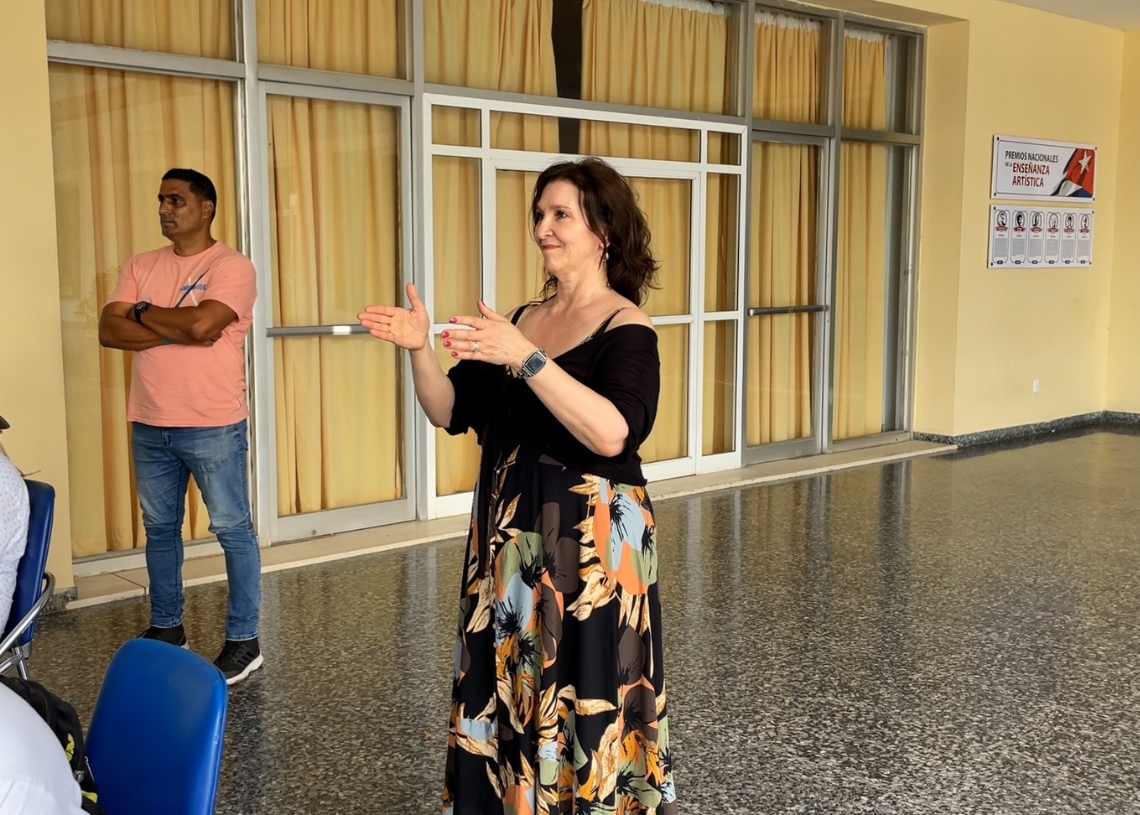
The performer, winner of the Sarah Vaughan International Jazz Vocal Competition in 2018, met with women from different spaces of Cuban civil society with whom, according to the U.S. embassy, “she spoke about the importance of breaking stereotypes and succeeding in any field as a woman. She also spoke about the value of being an entrepreneur and how entrepreneurship contributes to the empowerment of women.”
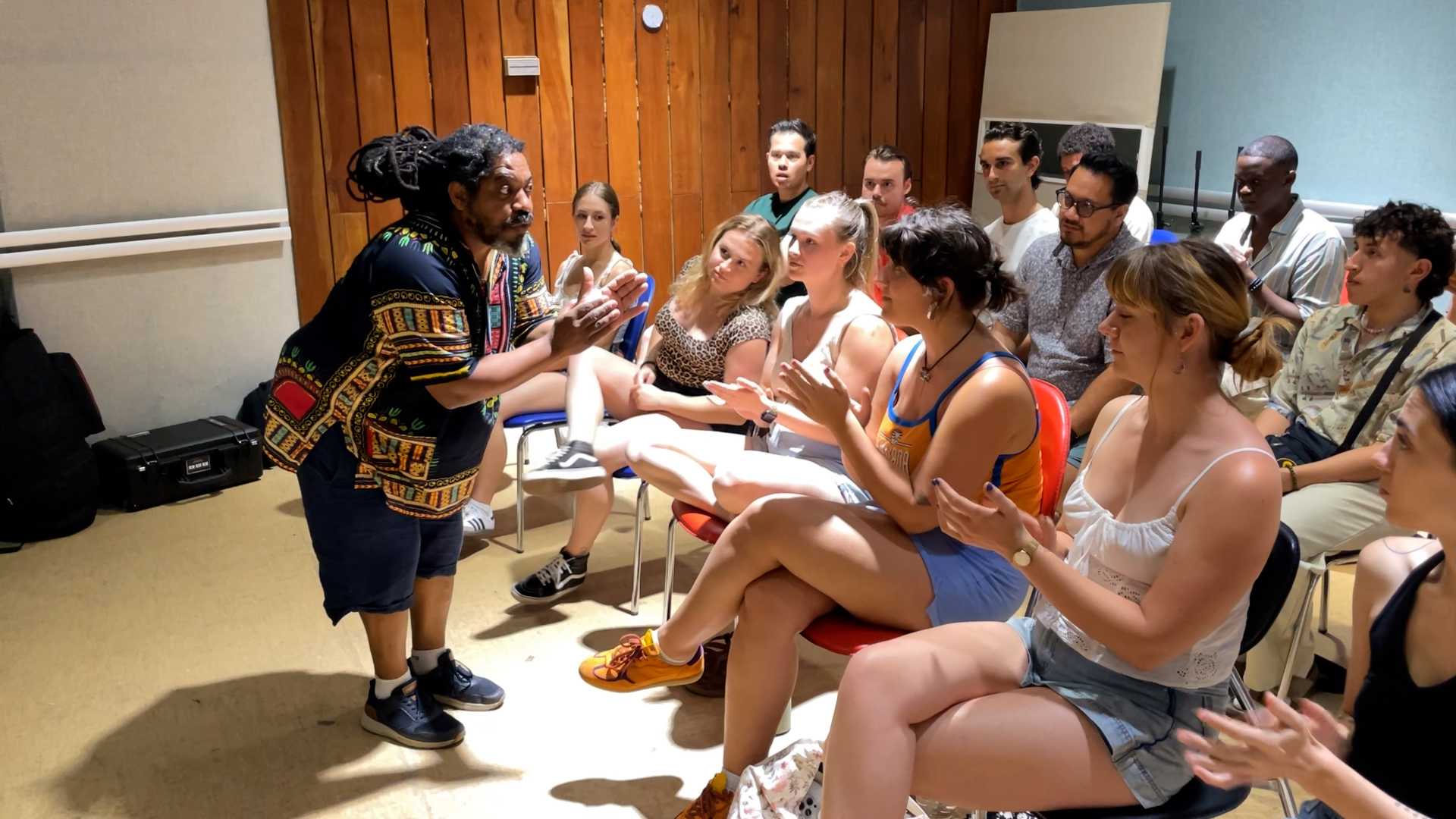
She visited the University of the Arts (ISA) and shared with some of its students, another fruitful opportunity, a prelude to two memorable concerts.
The electrifying evening, in the right place
“Only your empty seat remains. People are sitting even on the stairs in the hallway. Hurry up,” I could read in a WhatsApp message at the exact moment I crossed Zulueta Street and arrived at the museum entrance. I confess that I have the strange habit of sometimes forgetting the city in which I live, with its daily transportation problems. We luckily don’t live in London and this Laurin concert was 15 minutes late.
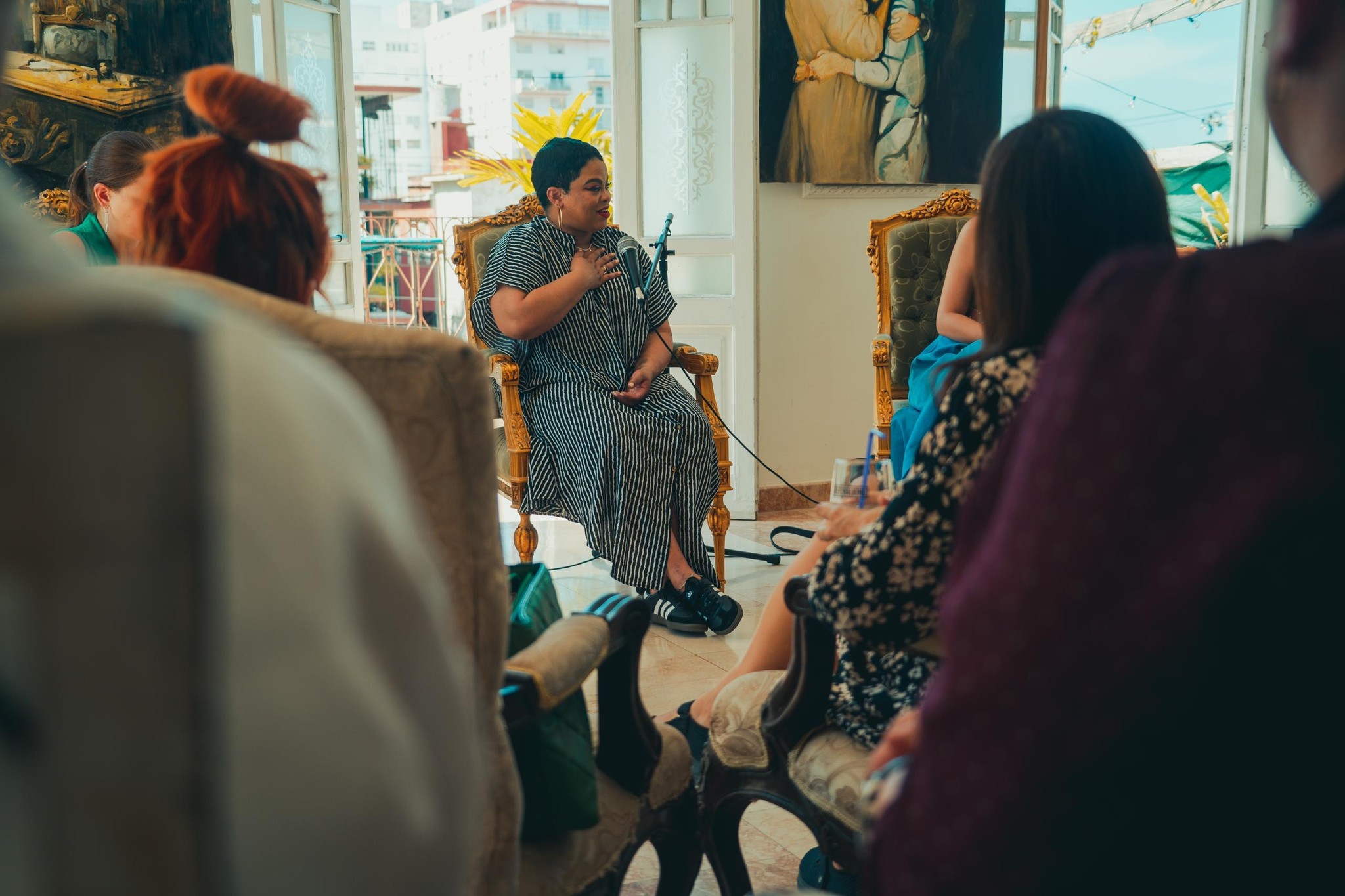
As soon as I took my seat, she began singing — a level of precision rarely seen, amid the delays. With an almost perfect command of Spanish in her interpretation, and an American accent revealing her origin, “Bésame mucho” was heard, a song straight to the heart of her audience, an act of complicity that was immediately reciprocated.
“I think we have some singers around here. They sound too good,” she joked and launched into a dynamic version of “Meditation,” by Antonio Carlos Jobim, a pulsating interpretation of the piece that the Brazilian recorded back in the day with Frank Sinatra.
The first two numbers of the evening pass like a breeze and on stage, the musicians display an exquisite symbiosis of classic jazz to support the performer. Throughout the night, Talese’s traveling companions demonstrate a venerable talent: Julius Rodríguez on piano, Anwar Marshall on drums, John Ellis on saxophone and Romeir Méndez on bass.
Laurin is a very good conversationalist, sweet and sparkling. She has something to say and knows how to do it, that’s why she doesn’t limit herself to the mere act of song; she talks about love, of caresses shared and also denied, of unspeakable secrets, of ideal people who turned out to be not so ideal and of the cold that comes after an unexpected separation.
“Those are the worst breakups because no one is upset with anyone; you only know it’s not the right person. It seems like, suddenly, you are breaking up for no reason, but you have all the reasons in the world and it feels like when the weather is going to change and the last leaf of the tree falls. You feel very cold outside and you know it will snow soon,” the artist stated in a somewhat pastoral style, before singing “Winter,” as a warm hug for her audience. It is the first of several of her own songs, presented in the first part of the recital. They make up her debut album Gorgeous Chaos (2016).
Laurin is the daughter of the wonderful chaos of human emotions, from which she gets her songs. “Winter” was recorded with Robert Glasper for her first EP An Invitation (2015), where she included “Forgive and Forget” and “This Love,” along with multi-instrumentalist Adam Blackstone. Precisely, Blackstone included in his debut album Legacy (2022) the song “My Winter,” a version of Talese’s song, with her and Glasper. Every piece is worth listening to.
Gorgeous Chaos is a journey of twelve songs, from and towards love, through the voice of this young artist who connects us with situations that we have all experienced at some point, whether in a relationship, with our family or with friends. The little more than 250 people who were at this concert at the Museum of Fine Arts learned about all this love, just as the attendees at the Teatro Martí experienced it the night before, despite the rainy day.
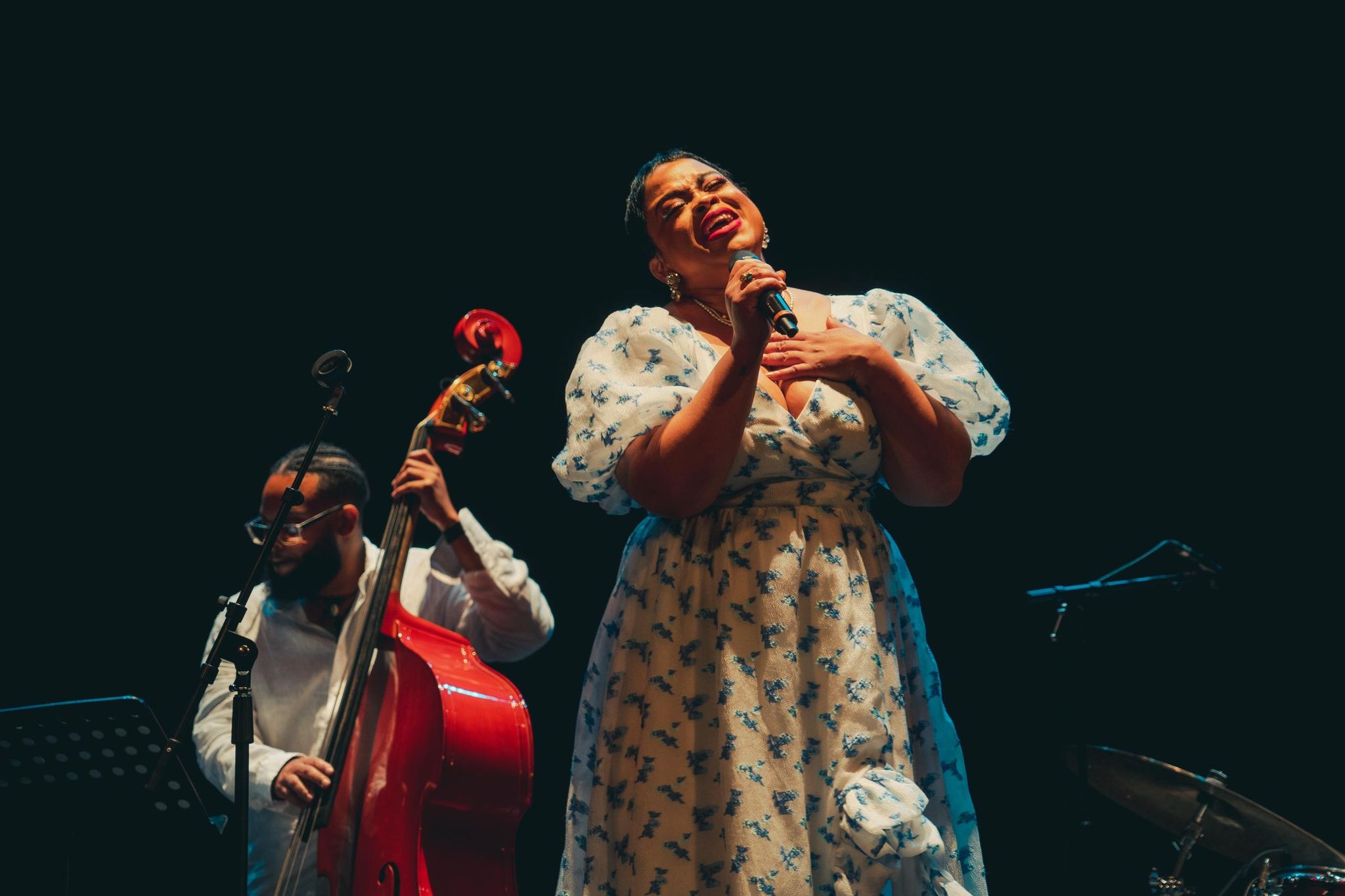
Laurin Talese dominated the space in a very natural and sensitive way. This may explain the success of the show where she sings and acts, Lady Day at Emerson’s Bar & Grill, written by Lanie Robertson, a text that narrates some events in Billie Holiday’s life. The eternal Lady Day and Sarah Vaughan — of course? — are two unavoidable references in the work of this young singer and it is easy to perceive it in her performance.
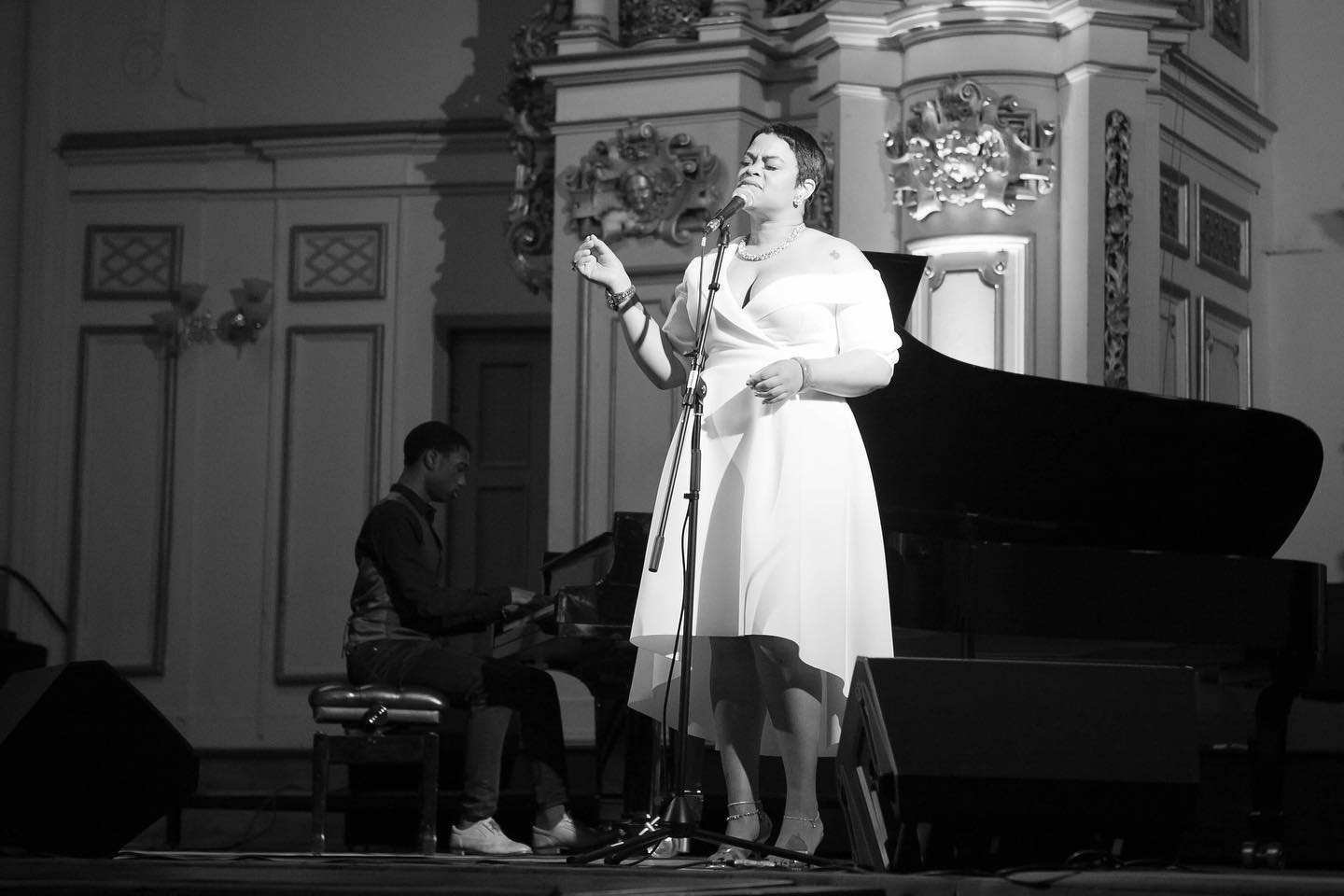
Without warning, winter turned into spring and we were faced with an exquisite version of “Flor de Lis,” a song by Brazilian singer-songwriter Djavan; at that moment, when Julius Rodríguez took the center of attention with pure piano, in the midst of that ecstasy and the swaying of Laurin’s starry black dress, she seemed to levitate and take us with her to some dimension of those from which we would like to never return. A good time.
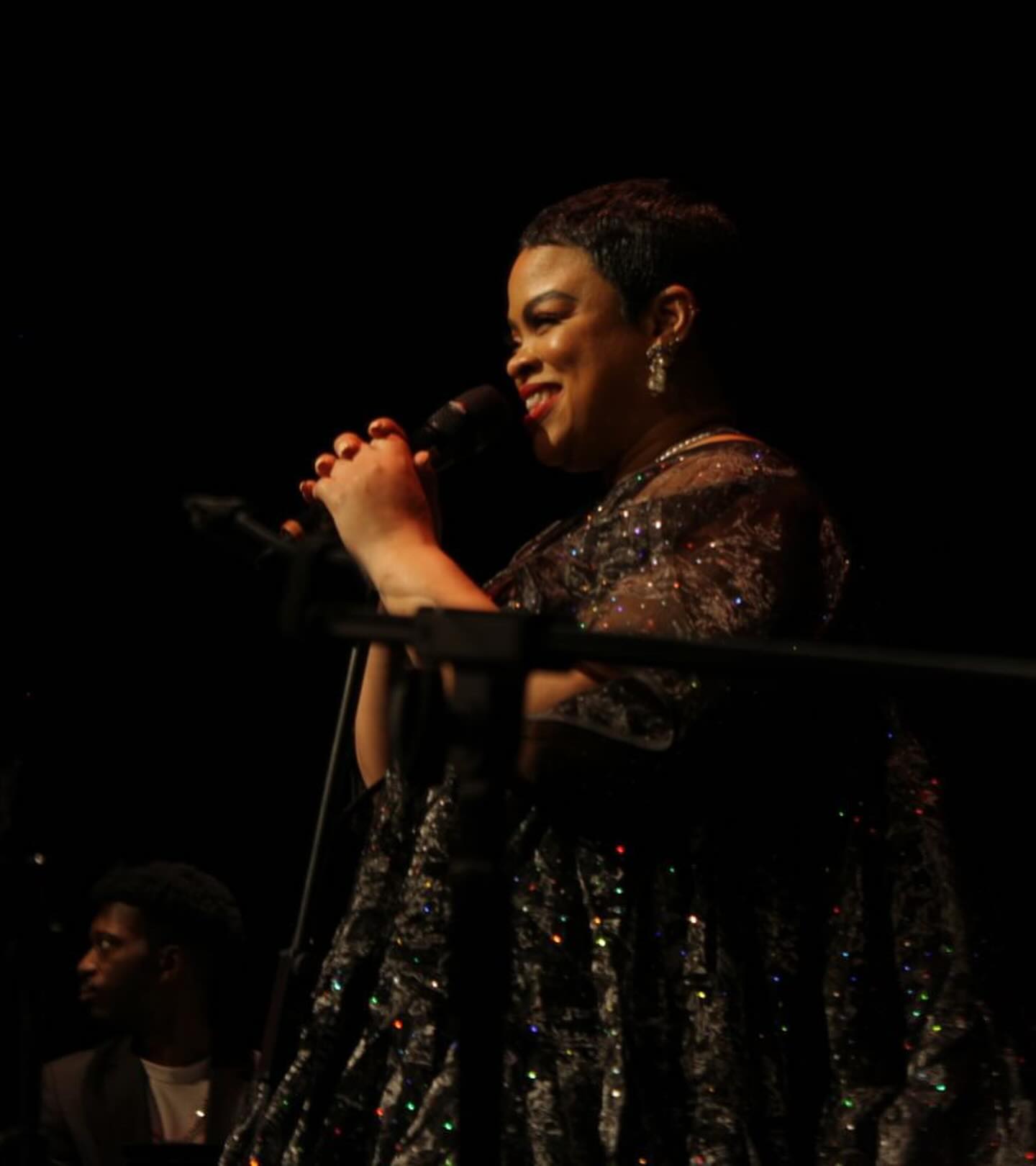
The waters opened and the interpreter plunged us into a sea of memories and experiences. Supported by a video art that reflected the waves of the sea, while images of the artist’s relatives (her mother, grandmothers, aunts, her ancestors) followed one another, the second part of the concert came as a moment reserved for the unprecedented.
Museum of Living Stories is the name of Talese’s second album, about to see the light. In the words of the performer, “they are songs born from different experiences that I have heard, some that I witnessed up close and others that I observed from afar. It’s about observing, searching and feeling gratitude for the people who tell these stories.”
If Gorgeous Chaos is a song about love, Museum… is a song about life, with all its diversity, its contrasts and that human capacity to treasure memories to perhaps turn them into art one day. It has heartbreaking songs like “Weekend Paradis,” the story of a man who couldn’t stand the pressure of work and family, so he took drugs on the weekends.
Rain Song, with all its symbolism, was a song that Laurin wrote in the middle of the night, during the days of the COVID-19 pandemic. She says that when she woke up one morning, she had seen images that she had been trying to avoid all week. She watched at the exact moment she saw a man’s life taken from him.
“It broke me and it was an image that haunted me for a long time,” she says. That man was George Floyd, the black U.S. citizen who died, a victim of police brutality, when officer Derek Chauvin’s knee pressed on his neck for more than five minutes, on May 25, 2020, unleashing a broad social protest movement known as Black Lives Metter. Rain Song is a tribute to all that struggle and the historical suffering of an entire community.
Museum of Living Stories proposes the act of contemplation as learning, also as reflection and reverence. When Laurin Talese went for long walks through the Wissahickon Forest, in Philadelphia, the city where she currently lives, she felt it like a refuge and a point of escape during the pandemic. “There was so much chaos, so much injustice, so much to do and at the same time so much anxiety. So I went to the forest to sing; I’m sure many people were wondering who that lady was. They must have listened to me, because I sang out loud to nature, all the time. The forest became my church and I wrote this song in the middle of the silence.” “Quiet” is a jump in free fall, a body suspended in balanced delight that leaves the audience’s spirits in a state of grace.
“I have more songs for you,” Laurin warned almost at the end of the evening and the voice of a child was heard, who from a vague point in the theater responded “Yeahh!” resounding that unleashed complicity among all of us who were there.
The artist then told us about her friend Erica, with whom she composed “Anything,” born of mutual support and her unconditional friendship — with her she also wrote “Forgive and Forget.” She told us about the women in her family who have helped her get to where she is today: the fundamental women in her life are in “Centerpiece.”
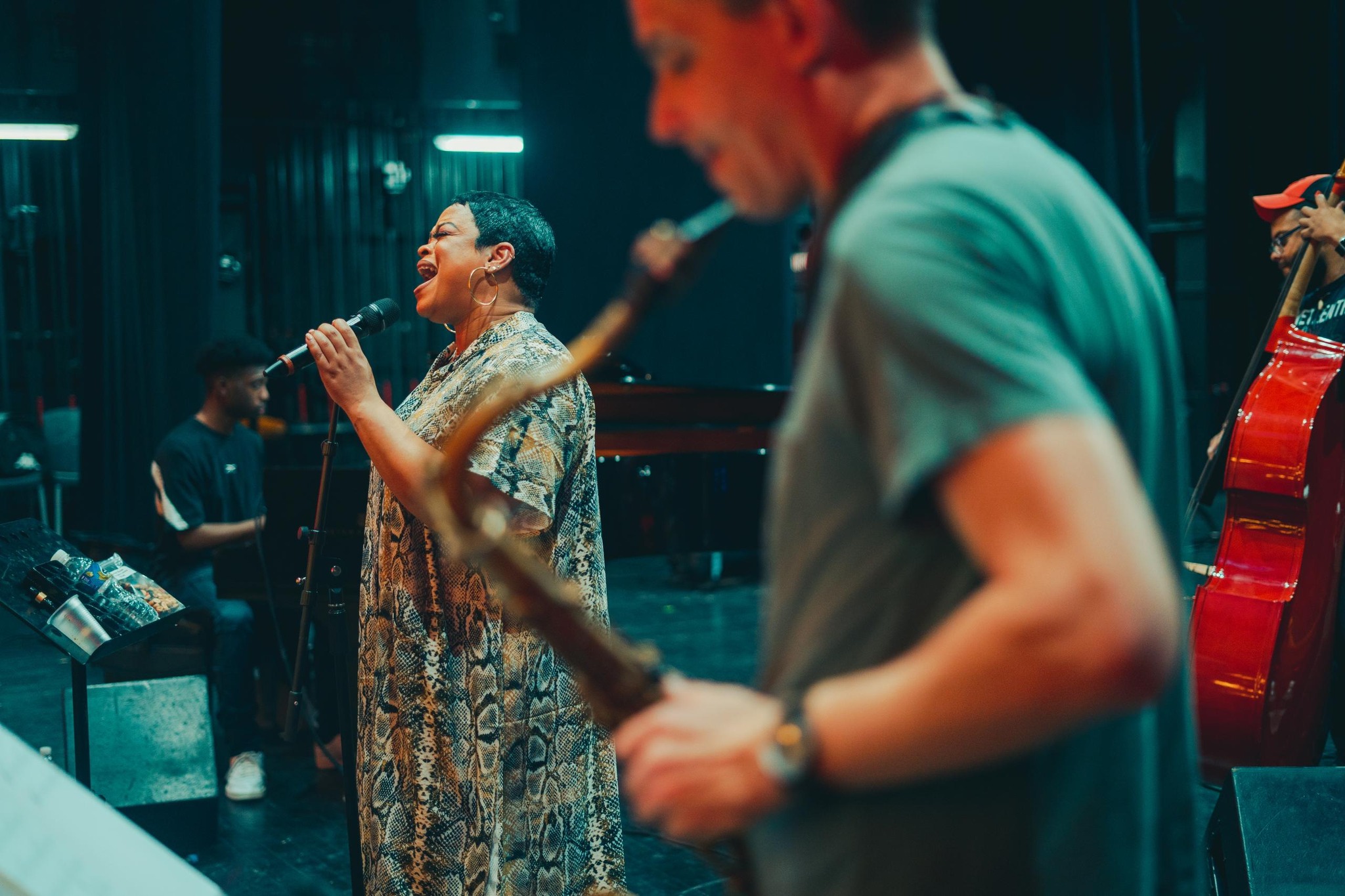
The core of this entire presentation was in sincerity, the spirit of communion of an artist armed with truths, through good music, and an audience that knew how to see them, hear them, feel them. “They are a very beautiful audience. Their energy is electric,” she said before presenting us with her last song, “and we can feel the love from the stage. Thank you for sending us back home with such a beautiful feeling; it means much more than you think.” She then dedicated the song “Soothsayers” (Prophets) to her aunts and we, in the audience, felt like we were the prophets who had discovered this giant artist.
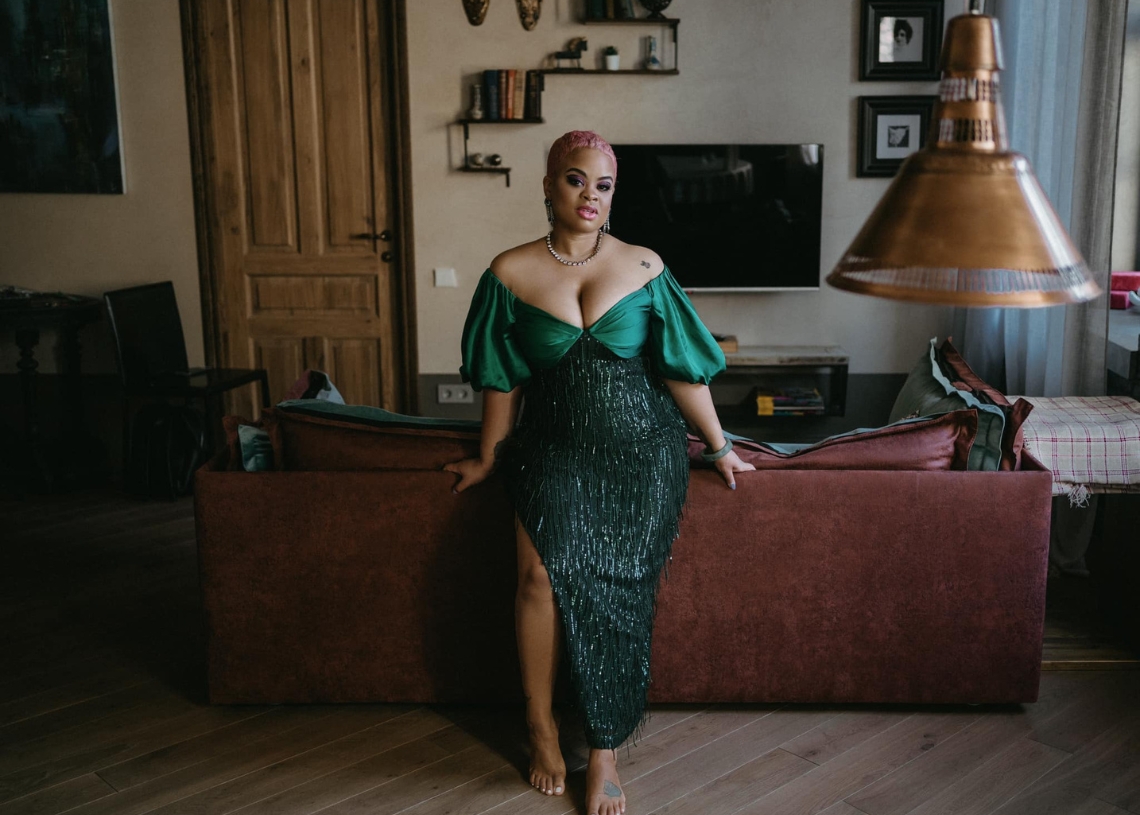
The feeling that comes from the precise moment when good concerts end is very comforting. In a room like the Museum of Fine Arts’, it is known, the experience is more pleasant, closer. It is the right space for a right artist, something like “the wrong place for the right people” that was the Café Society in New York’s Greenwich Village for Billie Holiday, many other jazz greats and everyone who was lucky enough to see them, of course, sharing stories, good music; living, despite everything.