Peru: Cubans against US boycott of their country’s medical cooperation

Lima, Mar 5 (Prensa Latina) Cubans living in Peru described the suspension of visas for those linked to Cuban cooperation programs as a new attack against their country by the Donald Trump regime.

This is what the Association of Cuban Residents in Peru, “Raíces Mambisas,” stated in a statement rejecting the measure and pointing out that it is the seventh aggression against Cuba with increasingly serious decisions.

The text demands the cessation of all arbitrary and illegal actions by the United States government that so harm the Cuban people and their right to sovereignty.

It reviews the historic international solidarity of Cuban medical brigades, which began in 1963 with their first mission in Algeria and have acted in Peru since 1970, in the face of earthquakes and epidemics.

“Our dignified and heroic ‘White Coats’ have been present in countries that need support and hope for life, where the right to health has never existed before,” adds the statement from the Cuban migrants, which also highlights the training of thousands of Latin American doctors who are returning to serve their people.

He notes that, due to their altruistic action, the Cuban medical brigades have earned recognition from the World Health Organization and the Pan American Health Organization.

It also highlights the Washington government’s prohibition on exchanges between American and Cuban scientists, creators of the vaccines against Covid-19 that protected millions of Cubans from the disease.

“We denounce before the world the arbitrary and illegal measures imposed on Cuba by the United States and demand that the permanent aggressions of the current US administration that so harm the Cuban people be stopped,” adds the Association of Cuban Residents in Peru “Raíces Mambisas.”

arc/mrs

Posted in The Blockade? | Leave a comment

Cuba received a new donation of medicines from India

Havana, Mar 5 (Prensa Latina) Indian Ambassador Armstrong Changsan received and delivered to Cuban authorities today the third shipment of medicines donated by the Indian government and people in a gesture of solidarity.

“I am happy that India can assist Cuba in these critical times, especially with the donation of medicines among other products,” Ambassador Armstrong Changsan told Prensa Latina.

“As you may know, India is the so-called Pharmacy of the World as it produces huge quantities of medicines and vaccines, which it supplies to the entire world,” said the Head of Mission.

This is the third of four such donations from the Indian government. The first arrived by air in January – as did this one – while the second and fourth are coming by ship because they are very large, Ambassador Changsan explained.

Those arriving by sea will do so in April and May, respectively, the diplomat said.

This shipment contains, among others, medications for circulation, such as Heparin, anesthetics (Profosol), antibiotics (Ceftriaxone), corticosteroids (Dexamethasone, Hydrocortisone), ampules of Magnesia Sulfate, Tranexamic Acid and Sodium Bicarbonate.

Following the arrival of the first donation of medicines in January, Cuban Foreign Minister Bruno Rodriguez expressed his gratitude for the humanitarian gesture and described it as “an example of the friendship between the two nations.” The shipment included antibiotics, antipyretics, analgesics, oral solutions and muscle relaxants, destined for the provinces affected by the passage of Hurricane Rafael last November.

In June 2024, Indian authorities also sent 90 tonnes of nine active pharmaceutical ingredients to Cuba, for the production of essential antibiotics, valued at 10 million euros.

The shipment was delivered to one of the laboratories of the BioCubaFarma Group, for the manufacture of medicines demanded by the population of the Island, such as Amoxicillin, Cephalexin, Cefixime in capsules and suspension; injectable drugs such as Ceftriaxone, Cefuroxime and Ceftazidime, with a coverage of six to 12 months.

Changsan took the opportunity to say that “the donation is an example of the brotherhood between the two nations over six decades, based on respect and shared views on economic and political matters.”

Cuba has maintained diplomatic ties with India for 65 years. India is one of the first Asian nations to recognise and establish ties with the Cuban state after the revolutionary victory of 1959.

At the ceremony for the anniversary of these bilateral ties (officialized on January 12, 1960), Ambassador Changsan highlighted the cooperation and friendship that has characterized these six and a half decades.

The Head of Mission said at the time: “We value our strong bilateral relationship and look forward to continuing to work together to address common challenges and explore new avenues of cooperation in the years ahead.”

India is one of Cuba’s top 20 trading partners, and among the $32 million in exports in the 2023-2024 period, pharmaceutical and chemical products predominate, according to data from the Ministry of Commerce of that South Asian nation.

In addition to bilateral agreements in various fields, New Delhi has granted Cuba significant lines of credit for the implementation of projects in the agricultural and renewable energy sectors.

arc/mh

Posted in Healthcare | Leave a comment

Alliance between historic leaders of Cuba and Venezuela is highlighted

Havana, Mar 5 (Prensa Latina) The first vice president of ICAP, Noemí Rabaza, considered today that the affinity of ideas between the historical leaders of the Bolivarian Revolution, Hugo Chávez, and the Cuban Revolution, Fidel Castro, gave rise to an indestructible Latin American alliance.

“Chávez and Fidel are two giants who share the same path,” Rabaza said in a tribute to the Venezuelan politician at the Cuban Institute of Friendship with the Peoples (ICAP), on the occasion of the 12th anniversary of his death.

“Having been recognized by the solidarity of the world as the Day of Latin American and Caribbean Dignity, his voice continues to resonate in every struggle, in every neighborhood that resists,” he said.

Alongside him, he stressed, is the immortal example of Fidel, beacon of the Cuban Revolution and architect of the links “between two peoples who decided to write their histories with letters of dignity.”

According to him, on his way, Chavez “found in Cuba not only an ally, but a mirror, because Fidel, with his audacity and vision, had already shown that a small Caribbean country could challenge the empire of history, and win.”

He also recalled the embrace that marked the beginning of the meeting between the two leaders in 1994, when Chavez arrived in Havana and Fidel received him in the rain, “without protocol, as one receives a brother.”

Since then, he commented, “Cuba and Venezuela share challenges and dreams.”

Our solidarity is the pulse of Revolutions that understood that true independence is built with education and health for all, with the certainty that no child should beg for justice, with the full emancipation of men and women, he said.

He also denounced that Venezuela and Cuba are victims of economic blockades and illegal sanctions imposed by the United States authorities, and of media attacks and sabotages orchestrated from US territory.

The empire cannot stand that we exist, that Cuba, despite everything, shows that science and humanism are more powerful weapons than missiles; it cannot stand that Venezuela, harassed and sabotaged, continues to raise social missions, he said.

They attack us, he said, because we are proof that another America is possible, “where the poor are not condemned to be poor, where the country belongs to those who work for it and where the flag of sovereignty is not negotiable.”

The ceremony was also attended by the Venezuelan ambassador to Cuba, Orlando Maneiro, who in a brief speech outlined Chavez’s career and described it as everlasting for Venezuela and the just causes of Latin America and the Caribbean.

Also participating were Deputy Minister of Foreign Affairs Anayansi Rodríguez, other officials from the Ministry of Foreign Affairs, the Government and the Communist Party of Cuba, representatives of the diplomatic corps accredited in Havana and members of various institutions.

arc/raj

Posted in Cultural, The Blockade? | Leave a comment

President Díaz-Canel highlights Cuba’s foreign policy

Havana, March 4 (RHC) — The First Secretary of the Central Committee of the Communist Party of Cuba and President of the Republic, Miguel Díaz-Canel, highlighted this Monday the performance of the island’s foreign policy, and urged its diplomats to continue activism and support for just causes throughout the world.

During the annual review of the Ministry of Foreign Affairs (Minrex), the president called on the representatives of that portfolio to be tireless champions in the defense of the concept of solidarity in international relations.

The meeting that examined the work of the organization in 2024 was also attended by Prime Minister Manuel Marrero Cruz, the head of Cuban diplomacy, Bruno Rodríguez, and other government leaders.

The participants in the meeting, held at the Palace of the Revolution, reviewed results and challenges in the management of the Minrex for 2025, among which are remaining faithful to the principles of the foreign policy of the Revolution and committed to the diplomacy of its people.

They highlighted that in 2024 the Caribbean island achieved another resounding victory at the United Nations in the fight against the blockade imposed by the United States, and the incorporation as a partner country of the Brics group (acronym of its founders, Brazil, Russia, India, China and South Africa).

“The strengthening of diplomatic and political relations, progress in consolidating the economic link with an important group of nations and activism in international forums, are among the merits of the Cuban foreign service,” they said.

They also valued that 2025 will bring transformations to the Minrex’s work systems, the application of a comprehensive and more proactive approach in supporting national economic management, from the more than 140 diplomatic missions that the Antillean island has.

The analysis among the diplomats put into context the priority of relations with the United States, marked by the increase in aggressiveness on the part of the new White House administration.

Washington is betting on dismantling and eroding previously reached bilateral agreements, which poses greater challenges in confronting the economic, commercial and financial siege of the United States.

The meeting also highlighted the importance of increasing ties with immigration, especially those residing in the northern nation, who are subjected to a campaign of harassment that causes a negative impact on those who want a better relationship with their homeland.

(Source: Prensa Latina)

Posted in Exchanges, The Blockade? | Leave a comment

Zimbabwe, Cuba advocate for strengthening parliamentary ties

Harare, Mar 4 (Prensa Latina) Jacob Mudenda, Speaker of Zimbabwe’s National Assembly, and Esteban Lazo Hernandez, President of Cuba’s National People’s Power Assembly (ANPP) and the Council of State, advocated on Tuesday for strengthening bilateral legislative ties.

On the last day of his official visit to this nation, Mudenda showed his Cuban guest the new Parliament headquarters on a tour of several meeting halls.

The two leaders exchanged experiences on the work of their respective parliaments and planned new actions to strengthen legislative links.

Lazo thanked his counterpart for the gesture and highlighted the results of his visit, during which President Emmerson Mnangagwa received him.

Mnangagwa reiterated the rejection of the US blockade and Cuba’s inclusion in Washington’s State Sponsors of Terrorism (SSOT) list.

The Cuban ANPP president expressed his opposition to the unilateral coercive measures also imposed on Zimbabwe.

Cuban Ambassador to Zimbabwe Susellys Perez Mesa, Jose Ramon Monteagudo, member of the Secretariat of the Central Committee of the Communist Party of Cuba (PCC), and Fernando Gonzalez, Hero of the Republic and President of the Cuban Institute of Friendship with the Peoples (ICAP) accompanied Lazo during this visit.

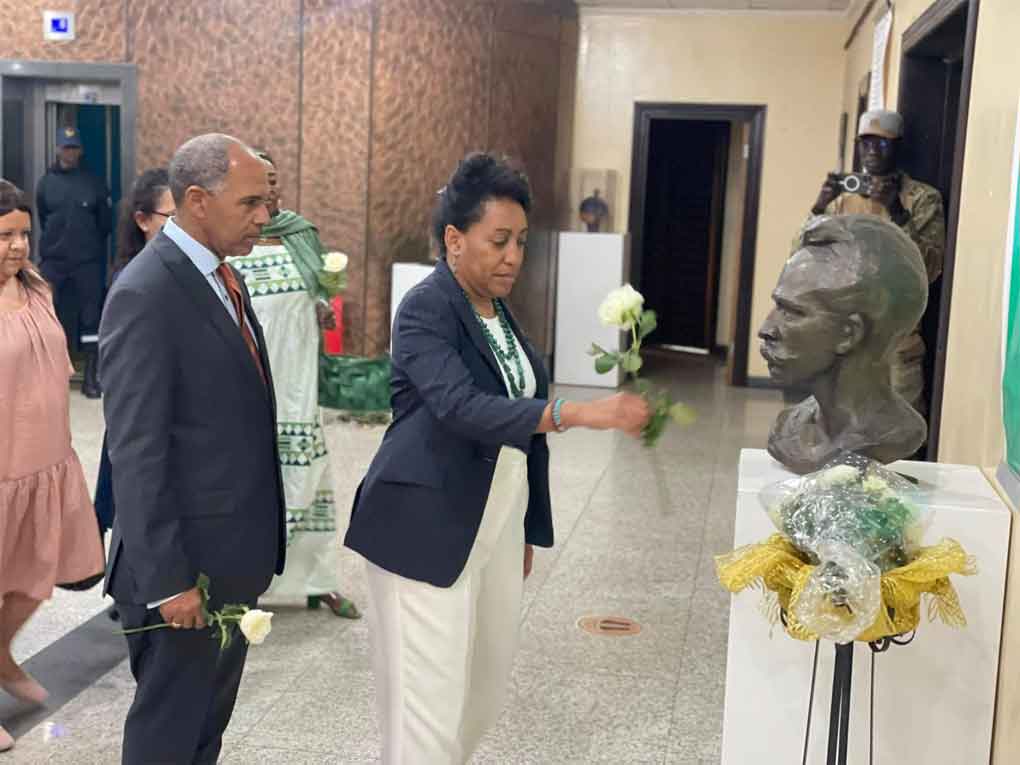
The visit included a tribute to the historic leader of the Revolution, Fidel Castro, before the monument built in the street named after him.

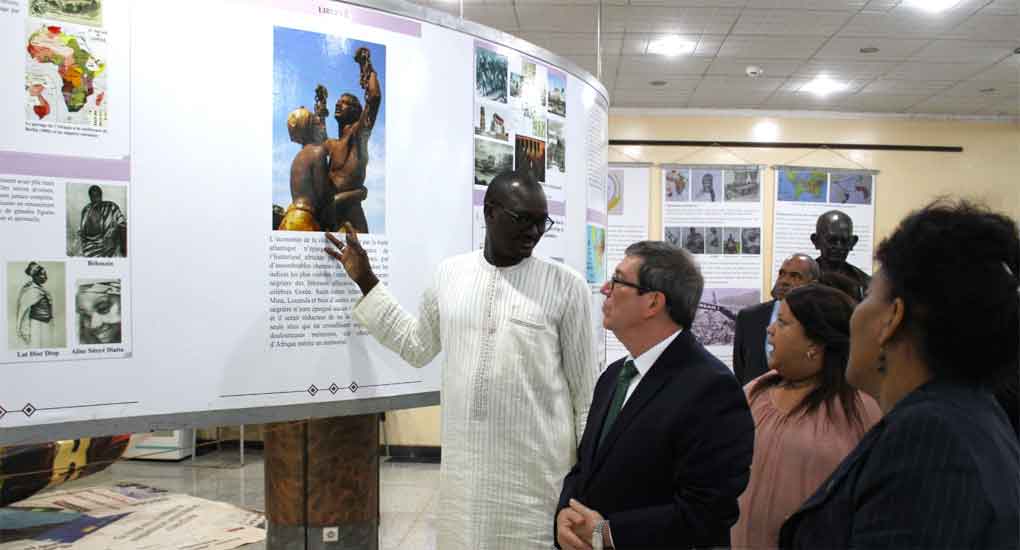
Lazo and his entourage also visited the Museum of African Liberation and led a solidarity act on the 45th anniversary of bilateral relations.

mh/iff/lam/leg

Posted in Exchanges | Leave a comment

US continues subversive programs against Cuba, FM asserts

Havana, Mar 4 (Prensa Latina) Foreign Minister Bruno Rodriguez said today that despite cuts in USAID funds, its interim administrator, US Secretary of State Marcos Rubio, uses taxpayers’ money in subversive plans against Cuba.

“While the US government announces a 90% cut in #USAID funds for more than 54 billion usd, its interim administrator, in line with his corrupt personal agenda, chooses to use taxpayers’ money in subversive programs against Cuba and not in international development,” Rodriguez stressed on the X social network.

In recent days, the top Cuban diplomat revealed that the United States Agency for International Development (USAID) invested more than 120 million dollars to subvert the constitutional order in Cuba.

In this regard, the foreign minister described as unusual that an official development agency should use money to support a change of government and enrich those who see a business in the suffering of the Cuban people.

The Cuban Foreign Affairs Deputy Minister, Carlos Fernandez de Cossio, stated that the current US government’s declared policy is aggressive.

They themselves have said that their purpose is to continue putting economic pressure on Cuba, to continue creating difficulties for the Cuban economy and thus cause greater hardships, greater problems for the well-being of the Cubans, for the living conditions in the country’, warned the deputy foreign minister in an interview granted to Prensa Latina.

According to the diplomat, ‘it remains to be seen exactly what they are going to do, but one should not be surprised that they have the will and the capacity to continue punishing the Cuban population as a whole on the basis of coercive economic measures’.

mh/abo/mem/mks

Posted in The Blockade? | Leave a comment

Cuban deputy foreign minister speaks with compatriots in the United States

Fernández de Cossío reiterated that the United States Government knows that there is a will on the part of Cuba to build a respectful relationship.                            Photo: Deisy Francis Mexidor

Havana, March 2 (RHC) — Cuban Deputy Minister of Foreign Affairs Carlos Fernández de Cossío spoke with a representation of compatriots residing in the United States Saturday evening in Washington, DC.

At the meeting, held at the Cuban Embassy in the U.S. capital, Fernández de Cossío explained the current and foreseeable characteristics of how bilateral ties could behave and the eventual impact on the island.

He said that the purpose is to increase what in Donald Trump’s first term (2017-2021) was called the policy of maximum pressure and that some, for a long time, have aspired to see the end of the Cuban Revolution, “because of the way this government speaks, they believe that that moment is near,” he emphasized to the audience.

“Some beilieve that intoxication it is really possible,” warned the deputy foreign minister, who did not rule out that in the “next days, months…” there will be more measures throughout this administration since there is the effort to do so.

Artists, lawyers, businessmen, religious people, among others, were the attendees, all united by the desire that the blockade and hostile policies imposed by Washington be eliminated and that a rapprochement be produced that would be favorable for both peoples.

Fernández de Cossío reiterated that the United States Government knows that there is a will on the part of Cuba to build a respectful relationship.

On Friday, at the headquarters of the Institute for Policy Studies (IPS), with the coordination of the Latin American Working Group (LAWG) and Friends of Latin America, the Cuban deputy minister of foreign affairs recalled that on his first day in office, President Trump reinstated Cuba’s designation as a state sponsor of terrorism, reversing an executive order issued on January 14th by then-President Joseph Biden.

He noted that “Trump’s revocation is in line with his administration’s hardline stance on Cuba and has the support of Secretary of State Marco Rubio, who has long advocated for sanctions against the island nation.”

“This way of enforcing the economic blockade, its reinforcement and the new aggressive measures will continue to have severely harmful effects on the Cuban economy, the standard of living, the development potential and the legitimate dreams of justice and well-being of the Cuban people, as has been the case in recent years,” stated Carlos Fernández de Cossío.

The event — in person and virtually  — was moderated by James Early, one of the members of the IPS Board of Directors.

(Source: Prensa Latina)

Posted in The Blockade? | Leave a comment

Parlatino calls to promote world peace

Panama, Mar 3 (Prensa Latina) Parlatino President Rolando González stressed the importance of strengthening commitments to peace, tolerance and respect, according to a statement issued by the institution, based in Panama since 2008, on Monday.

According to the press release, the Cuban lawmaker and head of the Latin American and Caribbean Parliament (Parlatino) is heading a delegation from the regional legislature to the 12th Session of the International Parliament for Tolerance and Peace in Geneva (Switzerland), in which groups from more than 40 countries are participating.

One of the main topics of the event that will close on Tuesday is the promotion of the Universal Charter of Peace for People and the Planet, a document adopted at the latest edition of the forum, which was held in Cambodia in November 2024.

González also met with Ahmed Bin Mohamed Aljarwan, president and founder of the Global Council for Tolerance and Peace, and both parties shared ideas and strategies on future actions to promote these issues of cardinal importance and strengthen democracy in their respective regions.

For many legislators, the choice of Geneva (Switzerland) for the deliberations of the International Parliament reinforces the symbolism of that meeting and the need for a joint effort to face the challenges that threaten peaceful coexistence globally.

jg/oda/ga

Posted in Exchanges | Leave a comment

Cuba congratulates Bulgaria on its National Holiday

Havana, Mar 3 (Prensa Latina) The Cuban Foreign Ministry sent congratulations today to the people and government of Bulgaria for its National Day, a date that commemorates the liberation of the European nation from Ottoman rule.

Through the social network X, the Cuban Foreign Ministry reiterated the willingness to strengthen the ties of friendship and cooperation between both nations.

After centuries of Ottoman domination, on March 3, 1878, the city of San Stefano hosted the signing of the Peace Treaty that put an end to the Russo-Turkish War of 1877-1878 and established the freedom of Bulgarian territories.

Cuba and Bulgaria established diplomatic relations on October 14, 1960, and since then strengthened their commercial ties, mainly in the areas of food, agricultural, light, mechanical, mining and tourism industries.

mh/abo/mem/mks

Posted in Cultural, Exchanges | Leave a comment

French association organizes trips to Cuba

Paris, Mar 2 (Prensa Latina) The Cuba Linda association today highlighted the organization in France of five travel groups to the island that will combine tourist activities with the rapprochement to the island and its challenges in the face of US hostility.

Speaking to Prensa Latina, the president of the association created in 1998, Didier Lalande, said that more than 70 French are part of the groups, with the first of them arriving in Cuba at the end of next week.

In addition to getting to know the natural beauty of the island and its people, these visits will make it possible to see the reality of a people that is resisting in the midst of many hardships an economic, commercial and financial blockade of more than 60 years, he said.

According to Lalande, on the trips the participants will carry donations in their luggage, particularly medicines.

He also said that Cuba Linda will follow up and support projects such as Soñarte, a community initiative in Havana, and Korimakao, which promotes culture in Ciénaga de Zapata, Matanzas.

Regarding the traditional French presence in the celebrations of May 1st, International Workers’ Day, in Cuba, he stressed that two of the organized groups will participate.

In April, Lalande will receive the Friendship Medal awarded by the Cuban government to people with a solidarity history and accompaniment to the Caribbean nation.

This recognition was given in November in Paris, on the eve of the XIX European Continental Meeting of Solidarity with Cuba, to several Frenchmen for their support and commitment in actions such as the struggle against the U.S. blockade, at a time when the president of Cuba Linda was in Havana.

mh/abo/mem/wmr

Posted in The Blockade? | Leave a comment