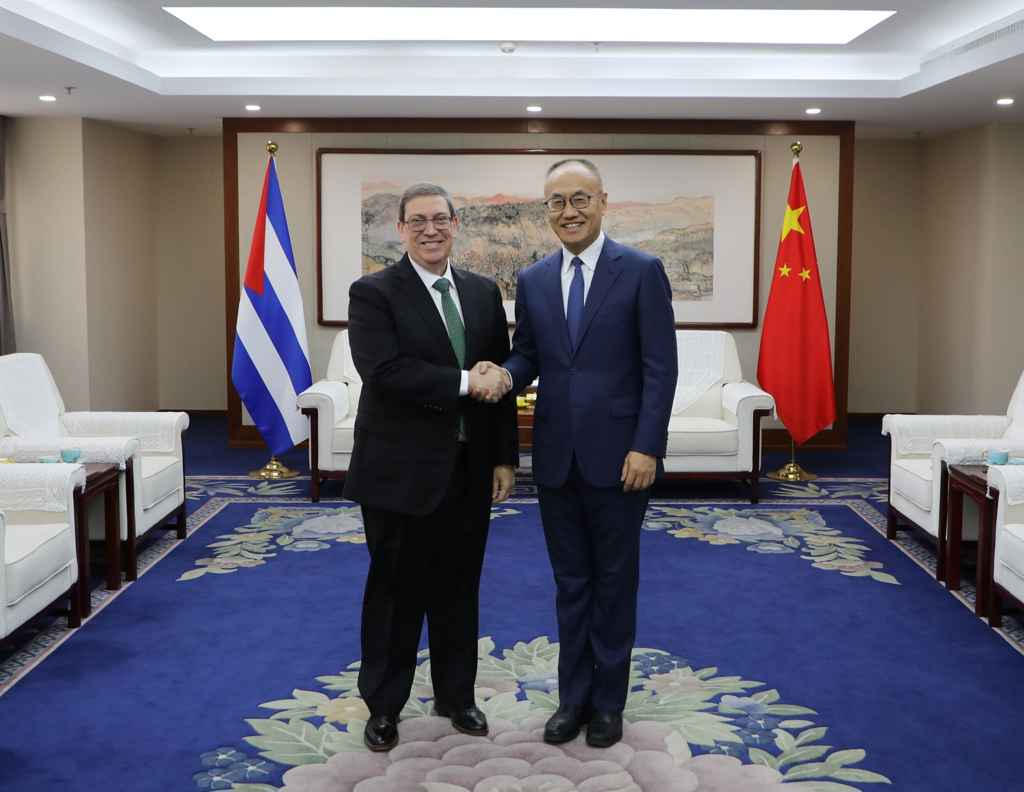
Beijing, Feb 4 (Prensa Latina) Cuban Foreign Minister Bruno Rodríguez, who is in China as a special envoy of the Communist Party (CPC) and Government, spoke today here with Chen Xiaodong, director of the China International Cooperation and Development Agency (CIDCA).
According to the chief diplomat, during the meeting he acknowledged the work and efforts made by this agency, in terms of bilateral cooperation, especially in the current context facing the island.
As part of his agenda here, Rodríguez also spoke today with Liu Haixing, head of the International Liaison Department of the Communist Party of China.
Both sides emphasized that cross-party ties are the cornerstone of the bilateral relationship.
The senior Chinese official expressed his best wishes to the people and government of the island, while underscoring the dynamism of relations between Beijing and Havana.
Rodríguez conveyed greetings and best wishes for peace, prosperity, and health to the Chinese people on the occasion of the Lunar New Year.
He noted that this meeting takes place amid a changing and dangerous global situation, characterized by an accelerated deterioration of the international order, which translates into threats to the peace and sovereignty of peoples.
The two countries are making progress in building a Chinese-Cuban community with a shared future, characterized by high levels of coordination, mutual political trust, support for their fundamental interests, and multi-sectoral cooperation, driven by the consensus reached between their respective leaders.
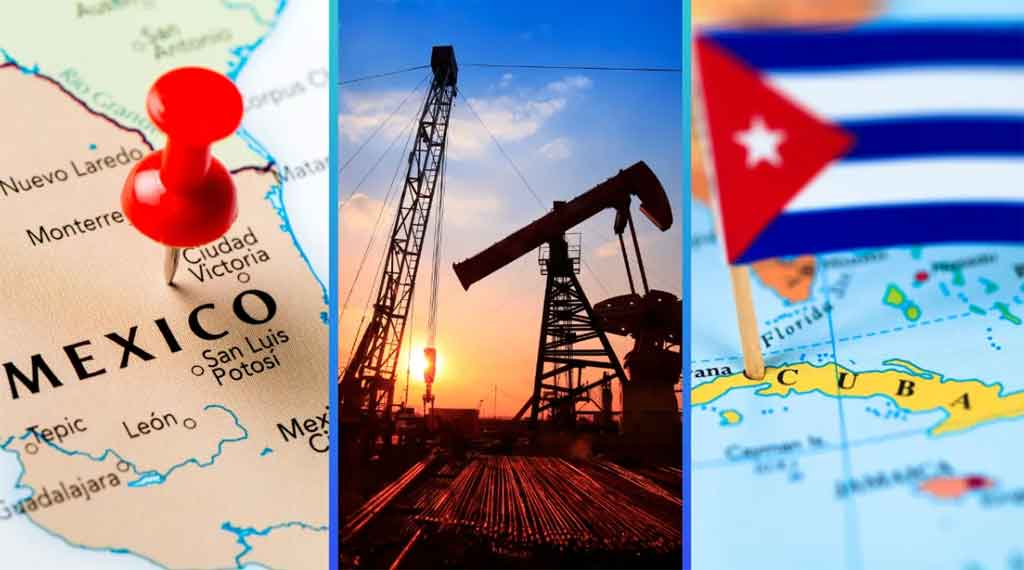
Mexico reaffirms its commitment to Cuba by coordinating the shipment of essential goods in the face of escalating US coercive measures. Photo: EFE
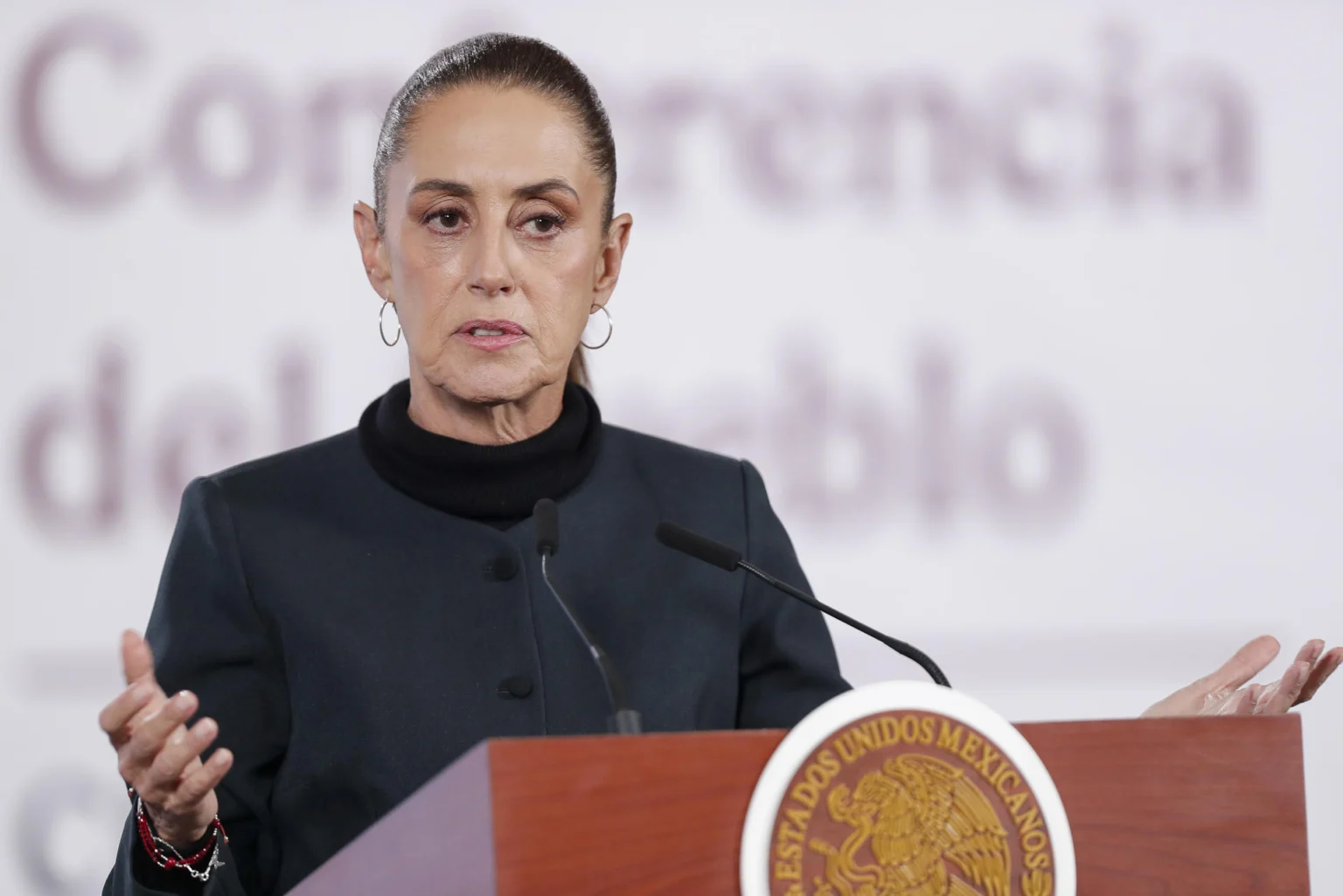
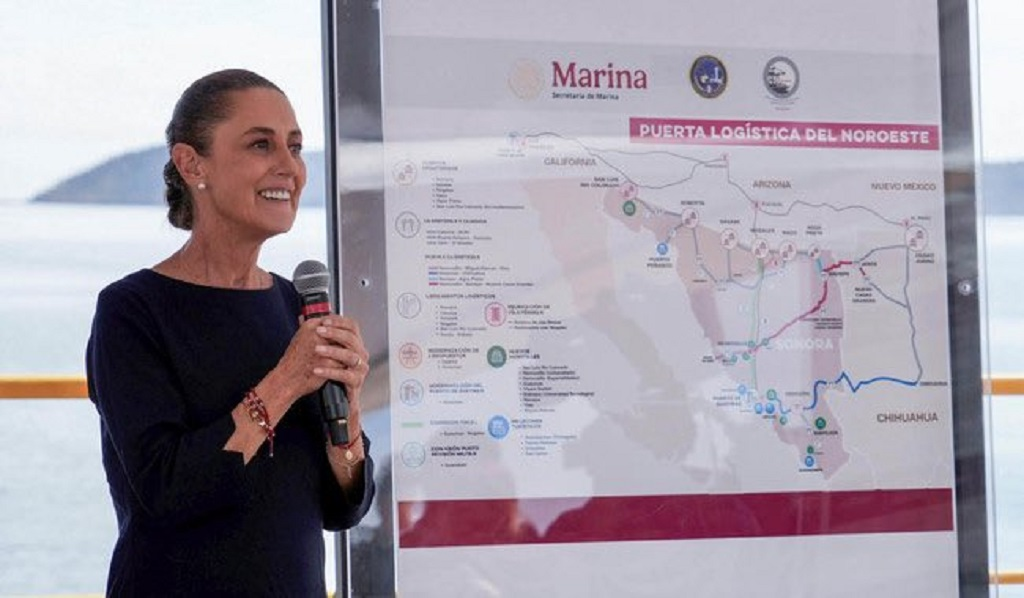
President Claudia Sheinbaum reaffirmed her solidarity with the Caribbean island in the face of the escalating coercive measures promoted by the Donald Trump administration.
Mexican President Claudia Sheinbaum confirmed on Sunday, February 1, that her government is coordinating with the Cuban embassy to send aid this week. During her morning press conference, the president explained that the goal is to identify the basic goods that the island most urgently needs. This announcement reinforces Mexico’s historical policy of solidarity with the Cuban people in the face of external pressures.
“ This week we are planning humanitarian aid to Cuba ; it is aid that will be carried out by the Secretariat of the Navy, with food and other products, in a diplomatic manner,” the president stated.
The shipment of essential supplies comes as Washington threatens to impose tariffs on countries that export oil to the Caribbean nation. Faced with this situation, Sheinbaum assured that Mexico will seek diplomatic solutions to maintain crude oil shipments through Petróleos Mexicanos (Pemex). The president emphasized that her administration prioritizes humanitarian reasons to prevent a larger crisis in the region.
The head of state warned that the recent unilateral coercive measures by the Donald Trump administration could severely worsen the situation on the island. Therefore, the Mexican government is exploring alternative ways to continue its support without giving in to trade blackmail. This stance comes after the White House’s declaration of a “national emergency,” a maneuver aimed at strangling the Cuban economy through energy control.
En Guaymas, Sonora, la presidenta @Claudiashein anuncia que México enviará ayuda humanitaria a Cuba; contempla alimentación, enseres y productos indispensables para las familias.
Simultáneamente, avanzan acciones diplomáticas para el suministro de petróleo a la isla. pic.twitter.com/HehxW8PHcG
Regarding press reports, Sheinbaum denied that the interruption of oil supplies was agreed upon in her recent talks with the US president. The president maintained that Pemex’s shipments represent only a tiny fraction of the Mexican state-owned company’s total production. For Mexico, support for Cuba is an exercise of sovereignty that is not negotiated under pressure or threats of tariffs.
Cuba’s Foreign Ministry described the new US executive order as a “brutal act of aggression” against its sovereignty. Mexico solidified its position last year as the island’s main supplier of hydrocarbons, playing a strategic role in its energy stability. The Sheinbaum administration insists that humanitarian aid is an ethical principle that must prevail over Washington’s political impositions.
Finally, the Mexican government will provide details in the coming days on the exact composition of the shipment of basic goods that will depart for the island. This action reaffirms Mexico’s leadership in Latin American integration and its rejection of the economic blockade. While the embargo tightens, Mexico is committed to international cooperation and mutual respect as tools to guarantee peace and the well-being of its people.
Mexico City, January 30 (Prensa Latina) Mexican congresswoman Dolores Padierna stated that the executive order signed by US President Donald Trump against Cuba is not foreign policy, but pure imperialism.
“This is not foreign policy: it is imperialism in its purest form. It is a trade war aggression that seeks to punish sovereign countries and turn hunger and energy into weapons of pressure,” the legislator said in a message on her social media account.
According to the deputy coordinator of the Morena party’s parliamentary group in the Chamber of Deputies, these are “inhuman, illegal and coercive measures, designed to suffocate an entire people and force geopolitical alignments.”
“There is no national security here: there is economic domination, international blackmail and collective punishment,” he denounced.
Trump signed the executive order yesterday declaring a national emergency and establishing a process to impose tariffs on goods from countries that sell or supply oil to Cuba.
The measure, another turn of the screw in the blockade that has been trying to suffocate the Cuban people for more than 60 years, is part of the current maximum pressure policy of the Trump administration against the island, and attempts to justify it with the interest of national security and foreign policy of the United States.
After returning to the White House on January 20, 2025, the Republican took among his first measures in office to reverse a decision made just seven days prior by his Democratic predecessor, Joe Biden, and reincluded Cuba on the arbitrary and unilateral list of state sponsors of terrorism.
Since then, hostile measures have rained down on the Caribbean nation in an attempt by the US government to make it collapse and bring about regime change.
According to the most recent data, the economic, commercial and financial embargo imposed by Washington on Cuba caused damages estimated at seven billion 556.1 million dollars between March 2024 and last February, an increase of 49 percent compared to the previous period.
In the health sector alone, that policy resulted in losses of nearly $300 million in one year, while the impact in the energy sector exceeded $496 million due to restrictions on importing fuels and spare parts.
On October 29, Cuba achieved a new victory in the United Nations General Assembly by obtaining 165 votes in favor of the resolution calling for an end to the blockade.
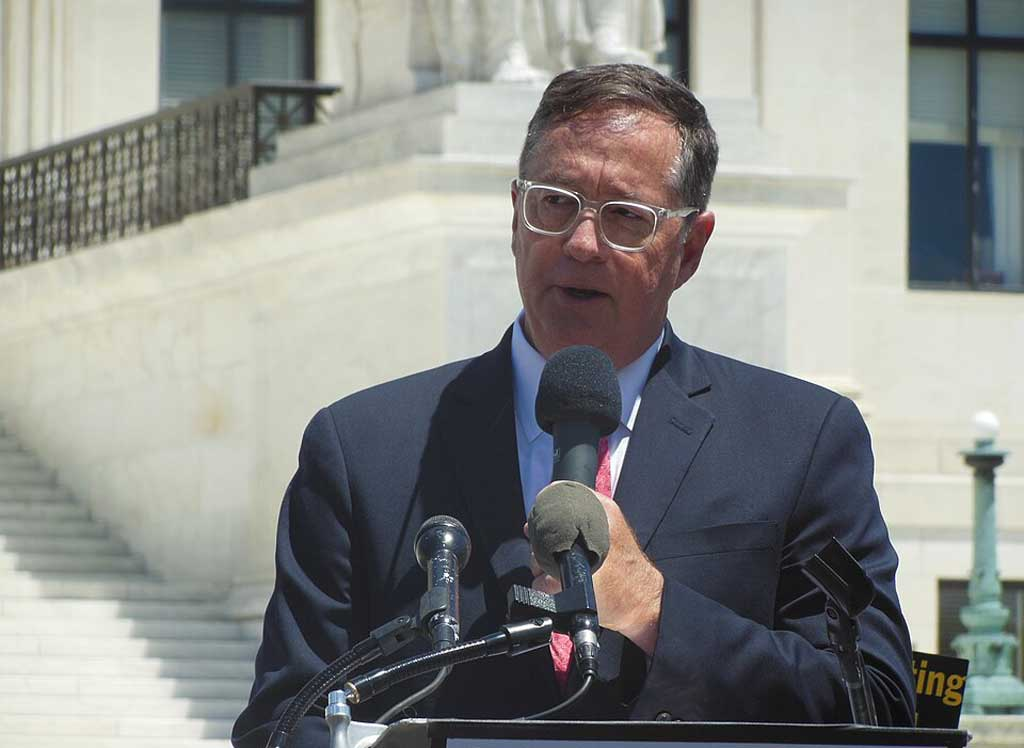
Washington, Feb 2 (Prensa Latina) Former president of the National Council of Churches of Christ, Jim Winkler, told Prensa Latina that the blockade is an instrument of economic terrorism used by the United States against Cuba and must end.
“Cuba does not represent a threat to the national security of the United States,” the former world leader said in his assessment of the anti-Cuban executive order signed by President Donald Trump on January 29.
Winkler warned that the current situation greatly hinders normal relations between American and Cuban churches, and advocated for closer ties between the two countries.
“Regular visits and contact strengthen ties and provide opportunities for prayer and worship,” added the former secretary of the National Council of Churches of Christ.
The reverend insisted that “the policy of the U.S. government restricts the religious freedom of our churches” and stressed that he was “deeply disappointed that President (Joe) Biden broke his campaign promise to restore relations with Cuba. In essence, he continued Trump’s policy and not Obama’s.”
Winkler emphasized that major Protestant, African American, and pacifist churches, as well as leading ecumenical organizations and the American people, support normal relations between the United States and Cuba. “This has been prevented by resentful and bitter elements in our nation,” he stressed.
“We are rapidly running out of time for diplomacy to work,” the religious leader warned, adding: “I am deeply concerned that the United States will illegally invade another nation again.”
Furthermore, he denounced that “Trump’s oil blockade, like the entire US blockade of more than 60 years, is unnecessary and immoral.”
Winkler led the nation’s largest ecumenical organization from 2013-2022, an association of 37 Christian faith groups, which together encompass more than 100,000 local congregations and some 35 million followers in the United States.
Trump’s decree – in its most brutal version of the blockade – declares a national emergency regarding Cuba, under which he considered that to confront it, a regime of unilateral coercive tariffs was necessary against those countries that sell or supply oil directly or indirectly to Cuba.
Mexico City, Feb 1 (Prensa Latina) Mexican President Claudia Sheinbaum announced today the shipment this week of humanitarian aid to Cuba in the form of food and other products and reaffirmed that her nation is working through diplomatic channels to supply fuel to the island.
“We are exploring all diplomatic avenues to send fuel to the Cuban people, because this is not a matter for governments, but rather a matter of support to prevent a humanitarian crisis in Cuba, and in the meantime, we will send food and other aid,” the president stated.
From Guaymas, in the northern state of Sonora, the head of the Executive Branch explained that the shipment will be prepared by the Secretariat of the Navy.
In a context marked by Washington’s threat to impose tariffs on countries that send crude oil to Cuba, Sheinbaum also contradicted her American counterpart, Donald Trump, who said yesterday that he asked the dignitary to stop sending oil to the Caribbean country and she agreed.
En Guaymas, Sonora, la presidenta @Claudiashein anuncia que México enviará ayuda humanitaria a Cuba; contempla alimentación, enseres y productos indispensables para las familias.
Simultáneamente, avanzan acciones diplomáticas para el suministro de petróleo a la isla. pic.twitter.com/HehxW8PHcG
“The issue (of sending oil to Cuba) has not been addressed in any of the conversations. The only time the topic was addressed was in the conversation that the Secretary of Foreign Affairs (Juan Ramón de la Fuente) had with the (US) Secretary of State Marco Rubio,” she clarified.
Trump signed the executive order on Thursday declaring a supposed national emergency and establishing a process to impose tariffs on the assets of nations that send crude oil to Cuba.
This decree, another turn of the screw in the blockade imposed on Cuba for more than 60 years, is part of Washington’s current maximum pressure policy against the island, and attempts to justify it with the interests of US national security and foreign policy.
During the plenary meeting of the deputies of the ruling Morena party, held yesterday, Foreign Minister De la Fuente considered it unacceptable that there is no humanitarian aid when it is required and reaffirmed his country’s decision to provide it to the nation that needs it.
Sheinbaum had stated on Friday that Mexico would look for ways to support Cuba and stressed the importance of avoiding a humanitarian crisis in the largest of the Antilles after the controversial measures announced by the United States.
Activists, parliamentarians, and representatives of political parties in this Latin American country have spoken out in recent days in support of the Caribbean nation in the face of the new US measure, described by many as unfair, cruel, and anachronistic.
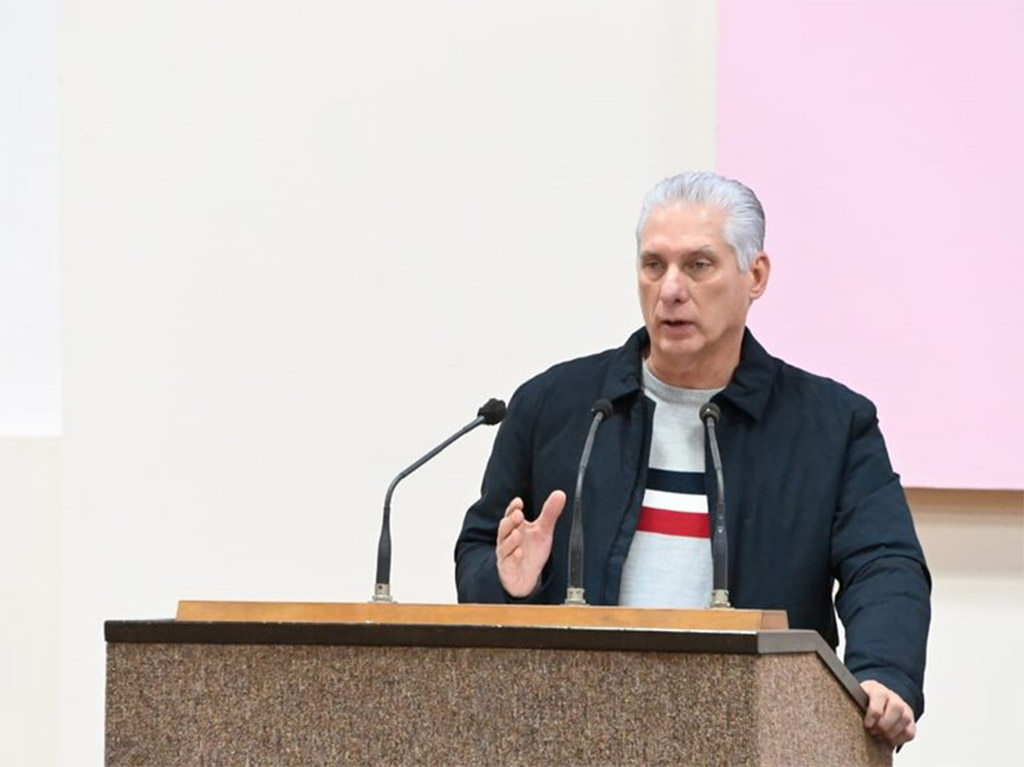
Havana, January 30 (Prensa Latina) President Miguel Díaz-Canel declared today that Cuba will overcome the recent executive order signed by US President Donald Trump and urged the Cuban people to respond to this measure with creative resistance and intelligence.
“Even if there is a fuel blockade, Cuba will not be defeated by the empire,” the head of state declared during the extraordinary plenary session of the Provincial Committee of the Communist Party of Cuba (PCC) in this capital.
He also urged the people, with the PCC militants at the forefront, “to fight, to create, to transform, to build and to share results with creative resistance and intelligence,” according to the summary of the meeting published on the Presidency of the Republic’s website.
Thus, he affirmed, it is the best way to react to the executive order signed by Trump, which, after labeling Cuba a threat to American security, establishes tariffs for countries that send oil to the island.
Díaz-Canel announced that Cuba will denounce this measure in every possible forum and assured that the Cuban condemnation will be supported by the countries and organizations that each year request the cessation of the United States’ economic blockade against Cuba at the United Nations.
“What right does an emperor have? What right does an empire have? What right does the government of a powerful nation have to deny a small country the fuel it needs to develop?” he questioned, and asserted that Cuba is a peaceful country, focused on promoting its development without threatening the national security of any state.
“Even amidst all this aggression and the blockade of all these years, we have said that we have the capacity and willingness to engage in dialogue with the US government. The problem is that dialogue cannot take place under pressure. Dialogue must be on equal terms, with respect, and without preconditions,” he emphasized.
“There is an asymmetry in the Cuba-United States relationship, and the United States created that asymmetry with the blockade,” he pointed out.
“We,” he stated, “did not attack the US. We have nothing against the American people.” He added that, due to the White House’s hostility, the people of both countries have no cultural, scientific, sporting, or educational relations.
On the other hand, the Cuban president referred to the recent US military aggression against Venezuela and commented that the action is part of a war against that country that began long before January 3, when President Nicolás Maduro and his wife were arrested.
Regarding this, he highlighted the confrontation between Cuban fighters and “elite US forces who had rehearsed an operation to kidnap the president in a few minutes, with superiority in men, technological superiority, superior weaponry, drones, a sophisticated deployment of technology, and tremendous firepower.”
“One day we will have to recognize how much the courage and example of the 32 Cubans who fell fighting the US invasion of Venezuela contributed to everything that is happening and what may happen in the future,” he said, and warned that “the empire has to calculate what an attack on Cuba would cost it.”
The extraordinary plenary session of the Communist Party of Cuba (PCC) in Havana concluded a process carried out in all provinces and the Isle of Youth, aimed at promoting the country’s comprehensive growth based on territorial projections and ensuring the leading role of party members in economic and social programs.
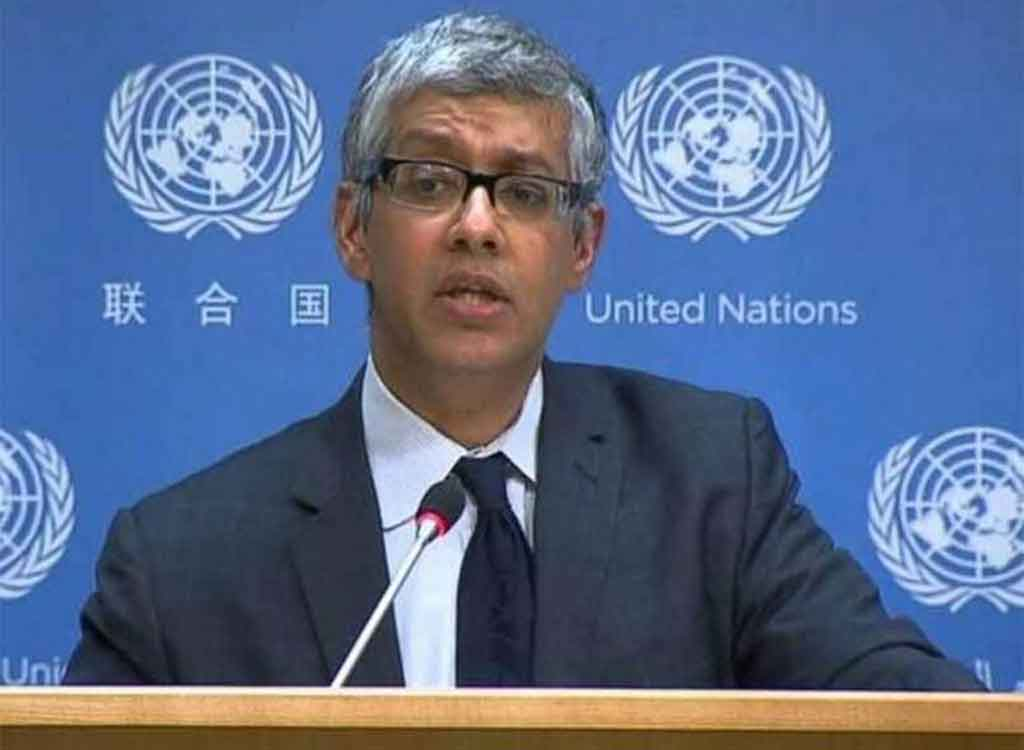
United Nations, January 30 (Prensa Latina) The Deputy Spokesperson for the UN Secretary-General, Farhan Aziz Haq, reiterated today the United Nations’ position in favor of lifting the US blockade against Cuba.
“As you know, the General Assembly has repeatedly called for an end to the blockade against Cuba,” the spokesman said in response to a question from Prensa Latina about the strengthening of that policy, following the new executive order from the Donald Trump administration to unilaterally impose coercive tariffs on countries that sell oil to the Caribbean nation.
“We urge all Member States,” he said, “to comply with the resolutions of the General Assembly.”
An executive order issued by the White House on January 29 and signed by the Republican president declares a “national emergency” regarding Cuba and, to address it, deemed it “necessary and appropriate” to establish a system of tariffs against countries that provide “directly or indirectly” any type of oil to Cuba.
Days before Trump’s return to the White House last year, the UN confirmed to Prensa Latina that it welcomed “the United States’ announcement of January 14 regarding, among other measures, the removal of Cuba from the State Department’s list of state sponsors of terrorism.”
It was a belated act by the outgoing Joe Biden administration, but it was a step in the right direction.
However, after taking office a week later, in his first hours in the executive mansion, Trump reversed Biden’s decision with an executive order without presenting any new evidence and ignoring the work and judgment of his own state agencies.
The reactions were swift. UN Secretary-General António Guterres even acknowledged at the time that Cuba’s conduct in some mediation processes, such as the peace process in Colombia, contradicts its continued inclusion on such a list.
Cuba was first included in that list of State sponsors of terrorism in 1982, during the government of Republican Ronald Reagan until, in 2015, Democratic President Barack Obama withdrew such designation, considering that it lacked merit.
The economic, commercial and financial blockade against Cuba constitutes a unilateral, coercive and extraterritorial policy that violates International Law and the purposes and principles of the UN Charter.
After 65 years of application, the central objective has not changed: to deteriorate the standard of living of the population, to provoke dissatisfaction, despair and irritation, as a means to bring about a change in the constitutional order that the Cuban people have freely chosen.
The US administration persists in ignoring the almost unanimous call from the international community to end this illegal and inhumane policy against Cuba, expressed in 33 UN General Assembly resolutions.
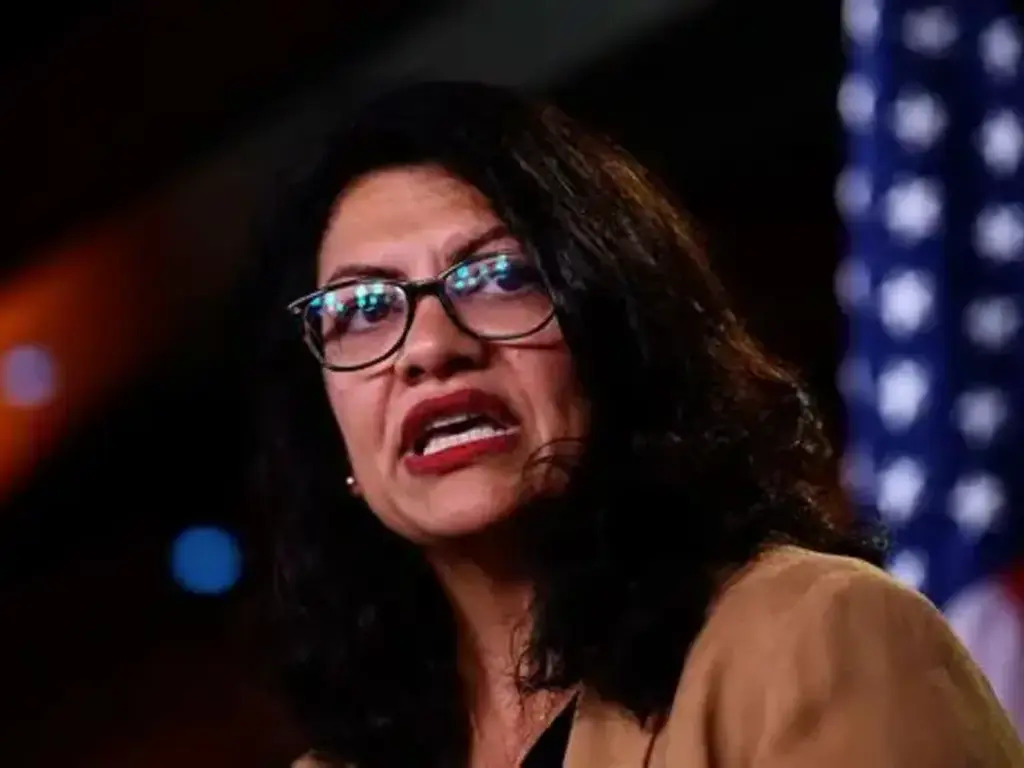
Washington, January 30 (Prensa Latina) Democratic Representative Rashida Tlaib stated today that Cuba poses no threat to the United States and that she is horrified by the attempt by the Donald Trump administration to strangle an entire people.
Tlaib, a member of the House of Representatives from Michigan, reacted in this way to the executive order signed by President Trump on January 29 declaring a “national emergency” regarding Cuba.
Therefore, the Republican president considered imposing a tariff regime against all countries that directly or indirectly try to supply oil to the island.
“This Executive Order will kill countless innocent Cubans,” the legislator wrote on her social media account, emphasizing in the statement that “homes, schools, and hospitals without electricity. Children without food or medicine. Cuba poses no threat to the United States. This is pure cruelty.”
Trump’s measure, which has met with strong rejection both inside and outside the United States, is a further tightening of the unilateral embargo that has been trying to suffocate Cubans for more than six decades and is part of the current maximum pressure policy of the White House against Cuba.
President Trump conditions the modification of this directive “on Cuba or the affected countries taking significant steps to address the threat or to align themselves with the national security and foreign policy objectives of the United States.”
Upon his return to the executive mansion on January 20, 2025, Trump took among his first actions in office to reverse a decision made just seven days earlier by his Democratic predecessor, Joe Biden, by reinstating Cuba on the arbitrary and unilateral list of alleged state sponsors of terrorism.
Since then, hostile measures have rained down on the Caribbean nation in an attempt by the United States government to bring it down and provoke a regime change.
We condemn in the strongest possible terms the new US escalation against Cuba.
Now the US government intends to impose a total blockade on Cuba’s fuel supplies.
In order to justify that, it resorts to a long list of lies with the purpose of portraying Cuba as a threat, which it actually is not. Every day there are new evidence showing that the only threat to peace, security and stability in the region and the only malignant influence is the one exerted by the US government against the peoples and nations of our America. It intends to submit them to its dictates, deprive them of their resources, mutilate their sovereignty and deprive them of their independence.
The US government is also resorting to blackmail and coercion in an attempt to make other countries to join its universally condemned blockade policy against Cuba; and if they refuse to do so, it is threatening to apply arbitrary and abusive tariffs in violation of all free trade rules.
We denounced to the world this brutal act of aggression against Cuba and its people on which it has imposed, for more than 65 years, the longest-lasting and most cruel blockade ever imposed against an entire nation and which it now has committed to subject to extreme living conditions.
Havana, January 30 (Prensa Latina) The Revolutionary Government today condemned the new escalation by the United States against Cuba, which through an executive order seeks to impose an absolute blockade on fuel supplies to the island.
In an official statement, the Cuban government described as “extreme” the measure announced on January 29, which declares a supposed national emergency to impose tariffs on countries that supply oil to Cuba.
The text noted that to justify this action, “an extensive list of lies and defamatory accusations is brandished,” including the “absurd assertion” that Cuba constitutes an “unusual and extraordinary threat” to U.S. national security.
He stressed that the Washington government “is aware that no one or very few can believe such mendacious arguments, but they don’t care,” and accused the US administration of showing “contempt for the truth, public opinion, and government ethics.”
The statement asserted that the executive order consolidates “a dangerous way of conducting U.S. foreign policy by force,” by claiming “the right to dictate to sovereign states which nations they can trade with.”
He stressed that this provision “constitutes a flagrant violation of International Law” and undermines the Proclamation of Latin America and the Caribbean as a Zone of Peace.
The Cuban government recalled that Washington “has reached this point after having failed for 67 years to subdue and destroy a genuine and legitimate political and revolutionary process,” and reaffirmed the island’s historic willingness to engage in bilateral dialogue based on mutual respect.
He emphasized that “Cuba poses no threat whatsoever to the United States” and described the country as “a peaceful, supportive and cooperative country, willing to help and contribute to other states.”
He warned that imperialism “is mistaken when it believes that economic pressure will break the resolve to defend national sovereignty.”
Finally, he called on the international community to define “whether a crime of this nature can be a sign of what is to come” and reaffirmed the decision to confront the measure “with firmness, equanimity and the certainty that reason is absolutely on our side.”