Cuban doctors’ work in the southern state of Mexico is highlighted

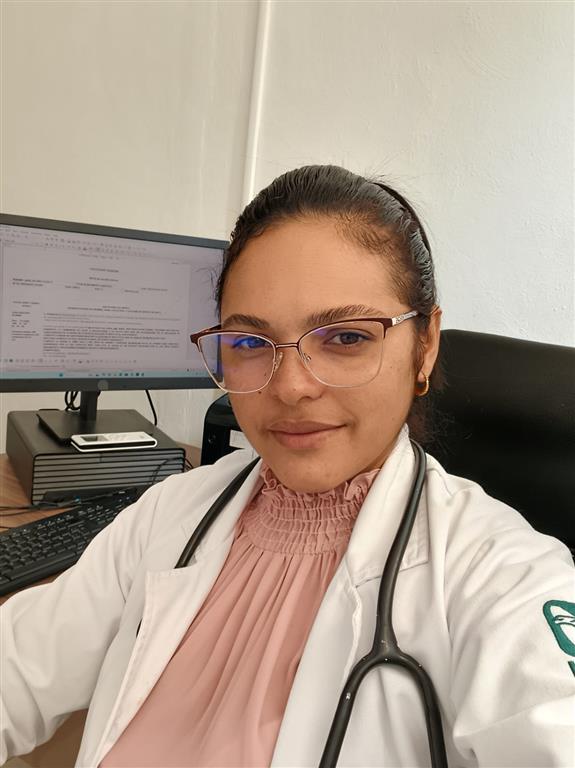
Mexico City, March 18 (Prensa Latina) Cuban doctors are key today to the care of chronic diseases at the IMSS-Bienestar Hospital in San Luis Acatlán, in the Mexican state of Guerrero, according to a media outlet on its website.

A report in the prestigious newspaper La Jornada indicates that the proper management of these conditions has contributed to reducing the demand for care in the hospital’s emergency department, and that cases of asthma attacks, diabetes mellitus decompensation, or kidney failure are virtually nonexistent.

“Since last year, they have been treated by Cuban specialists, and the community’s quality of life has improved on average,” the text states.

Preventive medicine and health promotion enhance the well-being of communities, said Dasiel Budet, from Havana, who, along with a Cuban colleague, inaugurated the internal medicine service at the health institution in July 2024.

The newspaper also visited the IMSS-Bienestar Hospital located in the municipality of Ayutla de los Libres, where surgeries have been performed for more than a year, Monday through Friday, by two specialists from the island. Without them, the operating room would be closed.

At the health center, director Pablo Navarrete, along with Mexican and Cuban doctors, are collaborating in whatever is needed, because half of the medical positions are vacant and the need to address obstetric emergencies, among other things.

“Premature births and newborns, who should be seen by a neonatologist, but there isn’t one, are then taken care of by pediatricians, of whom there are only three, whether or not they are on duty: two Cubans and one Cuban,” the outlet reports.

ro/las

Posted in Healthcare | Leave a comment

Cuba and Congo celebrate historic ties and strengthen cooperation

Brazzaville, March 18 (Prensa Latina) Congolese President Denis Sassou-N’Guesso today met with Cuban Prime Minister Manuel Marrero, with whom he discussed the historic ties of friendship between the two countries and future plans for strengthening cooperation.

During the dialogue, the parties reviewed milestones from more than 60 years of relations, which have been marked by the struggle for the emancipation of peoples, collaboration, and the training of professionals, always based on fraternity and mutual respect.

They also discussed a new approach to cooperation between the two countries, which would strengthen joint work in health matters but also extend to other areas.

In statements to the press, Marrero emphasized that both parties agreed to leverage the full potential of cooperation in areas such as technology, human resource development in Cuba, tourism, culture, science and innovation, and defense, among others.

The intention, he noted, is for economic and commercial cooperation to be on par with political ties.

The head of government commented that he had conveyed to President Sassou-N’Guesso the affection and gratitude of the Cuban people, as well as the satisfaction of more than six decades of uninterrupted relations and pride in the island’s contribution to the education of more than 3,000 young Congolese.

He described the visit as historic and exciting, as it represents a meeting between two sister countries, Marrero emphasized, delivering a message from Cuban President Miguel Díaz-Canel to the Congolese president.

Sassou-N’Guesso, for his part, spoke about his early days in the struggle and his encounters with Cuban leaders Fidel and Raúl Castro, as well as recalling the role the two countries played in the negotiations for the withdrawal of South Africans from Angola, the independence of Namibia, and the irreparable blow to the apartheid regime.

The president thanked Cuba for its support in the independence struggles of African peoples and reaffirmed that Congo will always vote in favor of the Caribbean nation in international forums.

This Tuesday, Marrero also held an exchange with the president of the Congolese Senate, Pierre Ngolo, to whom he conveyed warm greetings from the president of the Cuban Parliament, Esteban Lazo, and emphasized the importance of continuing to strengthen ties in this area.

He also held a private meeting with his Congolese counterpart, Anatole Collinet Makosso, participated in extended talks with delegations from both countries, and paid tribute to former Congolese President Marien Ngouabi (1938-1977) at the mausoleum dedicated to him.

arc/kmg.

Posted in Exchanges | Leave a comment

Cuban President receives American actor Kevin Costner

Havana, March 17 (Prensa Latina) Cuban President Miguel Díaz-Canel welcomed American actor, director, and producer Kevin Costner, who is visiting the Caribbean nation to explore underwater archaeology, the Presidency of the Republic announced today.

“It’s a pleasure to meet you and a source of great satisfaction for your visit to Cuba. You are greatly admired by the Cuban people, who have closely followed your recent stay in our country,” the president said during the meeting at the Palace of the Revolution.

Costner expressed feeling very well in Cuba and that he had dreamed of this project for some time, according to the Presidency on the social network X.

The American actor referred to his special friendship with Cuban Alejandro Mirabal, an underwater archaeologist and prominent researcher. “I’ve studied the Caribbean a lot,” he noted.

He commented that he was impressed by the Museo del Castillo de la Real Fuerza, both for its exhibits and its architecture.

During the pleasant conversation, the head of state invited him to visit Santiago de Cuba, whose bay holds a significant underwater heritage.

Kevin Costner previously visited Cuba in April 2001, where he met with the leader of the Cuban Revolution, Fidel Castro, with whom he held a lively conversation, according to the press at the time.

On that occasion, he traveled to Havana to present the film “13 Days,” about the October Crisis of 1962, in which he played the leading role of Kenneth O’Donnell, a collaborator of John F. Kennedy at the time.

In a statement to the Spanish newspaper El País in 2015, the artist expressed his joy at the rapprochement between Cuba and the United States.

“I’ve only been to Cuba once, but I’m seeing the new situation very well. In the world we live in, I’m always happy to hear news that shows us getting closer to each other,” he said.

oda/mks

Posted in Exchanges | Leave a comment

They call for dialogue and greater cooperation between the US and Cuba.

Basseterre, March 17 (Prensa Latina) The Prime Minister of Saint Kitts and Nevis, Terrance Drew, called for greater cooperation between the United States and Cuba to avoid harming the people of the Caribbean region, the Associated Times reported today.

The leaders of the United States, Cuba, and the Caribbean Community must engage in meaningful debate that promotes economic stability, healthcare, and security. “Isolation and confrontation will only serve to deepen our struggles. Cooperation, on the other hand, will elevate us all,” Drew emphasized.

Saint Kitts and Nevis, as a sovereign nation, will always make decisions that align with the best interests of our people, he emphasized.

Under his leadership, he stated, Basseterre will continue to be a voice for justice and sustainable development on the world stage, and will continue to engage both Cuba and the United States.

The Associated Times emphasized that Drew praised the assistance that Cuban medical collaboration continues to provide to his country, where professionals from that sister nation are treated with dignity.

These personnel contribute to strengthening our health system, he emphasized, while clarifying that there are links of equity and respect, in addition to enjoying the same rights and privileges as their local colleagues.

“Since 2003, Saint Kitts and Nevis has welcomed Cuban professionals who came not as strangers, but as family, helping us build a stronger, healthier, and more resilient nation,” the Prime Minister stated. Cuban health professionals have saved lives, he concluded.

Regarding labor practices, he dismissed all US accusations of exploitation and assured that Havana staff receive compensation according to the salary scale established by the local government. “We have never tolerated, nor will we tolerate, human trafficking practices on our shores or anywhere else,” he affirmed.

Cuban health workers in St. Kitts and Nevis receive comfortable housing at government expense and enjoy fair working conditions, including vacation time and standard work hours, he argued.

He also specified that the professionals own their passports and have all types of permits to travel abroad.

The statements by the prime minister of San Cristóbal de las Casas defending the presence of Cuban medical aid come against the backdrop of threats from the United States government to sanction countries that admit Cuban health personnel into their care programs to improve the quality of life.

nmr/joe

Posted in The Blockade? | Leave a comment

Cuba stands out as a guest destination at the Lisbon Tourism Exchange 

Lisbon, March 16 (Prensa Latina) Cuba concluded its successful participation today in the Lisbon Tourism Exchange as the international guest destination, consolidating its position in the Portuguese market and strengthening ties with important players in the sector.

Interviewed by Prensa Latina, Cuban Tourism Advisor for Spain and Portugal, Niurka Pérez, described the event as historic, adding that it generated continued interest from the public and leisure industry professionals in the Caribbean country’s offerings.

This market has always welcomed us with great affection. There are Cuban lovers here, and our stand hasn’t stopped, he explained.

During the meeting, held from March 12 to 16, retail agencies that sell tour packages from Portugal to the largest of the Antilles registered intense activity, Pérez added, emphasizing that the European nation continues to support the island.

One of the main objectives of the Cuban delegation at the event, held at the Lisbon International Fair in the Parque das Nações, was to foster a more direct connection between the two countries, without relying exclusively on stopovers in Madrid.

We, of course, continue to try and look for ways to connect this market with Cuba, not only in the summer but throughout the rest of the year, he said.

According to Pérez, his country not only focused on promoting beaches and tourist destinations, but also encouraged the dissemination of its own culture and heritage.

Living up to what we’ve always expected from this market, people came to share with us the mojito, the Cuba Libre (two cocktails), the dancing, the Cuban songs, and that’s been great, he said.

He also noted that last year, the number of Portuguese tourists who traveled to the island was the highest in history, surpassing the 2019 figure prior to the onset of the COVID-19 pandemic.

This event, which fostered the exchange of ideas and knowledge, the signing of agreements, and the promotion of destinations, also served as an invitation to the Cuban International Tourism Fair, to be held from April 30 to May 3 in Havana.

To that end, Pérez emphasized, we took advantage of Cuban Night, which was attended by representatives from agencies, airlines, and hotel chains, as well as figures from the smoke-free industry in Portugal and Brazil.

lb/dsa

Posted in Cultural | Leave a comment

San Cristóbal government praises Cuba’s medical collaboration

Basseterre, March 16 (Prensa Latina) The Prime Minister of Saint Kitts and Nevis, Terrance Drew, praised the continued assistance provided by Cuban medical cooperation to his country, where professionals from that sister nation are treated with dignity.

These Cuban personnel contribute to strengthening our healthcare system, Drew noted, adding that there are ties of equity and respect, and that they enjoy the same rights and privileges as their local colleagues.

“Since 2003, St. Kitts and Nevis has welcomed Cuban professionals who came not as strangers, but as family, helping us build a stronger, healthier, and more resilient nation,” the Prime Minister said.

Cuban health professionals have saved lives, he stated.

Regarding labor practices, he dismissed all US accusations of exploitation and asserted that Cuban professionals receive compensation according to the salary scale established by the government.

“We have never tolerated, nor will we tolerate, human trafficking practices on our shores or anywhere else,” Drew reaffirmed.

Cuban health workers in St. Kitts and Nevis receive comfortable housing at government expense and enjoy fair working conditions, including vacation time and standard work hours, Drew argued, as quoted by the Associated Times website.

He added that the professionals own their passports and have all types of permits to travel abroad.

Drew’s statements defending the presence of Cuban medical cooperation in his country come against the backdrop of threats from the United States government to sanction countries that admit Cuban health personnel into their care programs to improve the quality of life.

car/joe

Posted in Exchanges | Leave a comment

Haitian press highlights the value of Cuba’s medical cooperation

Port-au-Prince, March 15 (Prensa Latina) Cuban medical cooperation began in 1998 and today holds a very strong symbolic value in Haiti, highlights Le Nouvelliste, the most influential newspaper in the Caribbean country.

Cuban health personnel arrived here under President René Préval, at a time when Haiti was suffering damage from Hurricanes George and Mitch.

Cuba sent a medical brigade, medicines, and everything necessary to rescue the Haitian population, the source emphasized.

Former President Fidel Castro declared: “Haiti doesn’t need soldiers, it doesn’t need an invasion of soldiers; what Haiti needs is an invasion of doctors; what Haiti needs, in addition, is invasions of millions of dollars to develop,” the newspaper recalled.

Haitian press highlights value of Cuba's medical cooperation

The words of the historic leader of the Cuban Revolution were described by the Haitian newspaper as a blow to the United States government.

In 2001, a collaboration began with the Faculty of Medicine created by President Jean-Bertrand Aristide, and Cuba sent professors who also worked as doctors serving the Haitian population.

In December 2002, more than 800 Haitian doctors were receiving training at the University of Medical Sciences in Santiago de Cuba.

Le Nouvelliste lamented that successive governments, with the help of the largest of the Antilles, have prevented Haiti from having a robust health system with qualified personnel well integrated into the care chain.

Haitian press highlights value of Cuba's medical cooperation

As of December 4, 2024, more than 15,000 Cuban volunteers have joined the Cuban Medical Brigade, providing more than 36 million consultations, 194,241 births, including nearly nine million pediatric births, and some 660,000 surgeries.

“Cuban experts rehabilitated more than 206,000 disabled patients and administered more than 1,649,000 doses of vaccines during prevention campaigns,” the news outlet noted.

Currently, the number of Cuban health professionals present in Haiti in 2025 does not exceed 200, including 77 doctors who practice primarily in the south of the country.

The U.S. government’s threats of sanctions against countries with Cuban medical personnel have reached Haiti just as Haitian medical training is going through a difficult period.

This situation in the health sector is due to the insecurity that led to the closure or malfunction of several training centers, including the State University Hospital of Haiti.

Next November, the newspaper reported, a meeting is planned in Cuba to sign an agreement between the State University of Haiti and the Latin American School of Medicine in Havana.

ft/joe

Posted in Healthcare | Leave a comment

The US blockade of Cuba attempts to subdue a people determined to be free

New York, March 15 (Prensa Latina) The U.S. blockade of Cuba continues to be a cruel, unjust, immoral, and anachronistic reality that attempts to subdue the will of a people who have chosen to be free, said Noemí Rabaza, first vice president of ICAP, today.

Rabaza, who is attending the International Conference for the Normalization of U.S.-Cuba Relations here representing the Cuban Institute of Friendship with the Peoples (ICAP), expressed his gratitude for the energy and drive of the movement supporting the island, especially in Cuba.

“You have been a beacon of light in the darkest moments, voices rising against injustice, and arms reaching out to build bridges of friendship,” the official said at the in-person and virtual meeting, held at the iconic Malcolm X Center in New York.

Rabaza said that ICAP turns 65 in 2025, and the institution’s history “is intertwined with the solidarity activism of movements like the one you represent,” and more than six decades later, it remains “a bridge between Cuba and the world.”

Looking back on the time that has passed, “we cannot help but recall the figures of two giants whose struggles and legacies inspire us: Fidel Castro and Malcolm X. Both, from different positions but with a shared purpose, dedicated their lives to the fight for social justice, equality, and human dignity,” he emphasized.

On his social media profile, Cuba’s alternate permanent ambassador to the UN, Yuri Gala, described the event as an “important event organized by solidarity groups with the Cuban nation. #CubaIsNotAlone.”

The forum, which concludes tomorrow and was first held in 2017, features diverse participation and the collaboration of solidarity networks in the United States, Canada (Quebec), and the Latin American and Caribbean Continental Network of Solidarity with Cuba and Just Causes.

A final statement outlining the solidarity movement’s work objectives is expected in the immediate future, taking into account—as a brochure from the National Network on Cuba points out—that there is a two-way U.S. blockade that dramatically affects the lives of tens of millions of Cuban and U.S. residents.

Many point out that if the unilateral siege that has survived 12 administrations in the executive mansion did not exist, collaboration could be achieved in fields such as medical advances.

Figures highlighted by solidarity indicate that the embargo prevents, for example, some 80,000 American diabetics who undergo amputations each year and 550,000 lung cancer victims from accessing unique Cuban treatments for their condition.

They also point out that there are nearly 50 million adults in this country who are illiterate and cannot benefit from Cuba’s global literacy campaign “Yes, I Can,” which has helped 11 million people in 30 countries around the world learn to read and write.

They also emphasize that, due to the embargo, U.S. citizens have fewer opportunities to visit a beautiful Caribbean island and share experiences with its wonderful people.

rob/dfm

Posted in The Blockade? | Leave a comment

Triple jumpers will represent Cuba at the World Athletics Championships

Havana, March 14 (Prensa Latina) Three triple jumpers will represent Cuba at the upcoming World Indoor Athletics Championships in Nanjing, China, the Cuban athletics federation confirmed today.

According to the sports website JIT, triple jumpers Leyanis Pérez, Liadagmis Povea, and Lázaro Martínez will be the only Cuban representatives at the world championships, which will take place from March 21 to 23.

The National Athletics Commission informed the press that Pérez has a ticket as a 2025 World Athletics Indoor Tour champion and will arrive in Nanjing as the top seed with a jump of 14.62 meters, enough to win the meet in the French city of Lievin.

For her part, Povea currently holds second place in the indoor track rankings this season, supported by her 14.57-meter mark achieved in Miramas, also on French soil.

National Commissioner Rolando Charroo commented that Cuba’s greatest hopes for medals are pinned on both athletes, while not disregarding Martínez’s chances.

The Guantanamo native, who won the 2022 world championship in Belgrade, will attempt to reach the podium again after a previous period marked by injuries.

The website points out that other renowned athletes, such as high jumper Luis Enrique Zayas and 800-meter runner Daily Cooper, failed to achieve the necessary marks to qualify for the world competition.

lam/ads

Posted in Cultural | Leave a comment

Díaz-Canel urges young people to work to protect the Revolution

Havana, March 14 (Prensa Latina) Cuban President Miguel Díaz-Canel today urged youth to strive to protect all the achievements of the Revolution and promote the comprehensive development of the nation.

During a meeting with young people from five provinces, Díaz-Canel asserted that, with the support of the new generation of Cubans, the Caribbean nation will overcome the difficult times it is going through, according to the Santiago de Cuba newspaper Sierra Maestra.

He also expressed his confidence in young people and insisted that everyone should give their best in their student and job roles, in addition to “revisiting historical sites to continue defending who we are.”

The head of state spoke with students and workers from the eastern provinces of Las Tunas, Holguín, Santiago de Cuba, and Guantánamo, and Camagüey, in the center of the island.

The meeting with 147 young people took place in Mangos de Baraguá, a historic site in Santiago de Cuba and a National Monument, where a famous meeting took place between Major General Antonio Maceo and the Commander-in-Chief of the Spanish Army, Martínez Campos.

It was on March 15, 1878, when Maceo challenged the Pact of Zanjón signed on February 10, 1878, which sealed the capitulation of the Cuban Liberation Army to the Spanish troops and ended the Ten Years’ War (1868-1878).

For Maceo and his followers, what was agreed upon in that town in Camagüey did not guarantee the abolition of slavery, nor did it recognize independence.

“Maceo defended three principles at Baraguá, and they have become paradigmatic for Cubans: unity, sovereignty, and social justice. That is the legacy of that glorious event,” Díaz-Canel commented this Friday.

At the event, Omar López, director of the Santiago de Cuba City Council’s Office, recalled the historic event.

López emphasized that the national hero, José Martí, and the historic leader of the Revolution, Fidel Castro, mentioned the Baraguá Protest on several occasions, “which implies the continuity and presence of the idea of ​​never giving up and never giving up.”

On the other hand, “a replica of the Bronze Titan’s machete was presented to the Union of Young Communists, as a representation of the courage of those who fought for Cuban independence,” the text states.

Likewise, those present condemned the U.S. government’s economic blockade of Cuba and congratulated press workers on their day.

ode/raj

Posted in Uncategorized | Leave a comment