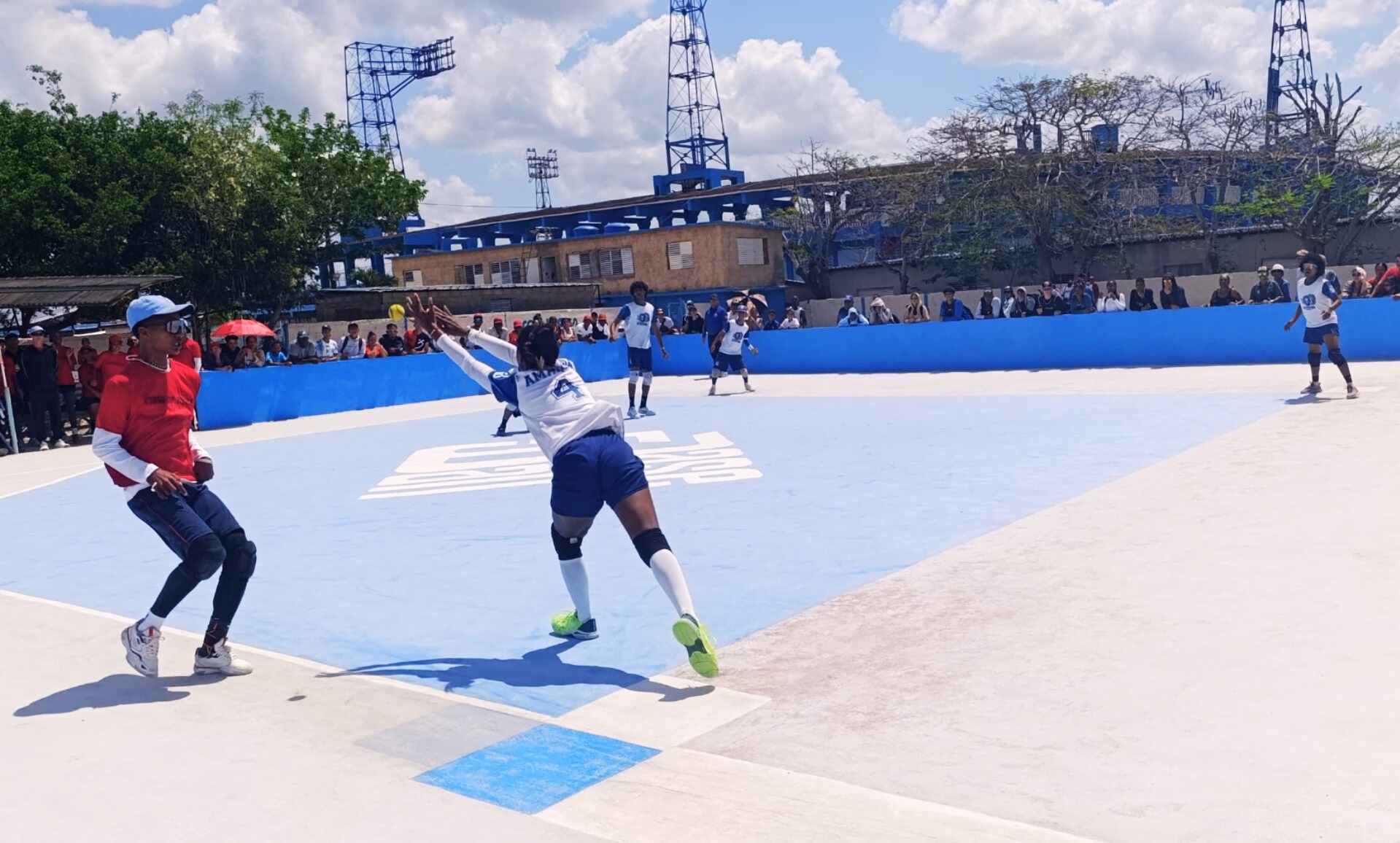
The 16 players selected – eight boys and eight girls – represent the six provinces competing in the National Championship. Eros Bernal Morales, the technical head of Baseball5 in Cuba, will be the general manager. Sergio Arturo Pérez Echevarria will be the head coach.
World champions Cuba announced an expanded roster of 16 for the Youth Baseball5 National Team. The pre-selection includes players from the six provinces competing in the National Championship. Havana, Ciego de Ávila and Santiago de Cuba have four players each, Guantanamo has two players, and Artemisa and Sancti Spiritus have one player each.
The eight girls include Amanda Diaz Jimeno and Adis Yudith Espinel – who helped Cuba win the inaugural WBSC Youth Baseball5 World Cup in Türkiye in 2022 – Geisel Camila Pupo Fernandez, Rachel Medina Isaac, Arianna de la Caridad La O, Dailenis Guillen Almeida, Mari Karla Pedroso and Raidi Marlen Tamayo Legrat.
The eight boys are Kevin Hidalgo, Carlos Rivera, Deivis Hodelin Cause, Rafael Alejandro Socarras, Sergio Leando Matamoros and Yandro Moracen.
Eros Bernal Morales, Baseball5 Technical Head in Cuba, will be the general manager. Sergio Arturo Pérez Echevarria will be the head coach.
HAVANA, Cuba — Heidy Sánchez lived in Florida for five years after immigrating from Cuba. She worked in Tampa as a nursing assistant, paid her taxes and had no criminal record.
None of this would stop her world from being torn to pieces. On April 22, Heidy was detained while attending a routine check-in at Immigration and Customs Enforcement (ICE) offices in Tampa. She was separated from Kailyn, her 17-month-old, U.S.-born daughter whom she was still nursing.
“My husband said he heard my screams from the other side of the door. ‘Please don’t take her away! Please!’” said Heidy, her voice breaking.
Two days later, Heidy was deported.
The separation was abrupt. She wasn’t allowed to pack any clothes or other belongings or say goodbye to her family. Her purse was left in her husband’s car.
Two weeks later, Heidy is back in Cuba, desperately hoping she will somehow be reunited with her daughter.
“My life is there in Tampa,” she said. “I breathe for that little girl in Tampa. I have nothing here.”
“SHE WAS MY MIRACLE”
Kailyn is Heidy’s only child.
Heidy and her husband Carlos went through a long fertility treatment before finally giving birth to Kailyn.
“She was my miracle,” Heidy said through tears. “She was the child we had longed for.”
Heidy and Kailyn were inseparable.
“I woke up each day to take care of my baby girl,” said Heidy. “She’d wait for me to breastfeed her, bathe her, take care of her. All my attention was focused on her.”
Heidy says that since she was deported, her husband has struggled to get Kailyn to eat. Kailyn looks for her all over the house, grabs her shoes, and keeps asking where her mother is.
“She’s awake until the middle of the night,” she said. “I had to record myself singing lullabies to get her to sleep.”
Heidy describes Kailyn as an active, happy, and playful child. However, she is undergoing treatment for epileptic seizures.
“Just yesterday she had a scan, and I’m not there,” said Heidy. “They say that she shouted: ‘Mom mom, mom!’ for me to defend her, to hold her, to support her.”
FAMILIES RIPPED APART
Immigrant families have been ripped apart by the Trump administration’s deportation policy. Trump officials have said that immigrants who are detained can decide whether to take their U.S.-born children with them when they are deported.
“That’s up to their family to decide where the children go,” Secretary of State Marco Rubio recently told NBC.
But Heidy said she was given no choice: “The [ICE] officer saw my phone, which had a photo of my daughter, her father and me. He said: ‘Oh, she has a family photo. Call the father and have him come and get her.'”
Heidy is not the only immigrant who has been unwillingly separated from their children since Trump assumed office.
“There’s a Venezuelan mom who was deported to Venezuela and the child was left here in foster care,” said Claudia Cañizares, Heidy’s lawyer. “In the same flight that we had Heidy, there was actually one of our clients that was a dad. He was the main provider of his family and he was removed to Cuba.”
Heidy immigrated to the U.S. in 2019 through a U.S. program which involved her waiting in Mexico, near the Texas border, before being summoned to the U.S. for an immigration court hearing.
She said she couldn’t attend the hearing because she feared for her life.
“People [trying to cross the border] were being kidnapped, were being robbed over the documents and they would lose them,” said Cañizares. “We kept pleading for the program to be cancelled because of this, because people could not show up to the hearings…Heidy was one of those people.”
When Heidy was finally able to cross the border, she was detained. She spent nine months in detention centers before being released. She was allowed to stay in the United States as long as she attended regular check-ins at ICE offices.
“They would give me an appointment for another date, within six months, or a year, and everything stayed the same,” she said. “I could go on with my normal life, and go to my appointments with ICE, and that’s what I did.”
Heidy says she became apprehensive after Trump’s election.
“When he said he was going to do mass deportations, you always tense up
a little bit, and say, ‘Wow, I could be on that list, it could happen to me,'” she said. “We always had the fear that it could happen. And it did.”
CUBANS NO LONGER THE EXCEPTION
During his first term, Trump adopted a “zero tolerance” policy toward undocumented immigrants, which led to children being stripped from their parents at the U.S. border.
Cuban immigrants, who had long enjoyed a relatively privileged status compared to people coming from other countries, were largely exempt from Trump’s crackdown.
That may be changing.
Heidy was one of 82 Cubans deported in handcuffs to Havana last month. Other Cuban immigrants report being detained while attending regular check-in interviews at ICE offices.
Cañizares said that she hopes that Heidy’s case will create more awareness of the suffering caused by the Trump administration’s migration policies.
“We want the public to turn out to bring awareness about what is going on currently in the U.S.,” she said.
Follow Us on WhatsApp and Telegram!
We’ve launched our Telegram and WhatsApp channels so you never miss a story.
May 6 (Cuba Si/Orinoco Tribune) In a strong display of defiance and solidarity, over 5 million people marched in the cities of revolutionary Cuba on May 1. Through these impressive marches, the Cuban people stood united and strong against US designs to crush Cuba for its refusal to succumb to imperialism or go back to the neo-colonial status it held prior to 1959. Just as the over 60 year old blockade of Cuba seems to reach its most draconian, more still is piled on, yet now more than ever, the US finds itself isolated as the Cuban people stand strong and solidarity with them grows.
International meeting of solidarity with Cuba, anti-imperialism and against the resurgence of fascism The day following the march, the theme of solidarity was carried forward to the International Meeting of Solidarity with Cuba, which took place at the Palace of the Conventions. 969 delegates were present, representing 269 organizations from 39 countries.
The dialogue was led by the first secretary of the central committee of the communist party and president of the republic, Miguel Díaz-Canel Bermúdez; member of the political bureau and secretary of organization of the central committee of the party, Roberto Morales Ojeda; the minister of foreign affairs, Bruno Rodríguez Parrilla; the secretary general of the CTC, Ulises Guilarte de Nacimiento; and the president of ICAP, Fernando González Llort.
The meeting was dedicated to the legacy of Commander-in-Chief Fidel Castro, on the 25th anniversary of the concept of revolution, the 65th anniversary of the Cuban Institute of Friendship with the Peoples (ICAP), and the 22nd Congress of the Cuban Workers’ Central (CTC).
President Miguel Díaz-Canel Bermúdez emphasized in his talk that solidarity is not just a word but an essential component against the increased aggression of the Trump administration.
“Thank you for being the voice of Cuba in the world. This meeting shows that, before the empire, the answer is more solidarity, a solidarity that symbolizes resistance to neocolonialism and support for the self-determination of peoples; a solidarity that becomes a weapon of struggle, that transcends borders and that we assume, as Fidel said, to be an ethical duty in the fight against neocolonialism.”
The inhumane policy of the United States against Cuba Carlos Fernández de Cossío, director general for the United States at the ministry of foreign affairs, spoke about the damage caused to Cuba by US policy.
“Our country is going through times of great adversity, reflected in the material and economic conditions of our people. This is a scenario planned by the US government to try to make life as difficult as possible for Cubans,” he said.
He recalled the words of the popular leader of the US, Malcolm X, warning that nothing teaches more than adversity.
“The people of Cuba are not discouraged by the current circumstances. They take on challenges and develop their creativity, the fruit of the teachings of the revolution,” he said.
The sentiment in the US, according to the diplomat, is that the largest of the Antilles belongs to them and that they have the right to dictate the course of the nation, which explains the incessant dispute since Cuba achieved true independence and began to exercise its right to self-determination.
This prohibits the importation of products originating in the United States and the use of the most important international payment systems. Most Americans are denied the right to travel to Cuba, and threats are made against investors who bet on the national market.
Regarding Cuba’s inclusion on the list of state sponsors of terrorism, Fernández de Cossío said that it has had serious repercussions for tourism on the island and is exacerbating its economic situation.
Solidarity: the bridge that unites the oppressed of all latitudes The hero of the republic and ICAP president, Fernando González Llort, referred to the need to promote cooperation and the right of peoples to self-determination in his speech.
“The response to neo-liberal capitalism must be unity and internationalism. We have a duty to forge alliances against the common enemy: the great elites who control the world,” he said.
“If capital and imperial ambitions are transnational in nature, solidarity among peoples must also transcend borders,” he said.
According to González Llort, the rise of figures such as Donald Trump is a reflection of a world in crisis and of a 21st-century fascism, which seeks technological advances to control and alienate the working class.
ForGonzález Llort, the promotion of dignified peace in defense of sovereignty is key in the battle against imperialism. However, it must be a peace that respects the full dignity of people and is grounded on social justice.
“That is why Cuba stands with Palestine against the Zionist regime that, for more than 75 years, has murdered, kidnapped, abused, and besieged the Palestinian people. We stand with Puerto Rico in its struggle for independence, we support the cause of the Sahrawi people, we support the legitimate rights of indigenous communities, and we endorse the declaration of Latin America and the Caribbean as a zone of peace.”
González Llort conveyed the opposition of the largest of the Antilles to NATO interference, as well as its desire for a world free of nuclear weapons.
“While the military-industrial complex of the great powers manufactures wars for its own benefit, Cuban medical collaboration, which has helped more than five million people around the world, is denigrated,” he said.
He criticized the way in which hegemony is established through cultural colonization, which makes what is foreign seem desirable and what is one’s own seem inferior. In this scenario, resistance means creating art, schools, and popular communication.
“Unity and solidarity play a decisive role. The latter, not as charity, but as a revolutionary and humanist bulwark. It is the bridge that unites the oppressed of all latitudes,” he said.
González Llort condemned those who do not defend their sovereignty are as appendages of the empire.
Medals of Friendship Near the end of the event, the Cuban president awarded medals of friendship to 2 long-time Cuban solidarity activists: Cheryl Labash, co-chair of the National Network of Solidarity with Cuba in the United States, and André Chassaigne, former deputy and president of the France-Cuba Friendship Group of the French National Assembly.
As per usual, the event went out with a performance of love and solidarity from the Cuban National Children’s Theater; La Colmenita.
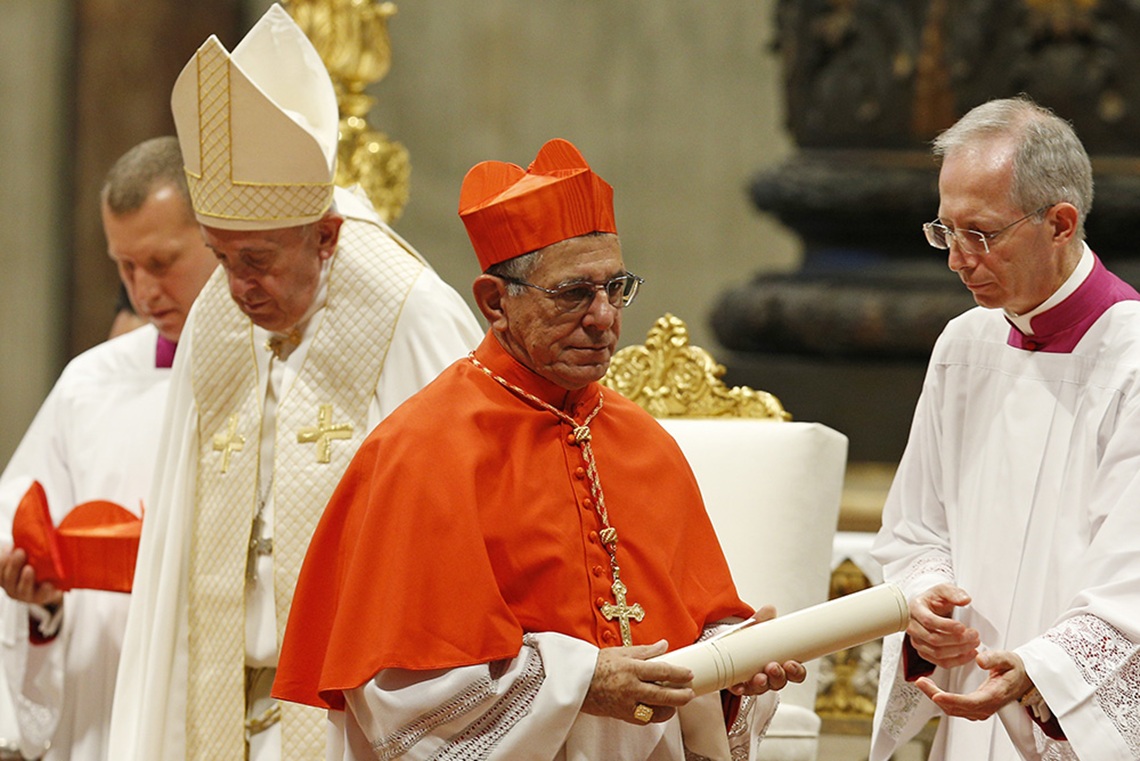
Cuban Cardinal Juan García Rodríguez, Archbishop of Havana, is one of the 133 members of the College of Cardinals who, starting tomorrow, May 7, will vote to elect the next pope.
In an interview with National Catholic Reporter (NCR), the cardinal, already in the Vatican, stated that the mood in the pre-conclave congregations is shaped by Pope Francis’s legacy and a shared desire for unity.
The outlet reported that García Rodríguez emphasized that these congregations are not marked by political or regional maneuvering but by a spiritual current.
There is a desire to grow what Pope Francis left as his legacy—with his life, his words, his example,” García told *NCR*, underscoring the cardinals’ commitment to following the synodal path championed by the pontiff.
According to the report, 12 years after the conclave that elected Francis, Latin American voices continue to resonate in the Catholic Church’s deliberations at the Vatican.
Cuban Cardinal Juan García on the upcoming conclave
For the Archbishop of Havana, who was named a cardinal by Pope Francis, there are no planned strategies or names whispered in corners during the pre-conclave meetings.
“The conclave and the general congregations are acts of faith,” he said, adding, “We believe the Holy Spirit is there.”
In his remarks to NCR, the Cuban cardinal spoke about the present and future of the Church, rooted in synodality—a concept introduced by Francis that, for García, is nothing more than a return to the origins of the Gospel.
According to NCR, synodality is defined as “the Church’s new inclusive way of walking together and sharing ecclesiastical power between lay Catholics and the clergy.”
The Cuban cardinal stressed that, for him, “there is a general desire for unity, a desire to preserve Pope Francis’s legacy, to maintain synodality.”
Along those lines, he added that he sensed a collective desire among the cardinals to continue what Pope Francis sowed during his pontificate.
“A desire to go to our neighbor, who is ultimately Christ, a desire for peace—so needed in the world,” he said.
The Archbishop of Havana noted that, for him, faith means trusting that the Spirit will speak in the upcoming conclave, despite differences in language, experiences, or pastoral priorities.
“There may be many bets”
García is staying with the Jesuits of St. Ignatius of Loyola in Rome, a community that over the past 30 years has sent numerous lay volunteers and missionaries to support impoverished Catholic communities in Cuba, NCR highlighted.
Outside the morning sessions of the pre-conclave general congregations, held daily from 9 a.m. to 1 p.m., García remains at St. Ignatius. There, the Cuban cardinal celebrates Mass in the afternoons and hears confessions.
“Among those cardinals, there are holy men, missionary men, charitable men, men who have lived or are living their faith fully,” García said.
“There may be many bets, there may be many opinions, but it is an act of faith in which the Holy Spirit manifests Himself,” he added.
Are there pacts to elect the pope?
When asked whether Latin American cardinals would vote as a bloc, he denied the existence of pacts or alliances. According to him, their conversations have not revolved around specific names or regional interests.
For him, the essential thing is the process, guided by prayer, dialogue, and an open attitude.
“There in the conclave, with prayer and conversation—well, with the light of the Holy Spirit—it will come. The one already chosen by God,” García said.
What the next pope should be like, according to the Cuban cardinal
When asked what the next pope should be like, García responded candidly:
“A mystical man, a missionary, a man of charity, a synodal man, a synodal successor, with affection for people—because all over the world, we all need affection.”
That affection, he explained, goes beyond mere gestures; it represents the core of Christian witness.
“When the pope shakes a hand, lifts children onto the popemobile, writes to those who suffer, or washes the feet of prisoners, he is expressing affection. That is what Jesus Christ did,” he said.
“I have candidates in mind”
Though he acknowledged that the world today is wounded and divided, García remains hopeful.
He believes that despite differences, there is a deep longing for unity among the cardinals.
“There is a common current, a common path. It’s not exact, it’s not uniform, but what is common—and the desire is—that we all move forward,” he said.
Even as analysts and observers circulate names of possible papal candidates, García stressed that he, like many of his Latin American peers, focuses less on individual figures and more on spiritual preparation.
“I have candidates in mind,” he admitted. “But in the conclave, through prayer and dialogue, with the illumination of the Holy Spirit, God’s chosen one will be revealed,” he concluded.
A Cuban cardinal in the election of the next pope
Tomorrow, Cuban Cardinal Juan de la Caridad García Rodríguez (76) will enter the Sistine Chapel as one of the 133 members of the College of Cardinals who will vote to elect the next pope.
García is the only Cuban in the conclave and will participate after being proclaimed a cardinal on October 5, 2019, by Pope Francis himself.
Currently, he is a member of the Permanent Committee of the Cuban Bishops’ Conference and president of the National Commission for Mission and Family.
His pastoral vision aligns with the principles that defined Francis’s pontificate, which left as its legacy a more human, inclusive Church committed to the social reality of its followers.
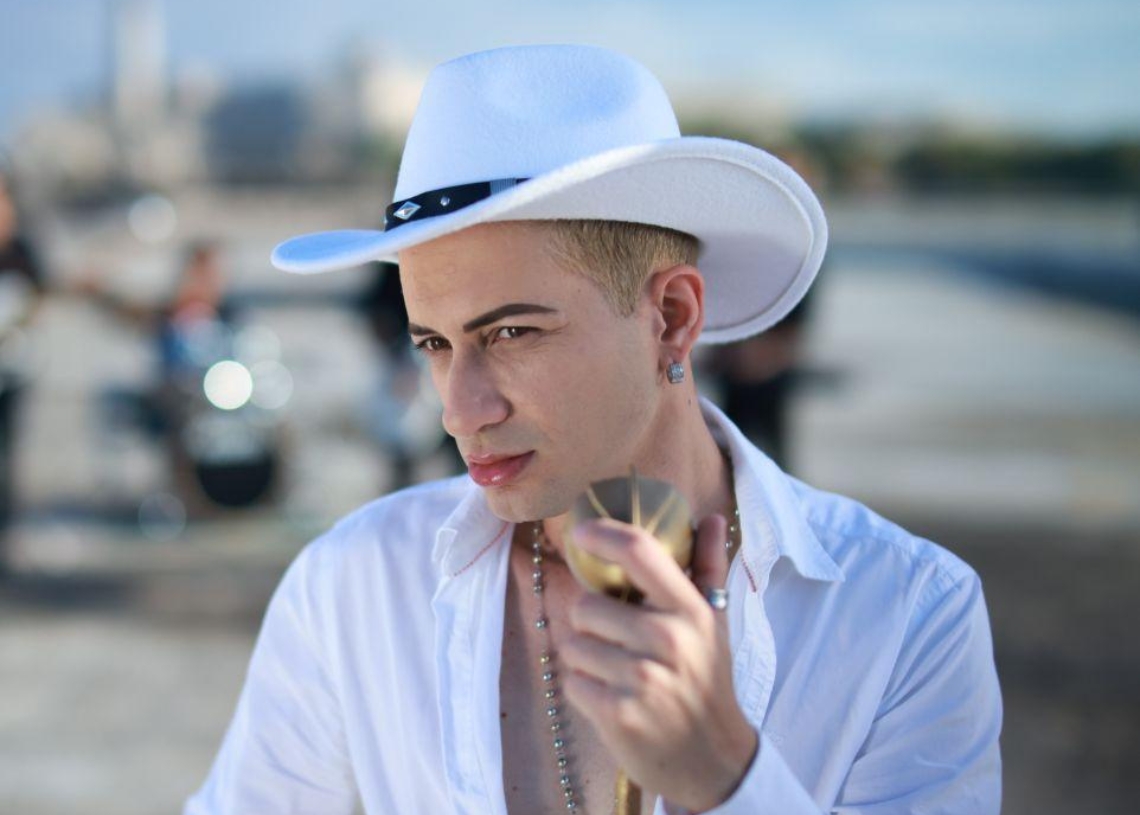
Jorge Soto (Holguín, March 12, 1986) took his first steps in music in his native Holguín. At the beginning, he performed songs by world pop celebrities such as Ricky Martin and Chayanne.
In 2005, after moving to Havana in search of work opportunities, Papushi, as he is known in the artistic world, recorded his first two songs under the musical production of Ernesto Blanco.
“Sexy” was his debut song on Radio Cadena Habana, and Soy Papushi (2007) was his first solo album.
In 2009, he joined the roster of the Barbarito Diez Provincial Music Company of Las Tunas as a professional singer.
He then returned to Havana, where he recorded his second album, Como un niño bueno (2014).
Between those beginnings and his recent win at the Premio Tejano Mundial in the Cumbia Pop Song of the Year category (2025), there’s a long and arduous journey.
Photo: Courtesy of the interviewee.
Your beginnings were filled with a lot of activity in terms of music and the places you visited throughout Cuba. What memories stand out from those early years?
It was 2002. I went to a disco bar in Holguín where they held karaoke competitions as part of a show. The friends I’d gone with told me to go ahead and sing; they knew I really liked music, but I’d never sung in public. I did so with the song “Laura no está,” a hit by the Italian singer Nek, and it was so well received that I returned to that place night after night, eager to sing again.
The decision I made when I moved to Havana, a place completely unknown to me and very different from Holguín, took me a little time to adapt to, but I had to do it. I wanted to begin my professional career in music. That was in April 2005.
If you had to briefly describe how your career has developed from the beginning to the present, what would you say?
It has been a journey of great perseverance, total dedication, and a lot of sacrifice. Music has been a dream that I have had to fight for practically alone, especially in the beginning.
Photo: Courtesy of the interviewee.
You started singing house and pop songs, and composing ballads and rancheras. You ended up transforming Selena’s Tex-Mex into urban music with the 2018 release of the album Por siempre Selena. Why did you decide to venture into such different genres?
They were different stages of my life. I’ve been in music for 20 years now, and I initially wanted to experiment with dance and house, then urban, bachata, pop ballads, and others, until recently arriving at the Tex-Mex genre. The truth is, I like to test myself as a performer, to feel like I can do different genres. Maybe I was looking for the style I felt best with, but I’ve liked them all.
What musical genre do you prefer?
Without a doubt, Tex-Mex cumbia, which is what I’ve been doing for over a year. It was the first musical genre I became interested in as a child, through Selena’s music.
You’ve also written songs for singers like Yolie, Yenisey del Castillo, Rafael Espín and Leyanis López. They’ve become hits. Between writing and performing, which facet do you enjoy the most?
I love writing. It doesn’t matter if there are many songs already written that haven’t been recorded; composing is a form of expression that comes from my soul and heart. Almost everything I write I’ve lived and felt.
What do you consider to be the hallmark of your lyrics and performances?
Feeling. When I write and sing, I always try to give them that, since I almost always write about love or heartbreak.
Photo: Courtesy of the interviewee.
Are there any differences in your creative process when you compose for another artist?
I usually write the song as if I were going to perform it myself. Then I suggest to the singer what I think would fit them. I did that from 2013 to 2021. After that, I dedicated myself more to writing for myself. Doing both at the same time took up a lot of my time; singers are very demanding.
Among the achievements you’ve reached during your two-decade career was the song “Bailando con Juana” (2017), a duet with Juana Bacallao. It became a radio hit, as well as number one on the Pistacubana website and the annual Los Lucas video. Has there been another moment like that that you consider a turning point in your career?
Yes; it was in 2015, when I achieved my first success composing for other artists in Cuba. The ranchera-pop ballad “Te borré de mi vida,” performed by Leyanis López, became a hit in Cuba, despite the fact that this musical genre isn’t very common on the island’s music scene. After two years writing songs for Cuban singers, that song gave me the recognition I needed as a composer.
Who have been the main musical influences, both Cuban and foreign, in your career?
I admire many Cuban and international artists, but Selena is the main inspiration in my music. There are also others like Celia Cruz, Benny Moré, Gloria Estefan, Paulo FG, Juan Gabriel, Polo Montañez, Madonna, Luis Miguel, Ricky Martin, and many more. Although they have different styles and eras, they are exemplary artists to follow in music.
What collaboration did you really want to achieve, and did it come to fruition?
I always wanted to unite my voice with Selena’s, because she is my inspiration in music, but she was no longer physically with me. But thanks to technology, in 2016, the first duet I made with her was released: her hit “Si una vez,” with music producer Carlos Lara “El Anarkiologo.”
Then came two more duets of the songs “Como la flor” and “No debes jugar”; in which we experimented with the urban genre. It was a dream come true, especially because of the acceptance it achieved.
What has been the biggest challenge you’ve faced since beginning your career?
To never give up on anything or anyone, and to always defend what I believe in and what I want to achieve.
How do you long for public recognition?
As a Tex-Mex singer, I think I’m achieving it, both in Cuba and in Texas and Mexico.
After the release of albums like Por siempre Selena (2018) and El irrepetible (2020), you’ll release El rey del tex-mex in February 2024. On this compilation, you included the song “Te digo adiós,” which a few months ago received the Premio Tejano Mundial in the Cumbia Pop Song of the Year category (2025). What does it mean to you to be the first Cuban to win an award in this competition?
It’s very important. I still can’t believe it. It’s a sign that this is the path I should follow in music.
Do you feel it as a personal or collective victory?
Both. Personally, if I hadn’t decided to make this album, it wouldn’t have been released and I wouldn’t have won the award. But it’s also a collective victory. Music producer Carlos Cartaya did a great job on this album. Other people supported me and believed in me.
“Te digo adiós” was one of five songs nominated in the category during the fifth edition of the event, which recognizes Tejano music hits worldwide and was held in San Antonio, Texas, United States. What’s next for Papushi’s artistic career after achieving this triumph?
Finishing my album El rey del tex-mex, which I decided to name in honor of Selena, the queen. Then, I want to tour Texas and Mexico first, and maybe this year, perform a duet with Alicia Villarreal, the queen of Regional Mexicano, who knows my work and has shown admiration for it.
The cast of “Buena Vista Social Club” (Photo: Matthew Murphy)
by Darryn King • May 6, 2025 — Broadway.Com
Buena Vista Social Club, the musical telling of the story behind the landmark Afro-Cuban jazz album of the same name, will embark on a North American tour next year. The tour will launch in Buffalo in September 2026, with planned stops in Washington, D.C., Chicago, Los Angeles and many other cities. Casting, exact dates and additional cities will be announced at a later date.
“It is an incredible honor to bring Buena Vista Social Club to Shea’s Performing Arts Center as the first stop on its tour,” said Albert Nocciolino, President & CEO of NAC Entertainment, in a statement. “We’re proud that Buffalo audiences will be the first to experience this brilliant, electrifying production where live music is the heart of the show, and with exceptional performances that honor the Buena Vista Social Club legacy.”
Buena Vista Social Club is currently nominated for 10 Tony Awards, including for Best Musical. It features a book by Marco Ramirez and choreography by Justin Peck and Patricia Delgado. Saheem Ali directs.
Step into the heart of Cuba, beyond the glitz of the Tropicana, to a place where blazing trumpets and sizzling guitars set the dance floor on fire. Here, the sound of Havana is born—and one woman’s remarkable journey begins. A tale of survival, second chances and the extraordinary power of music, Buena Vista Social Club brings the Grammy-winning album to thrilling life and tells the story of the legends who lived it.
With continued support from Vietnamese experts, the “shrimp farming for hunger elimination” model is gradually taking shape in Cuba, creating jobs for thousands of local workers.
May 5, 2025
Havana (VNA) – Despite the geographical distance, the Vietnam–Cuba friendship has been continously fostered through practical cooperation projects, notably a high-tech intensive shrimp farming model in Camagüey province.
The initiative stands as a vivid testament to the comprehensive cooperation between the two nations, contributing not only to increased aquaculture productivity but also paving the way for sustainable development of Cuba’s fisheries sector.
Launched in 2024, the project’s first production cycle has yielded encouraging results. After just 121 days, five pilot ponds in Santa Cruz del Sur, Camagüey province, harvested 20 tonnes of shrimp or 4 tonnes per hectare, a significant achievement given the current challenges facing Cuba’s aquaculture industry. Vietnamese expertise has played a key role in this success, with a team of four seasoned engineers working closely alongside Cuban technicians throughout project implementation.
Building on initial success, both sides are working to expand the model to 10 hectares in Camagüey, aiming to reach a yield of 45 tonnes in the second half of 2025. The project fully applies Vietnam’s advanced shrimp farming technology, including modern aeration and water filtration systems, along with high-quality feed and care protocols.
Miguel Antonio Manso Díaz, head of production at the Cultisur Unit in Santa Cruz del Sur, noted that the second production cycle began in late April on a 5-hectare site. They have prepared 10 out of 30 ponds, stocking at a density of 100 shrimps per square metre, targeting a productivity of 900 to 1,000 kg per hectare.
The model is being replicated beyond Camagüey in key provinces such as Villa Clara in central Cuba and Pinar del Río in the west, bringing practical benefits as Cuba strives to overcome sanctions-related challenges. The project not only boosts productivity but also facilitates comprehensive technology transfer, from cultivation techniques to production management.
This cooperation project is opening new prospects for Cuba’s aquaculture sector, addressing food security, while laying the groundwork to attract investment in high-tech agriculture. With continued support from Vietnamese experts, the “shrimp farming for hunger elimination” model is gradually taking shape, creating jobs for thousands of local workers.
Cuba is steadily mastering modern shrimp farming technology, moving toward sustainable and self-reliant aquaculture development. The success of the project once again underscores the enduring vitality of the traditional Vietnam–Cuba friendship and marks a new chapter in bilateral economic and technical cooperation based on mutual benefit and sustainable development./.
HAVANA, Cuba, May 5 (ACN) Cuba is attending the Mendeleev International Chemistry Olympiad, which began on Sunday and will last until May 13 in Belo Horizonte, capital of the Brazilian state of Minas Gerais.
The competition is for high school students and is considered one of the most prestigious and oldest in its specialty, informed the Communication Department of the Ministry of Science, Technology and Environment.
It pointed out that four young people and a mentor will take part in representation of the guest country, and it is the second occasion of Cuban presence in the event – the first took place in 2004.
The competition will include two theoretical and one practical exams, the winners will receive medals and certificates, each team the official protocol of the competition and the overall winner a prize in memory of V. V. Lunin. Lunin, an eminent Russian chemist, it added.
For the first time, PhD. Gerardo Manuel Ojeda, head of the pre-selection and professor of the Faculty of Chemistry of the University of Havana, is one of the experts invited to be part of the international jury.
Organized by the Lomonosov Moscow State University and the Melnichenko Foundation, it is considered the most difficult chemistry event in the world.
Wrestlers from Prince Albert and a local wrestling school in Cuba pose together at the Cuban National Training Center. (Photo submitted/Roxanne Richards)
Five time Olympic Champion Joins PA wrestlers
By Nick Nielsen
May 5, 2025 – SASK NOW.com
While the sport of wrestling often gets overlooked by some of the bigger sports in North America, the athletes that compete are some of the most dedicated you will find.
In other countries though, wrestling is a much bigger sport, and that’s why 20 wrestlers from the Prince Albert Wrestling Club found it to be such an honour when they were invited to head down to Cuba to train with a wrestling school at the Cuban National Training Center training facility.
According to manager and one of the coaches for the club Roxanne Richards, it started with an email at the end of June last year from Canada Cuba Sports and Cultural Festivals inviting them down south for a training opportunity in February of 2025. After a ton of fundraising and flight cancellations due to weather caused them to reschedule, they finally got to head down to Cuba for the Easter Break.
“I’m kind of that person that never says no to an opportunity, and I always tell my athletes, ‘if you have an opportunity presented to you, you say yes because you never know what you’re going to be giving up.’ So I said yes and I gathered up 20 athletes and a few coaches and we went down for a trip to Cuba. So what we did was since the end of June, we stepped into high gear and we did a lot of fundraising throughout the city. We did a raffle, we did barbecues, we we did all kinds of different types of fundraising to have enough money to go.”
The focus during the week long trip was mainly on wrestling and training, but the athletes also got to spend some time touring Havana, time on the beach, and some other touristy things to learn about the culture of Cuba. Still though, the wrestlers learned just as much about Cuban culture on the wrestling mats as they did around the community.
“The kids were able to connect with a lot of the Cuban athletes. That was absolutely amazing for them and eye-opening just to be able to go to a country like Cuba and learn what kind of life they have and what they experienced down there and the kinds of challenges that they have to face just to be able to train. The school that we trained with is a high performance wrestling school where they train three times a day and they go to school, so that’s really all they do, and most of the Cuban athletes were about 14 years old. Ours were a little bit older, but their level was a little step up from where we were. So it was really good training for us.”
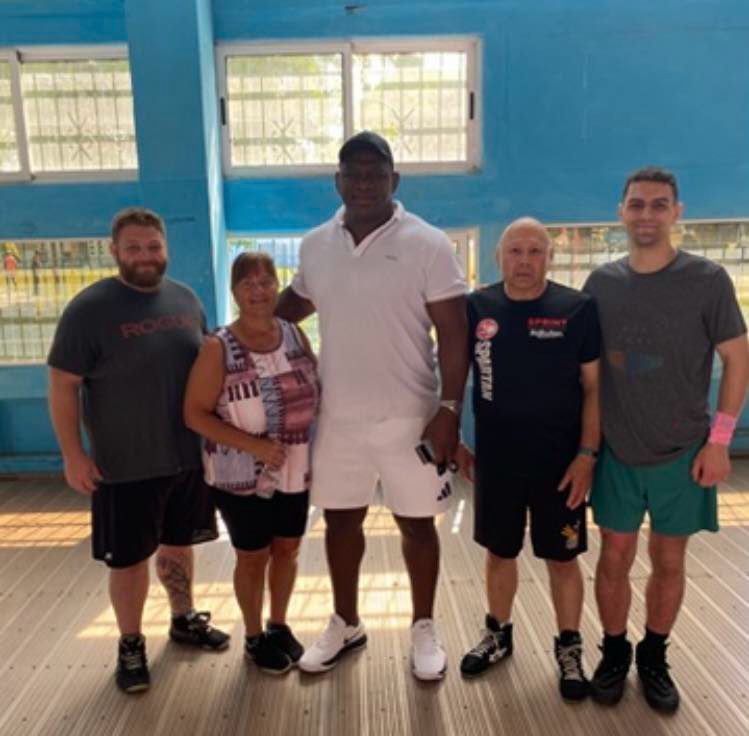
The Cuban National Training Center is where the Cuban Olympic team trains, and it isn’t much. Just a cement building with four wrestling mats and a few flags on the walls, but it’s a building where some amazing athletes honed their craft. During their time there they got to meet a national hero in Mijaín López, a five time Olympic and five time World champion in Greco-Roman style wrestling.
López retired from the sport last year at the age of 41 as one of the most accomplished wrestlers of all time. The Giant of Herradura is the only athlete in the world to ever win gold in the same event in five consecutive Olympic games. He carried the Cuban flag for his country in all five Olympic Games he competed in, and so even though the Prince Albert wrestlers didn’t get a chance to train with him, having him stop by was still an amazing experience.
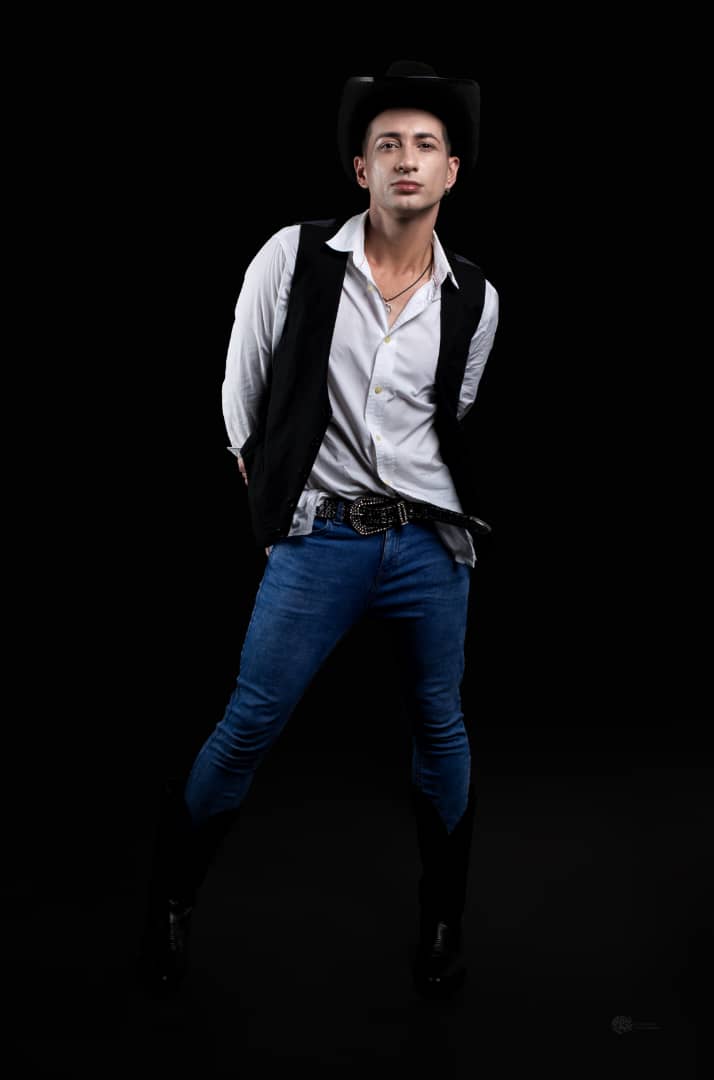
From left to right: Kalin Langford, Roxanne Richards, Cuban Olympic wrestling legend Mijaín López, Eric Honetshlager, and Conley McLeod. (Submitted photo/Roxanne Richards)
“He took pictures with us and he hung around for a few minutes and then he left, but it was pretty exciting to actually get a chance to meet him. To be able to be even in the building where he trained for the last 20-some years, it was pretty exciting. Even some of the Cuban coaches were crying when they saw him. This guy’s huge in Cuba obviously. It was a really, really great opportunity for the kids to be able to meet him.”
Even with the Prince Albert wrestlers being older and in theory stronger than the Cuban wrestlers they trained with, the difference in skill and experience heavily favoured the Cubans. With the Cuban wrestlers training three times a day, they didn’t get any sparring sessions in because of the skill difference, but Richards said that they were able to pick up a ton of lessons to bring back to Prince Albert.
“Our cardio level was pretty even because in Prince Albert, our head coach who is Cody Souter, he trains hard with their cardio. The part that we noticed that they do so much more than we do, and we are going to start changing that, is their agility level, their speed, their fast twitch motion, their ability to switch from one thing to the other. Some of the training that they did was so fast and so quick, and we were a little bit slow.”
While a lot was learned on the tours around Havana about the country’s history and culture, a lot more was learned about human connection. While Prince Albert’s wrestlers and the Cubans didn’t understand each other’s language, they were able to bond and have fun together through the one thing that connected them: the sport of wrestling.
“It was interesting because with the language barrier, you don’t get to explain where your hands should go or your arm or your leg. You have to show it, so some of our kids were laughing, they said, ‘it’s like having a full on game of charades’ because you have to just use your body to explain things and it was really challenging for them, but it was so good just to be able to to communicate that way which goes to show that you really don’t need the language. A wrestler is a wrestler no matter where you are.”
While the opportunity to return hasn’t been expressed yet, Richards said she would absolutely jump on the opportunity to take members of her team down south again.
Cuba has ignited a fresh wave of tourism cooperation within the ALBA-TCP bloc by championing multi-destination travel packages and pushing for stronger airline integration among member nations. This strategic move aims to enhance regional connectivity, attract more international visitors, and position the alliance as a unified tourism corridor. By focusing on shared branding, sustainable development, and streamlined air travel, Cuba is driving a collaborative agenda that seeks to transform the bloc into a seamless, multi-country travel experience.
In a strategic push to revitalize regional tourism, Cuba is taking a lead role within the ALBA-TCP (Bolivarian Alliance for the Peoples of Our America – Peoples’ Trade Treaty) by spearheading initiatives aimed at enhancing travel connectivity and destination integration across member nations. A high-level tourism-focused meeting concluded on Friday with a renewed commitment to forging a unified tourism identity, advancing sustainable tourism, and coordinating airline partnerships to enable seamless regional travel.
The gathering brought together key stakeholders from ALBA-TCP member states, who examined several mechanisms to accelerate tourism development in the region. The initiative underscores Cuba’s role as a tourism pioneer within the bloc, helping catalyze shared economic benefits while adapting to the evolving global travel landscape.
Regional Integration Through Tourism: A New Strategic Roadmap
At the center of the dialogue was the development of multi-destination tourism products, designed to attract international travelers interested in exploring multiple countries in one seamless itinerary. By leveraging the cultural, natural, and historical richness of ALBA-TCP member nations, the bloc is building packages that appeal to both leisure and business travelers.
Delegates worked on defining a comprehensive roadmap to bring this vision to life. The roadmap includes timelines, technical recommendations, and collaborative action points that will align national tourism policies with broader regional goals.
Creating a Collective Identity: The Tourism Brand for ALBA-TCP
One of the central initiatives introduced at the meeting involved crafting a distinct tourism identity that would represent ALBA-TCP nations collectively on the global stage. This unified brand aims to position the region as a unique, interconnected travel corridor offering distinctive experiences across Latin America and the Caribbean.
The brand would not only elevate the international visibility of lesser-known destinations but also establish a strong regional narrative built around themes of culture, nature, wellness, and social harmony. This effort is expected to resonate with global travelers seeking authentic, multi-layered experiences in emerging travel markets.
A robust communications campaign will accompany the branding initiative. This campaign is expected to include promotional videos, social media engagement, joint participation in international travel expos, and digital marketing strategies aimed at both traditional and non-traditional source markets.
Strengthening Sustainable Development Goals in Tourism
In line with global travel trends, sustainable development emerged as a core pillar of the discussions. ALBA-TCP member states reiterated their commitment to developing tourism that preserves natural resources, respects local cultures, and generates inclusive economic growth.
The strategy places particular emphasis on:
Eco-tourism and green infrastructure
Community-based tourism models
Carbon footprint reduction efforts
Education and training in sustainable practices
By integrating sustainability into the broader tourism agenda, the bloc aims to enhance long-term resilience while meeting rising consumer demand for responsible travel.
Expanding the Air Connectivity Network
A critical component of the proposed integration is the flexibilization of aeronautical policies and the creation of regional airline interconnections. Participants outlined several strategies to support this, including:
Coordinated route development among national carriers
Shared investment in regional airports
Open skies agreements within the bloc
The introduction of inter-bloc air passes and code-sharing arrangements
This push toward enhanced air connectivity is intended to lower travel costs, reduce transit time between destinations, and increase the accessibility of multi-country tourism packages.
In a forward-looking move, representatives from various airlines are set to participate in upcoming workshops and consultations, aimed at aligning operational capacities with tourism objectives. This collaboration is expected to produce a more integrated flight network that connects both major cities and remote attractions across the bloc.
Corporate and Social Tourism on the Agenda
The initiative also places renewed focus on corporate and social tourism, recognizing the untapped potential of business and institutional travel within and beyond the region. This segment includes:
Conferences and trade events
Educational exchange programs
Cultural and sporting events
ALBA-TCP countries plan to enhance infrastructure and services geared toward hosting such events, which often lead to high-value tourism and foster intergovernmental cooperation.
Proposals include:
Dedicated business tourism zones
Joint event calendars
Cross-border event incentives
Streamlined visa processes for business travelers
Interest From Non-Member Operators
Notably, the ALBA-TCP initiative has started attracting attention from tourism operators outside the bloc, particularly those already active in Cuba. Their interest lies in the growing potential for regional market expansion through partnerships that align with the bloc’s new vision.
While formal accession is not on the table, these external operators may participate in joint promotional campaigns or serve as strategic collaborators in implementing new tourism products and interconnection plans.
This widening circle of engagement signals increasing confidence in the bloc’s capacity to offer a compelling and coherent tourism proposition.
Strategic Objectives and Implementation Milestones
The momentum sparked by Cuba’s leadership is set to translate into tangible actions over the next 18 months. The agreed-upon roadmap includes key deliverables, such as:
Launching a pilot multi-destination package by the end of the current year
Finalizing the ALBA-TCP tourism brand and visual identity
Holding aviation policy workshops with key airline partners
Launching joint digital marketing campaigns targeting Europe, Asia, and the Americas
Hosting a regional tourism summit to present the integrated offering to global stakeholders
These milestones are designed to lay the groundwork for long-term tourism growth and provide a replicable model for other regional blocs.
Opportunities and Challenges Ahead
The ALBA-TCP nations acknowledge that while the integrated tourism framework holds significant promise, several challenges must be addressed:
Regulatory harmonization across borders
Infrastructure development in under-connected areas
Currency exchange limitations
Aligning private sector expectations with public policy goals
However, the commitment demonstrated at the recent meeting—and the interest from external tourism entities—points to a growing consensus that the bloc’s collective tourism potential outweighs individual limitations.
With Cuba at the helm, ALBA-TCP is charting a course that could redefine how regional tourism functions in Latin America and the Caribbean—through cohesion, cooperation, and connectivity.
The Broader Economic Impact
Tourism remains a vital economic engine for most ALBA-TCP countries. By combining efforts and presenting a shared destination portfolio, the bloc is aiming to:
Boost tourism revenues
Diversify national economies
Enhance cultural diplomacy
Reduce reliance on single-source markets
This collective push is expected to increase inbound visitation numbers, create new jobs in hospitality and transport, and stimulate foreign direct investment in the tourism and aviation sectors.
Furthermore, the shared marketing of diverse attractions—from Cuba’s beaches to Bolivia’s highland culture and Nicaragua’s volcanoes—offers travelers a compelling and varied regional experience.
Cuba is driving a new phase of tourism growth within ALBA-TCP by promoting multi-destination travel packages and enhancing regional airline connectivity. This approach aims to unify member nations under a cohesive tourism strategy that boosts accessibility, sustainability, and international appeal.
Cuba’s leadership in this renewed tourism strategy for the ALBA-TCP bloc is igniting a transformative vision for regional travel. Through multi-destination offerings, strengthened airline connectivity, a unified tourism brand, and sustainable development goals, the bloc is preparing to position itself as a competitive, cooperative, and culturally rich tourism region on the global stage.
As new frameworks take shape and pilot projects are launched, the ALBA-TCP’s tourism integration could serve as a model for other regions seeking to harness collective strength in a rapidly evolving global travel industry.







 From left to right: Kalin Langford, Roxanne Richards, Cuban Olympic wrestling legend Mijaín López, Eric Honetshlager, and Conley McLeod. (Submitted photo/Roxanne Richards)