Ten U.S. students graduated last week from Cuba’s Latin America School of Medicine (ELAM).
The school trains young doctors from medically underserved communities in Latin America and the Caribbean, Africa and the United States. Cuba provides the students full scholarships, meals and lodging. Since it opened in 1999, ELAM has graduated more than 35,000 doctors.
One of the biggest medical schools in the world a decade ago, student numbers have dwindled. Even so, ELAM is currently home to students from over 90 different countries – including more than 170 Palestinian medical students. See our documentary From Gaza to Cuba about one of them HERE
Havana, July 30 (Prensa Latina) The General Union of Workers and Farmworkers of Mexico will work to promote and organize solidarity actions with the Cuban Revolution, according to a statement from the island’s Ministry of Foreign Affairs today.
According to the statement, the organization’s head of international affairs, Héctor Domínguez, expressed this commitment during an official meeting with José Maury, political advisor to the Cuban Embassy in Mexico.
Published on cubaminrex.cu, the text adds that Domínguez considered it important to “strengthen relations with the Cuban Workers’ Central Union and its unions” to “continue enriching the historic relationship of brotherhood between the workers and peasants of the two countries.”
The union leader also “thanked for the information about the United States government’s attacks against the Cuban people.”
Since its founding in 1949, the General Union of Workers and Farmworkers of Mexico has defended labor and farmworker rights, and is characterized by social struggle and the demand for optimal working and living conditions for its members.
It is currently a member of the World Federation of Trade Unions, established on October 3, 1945, in Paris and one of the oldest international trade union organizations in the world.
Haitian women having their blood pressure taken at a mobile clinic staffed by a Cuban medical brigade in Salomon market in Port-au-Prince.
The Cuban revolution endures despite more than 60 years of U.S. attacks. One system exploits the people, while the other prioritizes their needs. Which nation deserves the label of “failed’?
In an age where propaganda masquerades as truth and empire cloaks itself in the garb of “democracy,” few lies are as pervasive—or politically useful—as the assertion that Cuba is a failed state. This accusation, deployed with relentless regularity by U.S. officials, corporate media, and neoliberal ideologues, is meant to delegitimize a revolutionary and socialist project that has refused to bow before empire.
But what does it mean to be a “failed state”? And more importantly, who gets to define failure?
Let us be clear: Cuba is a besieged state, not a failed one. Under siege from the most powerful imperial force in the world—the United States—it has endured more than six decades of blockade, economic sabotage and subversion. The U.S. blockade is not merely a trade, financial and commercial embargo. It is an economic war designed to produce misery, scarcity, and discontent. It is a deliberate and cruel attempt to collapse a sovereign society. And yet, despite this onslaught, Cuba continues to pursue a project rooted in ethics, equality, and human dignity. It does not hide its problems; it confronts them.
Contrast this with the conditions in the so-called “developed” West. In the United States—the wealthiest country in the history of the world—over 40 million people live in poverty, with millions more living one paycheck away from destitution. Children go hungry. Entire communities are criminalized. Access to healthcare is rationed by income. Gun violence, mass incarceration, addiction, homelessness, and the erosion of democratic rights are not aberrations; they are features of a system in which profit trumps people.
In the United Kingdom, a country that once governed a vast colonial empire, the situation is no better. Austerity has gutted public services. Food banks have become institutionalized fixtures in working-class communities. The National Health Service, once a global model of publicly funded healthcare, has been bled dry by privatization. Homelessness is rising. Inequality is deepening. And the political class blames the poor for their own misery while rewarding the rich for their predation.
So let us ask: who is the failed state?
Cuba, despite having a GDP per capita a fraction of the U.S. or UK, provides universal healthcare, free education through to the doctoral level, and a literacy rate that surpasses many wealthy nations. Life expectancy in Cuba is on par with the U.S.—a country that spends more on healthcare than any nation on Earth, but still fails to provide it to tens of millions. In the midst of devastating shortages caused by the blockade, Cuba sent doctors to dozens of countries during the COVID-19 pandemic, while the U.S. hoarded vaccines and the UK prioritized profits for pharmaceutical companies.
And perhaps most importantly, when confronted with rising inequality and hardship, the Cuban state does not blame the people. It does not pathologize poverty. It does not criminalize desperation. It does not call the poor lazy, or the vulnerable expendable. It recognizes that social vulnerability is a collective challenge, not an individual failure.
As Cuban President Miguel Díaz-Canel recently affirmed, “The Revolution does not hide its problems. It faces them with ethics and social justice, even in the midst of extreme circumstances.” This is the essence of revolutionary responsibility: to claim one’s people, even and especially in their suffering. Unlike the leaders of capitalist states, who see the working class and the marginalized as burdens or threats, Cuban leadership speaks of the vulnerable as ours. “Our homeless. Our inequalities. Our vulnerable youth.” In that single possessive word, “our”, is a world of difference.
This is the living embodiment of Amílcar Cabral’s revolutionary axiom: “Tell no lies, claim no easy victories.” Cuba does not pretend all is well. It does not present a façade of invincibility. But it does not give up. It does not disown the poor. It does not privatize social suffering or profit from despair. It seeks, even amid crushing sanctions, to provide care.
More than thirty targeted social programs have been launched in Cuba to address inequality and social distress. These are not neoliberal “efficiencies” or charity-based palliatives. They are redistributive, rights-based initiatives aimed at repairing and restoring the social fabric. And they are pursued not because they are easy—but because they are right.
Meanwhile, in Western nations that claim to be paragons of democracy and development, politicians deploy rhetoric of “personal responsibility” while enabling systems of exploitation. Homeless people freeze on the streets while billionaires buy their next yacht. Prisons expand while schools decay. Fossil fuel corporations rake in record profits as the world burns. And rather than speak of our vulnerable, Western leaders speak of “those people,” as if inequality and immiseration were a natural condition or personal choice.
Again, we ask: who is the failed state?
Failure is not the inability to avoid hardship. It is the refusal to respond to hardship with dignity and justice. A failed state is not one that suffers, but one that abandons. By this measure, it is not Cuba that has failed. It is those Western states that have abdicated any sense of collective responsibility, any commitment to equality, equity, and any belief in solidarity.
Cuba, on the other hand, chooses the harder road—the one lined not with wealth but with principle. It stumbles, it struggles, but it does not surrender. And in refusing to lie, to claim easy victories, or to devalue human life, it reminds us of what a government can be: not a guardian of the financial oligarchy but a steward of dignity.
So the next time the charge is made—Cuba is a failed state, ask: compared to what? To a world where billionaires fly to space while countless millions can not afford rent? To a system that sacrifices the poor on the altar of profit? To societies that punish vulnerability and commodify health, education, even life itself?
Cuba is not perfect. No society is. But it is a project still rooted in justice, still committed to the people, still alive with revolutionary ethics. That, in a world drenched in cynicism and cruelty, is not failure. It is the kind of success that capitalism will never understand.
So let us ask again—clearly, honestly, and with conviction: Who is the failed state? And which is the failed system?
Isaac Saney is a Black Studies and Cuba specialist and coordinator of the Black and African Diaspora Studies (BAFD) program at Dalhousie University in Halifax, Nova Scotia.
Today a great crime is being committed by the U.S. government, with Donald Trump and Marco Rubio deepening further the cruel policies of Joseph Biden and Antony Blinken aimed at asphyxiating the Caribbean island of Cuba through unremitting, cruel, extraterritorial sanctions, which amount to bullying economic warfare.
Ever since the triumph of the Cuban Revolution on January 1, 1959, the United States government—under both Republican and Democratic White Houses and Congresses—has been committed to the destruction of its example by any means possible. This bipartisan Washington policy is hated hemispherically and internationally. This is registered in near-unanimous condemnation every year in the United Nations General Assembly for the past 30 years.
U.S. anti-Cuba policy is also broadly opposed in the United States. Over 116 City Councils—including cities large (Chicago, New York City, Pittsburgh) and small; dozens of central labor councils and national and local labor unions; and religious institutions. (For the full list, visit nnoc.org.)
Over these many decades, those means have gone beyond mendacious propaganda and conscious disinformation. More important has been direct material aggression and covert subversion: assassination (the revolutionary leader Fidel Castro was targeted for murder some 638 times); terrorism (over 3,500 Cubans have been killed in terrorist attacks organized illegally from U.S. territory); industrial sabotage; mercenary invasion at the Bay of Pigs; the introduction of biological agents to spread dengue fever; and many more sordid examples. All of this has been thoroughly documented in files released under the Freedom of Information Act and innumerable books and documentary films.
So why has the U.S. government continued to expend so much energy and resources to overthrow the government and social system of our Caribbean neighbor? Is it really a sincere opposition to “communist tyranny” and for “democracy”?
Such boilerplate of course is belied by Washington’s historical record of installing and supporting vicious military dictatorships that grind workers and peasants into destitution in the service of the U.S. capital. It’s a bloody legacy of horrific crimes of U.S. interventionism, overthrowing democratically elected governments, and has resulted in many, many hundreds of thousands of lives extinguished.
Perhaps the answer has more to do with the example of Cuba’s amazing social advances which resonate across the Americas and the world: eliminating [illiteracy]; smashing Cuban-style Jim Crow segregation; elevating the status of women; access to free health care, a state-of-the world science and biotechnology industry that has life-extending medications and vaccines for lung cancer (collaborating with the Roswell Center in Buffalo, NY), diabetic foot ulcers and much more. Perhaps most decisive has been Cuba’s foreign policy of international solidarity and support for the struggles of working people, which invariably is at odds with U.S. foreign policy.
President Barack Obama, under mounting hemispheric pressure, started to shift U.S. policy in the direction of U.S.-Cuba normalization in 2014-15. Great hopes were raised in Cuba and around the world. He removed Cuba from the spurious U.S. “State Sponsors of Terrorism” list. Over the course of his first term, Donald Trump reversed nearly all of Obama’s limited but important policy changes. Surprising some and breaking his 2020 campaign promises, Joseph Biden continued and even deepened Trump’s policies. Trump 2 and Rubio are preparing yet further bipartisan aggression.
Today, Cuba is under very harsh economic circumstances. The accumulated damage of the U.S. economic war has been devastating: shortages, energy blackouts, long lines, rising costs, growing inequality. Most heartbreaking is the effect of the blockade on Cuba’s system of free, universal health care.
We are calling on people of conscience and consciousness in our beautiful region to speak out and act! Support and join the newly formed Upper Delaware River Cuba Si Coalition. Look for our website, which is under construction. Join us in this great cause!
Ike Nahem and Erin Feely-Nahem are longtime Cuba solidarity activists who honeymooned in Havana in 1998. They have organized dozens of delegations to visit the island. Ike is a retired Amtrak locomotive engineer and a Teamsters Union member. Erin is an LMSW and retired longtime leader in the fields of domestic violence, where she organized shelters for battered women (and some men), low-income housing and HIV-AIDS advocacy in New York City. They live in Cochecton. Both are founders and organizers of Cuba Si NY/NJ and the International US-Cuba Normalization Coalition.
Havana, July 29 (Prensa Latina) Mexican federal representative Damaris Silva Santiago and Cuban National Assembly of People’s Power (parliament) representative Alberto Núñez Betancourt held a meeting in Havana, the Foreign Ministry reported today.
According to the notification, “as part of his visit to the island, Silva Santiago met at the parliamentary headquarters with Núñez Betancourt, vice president of the legislative body’s International Relations Committee.”
“During the meeting, they discussed parliamentary diplomacy and the need to enhance mutual understanding and expand channels of collaboration between Cuba and Mexico,” the statement added.
Representative Damaris Silva Santiago, a member of the National Regeneration Movement (Morena) party, is secretary of the Chamber of Deputies’ Committee on Migration Affairs and the thematic coordinator for Mexicans Abroad.
She has held various positions during a political career spanning at least 30 years and is also recognized for her activism on behalf of indigenous communities and in defense of migrants.
Tatyana Mashkova, the Director General of the Russian National Committee for Economic Cooperation with Latin American Countries, announced that Russia and Cuba are working ‘in parallel’ to develop a logistics hub at the deep-water Port of Mariel, approximately 40 kilometres west of the Cuban capital, Havana.
The port’s purpose is to facilitate trade between Russia and Latin America. Mashkova, speaking to the Russian state-owned domestic news agency RIA Novosti, stated “our companies could benefit from this Cuban platform to deliver their goods more actively throughout the region”.
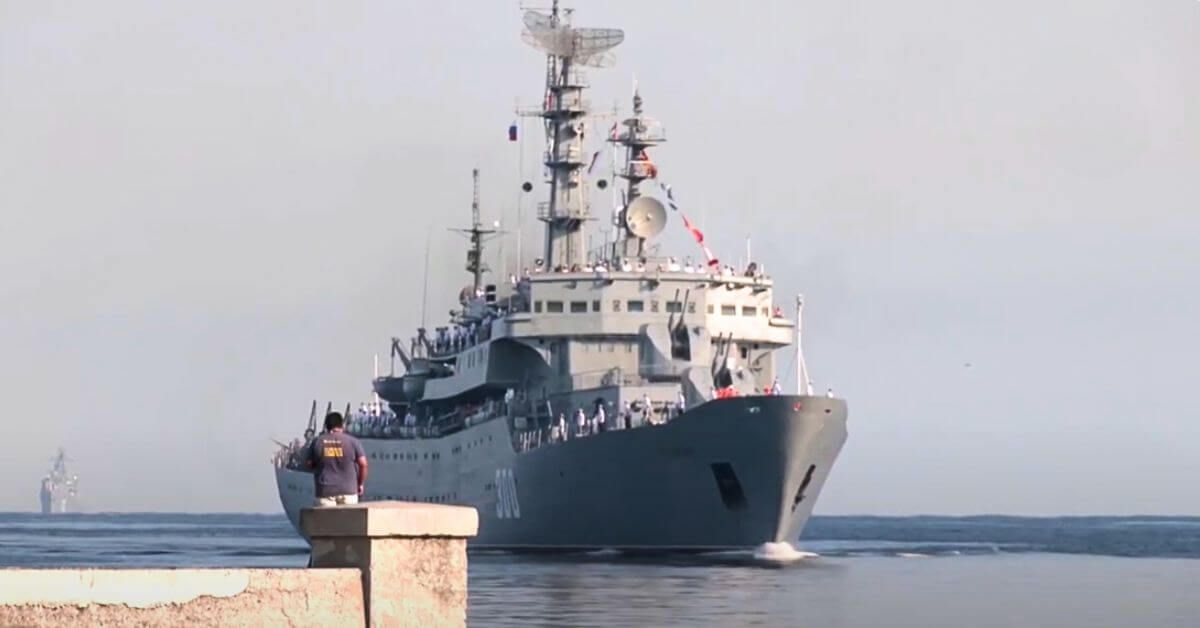
The project is the latest example of Russo-Cuban collaboration. In recent years, Russian warships have docked in Havana to conduct military exercises, Cuban mercenaries have fought for the Russian military in Ukraine, and Russian fuel shipments worth tens of millions of dollars have helped to meet Cuba’s energy needs.
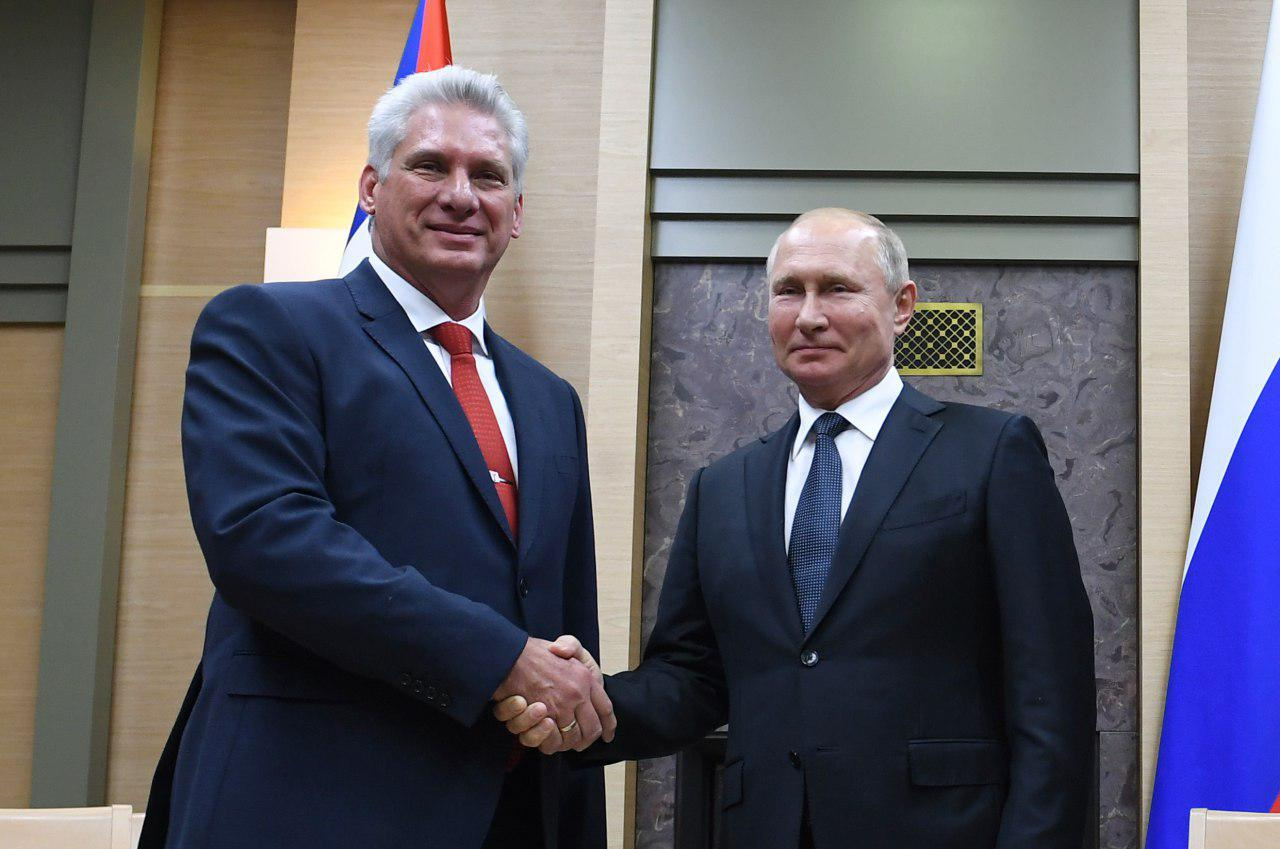
Following the meeting between Cuban President Miguel Díaz-Canel and his Russian counterpart Vladimir Putin in May 2025 in Moscow, Russia vowed that its businesses would invest over $1 billion in Cuba by 2030 to help combat Cuba’s current economic woes, prompted by the inefficiency of Cuba’s state-run production, the recent decline of the Cuban tourism industry, and the Trump-led economic embargo.
Russian and Cuban Presidents Vladimir Putin and Miguel Díaz-Canel meet in Russia in 2019.
The increasingly close relations of the two nations has historical precedent. After the successful Cuban Revolution of 1959, the country aligned itself politically with the now-defunct Soviet Union (USSR).
At the time, the USSR provided Cuba with the financial aid necessary to survive the American trade embargo of 1962; the Soviet bloc bought Cuban sugar and nickel for a high price and sold the Cubans cheap machinery and petroleum.
Fidel Castro, leader of Cuba both during and following the revolution, also secretly agreed to host Soviet nuclear missiles aimed at preventing invasion attempts by the United States. This contributed to the escalation of the Cuban Missile Crisis of 1962, which brought the world to the brink of nuclear war.
The recent intensification of the Russo-Cuban cooperation in economic, military and diplomatic matters is largely attributable to their shared animosity, both historic and current, towards the United States.
The US has maintained its trade embargo against Cuba since 1962 and has been the primary supplier of weaponry to Ukraine since the Russian invasion of its neighboring state in February 2022.
A Russian warship arrives in Havana in Summer 2024.
The Russian Foreign Ministry decried the decision of the current US government to name Cuba a state sponsor of terrorism and argued that American sanctions against Cuba are “doomed to failure”.
The Cuban government, on the other hand, has consistently refused to condemn Russia’s invasion of Ukraine, laying the blame for the conflict firmly on the shoulders of the U.S. and its NATO allies.
Cuban President Miguel Díaz-Canel, while visiting Russia in 2022, stated in an address to the Russian State Duma that “the causes of the conflict … [are attributable to] the aggressive policy of the United States and […] the expansion of NATO towards Russia’s borders”.
Cuba’s alignment with Russia represents one facet of its integration into a bloc of nations that seek to challenge western economic, institutional and political primacy; BRICS.
Cuba joined BRICS – an intergovernmental organisation that seeks to reduce international reliance on the American dollar, increase cooperation between developing countries and challenge the concentration of political and economic power in the U.S. and Western Europe – as a partner this year.
Cuba’s accession to the BRICS group, according to Alice Velicogna of the Italian think tank Istituto Analisi Relazioni Internazionali, represents a fortification of “its economic and political ties with key global players outside the Western sphere of influence” and a symbol of its “ability to build strategic alliances despite decades of U.S.-led sanctions and diplomatic isolation”.
Havana, July 29, 2025.- The president of the National Assembly of People’s Power of Cuba, Esteban Lazo Hernández, is attending the Sixth World Conference of Speakers of Parliament, taking place from today until July 31st.
The conference, which will take place at the Palais des Nations (headquarters of the United Nations Office in Geneva), is hosted by the Inter-Parliamentary Union in partnership with the United Nations.
This is Lazo Hernández’s first time at this international event, which has been held every five years since 2000 and serves as a unique platform for participation and high-level discussions between the highest-ranking parliamentarians from around the globe.
During the Conference, the Cuban parliamentarian will take part in the general debate, panel discussions, and other forums.
He will also hold meetings with parliamentary representatives from various countries.
Addis Ababa, July 28 (Prensa Latina) Deputy Prime Minister Jorge Luis Tapia Fonseca reaffirmed Cuba’s willingness to contribute to positioning food systems at the center of development agendas to combat hunger, poverty, and inequality.
Speaking at the opening session of the Second Review of the United Nations Food Systems Summit (UNFSS+4), Tapia Fonseca reaffirmed that achieving these goals, especially for countries in the South, requires a joint and united mobilization of all.
She called for the promotion of cooperation mechanisms in the agricultural sector that would allow for the creation of platforms for food chains with a focus on social protection, with the participation of young people, women, and rural communities.
He also called for increased collaboration among countries, prioritizing the exchange of experiences in food security, sovereignty and self-sufficiency, nutrition and health, science and innovation, agroecology, agricultural extension, and the proper management of food loss and waste, among others.
“None of this will be possible as long as the current unjust international order prevails, in which trillions of dollars are spent each year on military spending and in which many of us are victims of unilateral coercive measures that hinder our development aspirations,” the Havana representative denounced.
Along the same lines, he stated that this international order is incapable of preventing the inhabitants of the Gaza Strip in Palestine, a victim of genocide by Israel, from facing a serious food crisis and hundreds of people, including children and the elderly, from dying of malnutrition and hunger.
Cuba, he emphasized, despite the economic, commercial, and financial blockade imposed by the United States government, remains committed to seeking creative solutions that will allow it to move forward and counter the impact of this unilateral measure.
He mentioned the Food and Nutrition Sovereignty and Security Law, approved on the Caribbean island in 2022, which facilitates the joint action of all national and local institutions and structures linked to food production, with the primary support of agroecological development and its proven environmental protection.
“The resources to eradicate hunger and transform food systems are available; all that’s needed is political will and commitment to use them for the benefit of the people,” the Cuban deputy prime minister asserted.
In this regard, he added that South-South cooperation demonstrated that with solidarity and determination, it is possible to promote food security.
He expressed his gratitude to the United Nations and the governments of Ethiopia and Italy for organizing UNFSS+4, as well as for the hospitality provided to the Cuban delegation.
Havana, July 28 (Prensa Latina) A group of young people from the United States graduated from the Latin American School of Medicine in Cuba (ELAM), the Ministry of Foreign Affairs announced today.
A text published on the website cubaminrex.cu expresses the “most sincere recognition” for the young people and admiration for their families “for having accompanied them on this path of dedication and commitment,” although it does not specify how many completed their studies.
Under the image of ten graduates, he notes that “in a world marked by inequality in access to healthcare,” Americans have just “completed one of the most transformative experiences of their lives.”
He also considers ELAM, “conceived in 1999 in response to the devastation caused by two hurricanes that struck Central America and the Caribbean,” an “institution born of Cuba’s commitment to life, solidarity, and social justice.”
“What was then a humanitarian emergency gave rise to a lasting project of hope: free training for young people from impoverished communities in Latin America, the Caribbean, Africa, and the United States, so they can return as doctors to serve where they are most needed,” he notes.
Today, he adds, “those ideals take shape in the stories of these new American doctors, who have lived with students from more than twenty countries, sharing not only classrooms but also cultures, songs, dances, values, and dreams.”
“Diversity didn’t divide them: it united them. At ELAM, difference is celebrated and solidarity is cultivated as the seed of the more humane world we all deserve,” the statement notes.
It’s not just about rigorous academic training, he emphasizes, stating that ELAM forges awareness and prepares each student “to be, more than a doctor, a guardian of human dignity, a professional committed to their community and to health as a right, not a commodity.”
These young people, he adds, “will carry with them not only medical knowledge, but also a deeply supportive and transformative ethic.”
He also emphasizes that Cuba maintains, “despite enormous difficulties, a project that demonstrates that another world is possible when life is put before profit.”
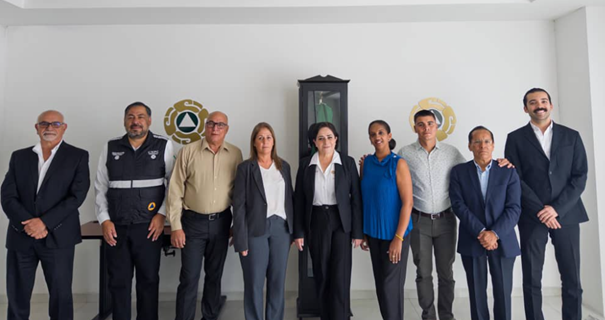
Cuban delegation from defense, meteorology & water agencies visited Mexico July 13-17 to enhance disaster risk cooperation. Meeting under CREWS initiative focused on sharing weather monitoring techniques & response strategies.
A Cuban delegation comprising representatives from the Estado Mayor Nacional de la Defensa Civil (EMNDC), the Institute of Meteorology (INSMET), the National Institute of Hydraulic Resources (INRH) recently visited Mexico to explore opportunities to collaborate on improving disaster risk reduction related to hydrometeorological hazards.
In Cuba, hydrometeorological risk management operates through close collaboration and direct information exchange between three key institutions: EMNDC, INSMET, and INDRHI. These organzations work collaboratively to enhance risk management services and reduce the impact of hydrometeorological events on vulnerable communities – a mission that has become increasingly critical as extreme hydrometeorological events intensify and weather patterns continue to shift.
From 13-17 July, a Cuban delegation met with Mexico’s National Civil Protection Coordination (CNPC) and the National Civil Protection Communications and Operations Center (CENACOM). Organized through the CREWS Accelerated Support Window for Cuba, the meeting established new lines of cooperation, focused on transferring best practices and techniques for monitoring hydrometeorological conditions, and updating early response plans.
Cuba’s Civil Defense system operates through an integrated institutional network that connects multiple sectors including health, meteorology, water resources, transportation, energy, and communications. This comprehensive approach enables rapid activation of action protocols at the national level. The system’s primary strength lies in its territorial and community mobilization capabilities, employing a preventive approach that has significantly reduced vulnerability to hurricanes, torrential rains, and droughts.
To maximize preparedness and response capabilities, and improve key impact reduction indicators, Cuba continues to seek opportunities for international cooperation. The country aims to facilitate knowledge and best practice transfers while adopting new technologies that will enhance efficiency in disaster risk management.