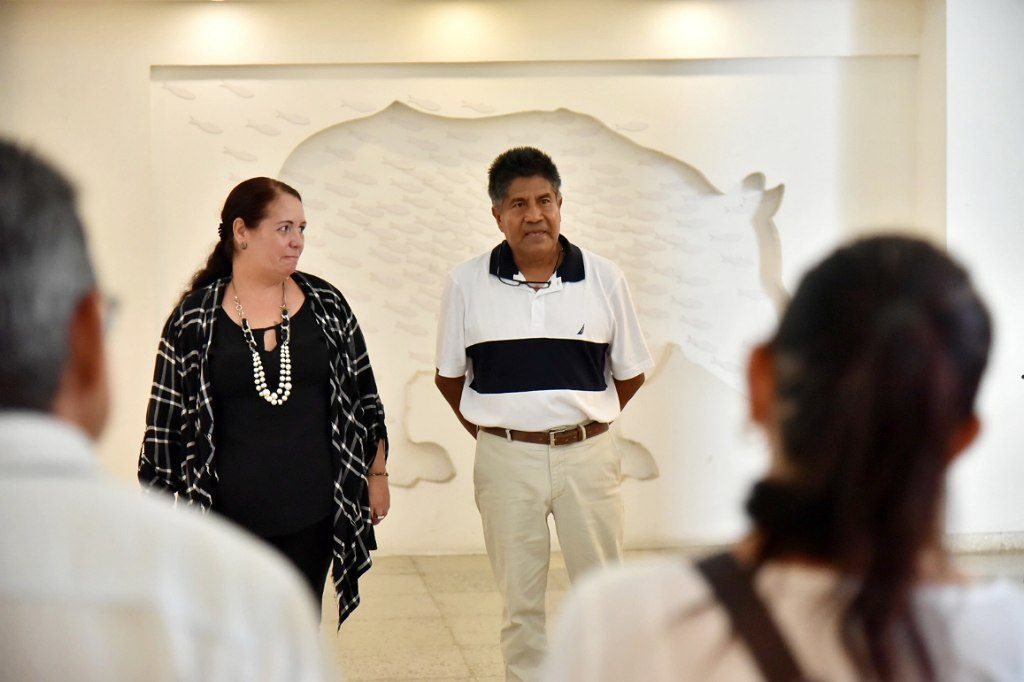
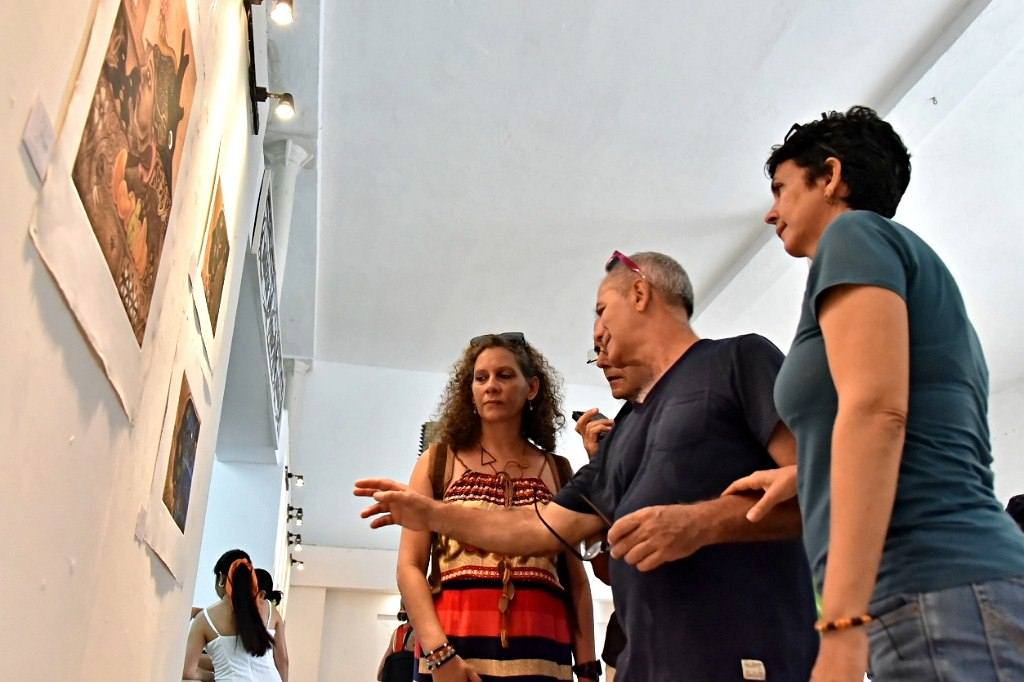
Havana, Sep 5 (Prensa Latina) The exhibition “Women of the Island,” by Mexican artist Enrique Flores, opened today in Old Havana. In it, the artist reflects his feelings of love for Cuba and the women born here.
The Experimental Graphic Arts Workshop received Flores’ works, and they are now on display in its Main Gallery as a tribute, celebration, and respect for the women of this country.
My work always keeps this being in mind, and the theme of them predominates in my work, as they play a predominant role, Flores noted.
I dedicate the exhibition to the Cuban people, but above all, to the women of the island because, as everyone knows, they are the driving force of society, he said.
I come from the generation of the 1960s in Mexico, and we grew up hearing news from the sister nation of this island. As time went by, we wanted to learn about the people here and their customs, but it was only a few years ago that I discovered Cuba, and I loved it, he commented.
The idea of exhibiting in this country is because the artist has joint works with Cuban institutions.
I want the people here to know my work, which isn’t anything special, but it’s made with a lot of love; for me, women are an important part of every society and every era, she noted.
There are historical passages that have been defined by women, and unfortunately, sometimes they don’t get the prominence they deserve, but they have made crucial decisions, and that has captivated me, she declared.
I don’t know when they coined the term “weaker sex,” because it’s quite the opposite, Flores concluded.
The Mexican artist plans to return to Cuba in January or February to work on several productions at the Taller Experimental de la Gráfica.
Mexico City, Sep 5 (Prensa Latina) Details of the 41st edition of the Jazz Plaza International Festival, scheduled to take place in Cuba from January 25 to February 1, 2026, were announced in this capital by its president, Víctor Rodríguez.
The prestigious event, under the artistic direction of Roberto Fonseca, will extend its performances to venues in different Cuban provinces, especially Havana, its main venue, and Santiago de Cuba, according to a press conference.
Also participating in the meeting were Samuel Fonseca Martínez, executive director of the Benny Moré Mexico-Cuba Cultural Center; Mario Escalona Serrano, general director of Prelasa; and Norma Rodríguez Derivet, cultural advisor at the Cuban Embassy in Mexico.
The organizers emphasized that Jazz Plaza has established itself as the most important event of its kind in the Caribbean nation, bringing together prestigious international figures and young talents each year in spaces that foster creativity, musical diversity, and dialogue between cultures.
According to reports, among the most anticipated offerings of the 2026 edition is an inaugural concert by maestro Frank Fernández, a symbol of Cuban piano, alongside students from the country’s art schools, on January 25 at the National Theater of Cuba.
Also considered top-notch performances are the concerts promised by pianists Ernán López-Nussa and Dayramir González, as well as composer and guitarist Héctor Quintana.
During the festival, a special tribute will be paid to the legendary Arsenio Rodríguez Group, and performances by Havana D’Primera, Alain Pérez, Isaac Delgado, and other renowned artists are expected.
The event will also include a wide range of musical genres, as was the case in the last edition, where more than 400 artists and five symphony orchestras participated.
The official poster for this 41st edition of Jazz Plaza is the work of maestro Sosabravo, one of Cuba’s greatest visual artists, who will celebrate his 95th birthday on October 25.
During her address, Norma Rodríguez Derivet, Cultural Counselor at the Cuban Embassy in Mexico, recalled that Cuba is known as “the Island of Music” and emphasized that, despite the difficulties imposed by the U.S. blockade, the Festival remains a space of resistance and international outreach.
He noted that the embargo has limited the participation of musicians from other countries, such as Puerto Rico, who will not be able to attend this time, although he reaffirmed the desire to maintain the diversity and spirit of unity that characterizes the event.
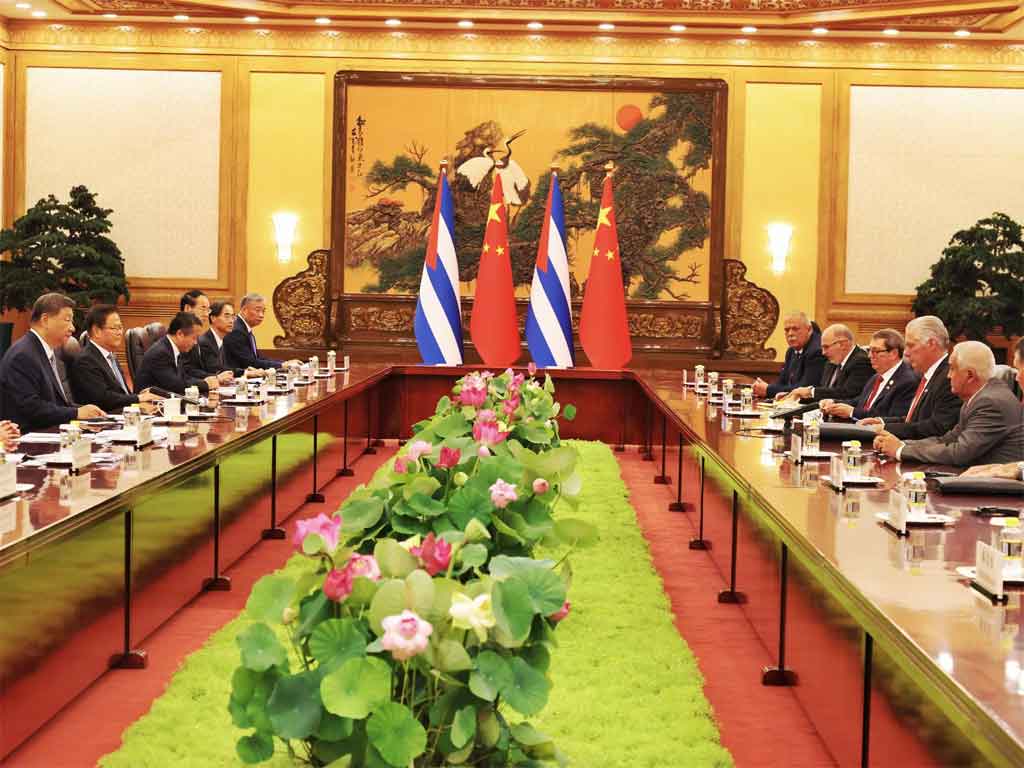
Chinese President Xi Jinping on Thursday said that Beijing will “firmly support” Cuba in its “just fight” against interference and embargo.
Xi made the remarks as he hosted Cuban President Miguel Diaz-Canel in Beijing, a day after China staged a large-scale military parade marking the 80th anniversary of the end of World War II.
Noting that this year marks the 65th anniversary of the establishment of relations between Beijing and Havana, Xi told his Cuban counterpart that the two nations should take this as an opportunity to enhance bilateral ties to a “higher level and bring more benefits to the two peoples.”
Xi urged the two sides to “commit to a shared future, deepen high-level political mutual trust, further intensify high-level exchanges, better share experience of Party and country governance, firmly support each other, and continue to deepen the special bond of sharing weal and woe,” according to a statement from the Chinese Foreign Ministry.
“China will continue to offer help and support to Cuba to the best of its capability,” he added, noting that Beijing “will continue to firmly support Cuba’s just fight against interference and embargo.”
Xi’s remarks came after US President Donald Trump last month signed a memorandum to intensify economic pressure and restrictions on Cuba, which was slammed by Havana for “punishing the entire Cuban people.”
Trump’s move to sign the memorandum was one of several decisions taken against the Cuban government, such as reinstating Cuba as a “State Sponsor of Terrorism,” and continuing efforts to reverse the Joe Biden administration’s attempts to improve the relationship with Havana.
In 2021, the total bilateral volume between China and Cuba amounted to $1.02 billion, and the two sides continue to maintain diplomatic relations since 1960.
HAVANA, Cuba, September 2 (ACN) Cuba reiterated today at the United Nations (UN) its support for UNICEF’s mandate and its commitment to the comprehensive protection of children and adolescents.
In his speech at the second regular session of the UNICEF Executive Board, Ernesto Soberón Guzmán, Cuba’s permanent representative to the UN, recognized the organization’s work in contexts marked by conflicts, inequality and climate crises and stressed the importance of ensuring adequate, flexible and predictable resources so that UNICEF can meet its goals in developing countries.
Likewise, the Cuban diplomat underscored the value of UNICEF Strategic Plan for 2026–2029, as well as the need to harmonize statistical information on children and adolescents with national governments so that their actions address major social challenges.
Mr. Soberón Guzmán praised the sustained cooperation between Cuba and UNICEF in key areas such as maternal and child health, early childhood care, violence prevention, climate resilience, and response to natural disasters.
He also announced the 7th round of the Multiple Indicator Cluster Survey (MICS) between November 2025 and February 2026, which will provide key data to design of public policies and monitor the 2030 Agenda.
Amid an unprecedented economic crisis fueled by U.S. sanctions, Cuba’s universal and free healthcare system is struggling to provide patients with life-saving pacemakers. Doctors at Havana’s Institute of Cardiology and Cardiovascular Surgery say U.S. sanctions make it difficult for Cuba to import pacemakers directly from manufacturers.
We visited Cuba’s Cardiology Institute, where we talked with patients, their relatives and doctors about what the donated pacemakers mean to them. WATCH THE VIDEO.
Beijing, Sep 4 (Prensa Latina) The presidents of Cuba, Miguel Díaz-Canel, and China, Xi Jinping, emphasized here today the special nature of the bilateral ties that have reached 65 years of establishment.
During the meeting at the Great Hall of the People, Díaz-Canel highlighted China’s contributions to the world, its defense of multilateralism, and global governance.
He also highlighted the Asian giant’s achievements and the historical legacy of its revolutionary process.
In this regard, the Cuban president once again expressed the gratitude of the Cuban people and Communist Party toward the Asian nation and its highest authorities.
He also conveyed greetings from the historic leader of the Cuban Revolution, Raúl Castro, a tireless promoter of ties between the two countries.
Díaz-Canel expressed his gratitude for the invitation to participate in the activities commemorating the 80th anniversary of the victory in the Chinese People’s War of Resistance Against Japanese Aggression and the defeat of fascism.
The Antillean leader affirmed that it was a majestic parade and had previously commented that it was an honor for the island to attend this military parade.
For his part, Xi Jinping thanked Díaz-Canel for his presence at the commemorative activities.
In fact, the Caribbean leader was the only president from the Americas to participate in this historic event in Tiananmen Square, which was also attended by 25 other invited heads of state and government.
Xi has repeatedly asserted that the two countries are good partners, good friends, and good brothers, and that under the guidance of successive leaders, traditional friendship has developed from generation to generation.
The two sides also recalled that Cuba was the first country in Latin America and the Caribbean to establish diplomatic relations with the new China, paving the way for ever-deepening ties and a strong foundation of mutual political trust.
Díaz-Canel previously laid a wreath at the Monument to the Heroes of the Chinese People, located in Tiananmen Square, as a tribute to the country’s martyrs.
The Cuban president expressed the island’s support for the Global Governance Initiative recently proposed by Xi during the Shanghai Cooperation Organization (SCO) Summit, which is focused on promoting a more just and reasonable global governance system and jointly advancing toward a community of shared destiny for humanity.
As part of his agenda for this day, the president also meets with Li Xi, a member of the Standing Committee of the Political Bureau of the Communist Party of China Central Committee and secretary of the Central Commission for Discipline Inspection.
China and Cuba will officially celebrate today the 65th anniversary of the establishment of diplomatic ties, marked by multi-sectoral relations and deep mutual political trust.
While U.S. ships and submarines point their guns at Venezuela, the ship of dawn embodies the shared dreams of unity between Fidel and Chávez, Bolívar and Martí
September 1, 2025.- In 2014, Latin America and the Caribbean were declared a Zone of Peace. In this territory, countries do not sanction each other or threaten each other with nuclear arsenal ships. They do not attempt to delegitimize legally established governments, but rather support them, because offering a hand to a state is also helping its people.
These days, when Venezuela is under military siege by the U.S. empire, and Cuba knows it is continually harassed by the same enemy, their peoples forget the distance and build bridges to realize the shared dreams of Fidel and Chávez, which were also the aspirations of Bolívar and Martí: a united America, from the Rio Grande to Patagonia.
A ROUTE FOR SOLIDARITY
Like the peace that moves through the Caribbean, pure white, even though saltpeter tries to defile it… And in the cabin, in the center, watching over the cargo, those eyes—Chávez’s—launch not missiles, but messages, to remind the world that Our America is not alone.
Thus, while U.S. ships and submarines point their guns at Venezuela, the ship Manuel Gual departed from the port of La Guaira, later receiving the Mariel Special Development Zone, in the presence of members of the Political Bureau of the Party’s Central Committee, Prime Minister Manuel Marrero Cruz, and the first secretary of the Party in Artemisa, Gladys Martínez Verdecia, as well as Yudí Mercedes Rodríguez Hernández, member of the Secretariat of the Central Committee and head of its Department of Services, and the Venezuelan ambassador to the island, Orlando Maneiro.
This is the first voyage of the shipping and trade route of the ALBA-TCP countries, in response to the need for a regional maritime transport solution raised at the 24th Summit of the alliance in December 2024.
This “brave crew” is, in the words of the interim Minister of Domestic Trade and Foreign Investment, Carlos Luis Jorge Méndez, the bearer “not only of a valuable cargo of material goods, but above all of the sincere affection of the people and government of Venezuela towards Cuba.”
“It is,” he said, “a reminder that our peoples, when they unite, are stronger and freer (…) a commitment to a shared future, joint development, and the dream that our nations can prosper on the basis of complementarity and unity, without depending on anyone but the strength of our own peoples.
“May every ship that sails the Caribbean on this route serve to honor the memory of Fidel and Chávez and (…) to promote the certainty that we are building together a more just, sovereign, and prosperous future for our peoples. While some impose blockades and sanctions, we open paths of brotherhood,” he said, while reiterating Cuba’s rejection of the deployment of U.S. military forces and resources in the Caribbean and the disinformation war they are waging to justify aggression against the South American nation.
More than 6,100 tons of products, such as food supplies and animal feed, fertilizers, and seeds, arrived in the containers of the Manuel Gual. With this inaugural voyage of the ALBA route, the experience becomes a commercial model that will reduce logistics costs, promote new productive niches, expand the market for producers, and generate direct benefits for consumers.
However, it is not only a regional tool for economic independence, as Fidel and Chávez dreamed of when they created ALBA, but also a demonstration of solidarity, complementarity, and collaboration in facing social challenges, according to Orlando Maneiro.
It is an expression of the commitment and political will of the heads of state and government of the member countries to integration based on principles of equity and resistance to imperialism, he said.
After this voyage, the ALBA ship will arrive at various destinations in Latin America and the Caribbean to establish the first regular maritime routes and thus lay the foundations for a sovereign logistics network.
CUBA WILL NEVER BE SILENCED IN THE FACE OF INJUSTICE
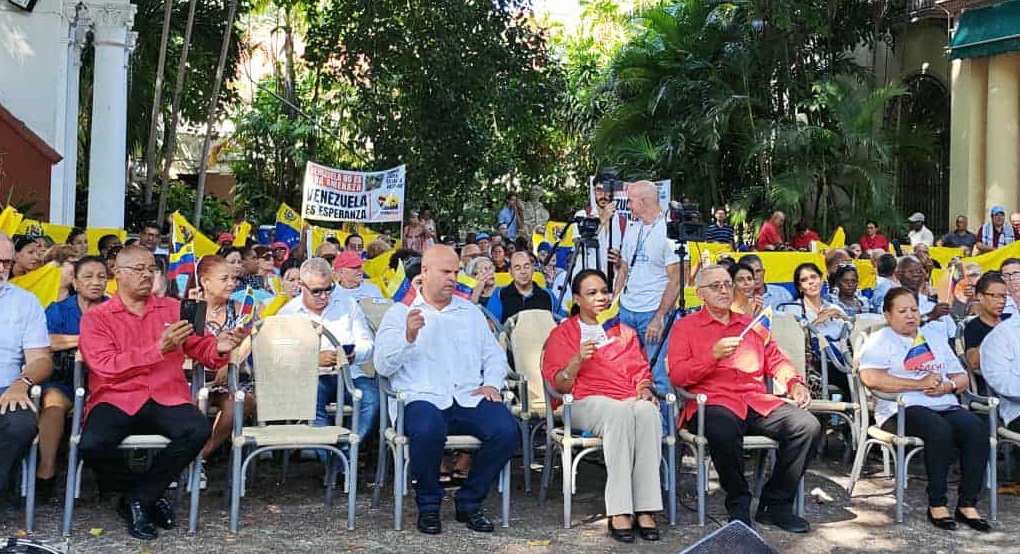
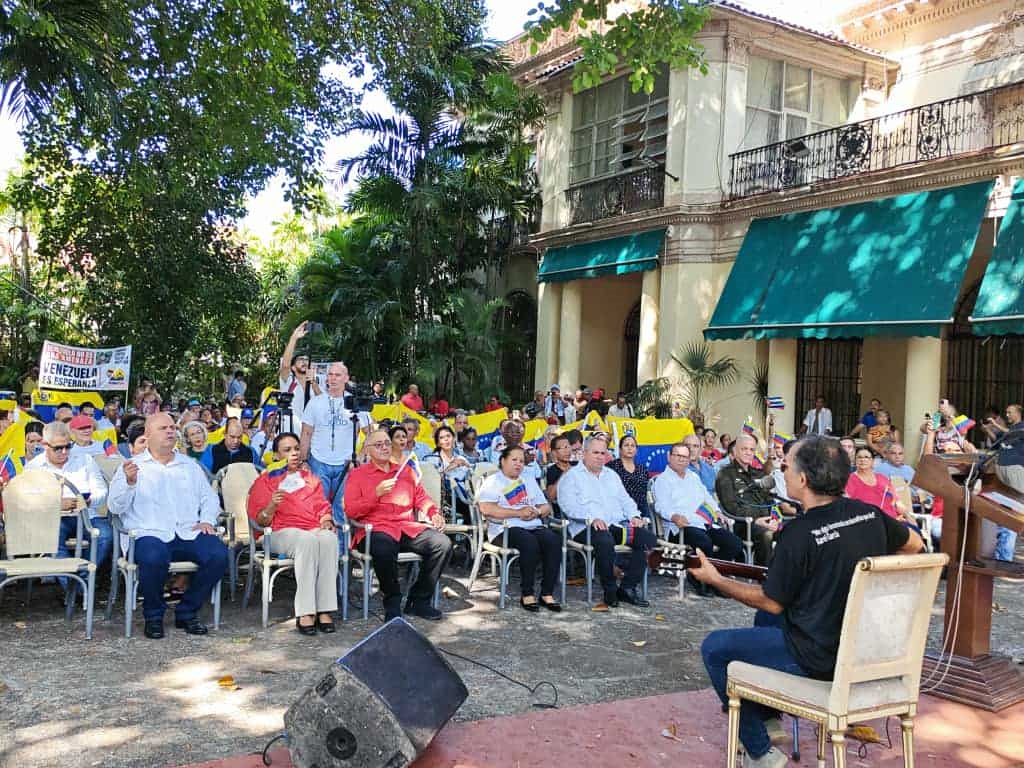
The Cuban Institute of Friendship with the Peoples (ICAP), together with the Cuban Chapter of the Anti-Fascist International, showed its unconditional support this weekend throughout the country for the people of Venezuela, threatened by the U.S. military deployment in the Caribbean.
In the capital, the meeting was chaired by Teresa Amarelle Boué, member of the Political Bureau of the PCC and Secretary General of the Federation of Cuban Women; Inés María Chapman Waugh, Deputy Prime Minister; Fernando González Llort, Hero of the Republic and president of ICAP; and Orlando Miguel Maneiro, ambassador of the South American nation.
Under the premise that “Venezuela is not a threat, Venezuela is hope,” the statements on drug trafficking and paramilitarism, without legal basis, promoted by the U.S. administration, which seek to violate the sovereignty, territorial integrity, and self-determination of the sister country, were condemned.
At the meeting, Fernando González Llort stated that ICAP supports the actions that the government of Nicolás Maduro decides to implement to guarantee the country’s security: “Keep in mind that Venezuela is not alone. Cuba will never remain silent in the face of injustice; we will defend the truth, equality, and the rights of our Venezuelan brothers and sisters.”
Santiago is also on the side of the birthplace of Bolívar and Chávez, as demonstrated at an event attended by, among others, internationalists from the island who served in that land.
“I fondly remember the welcome I received from the brotherly Venezuelan people when I provided medical assistance in 2003,” said Dr. Arelis Machado Elías, while denouncing that imperialism “cannot stand progressive ideas enduring among the peoples.”
The people of Cienfuegos, for their part, demanded an end to hostility against Venezuela and Latin America, which is, as was made clear there, evidence of the extraterritorial, colonial, and regional peace-violating nature of imperialist actions.
From the La Rotonda cinema in Santa Clara, a call was made to respect the region as a Zone of Peace and free of weapons of mass destruction. Meanwhile, the people of Bayamo raised their voices as a bastion of dignity. Their words of solidarity, sharp as an insurgent machete, built a bridge across the Caribbean to embrace Venezuela, threatened under the pretext of false ghosts of drug trafficking. Ciego de Ávila was also the scene of solidarity and internationalist support.
“If the Yankees were fair, instead of a threat to their national security, they would recognize that Venezuela is a hope for other Third World peoples. But we can’t ask for pears from an elm tree,” said young Carla López at the ICAP headquarters in Guantánamo. Camaguey also demanded that hands be kept off that country, with which the Cuban people have had a special relationship for more than two decades.
The event also reiterated the right of peoples to self-determination and to democratically choose their path.
First Secretary of the Communist Party of Cuba Central Committee and President of Cuba Miguel Diaz-Canel Bermudez (L) and Vietnamese Ambassador to Cuba Le Quang Long (Photo: VNA)
The Vietnam – Cuba friendship is a vivid symbol of genuine internationalism, Vietnamese Ambassador to Cuba Le Quang Long told the Vietnam News Agency ahead of the state visit to Vietnam by First Secretary of the Communist Party of Cuba Central Committee and President Miguel Diaz-Canel Bermudez from August 31 to September 2.
Saturday, 30/08/2025 — Voice of Vietnam
The diplomatic relationship, established on December 2, 1960, marked Cuba as the first Latin American nation to recognise the Democratic Republic of Vietnam (now the Socialist Republic of Vietnam), Long said, adding bilateral relations have been built on solidarity, cooperation, and mutual trust across all areas, with shared revolutionary ideals and unyielding spirit.
Over the decades, the ties have gone far beyond conventional diplomacy to evolve into a close brotherhood, despite being oceans apart. A solid foundation of the relations was laid by Cuban leader Fidel Castro, whose historic visit to the liberated zone of Quang Tri in South Vietnam in September 1973 despite bombing campaigns and his famous saying “For Vietnam, Cuba is willing to shed its own blood” have resonated deeply with the Vietnamese people.
He described the fraternal relationship as a rare one in international relations and a valuable asset that has been extremely treasured and developed across all areas by the two Parties, States, and peoples.
Cuba’s support for Vietnam during the latter’s resistance war was comprehensive and sacrificial, extending beyond material aid to include spiritual and political support. Cuban engineers helped rebuild war-torn infrastructure while its doctors and medical staff came along with medicines and equipment to offer their services.
Besides, Cuban experts stood shoulders to shoulders with Vietnamese soldiers and people under the bombardment at Hai Phong Port, engaged in the construction of the Truong Son trail, the Dong Hoi friendship hospital, and Hanoi’s Thang Loi Hotel.
He recalled the nationwide campaign “All for Vietnam” in Cuba, which saw factories, schools, and residential areas named after Vietnamese heroes and landmarks, a phenomenon unseen elsewhere in the world.
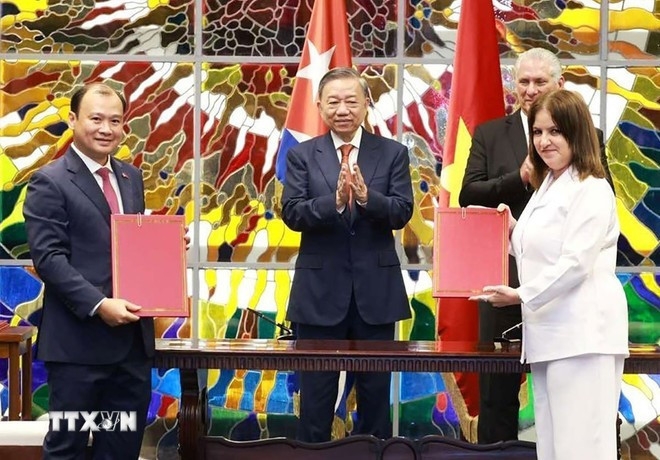
The state visit to Cuba in September 2024 by Party General Secretary and then State President To Lam helped elevate the bilateral ties to a new height. (Photo: VNA)
According to Long, Cuba had a pivotal role to play in encouraging Latin American countries to support Vietnam’s accession to the United Nations in 1977 while standing firmly with Vietnam during the tough times, including post-war reconstruction and the northern border incident in February 1979.
As Vietnam embarked on its Doi moi (renewal) and achieved remarkable development progress, the relationship shifted into a two-way strategic partnership. Vietnam has become a donor of food, machinery, and equipment to Cuba, called on the US to lift the embargo against Cuba, while sharing lessons in socio-economic development, international integration, and socialist-oriented market reforms. Cuba studied Vietnam’s experience in economic restructuring, including the equitisation of state-owned enterprises and the introduction of single-member limited liability companies.
Regarding cooperation in economy, trade, and investment, the ambassador said Vietnam is now the biggest investor and the second largest trading partner of Cuba in Asia. Bilateral trade reached some US$250–350 million during 2015–2020. Under a trade agreement signed in 2018 and effective in 2020, both sides aim to raise the trade volume to US$500 million within five years. Vietnam exports rice, electronics, apparel, footwear, and building materials to Cuba, while importing Cuban pharmaceuticals, vaccines, and medical biological products.
Cooperation has expanded to such areas as rice, corn and aquaculture production, culture, and defence, he said, adding landmarks have been named after President Ho Chi Minh in Cuba and Fidel Castro in Vietnam while plans are underway to establish dedicated research institutes on the two leaders in each other’s countries.
He added that the two countries have maintained frequent high-level exchanges, especially the state visit to Cuba in September 2024 by Party General Secretary and then State President To Lam, elevating the bilateral ties to a new height. This year marks the 65th anniversary of diplomatic relations and was designated as the “Vietnam – Cuba Friendship Year”, with plans to deepen cooperation in food production, biopharmaceutical R&D, and energy, according to Long.
Over the past 80 years, Vietnam has overcome immense challenges to secure remarkable socio-economic achievements and a rising international standing, Long highlighted, stating that throughout that journey, Cuba’s special and pure friendship has been an unwavering source of strength.
He reaffirmed Vietnam’s determination to nurture and deepen the traditional friendship, special solidarity, and comprehensive cooperation with Cuba, making it an invaluable asset for future generations.
Havana, Aug. 30 (Prensa Latina) Cuba today demanded an immediate end to the U.S.’s bellicose actions that threaten peace in Venezuela, and an end to interventionism in Latin America and the Caribbean, a region declared a Zone of Peace.
During an event in this capital, organized by the Cuban Institute of Friendship with the Peoples (ICAP) and the Anti-Fascist International, the Caribbean country reaffirmed its unwavering solidarity with the Venezuelan people.
ICAP President Fernando González denounced the deployment of U.S. naval forces off the Venezuelan coast as an act of intimidation based on unfounded pretexts.
“This military mobilization is not a response to security concerns, but rather to interventionist intentions that threaten Venezuela’s sovereignty and self-determination,” he stated.
He warned that these maneuvers actually seek to control the country’s energy resources and further destabilize it.
González emphasized that Venezuela is not alone and that Cuba will continue to defend, alongside its people, truth, dignity, and the right to decide their future. “The slogan #CubaConVenezuela is a commitment to brotherhood and resistance in the face of blockades, pressure, and destabilizing campaigns,” he stated.
He recalled that the history of Latin America is marked by the united struggle against imperialism, and that Venezuela is today a symbol of hope and resistance.
For his part, the Venezuelan ambassador to Cuba, Orlando Maneiro, expressed his gratitude for the unconditional support for his country throughout the island, which today held a national day of solidarity with the homeland of Bolívar.
He emphasized that attacks against Venezuela have intensified since the departure of Hugo Chávez and the democratic assumption of power of Nicolás Maduro. “Millions of civilian militia members have mobilized to defend the country’s sovereignty alongside its legitimate president,” he concluded.
The Havana rally was led by Teresa Amarelle, a member of the Communist Party’s Political Bureau, Deputy Prime Minister Inés María Chapman, and other Cuban political and government officials.
Despite the Trump administration’s openly hostile policy toward the island, Cuba has continued to receive monthly deportation flights from the United States in accordance with a bilateral agreement.
“Our collaboration in these operations is not affected by the state of our relations with the U.S.,” said Lourdes Gil Robaina, an immigration official.
According to Gil Robaina, this latest flight was the eighth this year and the 59th since 2017.
Cuba kept accepting the flights even after the Trump administration unilaterally ended bilateral migration talks that were held regularly under Biden. Meanwhile, Cuban officials who have sought dialogue with the Trump administration have reportedly been snubbed.
“Cuba has the will to talk at any moment,” said Alejandro García del Toro, a representative of the Cuban Ministry of Foreign Affairs. “But in the case of this administration, they have decided not to, so far.”
García del Toro said comments made by U.S. Secretary of State Marco Rubio and Chargé d’Affaires Mike Hammer expressing sympathy for the Cuban people were “hypocritical” given the Trump administration’s Cold War-era policy toward Cuba.
“You cannot impose a harsh blockade on a whole population, and at the same time say that you want the best for the Cuban people,” he said.