The South Korean presidential office said Sunday that the establishment of diplomatic ties with Cuba would create new economic opportunities for Korean companies, though it conceded it would take time.
“The establishment of diplomatic relations and the future opening of a permanent mission in each country will lay the groundwork for expanded economic cooperation in a gradual manner,” the presidential office touted the anticipated impacts of forging of ties announced on Wednesday.
The office admitted that “direct trade with Cuba is significantly restricted due to United States’ sanctions on Cuba.” This means traders need to move goods and money via third countries such as Panama.
The US currently maintains an economic embargo of Cuba that was first imposed in the 1960s, following the revolution led by Fidel Castro and the nationalization of properties belonging to US citizens and corporations.
But the office highlighted that Cuba holds the potential to emerge as a promising new market, ripe with opportunities for economic expansion and development if US sanctions are lifted.
Cuba is the largest island country in the Caribbean and has a population of over 11 million people. Although Cuba’s per capita gross domestic product in 2022 was $2,256, it has enormous potential for further economic development, it said.
“Cuba stands as a key repository for nickel and cobalt, vital for secondary battery production, signifying abundant potential for collaboration in the mineral supply chain sector,” the presidential office said.
The presidential office explained that Cuba was the world’s fifth-largest producer of nickel, and the country has the world’s fourth-largest known cobalt reserves.
Seoul also noted that Cuba anticipates exporting agricultural and fisheries products to South Korea, leveraging its fishery resources, particularly sea cucumbers, as well as high-end rum and cigars.
South Korean manufacturing businesses also will be able to explore opportunities for expansion in sectors such as consumer goods, electronics, and machinery, given that Cuba is currently having commodity shortages due to US sanctions.
Cuba has identified the mitigation of its chronic energy crisis as a paramount task for economic recovery, actively seeking to expand its power generation infrastructure and promote the development of renewable energy sources.
“This creates an opportunity for Korean companies with strengths in energy sectors such as power generation and plants to capitalize on and explore entry into the Cuban market,” the presidential office said.
With the establishment of diplomatic relations, there is anticipation that future official economic agreements, currently lacking at the government level between the two countries, could be signed, potentially alleviating constraints on Korean companies’ market entry.
Furthermore, South Korea’s opening of a diplomatic mission in Cuba will facilitate on-site support for Korean companies throughout the entry process.
The presidential office also stressed that it would be a great opportunity for Korean cultural businesses to tap this emerging market by pursuing business in Cuba. Currently in Cuba, “ArtCor,” a group of roughly 10,000 fans of Korean popular culture, is in operation as a sign of growing public interest in South Korea.
Furthermore, it noted that “formal ties with Cuba will help lay provision of systematic consular support for Koreans visiting the Caribbean nation.”
According to the South Korean Foreign Ministry, about 14,000 Koreans used to visit Cuba each year before the COVID-19 pandemic.
South Korea established diplomatic relations with Cuba on Wednesday. Cuba is the 193rd country which South Korea has built diplomatic relations with. Cuba had been the only Latin American country with no diplomatic relationship with South Korea.
On the occasion of his arrival in Italy for the translation of his book De Patria y cultura en Tiempo de Revolución, a text that deals with the ideological war of the United States against his country (PGreco edition, reviewed by us in the January issue of the Italian edition of Le Monde Diplomatique), we interviewed the historian, Ernesto Limia Díaz.
How does your personal history fit into the history of Cuba?
My name is Ernesto Limia Díaz, because Díaz is my mother’s surname, and it is only fair to emphasize that we were born of women. I am the son of two communists who named me after Che, because I was born in October 1968, a year after his death, and I grew up in love with the revolution and with Fidel, where every child thought he would grow up to be like Che. I was born in Bayamo, a city full of living history, which I felt as a child and to which I had a great desire to contribute ideas. By the age of 13, I was “too political” even for my mother, a staunch communist. While many of my friends read Jules Verne, I spent hours reading García Márquez or Hemingway. At the end of the day, I would lock myself in the bathroom and continue reading by the light of a yellow light bulb. From then on, I felt a commitment to the poor of the planet. My father, who was a political figure in the government, advised me to choose my friends outside the narrow circle of activists. And so I walked with the children of the poorest, with the blacks, with the children of single mothers, with, the humblest people. They called me Robin Hood because I wasn’t afraid to stand up for children who were bigger than me, against others who were even bigger. I believe that many things go together in being a revolutionary, that revolution is also a work of love, a set of feelings, of great human sensitivity. Today I am a 55-year-old man, I only missed five or six years of the siege that the Cuban Revolution suffered and of its resistance. When I see an act of injustice committed against a woman, a black person, or a child, I feel great indignation. Praise from an academic or an intellectual makes me feel embarrassed and almost angry because I think that being intelligent or knowing how to speak are not particular virtues, whereas being supportive and empathetic are. You are not a good revolutionary if you do not feel the pain of others as your own if you do not dedicate your life to changing the fate of the damned of the earth. So, when praise comes from the poorest, yes, I am moved to tears.
How did you come to love history as the history of class struggle?
I have to say that I didn’t think of history as a class struggle in the strict sense, because revolutionary history in Cuba begins with independence. A process in which people from different classes came together. The revolutionary vanguard that began to build the Cuban nation was made up of wealthy people who knew how to study and bring together the material conditions and cultural values to lead the independence struggle and its ideals. In this sense, if history is seen as the history of class struggle, it is not the history of Cuba. The history of Cuba is the history of a landowner like Carlos Manuel de Céspedes, father of the fatherland, like Perucho Figueredo or Francisco Vicente Aguilera, who was the richest man in the Oriente and died in the greatest poverty for defending the ideal of Cuban independence, and this revolutionary vanguard, for reasons we have no time to explain, came from Bayamo. From my land came the poets, the revolutionary intellectuals, and the landowners who built 10 October 1868, the founding date of Cuban independence. Many of us were born listening to this story passed down from generation to generation. Bayamo was the first armed capital of free Cuba, the territory liberated by the Mambises, as it was called. And it was in Bayamo that the patriots decided to burn the city when the Spanish recaptured it, so as not to hand it over to the enemy. And these symbolic values have remained in the heart of every man and woman from Bayamo. It was in this context that my love of history was born, in my family and at school. I began to think about using history as a tool to build a struggle in the cultural battle when I was 14 years old and went to study in another eastern city, Holguín, the land of Fidel and Raúl. My mother told me that in the house of the father of the Fatherland, Manuel de Céspedes, Eusebio Leal was giving a talk about him. A Havana historian, one of the greatest Cuban revolutionary intellectuals of all time, who died two years ago. He also had a weekly program called Andar La Habana, in which he presented every corner of the city’s history by commenting on its architecture.
He was a snake charmer extraordinaire, a man much loved by Fidel and Raúl and by all Cubans, who turned out en masse for his wake. At the time, he did not have the fame he would have after rebuilding the crumbling old Havana, apparently with Fidel’s support. However, when I went to listen to him, I felt lifted out of my seat and catapulted into another dimension within the first ten minutes. I listened for an hour. Then I ran home and told my mother: ‘If I ever get to talk about history, I want to do it like this man. And then, you see how things go, in 2008, while I was in the army, I heard Obama, now president, talk about Cuba in a different way than when he was a senator, and he had opposed the blockade, considering it a mistake. Once elected, however, he lifted it and raised the issue of Cuban nationalization of US companies. At the time, I had no dreams of becoming a historian, nor had I ever written an article. But I had an impulse to write a book called From Thomas Jefferson to John Kennedy, to show Cubans why the revolution had to nationalize US companies. So, I went to Dr Eduardo Torres Cuevas, president of the Academy of History and the José Martí Society, one of Cuba’s most eminent historians, and asked him to explain to me how to write a history book. He explained it to me and gave me some ideas. I wrote a 40-page book and went back to him, who threw it at me and asked me if I wanted to publish it. I left in shame. With all due modesty, I consider honesty and self-criticism to be my two main qualities, ever since I was a child. That embarrassment was the trigger for me to start working seriously. From there, the project of writing the history of Cuba in four volumes took shape. The first, Cuba entre tres imperios: Perla, Llave y Antemural, is now in its second edition. It tells the story of Cuba from Columbus to the British conquest of Havana in 1762. When I finished it, I took it to the publishing house in town to have it published, and the director, who is like a second mother to me, told me: ‘You are like a son to me, and before you publish it, I want Eusebio Leal to see it. It wasn’t usual, but Silvana is terrible and she made that condition. So, I took it to Eusebio’s secretary. After 14 days I had given up hope, but then I got a call to go to Eusebio’s office. After almost thirty years since I had first heard him, I met him face to face. It was 2011. I remember the praise of this great man, as one remembers the love of one’s life. He told me: ‘This is a book that every university student should have. And he had it published the following year. Bear in mind that the price was set in cuc, the currency used in tourism, and that 100 copies were usually given away. Eight hundred copies of the book were given away.
For a student of José Martí, considered the world’s first anti-imperialist, what does Lenin mean today, 100 years after his death? What has his understanding of history meant to you?
I read Lenin when I was a student at the military academy. Like many students, we learned about him from textbooks, but not from his original works. However, I always took my studies very seriously and liked to go to the source. Then, for the exam on scientific communism, which was on “Extremism, a childhood disease of communism”, a book that was not in the bookshop, I went to Havana because I was told it was in the library there; and I began to study it, being fascinated by it. My parents are staunch Leninists. I had read two biographies of Lenin and was more interested in his escape from Siberia than his return to Russia. At the age of 28, while practicing karate, I broke my femur and was bedridden for three months. I read the six volumes of Lenin’s Selected Works that we had at home. I had studied some of the classics of Marx and Engels – not Capital, which even Fidel abandoned after the first volume – but studying Lenin was something else. Lenin put the practice of revolution into theory. He showed how it could be achieved in the semi-feudal conditions of Russia at that time. He left us a set of theoretical-practical tools that have stood the test of time and that every revolutionary must have as a guide in political life, asking the first essential question: What to do, because it is a question of understanding how. Lenin made a revolution where Marx thought there were no conditions, and he did what no one had done before: he gave power to women. What followed was simply a deformation of his thought and work. Anyone who does not follow the path of Lenin, one of the most important symbols of world history, is not a true revolutionary. Fidel spoke passionately about Martí and Lenin, saying that he had studied Marx.
“Of Homeland and Culture in Times of Revolution” describes and analyses the onslaught of the Cuban Revolution as a paradigm that transcends the island’s history. Is that so?
The Yankees have tried everything with Cuba over two centuries; they have experimented with the neo-colonialist model with Cuba. The first thing they did when it was a colony was to take economic power. Cuba was subject to Yankee capital even when it was a Spanish colony in the 19th century. Then the cultural colonization began, parallel to that of Puerto Rico, which they had already annexed. They could not do it with Cuba, but they never gave up on imposing an economic and political hegemony and colonizing it culturally. And after the triumph of the revolution, imperialism used every means to overthrow it. The United States is not only the enemy of the socialist revolution but also of the Cuban nation. The methods with which they tried to impose their hegemony were later extended to Latin America and also to Europe if we consider the Marshall Plan. So, Patria, Cultura y Revolución is not just about Cuban history but has two elements: a truly historical one and a political one, which is very topical. I conceived it based on several articles, amid the cultural debate about a group of intellectuals who were politically trained by the ideological laboratories of the United States to create a counter-revolutionary opposition in Cuba, which they failed to do: because there is no nationalist opposition project in Cuba. The platform of the opposition is annexationist and therefore has no popular appeal. Of course, we cannot ignore the fact that there are some intellectuals, even legitimate ones, who have been educated in Cuban universities, but always thanks to US funding of 20 million dollars a year, people who take their orders from the subversion laboratories. The cultural debate that emerges from the book has to do with how society, the economy, politics, and culture are interpreted. It is a vision that may also be of interest to the European reader, because in the neo-liberal system, in which the communications revolution has made the earth appear square, to the point that if Galileo woke up now, he would die of a heart attack, the same message reaches everywhere: from Italy to France, from China to Africa and Latin America. The same message and the same speaker, with the same formula and the same conditioning: to create a manipulable idiot who does not think, whose historical memory is destroyed to destroy his critical thinking. A human being who is almost instinctively an animal, who thinks about eating and consuming, and who does so based on a predetermined idea. The book will be an “Our American” vision of the cultural challenges of the contemporary world, which can also be a stimulus for the revolutionary left in other countries. A stimulus to renew its commitment to the poor of the world, to take up the challenges necessary for their emancipation. A look that, without claiming to be exhaustive, points to a path, one of the options available.
Cuba, which despite numerous attacks continues to send the world a message of peace with social justice, what can it say in the face of imperialist war, cognitive war, and another paradigm of oppression, that of the Palestinian people?
The message is the same as that of Marx, Lenin, Martí, Che, Fidel, Ho Chi Minh, Mella, Bolívar, Chávez or Martin Luther King: these are times of struggle. If you study world history, you will see that the colonial powers are the same ones that are at war today with Palestine, Russia, Syria… They are the same powers: the United States, England, Germany, Holland… The same powers and interests of 500 years ago, adapted to today’s conditions. Contrary to what one might think, the cultural and political heritage that the Left has today would enable it to win much more easily than what happened to our ancestors but with two assumptions. The first is to coordinate ourselves, to build a unity that is by no means spontaneous, and which we Cubans, since the War of Independence, have summed up in one phrase: the homeland before us. But just as Martí said that the homeland is humanity, when we speak of a great homeland, we must refer to the universal homeland, which requires us to put aside individual interests, idiosyncrasies, whims, dogmas, and divisions. The second element is the study of history, not as an archaeological find, but as a platform for the future. Read, study, and discuss, but always with the interests of the homeland – humanity – at the forefront, and with the compass of all those greats I mentioned earlier who organized the damned of the earth.
The Wretched of the Earth by Franz Fanon, a Martinican who wrote it in what was then French Algeria, was one of the first books by a non-Cuban thinker to be published here at the Casa de las Americas, at Fidel’s request, and I recommend it to all revolutionaries. A reference book. Martí, in the 19th century, spoke of the poor of the earth. This is the compass. These are not abstract ideas, but the indication to put the human being, as a social being, first. The ideas are built for the most marginalized human beings. There can be no revolutionary struggle today if women are not the priority in our hearts because they are the most oppressed in history. There can be no revolution if Africa and Palestine are not at the center of our hearts, if the condemned of the earth are not at the center of our hearts if all the ideas and all the theories do not serve to move this world forward for the poor of the earth, for the condemned of the earth.
Santiago de Chile, Feb 18 (Prensa Latina) Members of the Raíces Cubanas Association of residents in Chile traveled to Valparaíso to aid the victims of wildfires which have to date left over 130 dead and thousands of homes ravaged.
The members worked in removing debris and also took supplies to the medical center set up by graduates of the Latin American School of Medicine (ELAM) at the Villa Independencia hood of the Achupallas district, in Viña del Mar.
Alongside Alemana and Quilpué villages, Independencia village has been one of the most-affected areas at the beginning of the month, considered the worst disaster in the country since the 2010 earthquake.
The Forensic Medical Service reported 133 deaths, 108 of them have been identified.
In the ravaged areas, work is being carried out to remove debris, a mission that should be completed by February 25.
Affected families will be able to take advantage of three temporary options: a rental voucher, emergency housing and hotel accommodation, where top-priority will be given to pregnant women and dependents.
Quito, Feb 17 (Prensa Latina) Ecuadorian friends of Cuba highlighted the resilience that the people of the island maintain, despite the obstacles of the blockade imposed by the United States.
In a virtual conversation, organized by the Unitierra University, lawyer and activist Veronica Naranjo told her experience after a recent visit to the Caribbean nation as part of the XXIX South American Brigade of Volunteer Work and Solidarity with Cuba.
She described her stay in the Antillean country as personally and humanly rewarding, and commented on how many people told her before leaving for Havana that she would be “brainwashed” there.
However, it was quite the opposite, as we were able to learn first-hand about the political system in Cuba, an example of citizen participation and respect for human rights, as well as the security in its streets, Naranjo said.
She also referred to the negative impact of the blockade on the health system, something she was able to see together with the rest of the brigadiers with a visit to a hospital in the Cuban capital.
However, she stressed that “they are a people aware of their reality, convinced of their Revolution, of extreme human quality, ethics, resilience, resistance, and fighting capacity”.
Havana, Feb 17 (Prensa Latina) Brazil will deploy a broad agenda today at the San Carlos de la Cabaña fortress, the venue of the 32nd Havana International Book Fair, where it participates as the guest of honor.
The Brazilian booth at the fairgrounds will host the conference: “From the networks to the Printed Book”, by Ilustralu.
There will also be the activity It’s All for Yesterday: a conversation on the literary creation of Conceição Evaristo e Emicida.
In addition, the Professional Hall will host a lecture on “Brazilian literature at Casa de las Américas” by Caridad Tamayo (researcher at this Cuban institution).
This will be followed by “The challenges of the productive chain in Brazil”, by Juliana Monteiro (Brazilian journalist, writer and bookseller).
Later, Socorro Aciolli, a prominent Brazilian writer and teacher, will address the topic “Literary creation in the contemporary publishing market”.
An activity that promises to be dynamic will be the debate on “The Latin American comic strip. Different views”, with panelists: Ana Luiza de Souza Freitas (illustrator and cartoonist from Brazil); Gidalti Oliveira Moura Júnior (cartoonist from Brazil); Centro Cultural Pablo de la Torriente and Vitrina de Valonia (Cuba).
Madrid, Feb 17 (Prensa Latina) Cuba’s Prime Minister Manuel Marrero stressed that his country seeks to boost its economy amid a hostile context due to the U.S. blockade.
We are facing a war on all fronts, we face all the challenges as a war economy, but we do not rest finding alternatives, diversifying our markets, with the conviction to move forward, Marrero said.
In a meeting with the Cuban State Mission in Spain, in transit to Havana, after participating in the World Summit in the United Arab Emirates, the president shared the priorities to move onward with the socialist project defended by the island.
He pointed out that, within the tightening of Washington’s blockade, which is worsening with the impact of global crises and conflicts, if only one of the measures were removed, the one that unjustly places Cuba on the list of countries that collaborate with terrorism, doors would be opened to bank credits.
Accompanied by the Cuban ambassador to Spain, Marcelino Medida, the head of the Government of the Caribbean island stressed that strategies are being worked on to correct distortions, boost the economy, and maintain its social project, with a plan that includes seven major objectives.
Macroeconomic stabilization, from price updating and decentralization to exchange rate control; increase and diversification of foreign exchange income, with the stimulation of exports; increase of national production, towards food sovereignty; improvement of the entrepreneurial system and territorial development, are some of the initiatives underway.
Quito, Feb 17 (Prensa Latina) Ecuadorian friends of Cuba highlighted the resilience that the people of the island maintain, despite the obstacles of the blockade imposed by the United States.
In a virtual conversation, organized by the Unitierra University, lawyer and activist Veronica Naranjo told her experience after a recent visit to the Caribbean nation as part of the XXIX South American Brigade of Volunteer Work and Solidarity with Cuba.
She described her stay in the Antillean country as personally and humanly rewarding, and commented on how many people told her before leaving for Havana that she would be “brainwashed” there.
However, it was quite the opposite, as we were able to learn first-hand about the political system in Cuba, an example of citizen participation and respect for human rights, as well as the security in its streets, Naranjo said.
She also referred to the negative impact of the blockade on the health system, something she was able to see together with the rest of the brigadiers with a visit to a hospital in the Cuban capital.
However, she stressed that “they are a people aware of their reality, convinced of their Revolution, of extreme human quality, ethics, resilience, resistance, and fighting capacity”.
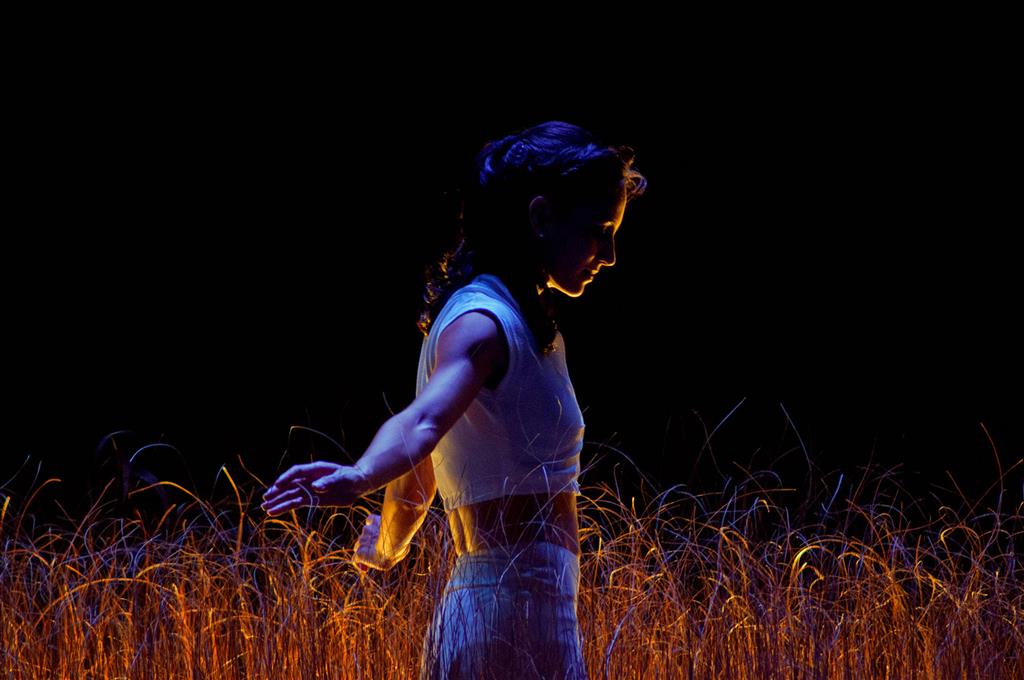
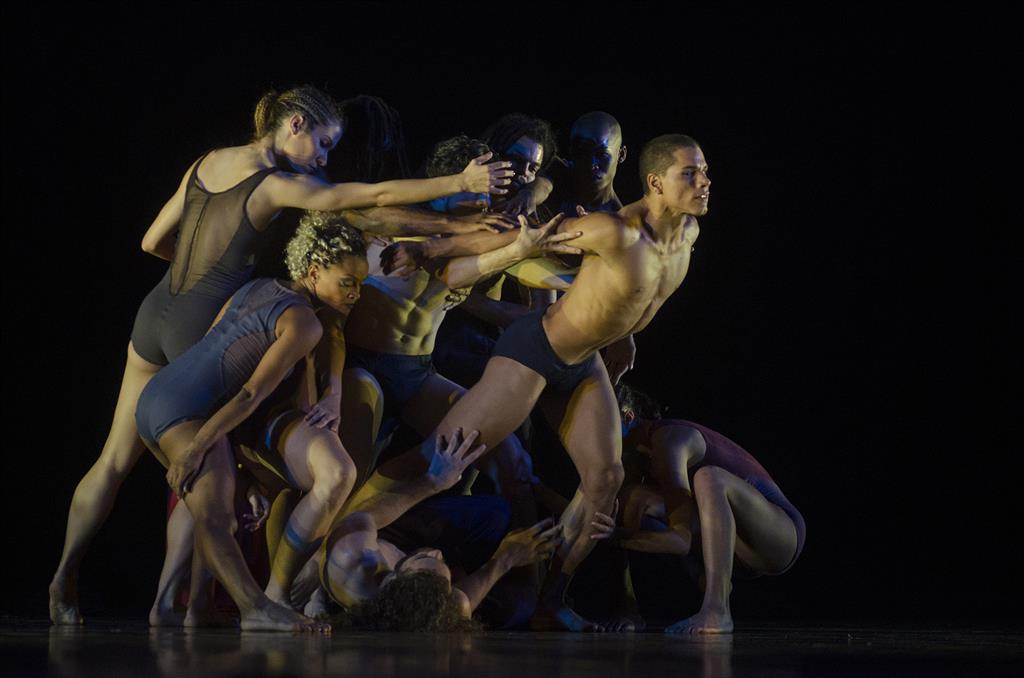
Berlin, Feb 16 (Prensa Latina) Acosta Danza, under the general direction of first dancer Carlos Acosta, will present the show “Eclectic Cuban” on February 17 and 18 at the Bonn Theater in Germany, the company announced today.
The program comprises well-known works of its collection such as “Satori”, by Raúl Reinoso, a piece that takes as a starting point the precepts of Zen Buddhism; and “Paysage, soudain, la nuit”, by the Swedish Pontus Lidberg, inspired on a musical piece by Cuban master Leo Brouwer.
Photo: Yuris Nórido
He will also present “Impronta”, a solo created by the Spanish María Rovira in which contemporary dance and Afro-Cuban dances are combined; as well as “Fauno”, a duet by Sidi Larbi Cherkaoui inspired by a mythical piece in the history of ballet.
To close the evening, the German public will be able to see “De punta a cabo”, a choreographic version of the original by Alexis Fernández (Maca).
Photo: Enrique Smith Soto
Since its stage debut, Acosta Danza aims to perform dance shows in full accordance with the most current notions being developed in the world, not only in terms of the movement of the bodies, but also in everything related to the scene.
Belgrade, Feb 16 (Prensa Latina) Cuban Ambassador in Belgrade Leyde Rodriguez Hernandez attended a State Ceremony in Orašac on the Serbian State Day, also attended by Foreign Minister Ivica Dačić, diplomatic sources noted on Friday.
The commemoration is connected with the beginning of the First Serbian Uprising in Orašac on February 15, 1804, and the proclamation of the Sretenje Constitution of the Principality of Serbia on February 15, 1835, the source added. On its X account, Cuba’s Foreign Ministry congratulated the people and Government of the Republic of Serbia on the occasion of their National Day.
“We ratify the will to continue to strengthen the historic relations of friendship and cooperation between our countries,” the Cuban Foreign Ministry noted.
During the State ceremony in Orašac, Bishop Jovan of Šumadija said that a nation that does not remember its predecessors and the past is not worthy of the present and the future.
Dačić, in turn, noted that “exactly 220 years ago, the most prominent people of the Serbian people gathered in this place and made one of the most important decisions in our history.”
They decided to start the struggle for freedom, which the previous generations had been dreaming about for centuries, the head of Serbian diplomacy added.
The President of Republika Srpska, Milorad Dodik, indicated that he is convinced that the unity of the Serbian people is unbreakable and indestructible, wherever our people are.
Havana, Feb 16 (Prensa Latina) Cuban President Miguel Diaz-Canel denounced today that Israel, with the complicity of the United States, is responsible for the extermination of the Palestinian people in the Gaza Strip.
In the social network X, the president said that he agrees with the thinking of the historic leader of the Cuban Revolution, Fidel Castro, who said that ‘a new and repugnant form of fascism is emerging with remarkable force at this moment in history’.
We see it every day in Palestine, the president stressed in his message, while calling for an end to the aggression.
Cuba will soon present its arguments before the International Court of Justice (ICJ) on Israel’s practices and activities against the rights of the Palestinian people and other Arab inhabitants of the occupied territories.
A statement issued by Deputy Foreign Minister Anayansi Rodriguez said that as part of the process requested by the United Nations General Assembly on December 30, 2022, the island asked for a pronouncement on the legal consequences derived from Israel’s practices and policies against the Palestinian people.
Cuba legally reaffirms that both Israel and its accomplices should be declared responsible for the genocide that the Palestinian people have lived through for decades.
The Palestinian Health Ministry figures show that the number of victims of the current Israeli aggression against the Gaza Strip amounted to more than 28,700 dead and 68,500 wounded.