Fox News Digital reported last week that it had “learned” federal officials had served subpoenas to streamer Hasan Piker and Code Pink co-founder Medea Benjamin as part of a “dragnet” targeting as many as 40 U.S. citizens who participated in the Nuestra América Convoy to Cuba last March.
The article, written by pro-Trump journalist Asra Nomani, is a case study in conspiratorial red-baiting masquerading as investigative journalism. Relying on anonymous sources, it’s riddled with unsubstantiated claims, loaded language and Trump administration talking points presented as established facts.
Yet beneath Fox News’s sensationalism lies a genuine development: the Trump administration appears to be targeting Cuba solidarity activists.
Belly of the Beast journalist Liz Oliva Fernández interviewed Medea Benjamin, who confirmed she had received a “request for information” (not a subpoena) sent to Code Pink via email by the Treasury Department’s Office of Foreign Assets Control (OFAC). Watch the interview HERE.
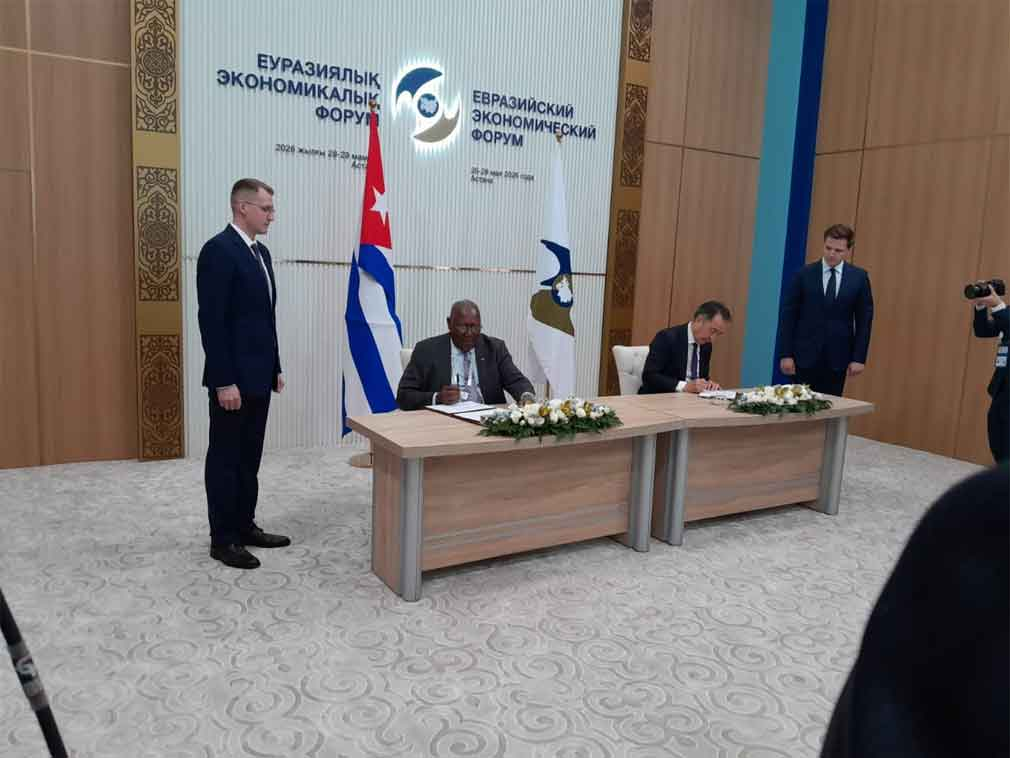
Astana, May 28 (Prensa Latina) Cuban Vice President Salvador Valdés is participating in the Eurasian Economic Forum taking place in the Kazakh capital, the Ministry of Trade and Integration of the Central Asian country announced today.
Upon his arrival, the senior official was greeted by Kazakh Minister of Trade Arman Shakkaliyev, who stressed that the summit’s main objective is to deepen and strengthen trade and economic cooperation.
“Furthermore, the main priority this year is artificial intelligence,” the trade minister emphasized.
On Thursday, the Cuban vice president signed the Joint Action Plan until 2030 between the Caribbean nation and the Eurasian Economic Union (EAEU).
Hours before Valdés’ arrival in Astana, Russian President Vladimir Putin’s plane also landed in the Kazakh city. The president’s state visit will last three days, from May 27 to 29.
During this time, in addition to the bilateral agenda, the Russian leader is expected to address EAEU issues, whose events are being held these days in Astana.
Since the beginning of the year, the situation in Cuba has deteriorated drastically, following the announcement by the US government at the end of January of measures aimed at a total blockade of fuel supplies to the island.
In early May, these measures were reinforced with a new executive order from Washington, which imposes secondary sanctions in the energy sector against countries that intend to supply fuel to the Caribbean nation.
Currently, power outages in Cuba exceed 15 hours, with brief interruptions when service is restored. Furthermore, the island is suffering from a severe shortage of gasoline and diesel.
The Eurasian Economic Union (EAEU) is an international economic integration association whose members are Russia, Armenia, Belarus, Kazakhstan, and Kyrgyzstan. Iran, Cuba, Moldova, and Uzbekistan have observer status.
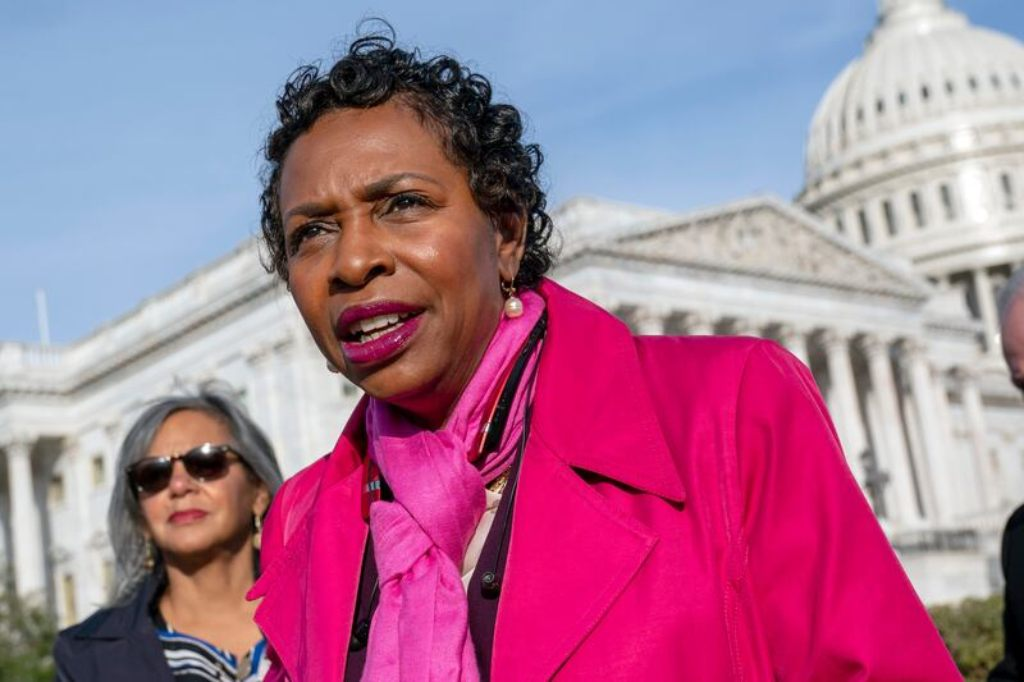
Washington, May 25 (Prensa Latina) More voices in the United States are calling today for an end to the oil blockade against Cuba, a policy that, according to Yvette D. Clarke, chairwoman of the Congressional Black Caucus, is “barbaric” and deepens the humanitarian crisis on the island.
“Enough is enough! The Congressional Black Caucus will not stand idly by and allow this administration to continue this barbaric policy that generates unimaginable human suffering in Cuba,” said Clarke, a member of the House of Representatives from New York.
The Democratic congresswoman issued a letter addressed to President Donald Trump and his Secretary of State, Marco Rubio, urging them to ease the economic pressure on the Caribbean nation.
Clarke denounced the impact of the current administration’s suffocating policy against the people of the Caribbean nation, which has caused “an increase in infant mortality rates, the threat of famine and a deterioration in the standard of living of innocent Cuban civilians.”
“Under the oil blockade and the tightening of sanctions (unilateral coercive measures) imposed by this administration, Cubans are dying,” the legislator wrote.
A press release published on its official website emphasized that the Congressional Black Caucus, which has long encouraged the United States to lead the world stage in supporting peace and justice, rejected the administration’s draconian policies, which have resulted in the grave situation facing the Cuban people.
“We demand that they end the oil blockade, lift the sanctions against Cuba, and allow the Cuban people access to the most basic resources they need to survive on the island,” Clarke stressed.
Last week, Arizona Democratic Senator Ruben Gallego warned of the attempts at aggression that were being planned in Washington against Cuba.
“We are watching Republicans fabricate before our very eyes a reason for another regime change war, this time in Cuba,” the legislator wrote on his social media account. X. Gallego, along with his fellow party members Tim Kaine (Virginia) and Adam Schiff (California), introduced a War Powers Resolution to block the use of the United States Armed Forces in hostilities against Cuba.
President Trump’s use of the U.S. military to blockade Cuba has created a humanitarian crisis on the island and risks leading to a massive migration crisis, a press release on its website stated.
Furthermore, it continues to threaten direct military action, and recent reports indicate that the Southern Command has been ordered to draw up plans for possible military action, the text, released this Thursday, argued.
“The president’s approval ratings are plummeting, so he’s fabricating a pretext for invasion and seeking a quick victory to project an image of toughness. We must speak out now, before we end up embroiled in another endless war,” he stressed.
The senators stressed that they will continue to push for resolutions on war powers and seek bipartisan support “to make clear our opposition to the use of military force against Iran, Cuba, Venezuela, or any other nation that does not pose an imminent threat to the United States.”
Trump reiterated in his 2024 election campaign that, if he won, he would keep the United States out of armed conflicts; he even fought to win the Nobel Prize last year.
But since he returned to the White House, threats of expansion and interventionism have been setting the tone for his foreign policy agenda.
Now, despite having an open battlefront in the Middle East with Iran, the Trump administration’s next target appears to be Cuba.
The aircraft carrier Nimitz was deployed to the Caribbean area, but, according to Trump, it is not to try to intimidate the island.
Havana, May 22 (Prensa Latina) The president of the Cuban Parliament, Esteban Lazo, today thanked Alice Portugal, president of the Brazil-Cuba Parliamentary Friendship Group, and other Brazilian legislators, as well as the Mexico-Cuba Brotherhood Group, for their expressions of solidarity.
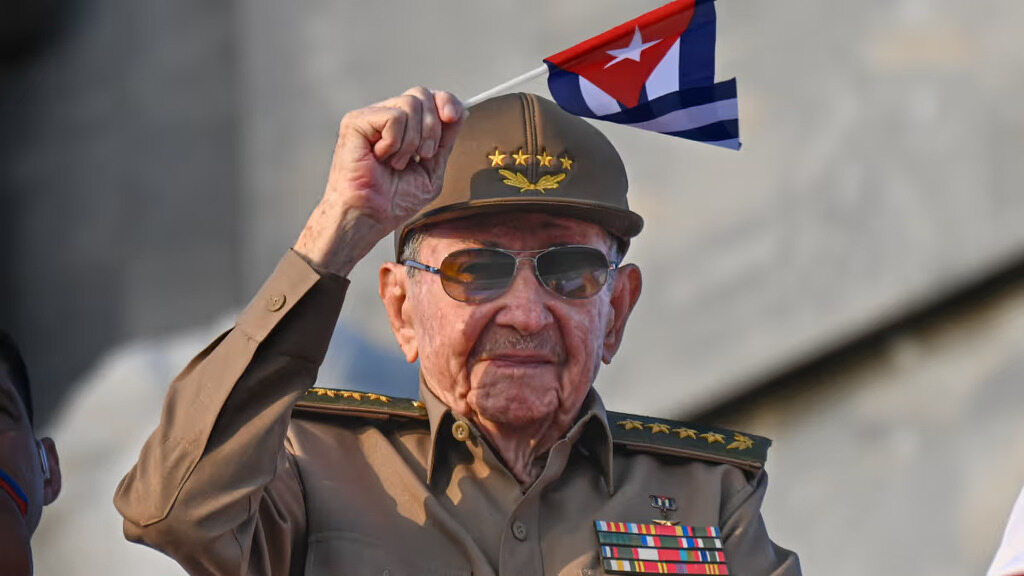
A message posted on the Facebook profile of the National Assembly of People’s Power of Cuba notes that Portugal, a federal deputy for Bahia and a member of the Communist Party of Brazil, expressed her repudiation of the decision by the US government to accuse Army General Raúl Castro, the leader at the head of the Cuban Revolution.
In a video statement on social media, the parliamentarian affirmed that “Raúl is a symbol of Cuban liberation, from all North American yoke, which practically sought to enslave the people of Cuba before their revolution.”
He also reaffirmed the Brazilian Parliament’s solidarity with the Caribbean nation in the face of the economic, commercial and financial blockade, and the threats of military intervention.
The legislator stressed that “above all, we are completely outraged by this attempt to accuse Raúl, dismantle the blockade, and the military attempt to overthrow the revolutionary government of Cuba.”
Since June 2023, Portugal has held the presidency of the Brazil-Cuba Parliamentary Friendship Group, from where it has promoted solidarity initiatives, denounced the blockade and held meetings with Cuban diplomats, according to media reports on the island echoing the statement.
In the Cuban Parliament’s own publication, Lazo, under the hashtag “#CubaNoEstáSola”, referred to the deputies who are members of the Mexico-Cuba Brotherhood Group.
The day before, at the National Capitol, the seat of the legislature, Lazo, who is also president of the Council of State, exchanged views with Mexican Senator Higinio Martínez.
During the meeting, together with Vice President Ana María Mari Machado, they expressed their gratitude for the historic and unwavering solidarity of the Government, Parliament and people of Mexico towards Cuba, and reaffirmed their commitment to strengthening inter-parliamentary ties for the benefit of both countries.
Violence — including terrorism — against Cuba has long been tolerated in Washington; Cuba’s response to it has not. That double standard is once again on full display as the Trump administration moves to indict former Cuban President Raúl Castro for the shoot-down of two planes 30 years ago — even as the U.S. military regularly blows up boats in the Caribbean and eastern Pacific, killing nearly 200 people with impunity.
The 1996 downing of two Cessnas belonging to the Miami-based group Brothers to the Rescue was not a sudden or contextless act. It followed repeated provocations and incursions, numerous warnings, and the U.S. government’s refusal to restrain a political group openly seeking confrontation.
Presented in Miami and Washington as a long-overdue pursuit of accountability for the deaths of four men, the pending indictment rests on a familiar foundation: selective outrage, historical amnesia and legal exceptionalism.
From Rescue Missions to Provocation
Brothers to the Rescue was founded by José Basulto, a veteran of the botched Bay of Pigs invasion and CIA collaborator with a history of violent actions against Cuba. In 1961, Basulto was involved in a 1961 plot to bomb a missile base in Havana. A year later, he helped position a boat armed with a 20mm cannon off the coast of Havana and fired on the Hornedo de Rosita hotel, where he believed Fidel Castro would be dining.
Brothers to the Rescue began in 1991 by flying search-and-rescue missions for Cuban rafters. But after a 1994 immigration accord sharply reduced the flow of migrants across the Florida Straits, the group shifted from rescue work to overt provocation. “They started…to carry out a political agenda of harassing and threatening the Cuban government,” recalled Richard Nuccio, then White House special advisor on Cuba. Brothers to the Rescue pilots repeatedly violated Cuban airspace, dropping religious medallions and anti-government leaflets over Havana, including one urging Cubans to “Change Things Now.”
Basulto was open about the flights’ purpose. After one 1995 flyover of Havana, he declared: “We want confrontation.” The mission, he said, was meant to show that “the regime is not invulnerable.”
The Cuban government repeatedly warned Washington that the flights were illegal and dangerous. Cuban officials filed diplomatic protests, sent evidence to the Federal Aviation Administration (FAA) and made clear that if the incursions continued, Cuba could down the planes. U.S. officials knew the danger was real. In a January 1996 email, FAA official Cecilia Capestany informed her superiors that “one of these days the Cubans will shoot down one of these planes.”
Yet Washington failed to stop the flights. Cuban officials used every means of communication available: diplomatic notes, military briefings, intermediaries and back-channel contacts, to make clear their patience had run out.
On February 24, 1996, three Brothers to the Rescue Cessnas took off from Florida after filing a false flight plan claiming they were searching for rafters at sea. In reality, the mission was once again intended to penetrate Cuban airspace.
As the aircraft approached the island, Cuban controllers immediately warned the aircraft not to cross into their airspace. “You run danger by penetrating that side,” they replied.
“We are ready to do it,” Basulto responded. “It is our right as free Cubans.”
Not long after, Cuban fighter jets shot down two of the aircraft, killing all four men aboard. Basulto’s plane managed to return to Miami.
Weaponizing a Tragedy
The downing of the Brothers to the Rescue planes was not only used to demonize Cuba. It also reshaped U.S. policy for decades.
Before the incident, the Clinton administration had been cautiously exploring limited openings with Havana. But after the planes were shot down, hardliners in Congress seized the moment. Inside the White House, some officials warned against overreaction. Brothers to the Rescue had “been playing with fire,” Richard Nuccio told senior adviser Sandy Berger. “They got exactly what they were hoping to produce.”
The warning went unheeded. Clinton quickly moved to support the Helms-Burton Act, which codified the U.S. embargo into law, and through its Title III, expanded its extraterritorial reach, allowing U.S. nationals to sue foreign companies accused of “trafficking” in property nationalized after the Cuban Revolution. Clinton and every president since him suspended Title III for more than two decades, until Trump activated the provision in 2019, unleashing dozens of lawsuits that resulted in an exodus of foreign investment from the island.
The Brothers to the Rescue shoot-down also became central to the prosecution of Gerardo Hernández, one of the Cuban Five, a group of operatives who were sent undercover to South Florida to monitor terrorist organizations linked to attacks against civilians in Cuba. In 1998, Cuban officials handed the FBI extensive documentation detailing dozens of U.S.-financed terrorist plots. The FBI responded by arresting the agents who had infiltrated the terrorist networks. Hernández was convicted in 2001, in a highly controversial trial, on conspiracy charges related to the Brothers to the Rescue shoot-down, despite no evidence that he participated in, ordered, or had foreknowledge of the decision to down the aircraft.
Nearly three decades later, the same incident is once again being weaponized to target Raúl Castro, stripped of the broader context in which it occurred. Missing from the Justice Department’s indictment is the long history of violent, Florida-based extremists targeting Cuba, which has continued into the present day.
Florida-Based Terrorism and Decades of Impunity
On February 25, 2026, a Florida-registered boat carrying ten armed men exchanged fire with the Cuban coast guard one mile off Cuba’s northern coast. According to Cuba’s Interior Ministry, the men opened fire first, injuring a Cuban commander. After the firefight, five of the men were killed, and the boat was seized, along with more than 12,000 rounds of ammunition, sniper rifles, molotov cocktails, bulletproof vests and night-vision equipment. All ten men on board were reportedly Cuban-born residents of the United States.
The incident was the latest episode in a decades-long campaign of armed attacks, sabotage and terrorism directed at Cuba from U.S. soil, often with impunity and, at times, tacit political protection in Miami and Washington.
Terrorists Orlando Bosch and Luis Posada Carriles lived freely in Miami until their deaths.
The most infamous example is Cubana Flight 455. Orlando Bosch and Luis Posada Carriles are widely believed to have masterminded the 1976 bombing of the civilian airliner, which exploded off the coast of Barbados, killing all 73 people on board. At the time, it was the deadliest act of airline terrorism in the Western Hemisphere. The victims included children and every member of Cuba’s national fencing team.
The FBI later described Bosch’s organization, CORU (Coordination of United Revolutionary Organizations), as an “an anti-Castro terrorist umbrella organization,” while former U.S. Attorney General Dick Thornburgh called Bosch an “unrepentant terrorist.” Posada Carriles was implicated in a long string of violent operations spanning decades, including a 1997 bombing campaign targeting hotels in Havana that killed an Italian tourist and injured several others.
Far from prosecuting Bosch and Posada Carriles, the United States ultimately shielded both men. In 1990, President George H.W. Bush allowed Bosch to remain in the country despite a 1989 Justice Department ruling that sought to deport him, citing “substantial proof concerning his past and present terrorist activities.” Posada Carriles, meanwhile, escaped from a Venezuelan prison while awaiting trial for the Cubana Flight bombing and later resurfaced in Central America during the Iran-Contra scandal. After illegally entering the United States in 2005, Posada Carriles was protected from extradition to Venezuela and Cuba and was never tried in the U.S. for the bombing of the Cubana flight.
Both Posada Carriles and Bosch lived freely in Miami until their deaths.
Miami is ground zero for the double standard driving U.S. policy toward Cuba. The Cuban-American hardliners who dominate the city’s politics have long espoused violence, terrorism and collective punishment against Cuba in the name of “freedom” and “human rights.” Unsurprisingly, the current push to indict Raúl Castro came three months after Cuban-American hardliners from Florida urged the Justice Department to do exactly that.
“This was a long thought-out thing that I wanted to do,” Rep. Mario Díaz-Balart (R-FL) told USA Today. “And I thought this is the president that would do it.”
Cuba on Trial, Washington Above the Law
The hypocrisy does not end at the Florida Straits. Since the turn of the century, the United States has bombed targets across multiple countries without declarations of war, without UN authorization and often with little regard for civilian victims. More recently, across the Caribbean and Pacific, the United States has carried out military strikes with a level of impunity that makes Cuba’s actions in 1996 look restrained by comparison.
While Washington and Miami prepare indictments against a 94-year-old man over a three- decade-old incident, the Trump administration has spent recent months executing people in boats in international waters with zero accountability. Since September 2025, the United States has launched nearly 60 military strikes against vessels in the Caribbean and Pacific under Operation Southern Spear, claiming to target “narco-traffickers” and “terrorist organizations.”
The operations have killed at least 193 people, in part due to tactics such as disguised military aircraft and “double tap” strikes on an already disabled vessel targeting survivors after an initial attack. Almost no evidence has been presented to the public. Satellite images are classified. Intercepts are withheld. Even the names of the dead are not released. Victims of U.S. firepower are seldom granted the dignity of public recognition.
These extrajudicial killings reflect a familiar double standard in U.S. foreign policy: that the United States’ own violence is legitimate while the violence of its adversaries is not, even in cases of self-defense.
Repackaging Regime Change as Justice
The pending indictment is not simply a means to settle a decades-old score; rather, it serves present foreign policy goals, aimed at transforming shaky criminal charges into a legal pretext for regime change and possibly military intervention.
According to NBC News, Trump “has grown increasingly frustrated with the Cuban government’s ability to maintain power” and has been “pressing his advisers” about why collapse has not yet happened despite unprecedented extraterritorial sanctions and an oil blockade that is causing a humanitarian crisis. While administration officials believe the Cuban government will fall before the end of the year, Trump “has found that timeline insufficient.”
With escalated economic warfare failing to bring about the Cuban government’s collapse, the Department of Defense is drafting plans for possible military action against Cuba.
The only missing piece is a legal pretext. The “narco-terrorism” charge used to justify the abduction of Venezuela’s President Nicolás Maduro cannot easily be applied to Cuba. For decades, the “consensus position” within the U.S. intelligence community has been that Cuba does not sponsor terrorism. Meanwhile, the State Department has long considered Cuba a key U.S. partner in counternarcotics cooperation.
The indictment against Castro would seem to provide a justification, albeit a flimsy one, for military action. Far from being the culmination of a long search for accountability, the case appears to lay the legal groundwork for a new and more violent phase in Washington’s siege on Cuba.
This article draws in part from the book “Back Channel to Cuba,” by William M. LeoGrande and Peter Kornbluh, which provides a detailed account of the history surrounding the Brothers to the Rescue incident.
About the Author
Nicholas Greven holds a Masters degree in Latin American and Caribbean Studies and a Bachelors in U.S. & Latin American History from Indiana University, Bloomington. He is currently in law school at the City University of New York School of Law.
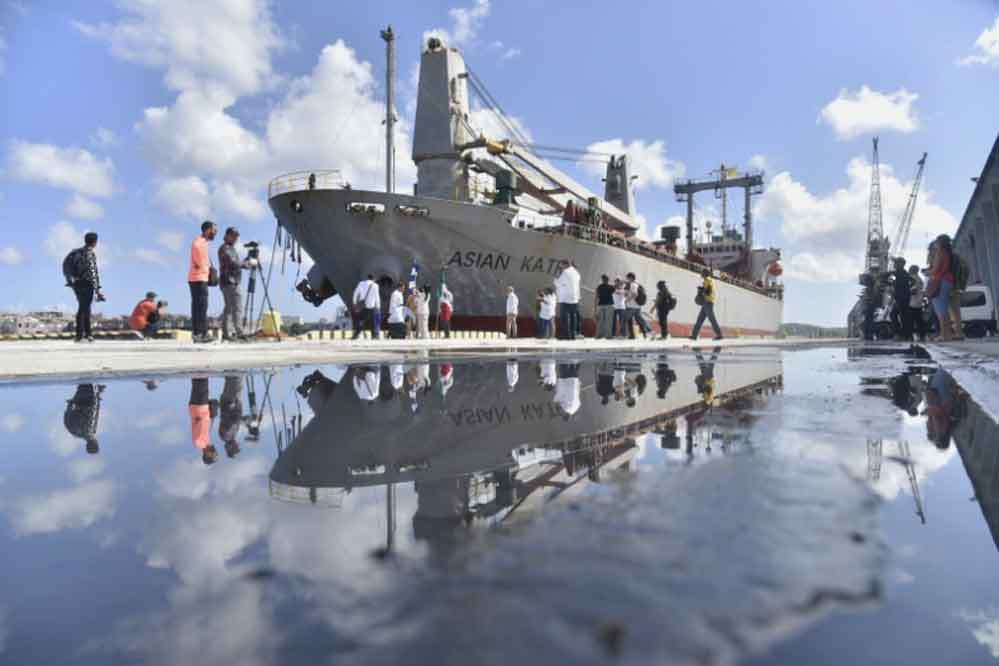
Havana, May 18 (Prensa Latina) A shipment of approximately 1,600 tons of food and personal hygiene items from Mexico and Uruguay arrived in Cuba today, in a gesture of solidarity amid the tightening of the US blockade.
Photo: Abel Rojas (FotosPL)
The Mexican ambassador to Cuba, Miguel Ignacio Díaz, reported that this is the eighth shipment of solidarity aid for the Cuban population and highlighted that the action responds to President Claudia Sheinbaum’s commitment to supporting the Cuban people in the face of the economic blockade imposed by Washington.
The aid comes from both the Mexican government and civil organizations, unions and social groups that organized from the Zócalo in Mexico City.
Uruguay joined the initiative by accepting Mexico’s invitation to ship its donations on the same vessel, given the difficulties some countries face in getting their aid to the island.
For his part, the Cuban Minister of the Food Industry, Alberto López, expressed the deep gratitude of the Cuban people to the government of Mexico, headed by President Claudia Sheinbaum, as well as to the government of Uruguay, for this humanitarian gesture.
“Each of these food items represents the affection and closeness of the Mexican and Uruguayan people towards Cuba, and they will be received with the utmost responsibility and respect, with the commitment that they reach those who need them most: our children, our elderly, and our most vulnerable homes,” the Cuban official stated.
López stressed that the products arrive at a time of great economic hardship, aggravated by the intensification of the criminal blockade that the country suffers from the United States government, and constitute a true example of international solidarity.
“From the bottom of our Cuban hearts, we express our deepest gratitude for this humanitarian gesture, which will be remembered as a true example of brotherhood between our nations. Thank you very much, Mexico; thank you very much, Uruguay. Your help is a life-giving embrace of hope for Cuba and the world,” the minister concluded.
Uruguay’s ambassador to Cuba, Juan Andrés Canessa, highlighted that the donated powdered milk is being delivered within the framework of the Strategic Cooperation Agreement with Mexico.
He added that the fund, created in 2023, demonstrates the continuity and urgent need for regional integration and solidarity.
“This is part of the broad solidarity that the Uruguayan people are showing towards Cuba,” said the diplomat, who thanked Havana for receiving the donation and Mexico for facilitating logistical support.
The welcoming ceremony was attended by officials from the Communist Party of Cuba, Deputy Prime Minister Oscar Pérez-Oliva, and several ministers from the Caribbean nation.
The presence of the Mexican Agency for International Development Cooperation (AMEXCID) in Cuba marked a moment of high political and symbolic value between the two nations. Photo: Santiago de Cuba Press Correspondent
The program, replicated in six additional municipalities, seeks to strengthen food sovereignty.
May 18, 2026 — teleSUR
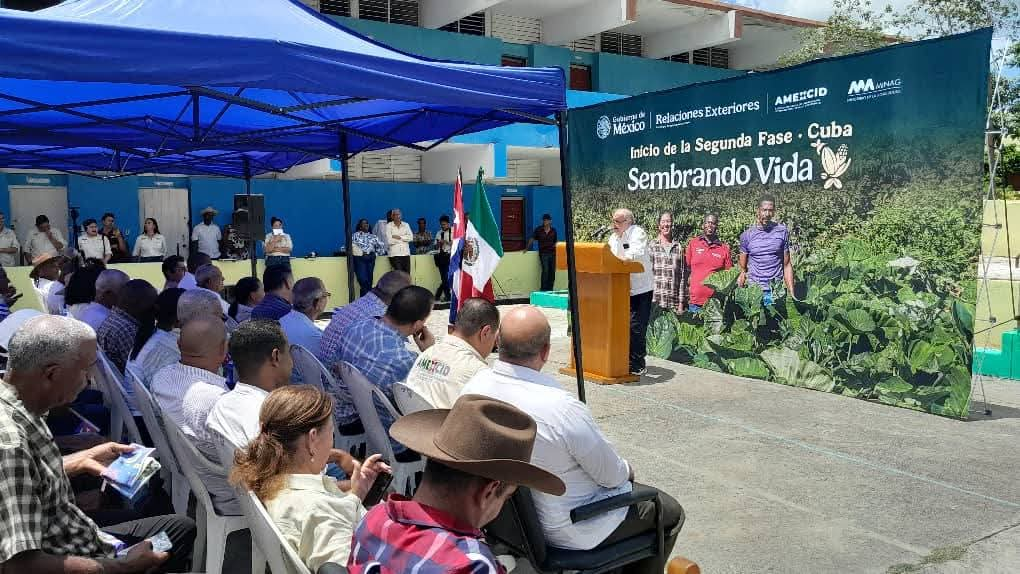
A delegation from the Mexican Agency for International Cooperation for Development (AMEXCID) visited the city of Santiago de Cuba , capital of the province of the same name located in the southeast of the Caribbean island, on Sunday, May 17 , with a view to strengthening the historical ties of solidarity and brotherhood between both nations.
The visit, of high political and symbolic value, began with a tribute to Cuban heroes at the Santa Ifigenia Heritage Cemetery. The ceremony was attended by Cuban Deputy Prime Minister Oscar Pérez Oliva Fraga and the Executive Director of AMEXCID, Alejandra del Moral Vela.
Also in attendance were the governor of Santiago de Cuba, Manuel Falcón Hernández, and the Mexican ambassador to Cuba, Miguel Díaz Reynoso. They were joined by ministers, deputy ministers, and officials from the Party and the Government.
During the meeting, the Mexican delegation reaffirmed the willingness of its government to support Cuba on its path of resistance and development.
The highlight was the inauguration of the second phase of the “Sembrando Vida” (Sowing Life) project in the municipality of San Luis. The program, replicated in six additional municipalities, aims to strengthen food sovereignty and improve living conditions in rural Cuban communities, benefiting more than 15,000 farmers and their families.
The official visit of an AMEXCID delegation to the Caribbean island added a new chapter to the historical ties of solidarity and brotherhood between Mexico and Cuba.
The “Sowing Life” initiative is a tangible example of cooperation that translates into increased agricultural production and greater food security, directly impacting the local economy. It constitutes a concrete response and tangible relief in the face of the hostile environment of commercial, financial, and energy pressure , as well as the constant threats of military intervention promoted by imperial powers.
The day also commemorated the 67th anniversary of the Agrarian Reform Law, signed by Fidel Castro Ruz. This law transformed the social and economic structure of the Cuban peasantry.
This coincidence underscores the principle that the land and its fruits should serve the people. Cuba is a peaceful country that enjoys the support of nations like Mexico. Mexico has made it clear that it will never abandon the island, reaffirming that the bond between our peoples is stronger than any adversity.
For decades, politicians in Washington and Miami have claimed to speak for the Cuban-American community, creating a narrative to justify a policy of regime change through economic starvation.
But a growing movement of Cuban Americans is pushing back.
In the latest installment of our series U.S. Voices Against the Blockade, we meet Justine Medina, a Cuban American who grew up in Florida, the epicenter of anti-Cuba rhetoric.
Justin Medina is a barista and Cuban-American activist opposed to the embargo imposed by the U.S. government on Cuba, the island she considers her other homeland.
After multiple visits to Cuba, she says conditions have worsened: food shortages, scarcity of medicine and constant blackouts that make daily life harder.
According to Justine, this war, which has lasted 66 years and has intensified over time, only causes more suffering for the people. “I grew up hearing criticism of the Cuban government,” says Justine, who was raised in Florida. “But I also learned that the embargo should end.”
U.S. Voices Against the Blockade is a new series featuring Americans who oppose U.S. sanctions on Cuba. Watch Episode 3 to hear from Cuban-American activist Justine Medina and stay tuned to meet other U.S. activists who oppose the embargo.
Vatican City, May 17 (Prensa Latina) The Cuban ambassador to the Holy See, Leyde Rodríguez, highlighted today that the recent Holy Mass in the Vatican for the peace and development of his country demonstrated the positive bilateral ties.
Regarding the liturgical celebration that took place on the night of May 15 at the Roman Church of St. Ignatius of Loyola, the diplomat told Prensa Latina that “we consider it an act of solidarity with the Cuban people in the difficult humanitarian conditions they face,” following an escalation of the aggressive policy of the United States.
Rodríguez noted that at the Holy Mass for Peace and Development in Cuba, officiated by Cardinal Michael Czerny, Prefect of the Dicastery for Promoting Integral Human Development, the current context of threat against the territorial integrity of the island was denounced, given the aggressive nature of American imperialism.
“The Vatican has expressed its concern about the situation in Cuba and maintains a tradition of condemning the genocidal economic, commercial and financial blockade of the United States against the island, aggravated after the signing by President Donald Trump of the executive orders of January 29 and May 1 of this year,” he stressed.
Cardinal Czerny emphasized in his homily the Vatican’s position in favor of “a disarmed and disarming peace,” which enables development, and that is why this mass had that name, for peace and for development in Cuba, which has always been the objective of our social project,” he noted.
The call of Pope Leo XIV was recalled, that “all international controversies and conflicts should be resolved peacefully, through negotiation and diplomacy, and not through the use of force, and that peace should be the result of dialogue, not wars,” he asserted.
The Holy See, he said, “has been very clear, both in the messages of the Supreme Pontiff and in statements by the Secretary of State, Pietro Parolin,” in pointing out that “it is Cuba that must resolve its problems among Cubans” while “it has opposed the use of force,” supporting dialogue and negotiation.
The ambassador stressed that “this first Holy Mass that has been organized reflects the positive diplomatic relations between Cuba and the Vatican, which will celebrate their 91st anniversary on June 7th, characterized by respect, mutual recognition, ethical and responsible diplomacy, with a constructive, frank and direct dialogue.”
“We agree on many issues on the current international agenda, such as respect for world peace, rejection of violence, preventive attacks, the use of force in conflict resolution, terrorism, as well as the need to eradicate poverty in the world.”
Both parties maintain a high level of concern for the preservation of the environment, the fight against climate change and its consequences, an issue that is precisely addressed by the Dicastery for Promoting Integral Human Development.
Furthermore, “it is necessary to highlight the importance that both the Holy See and Cuba attach to multilateralism, to the existence of a world order based on international law,” the Cuban ambassador added in his statements to this news agency.
From the development of five COVID-19 vaccines to the world’s first meningitis B vaccine and an innovative lung cancer treatment, Cuba’s biotech industry has long punched above its weight. But no achievement may be as significant as NeuroEPO, a non-invasive nasal drop that has been shown to stabilize the progression of Alzheimer’s and to even improve cognitive function in many patients. Crucially, the medication, commercially known as NeuralCIM, has produced significantly fewer side effects in clinical trials than leading FDA-approved Alzheimer’s drugs.
“Making this drug available to the rest of the world is a mandate. It’s not a wish,” Dr. Bill Blanchet, a physician from Colorado who has more than 50 patients taking the medication, told Belly of the Beast in an exclusive interview.
A Daughter’s Love Sparks a Scientific Breakthrough
The scientist behind NeuroEpo is Dr. Teresita Rodríguez.
Teresita’s journey began when her mother, Amelia, was diagnosed with Alzheimer’s. Determined to help her, Teresita joined her colleagues at Cuba’s Center for Molecular Immunology (CIM) who were working on a medication for neurodegenerative diseases.
When Teresita realized the experimental drug could be effective in treating Alzheimer’s, she started administering it to Amelia. The results Teresita witnessed were striking and would lay the foundation for what many believe could become a game changer for Alzheimer’s treatment around the world.
Belly of the Beast’s latest documentary, Teresita’s Dream, tells the story of the personal quest behind one of Cuba’s most extraordinary scientific achievements.
The film is available now to our Patreon subscribers.
Join our Patreon to watch the documentary, gain early access to our content and support grassroots journalism in Cuba.
Innovation Under a Blockade
NeuroEPO was developed amid an intensifying economic war waged by the U.S. government.
Cuba’s biotechnology sector depends on highly specialized imported reagents, machinery and replacement parts, many of which are barred from export to the island by sanctions. But Washington’s Cold War-era policy toward Cuba doesn’t only obstruct the development and production of Cuban medicines. It also severely restricts their ability to reach patients abroad, particularly in the United States.
“It would be very unfair if this product couldn’t reach other parts of the world,” Teresita says in Teresita’s Dream. “It’s frustrating to think this could happen because of politics.”