
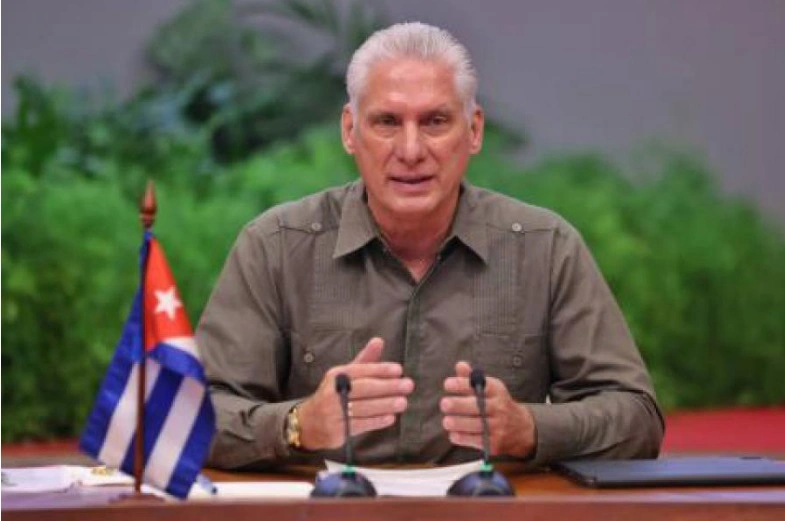
The Cuban president described the support as an act of sovereignty in the face of coercion exerted by the United States government during the vote.
October 30, 2026 — teleSUR
Cuban President Miguel Díaz-Canel expressed his gratitude to the 130 nations that supported the United Nations General Assembly resolution demanding an end to the economic, commercial, and financial blockade imposed by the United States against Cuba.
The overwhelming global support against imperialism’s economic war— 130 votes in favor, 17 against, and 25 abstentions —came after intense diplomatic disputes in the multilateral arena and brutal pressure from the White House on sovereign states to change their votes and not support Cuba. This marks the thirty-fourth time since 1992 that the world has rejected this US policy.
The Caribbean head of state used the social media platform X to communicate his message to the world. Díaz-Canel highlighted the political courage of the countries that defied Washington’s threats. In his post, the president wrote: “On behalf of the Cuban people, we thank the 130 nations that voted against the genocidal blockade and the collective punishment to which the U.S. government subjects us.” He added that this decision constituted “an act of courage and sovereignty, in the face of coercion to prevent them from doing so.” This recognition underscores the geopolitical importance of the favorable vote in the current context of bilateral tensions.
The approval of the resolution presented by Cuba occurred against a backdrop of tightening US restrictions. Between March 2025 and February 2026, damages attributed to the blockade amounted to $8.0833 billion , 7% more than in the previous period. Accumulated damages over six decades exceed $178.7 billion at current prices .
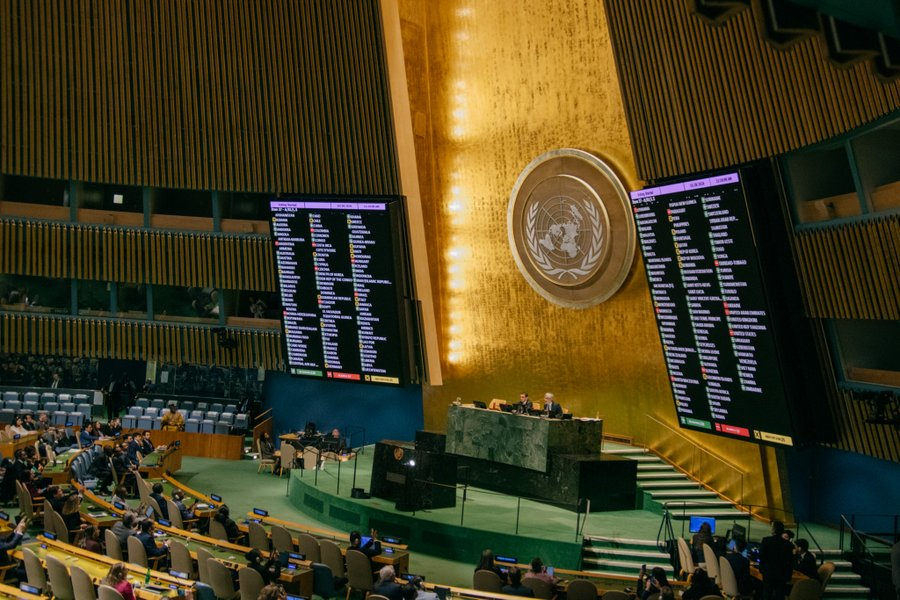
Diplomatic tensions at the General Assembly
The day before the vote turned into a diplomatic battle between Cuba, which defends multilateralism and international law, and a MAGA-style US that repeatedly violates the UN Charter and views the world as its backyard. Cuban Foreign Minister Bruno Rodríguez warned of an “unprecedented deployment” by Washington to undermine support for the resolution.
During the sessions, the US representative to the UN, Mike Waltz , asserted that “the blockade does not exist” and attempted to blame the Cuban leadership for the economic crisis, claiming it was orchestrated by the White House to destabilize the country . These statements provoked a strong protest from the Cuban delegation, which accused the diplomat of lying about the true causes of the crisis on the island. Diplomats from numerous nations advocated for an end to the unilateral coercive measures and cited their negative impact on national development.
Voting results and historical context
The General Assembly adopted the resolution with 130 votes in favor, 17 against, and 25 abstentions . Pressure from the White House and the subservience of a group of nations played their part: there were 10 more votes against and 13 more abstentions compared to the 2025 vote. Some countries did not participate due to arrears in their UN dues payments.
Since 1992, Cuba has presented this initiative annually, always receiving a large majority. The blockade, in place for more than six decades, is systematically rejected by the international community as a violation of international law and the sovereignty of states.
Economic impact and recent escalation
Washington’s aggression against Havana intensified after the US military invasion of Venezuela to kidnap President Nicolás Maduro on January 3. Subsequently, on January 29, US President Donald Trump signed an executive order authorizing tariffs on imports from countries that supply oil to Cuba .
READ ALSO:
Díaz-Canel: Cuba expands the use of its own resources in the face of the US oil strangulation
This measure has generated a severe fuel shortage , affecting electricity generation and causing prolonged blackouts. The lack of energy impacts vital sectors such as the economy, transportation, food production, health, and education. The UN resolution seeks to mitigate these effects by calling for an end to unilateral restrictions.
Author: teleSUR-asm
Source: teleSUR and Agencies
