
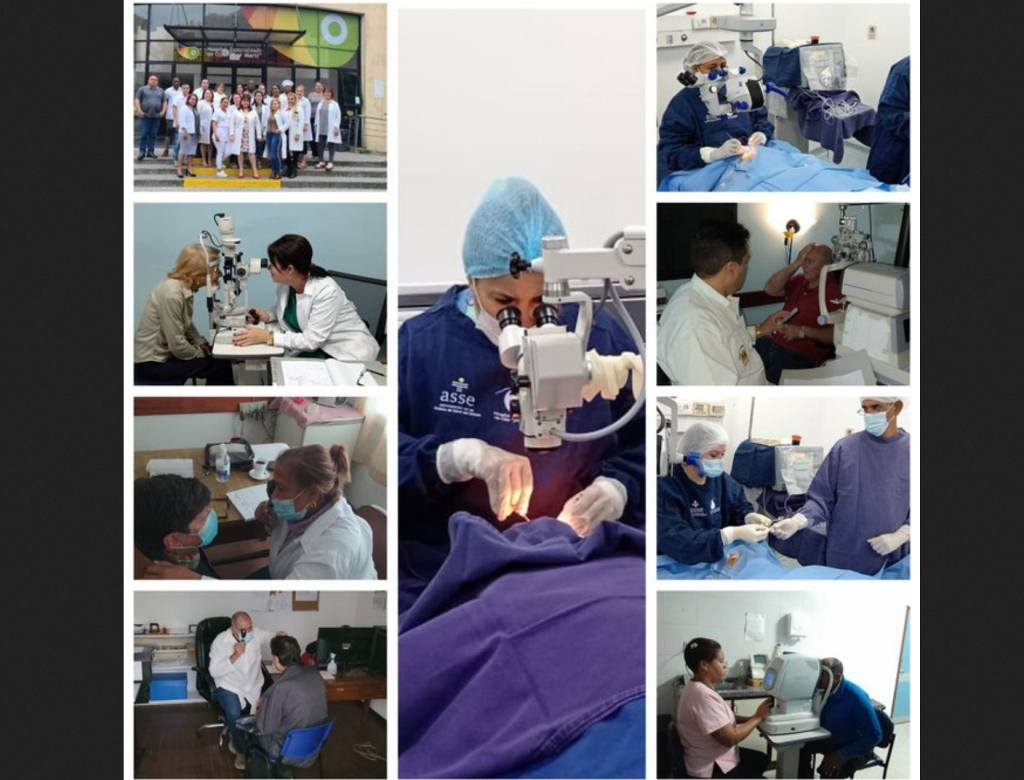
Montevideo, Oct 7 (Prensa Latina) Cuba does not receive a single cent for medical cooperation with Uruguay and the services of an ophthalmological brigade in the South American country, former Deputy Minister of Social Development Ana Olivera stated here today.
By Orlando Oramas León
The former president of the Chamber of Deputies was also part of the board of directors of the Ministry of Social Development (Mides) when Cuba and Uruguay were preparing the agreement that 19 years later restored sight to thousands of Uruguayans, with some 123,000 surgical interventions.
Olivera made statements to the public television channel that amended previous statements by Foreign Minister Mario Lubetkin regarding changes to the bilateral agreement following remarks from the United States government.
According to Lubetkin, the funds paid for the work of the Cuban medical brigade will be sent to the doctors and not to the island’s government.
Uruguay does not pay the Cuban government for the arrival of this solidarity brigade, Olivera clarified.
He recalled that between 2005 and 2007, some three thousand Uruguayans traveled to Cuba to be treated by Operation Miracle, most of them undergoing cataract surgery.
The first trips were from Buenos Aires because Cubana de Aviación didn’t fly to Montevideo, he recalls. He adds that many of them lived in poor settlements, lacked passports, and traveled with their national identity cards.
Actually, the first thing that was agreed upon was the existence of a reference hospital center, the “José Martí” Eye Hospital, which was fully equipped by Cuba.
From there – he continues – the first brigades began, for which Uruguay does not pay the Cuban government.
She explained that in practice, the Social Security Bank deposits $250,000 into an account at the Bank of the Republic. The head of the medical brigade uses this money to pay for airfare for the annual vacation to the island, excess baggage fees, and the stipend each brigade member (about twenty) receives.
In turn, the State Health Services Administration is responsible for the accommodation, food and transportation of the Cuban collaborators, who carry out investigations throughout the country.
Ana Olivera believes that this cooperation “has been very important for Uruguayan society. As someone told her: “I haven’t seen colors in a long time” or another: “Now I see my grandchildren.”
There was a man who went on the first trip to Cuba and had lost his job because of vision loss, because he was poor, because he didn’t have three thousand or fifteen hundred dollars to pay for an operation. Later he joined a drivers’ cooperative, the former Undersecretary of the Ministry of Social Development recounted.
The bilateral agreement promoted free care for those who do not have the financial resources to cover the costs of ophthalmological services, in order to restore or improve the vision of Uruguayan citizens.
By August 2026, more than 160 Cuban doctors had served in the country in seven brigades. By that time, the Caribbean experts had provided 956,433 consultations, 222,873 screenings, and performed 122,928 surgeries.
Internationally, Operation Miracle, launched at the time by Presidents Fidel Castro and Hugo Chávez, benefited more than six million people who regained their sight. From its inception, it faced hostility from Washington.
mem/ool
