

Santiago, Chile, April 1 (Prensa Latina) Cuba affirmed today at ECLAC that five years into the horizon outlined in the 2030 Agenda, its principles are far from being fulfilled, and urged wealthy countries to honor what they have agreed to in official development assistance.
By Carmen Esquivel
Participating in a forum on the Sustainable Development Goals (SDGs), the head of the Cuban delegation, William Díaz, warned about the lack of political will among the most economically advanced nations to contribute 0.7 percent of their Gross Domestic Product to this goal.
The reform of the international financial architecture, encompassing both institutions and their governance structure, cannot be delayed, said the director general of international cooperation at the Ministry of Foreign Trade and Investment (Mincex).
The official also urged facilitating access to long-term financing and improving assistance, technology transfer, and capacity building programs.
In his remarks, the Cuban representative denounced the obstacles to development created by unilateral coercive measures applied against several countries.
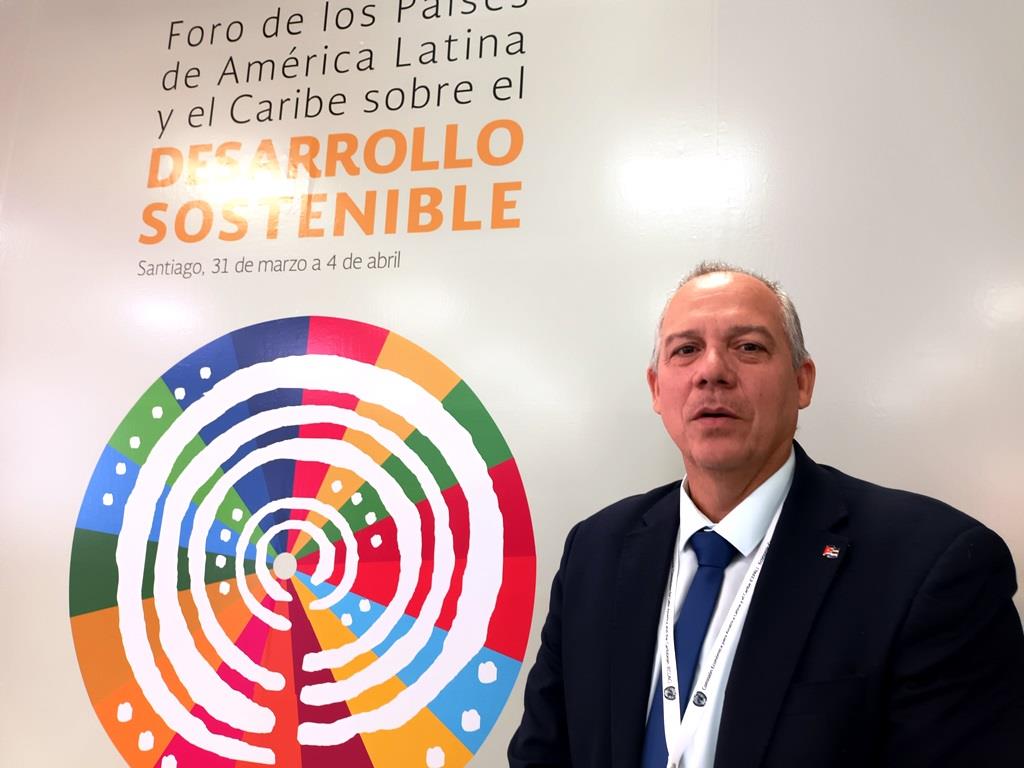
He cited the case of the unjust and criminal blockade maintained by the United States against Cuba for more than six decades and, in particular, the inclusion of the island on the list of alleged sponsors of terrorism, a place it should never be.
The blockade affects all sectors, and one of its greatest impacts is the persecution of all our financial transactions, the Mincex official told Prensa Latina.
The meeting, held at the headquarters of the Economic Commission for Latin America and the Caribbean, aims to share experiences to overcome the region’s gap in achieving the SDGs. Government representatives, UN officials and experts, members of international and regional organizations, the private sector, academia, and civil society are participating in the event, which will run until April 4.
A decade ago, 193 United Nations member states approved an ambitious agenda of 17 goals for 2030 that seek to eliminate poverty, improve education and health, achieve gender equality, decent work, and economic growth, among other objectives.
However, according to ECLAC studies, less than a quarter of the goals have been achieved or are expected to be achieved in the next five years.
In the view of the United Nations agency, progress requires financing and strengthening international and regional cooperation, as well as multisectoral alliances.
arc/car

