
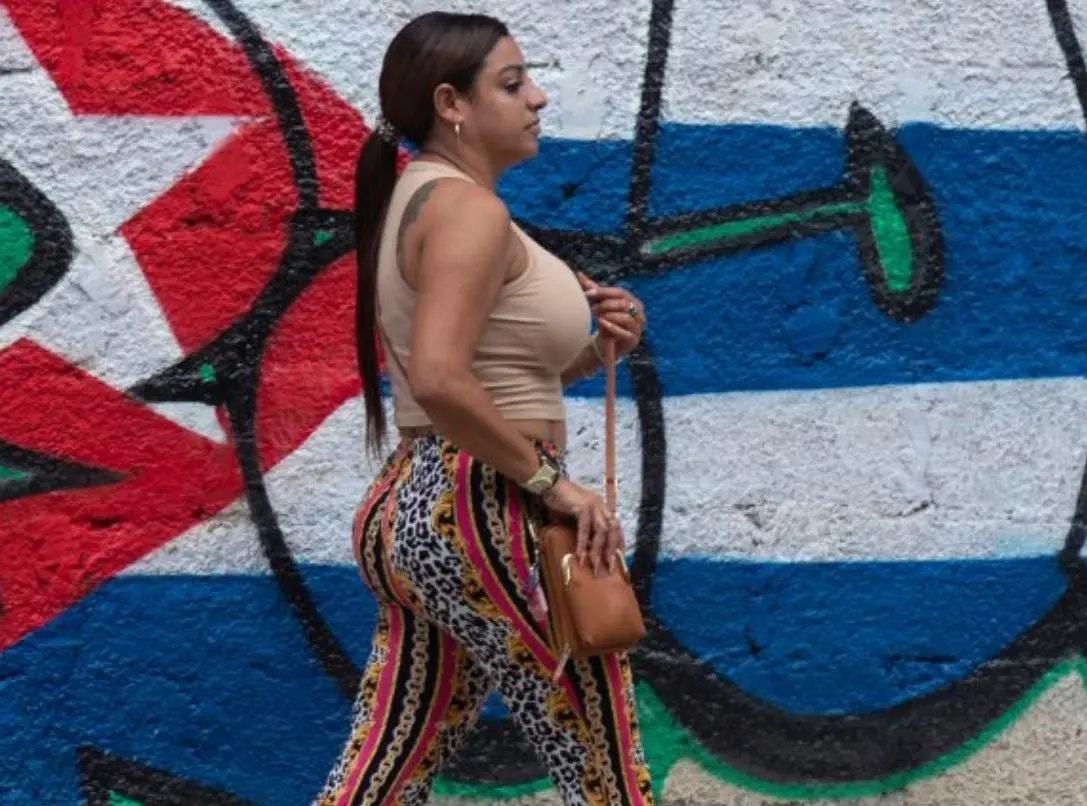
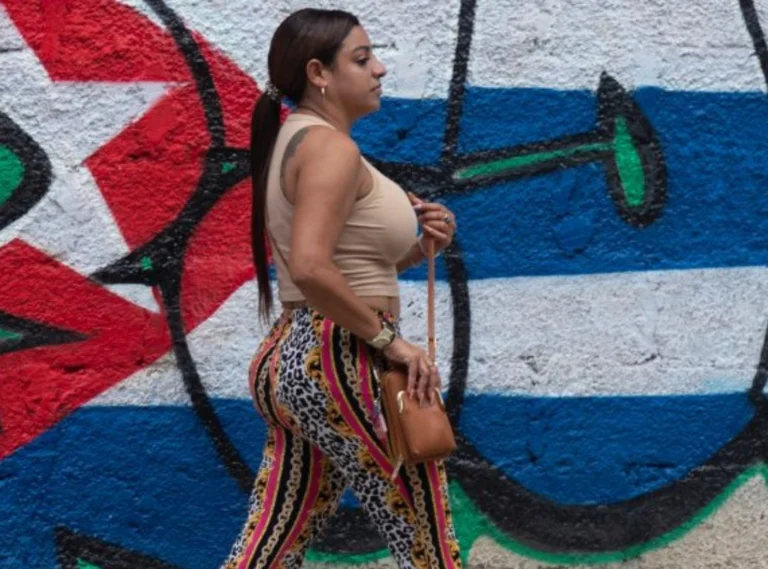
 A woman walks past a graffiti mural in Havana. Photo: EFE.
“I’m ready to fight. We won’t back down; surrender is not an option for Cubans. We decide our own destiny, no one else,” says Enma, a mother and teacher.
February 21, 2026 — teleSUR
Cuba has now endured more than six decades under a severe US economic, commercial, and financial blockade, a reality that has transformed daily life into an obstacle course. The embargo not only impacts the economy but also the very heart of families.
In recent weeks, this pressure has intensified with new restrictive measures from Washington aimed at preventing fuel shipments to the island, triggering an energy crisis that is testing, once again, the Caribbean nation’s capacity for reinvention. But amidst the scarcity, popular organization and, above all, the strength of Cuban women are emerging.
Emma Doris: between healing and hope
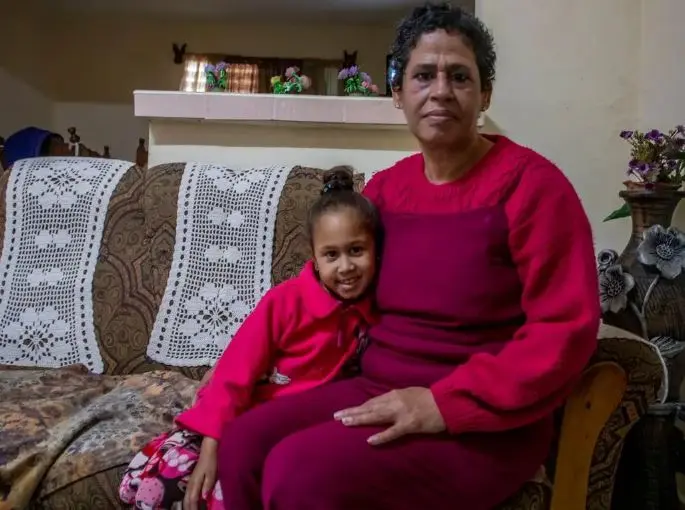
Emma Doris Ricardo Santana, a mother and university professor, knows firsthand the weight of these restrictions. Her life took a dramatic turn when an aggressive form of breast cancer forced her to leave the classroom.
The blockade hindered his recovery : the shortage of cytostatic serums prevented him from receiving the full treatment within the planned timeframe.
The lack of medication was compounded by the ordeal of transportation , forcing her to travel between three different hospitals. Despite everything, Emma recovered thanks to the dedication of Cuban public healthcare and an unbreakable network of support.
“Medicine heals, but so does solidarity. That’s what makes you get up,” he says with a recovered smile, although his eyes reveal a latent concern.
His 10-year-old daughter, Claudia, suffers from a growth disorder . The necessary reagents and hormones are not reaching the island due to the sanctions.
“The family’s priority is her. The little girl needs treatment that we can’t yet provide in Cuba,” she explains. But far from giving up, Emma remains resolute: “I’m ready to fight. We won’t back down; surrender is not in the Cuban spirit. We decide our own destiny, no one else.”
The dream of becoming a mother in the face of adversity
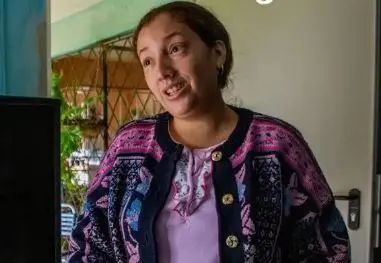
At 29, Rocío Rincón has only one goal in life: to be a mother. A civilian employee at the Carlos J. Finley Hospital, she lives with a pituitary tumor that has prevented her from fulfilling her dream . In her home, a Yoruba altar and a painting of five angel girls watch over her longing.
“None of those children are mine, but having a baby is my goal,” she confesses with a deep but serene sadness. Rocío is grateful that her treatment is free thanks to the Cuban healthcare system, although the instability in the supply of medications—which often depend on donations from friendly countries—is a constant shadow.
“ Too many people are suffering because of this blockade. With Trump, the situation is much more aggressive; these are measures to suffocate us, but they won’t succeed,” Rocío declares, reflecting the feelings of thousands of women who, between deprivation and faith, refuse to relinquish control of their future.
Manuel Isla Community: sowing sovereignty in the most remote corner
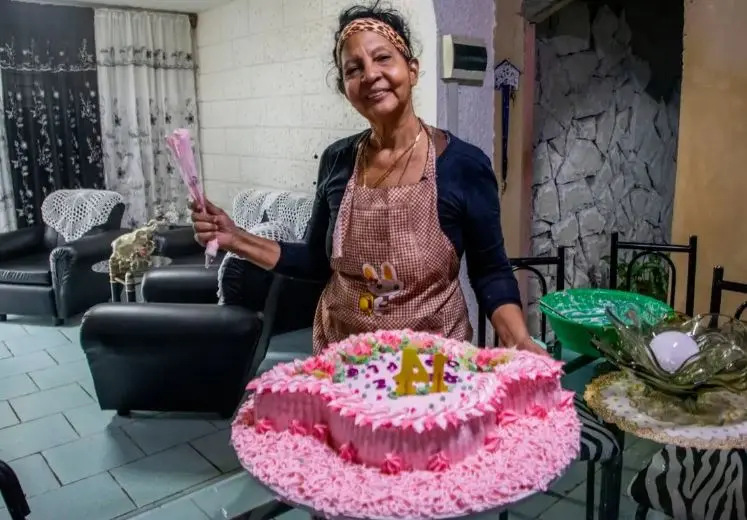
Far from the hustle and bustle of the capital, the Manuel Isla community —named in honor of a young martyr of the Revolution—stands as a model of self-management. There, professionals, educators, and workers have built an oasis of resistance.
In this environment lives María Eva Puentes Torres, a Santiago baker in her sixties who works wearing an apron adorned with bunnies and battles power outages to deliver her cakes. Each cake is a work of art and a testament to resilience.
“The blackouts take away our ability to work and affect my university daughter’s studies, who can’t even charge her phone to watch her classes,” she confesses indignantly.
However, his stance is unwavering : “This country is ours. We will resist with creativity. No one here surrenders.”
Ainara: The voice of the future that is not afraid
Cuban bravery knows no age. Ainara Neira Reyes, at just 11 years old , speaks with the maturity of someone who understands that her school is a bastion of values. Although the blockade limits her access to pencils, notebooks, or even the possibility of playing volleyball because there are no balls, she feels protected by her teachers.
“We pioneers always go ahead,” says Ainara, who keeps herself informed daily and understands that external hatred seeks to break her spirit.
His message to the children of the world is one of pure solidarity : “We are going through a difficult time, but if you go through something similar, we will support you from here. Don’t give up!”
The language of the “indomitable guerrilla”
As Tatiana Coll, a longtime collaborator on the island and witness to the 1970 sugar harvest, rightly recalls , Cubans have a special nature : perhaps in their daily routine they seem relaxed, but “as soon as the trumpet of defense sounds, nobody can surpass them.”
They activate in guerrilla mode , a characteristic that Fidel taught them and that today women —from the pastry chef to the pioneer— embody with a dignity that does not understand surrender.
In Cuba, resistance is not just a political concept; it’s a mother’s hand baking a cake in the dark, a girl defending her right to education, and a community that, faced with fuel shortages, decides to grow its own food. Solidarity and sovereignty, definitively, have a woman’s face.
Author: TeleSUR – ac – DE
Source: La Jornada – Agencies
