

New York, USA, Feb 26 (Prensa Latina) Cuba’s collaboration in health is today a feat and a bastion of hope for many people around the world, said Samira Addrey, member of the board of directors of the American organization IFCO-Pastors for Peace.
In this time of aggression against Cuba, we must highlight the work of that country in terms of health and international collaboration, said Addrey, also a graduate of the Latin American School of Medicine (ELAM) during an interview with Prensa Latina.
“I believe that the example of ELAM, which after 25 years continues to produce doctors for the world, is clear proof that Cuba has exported health, love and friendship to the world while the United States continues to export violence,” he said.
Unfortunately, we are living in a country with a broken health structure, where people with low economic resources do not count, where the country does not focus on the human being, explained Dr. Addrey.
Our task as ELAM graduates, as Cuba has trained us, is to return and focus here, being an example that another world is possible, he added.
He acknowledged the training received on the island “as doctors of science and conscience” and stressed that “in Cuba, a type of doctor is trained who is humanistic and supportive.”
Samira, who heads the ELAM program at IFCO (Interreligious Foundation for Community Organization) highlighted the group’s decades of experience in the solidarity movement with Cuba “and we want to take advantage of that history,” she emphasized.
In 1967, Lucius Walker founded IFCO and in 1988 conceived the Pastors for Peace project that organized humanitarian aid caravans as a way to support victims of U.S. foreign policy in the region.
Walker led 21 Friendship Caravans from 1992 until his death in September 2010, to bring humanitarian aid and medicine to Cuba in yellow school buses, without seeking permission or a license from the authorities.
In the dialogue, Samira spoke about defending the legacy of Reverend Lucius and the trust in their communities with the training they receive in the Caribbean nation.
For Addrey, “Fidel Castro’s dream lives on, we have seen 25 years and we will see 25 more years of a prosperous ELAM.”
Personally, for me, as a 2020 ELAM graduate, Cuba has reinforced many of the values I grew up with, confessed Addrey, who was born in Ghana.
Cuba embraced me and treated me like a daughter during the years I was there; in addition to the medical skills we learned in medical school, there is a level of family, of sense of being human that I have not experienced anywhere else, she confessed.
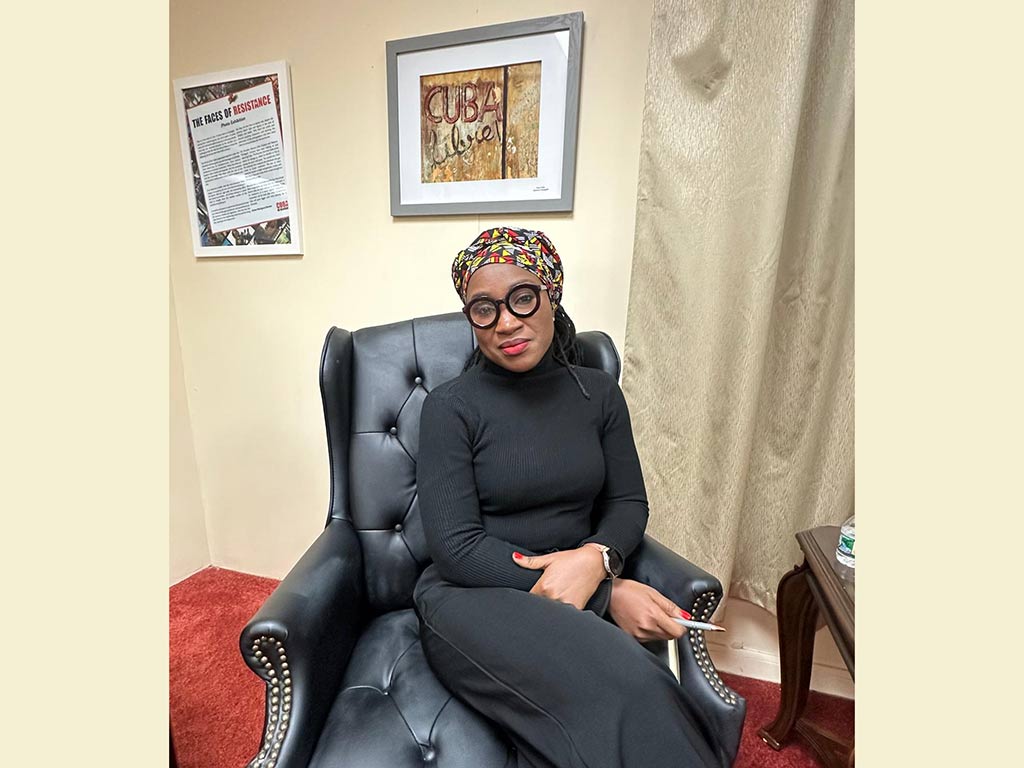
“In Cuba, everyone shows solidarity with you in whatever way they can and tries to support you in your difficulties,” said the doctor.
He said that Cuba is a part of his heart, “and I think it is important for me to pass that on to my daughter. She knows that there is a country far from Ghana where I was born, that we were raised there and that it has an immensely beautiful people.”
I believe – Addrey concluded – that the world should recognize Cuba beyond the things that are popular, one must be there, one must feel the people, live with them and feel their humanity.
ode/dfm
