
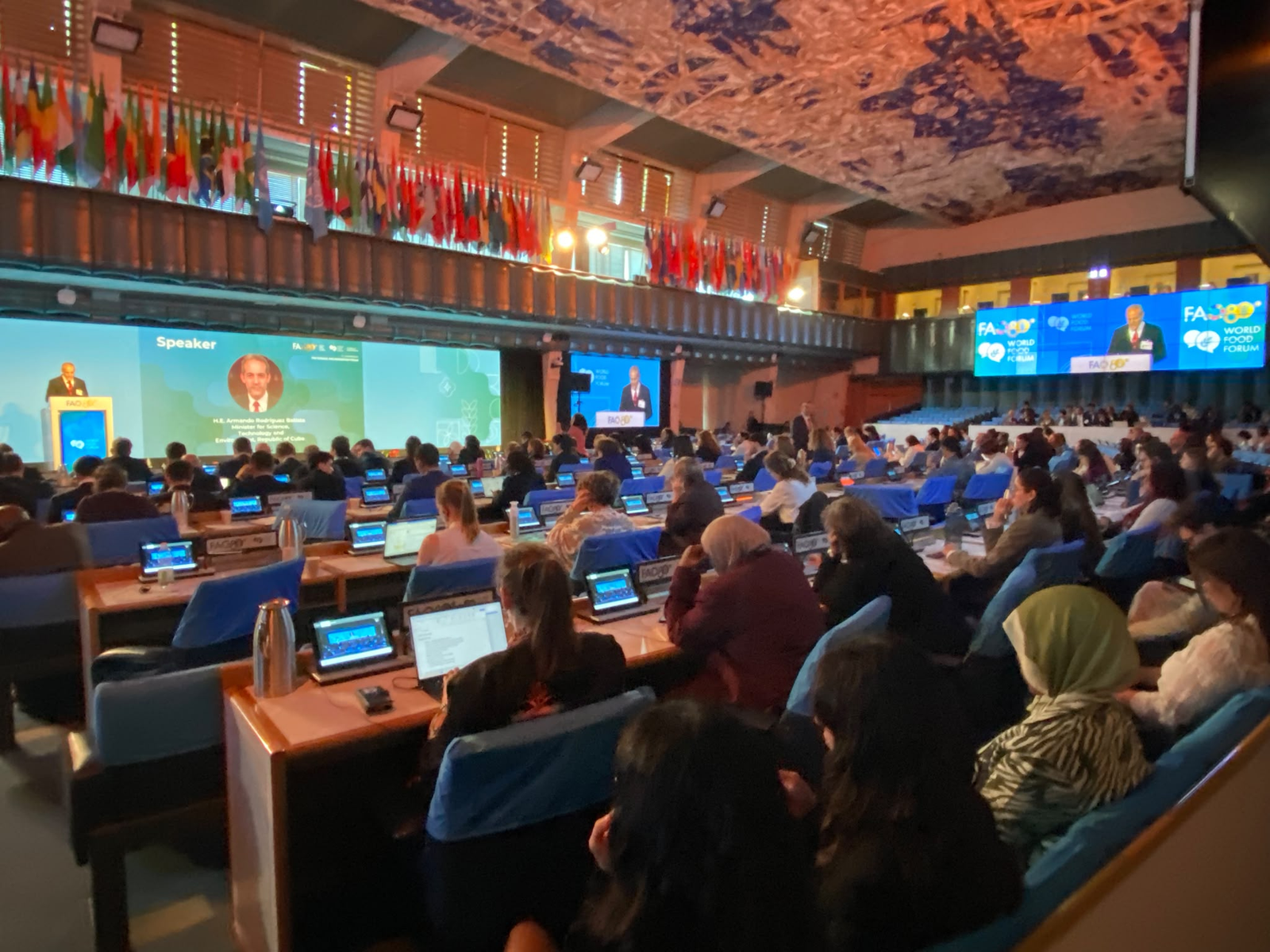
Rome, Oct 13 (Prensa Latina) The Cuban Minister of Science, Technology and Environment (Citma), Armando Rodríguez Batista, stressed today in this capital that developing agri-food systems should be a task not only of the Ministries of Agriculture, but of the entire society.
Speaking at the opening of the World Food Forum’s (WFF) Science and Innovation event, the Cuban minister drew attention to the pillars of the Ministry of Science, Technology and Environment’s (Citma) policy, the first of which is the need to have science, technology and innovation capabilities at the national level, but also at the local level.
He highlighted that in Cuba a quarter of the science produced is directly related to agriculture, dedicated to the study of pests, new seed varieties, but also to a science that addresses the environmental and social dimension.
He also emphasized the significant role of the social dimension in the scientific approach to agri-food systems in Cuba. “We do not fund any research, development, or innovation project that does not incorporate the social dimension,” he stated.
He stated that for the country this is as important as knowing and studying its ecosystems or the threats associated with climate change, or salinization, considering that Cuba is an archipelago where 90 municipalities are coastal.
Rodríguez asserted that among the priorities of the Cuban science strategy is also having the capacity to manage both national and international projects that allow the development of agri-food systems with diversified sources of financing.
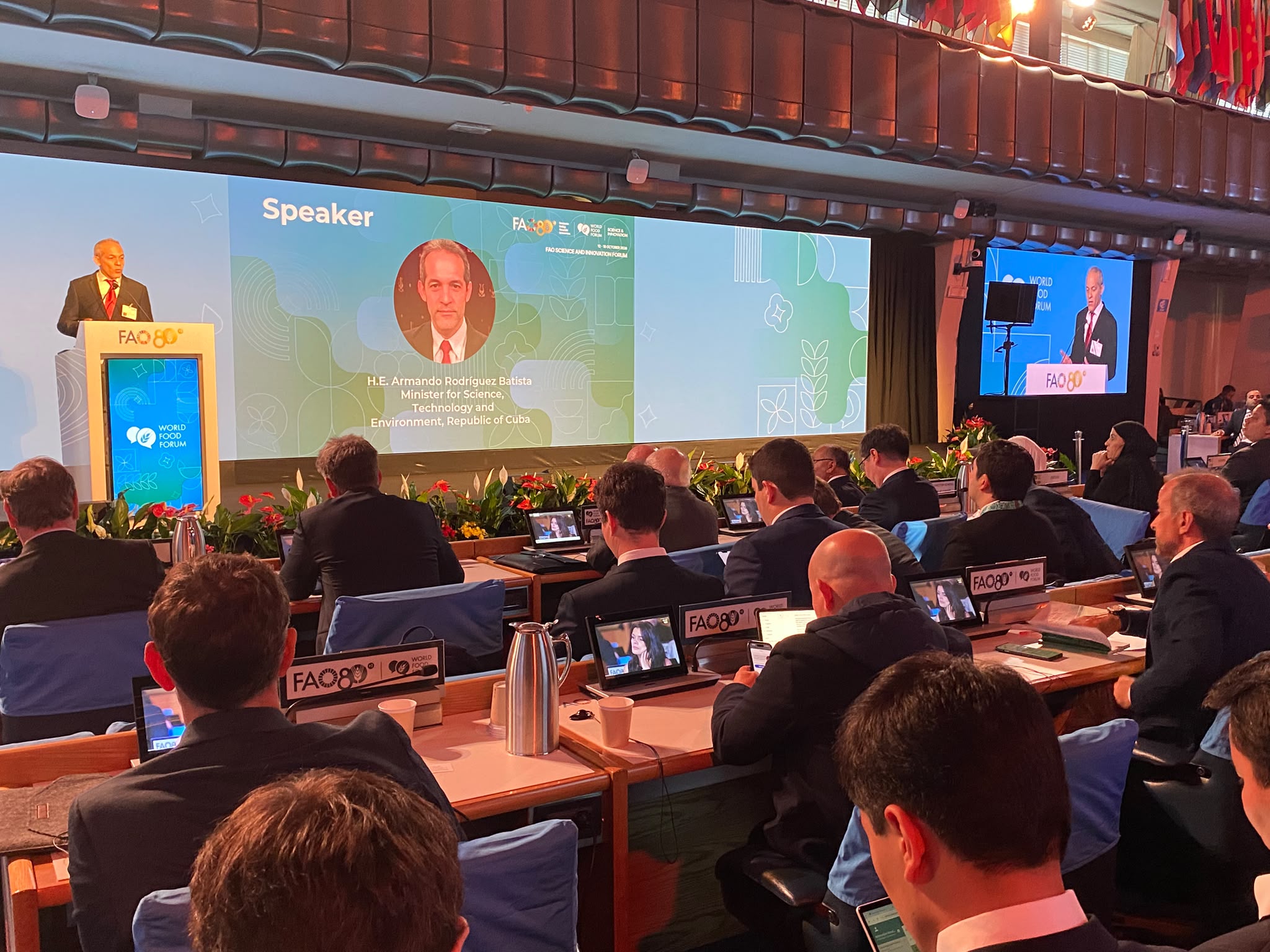
Another key element, he said, is the decision to work so that behind every regulation, every governance, every legal framework, there is a construction based on science.
He mentioned that the country recently passed the law on food sovereignty and security and nutritional education, which was based on the exchange of scientific knowledge.
He added that the General Law of Science, Technology and Innovation was also approved, which includes a Science and Technology strategy that defines the priorities for research based on the development of agri-food systems.
A country’s national environmental strategy, he said, is also key in reflecting the knowledge and development demands of agriculture.
This meant that five of the eight environmental problems defined in the Cuban environmental strategy correspond to issues that have a close direct connection with agri-food systems.
The head of Science, Technology and Environment of Cuba stressed that a third relevant element of the national strategy is the dialogue between scientists, producers and the country’s authorities, seeking a governance that truly reflects the needs and demands of the agri-food systems.
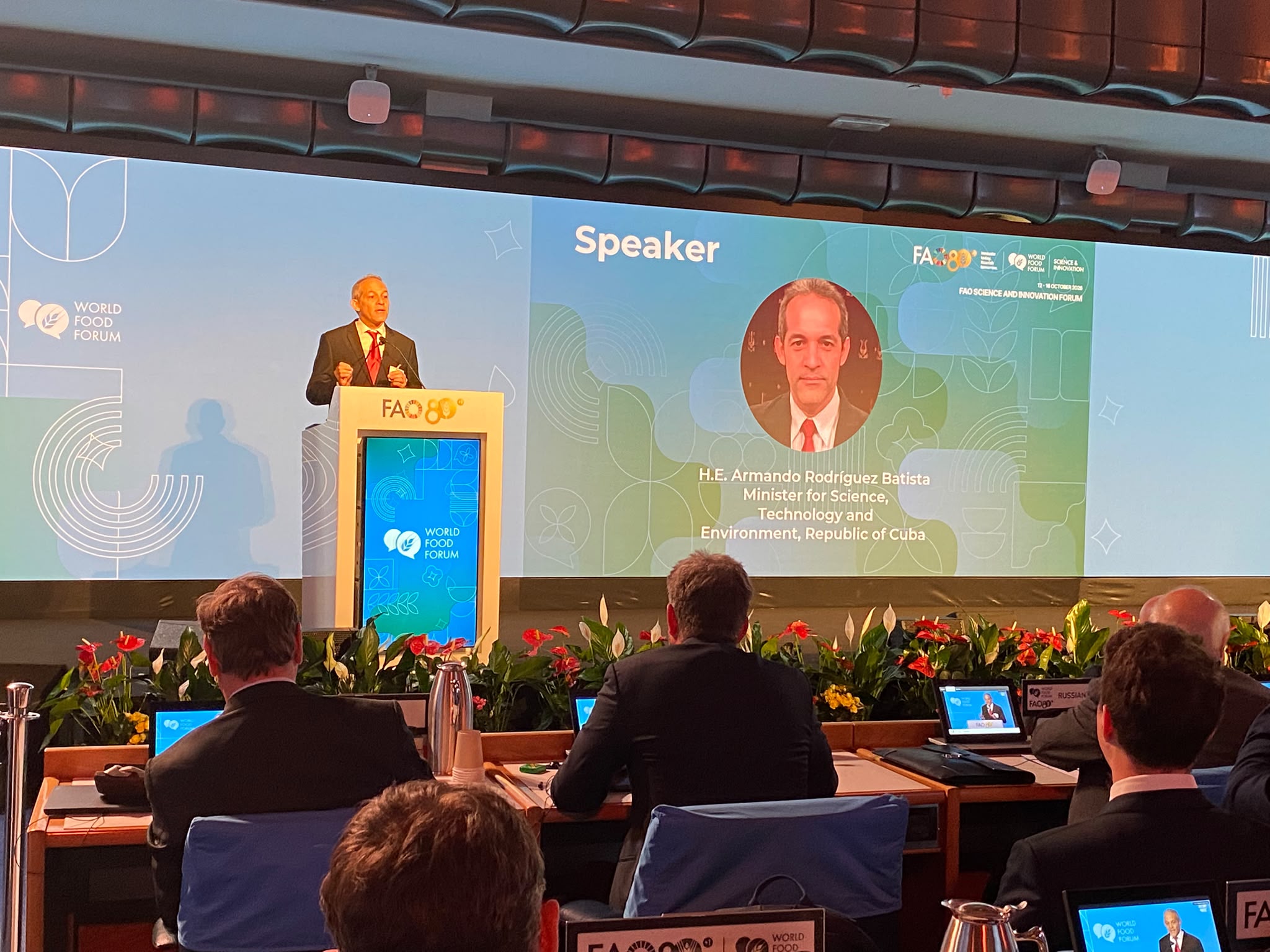
In this regard, he referred to the experience of the National Innovation Council, which promotes best practices in the areas of national life and is led by the President of the Republic with the participation of the Prime Minister, five other ministers, five experts from various fields of national science and an equal number of successful entrepreneurs.
In his address to the WFF, Rodríguez warned that such demands also include the effects of climate change or the impact of the United States’ economic, commercial and financial blockade.
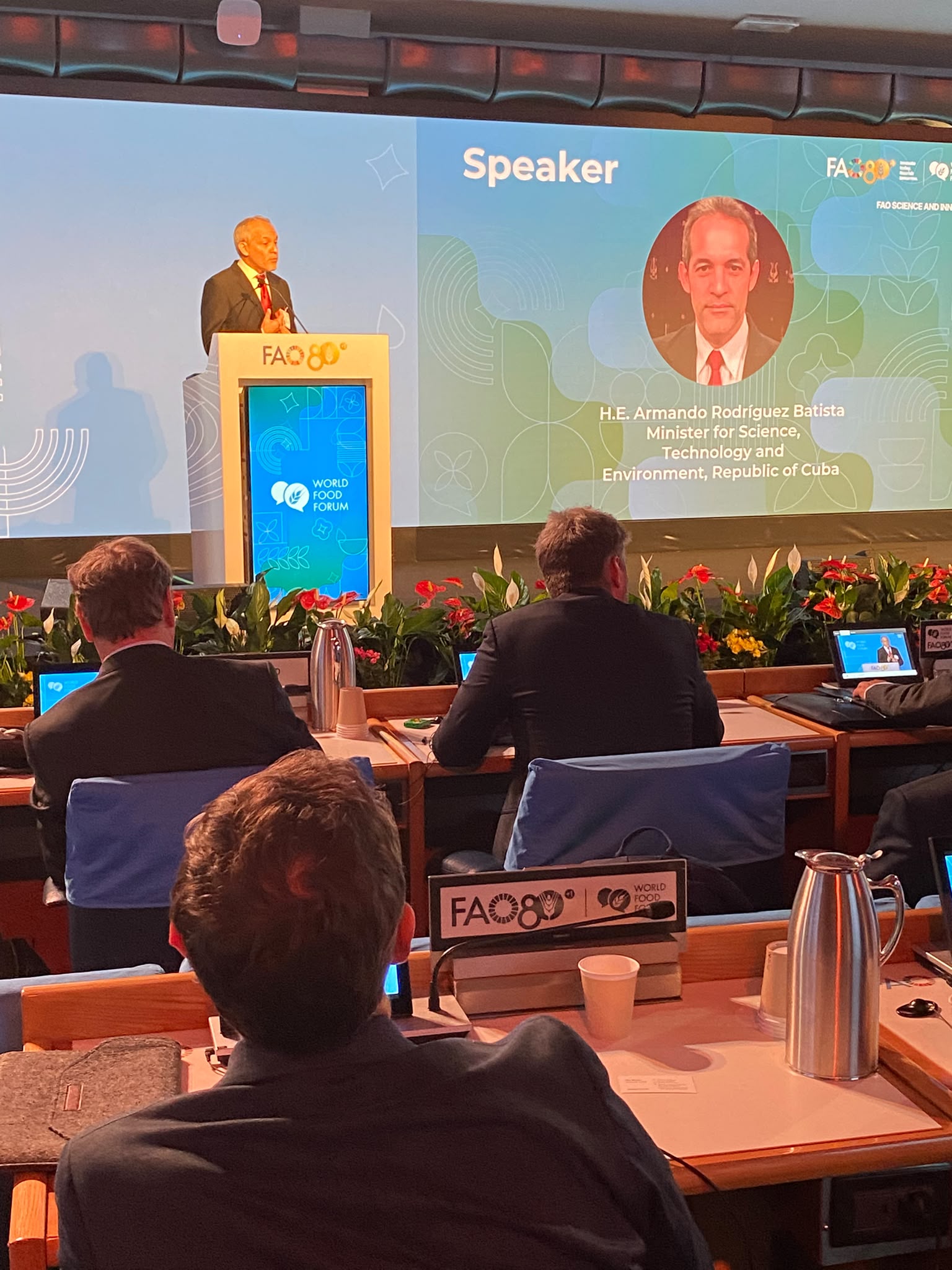
The Cuban official denounced the effects of Washington’s measures against the island, stating that in the agri-food sector alone, they cost more than $440 million in 2024.
He indicated that in the face of these sanctions, the country’s national capabilities in innovation and resilience have prevailed.
mem/mml
