The American passport is one of the strongest in the world, offering visa-free access to 182 destinations. Some places, like Russia and Iran, require that Americans acquire a visa prior to entering the country. What some Americans may not realize, however, is that their own government has several restrictions about where they are allowed to travel, specifically to Cuba and North Korea.
Restrictions on travel to Cuba date back to 1962, when John F. Kennedy placed sanctions on the Cuban government and forbade U.S. citizens from traveling there. Under these restrictions, only specific categories of individuals, such as those visiting family, are allowed to go to Cuba. The only way that Americans can travel to Cuba currently is through “veiled tourism”—in which someone uses a “Support for the Cuban People” travel license to comply with American restrictions. Traveling to the country for explicit tourist purposes is completely banned.
The ban on going to North Korea is a much more recent development. The prohibition was implemented in 2017 and was related to the death of the jailed American student Otto Warmbier. If an American uses their U.S. passport to enter North Korea, their passport can be revoked, and they may face felony charges. Unfortunately, due to this ban, it is actually impossible for aspirational American travelers to visit every single country in the world without acquiring a second citizenship.
Everyone has different risk preferences and the level of risk that people are willing to expose themselves to is an individual decision. Caveat emptor is a Latin phrase that translates to “let the buyer beware.” The core principle of caveat emptor is that consumers are responsible for conducting their own due diligence before entering into a transaction. Visiting countries like North Korea or Cuba may involve certain risks, but ultimately, it is up to the individual to decide whether to assume those risks. While many Americans may be hesitant to travel to countries like North Korea, the government should not prohibit such travel outright—they should instead let the buyer beware.
The State Department categorically advises Americans not to travel to Russia due to the ongoing conflict in Ukraine. I lived in Russia during this time period, nevertheless. I exercised my own discretion and accepted the associated risks—risks I believed were often overstated. Had the government enacted a complete travel ban, I would have missed my graduation ceremony in Moscow and the many meaningful experiences and lasting memories I gained there after 2022. My time in Russia, despite official warnings, underscores a broader principle: individuals—not the government—should have the final say over the risks they are willing to take.
Travel bans to places like North Korea and Cuba are not just about safety—they are about freedom. Restricting the ability to travel limits personal liberty and the fundamental right to move and engage with the world on one’s own terms. True freedom includes the right to cross borders without undue interference from one’s own government. Moreover, if the countries that the State Department advises against going to are as dangerous or oppressive as claimed, Americans should have the freedom to go and investigate that for themselves.
The State Department placed Cuba back on the list of countries “not fully cooperating” with U.S. counterterrorism efforts a year after Biden had removed Cuba from the list. The reasoning behind the designation is that Cuba refuses to discuss the return of “U.S. fugitives from justice” as well as “other recent circumstances of non-cooperation,” according to a statement by spokesperson Tammy Bruce. The statement does not provide any details as to those circumstances.
Biden had removed Cuba from the list citing law enforcement cooperation between the two countries. According to Biden and Cuban officials, Cuba and the U.S. cooperate on several issues, including counterterrorism, migration and drug trafficking. Check out this interview with a member of the U.S. Coast Guard who spoke of his cooperation with his Cuban counterparts.
The list results in the prohibition of the sale or license for export of defense articles and services to Cuba. It is far less impactful than the State Sponsors of Terrorism List (SSOT), which cuts Cuba off from trade, investment and credit.
Havana, May 27 (Prensa Latina) Cuban President Miguel Díaz-Canel today sent congratulations to his Venezuelan counterpart, Nicolás Maduro, and to the members of the Simón Bolívar Great Patriotic Pole, for the electoral victory achieved in the recent elections.
“The Bolivarian Revolution is consolidating its institutions with the majority support of the people, despite the sieges and sanctions,” the president emphasized on the social network Telegram.
The head of state highlighted the success achieved by the Great Patriotic Pole, an electoral alliance led by the United Socialist Party of Venezuela, whose candidates won the legislative and regional elections.
Following the elections held on May 25, the Simón Bolívar Great Patriotic Pole won 82.68 percent of the 285 seats in Venezuela’s National Assembly (parliament) and 23 of the 24 governorships across the country.
Data released by the National Electoral Council confirmed the participation of 42.63 percent of the 21.4 million eligible voters in the election.
As US restrictions tighten, Cuba’s efforts to protect its ecosystems are faltering — with rising deforestation, strained conservation programs, and growing pressure on protected areas.
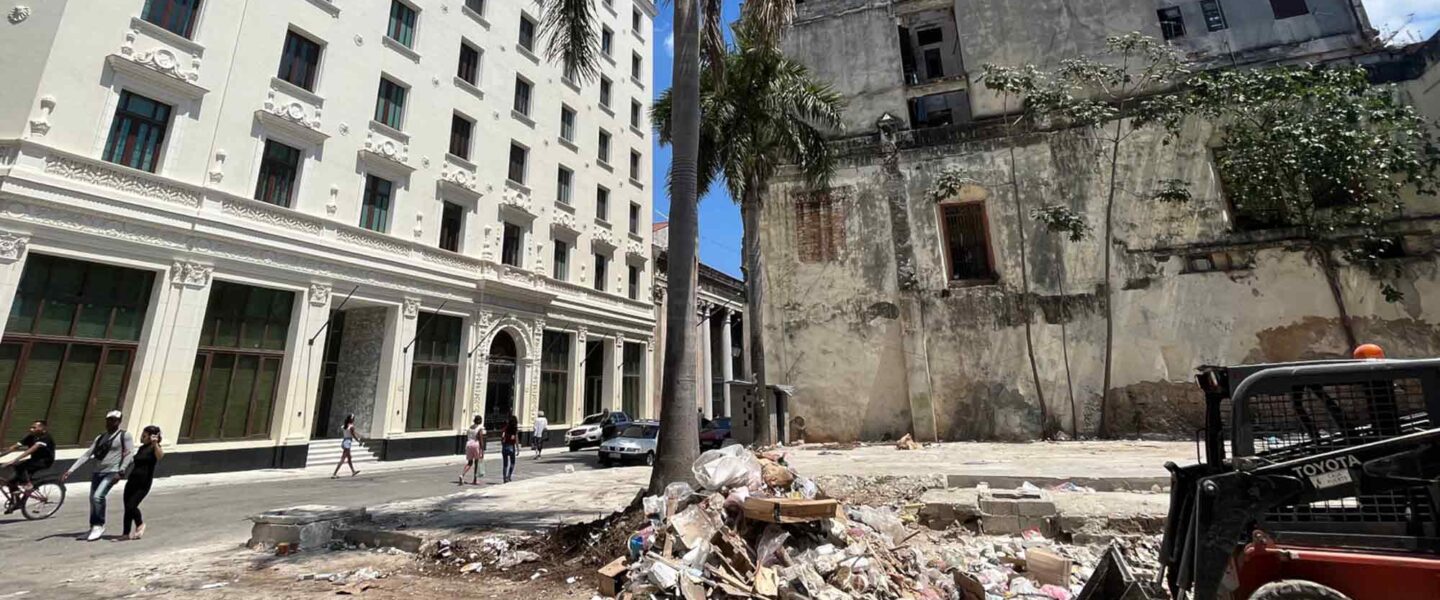
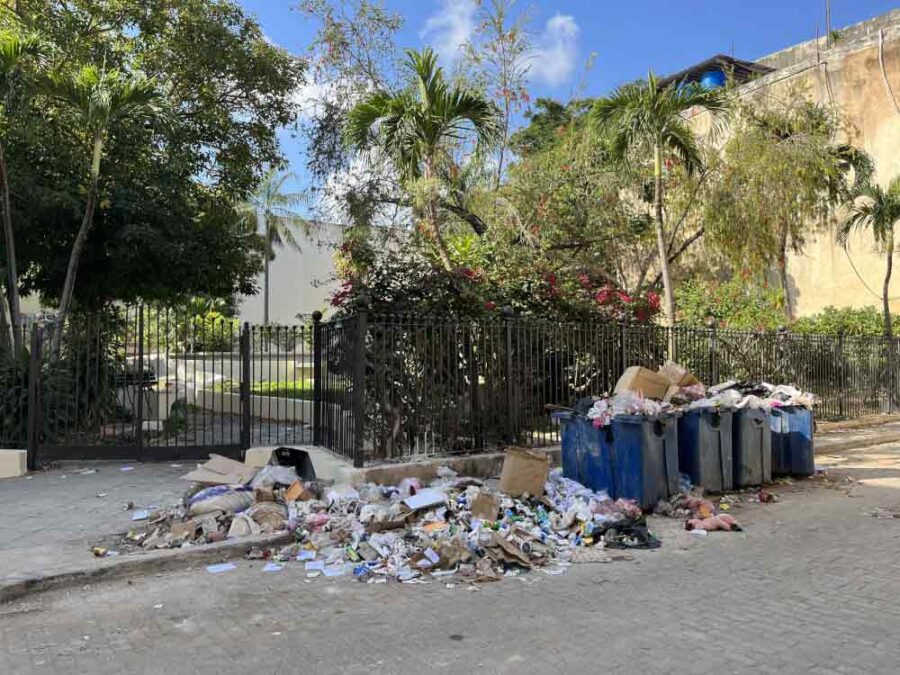
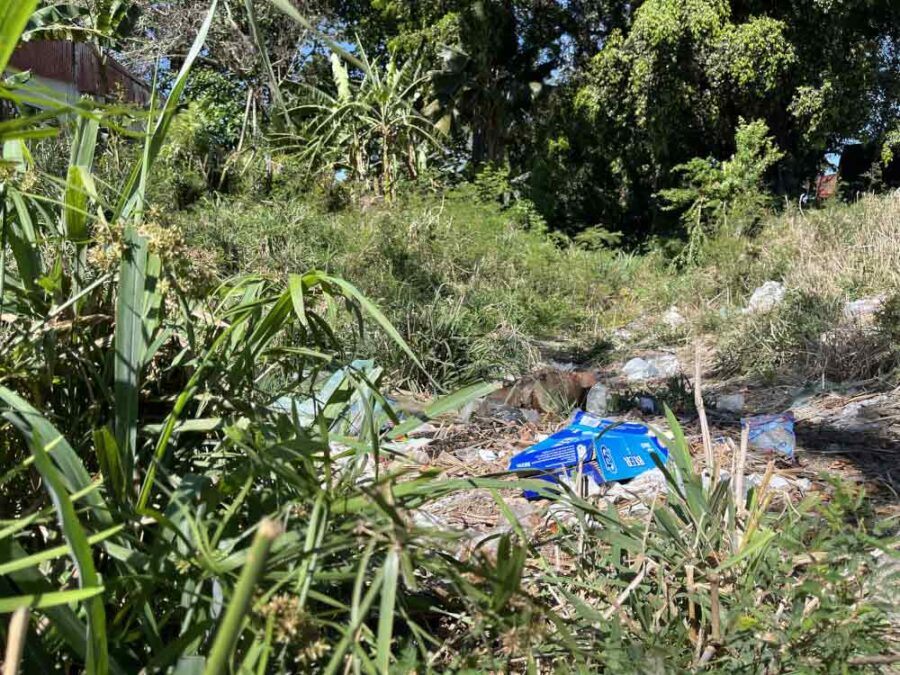
Music, cigars, and vintage cars — these are the most common clichés about visiting Havana, Cuba’s capital. They’re all still common sights, but now visitors may also encounter a different scene: mounting garbage in the streets, forest fires, and chemical waste dumped in residential areas.
These are all symptoms of the country’s worst economic crisis in three decades — which started during the COVID-19 pandemic and is now compounded by renewed political pressure from the United States.
On top of the decades-long US embargo, the new Trump administration quickly re-added Cuba to the State Sponsors of Terrorism list. The designation, announced by Secretary of State Marco Rubio in the administration’s first few days, allows for harsh sanctions: trade restrictions, export bans, frozen assets under US jurisdiction, and limited access to international financial markets.
This political label, though aimed at Cuba’s government, severely restricts the entire island’s access to international funding, technology, and scientific collaboration. It also hinders any attempt at a genuine energy transition and makes the protection of Cuba’s rich biodiversity — among the most unique in the Caribbean — increasingly difficult.
Sergio Jorge Pastrana, executive director of the Cuban Academy of Sciences, blames the “mismanagement of solid waste in Havana and other cities” on the policies of the United States government. “Fuel is so scarce that basic environmental services, once a hallmark of Cuba’s public systems, can no longer be sustained,” he says.
On the streets of the country, residents feel a sense of nostalgia for the era of the Obama presidency, when relations between Cuba and the United States started to normalize.
“Back then, there was hope,” says José Mendez, a resident of Havana. “The biggest problem for me is that, since Trump was elected, that hope has vanished. There was a glimmer with Biden, but he’s done very little to ease the pressure on us. Now there’s no prospect for economic or environmental improvement here.”
A Political Tool With Environmental Costs
The State Sponsors of Terrorism list is maintained by the US State Department and includes governments accused of financially, logistically, or politically supporting terrorist groups. As of now, only Cuba, North Korea, Syria, and Iran remain on the list.
The designation carries not only commercial restrictions but also cuts off foreign companies and nongovernmental organizations from operating in the country, for fear of legal complications or reputational damage. It further isolates Cuba diplomatically and reinforces its pariah status on the world stage.
“This list functions more as a tool of geopolitical leverage than an effective mechanism for curbing terrorism,” says Carolina Silva Pedroso, a professor of international relations at the Federal University of São Paulo in Brazil. “It weakens regimes that don’t align with US policy while overlooking allies involved in equally questionable actions.”
Cuba was originally placed on the list in the 1980s for offering medical aid and asylum to groups such as Colombia’s FARC and Spain’s ETA. The country was removed during the Obama–Raúl Castro rapprochement in 2015.
Barack Obama’s presidency tried to normalize bilateral relations between Washington and Havana by easing economic blockade measures, removing Cuba from the list of state sponsors of terrorism, and allowing U.S. cooperation in sectors such as tourism and agronomy — steps that boosted the island’s economy.
The nation’s environment quickly benefited. Between 2015 and 2021, the Cuban government significantly increased its financial commitment to environmental conservation from 534 million pesos ($22.2 million) in 2015 to 2.3 billion pesos in 2021 ($95.8 million) — a more than 330 percent increase, according to Cuba’s National Office of Statistics and Information.
During this period Cuba’s increased investment in environmental conservation led to several tangible outcomes on the ground — including the launch of coastal wetland restoration programs, the promotion of organic and sustainable agriculture, and the implementation of national strategies to adapt to climate change.
But Trump reinstated Cuba to the terrorism list in his first term — sparking formal protests from the Cuban government.
President Joe Biden’s administration removed Cuba from the list again in the final hours before he left office. But Trump again reversed that decision, making the designation one of the first symbolic acts of his second presidency.
Triple Crisis: Economy, Energy, and Ecosystems
As Cuba struggles with soaring three-digit inflation, widespread rationing of food, fuel, and public services, and a GDP drop of 12 percent since 2019, its ecosystems are quietly collapsing.
In Santa Marta, a town in the province of Villa Clara where thousands of tourists flock to visit the white beaches of Cayo Santa María, the tension between economic survival and environmental conservation is palpable. According to a Cuban government report, unregulated tourism is degrading coral reefs and mangrove forests in the area.
The once-pristine sands and turquoise waters now coexist with waste and pollution. In 2019 Villa Clara collected 1.9 million cubic meters (67 million square feet) of waste, according to Cuba’s National Office of Statistics and Information. By 2023, the latest data available, the figure dropped to 911,000 cubic meters (32 million square feet) — not because there’s less waste, but because the system can no longer operate properly.
The lack of resources for environmental enforcement and infrastructure makes it difficult to contain deforestation, poaching, and overexploitation of natural resources.
Investment in environmental protection has grown by only 47 percent since 2021, but hyperinflation — estimated at around 200 percent over the same period — has severely undermined these efforts. As the cost of living soars, locals increasingly turn to protected areas for income, guiding tourists through fragile ecosystems and hunting during restricted seasons.
Cuba’s biodiversity includes more than 35,000 species, with more than 42 percent endemism, according to government data — a staggering concentration for an island of its size. According to Cuba’s Institute of Ecology and Systematics and the Ministry of Science, Technology and Environment, numerous endemic species face increasing threats. Among the island’s native flora, 772 species are critically endangered, 512 are endangered, and 396 are classified as vulnerable.
Notably, the zunzuncito (Mellisuga helenae) — the world’s smallest bird — is threatened by habitat loss, while the almiquí (Solenodon cubanus), a rare nocturnal mammal endemic to Cuba, is critically endangered and remains under close study by the IES. Both species are particularly sensitive to habitat disruption and human encroachment.
While the government doesn’t openly admit it, locals told me that deforestation has increased as families cut trees for firewood to escape Cuba’s frequent blackouts.
Forest fires, 95 percent of which were caused by human activity, also surged by 97 percent last year, with economic losses estimated at 338 million pesos (about $14 million) according to the Ministry of Agriculture. In Villa Clara, tree planting fell from 1,220 acres in 2019 to just 444 acres in 2023.
“I know many people who clear forests just to be able to cook or start planting something,” says Héctor Muñiz, a resident of Santa Clara. “Illegal fishing and dumping waste … are also increasing. A lot of what we see is simply a result of … the economy.”
Beyond biodiversity, Cuba is also struggling to finance its renewable energy transition. The country’s aging power grid relies heavily on oil-powered thermoelectric plants, which are frequently offline due to lack of fuel.
“Cuba’s goal is to generate 24 percent of its electricity from renewable sources by 2030,” says Bernardo Pericás, a researcher and author of several books on Cuban politics and economy.
But progress is slow. The US embargo and the terrorism designation make international financing nearly impossible. The amount of energy generated from renewables fell from 1.3 million tons of oil equivalent to just 624,000 over five years, around 15.1 billion kWh to 7.2 million kWh. The number of solar panels installed increased only slightly — from 4,000 per year to 6,000 in the same period, according to ONEI data.
“Paradoxically, for Cuba to become more autonomous and less dependent on external systems, it still needs outside investment,” Pedroso explains. “The current restrictions make that impossible.”
This story by Vinicius Pereirawas originally published by The Revelatorand is part of Covering Climate Now, a global journalism collaboration strengthening coverage of the climate story. WhoWhatWhy has been a partner in Covering Climate Now since its inception in 2019.
The U.S. National Institutes of Health (NIH) last week barred scientists in six “countries of concern” from accessing 21 biomedical databases – a vast network of vital healthcare resources related to an array of conditions from Alzheimer’s to cancer. The ban impacts Cuba, China, Russia, Iran, Venezuela and North Korea.
The measure stems from a Biden administration rule to prevent access to “sensitive” U.S. data by countries that “pose a significant risk” of using that data “to the detriment of the national security of the United States.”
There’s no credible evidence that Cuba poses a threat to U.S. national security, including within the fields the scientific databases cover.
However, these types of baseless claims leveled by U.S. officials are not new.
In 2002, then Under Secretary of State John Bolton accused Cuba of developing biological weapons just as he was claiming Iraq had weapons of mass destruction. Both claims were bogus.
There is evidence, however, connecting the U.S. government to the use of biological weapons against Cuba. In 1962, U.S. officials discussed using biological or chemical agents to sabotage Cuban crops. The 1975 U.S. Senate Church Committee revealed CIA plots to use biological agents to assassinate Fidel Castro. And a report in Newsday presented evidence that operatives linked to anti-Castro terrorists and backed by the CIA introduced African swine fever virus into Cuba in 1971, leading to an outbreak that forced the slaughter of 500,000 pigs.
After Havana-stationed U.S. diplomats and CIA operatives reported a series of health incidents in 2016, then Senator Marco Rubio and other U.S. politicians accused Cuba of “attacks” on U.S. personnel. But since then, multiple investigations by U.S. security and scientific authorities have found no evidence of attacks, much less any evidence linking Cuba – or any other country – to the incidents.
Watch Episode 4 of our documentary series The War on Cuba, where we take a closer look at so-called “Havana Syndrome.”
The U.S. restriction on access to biomedical databases erects yet another barrier to scientific and medical collaboration between the United States and Cuba, which has long been stifled by U.S. sanctions. Scientists from both countries grew closer during the Obama opening only to be wedged apart again during the Trump and Biden administrations. Read our article about the recent history of U.S.-Cuba scientific collaboration HERE.
Also check out our recent INTERVIEW with Dr. Mitchell Valdes-Sosa, the U.S.-born director of the Cuban Center for Neuroscience, who argues that the U.S. is “trying to destroy” Cuban science.
Havana, May 26 (Prensa Latina) Cuban Foreign Minister Bruno Rodríguez expressed his gratitude today for the many displays of solidarity and support his country received from various latitudes this weekend in rejection of the blockade.
Through the social network X, the chancellor emphasized that while the United States persists in its criminal genocide against the Cuban people, “the solidarity and love of our compatriots and friends is multiplied.”
This Sunday, friends and fellow citizens of the Caribbean nation demonstrated in solidarity from various cities to demand the removal of the economic, trade, and financial blockade.
In Chile, participants in the inter-regional meeting of solidarity with Cuba reiterated their call to lift the blockade imposed by the United States and remove the island from the list of alleged sponsors of terrorism.
During the event, Lautaro Carmona, president of the Chilean Communist Party, highlighted the significance of the Cuban Revolution not only for his country but also for the world, and condemned campaigns attempting to discredit the process.
The political leader described the island’s inclusion on the United States’ terrorist list as unfair and noted that the Caribbean nation, in proportion to its population, provides the most doctors to the world’s populations.
According to reports from the Cuban Foreign Ministry in X, the demands against the blockade and support for the island were expressed in Amsterdam and in a solidarity march in Namibia, in which Cubans residing in the African country, medical collaborators, a representation of the Union of Young Communists and Namibians participated.
Since 1992, the international community has ratified its rejection of the embargo at the United Nations, a unilateral policy reinforced to unprecedented levels during the impact of COVID-19 with the clear aim of strangling the Caribbean country’s economy.
Washington, May 26 (Prensa Latina) Former Democratic U.S. Congressman Charles Rangel, a friend of Cuba and supporter of the campaigns to lift the blockade, died today at the age of 94 in a New York hospital.
A founding member of the Congressional Black Caucus, Rangel—born in Harlem on June 11, 1930—served in the U.S. House of Representatives from 1971 to 2017. He was the first African American to chair the influential Ways and Means Committee.
His death was announced by the City College of New York, where, after retiring from Congress in 2017, he served as statesman-in-residence and launched the Charles B. Rangel Infrastructure Workforce Initiative to boost jobs in the Manhattan and Bronx areas he called home.
For many, with Rangel’s departure, an era passes, not only that of a long-serving, sharp, and defiant congressman, but also that of a generation that blazed trails through dignity, courage, and streetwise.
A message sent to Prensa Latina noted that Rangel’s passing is “a great loss,” especially because “he was always a friend of Cuba and of our solidarity campaigns in the United States to end the blockade.”
The issue. The Washington State Clark College Jazz Band planned to visit Cuba to learn about Cuban jazz and share experiences with local music students, but their trip was blocked at the last minute by the U.S. Treasury Department’s Office of Foreign Assets Control (OFAC).
What happened. Clark’s students were going to travel to Cuba through a general “support for the Cuban people” licence, which, unlike a specific license, would not require authorization from OFAC. But when the school tried to send a wire transfer to the tour company organizing the trip, Bank of America froze the money and reported the transfer to OFAC. Clark College requested the funds be released and applied to OFAC for a specific license for the trip. The school’s request was denied by OFAC two days before the group was scheduled to travel.
Jazz “inconsistent” with U.S. policy. OFAC’s March 25th letter denying the license claimed that Clark’s request “to attend several presentations on Cuban jazz music and participate in musical cultural exchanges with Cuban musical students, as described in the Application, would be inconsistent with U.S. Government policy.”
What to make of this. The letter does not explain how cultural exchanges between U.S. and Cuban students are contrary to U.S. policy. It does, however, hint at who made this determination. The OFAC letter to Clark says the decision was made “after careful consideration, including consultation with the U.S. Department of State.” The State Department is headed by Cuban-American hardliner Marco Rubio, who oversees Cuba policy along with his right-hand man, Special Envoy for Latin America Mauricio Claver-Carone.
Some context. Since Donald Trump’s inauguration, several travelers have reported harassment upon returning to the U.S. Meanwhile, travel from Cuba to the U.S. is also proving difficult. Recently, Cuban music students were denied U.S. visas to visit Berkeley High School.
Mexico City, May 25 (Prensa Latina) The economic, commercial, and financial blockade imposed by the United States on Cuba is completely contrary to international law and is abominable given the suffering it has inflicted on millions of civilians, the Mexican newspaper La Jornada stated today.
“Whatever the justification put forward by those in the White House for maintaining and intensifying the blockade, it must be remembered that it is completely contrary to international law,” the prestigious media outlet stated in an editorial.
The newspaper also notes that this siege—condemned annually by the United Nations General Assembly—“is abominable because of the endless suffering it inflicts on millions of civilians who have nothing to do with geopolitical tensions.”
According to the text, Mike Hammer, the top U.S. diplomat in Havana, announced on Friday that “Washington plans to toughen its policy of destroying the Cuban economy, in line with the measures taken” by President Donald Trump.
Since returning to the White House, the Republican has implemented measures such as reinstating the island on the unilateral list of alleged state sponsors of terrorism, tightening regulations on remittances, and canceling immigration programs implemented by the previous administration.
“It’s hard to imagine what new mechanisms the magnate and his subordinates might devise to punish the Cuban population because their authorities don’t submit to the superpower’s dictates,” La Jornada asserts, later referring to Trump’s first term.
“Not only did it undo,” he adds, “all the progress made in the last phase of Barack Obama’s administration” toward détente and understanding, “but it also added new layers of oppression and sadism that have plunged Cuba into a desperate situation.”
In his opinion, if during his first presidential term (2017-2021) Trump’s attack on Cuba seemed driven above all by his fixation on dismantling any Obama-era policy or program, now the virulence has become an organic part of his administration.
This—the editorial, titled Trump vs. Cuba: Hardening Sadism, adds—is due to the presence in the front row of figures such as “Secretary of State Marco Rubio, a member of the most radical and interventionist wing of the Cuban-American community in Florida.”
“Rubio, like Trump himself, continues to view Cuba through Cold War blinders, despite the fact that the Soviet bloc disappeared more than 30 years ago, because, paradoxically, the tycoon cultivates much more sensible relations with Russia than those of his predecessors,” he comments.
“In this way,” he states, “millions of Cubans are becoming victims of the outdated ideological phobias of a political group that has no regard for the liberal democratic institutions in whose name Washington has endeavored to destroy the Cuban Revolution.”
May 25, 2025 #saintkittsandnevis#cuba#solidarityPrime Minister Terrance Drew, from Saint Kitts and Nevis, refers to Cuba’s solidarity in sending medical brigades to countries in the region. teleSUR