Trump’s new travel ban shakes South Florida families with ties to Cuba, Haiti and Venezuela

By Ivan Taylor — June 10, 2025 / CBS Miami

The Trump administration’s newly expanded travel ban took effect Monday, triggering confusion and concern among travelers at Miami International Airport — especially those with ties to Cuba, Venezuela and Haiti.

The ban, which applies to nationals from 12 countries and imposes partial restrictions on several others, has left many South Florida residents with family abroad worried about their ability to reunite with loved ones. 

Cuba is one of seven countries with partial restrictions, on the same list is Venezuela. The full travel ban applies mainly to Arab and African nations, but it also includes Haiti from this hemisphere.

The first day of implementation brought mixed experiences for travelers, some of whom were questioned by customs agents, while others passed through without issue.

Travelers from Cuba, Venezuela and Haiti express fear and frustration

Katheleen Areas, who frequently travels to Havana, said the ban has derailed her plans to bring her mother to the U.S.

“That was my plan, but now with these new restrictions, bringing her to the U.S. is now out of the question,” Arias, who is a U.S. resident, told CBS News Miami. 

She said her long-term goal was to bring her mother to South Florida under the family reunification plan, but she said that now that is only a dream.

Alexis Alvarez, a U.S. resident who just returned from Cuba, said he was surprised by the lack of questioning upon arrival.

“They didn’t ask me anything today, not even the usual secondary screening,” said Alvarez, who is applying to become a U.S. citizen. But his relief is clouded by concern for his family.

He said his family in Santiago is concerned about the new travel restrictions.

“My attorney told me I cannot bring my wife and son any time soon. It’s a shame,” Alvarez said.

New travel restrictions could block thousands of visas

The restrictions vary by country. While Cuba and Venezuela face partial bans due to what the U.S. government calls “inadequate vetting procedures,” Haiti is subject to the full travel ban. Haitian travelers reported more scrutiny at the airport.

“They checked to confirm whether my visa was valid under the new rules,” said Naray Llany, a Haitian national with a tourist visa issued three years ago. He said customs agents asked about the purpose and duration of his trip.

The Department of State said currently valid visas will not be revoked, but individual customs officers retain discretion at the border. 

According to the U.S. government, both Cuba and Venezuela have deficient screening and vetting processes to properly identify individuals entering the U.S.

“For those of us who have family in Cuba, this is harsh. My family did not have a visa and now they can’t get one,” said a woman who did not want to reveal her identity as she headed to Havana.

President Trump has defended the travel restrictions as necessary to protect national security.

“It’s about making sure we’re enforcing our laws,” a spokesperson said.

Still, critics argue the policy disproportionately affects families. One Cuban woman heading to Havana said her relatives back home have now lost all hope of securing a visa.

“They don’t have one, and now they won’t get one,” she said.

According to the American Immigration Council, the updated travel ban could impact up to 34,000 immigrant visas and more than 125,000 non-immigrant visas.

Posted in The Blockade? | Leave a comment

Cuba’s Top Diplomat to U.S.: Blockade Hurts Black Americans and Cubans Alike

June 10, 2025 — The Windy City Word

By Stacy M. Brown
Black Press USA Senior National Correspondent

Cuba’s Deputy Director of U.S. Affairs Johana Tablada offered a sobering but impassioned critique of current U.S. policy toward Cuba during an exclusive interview in Washington, D.C., where she called on Americans—especially African Americans—to pay closer attention to the consequences of decades-long sanctions and misinformation. In an interview at Black Press USA’s headquarters in Washington, D.C., Tablada described the current relationship between the U.S. and Cuba as being “at a low point,” marked by “maximum aggression” from the U.S. government. “It is difficult to describe this as anything but open hostility,” she told National Newspaper Publishers Association (NNPA) President & CEO Dr. Benjamin F. Chavis Jr. “This year alone, since January 20, the U.S. has imposed more than a dozen unilateral coercive measures against Cuba.”

The NNPA is the trade association representing the more than 200 African American newspapers and media companies that comprise the Black Press of America. “On behalf of the Black Press of America, we are very pleased to welcome Secretary General Tablada to the offices of the Black Press of America. It’s important to emphasize the long-lasting and long-standing solidarity between Cuba and Black America,” Chavis declared. “The historic meeting between President Fidel Castro and Malcolm X in the 1960s in Harlem, New York, epitomized not only the friendship but the comradeship between freedom fighters in America with freedom fighters in Cuba.” U.S. sanctions, Tablada noted, go far beyond restricting trade—they now include denying visas to Cuban athletes and scientists, interfering with cultural exchanges, and cutting remittances through Western Union. “The Cuban Olympic Committee’s president wasn’t granted a visa to attend events in the U.S.,” she said. “And this during a cycle leading up to the Olympics in Los Angeles.”

Tablada specifically pointed to the Trump administration’s reinstatement of Cuba on the U.S. list of state sponsors of terrorism as fraudulent and damaging. “It’s a designation based on lies,” she said. “And when a country is placed on that list, it becomes nearly impossible to receive oil, medical supplies, or even financial transfers due to global banking fears.” She drew a sharp contrast between the current state of U.S.-Cuba policy and the optimism that accompanied President Barack Obama’s historic visit to Havana in 2016. “We had a breakthrough,” she declared. “We were talking and engaging respectfully—even when we disagreed. That’s no longer happening.” Throughout the 40-minute interview, Tablada spoke fondly of the long-standing solidarity between Cuba and the African American community. She invoked the legacy of Malcolm X, the symbolism of his 1960 meeting with Fidel Castro in Harlem, and Cuba’s military support for liberation movements in Angola and South Africa. “Cuba is the only country in Latin America that went back to Africa and fought and died to end apartheid,” she said. “That bond with the African diaspora is deep and permanent.”

She noted that Cuban identity and culture are inextricably linked to Africa. “Our music, our food, our sense of honor—it all comes from Mother Africa. And we have a responsibility to protect that legacy,” she remarked.

Tablada called the decades-long U.S. embargo—enforced through a patchwork of laws, including the 1917 Trading with the Enemy Act, the Helms-Burton Act, and the Torricelli Act—an unprecedented and inhumane measure. “There is no other country in the world that faces this level of comprehensive economic warfare,” she said. “It’s not just unfair; it’s provoked suffering and hardship.” She added that Cuba has never retaliated with sanctions or actions against the United States, highlighting the one-sided nature of the policy. The diplomat also pushed back on U.S. accusations of forced labor in Cuba’s international medical missions. “We operate in 56 countries with agreements supported by the United Nations,” she said. “Yes, those missions generate income to fund our free healthcare system—but calling that human trafficking is a grotesque lie. The U.S. is spending millions to manufacture pretexts for aggression.” Tablada warned that U.S. policies are even affecting tourism and access to energy. “Today, the U.S. actively blocks vessels from delivering oil to Cuba. It pressures other countries to deny Cuba tourism access,” she asserted. “And then it blames us for the resulting blackouts and scarcities. This is not diplomacy. This is punishment.”

Despite the challenges, Tablada expressed hope for the people of the United States. “I believe that if Americans—especially African Americans—knew the full truth, they would reject these policies,” she said. “Because they have always stood on the side of justice, from civil rights to solidarity with global liberation movements.” She extended an invitation for the Black Press of America to work with Cuban journalists to strengthen the exchange of truth. “Let’s put Cuba back on the radar,” she said. “The people of both countries want peace, not conflict.” Chavis added that the Black Press plans to travel to Cuba soon. “We are planning to take a delegation of the Black Press to visit Havanna to work out a strategic alliance between the Cuban press and the Black Press of America,” Chavis insisted. “Our interests are vital, our interests are common, not only for the present but for the future.” Asked what gives her hope, Tablada answered without hesitation: “Our youth. And the truth. When people talk to each other honestly, good things happen.” Tablada said she would welcome a conversation with President Trump himself. “Let’s talk. Cuba is not an enemy of the United States,” she said. “Let’s stop the lies and sit down. Every time we’ve done that, progress followed.”

Posted in The Blockade? | Leave a comment

Archbishop Gallagher in Cuba: Promoting peace and unity

Archbishop Gallagher celebrates Holy Mass in Havana 

The Vatican Secretary for Relations with States visits Cuba to mark 90 years of diplomatic relations between the Holy See and Havana. The visit also highlights the Holy See’s continued commitment to accompanying the Cuban people and supporting the common good.

By Edoardo GiribaldiVatican News

During a Mass at the Cathedral of Havana marking the 90th anniversary of diplomatic relations between the Holy See and Cuba, Archbishop Paul Richard Gallagher, Secretary for Relations with States and International Organisations, recalled the Church’s mission in light of the vision of Pope Leo XIV.

In his homily, Archbishop Gallagher highlighted peace, justice and truth as foundational principles of both the Church’s missionary work and Vatican diplomacy. He highlighted the long-standing closeness of the Holy See to the Cuban people through the work of apostolic nuncios and the visits of Popes John Paul II, Benedict XVI, and Francis. He described Pope Francis’ visit in 2015 as one guided by unity and communion among Christians, and fraternity among peoples.

Message from Pope Leo XIV

Recalling Pope Francis’ words during his visit to Cuba, Gallagher noted the Pope’s desire for the country to follow “paths of justice, peace, freedom and reconciliation.” During the celebration, Gallagher also invoked the intercession of Blessed Olallo Valdés, José López Piteira, and Venerable Félix Varela, asking that bonds of peace and mutual respect may continue to grow. The Mass also offered thanks for the election of Pope Leo XIV, with Gallagher extending the Holy Father’s greeting to the Cuban people.

Unity and mission

Archbishop Gallagher underlined that the election of Pope Leo XIV is a sign of God’s enduring care for His people. The theme of communion was central to the homily, seen not only in vigilance but in unity within the Church. He encouraged unity with the bishops and the Pope, warning against ideologies that distort the Gospel or divide the Church.

He cited the episcopal motto of Pope Leo XIV—In illo uno unum (“In Him who is One, we are one”)—as a reminder of the Church’s vocation to unity and reconciliation. This, he said, expresses the Pope’s mission and thinking.

The Church amid challenges

Reflecting on the Gospel proclaimed at the Mass, Archbishop Gallagher recalled Jesus’ prayer for unity among his disciples. While acknowledging the challenges faced by the Church, he noted that it continues to navigate history, often marked by division, migration, and injustice, guided by the Holy Spirit and the ministry of the Pope. He recalled the Cuban people’s enduring trust in the Virgin of Charity of El Cobre, especially in times of hardship.

Service and truth

The mission of the Church, Gallagher said, is to continue casting the net of the Gospel into the waters of the world, promoting a life of service and openness to others, rooted in truth. Only by setting aside self-interest, he explained, can people see each other as children of God. Authentic relationships and respectful dialogue must be grounded in the truth of the Gospel, even when faced with resistance.

Charity as a guiding principle

Archbishop Gallagher concluded by reflecting on charity, drawing from Pope Leo XIV’s reference to Rerum Novarum by Pope Leo XIII. Charity, he said, must be understood not only as assistance to others, but as the highest expression of God’s love—a commitment to the common good and the dignity of every person. The principles of peace, justice, and truth, he affirmed, must always be lived in charity. He assured civil authorities of the Holy See’s ongoing support for the good of all Cubans.

Posted in Cultural | Leave a comment

Cuba, Venezuelan navy’s Simon Bolivar training ship arrived in the country

June 9, 2025 — teleSUR

The Venezuelan Navy’s training ship AB Simón Bolívar has arrived in Cienfuegos as part of its 35th Overseas Training Cruise. More details in the following report of our correspondent Fabiola Lopez. teleSUR

Posted in Exchanges | Leave a comment

Cuba’s small businesses and families struggle as Trump’s travel ban takes effect

June 9, 2025 — Al Jazeera

The Trump administration’s travel ban has kicked in and Cuba is one of the countries affected. Travel from the island will be further reduced and the US Embassy in Havana will stop issuing visas. It’s just the latest in a series of sanctions from Washington. Al Jazeera’s Ed Augustin reports from Havana, Cuba.

Posted in The Blockade? | Leave a comment

Archbishop Gallagher in Cuba for 90th anniversary of Holy See diplomatic ties

Archbishop Paul Richard Gallagher, the Vatican’s secretary for relations with states, meets with Cuban President Miguel Díaz-Canel on June 5, 2025, in Cuba. | Credit: Vatican Secretariat of State

By Hannah BrockhausCatholic News Agency

Vatican City, Jun 6, 2025 / 11:53 am

The Vatican’s foreign minister is in Havana this week, where he met with local Catholics and political authorities during a visit marking 90 years of diplomatic relations between Cuba and the Holy See.

Archbishop Paul Richard Gallagher, secretary for relations with states, spoke Thursday at the Palacio de la Revolución, the house of the Cuban government and the office of the first secretary of the Cuban Communist Party, after meetings with President Miguel Díaz-Canel and Prime Minister Manuel Marrero Cruz, earlier in the day. He also met Foreign Minister Bruno Eduardo Rodríguez Parrilla on June 4.

According to a post on X by the Secretariat of State, Gallagher’s presentation at the conference June 6 was on the diplomacy of the Holy See, “animated by evangelical values in the promotion of peace and human dignity, as an expression of the very catholicity of the Church.”

Cuba and the Holy See established diplomatic relations on June 7, 1935. Despite the 1959 Cuban Revolution, when Prime Minister Fidel Castro embraced Marxism-Leninism and imposed state atheism, diplomatic ties between the two states have never been broken.

According to the Vatican, 60% of Cuba’s population of over 11.2 million people is Catholic. There are over 300 parishes and more than 2,000 pastoral centers across three archdioceses and 11 dioceses.

On June 4, Gallagher met the bishops of Cuba, of which there are around 15 resident in the country, and celebrated Mass in Havana’s Cathedral of the Immaculate Conception of the Virgin Mary.

In his homily, according to Vatican News, the archbishop emphasized the valuable role the Catholic Church plays in Cuban society, saying “truth makes peaceful relations and constructive dialogue possible.”

He also indicated that peace, justice, and truth are principles that guide both the pastoral action and the diplomatic work of the Holy See, and noted that these principles can serve as a basis for cooperation with state institutions.

“The Church perpetuates this mission of caring for the flock that the Spirit has entrusted to her,” he said. Gallagher also mentioned that the Holy Father’s presence in the life of the Church in Cuba has been manifested not only through the apostolic nuncios but also through the visits of Popes John Paul II, Benedict XVI, and Francis.

Bringing the greeting of Pope Leo XIV to the Church in Cuba, the archbishop called on Mary, that she “who infused the radiance of heavenly light into Cuban souls, [may] turn tears into smiles, and may she return peace to those who are sad, so that the power of charity may live on among us.”

“The pope invites us to the ‘Hour of Love,’ where charity — not as alms but as love that gives life — must prevail. It is a pillar, along with peace, justice, and truth, of our action in society. Therefore, the Holy See reiterates its collaboration with Cuba for the common good,” Gallagher said, according to the website of the Cuban bishops’ conference.

Bringing the message of the Holy Father, the diplomat added: “Pope Leo XIV asked me to assure you that bishops, priests, seminarians, religious sisters, and all Cubans have ‘a little corner in his heart.’ He prays that, united with the successor of Peter, we may live our faith with a missionary spirit and achieve the peace that Christ left us.”

The Vatican’s secretary for relations with states also referred in his homily to the role of religious figures linked to Cuba’s spiritual history, such as Blesseds Olallo Valdés and José López Piteira, and Venerable Félix Varela, whom he described as “a great propagator of love among Cubans and among all people.”

According to the Cuban bishops’ conference, the Mass was attended by members of the Communist Party of Cuba, including Vice President Salvador Valdés Mesa and Foreign Minister Bruno Rodríguez Parrilla.

Representatives of the Orthodox Church and other Christian denominations also participated, according to official Cuban newspaper Granma.

On the last day of his June 4–6 trip, Gallagher was also scheduled to visit the nursing home Hogar de Ancianos San Francisco de Paula.

Victoria Cardiel of CNA’s Spanish-language news partner, ACI Prensa, contributed to this report.

Posted in Exchanges, The Blockade? | Leave a comment

Calls in the United States for an end to the blockade against Cuba

Cuban diplomats David Ramírez and Yasser Ibarra highlighted the suffering caused by this cruel interventionist policy, explaining how former President Donald Trump added 243 measures during his first term that were not reversed by Joe Biden. These measures have continued to increase in Biden’s second term.

By: Nuria Barbosa León — June 8, 2025 — Radio Havana Cuba

At the Union Hall of the International Association of Machinists in Los Angeles, California, the commitment to continuing the fight against the criminal economic, commercial and financial blockade imposed by the United States on Cuba was reaffirmed.

Cuban diplomats David Ramírez and Yasser Ibarra highlighted the suffering caused by this cruel interventionist policy, explaining how former President Donald Trump added 243 measures during his first term that were not reversed by Joe Biden. These measures have continued to increase in Biden’s second term.

They also explained that Cuba was placed on the spurious list of state sponsors of terrorism just days before Trump left the White House in 2021, in an attempt to intensify coercive measures. Biden later removed Cuba from the list shortly before leaving office, only for the current administration to reinstate it within its first few days — without providing any evidence to justify the designation.

The only reasonable explanation for such actions is to inflict further hardship on the Cuban people, who are currently experiencing a severe economic crisis marked by prolonged power outages, shortages of food and medicine, fuel scarcity and an almost non-existent public transport system — all consequences of the blockade.

‘We resumed diplomatic relations during the Obama administration, which saw several sanctions being lifted. Within a very short time, improvements in our country could be seen by the Cuban people and people around the world. For the first time in decades, our GDP grew by 3.6%, rather than the usual annual growth of 1%. You could visit Havana and see thriving businesses and bustling streets, as well as U.S. cruise ships arriving. It was a very dynamic city. ‘All of this is based on facts. I am not trying to boost propaganda or anything like that,’ explained David Ramírez, according to Mark Friedman, a member of the International Association of Machinists Local 1484 and an activist with the ‘Cuba in Los Angeles’ committee.

However, Yasser Ibarra emphasised that ‘amid this adversity, we have never been alone. You, our friends in solidarity, have organised campaigns, demonstrations and public actions to demand an end to the blockade. You have collected medicines, medical supplies and food, and delivered them to our people.’

He also expressed gratitude for these gestures, as well as for the times when those present had risked their lives by travelling to Cuba and defying prohibitions designed to prevent people-to-people exchanges. ‘Every act of solidarity — a donation, a letter, a march or a visit to Cuba — is an act of love that Cuba deeply values. It gives us strength to resist, inspires us to keep fighting, and reminds us that solidarity is the noblest language”, he affirmed.

During the event, participants shared experiences from the delegation that attended May Day celebrations in Cuba and expressed their desire to return for similar events.

The Los Angeles branch of the Hands Off Cuba Committee reaffirmed its commitment to continuing to demand the removal of Cuba from the list of state sponsors of terrorism, the lifting of all travel and trade restrictions imposed by U.S. blockade laws, and an end to the occupation of Guantánamo, where an illegal military base exists.

Kevin Kucera, a board member of the California Machinists Union, Mike Vera, a representative of the Inland Boatmen’s Union and the maritime division of the International Longshore and Warehouse Union, and Jensen Walsh, co-chair of the Democratic Socialists of America in Orange County, endorsed this stance.

Additionally, Jenny Álvarez, a former Charles Drew University of Medicine and Science student, proposed forming another delegation to visit Cuban healthcare institutions, as has been done in the past.

Erika Feresten supported this idea, sharing her experiences of visiting Havana’s Calixto García Hospital. “On our website, we published our first initiative, titled ‘From the Heart to Cuba’. We have three initiatives: sending pacemakers to Cuba, ending the blockade and defending Cuban medical brigades, which are also under attack. Tonight, we are here to discuss the pacemaker campaign. It is imperative that we mobilise and face this challenge. I am pleased to announce that Health Care 4 Us donated $500. Their fundraising campaign raised an additional $750, bringing the total to $1,250,” she stated.

Other speakers proposed additional actions to challenge blockade laws and strengthen the bond between the two peoples, despite the negative policies promoted by the US government to exert control over Cuba.

Posted in The Blockade? | Leave a comment

Nostalgia revived in Cuba with tribute to renowned Mexican singer-songwriter Armando Manzanero

Havana, June 7 (Prensa Latina) The concert “I Know You Will Return: Tribute to Manzanero in Cuba” was held today in the Avellaneda Hall of the National Theater to honor the figure and work of the legendary Mexican artist of romantic music in Latin America.

The gala began with remarks from Marco Antonio Lugo, executive president of the Bolero Institute of Mexico, who thanked all the artistic talent from both countries.

Mexico and Cuba are united by our struggles, our efforts, our hopes; however, I believe the most important bond in this union has been music, especially the bolero, Lugo said.

I also think that the most significant relationship between both peoples today is the infinite love for Manzanero, who taught us “I don’t write songs, I write life,” the executive emphasized.

“Yo sé que volverás” (I Know You Will Return) is a successful title, not only because of the song immortalized by Luis Miguel, with lyrics by Luis Pérez Sabido and music by our unforgettable Manzanero; it’s a premonitory song title for those of us who have visited Cuba, to which we will surely return, noted the executive president of the Bolero Institute of Mexico.

Lugo concluded his welcoming remarks by thanking the diplomatic mission in Cuba, especially the Mexican ambassador to the island, Miguel Díaz Reynoso.

Thanks to all who admire the common denominator of Mexicans and Cubans: Armando Manzanero, the executive added.

The diplomat responded to the audience’s applause and spoke of the unity between the peoples “of the two shores united by the Gulf of Mexico.”

The artistic performance began with the strains of “Te extraño” and “Esta tarde vi llover” (I Miss You) and “Esta tarde vi llover” (This Afternoon I Saw It Rain), performed by the Cuban Radio and Television Orchestra under the direction of maestro Miguel Patterson, accompanied by the choirs of both media outlets.

“Contigo aprendí” was included as a poem by Manzanero’s co-author, Pérez Sabido, who recalled details of his life, including when he met his friend and partner in romantic compositions.

From Cuba, Beatriz Márquez, Sergio Farías, Vania Borges, Waldo Mendoza, Karel Bartutis and Haila María Mompié lit up the stage.

While artists from the neighboring country arrived, such as Aranza – who already visited Cuba in 2018 when Manzanero offered a single concert on the island -, Carlos Cuevas, Alejandra Ávalos, Laura Flores, Los Miranda and Marco Antonio del Muro.

Among the songs performed were unforgettable pieces such as “Contigo aprendí” (I Learned with You); “Esperaré” (I Will Wait); “Señor amor” (Lord Love); “Somos novios” (We Are Boyfriends); “Yo soy no tu amigo” (I Am Not Your Friend); “Felicidad” (Happiness); “To the One Who Lives with You.”

A repertoire full of nostalgia, which also included the songs “Parece que fue ayer” (It Seems Like It Was Yesterday), performed by Cuban Farías, owner of a powerful voice and to whom the audience requested another song.

Hayla María Mompié capped the concert with the song “Me vuelves loca” (You Make Me Crazy), ending with a medley after introducing the team of artists; melodies such as “Por debajo de la mesa” (Under the Table), “Esta tarde vi llover” (This Afternoon I Saw It Rain), “Entre tú y yo” (Between You and Me), and “Nosotros” (Under the Table) brought the tribute to the little giant of romantic song, Armando Manzanero, to a close.

lam/dpm

Posted in Cultural | Leave a comment

Baseball game in the U.S., a bridge between Cubans on both shores

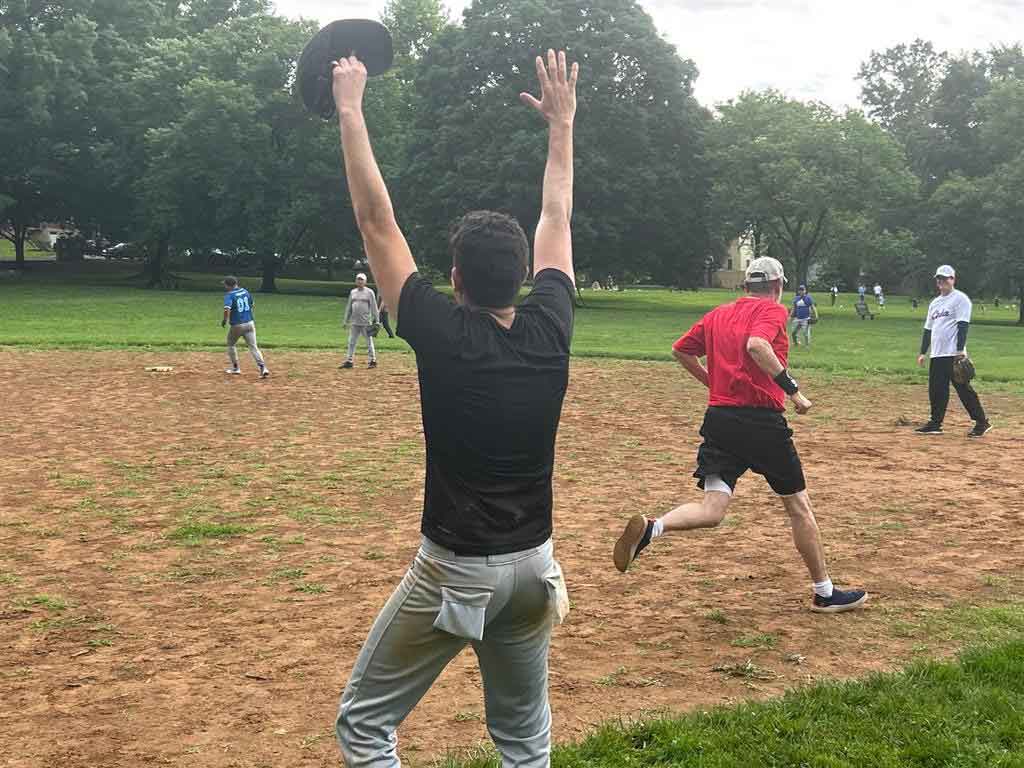
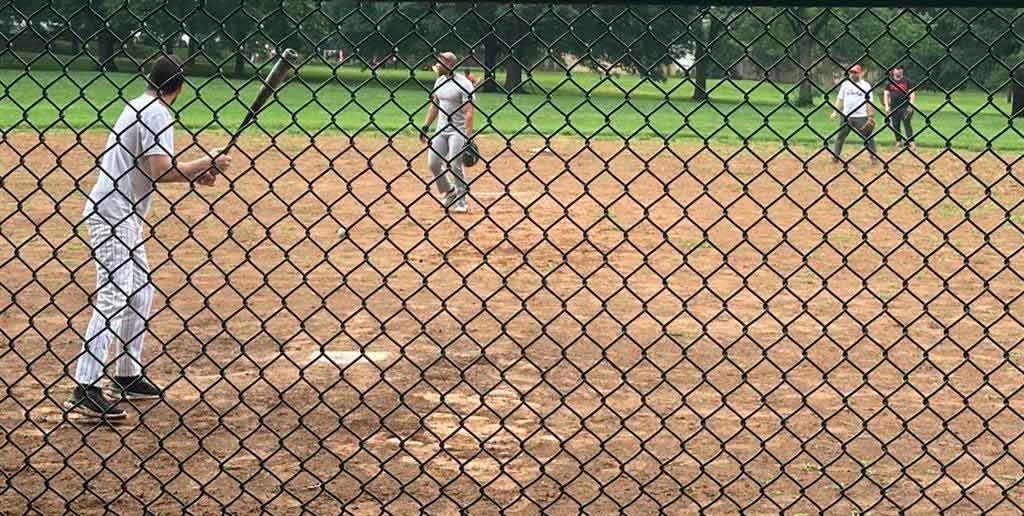
Washington, June 7 (Prensa Latina) Baseball, Cuba’s national sport, united Cubans from both shores of the Caribbean today in a fraternal game, organized here by the diplomatic representation of the largest Caribbean island in the United States.

Bad weather – a drizzle that suddenly became intense – could not prevent the clash scheduled for five innings, but which was decided in a sixth inning in favor of the Rebeldes team (11 runs) against the Mambises (nine).

Luis Lauzarique led the Rebels’ comeback with shots that left the Mambises unable to recover. The loser was Ariel Vaillant.

Before the start, the Chargé d’Affaires of the Cuban Embassy, ​​Lianys Torres, highlighted the importance of meetings like these, “which are already becoming a tradition,” and she hopes that “others can be held, always with the spirit of building bridges.”

He said the Cuban government’s intention “is to continue advancing the ties that unite us.”

Johana Tablada, deputy director general for the United States at the Cuban Foreign Ministry, was a special guest at the game. This activity concluded her work schedule in the capital.

jcm/dfm

Posted in Cultural, Exchanges | Leave a comment

LULAC SAYS SUPREME COURT RULING IS SHORTSIGHTED IN PERMITTING MASS DEPORTATION OF NON-CRIMINAL MIGRANTS FROM CUBA, HAITI, NICARAGUA, AND VENEZUELA

June 7, 2025 — League of United Latin American Citizens (LULAC)

Washington, D.C. — The League of United Latin American Citizens (LULAC) expresses grave concern and disappointment following today’s U.S. Supreme Court decision letting a lower court ruling to stand. The action permits the Trump administration to revoke humanitarian parole protections for approximately 500,000 immigrants from Cuba, Haiti, Nicaragua, and Venezuela. The individuals affected include some in the country for as long as 10 years who were legally admitted and now face imminent deportation, stripping them of their right to work and contribute to our society.

This decision endangers the futures of hundreds of thousands of families who came to the United States seeking safety, dignity, and a fair chance to contribute to our nation’s fabric. LULAC stands firmly in support of these men, women, and children and urges immediate congressional action to address our nation’s broken immigration system.

“The strength of America has always been its ability to welcome newcomers who bring courage, talent, and determination. Immigrants from Cuba, Haiti, Nicaragua, and Venezuela fleeing persecution, poverty, and violence are not a burden on our nation but a beacon of what makes us great,” said Roman Palomares, LULAC National President and Chairman of the Board. “They come here with a dream to build a better life, and in doing so, they help build a better America. We must never forget that immigrants founded and forged this country.”

The Supreme Court’s brief but impactful order means the case will be first litigated at the lower court level. In the meantime, extensive damage with mass deportations is anticipated, instead of case-by-case review of immigration status revocations. Without explanation, the justices’ majority decision leaves over a million migrants—including others from Ukraine, Afghanistan, and Central America—vulnerable to uncertain futures.

“Xenophobia is not a policy. It is a symptom of fear that ultimately harms our economy and diminishes our moral standing,” added Palomares. “These workers are filling labor gaps, contributing to our GDP, and strengthening industries that power our daily lives. Denying them the right to stay and work legally in the U.S. is not only unjust—it is economically self-defeating. We must replace politics with purpose and hatred with hope.”

LULAC calls on every American to contact their elected officials in Congress and demand comprehensive immigration reform that reflects our values and meets the moment. The future of our nation must include a humane and rational pathway for migrants who seek lawful, productive lives in this country.

Posted in The Blockade? | Leave a comment