After winning three in a row, the Cubans will have a day off on Saturday
Yant scores 21 as the Caribbean come from behind to beat the Netherlands
Published 27 Jun 2025 — Volleyball World
Cuba men’s national team will head into the weekend with a lot to celebrate as the Caribbean secured their third-straight comeback victory in the second week of the Volleyball Nations League 2025 in Belgrade on Friday.
Playing for a third-straight day in the Belgrade Arena, the Cubans showed no signs of fatigue and had the energy to erase a first-set loss and beat the Netherlands 3-1 (21-25, 25-18, 25-21, 30-28), repeating what they had done against Germany on Wednesday and Serbia on Thursday and getting their third-straight comeback victory is as many days.
With nine points collected this week alone and 12 overall (four wins, three losses), the Caribbean now appear in fifth place in the VNL 2025 standings. The Dutch, who won just one of their first seven matches in this week’s edition of the tournament, are 16th, with three points.
“It was very hard,” middle blocker David Fiel reacted. “The first two matches were very stressful, both mentally and physically. But we came in determined to get a win today. It didn’t matter how we did it, the most important thing today was to get the victory. We have a very good team and everyone can help, as they did today.”
The Cubans got the victory in the same way they typically do, as their overpowered their opponents both at the net, leading the Dutch in kills (64 to 57) and blocks (13 to six), and the service line, getting three aces to the Netherlands’ two, and created the cushion needed to compensate for their higher number of errors (27 to 21).
The VNL 2025 top scorer, outside hitter Marlon Yant again came up big for the Cubans, leading the team with a match-high 21 points (20 kills, one block). Opposite Jose Masso (17), outside hitter Jose Gutierrez (15) and middle blocker Roamy Alonso (14) also had solid performances for the winning side.
On the Dutch side, opposite Silvester Meijs and outside hitter Tom Koops led the team with 15 points apiece, while 34-year-old outside hitter Ramon Martinez-Gion delivered 13 in his debut with his country’s national team.
“We’re trying to fight for every point here this week and hopefully some matches will go our way,” Martinez-Gion said. “Today it was very close and we were a little bit unlucky not getting at least a fifth set. But we have more matches coming soon and our focus is on that.”
Earlier on Friday in Belgrade, Iran defeated Argentina 3-1 (25-21, 22-25, 25-22, 25-22). Saturday’s schedule in the Serbian capital will have Germany and Iran playing the first match, at 16:30 local time (14:30 GMT), and Serbia and Argentina battling at 20:00 (18:00 GMT).
Havana, June 28 (Prensa Latina) Visiting the museum in Cuba that preserves the memory of the famous American writer Ernest Hemingway is more than just a huge satisfaction for visitors, it is an experience worth experiencing on multiple occasions.
At Finca Vigía, as this property is also known, located about 15 km from the historic center of this city, the presence of the Nobel Prize winner in Literature is felt in every corner, where art, culture, and history converge in perfect harmony.
National and international participants gathered here for the 20th Ernest Hemingway International Colloquium, which opened last Wednesday with the presence of academics, scholars, and admirers of the life and work of the author of “For Whom the Bell Tolls.”
The Gigi’s Stars Community Children’s Baseball Project welcomed everyone to the venue with a small representation of the sport they passionately display, both in spirit and on their jerseys.
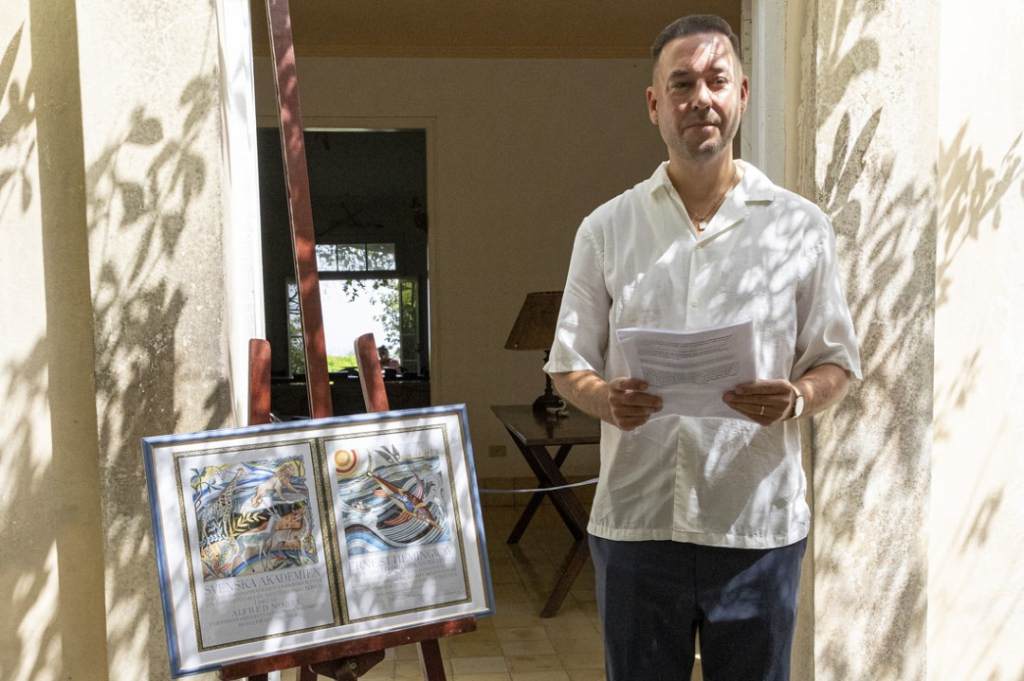
The reproduction of the Nobel Prize in Literature scroll was then unveiled, an activity coordinated with the Swedish Embassy in Cuba.
Today we are donating a photographic reproduction of the Nobel Prize diploma that Ernest Hemingway received in 1954, symbolizing the cultural ties between Sweden and Cuba, said Magnus Johansson Foddrell, First Secretary of the Embassy in Havana.
Later, tourists and Colloquium guests saw—some for the first time—the museum where Hemingway completed For Whom the Bell Tolls and wrote Across the River and Into the Trees, The Old Man and the Sea, A Place Like Home, and Islands in the Gulf, as well as numerous newspaper articles.
Many of the works on display there, and the decor itself, are a source of wonder; however, the collection of more than 900 records, spanning a wide variety of genres, reveals a little-known side of the narrator: his exquisite taste in art.
At the closing ceremony, simple but moving, the participant’s diploma was presented to the founder of the Colloquium, Gladys Rodríguez Ferrero, and the rest of the speakers.
With the invitation to participate in the 2027 edition, a competition that honors a writer whose work is considered among the classics of 20th-century literature concludes.
Havana, June 27 (Prensa Latina) The decision by the U.S. embassy here to deny a visa to the delegation that was scheduled to participate in a women’s volleyball tournament in Puerto Rico is making headlines in major national media outlets today.
A statement issued Thursday by the Cuban Volleyball Federation (FCV) reported that the team would be unable to attend the NORCECA Final Four, scheduled for July 16-21, due to visa denials.
The text describes this measure as “unfair and discriminatory, and contrary to the precepts of sport.”
The FCV explains that this conduct, contrary to the commitments inherent to the responsibility assumed by host countries of international sporting events, hinders Cuba’s presence in a competition included in the qualification process for the Central American and Caribbean Games and counts toward the NORCECA and world rankings.
Several media outlets on the island have similarly described this hostile behavior, which is aligned with Washington’s policy of maximum pressure on Havana since Donald Trump returned to the White House.
Imperial arrogance, arrogance, abuse of power, and disrespect for the rules of the Olympics are also among the most repeated criticisms on digital social media regarding the topic.
According to the statement from the island’s Federation of this sport, the 16 members (12 athletes, two coaches, one referee, and one team manager) were notified at the U.S. diplomatic headquarters in Havana, where they submitted the request “in accordance with the established deadlines for such a process.”
The deliberate denial or delay of visa applications to hinder the participation of Cuban sports teams in tournaments held on U.S. soil has become a common practice of the Washington government, and has been denounced on each occasion by the island’s authorities.
Havana, June 27 (RHC/ACN) — The Ministry of Foreign Affairs issued a statement on Friday, reiterating that Cuba does not and will not recognize any moral or legal authority of the Organization of American States (OAS), nor of any of its officials and subsidiary or autonomous bodies.
For months, U.S. Secretary of State Marcos promoted a campaign to position Rosa María Payá Acevedo, a well-known defender of the blockade against Cuba, as an impartial human rights expert on the OAS’s Inter-American Commission on Human Rights (IACHR), narrowly achieving her election through pressure and economic blackmail.
However, her history of supporting coups d’état, promoting military interventions, and ignoring international norms demonstrated her lack of suitability.
This maneuver, part of an anti-Cuban obsession, seeks to exploit the IACHR to attack Cuba’s medical cooperation, even demanding confidential information from OAS member states, violating their sovereignty.
Because of its importance, we are publishing the full statement issued by the Cuban Ministry of Foreign Affairs:
U.S. Pressure and Blackmail Impose Mercenary on the OAS Inter-American Commission on Human Rights
For months, the U.S. Secretary of State has unleashed an operation to try to transform a prominent member of his roster of salaried defenders of the blockade and aggression against Cuba into an impartial human rights expert.
Despite the dignified, courageous, and legitimate position of numerous governments in Our America, multiple pressures and threats, including blackmail claiming the United States would cut budgets for cooperation programs in the hemisphere, led to the narrow election of the notorious mercenary Rosa María Payá Acevedo as Commissioner of the Inter-American Commission on Human Rights.
However, the efforts of the Secretary of State, who made it a priority of his Department to whitewash the candidate’s record, did not erase the new Commissioner’s shameful record of supporting coups d’état, spreading lies, and promoting military interventions and economic warfare policies in the region.
As confirmed by the Independent Panel for Evaluating Candidates for the Inter-American Human Rights System, Payá Acevedo “demonstrated limited knowledge of international human rights standards, jurisprudence, or doctrine,” and her political activity “may call into question the appearance of independence in the judgment of a reasonable observer.”
The Center for Economic and Policy Research issued a special report on this candidate, stating that “Ms. Payá’s public record demonstrates a repeated disregard for human rights and international law in this area” and that she spread “disinformation about OAS member state governments.”
The Secretary of State, with his delusional anti-Cuban obsession and contempt for Our America, has succeeded in imposing one of his favorite employees to defend coercive policies that are universally rejected.
Facts like this demonstrate that hemispheric relations need a profound transformation.
The Inter-American Commission on Human Rights is being used right now by the United States Secretary of State as part of his immoral campaign against Cuba’s medical cooperation. To this end, it has unprecedentedly required all OAS member states to respond to a detailed questionnaire on the agreements they have or have had with Cuba regarding cooperation in the health sector, which many consider an unprecedented request and a violation of state sovereignty.
Cuba reiterates that it does not, and will not, recognize any moral or legal authority over the OAS or any of its officials and subsidiary or autonomous bodies.
Havana, June 27 (Prensa Latina) Academics and scholars, all admirers of the work of the celebrated American writer Ernest Hemingway, are meeting here today to recall his legacy and share knowledge at the international colloquium that bears his name.
There are only a few hours left until the end of the event, whose Academic Session takes place in the Universal Art Building of the National Museum of Fine Arts.
From there, participants will access the history preserved in the pages of the book “Hemingway’s Havana and Other Stories” by Cuban journalist, writer, and essayist Ciro Bianchi and will visit the San Gerónimo University College in Havana.
The academic program of the 20th Ernest Hemingway International Colloquium also included the presentations The Presence of Botany in the Finca Vigía Collection, and Panarchy, Learning and Transformation in the “Great River with Two Hearts.”
Ernest Hemingway and his relationship with Geography, and Hemingway’s anti-fascist struggle will be other investigations that will highlight the figure of the author of The Old Man and the Sea (1952).
This journey through the life and work of the Nobel Prize winner in Literature is a must-see for the “Hemingway’s Havana” tour, with visits to Sloppy Joe’s Bar and Floridita Bar.
The event, which began last Wednesday and will conclude tomorrow, provides a platform for exchanging information with specialists and institutions affiliated with the museum that bears the writer’s name, as well as for comparing recent works about his life and work.
This edition commemorates the 90th and 85th anniversaries of the first publication of the novels “The Green Hills of Africa” and “For Whom the Bell Tolls,” respectively.
It also commemorates the 65th anniversary of the completion of “A Party to Live” and the meeting between Fidel Castro and Hemingway in Havana on May 15, 1960.
Havana, June 27 (Prensa Latina) Cuban authorities and tourism specialists are seeking substantial support from the multi-destination region to promote the recovery of the country’s travel industry.
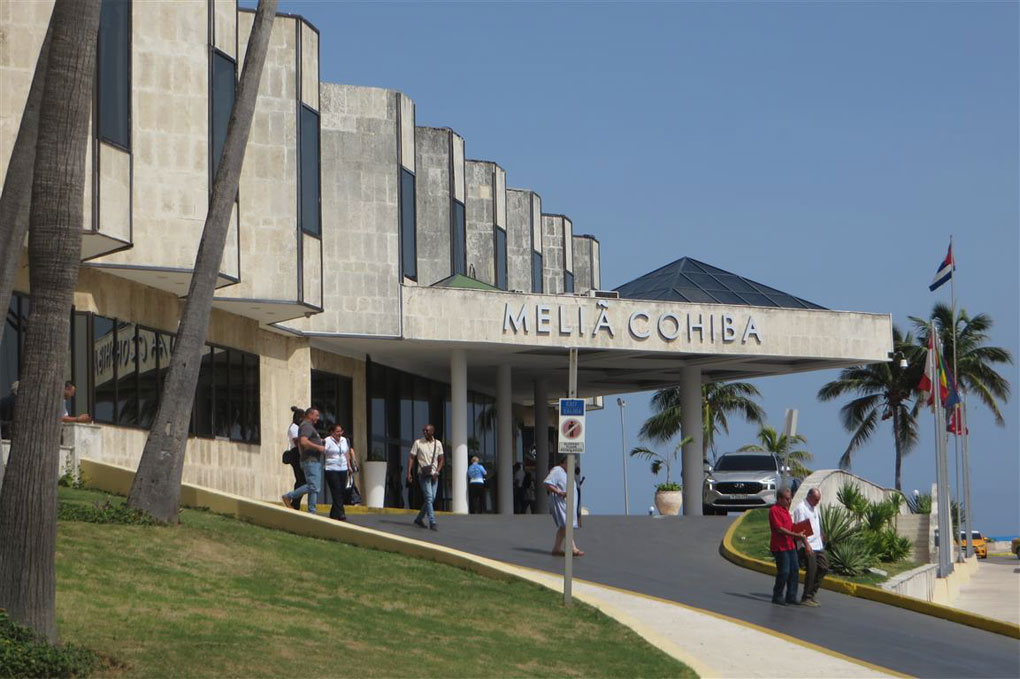
This opinion was echoed this Friday by 80 experts on the subject, representing tour operators, travel agencies, hoteliers, and airlines, who participated in the First Multi-Destination Forum, held for two days (June 26-27) at the Meliá Cohiba Hotel in Havana.
The meeting took place during the first day in the hotel’s Salón Cetro and closed at the Havana Café.
The discussions, exchanges, and discussions also included a delegation from Venezuela and another from Honduras, as part of the Bolivarian Alliance for the Peoples of Our America-People’s Trade Agreement (ALBA-TCP).
During these sessions, 61 meetings were held and 76 agreements were signed, resulting in 15 multi-destination products, they reported at the closing ceremony.
Attendees agreed on the success of the meeting and advocated for holding it regularly. The organizers also highlighted the presence of delegates from 15 airlines, a key factor for multi-destination plans.
Among the objectives, details were learned about connections between Cuba, Mexico, Panama, Venezuela, Jamaica, and the Dominican Republic (locations such as Cancun, Punta Cana, Varadero, and Santiago de Cuba) based on various proposals submitted by the participating firms.
The travel agency Ecotur, dedicated to adventure, nature, and rural tourism, highlighted the fact that, together with Enjoy Travel of Spain, they offer routes that even facilitate the participation of tourists included in plans for travelers with disabilities or reduced mobility.
Companies such as Cubatur, Cubanacán, Havanatur, Cubabooking, Bojorques, Vivas, San Cristóbal, and a long list of companies are participating with the aim of making a joint effort to promote multi-destination travel.
At the meeting, they also outlined plans to boost visits by this type of Chinese vacationer, with plans for combined stays of approximately 15 days, offering a variety of excursions, visits, experiences, and enjoyment.
Topics such as “A Single Trip” were noted, which involve Cancun, Havana, Margarita Islands, Santiago de Cuba, and Kingston.
Recipes for combining destinations, maximizing airline revenue, and customer satisfaction round out the comments from those attending the multi-destination forum.
Havana, June 27 (Latin Press) The Cuban Minister of Foreign Affairs, Bruno Rodriguez, today denounced the US government’s measure preventing the attendance of the Cuban women’s volleyball team at the Final Four Norceca tournament.
“The denial of visas for Puerto Rico tournament, is part of the racist and xenophobic list of visa restrictions prepared by the Secretary of State,” said the foreign minister on social network X.
“It seeks to prevent the development of Cuban sport, which it already limits with a renewed blockade,” he concluded.
A note issued this Thursday by the Cuban Volleyball Federation (FCV) reported that the team would be unable to attend the Norceca Final Four, scheduled for July 16-21, due to the denial of visas.
The FCV explains that this procedure, contrary to the commitments inherent in the responsibility assumed by countries hosting international sporting events, Impedes the presence of Cuba on a list included in the classification route to the Central American and Caribbean Games and eligible for the rankings of North America and world.
Confronting a sudden decline in US tourism arrivals, Cuba has unveiled an ambitious and transformative plan to develop a “Caribbean Schengen” — a groundbreaking regional visa initiative meant to facilitate borderless movement across a series of Latin American nations. The plan seeks to facilitate easier bureaucratic clearance, lure long-haul visitors from Asian and other emerging markets, and revamp regional tourism by promoting multi-destination holidays. As Cuba’s traditional dependence on American visitors declines, this visionary approach marks a timely move toward increased regional integration and worldwide competition within the tourism industry.
In a bold and unprecedented tourism proposal, Cuba has introduced a vision to create a unified regional visa system across Latin America—similar to Europe’s Schengen Area. Announced during a high-level meeting in Bogotá with airline and tourism representatives, the initiative—coined informally as the “Caribbean Schengen”—aims to stimulate regional tourism and attract visitors from long-haul markets such as China, Russia, and Turkey.
The core objective is to allow a tourist arriving in Havana to seamlessly continue their journey to destinations like Cartagena, Cancún, or Lima without facing immigration obstacles at each border. While ambitious, the plan represents a critical response to Cuba’s deepening tourism crisis and underscores a regional strategy to overcome bureaucratic inefficiencies and fragmented travel systems.
Why Cuba Is Proposing a Regional Tourism Visa
Cuba’s tourism industry has undergone a dramatic contraction over the past seven years. In 2017, the country welcomed approximately 4.7 million tourists. By 2024, that number had plummeted to 2.2 million. The decline is attributed to multiple converging factors: the lingering impacts of the COVID-19 pandemic, a domestic energy crisis, and increasingly restrictive U.S. policies—especially Cuba’s renewed designation as a state sponsor of terrorism, which has discouraged even European travelers from visiting the island.
In response, Cuba’s Ministry of Tourism is spearheading a plan not just for national recovery but regional revival. The concept is clear: to offer international travelers a seamless and attractive multi-country experience in Latin America, encouraging them to explore beyond a single destination—without facing repetitive visa processes or border delays.
Reimagining Latin America as an Integrated Travel Corridor
The Caribbean Schengen proposal seeks to turn Latin America into a more unified, traveler-friendly destination by reducing immigration barriers across participating countries. The strategy mirrors the European Schengen Zone, where citizens and tourists can move across 27 countries without additional visas or passport checks.
Such a vision, if realized, would offer transformative potential for Latin American tourism by encouraging longer stays, increased spending, and multi-country itineraries from long-haul travelers. Rather than competing for visitors individually, countries could leverage their collective appeal and natural complementarities—beaches, colonial cities, jungles, and cultural diversity—as part of a unified offering.
China as the Central Pillar of Cuba’s Tourism Pivot
Confronted with a steep drop in arrivals from the United States, Cuba is redirecting its tourism focus toward fast-growing international markets. China, in particular, has become the cornerstone of this new direction.
Cuba now operates two direct weekly flights between Beijing and Havana and has removed visa requirements for Chinese citizens—a strategic move to lower barriers and attract more high-spending tourists from Asia. These steps position China as a key driver in Cuba’s recovery and in the broader regional tourism strategy.
Cuba’s tourism ministry believes that capturing Chinese outbound travelers—especially those seeking culturally rich, warm-climate destinations—can rejuvenate not only Cuba’s market but also that of neighboring countries. The idea is simple: by fostering joint strategies and connectivity, the region can benefit from shared growth.
Expanding Beyond the “Sun and Sand” Model
Cuba acknowledges the urgent need to broaden its tourism offerings beyond traditional models to remain competitive in a shifting global travel landscape. The traditional “sun and beach” model, long the hallmark of Caribbean travel, is no longer sufficient in a competitive global market.
The country is working to broaden its appeal by offering experiential travel—cultural heritage, eco-tourism, medical tourism, and historic tours. Cuba’s tourism roadmap includes not just increasing hotel capacity and flight routes, but also updating infrastructure, promoting regional partnerships, and modernizing migration systems to align with international standards.
This diversification is crucial if Cuba and its regional neighbors are to attract travelers from markets such as China, Russia, and Turkey—who often seek rich cultural experiences in addition to leisure travel.
Challenges Facing the “Caribbean Schengen” Vision
Despite its forward-looking potential, the concept of a shared Latin American visa is beset with significant hurdles. Unlike Europe, Latin America does not have the same level of institutional, political, or economic cohesion.
The region is characterized by diverse migration systems, fragmented infrastructure, political volatility, and divergent national interests. Multilateral negotiations on tourism are often slow-moving, and trust between nations can be fragile. There is no supranational body equivalent to the European Commission that can enforce or mediate a shared visa policy across Latin America.
Creating a “Caribbean Schengen” would require harmonized legal frameworks, interoperable technology platforms, border control modernization, and above all—political will from multiple governments. These are complex, long-term endeavors that could take years, if not decades, to fully materialize.
Is the Proposal More Symbolism than Strategy?
Some observers argue that the proposal may be more of a symbolic gesture than a feasible policy. Cuba’s domestic tourism infrastructure continues to struggle with structural issues—from electricity shortages and supply chain gaps to an international image stained by political and human rights criticisms.
Even with functional hotels protected by private generators, the broader appeal of the country is undermined by internal instability and restrictive economic conditions. Without addressing these core issues, simply facilitating multi-country travel might not be enough to restore Cuba’s position as a top destination.
Nevertheless, the regional visa idea serves as a compelling narrative tool—a vision that positions Cuba as a thought leader in Latin American tourism reform and a call for cooperation in times of shared crisis.
Strategic Timing in a Time of Transition
The proposal comes at a time when global tourism is undergoing realignment. As Western travel patterns become less predictable and Asia-Pacific demand surges, Cuba’s turn toward Eastern markets and regional integration could place it ahead of the curve.
With the right investment and collaboration, a regional visa model—even if partial—could begin to reshape the tourist flows to Latin America. Early progress could include bilateral or trilateral visa agreements, regional marketing campaigns, and pilot projects in select tourist corridors.
Frequently Asked Questions About Cuba’s Regional Visa Proposal
What is the “Caribbean Schengen” concept proposed by Cuba? Cuba’s tourism ministry is proposing a regional visa system inspired by Europe’s Schengen Area. The goal is to enable tourists to travel across participating Latin American countries—such as Cuba, Colombia, Mexico, and Peru—without needing multiple entry visas, thereby boosting regional tourism and simplifying travel logistics.
What drives Cuba’s strategic focus on attracting travelers from China, Russia, and Turkey over traditional markets? Cuba is shifting its focus toward emerging travel markets due to a sharp decline in American tourists, driven by diplomatic tensions and travel restrictions. China, in particular, offers a vast pool of outbound travelers. By improving air connectivity and removing visa barriers, Cuba aims to attract tourists who may explore multiple destinations across Latin America.
What are the major challenges to implementing a regional visa? The proposal faces institutional, political, and logistical barriers. Latin America lacks unified migration systems and supranational governance. Political instability, economic disparity, and varied border security practices make a fully integrated visa system difficult to implement in the short term.
How is Cuba’s energy crisis impacting tourism operations? While widespread blackouts affect residents, most hotels maintain uninterrupted service using independent generators. The government has prioritized the tourism sector as a vital source of economic stability, though this has sparked criticism over imbalanced resource allocation that overlooks citizens’ basic needs.
What are the next steps for this proposal? While no official roadmap has been established, Cuba is likely to continue lobbying for regional support and may pursue bilateral visa agreements or limited pilot projects. Partnering with countries such as Mexico, Colombia, and Peru could lay the groundwork for deeper regional travel unification in the future.
Rhetoric or Regional Reset?
Cuba’s proposal for a “Caribbean Schengen” is bold, timely, and rooted in real economic urgency. While its implementation faces formidable roadblocks, the vision shines a spotlight on the need for Latin America to modernize, integrate, and diversify its tourism offerings.
Whether it serves as a symbolic diplomatic overture or evolves into a tangible policy, the idea forces important conversations around shared regional strategy, international competitiveness, and the future of tourism in a post-pandemic, multi-polar world.
In response to declining US tourist numbers, Cuba has proposed a transformative Caribbean Schengen-style visa to boost regional tourism and attract travelers from emerging global markets. This bold strategy aims to simplify cross-border travel in Latin America and strengthen the region’s global tourism appeal.
Cuba may still be a long way from leading a fully integrated travel bloc—but its voice is helping shape the debate about how Latin America can respond collectively to the shifting tides of global tourism.
China and Cuba officially launched their first regularly scheduled international freight corridor, Havana, Cuba, June 25, 2025. /CMG
China 26-Jun-2025 — CGTN
On June 25, China and Cuba officially launched their first regularly scheduled international freight corridor.
The ribbon-cutting ceremony was attended by Cuba’s Transport Minister, Eduardo Rodriguez Davila, Deputy Minister of Foreign Trade and Foreign Investment Debora Rivas, Chinese Ambassador to Cuba Hua Xin, and senior representatives from both countries’ airlines.
Built on the existing Beijing-Havana passenger service, this new air link will operate two weekly flights, each with a 20-tonne cargo capacity.
It slashes transit times for goods shipped from China from several weeks by sea to under 24 hours by air, meeting the urgent, high-value transport needs of Sino-Cuban trade.
More than 600 people came out to Havana’s Acapulco Cinema for a special screening of our documentary film From Gaza to Cuba. See what people said about the event HERE
Belly of the Beast celebrated its five-year anniversary in April with a powerful night of documentary cinema at Havana’s iconic Acapulco Cinema. The screening brought together voices from Cuba and around the world, united by stories of resistance, solidarity and truth. Watch here.