Havana, July 1 (Prensa Latina) Cuban President Miguel Diaz-Canel described his meeting with the director of the Russian Foreign Intelligence Service, Sergey Naryshkin, at the Palace of the Revolution as pleasant.
The head of state emphasized on X that, during the talk held the day before, the excellent state of bilateral relations was discussed, precisely in the year that marks the 65th anniversary of their reestablishment.
The president conveyed the affection of the leader of the Cuban Revolution, Raul Castro, to the visitor and sent greetings to his Russian counterpart, with whom he recently spoke.
Diaz-Canel also thanked Russia for its unconditional support in the fight against the US blockade and for achieving Cuba’s removal from the unilateral list of state sponsors of terrorism.
Havana, July 1 (Prensa Latina) Cuba today rejected the Presidential Memorandum on National Security issued by the United States government, which, by reissuing a similar one from 2017, tightens the economic siege and causes greater hardships for its people.
A statement from the Ministry of Foreign Affairs (Minrex) specifies that the anti-Cuban document released by the U.S. government on June 30, 2025, reissues and amends a similar one issued on June 16, 2017, at the start of Donald Trump’s first term.
Cuba categorically denounces and rejects both versions of the infamous document, the statement said, warning of U.S. intentions to take over the country and dictate its destiny, in accordance with the provisions of the Helms-Burton Act of 1996.
The Ministry of Foreign Affairs asserts that since 2017, the U.S. government has begun implementing measures to further strengthen the economic blockade, taking it to a qualitatively more damaging level.
The note points out that these measures have been maintained over the past eight years and explain the current shortcomings and challenges facing the Cuban economy in its recovery, growth, and development.
He adds that the original 2017 Memorandum was the political platform that promoted, among other measures, the near-absolute ban on U.S. travel to Cuba; it led to the persecution of fuel supplies and the obstruction of remittances.
That memorandum also justified measures against third-country governments for relying on Cuban medical services to serve their respective populations, the Foreign Ministry asserts.
It also led to pressure on commercial and financial entities around the world to prevent their relations with Cuba, which included lawsuits in U.S. courts against the island’s investors. It also ordered the slanderous inclusion of the island on the list of alleged state sponsors of terrorism.
The Ministry of Foreign Affairs statement asserts that “U.S. leaders and politicians have the audacity to declare that they are acting in this way for the good of the Cuban people,” using terms “such as democracy, human rights, and religious freedom” that “are concepts incompatible with the historically abusive and transgressive conduct of the U.S. government.”
The Foreign Ministry concluded by stating that the U.S. government “doesn’t care that Cuba is a peaceful, stable, supportive country with friendly relations with virtually the entire world. The policy it pursues responds to the narrow interests of a corrupt, anti-Cuban clique that has made aggression against its neighbor a way of life and a very lucrative business.”
Cuban doctors arrive at the Jose Marti International Airport in Havana, Cuba, June 8, 2020, after traveling to Italy to help with the COVID-19 emergency response. (Ismael Francisco/Pool via AP, File)
By MATTHEW LEE — Associated Press (AP) — June 30, 2025
WASHINGTON (AP) — President Donald Trump has instructed his top Cabinet officers to review U.S. policy toward Cuba, ordering them to examine current sanctions and come up with ways to toughen them within 30 days.
In a memo Monday, Trump said the reviews should focus on Cuba’s treatment of dissidents, its policies directed at dissidents and restricting financial transactions that “disproportionately benefit the Cuban government, military, intelligence, or security agencies at the expense of the Cuban people.”
In one potential significant change, the order said the U.S. should look for ways to shut down all tourism to the island and to restrict educational tours to groups that are organized and run only by American citizens.
The move is not a surprise given that Trump has previously said he plans to rescind the easing of sanctions and other penalties in Cuba that were instituted during the terms of Democratic Presidents Barack Obama and Joe Biden. In the days before leaving office, Biden had moved to lift the U.S. designation of Cuba as a state sponsor of terrorism.
Trump’s memo “supports the economic embargo of Cuba and opposes calls in the United Nations and other international forums for its termination,” according to a fact sheet.
In Cuba, Foreign Minister Bruno Rodríguez responded swiftly to the document.
“The Presidential Memorandum vs #Cuba released today by the US government strengthens the aggression & economic blockade that punishes the whole Cuban people and is the main obstacle to our development,” he wrote on X. “It’s a criminal behavior that violates the #HumanRights of an entire nation.”
The administration also has announced visa restrictions on Cuban and foreign government officials involved in Cuba’s medical missions, which Secretary of State Marco Rubio has called “forced labor.”
In an interview with The Associated Press this month, Cuban Deputy Foreign Minister Carlos Fernandez de Cossio accused the United States of trying to discredit the medical missions and criticized reversal of policy welcoming Cubans to the U.S.
Rubio, whose family left Cuba in the 1950s before the communist revolution that brought Fidel Castro to power, has long been a proponent of sanctions on the communist island.
___
AP writer Andrea Rodríguez in Havana contributed to this report.
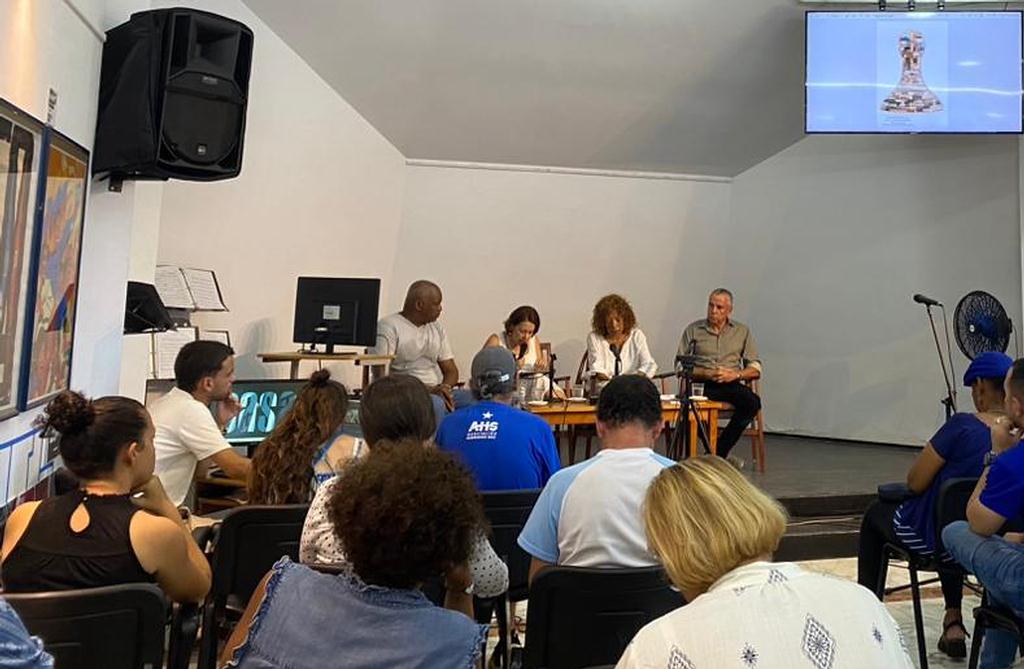
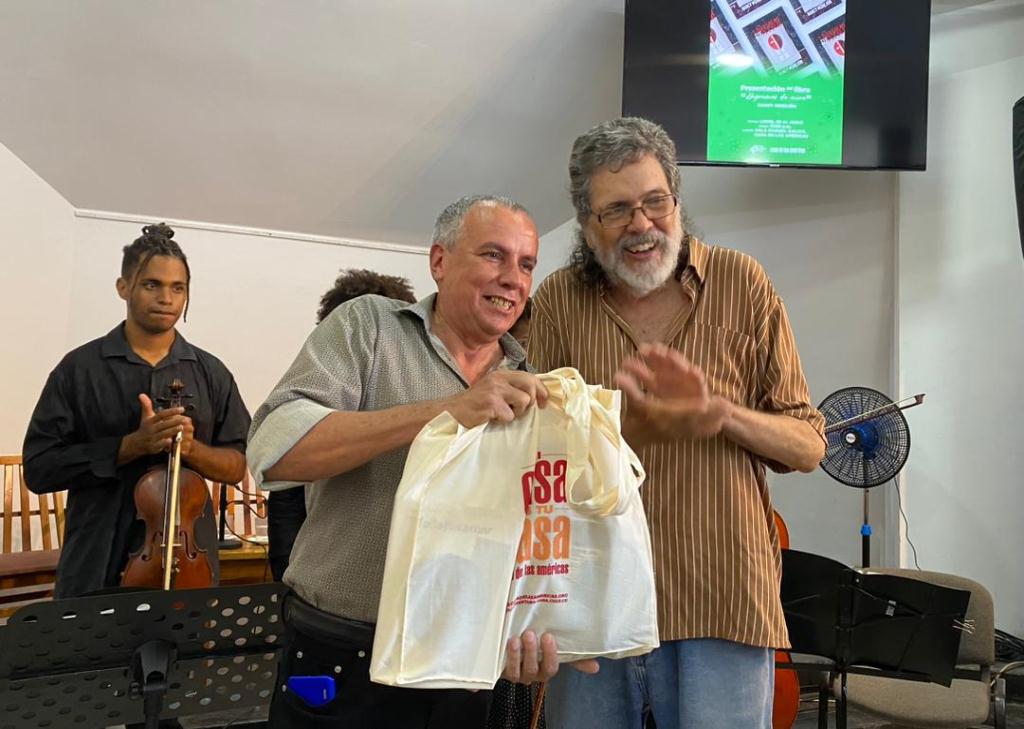
Havana, June 30 (Prensa Latina) Poetry and visual arts converge in the pages of the book Lágrimas de aire (Tears of Air), by the distinguished poet Nancy Morejón, whose literary magic reaches greater splendor thanks to the work of another essential creator: Roberto Diago.
From the Manuel Galich Room at Havana’s Casa de las Américas, an extraordinary moment was experienced that not only demonstrated the greatness of both artists, but also art’s capacity to summon sensitivity, both in the face of beauty and in the face of that which tarnishes all expressions of freedom and life.
“It’s a victory, an event, that a small art book exists with poems by two artists who, although we are from different generations, go through the same pain,” said the 2001 National Literature Prize winner in an exclusive interview with Prensa Latina.
In his opinion, at a time of so much confusion, genocide, hatred, aggression, and calls for war, “it’s important that we’ve been able to get this far; it’s a privilege to be alive and enjoy this moment.”
Referring to the Abril Publishing House as a platform for the publication of this poetry collection, he said: “Providing us with this space means a lot and is a turning point in the concept of your catalog.”
The distinguished author deeply thanked the publisher for its work, art critic Carina Pino for the book presentation, and Yaima González, Roberto Diago’s promoter, who significantly contributed to the dialogue between the two creators and the Abril Publishing House.
Furthermore, he considered it a pride and a blessing to be part of the publishing team, which is celebrating its 45th anniversary this Tuesday, July 1st.
Near the end, the institution’s vice president, Jaime Gómez Triana, praised Abril’s work and the publications that highlight the literature and authors of Cuba and Latin America.
For his part, the president of Casa de las Américas, Abel Prieto, took the opportunity to recognize the editor and warn against this new wave of fascism, “which demonstrates intolerance, extremism, and violence.”
These are things that are hard to digest; it’s a terrible moment in world history, the prestigious Cuban intellectual emphasized.
In the current context, “I believe that Cuba must increasingly become a haven of utopias, of love of life, and of respect for others.”
Likewise, he attached great importance to the book’s presentation, as it coincided with the publisher’s 45th anniversary celebrations.
The music of the Cromas Quartet was the final delight of the meeting, as unmissable as the work of its protagonists.
Mexico City, June 30 (Prensa Latina) Cuban Tourism Minister Juan Carlos García stated today in Mexico City that his country is committed to Mexico once again becoming one of the main sources of visitors to Cuba.
“Cuba is committed to Mexico becoming what it has always been: one of its main sources of tourism to Cuba. It is committed to this, it will work tirelessly toward it, and we are confident that Mexico will once again occupy the positions it has always held,” he told reporters.
“Together with the Mexican government,” he added, “we could have a lot of help with promotion and advertising. We could also do many things together to sell attributes of both countries as part of a service.”
In a meeting with tour operators and agencies to present the potential of the so-called smokeless industry, the president spoke to the media about the difficult situation facing the sector in his country.
“Tourism is currently going through a very difficult situation, which is multifactorial, but what we have done is analyze the causes, both objective and subjective, and we have outlined strategies and actions to resolve them,” he noted.
He emphasized the importance of returning to the nation’s traditional markets, described Latin America as extremely important for recovering that tourism, and highlighted the commitment to Mexico, but also to other countries such as Argentina, Peru, Colombia, and Brazil.
“We’re very close. We believe we need to improve communication much more, including what we do, how we are doing today, what we can offer, what quality we can offer it with, and the full range of Cuban tourism,” he said.
In this regard, he emphasized that in addition to its beautiful beaches, Cuba has culture, nature, and great potential for the development of medical tourism.
He also mentioned the effects of the economic, commercial, and financial blockade imposed by the United States on the island. In response, an assessment is being made of the situation, and no one is “crying in a corner,” but rather trying to achieve new goals in this very adverse environment.
During the meeting at Mexico City’s Barceló Reforma Hotel, Mexico City’s Secretary of Tourism, Alejandra Frausto, highlighted the relationship with Cuba and asserted that these cultural bridges of friendship, solidarity, affection, and shared aspirations must flourish in tourism.
Havana, June 30 (Prensa Latina) Foreign Minister Bruno Rodríguez denounced today that the Presidential Memorandum signed by Donald Trump reinforces the policy of aggression and tightens the economic blockade against Cuba, with detrimental effects on the entire population and its development.
In his X account, the Minister of Foreign Affairs wrote that “The Presidential Memorandum against #Cuba released today by the US government reinforces the aggression and economic blockade that punishes the entire Cuban people and is the main obstacle to our development. It is criminal conduct and violates the #HumanRights of an entire nation,” he stressed.
U.S. President Donald Trump signed a memorandum today that strengthens his administration’s hardline policy toward Cuba and reverses measures implemented by his predecessor, Joe Biden.
The directive, released in a statement by the White House, will implement a legal ban on U.S. tourism to Cuba, while supporting (and reinforcing) the economic, commercial, and financial embargo against the Caribbean nation.
The presidential memorandum emphasizes that it “reestablishes and strengthens the strong Cuba policy implemented during his first term” and that it will ensure compliance “through periodic audits and mandatory record-keeping of all travel-related transactions for at least five years.”
It also specifies that it opposes requests at the United Nations and other international forums demanding the lifting of this hostile policy.
With this memorandum, the Republican president renewed the ban on any direct or indirect financial transactions with Cuban entities such as the Business Administration Group SA (GAESA) and its subsidiaries.
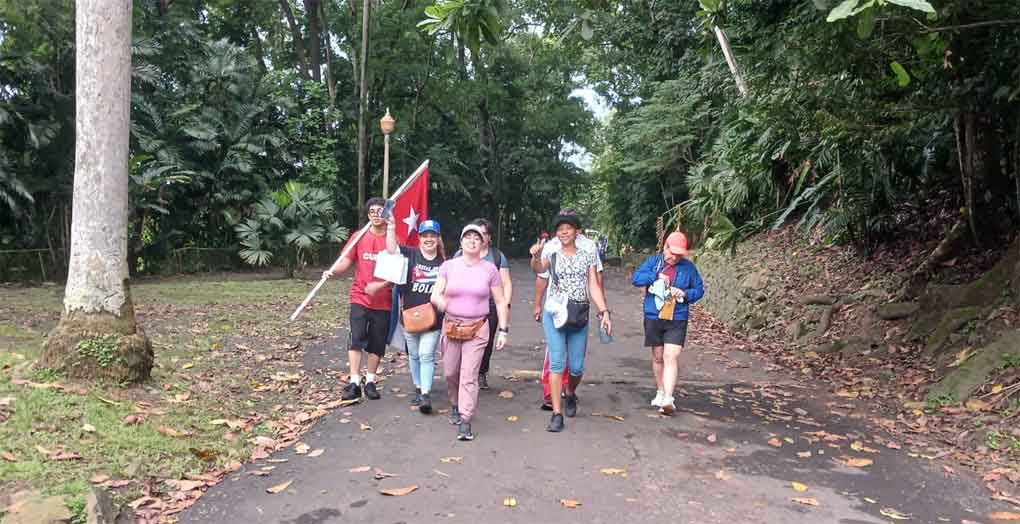
Panama City, June 29 (Prensa Latina) Panamanians and Cubans reached the top of Ancón Hill in this capital today to condemn the U.S. blockade imposed on the island for more than six decades, but destined to fail, they said.
In a symbolic and emotional event organized by the Cuban embassy on the isthmus, and after climbing the 199-meter-high hill from which the Central American nation’s largest flag flies, members of the state mission, Cuban residents, and solidarity groups demanded an end to the hostile policy.
On behalf of the participants, diplomatic official Yuniarque Canto noted that the harshness of the siege has not prevented the Revolution, which triumphed in 1959, from protecting the health and quality of life of the population, especially the most vulnerable.
As he explained, one expression of this cruel economic war can be seen in the obstacles they must overcome to acquire medical supplies and equipment and to provide care for people’s health, as demonstrated during the COVID-19 pandemic.
Canto emphasized the spirit of resistance that has characterized the Caribbean nation and that emerges as a greater human shield against the most brutal and prolonged siege the world has ever known.
Among the participants in the walk, members of the Martí Association of Cubans Residing in Panama highlighted that a similar commitment to their homeland was evident at the recent VII Meeting of Cubans Residing in Latin America and the Caribbean, held in the Dominican Republic between the 13th and 15th of this month.
According to Cuban Foreign Minister Bruno Rodríguez, this criminal measure constitutes the most ruthless, comprehensive, and prolonged economic warfare policy ever imposed on any country.
He also stated that as a result of the blockade, Cuba suffered losses of $5.568 billion from March 1, 2023, to February 29, 2024, representing an increase of nearly $200 million compared to the previous report submitted to the United Nations.
The estimated impact is more than $421 million per month, or $13.8 million per day, and he noted that over 60 years, these impacts have risen to $1 trillion 499 billion.
For the island’s top diplomat, Havana’s arbitrary inclusion on the State Department’s list of countries that allegedly sponsor terrorism deepens the difficulties and significantly affects Cuban families.
Rome, June 29 (Prensa Latina) The 4th Festival of the National Association of Italy-Cuba Friendship (ANAIC) concludes today in the city of Cava dei Tirreni, in the southern province of Salerno, after three days of solidarity activities with that country.
This Sunday’s program will be dedicated to the Cuban medical brigade providing aid to the people of the Calabria region, and will feature members of the medical team working in that southern Italian region, who will share their experiences, according to a statement.
As a special guest at this celebration, Gerardo Hernández, a Hero of the Republic of Cuba, arrived in Italy on June 23rd at the invitation of Anaic (National Institute of Statistics and Census), to participate in a broad program in several cities across the country, which will run until July 9th.
The national coordinator of the Committees for the Defense of the Revolution, a deputy, and a member of his country’s Council of State, will also be present at the Third International Meeting “Europe for Cuba,” to be held early next month in the northern city of Venice.
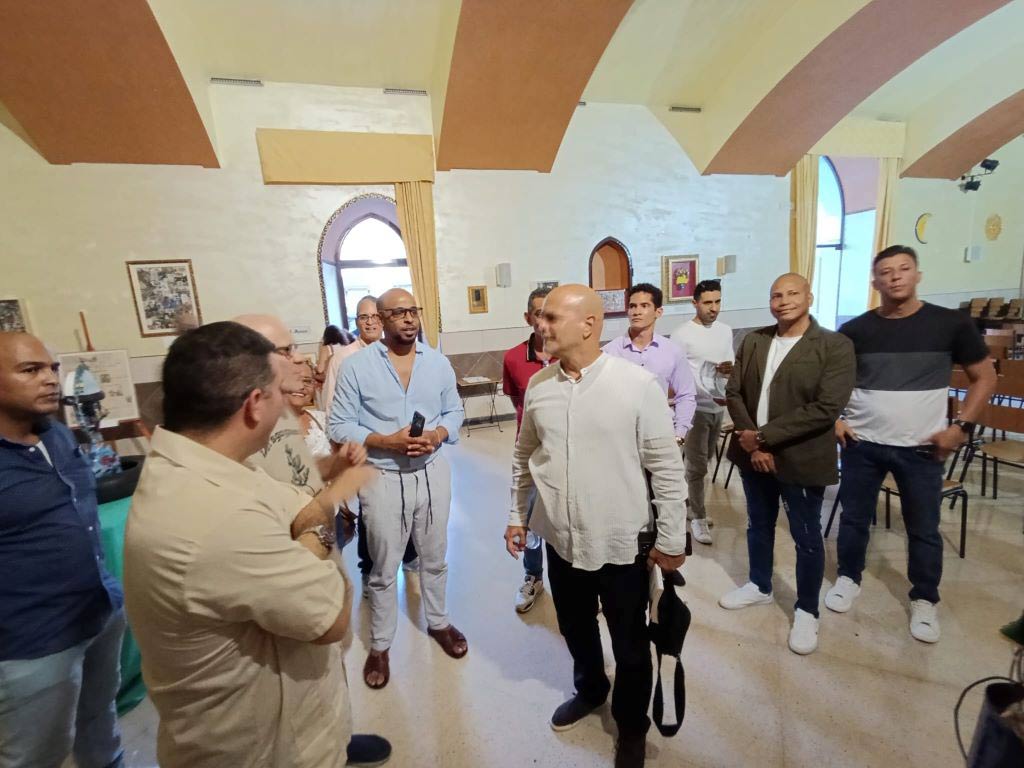
The Anaic festival began on June 27 at the Convent of San Francisco and San Antonio in Salerno, with a conference on Santería, between Catholicism and resistance, given by Cuban residents in Italy, Ulises Mora and Irma Castillo, promoters of the Timbalaye cultural project.
During the initial session, coordinated by Loredana Marino, representatives from Anaic, anthropologist Laura Marchetti, and Luigi de Magistris, former European Parliamentarian and former mayor of Naples, spoke.
Last Saturday, at 5:30 p.m. local time, an Anti-Fascist Roundtable was held, in which the writer Sonia Zanotti, the jurist Mirelle Fanon, the Cuban sociologist Indira Pineda, the Venezuelan consul Esquia Rubín, as well as the filmmaker Loredana Macchietti, president of the Gianni Miná Foundation, took part.
This was followed by a panel chaired by Marco Papacci, president of Anaic, on the topic of Cuba: The Island in Defense of Humanity in the Trump Era. Speakers included Cuban ambassadors to Italy Mirta Granda and Gerardo Hernández, as well as journalists Annalisa Capaldo, Erminia Pellecchia, and Giorgia Bozzetto.
In their interventions, the panelists addressed the current situation in the Caribbean country and its people’s struggle to defend their Revolution amid growing U.S. aggression, including a criminal economic blockade, aggravated by Cuba’s unjust inclusion on a list of alleged sponsors of terrorism.
Today, in addition to the session dedicated to the charitable work of Cuban doctors in Calabrian hospitals, there will be a debate, coordinated by the former president of Anaic, Irma Dioli, on the topic of Peace Beyond Wars.
The jurist Michela Arpicale will speak, along with Franco Dinelli, director of the Pax Christi Study Center, journalist Matteo Cosenza, and Italian diplomat Elena Basile.
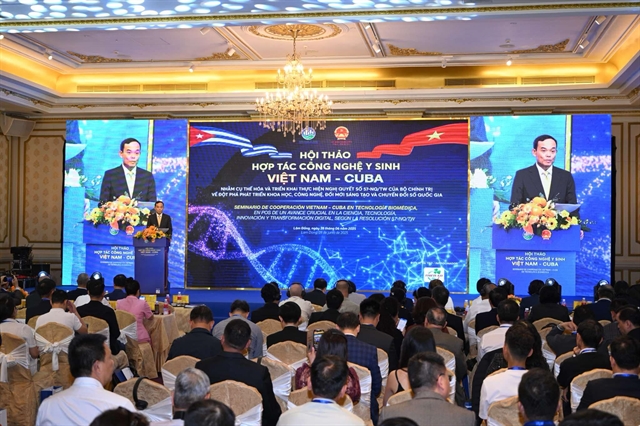
Panellists discuss opportunities for biomedical technology cooperation between Việt Nam and Cuba. — Photo courtesy of the organiser
June 29, 2025 — VietNam News
LÂM ĐỒNG — Vietnamese and Cuban scientists and policymakers discussed opportunities for biomedical technology cooperation at a workshop in Lâm Đồng Province on June 28.
The event was jointly organised by the Lâm Đồng Provincial People’s Committee and the Green Economy Institute (GEI) to concretise and implement the Politburo’s Resolution 57-NQ/TW on breakthroughs in science, technology development, innovation and national digital transformation.
The workshop brought together more than 200 experts, scientists, representatives of leading agencies, organisations and businesses from Việt Nam and Cuba in the biomedical field.
The workshop served as a forum to discuss cooperation, promote technology transfer, exchange experts and develop applied products based on inventions, patents and technical solutions with commercialisation potential from Cuban scientists, such as treatment of cancer, stroke and diabetes, as well as public healthcare and high-tech agriculture.
Resolution 57 has identified science, technology, innovation and digital transformation as key driving forces and inevitable paths to bring Việt Nam rapid and sustainable development in a new era. The resolution also particularly emphasises the development of spearhead high-tech industries, including key areas like biotechnology and especially biomedical technology.
Secretary of the Party Central Committee and Head of the Central Policy and Strategy Commission Trần Lưu Quang speaks at the workshop. — Photo courtesy of the organiser
Speaking at the workshop, Secretary of the Party Central Committee and Head of the Central Policy and Strategy Commission Trần Lưu Quang highlighted advanced biomedical technology as one of 11 strategic technology priorities for Việt Nam.
Cuba has become a successful model of innovation in the field of advanced biomedical technology, successfully building a complete, international biotechnology ecosystem with autonomy from research and development to production and commercialisation, according to Quang.
“Today’s workshop is an opportunity for us to thoroughly discuss the potential for cooperation between the two countries, the mechanisms and conditions necessary to establish and operate a Việt Nam – Cuba Biomedical Technology Cooperation Centre located in Lâm Đồng. I believe that the centre will be the nucleus to form a complete biotechnology ecosystem, not only serving the two countries but also replicating the cooperation model with other international partners,” Quang said.
According to the deputy secretary of the Provincial Party Committee and chairman of the People’s Committee of Lâm Đồng Province, Trần Hồng Thái, Lâm Đồng will create a favourable investment environment with specific policies to attract Cuban and Vietnamese enterprises to invest in the province.
“Cooperation with Cuba, a country with leading global biomedical technology, is the first strategic step in this roadmap. Lâm Đồng is committed to accompanying domestic and foreign partners to develop biotechnology into a new spearhead industry of national and regional significance,” Thái said.
Việt Nam is currently the third-largest Asian trading partner of Cuba. The two countries have untapped potential and investment opportunities, such as processing of agricultural products and food, consumer goods, and many other items.
Consul General of the Republic of Cuba in HCM City Ariadne Feo Labrada said that Cuba has a high level of development in biotechnology, biomedicine, medicine and pharmaceutical production, both in the fields of human and animal health care, as well as in agricultural production.
Labrada also confirmed that Cuba will work closely with Vietnamese authorities, organisations, governments and the business system to bring and transfer technology and experience in biomedical and biotechnology products to Việt Nam.
At the workshop, experts and businessmen from Việt Nam and Cuba shared opportunities and challenges in cooperation to transfer and apply biotechnology.
They said that biomedical technology and biotechnology are important foundations in developing a sustainable green economy, in line with the orientation of the Party and Government. They also introduced products and technologies for treating cancer, stroke and diabetes, as well as for community health care and high-tech agriculture.
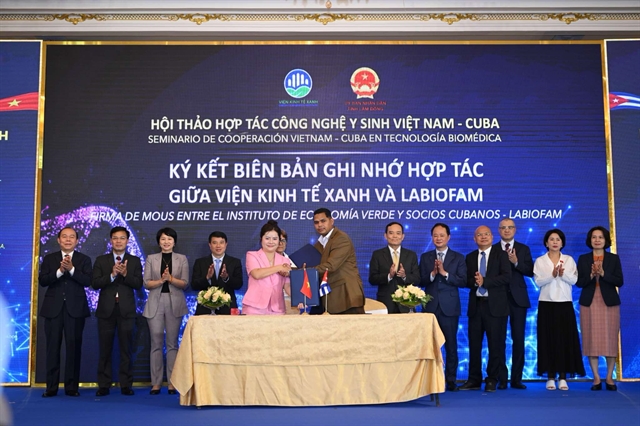
Representatives of GEI and the Labiofam Group (Cuba) signed a comprehensive cooperation agreement at the workshop. — Photo courtesy of the organiser
Within the framework of the workshop, the GEI and Cuba’s Labiofam Group signed a comprehensive cooperation framework agreement on joint research, development, production and trade of agricultural biotechnology, natural medicine products and research projects to serve people’s healthcare needs and sustainable agricultural development.
The GEI also signed an MoU on comprehensive cooperation with the Centre for Genetic Engineering and Biotechnology on cooperation in research, development, production and trade of agricultural biotechnology products and research projects, notably vaccines for livestock, poultry, aquatic animals and biological food preservation products.
Lâm Đồng currently has 1,247 species of plants with medicinal value, accounting for nearly 40 per cent of the total number of medicinal species in the country. The province’s Langbiang Biosphere Reserve was recognised by UNESCO in 2015 as one of the most important biodiversity conservation centres in Việt Nam and Southeast Asia, a place to preserve the rare genes of many medicinal species with high economic value. — VNS
HAVANA, Cuba, Jun 27 (ACN) The 53rd Venceremos Brigade will travel to Cuba next month, continuing the history of the US solidarity brigade with the Revolution founded in 1969, reported the Cuban Friendship Institute (ICAP by its Spanish acronym).
This year’s group includes 30 members of the LGBTQIA+ community, representing diverse gender expressions and identities, from 11 states in the northern nation.They condemn the US policy of maximum economic pressure against the Cuban people.
The brigade, the first group of its kind in the history of the Cuba solidarity movement, will arrive on July 21 to carry out 10 days of activities and celebrate the 26th, National Rebellion Day, alongside Cubans.
The visit program includes exchanges with Cuban institutions and professionals in fields of sexuality, health, and community projects, tours of sites of cultural and historical interest, and volunteer work, essential to the group since its inception.
In a press release, ICAP expressed its gratitude to its American friends for their visit and their defense of Cuba in the face of the growing hostility and harassment by the U.S. government, which is futilely attempting to subdue the people.