San Cristóbal government praises Cuba’s medical collaboration

Basseterre, March 16 (Prensa Latina) The Prime Minister of Saint Kitts and Nevis, Terrance Drew, praised the continued assistance provided by Cuban medical cooperation to his country, where professionals from that sister nation are treated with dignity.

These Cuban personnel contribute to strengthening our healthcare system, Drew noted, adding that there are ties of equity and respect, and that they enjoy the same rights and privileges as their local colleagues.

“Since 2003, St. Kitts and Nevis has welcomed Cuban professionals who came not as strangers, but as family, helping us build a stronger, healthier, and more resilient nation,” the Prime Minister said.

Cuban health professionals have saved lives, he stated.

Regarding labor practices, he dismissed all US accusations of exploitation and asserted that Cuban professionals receive compensation according to the salary scale established by the government.

“We have never tolerated, nor will we tolerate, human trafficking practices on our shores or anywhere else,” Drew reaffirmed.

Cuban health workers in St. Kitts and Nevis receive comfortable housing at government expense and enjoy fair working conditions, including vacation time and standard work hours, Drew argued, as quoted by the Associated Times website.

He added that the professionals own their passports and have all types of permits to travel abroad.

Drew’s statements defending the presence of Cuban medical cooperation in his country come against the backdrop of threats from the United States government to sanction countries that admit Cuban health personnel into their care programs to improve the quality of life.

car/joe

Posted in Exchanges | Leave a comment

Haitian press highlights the value of Cuba’s medical cooperation

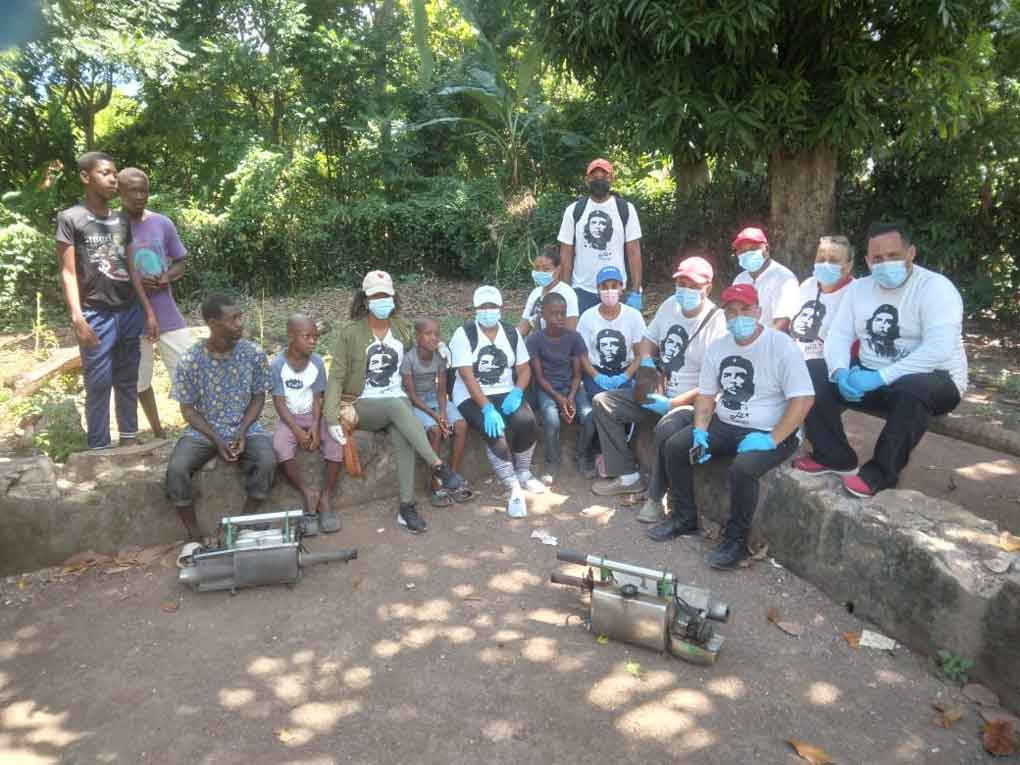
Port-au-Prince, March 15 (Prensa Latina) Cuban medical cooperation began in 1998 and today holds a very strong symbolic value in Haiti, highlights Le Nouvelliste, the most influential newspaper in the Caribbean country.

Cuban health personnel arrived here under President René Préval, at a time when Haiti was suffering damage from Hurricanes George and Mitch.

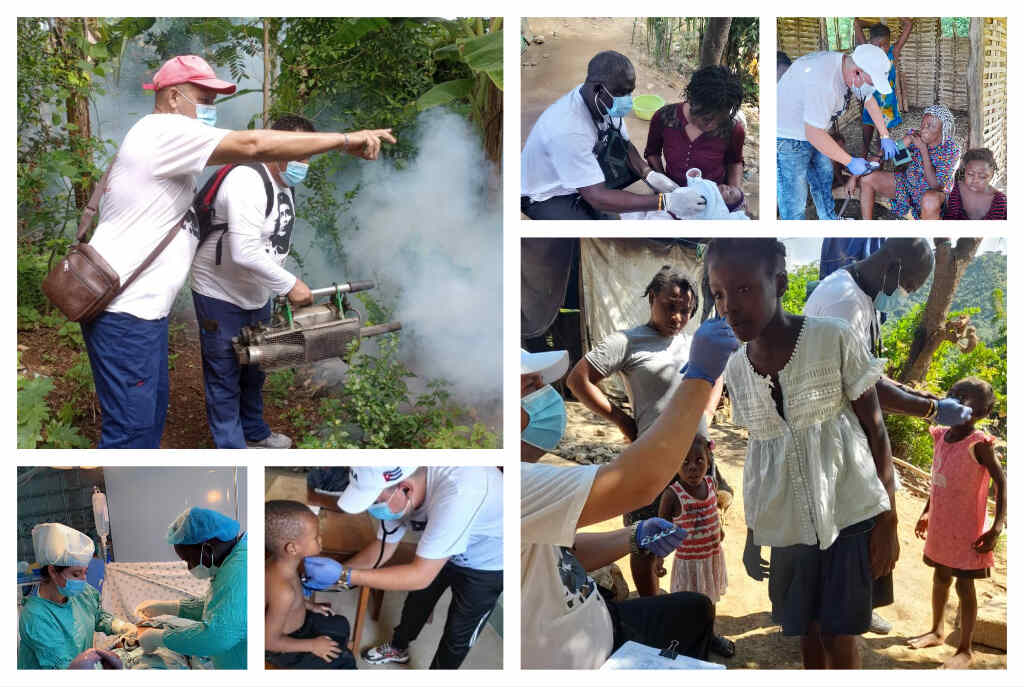
Cuba sent a medical brigade, medicines, and everything necessary to rescue the Haitian population, the source emphasized.

Former President Fidel Castro declared: “Haiti doesn’t need soldiers, it doesn’t need an invasion of soldiers; what Haiti needs is an invasion of doctors; what Haiti needs, in addition, is invasions of millions of dollars to develop,” the newspaper recalled.

Haitian press highlights value of Cuba's medical cooperation

The words of the historic leader of the Cuban Revolution were described by the Haitian newspaper as a blow to the United States government.

In 2001, a collaboration began with the Faculty of Medicine created by President Jean-Bertrand Aristide, and Cuba sent professors who also worked as doctors serving the Haitian population.

In December 2002, more than 800 Haitian doctors were receiving training at the University of Medical Sciences in Santiago de Cuba.

Le Nouvelliste lamented that successive governments, with the help of the largest of the Antilles, have prevented Haiti from having a robust health system with qualified personnel well integrated into the care chain.

Haitian press highlights value of Cuba's medical cooperation

As of December 4, 2024, more than 15,000 Cuban volunteers have joined the Cuban Medical Brigade, providing more than 36 million consultations, 194,241 births, including nearly nine million pediatric births, and some 660,000 surgeries.

“Cuban experts rehabilitated more than 206,000 disabled patients and administered more than 1,649,000 doses of vaccines during prevention campaigns,” the news outlet noted.

Currently, the number of Cuban health professionals present in Haiti in 2025 does not exceed 200, including 77 doctors who practice primarily in the south of the country.

The U.S. government’s threats of sanctions against countries with Cuban medical personnel have reached Haiti just as Haitian medical training is going through a difficult period.

This situation in the health sector is due to the insecurity that led to the closure or malfunction of several training centers, including the State University Hospital of Haiti.

Next November, the newspaper reported, a meeting is planned in Cuba to sign an agreement between the State University of Haiti and the Latin American School of Medicine in Havana.

ft/joe

Posted in Healthcare | Leave a comment

The US blockade of Cuba attempts to subdue a people determined to be free

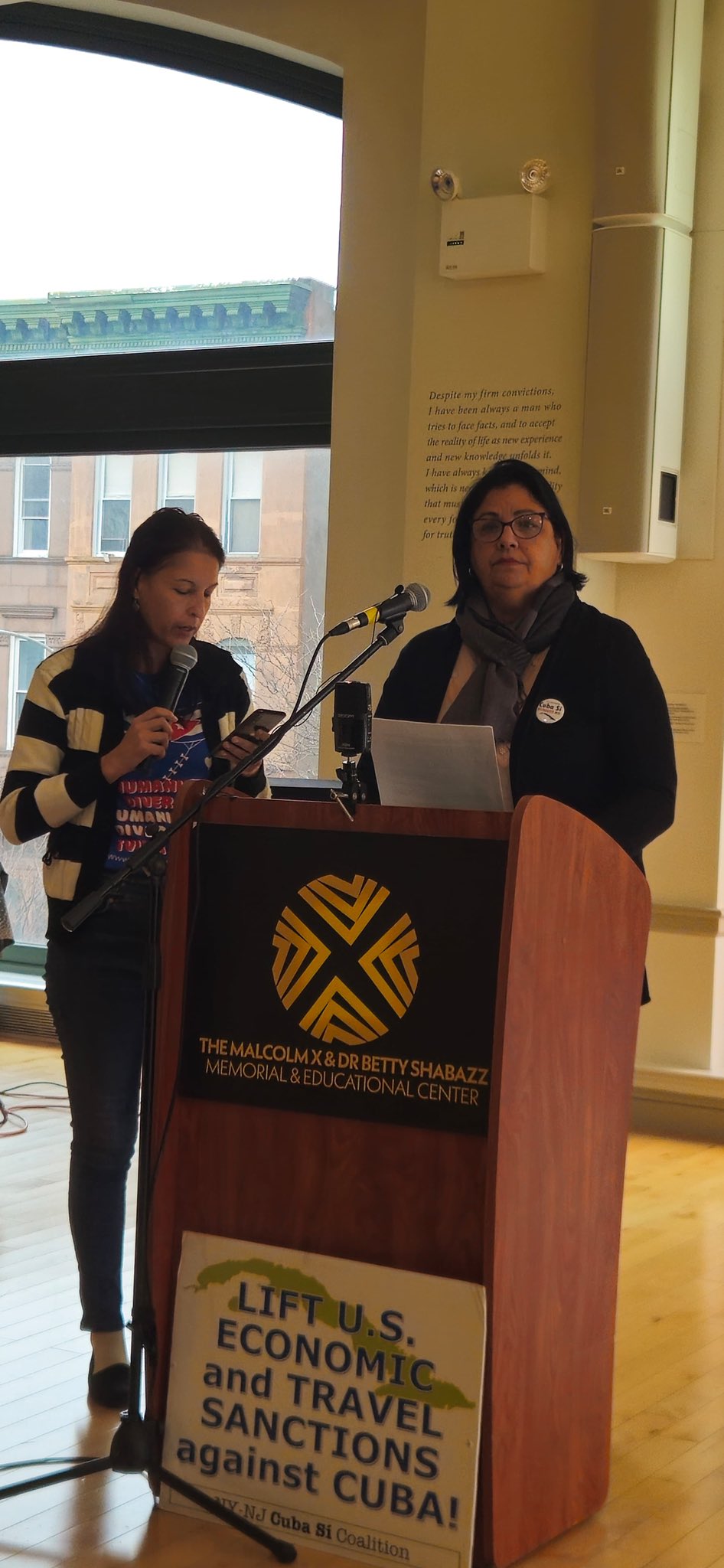
New York, March 15 (Prensa Latina) The U.S. blockade of Cuba continues to be a cruel, unjust, immoral, and anachronistic reality that attempts to subdue the will of a people who have chosen to be free, said Noemí Rabaza, first vice president of ICAP, today.

Rabaza, who is attending the International Conference for the Normalization of U.S.-Cuba Relations here representing the Cuban Institute of Friendship with the Peoples (ICAP), expressed his gratitude for the energy and drive of the movement supporting the island, especially in Cuba.

“You have been a beacon of light in the darkest moments, voices rising against injustice, and arms reaching out to build bridges of friendship,” the official said at the in-person and virtual meeting, held at the iconic Malcolm X Center in New York.

Rabaza said that ICAP turns 65 in 2025, and the institution’s history “is intertwined with the solidarity activism of movements like the one you represent,” and more than six decades later, it remains “a bridge between Cuba and the world.”

Looking back on the time that has passed, “we cannot help but recall the figures of two giants whose struggles and legacies inspire us: Fidel Castro and Malcolm X. Both, from different positions but with a shared purpose, dedicated their lives to the fight for social justice, equality, and human dignity,” he emphasized.

On his social media profile, Cuba’s alternate permanent ambassador to the UN, Yuri Gala, described the event as an “important event organized by solidarity groups with the Cuban nation. #CubaIsNotAlone.”

The forum, which concludes tomorrow and was first held in 2017, features diverse participation and the collaboration of solidarity networks in the United States, Canada (Quebec), and the Latin American and Caribbean Continental Network of Solidarity with Cuba and Just Causes.

A final statement outlining the solidarity movement’s work objectives is expected in the immediate future, taking into account—as a brochure from the National Network on Cuba points out—that there is a two-way U.S. blockade that dramatically affects the lives of tens of millions of Cuban and U.S. residents.

Many point out that if the unilateral siege that has survived 12 administrations in the executive mansion did not exist, collaboration could be achieved in fields such as medical advances.

Figures highlighted by solidarity indicate that the embargo prevents, for example, some 80,000 American diabetics who undergo amputations each year and 550,000 lung cancer victims from accessing unique Cuban treatments for their condition.

They also point out that there are nearly 50 million adults in this country who are illiterate and cannot benefit from Cuba’s global literacy campaign “Yes, I Can,” which has helped 11 million people in 30 countries around the world learn to read and write.

They also emphasize that, due to the embargo, U.S. citizens have fewer opportunities to visit a beautiful Caribbean island and share experiences with its wonderful people.

rob/dfm

Posted in The Blockade? | Leave a comment

Triple jumpers will represent Cuba at the World Athletics Championships

Havana, March 14 (Prensa Latina) Three triple jumpers will represent Cuba at the upcoming World Indoor Athletics Championships in Nanjing, China, the Cuban athletics federation confirmed today.

According to the sports website JIT, triple jumpers Leyanis Pérez, Liadagmis Povea, and Lázaro Martínez will be the only Cuban representatives at the world championships, which will take place from March 21 to 23.

The National Athletics Commission informed the press that Pérez has a ticket as a 2025 World Athletics Indoor Tour champion and will arrive in Nanjing as the top seed with a jump of 14.62 meters, enough to win the meet in the French city of Lievin.

For her part, Povea currently holds second place in the indoor track rankings this season, supported by her 14.57-meter mark achieved in Miramas, also on French soil.

National Commissioner Rolando Charroo commented that Cuba’s greatest hopes for medals are pinned on both athletes, while not disregarding Martínez’s chances.

The Guantanamo native, who won the 2022 world championship in Belgrade, will attempt to reach the podium again after a previous period marked by injuries.

The website points out that other renowned athletes, such as high jumper Luis Enrique Zayas and 800-meter runner Daily Cooper, failed to achieve the necessary marks to qualify for the world competition.

lam/ads

Posted in Cultural | Leave a comment

Díaz-Canel urges young people to work to protect the Revolution

Havana, March 14 (Prensa Latina) Cuban President Miguel Díaz-Canel today urged youth to strive to protect all the achievements of the Revolution and promote the comprehensive development of the nation.

During a meeting with young people from five provinces, Díaz-Canel asserted that, with the support of the new generation of Cubans, the Caribbean nation will overcome the difficult times it is going through, according to the Santiago de Cuba newspaper Sierra Maestra.

He also expressed his confidence in young people and insisted that everyone should give their best in their student and job roles, in addition to “revisiting historical sites to continue defending who we are.”

The head of state spoke with students and workers from the eastern provinces of Las Tunas, Holguín, Santiago de Cuba, and Guantánamo, and Camagüey, in the center of the island.

The meeting with 147 young people took place in Mangos de Baraguá, a historic site in Santiago de Cuba and a National Monument, where a famous meeting took place between Major General Antonio Maceo and the Commander-in-Chief of the Spanish Army, Martínez Campos.

It was on March 15, 1878, when Maceo challenged the Pact of Zanjón signed on February 10, 1878, which sealed the capitulation of the Cuban Liberation Army to the Spanish troops and ended the Ten Years’ War (1868-1878).

For Maceo and his followers, what was agreed upon in that town in Camagüey did not guarantee the abolition of slavery, nor did it recognize independence.

“Maceo defended three principles at Baraguá, and they have become paradigmatic for Cubans: unity, sovereignty, and social justice. That is the legacy of that glorious event,” Díaz-Canel commented this Friday.

At the event, Omar López, director of the Santiago de Cuba City Council’s Office, recalled the historic event.

López emphasized that the national hero, José Martí, and the historic leader of the Revolution, Fidel Castro, mentioned the Baraguá Protest on several occasions, “which implies the continuity and presence of the idea of ​​never giving up and never giving up.”

On the other hand, “a replica of the Bronze Titan’s machete was presented to the Union of Young Communists, as a representation of the courage of those who fought for Cuban independence,” the text states.

Likewise, those present condemned the U.S. government’s economic blockade of Cuba and congratulated press workers on their day.

ode/raj

Posted in Uncategorized | Leave a comment

Cuba reiterates its willingness to strengthen ties with Burkina Faso

Havana, March 14 (Prensa Latina) Cuban Foreign Minister Bruno Rodríguez reiterated today the island’s government’s willingness to strengthen its ties with Burkina Faso, which will celebrate their 50th anniversary in 2025.

According to the Cuban head of diplomacy on the social network X, he expressed the government’s intentions during a meeting with the chancellor of that African nation, Jean Marie Traoré.

He also expressed the island’s authorities’ satisfaction “with the good state of bilateral cooperation” between the two nations that have maintained official relations since December 11, 1965.

Rodríguez arrived in Burkina Faso this Friday for an official visit, during which he plans to hold meetings with Burkina Faso authorities, with the aim of strengthening relations between the two nations.

In addition to his counterpart, a meeting with President Ibrahim Traoré and Prime Minister Rimtalba Jean-Emmanuel Ouédraogo is also on the agenda, Cuban ambassador to Ouagadougou Nadieska Navarro told Prensa Latina.

He will also meet with the Burkina-Cuba Fraternity collective, which brings together political parties and civil society organizations involved in solidarity activities with the Caribbean island.

This meeting, the diplomat specified, “will take place at the symbolic memorial dedicated to the African country’s revolutionary hero, Thomas Sankara, who was a close friend of the historic leader of the Cuban Revolution, Fidel Castro.”

The Caribbean country’s foreign minister will also meet with members of the medical brigade in the capital of Burkina Faso and members of the Cuban diplomatic mission in that West African state.

Bruno Rodríguez began a tour of African nations on March 10, which took him to South Africa and Ethiopia before stopping in Ouagadougou, and includes visits to Nigeria, Ghana, and Senegal.

lam/raj

Posted in Exchanges | Leave a comment

Cuba has resisted the Helms-Burton Act against the Revolution for 29 years.

Havana, March 12 (Prensa Latina) Cuban Foreign Minister Bruno Rodríguez today recalled the signing by the United States government of the Helms-Burton Act 29 years ago, with the stated objective of overthrowing the Revolution.

In his profile on the social network X, the Cuban foreign minister stated that nothing similar exists in the world, and described this provision as a flagrant violation of the norms that govern international trade and the most basic rights of peoples.

The Helms-Burton Act, signed in 1996 by then-US President William Clinton, contemplates the internationalization of the blockade; the denial of credit and financial aid to countries and organizations that favor or promote cooperation with Cuba; and hindering foreign investment on the island.

Its enactment eliminated the unilateral possibility of lifting the siege on the island and established that it would remain in effect until there is what Washington calls a transitional government certified by the White House in Cuba.

Sections three and four of the Helms-Burton Act remained inactive until 2019, when President Donald Trump authorized their implementation, in order to prevent normalization of relations between Cuba and the United States.

According to experts, the Helms-Burton Act, along with the Torricelli Act (signed in 1992), constitutes a huge obstacle to bilateral relations and a violation of the principles of sovereign equality and non-intervention in the internal affairs of a State, as enshrined in international law.

mem/evm

Posted in The Blockade? | Leave a comment

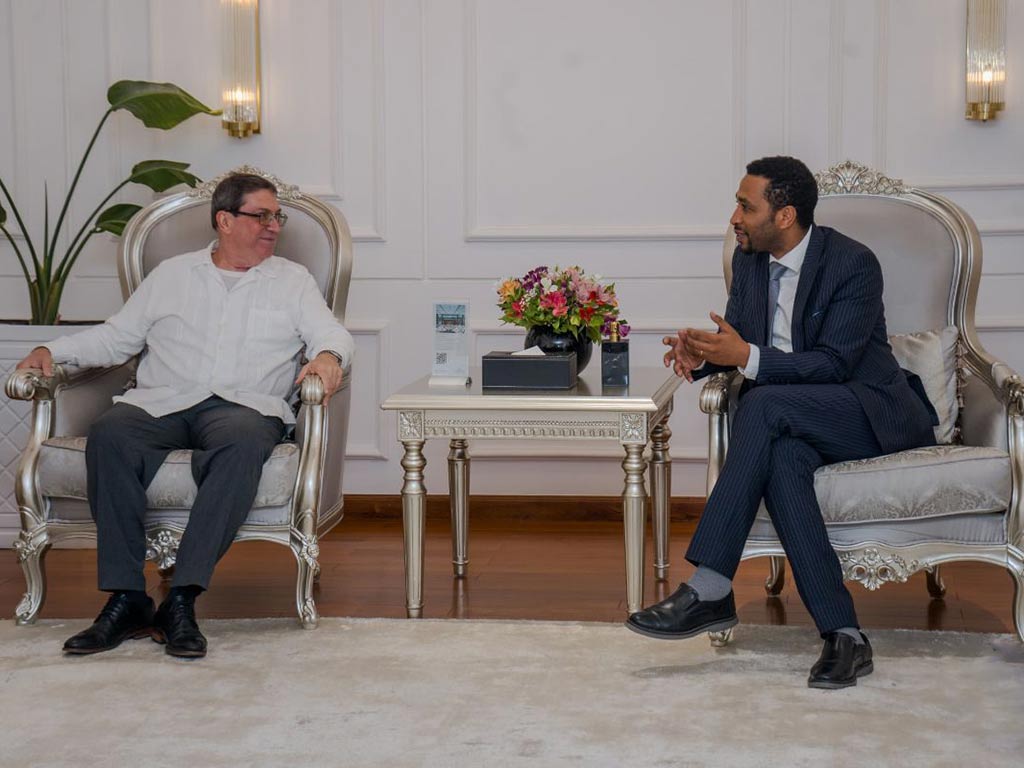
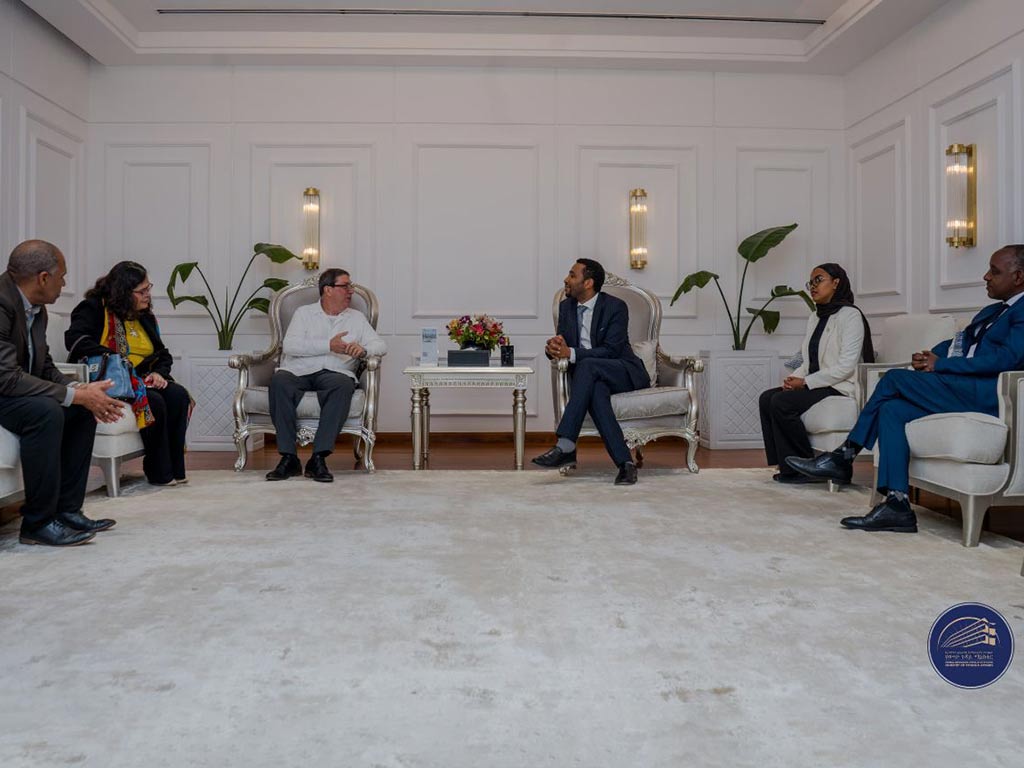
Cuban Foreign Minister arrives in Ethiopia, second stop on African tour

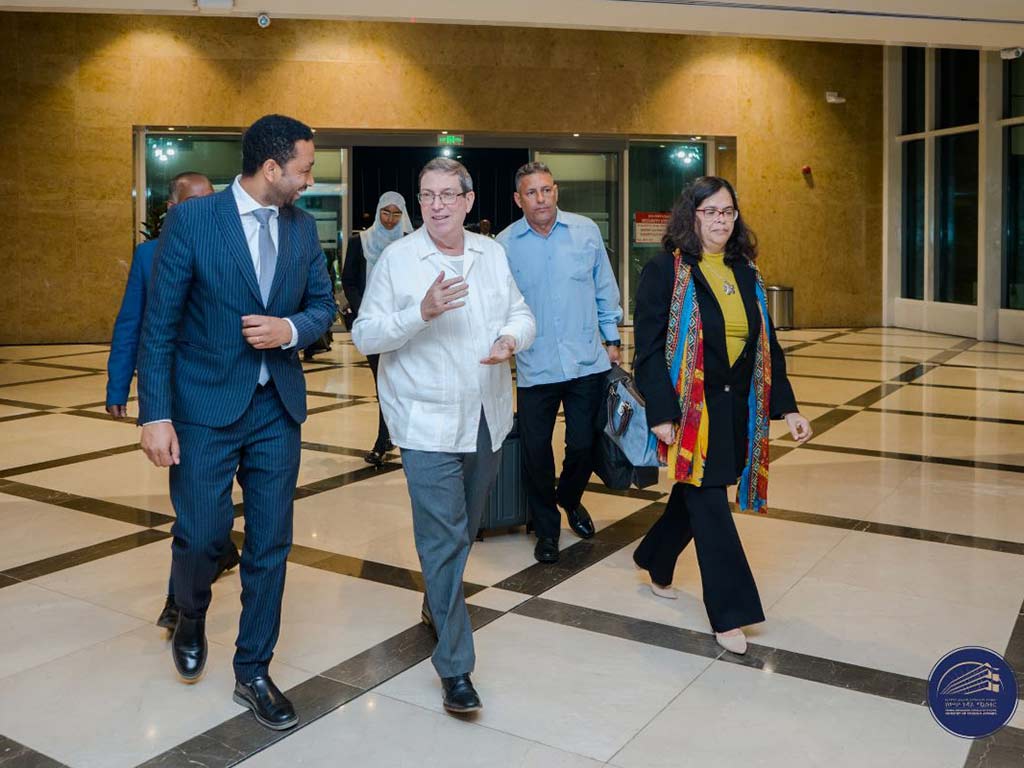
Addis Ababa, March 12 (Prensa Latina) Cuban Foreign Minister Bruno Rodríguez Parrilla arrived today in Ethiopia, the second stop on a working tour of Africa that began in South Africa and includes Burkina Faso, Nigeria, Ghana, and Senegal.

Upon his arrival at Bole International Airport in the capital, Rodríguez Parrilla was greeted by Aziza Geleta, Director of Protocol Affairs at the local Foreign Ministry, and Abraham Megistu, Deputy Director for Europe and the Americas and current interim director.

Likewise, he was welcomed by the director for South America and the Caribbean, Demissew Kebede, and the Cuban ambassador-designate to Ethiopia, Meylin Suárez Álvarez.

The official visit, which will last until March 14, is part of the celebrations for the 50th anniversary of the establishment of diplomatic relations between the two countries, to be commemorated on July 18.

During his stay, Rodríguez Parrilla will develop a work agenda that includes meetings with his Ethiopian counterpart, Gedion Timothewos, and other government authorities, reaffirming the desire to continue strengthening political, economic, and collaborative relations in various sectors.

On this day, the head of Caribbean diplomacy will visit the park called Tiglachin Monument (Our Struggle, in Amharic) and pay tribute to the 163 Cuban internationalist combatants who fell alongside Ethiopian soldiers in the Battle of Karramara on March 5, 1978, and whose bronze faces are represented in two murals.

Representatives from the local Ministry of Foreign Affairs, the Ethiopia-Cuba Friendship Association, and Havana graduates (Ethiopian-Cubans), among other guests, will participate.

npg/nmr

Posted in Exchanges | Leave a comment

Guatemala expresses solidarity with Cuba in the face of US hostility

Guatemala City, March 12 (Prensa Latina) Guatemalan anthropologist Sandra Xinico expressed solidarity with the hostile policy of the United States government that is causing so much harm to Cuba today, and urged the people of the Antilles to maintain their strength.

This North American practice tends or intends to impose itself on free territories and will surely continue to seek to complicate the situation through an unjust economic blockade against the Caribbean island, the Kaqchikel Mayan researcher emphasized.

In statements to Prensa Latina, he acknowledged the historic struggle of Cubans and all their work to maintain themselves as an independent and sovereign nation, a reference for the various peoples pursuing their liberation, he emphasized.

He ruled out the possibility that all this violence on the part of the United States is solely the result of Donald Trump’s administration, but rather the continuation of imperialist policies of invasion and colonization to subjugate those unwilling to align themselves with their plundering objectives.

What’s happening with the current US president isn’t accidental; “it’s been part of a plan to maintain dependency, as in the case of Guatemala, to make countries like what we’re experiencing here,” the writer asserted.

This subordination to a model that has led to the destruction of our communities, genocide, that has plundered our lands, that has seized the nation’s greatest treasures, said the young woman, originally from the municipality of Patzún, department of Chimaltenango.

And that dynamic is what the United States seeks to impose on Cuba, at the forefront of liberation, which insists that its people have another way of life, he reflected.

Unfortunately, a lot of information reaches us here that is already mediated by the northern country and doesn’t always correspond to the reality that the people live in, the former community leader considered.

Here we receive news as if the United States were a country that wanted to liberate others, that fought for democracy; however, we know that’s not the case, he added.

What they are seeking is to intervene, to penetrate deep into our territories in order to control us and then continue to benefit, Xinico warned.

He also expressed concern about all the anti-immigrant measures and the use of the U.S. naval base at Guantanamo Bay, in Cuba, to send people deported from the United States, which he described as a racist practice.

We know that the United States was built on a territory stolen from Native peoples; however, we live in a difficult situation regarding memory and our history, the anthropologist argued.

He denounced the policy of returning nationals to their countries through migration, a result of the structural problems we have in countries like Guatemala and the same evil caused by colonial practices.

oda/zinc

Posted in The Blockade? | Leave a comment

Barbados defends historic Caribbean ties with Cuba

Bridgetown, March 11 (Prensa Latina) The Barbados ambassador to the Caribbean Community (CARICOM), David Comissiong, today reaffirmed the historic relations with Cuba and assured that nothing and no one will be able to break that brotherhood.

When asked by a local news channel about the U.S. government’s recent decision to restrict visas for officials from countries that supported or continue to support the Cuban medical cooperation program, Comissiong was categorical: “These are ties that no one can break.”

The Barbadian diplomat noted that this measure by the US government is in line with its policy of bringing about regime change on the island and cited an official document from the 1960s that acknowledged this intention.

The Commission recalled when, in 1972, four Caribbean countries reestablished diplomatic relations with Cuba amidst the fiercest U.S. blockade. Fifty-three years later, hundreds of young people from CARICOM have been trained on the largest island in the Antilles, and thousands of Cuban doctors have served in these countries.

The senior diplomat said he is confident that Caribbean governments will make U.S. authorities understand the mistaken nature of this policy and, above all, that CARICOM member nations are independent and sovereign.

npg/ohh

Posted in Exchanges, The Blockade? | Leave a comment