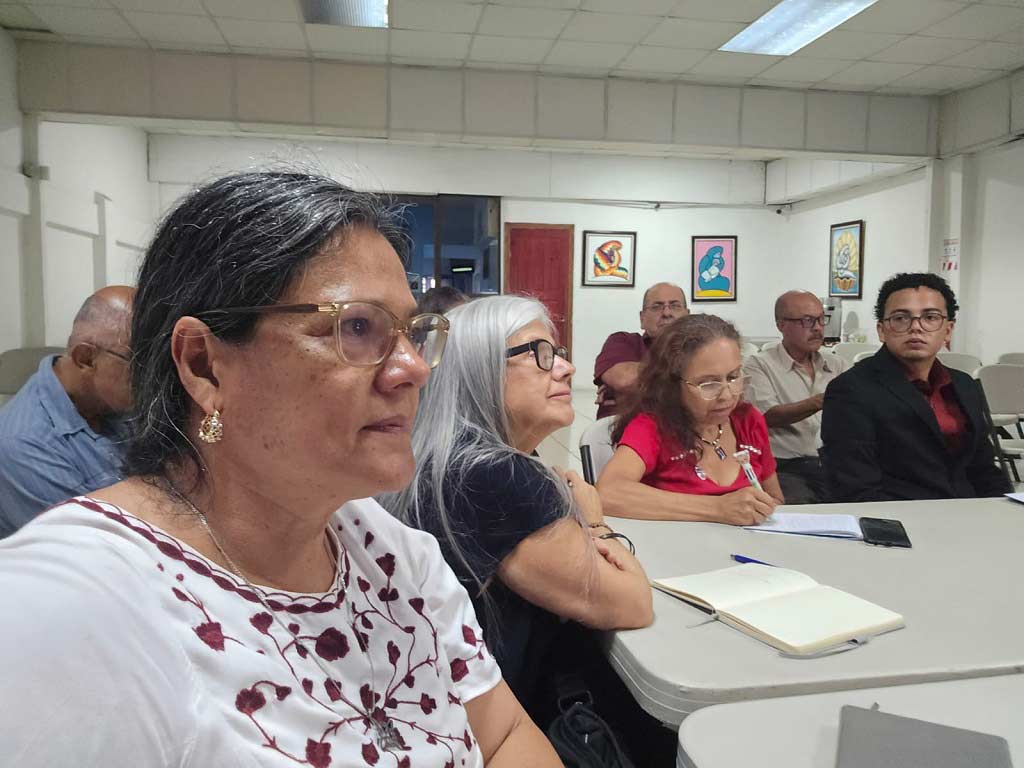
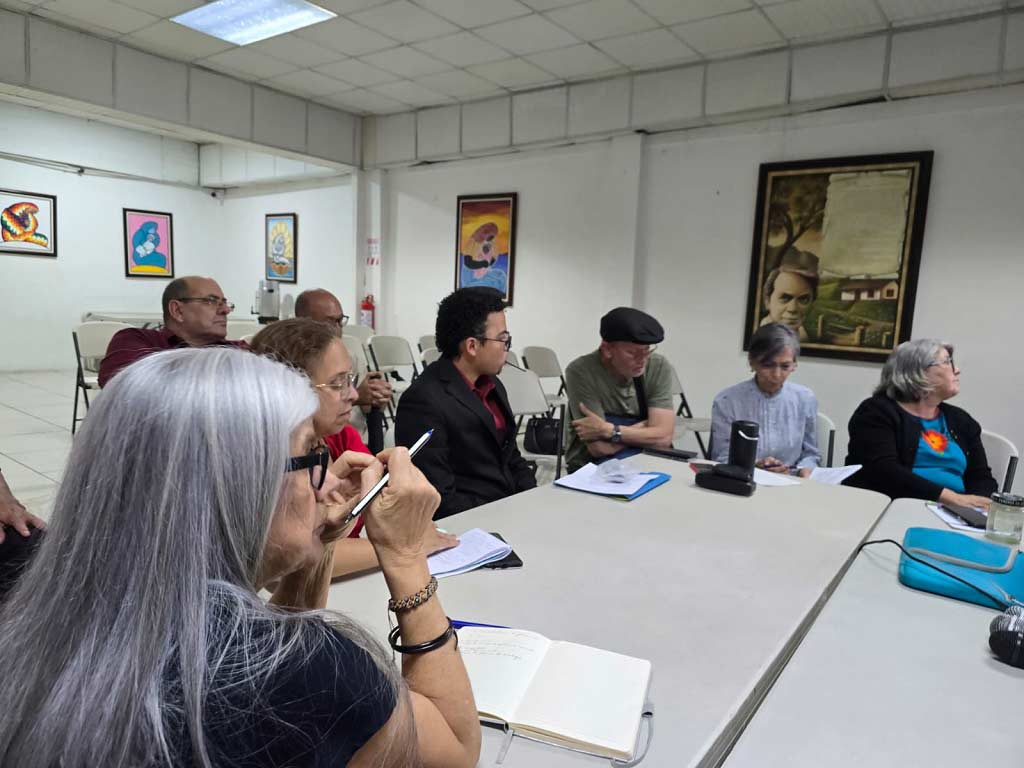
Panama City, July 13 (Prensa Latina) The Cuban ambassador to Panama, Víctor Cairo, denounced terrorist actions against his country sponsored and organized from the United States, according to local press reports here today.
In an interview with the Bayano Digital newspaper, Cairo also condemned the economic, commercial, and financial blockade imposed by Washington on the island for more than 66 years.
Regarding the publication of the June 30 U.S. presidential memorandum, which reiterates hostile actions dictated by President Donald Trump, the diplomat explained that bilateral relations between Cuba and the United States are characterized by the recently reported aggressiveness.
He specified that the situation is marked by a strong stance by “anti-Cuban” political figures in the White House, including Secretary of State Marco Rubio, an instigator bent on destroying the Cuban Revolution.
Cairo also noted that the economic, political, and diplomatic pressures exerted by the United States have been accompanied by terrorist and subversive plots within the Caribbean country, primarily targeting electrical power facilities, fuel depots, and attacks targeting hospitals and schools.
He added that these actions involve the transmission of messages of hate and violence on social media in an attempt to undermine the Cuban constitutional order.
Since mercenaries are ineffective in their internal work and fail to fulfill their vile purposes due to the strength of the people, he asserted, they then decide to hire people to commit acts of sabotage and terrorism to generate panic, fear, and instability.
He added that the list of individuals and organizations being prosecuted or wanted for involvement in terrorist acts against Cuba has been updated, thereby fulfilling the commitment to the norms of international law, the Cuban internal legal system, and the conventions to which we are party.
That list includes a group of people residing abroad, the vast majority in the United States. This list has been submitted to the United Nations, as well as to the Panamanian authorities, so that they may be aware of, contribute to, and cooperate with Cuba in the commitment and obligation assumed as States, he clarified.
On this topic, in his statements to the newscast, the ambassador recalled that the Cuban State is a party to the 19 international agreements related to terrorism and strictly complies with the United Nations Security Council resolutions related to combating this scourge.
UN Resolution 1373 requires all States to take measures to prevent and suppress terrorism, including criminalizing terrorist financing and promoting international cooperation in this area.
In this regard, he stated that “Cuba does not have a double standard on the issue of terrorism. Our position is clear: we oppose terrorism in all its forms and we cannot accept the United States’ inclusion of us on the list of state sponsors of terrorism, which is immoral and ethically false,” he emphasized.
The head of the Cuban diplomatic mission also appealed for international solidarity and the support of Cubans around the world to reject the inhumane blockade, which is the main obstacle to the development of his country, which resists unjust harassment and the violation of the principles of free trade among nations.
Havana, July 13 (Prensa Latina) A bureaucratic decision, alien to the spirit of sport, prevented a Cuban children’s team from traveling to Puerto Rico today, after Washington denied visas to the players’ coaches.
The La Palma team from Pinar del Río, the national champion in the 9-10 age group of the Little League girls’ softball team, was scheduled to participate in the Caribbean regional tournament leading up to the World Series starting July 14.
However, although the 14 girls received visas, the seven adults who were supposed to accompany them were excluded without valid justification by the US Embassy in Havana.
This refusal turns a sporting event into a collateral victim of the long-standing dispute between Cuba and the United States, a political rift that ignores age or purpose. Not even the educational and symbolic nature of the event was enough to stop a measure that, far from protecting anyone, exposes minors to defenselessness and deprives an entire community of a collective aspiration.
The Cuban Baseball and Softball Federation denounced the incident as part of a sustained pattern of obstruction, which this year has prevented other Cuban teams from participating or fully participating in international events, including some held on U.S. soil.
This episode is not only an affront to sport, but also to international commitments that imply respect, inclusion, and minimum guarantees for those who only aspire to compete on equal terms. There are no values at stake beyond the desire of a few to make sport a hostage to their policies.
Cuba has reiterated its concern about the future implications of such actions, which could even jeopardize the Caribbean country’s presence at events such as the 2028 Los Angeles Olympic Games or the upcoming World Baseball Classic.
San José, July 12 (Prensa Latina) “We confirm to Donald Trump that Cuba is not alone,” friends in Costa Rica who support the island told the U.S. president today, reacting to a memorandum from Washington that toughens sanctions against Havana.
“This is another escalation of arbitrary restrictions and economic, commercial, and political measures that are a clear attack on the sovereignty and dignity of the Caribbean nation,” added the solidarity movement Amor por Cuba-Costa Rica, in a statement obtained by Prensa Latina.
The organization criticized the aggressive nature of the White House’s decisions, “with its violent and arrogant tone of prohibiting American citizens and the Cuban people from maintaining daily relations according to the universal custom of civilized coexistence among nations.”
“Given its narrative and intent,” the text states, “the dictates of Trump’s memorandum constitute an act of outrage against the integrity of Cuba as an independent and legitimate state, adding to the countless outrages perpetrated by the impious despotism of the United States administrations.”
The Costa Rican solidarity movement recalled that, in the more than sixty years “since the triumph of freedom won by the Cuban people, the United States has violated multilateral conventions, international law, and the Charter of the United Nations in all its scope.”
The counterrevolutionary decrees issued by Trump and Secretary of State Marco Rubio, he asserts, express “the interests of voracious imperialist corporations, the recolonization strategy of the neocolonial deep power oligarchies, in their futile obsession with subjugating the Cuban people and occupying their territory with impunity.”
“These acts,” Amor por Cuba-Costa Rica asserts, “also reflect the hatred, revenge, and criminal hostility of the “Cuban-American” lobby, as well as of the Washington tyranny, whether in “democratic” or “republican” form and colors, in their vain attempt to crush the Revolutionary Government.”
This new wave of illegitimate and insane prohibitions by Washington demonstrates the disproportionate continuation of the failed and fruitless genocidal blockade against Cuba, through a policy of interventionism, desperate pressure, and anachronistic threats of amendments and unilateral and extraterritorial laws, the statement emphasizes.
“We condemn outright,” Amor por Cuba-Costa Rica emphasized, “the hostile and hateful strategy perpetuated by the United States with the repugnant, ignominious, and unacceptable purpose of plunging the gallant Cuban people into the hell of suffering, helplessness, and absolute precariousness.”
July 11 (teleSUR) Cuba’s Minister of Foreign Affairs, Bruno Rodriguez, rejected the new sanctions imposed by the United States government against Cuba as part of the continuation of its aggressive measures against the island. The high official described this new package of sanctions as part of a prolonged and merciless economic war against Cuba, reaffirming that his country and its leaders will not bow down despite the aggression. In turn, the Cuban government pointed directly at the Donald Trump administration for promoting a strategy of regime change through a policy of economic asphixiation in an attempt to provoke destabilization actions in the country.
In this context, the US Department of State announced that it will impose a new package of sanctions against the President of Cuba, Miguel Diaz Canel, the Ministry of Revolutionary Armed Forces, and the Ministry of Interior of Cuba. The sanctions include direct visa bans for family members of those sanctions as well as measures limiting the travel of members of the Cuban judicial and prison systems.
Panama City, July 11 (Prensa Latina) Cuban diplomats in Panama today condemned terrorist acts organized and perpetrated from the United States against their country, which have been reported on the island.
In a message on the social network X by the ambassador of the largest of the Antilles in the isthmus, Víctor Cairo, he points out the repudiation of these criminal actions that have been exposed, while emphasizing that Cuba is firm.
Last Thursday, at a press conference, the deputy head of the specialized agency of the General Directorate of Criminal Investigation of the Ministry of the Interior, Víctor Álvarez, stated that the number of individuals and organizations perpetrating terrorist acts against Cuba has increased.
Álvarez emphasized that the Caribbean nation has “sufficient evidence implicating individuals residing in several countries, primarily the United States.”
For her part, Deputy Foreign Minister Josefina Vidal denounced that the Caribbean country is a target of terrorist acts with the complicity and inaction of the authorities of the northern nation.
Vidal commented that “the impunity with which terrorist groups have acted against his country on U.S. soil for more than six decades” “is largely a consequence of the inaction, complicity, and lack of commitment of the United States government.”
These actions are “aimed at harming the security and integrity of the Cuban population and our institutions and facilities, both in Cuba and in the United States and other parts of the world,” he added.
The Cuban diplomat appeared before local and international media at the International Press Center and reported that authorities had updated and submitted to the United Nations the list of individuals and entities responsible for extremist acts against the Caribbean nation.
The Venezuelan government calls the U.S. Secretary of State “a spokesperson for resentment and failure.” Photo: Yván Gil/TG.
July 11, 2025 — teleSUR
Bolivarianauthorities describe the new coercive measures as “acts of financial piracy disguised as false morality,” referring to the sanctions against senior Cuban government officials, including President Díaz-Canel.
The Government of the Bolivarian Republic of Venezuela expressed, through an official statement, “its most energetic and categorical rejection of the infamous statement by the Secretary of State of the United States (USA), Marco Rubio , who in a new display of hatred, unhealthy obsession and imperial arrogance, seeks to sanction the legitimate president of the Republic of Cuba, Miguel Díaz-Canel Bermúdez ,” in reference to the note released this afternoon by the US State Department.
According to the Venezuelan Foreign Ministry, this act constitutes an affront to international law , as a U.S. government official has assumed the power to unilaterally sanction the head of state of a sovereign nation .
Bolivarian authorities denounce that this measure goes beyond a violation of the fundamental principles of coexistence among nations . “The attempt to punish President Díaz-Canel is an expression of profound contempt for the free peoples of Latin America and the Caribbean ,” the text states.
The Venezuelan government describes the US Secretary of State as “a spokesperson for resentment and failure .” It also denounces Marco Rubio as blinded by hatred and self-conscious about Cuba’s invincible dignity. These circumstances have led him to build “his political career on the desire to destroy revolutions that he neither understands nor will ever be able to subdue. His sick determination against Cuba is doomed to the same fate as all imperialist attempts against our America: absolute failure,” the statement reads.
The Bolivarian authorities declare that the imposition of new coercive measures is nothing more than “acts of financial piracy disguised as false morality .” They also highlight the Cuban people’s resistance with heroic dignity and accuse the U.S. government of being directly responsible for the suffering caused by “the criminal and illegal blockade, cowardly intensified by figures like Rubio.”
In this context, “Venezuela reiterates its absolute and unrestricted support for the people, the Government of the Republic of Cuba, and its President, and denounces before the international community the policy of systematic aggression promoted by the current U.S. Secretary of State, whose sole agenda is to prolong the Monroe Doctrine under new guises,” the statement concludes.
The U.S. says it is “taking steps to impose visa restrictions” on other Cuban officials.
July 11, 2025 — teleSUR
The U.S. State Department on Friday sanctioned Cuban President Miguel Díaz-Canel , along with Defense Minister Álvaro López Miera and Interior Minister Lázaro Alberto Álvarez Casas , according to a statement released by the agency.
Sanctions were also issued against their immediate family members, who will not be allowed to travel to the United States.
Similarly, the US indicates that it is ” taking steps to impose visa restrictions ” on other Cuban judicial and prison officials.
The U.S. government also announced the update of its list of Restricted Properties in Cuba and the Prohibited Accommodations in Cuba list , which includes 11 more properties linked to the Cuban government, including the new “Torre K” hotel. With this, the U.S. seeks to ” prevent U.S. funds from reaching the island .”
According to the State Department, the sanctions against senior Cuban officials were issued for allegedly being involved in ” serious human rights violations ,” which is part of a smear campaign by the U.S. against the island’s government .
The U.S. also stated that it “took steps to implement President Trump’s enhanced policy toward Cuba , outlined in Presidential Memorandum on National Security-5, dated June 30, 2025.”
Upon hearing the news, Cuban Foreign Minister Bruno Rodríguez Parrilla rejected “ immigration sanctions against revolutionary leaders” and denounced the U.S. as capable of “maintaining a prolonged and ruthless economic war against Cuba.”
The U.S. tightens the blockade against Cuba under Donald Trump’s administration.
The measure taken this Friday against senior Cuban officials follows the Trump administration’s announcement in early July, which approved a new presidential memorandum prohibiting U.S. citizens from traveling to Cuba as tourists .
The Memorandum also mandates periodic audits and requires travelers to record all Cuba-related transactions for at least five years, and tightens restrictions on remittances to the island , which had already fallen by 43.4% in 2024.
It also establishes more severe sanctions against Cuban entities , especially those linked to military institutions and the intelligence and security sectors of the Cuban State.
These measures are part of the so-called “maximum pressure” policy by the U.S. government, which it has maintained against Cuba since 2019, when President Donald Trump, in his first term, issued 243 new unilateral coercive measures , with the purpose of suffocating the economy and stimulating a supposed transitional government in Cuba.
Cuban authorities have spoken out against the measures imposed by the U.S., which reinforce the economic, commercial, and financial blockade that the country has maintained against Cuba for more than 60 years.
Havana, July 10 (Prensa Latina) The Office of the Organization of Ibero-American States (OEI) in Cuba today presented the progress made in cooperation with that international organization during the presentation of the results of its management in the 2023-2024 biennium.
The report, titled “2023-2024 Report: Two Years of Cooperation in Science, Culture, and Education,” presented at the Iberostar Selection Habana hotel, reveals the consolidation of bilateral ties, as well as the expansion and diversification of joint projects, according to Iosmara Fernández, director of OEI Cuba.
According to Fernández, the document “reflects the OEI’s commitment to human development in the Caribbean nation, aligned with national priorities in these sectors.”
“The Annual Report demonstrates the power of cooperation and shows that the dialogue of knowledge and collective construction are fundamental pillars for building more inclusive societies,” he added.
During the event, which included the participation of OEI executives, Cuban authorities, strategic partners, representatives of international cooperation agencies, and the media, the Office’s main achievements and lessons learned in the implementation of projects in the areas of science, education, and culture were presented.
Among these, the DRUIDA project—developed in collaboration with AECID and Cuban universities—stood out, training 168 professors in digital technologies for university teaching and leading to the creation of the Ibero-American Research Network for Digital Transformation.
Likewise, the creation of the School of Digital Skills, which graduated 314 professionals in postgraduate courses and attracted 359 participants in international webinars, among other benefits.
The meeting facilitated the exchange of experiences among entities benefiting from OEI-Cuba cooperation, and highlighted Cuba’s strategic role within the Ibero-American network, in the context of the OEI’s 75th anniversary.
The office, which opened in November 2022, has so far implemented 12 flagship projects with 15 national institutions, under the motto “We make cooperation happen.”
Brazilian table tennis World Cup champion Hugo Calderano was barred from competing in a major tournament in Las Vegas last week when the U.S. denied him a visa. The reason? He competed in Cuba two years ago.
“I followed the same protocol as all my previous trips to the United States using my Portuguese passport. When I was informed of the situation, I mobilized my entire team to obtain an emergency visa, but unfortunately, there was not enough time,” Calderano said in a statement. “It is frustrating to be left out of one of the most important competitions of the season for reasons beyond my control.”
Calderano, who is the highest ranked non-Chinese player in the world, holds dual citizenship from Portugal. As a Portuguese citizen, he is eligible to travel to the U.S. without a visa by filling out a simple online form via the Electronic System for Travel Authorization (ESTA).
But the U.S. government automatically revokes this visa waiver for anyone who has visited Cuba because the State Department lists the nation as a “State Sponsor of Terrorism” (SSOT).
Citizens from 42 countries can get a visa waiver via ESTA. But if they’ve visited Cuba, they must apply for a visa at a U.S. embassy in order to visit the United States, a process that can take months.
There is no evidence that Cuba sponsors terrorism. The listing is not formally a sanction. However, inclusion on the list has cut off the island from international trade, credit, banking and investment – making SSOT a centerpiece of the Trump administration’s “maximum pressure” strategy to decimate the Cuban economy.
The terror list largely explains the decrease of much-needed European tourism, as Europeans think twice before coming to Cuba to avoid losing their U.S. travel perks.
Watch our video and hear from European travelers on the U.S. measure HERE.
The American administration has made a significant step in restricting American tourism to Cuba while escalating a hitherto tense relationship between both nations. In response to a new policy shift by the U.S., visitors to Cuba are now subject to a massive fine of $250,000 for violating its prohibitions on tourism-related activities. These new restrictions form part of a bigger scheme aimed at tightening economic and political pressure on the Cuban government, especially after its reclassification as a state sponsor of terrorism by the U.S. in 2021.
The U.S. travel ban to Cuba has been on for decades, but new developments have made penalties and rules of travel more complex. One key part of renewed enforcement is a Presidential Proclamation, which came into effect in June 2025. It totally halts tourist visas, including B‑1/B‑2 visas for travel and J‑1 exchange visitor visas, from being issued to Cuban nationals and to all individuals traveling for other than a bona fide intent. It further limits American citizens from engaging in any tourist activity in Cuba without a special license from the U.S. Department of the Treasury’s Office of Foreign Assets Control (OFAC).
This policy shift follows a string of actions by the U.S. government, which has insisted on having its embargo of Cuba in place since the early 1960s. These new prohibitions are aimed at efforts at financial transactions that would accrue a benefit to Cuban state entities, including its military and intelligence apparatus.
Political and Security Reasons for the Prohibition
The U.S. government’s tourist ban is largely based on national security concerns. In 2021, Cuba was officially listed by the U.S. as a state sponsor of terror based on its refusal to cooperate on law enforcement issues, its funding of foreign terrorist organizations, and its refusal to accept deportees. These actions have been responsible for fanning hostilities between both nations and thus tourist travel restrictions.
The U.S. State Department also refers to a lack of response on behalf of the Cuban government to address visa overstays and other immigration issues as among the leading motivations for ongoing travel restrictions. For U.S. citizens, the new travel warning now warns that Cuba is a country where its citizens may encounter wrongful imprisonment, electricity outages, and unreliable embassy assistance. For these and other reasons, the State Department now urges visitors to “reconsider travel” to Cuba and offers a Level 2 travel advisory.
Economic and Social Impacts of Prohibition
The American travel ban has significant effects, not only on American travelers but also on Cuban citizens, their families, and businesses. Cuba was always a sophisticated destination for American travelers, with its rich culture, beautiful scenery, and thriving musical life. In any case, the embargo has had a lasting effect on Cuba’s economy, as tourism is a high-earning activity for Cuba.
Particularly, remittances sent by Cuban Americans to their families in Cuba are currently more closely tracked. Cubans are also frustrated by greater restrictions, which make it difficult for them to access money from their American families and add additional pressure on the economy. In addition, private ventures in Cuba—specifically belonging to businessmen wishing to access new demand for personal services directly—are currently exposed to new financial difficulties.
To American experts, journalists, and researchers previously allowed to travel to Cuba on professional and academic merits, new restrictions pose a new challenge. Even as these industries could still travel on a special license, navigating through the system now becomes difficult as visas build up and bureaucracy slows momentum.
Criminal and Monetary Penalties
The U.S. government has also increased sanctions for violating the tourism embargo, and now fines can reach $250,000. It’s tighter than ever on enforcement of the Cuban Assets Control Regulations (CACR) by the U.S. Treasury Department. These prohibit any monetary transactions related to tourism in Cuba (e.g., funds for lodging, transportation, or other tourist costs) except by a traveler with an OFAC license.
American Airlines and others have reiterated that tourist travel to Cuba remains illegal, and only a limited subset of licensed purposes—official government, journalism, and humanitarian—is allowed. Even for these purposes, American visitors are required to obey stringent restrictions, such as the use of cash, as no U.S. credit cards are acceptable in Cuba. Even financial transactions are required to be carried out through licensed intermediaries such as CADECA, licensed exchange desks in Cuba.
What This Means for Americans Thinking About a Trip
For American citizens who would like to visit Cuba legally, planning will have to grow more sophisticated as these rules grow increasingly complex. Those who desire to travel on family visits, professional research, journalism, or religious work all require obtaining the required licenses from OFAC. Travel restrictions to Cuba have become stricter than ever before, and offenders face heavy penalties or criminal prosecution.
The families aiming to reunite with their relatives in Cuba face delays in their applications for visas, thus increasingly finding it hard to maintain major personal contacts. Further tightening of restrictions will also delay the prospect of a thawing of relations between the two countries, which had temporarily relaxed in the mid-2010s.
The Cost of U.S. Policy
This widening distance between Cuba and the U.S. continues to affect real people—families split asunder, students prevented from continuing studies, and businessmen and women with additional economic burdens. These policies have, for many, ceased to be politics—they are a day-to-day hurdle to maintain relations, to chase a goal of academic excellence, or market local Cuban products. Behind policies are the faces of people whose lives get lost in geopolitics’ crossfire.
For others still hoping to indulge in Cuba’s rich culture or visit loved ones, these visits become more difficult with restrictions and cause people to reconsider their plans and face new entry barriers. On the heels of developments, continued restriction of tourism becomes a testament to tensions between both countries—a sore reminder of how foreign relations can sometimes become a thorny and problematic tangle of conflicting loyalties and demands. Finally, this latest move by the U.S. administration marks a new page in the complex and stormy U.S.-Cuba relationship, having significant impacts on both sides of the Straits of Florida.
(Source: U.S. State Department, White House, U.S. Treasury Department, U.S. Department of Homeland Security, U.S. Department of Commerce)